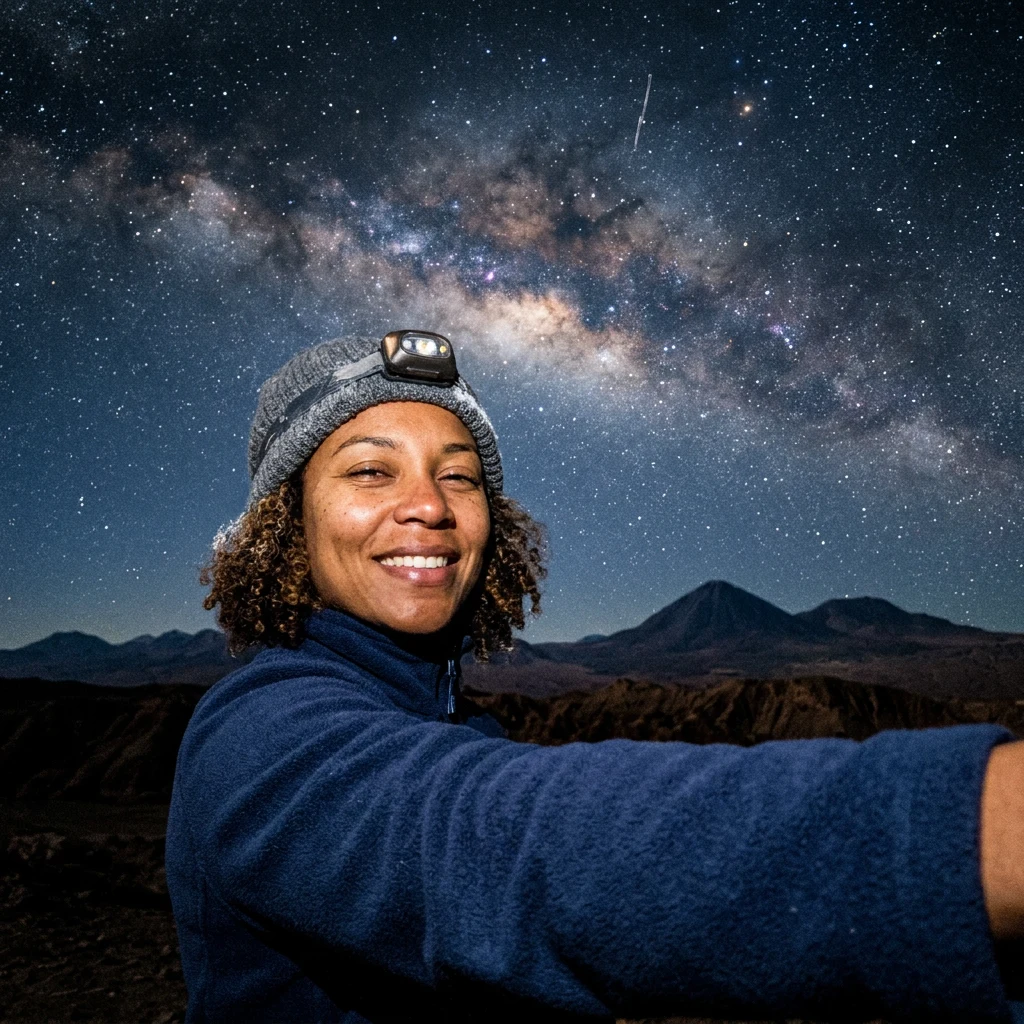
Named Contributors

Editorial Team

Every article on Dark Skies Atlas carries a name. Not a brand, not an editorial "we" — a specific person with specific knowledge of dark-sky travel, responsible for what they wrote. The team covers destinations, lodges, tours, gear, and the astronomical calendar: aurora season in the Arctic, Milky Way windows at high-altitude deserts, meteor shower peaks across hemispheres.

1

Named contributors

252

Signed articles

How we work

Most dark-sky travel content is anonymous. It is also frequently wrong — or accurate once and never updated. You will find Bortle ratings that were measured before a new road lit up the horizon, lodge recommendations based on star count rather than sky quality, and "how-to" sections that paraphrase Wikipedia without adding anything a stargazer actually needs.

Named authorship is a commitment to the opposite. When a contributor writes about a dark-sky reserve — the access road conditions, the best field for southern-horizon views, the time of year when the Milky Way core clears the treeline — they are putting their name to it. That is a different standard than anonymous copy generated to fill a page.

The team covers the full scope of a dark-sky trip: destinations from certified IDA reserves to remote high-altitude sites, lodges chosen for sky quality rather than TripAdvisor score, tours led by guides who track forecasts in real time, and practical logistics — moon phase calendars, gear checklists, red-light etiquette. Research means going there: driving the access road, checking the actual Bortle reading, verifying whether the lodge has blackout curtains or a flood-lit car park.

What we do not do

No sponsored placements. If a lodge or tour appears on this site, it is because a contributor decided it belonged there, not because anyone paid for the mention. Every published article has a byline and a named author you can look up. We do not recycle content from other travel sites or accept press trips in exchange for favourable coverage. The editorial standards page has the full details.

Questions about the editorial team

How are contributors selected?

Contributors are selected based on first-hand dark-sky experience — time spent at observing sites, specific areas of expertise (aurora forecasting, astrophotography, telescope operation, dark-sky certification), and the ability to write with enough precision to be useful. Generalist travel writers who once looked up at a clear sky are not what this site is built on.

Do authors observe in person?

Yes. Every guide on this site is based on on-the-ground research: driving to remote sites, checking actual Bortle readings against what the apps predict, and standing in a field at 2 a.m. to understand what a beginner will actually experience. We do not synthesize other travel sites or rewrite Wikipedia entries.

How do you keep content up to date?

Lodge listings, tour availability, and site access rules change. Contributors flag updates when they visit, and readers who spot errors can write to us directly. Each article carries a last updated date so you know how fresh the information is. For anything time-sensitive — tour availability, reserve access permits — always verify with the operator before your trip.

Can I contribute?

If you have specific, verifiable expertise in dark-sky travel — aurora forecasting, astrophotography planning, dark-sky park access, telescope operation — and you write clearly in English, get in touch via the contact page. We are not looking for generalist travel writers.

About Dark Skies Atlas

The editorial team is part of an independent dark-sky travel guide — destinations, lodges, tours, and practical planning worldwide. No tourism board affiliation. No sponsored content.