By destination
Aurora Hunting Trip: Plan Your Northern Lights Chase
A planning framework, not a fixed schedule: read the Kp-index and equinox timing first, pick from six destinations under the auroral oval, then build flexible nights around whichever one moves last.
Written by
Maya Okonkwo I've seen dark skies firsthand in the Atacama altiplano, Namibia's NamibRand Nature Reserve, and Morocco's Merzouga dunes; every other destination I write about is built from measured Bortle and SQM data, cloud climatology, and primary sources like park services and the International Dark-Sky Association.
Published
Most aurora trips get booked around a flight deal and a hopeful glance at somebody else's photos, with the actual forecast mechanics left as an afterthought. Flip that order. The Kp-index and the equinox calendar decide whether a geomagnetic storm is even likely on your travel dates, before any destination enters the conversation. Read the mechanics first, then pick a place, then build a flexible run of nights around whichever variable moves last.
This isn't a single-destination itinerary. Six places sit inside or near the auroral oval with genuinely different trade-offs: cold, dry, continental odds against coastal cloud; a self-drive island against a fly-in city; a glass-ceiling igloo against a heated teepee. If you'd rather see two of them weighed head-to-head than choose blind, my Yellowknife vs. Fairbanks comparison lines up clear-sky odds, cost, and tours directly.
Before you go
- Season: roughly late August through mid-April across the six destinations, though exact windows vary; Fairbanks runs August 21 to April 21, Tromsø September 15 to April 14.
- Kp expectations vary by latitude: Yellowknife and Tromsø see aurora at Kp 1-2; most of continental Europe needs Kp 6 or higher for the same glow.
- Moon phase: matters less than it does for a Milky Way trip, but a bright moon still washes out a faint, low-Kp display.
- Forecast: check a live Kp and cloud-cover forecast the same day you plan to go out, not two weeks ahead.
Time it: the Kp-index, the equinox, and the moon
The Kp index is NOAA's 0-to-9 scale for how disturbed Earth's magnetic field is, updated across rolling three-hour windows. A quiet Kp of 0 to 2 keeps aurora tucked close to the magnetic pole; a storm of Kp 5 or higher pushes the auroral oval toward lower latitudes. What matters for trip planning is your destination's magnetic latitude, not its geographic one. Yellowknife sits at roughly 68 degrees magnetic latitude and Tromsø at 67.4, both inside the oval, so a quiet night at Kp 1-2 is often enough. Most of continental Europe needs Kp 6 or above for the same glow. For the full mechanics, read how the Kp index works before you book anything.
Geomagnetic activity isn't spread evenly across the year. Storms cluster somewhat more often around the September and March equinoxes, a well-documented equinox effect that lifts activity by roughly 20 to 30%. Yellowknife, Iceland, and Tromsø's own destination pages all cite that same 20 to 30% figure independently, and Finnish Lapland's page documents the same seasonal pattern without putting a number on it, a good sign this is a real geomagnetic effect rather than a marketing line specific to one place. Build a trip around one of those windows if your dates are flexible, and treat it as a tailwind rather than a guarantee if they aren't.
Moon phase works differently here than it does for a Milky Way trip, where a new moon is close to mandatory. Aurora is often bright enough to hold its own against moderate moonlight, and a genuinely strong storm can overpower a bright moon entirely. What a full moon does wash out is a faint, low-Kp display, the kind you'd get on a quiet night at a lower-latitude site. Check the moon phase, but weight the Kp forecast and cloud cover more heavily; a good forecast app covers all three in one glance.
Where: six places under the oval
None of these six is objectively "best." Each trades reliability, cost, culture, or convenience for something else, and the right pick depends on what you actually want out of the nights the aurora doesn't show up.
Overwhelmed by six options?
My Yellowknife vs. Fairbanks comparison weighs clear-sky odds, cost, and tours between two of them head-to-head, if narrowing straight to a shortlist of two is more useful than scanning all six below.
A flexible multi-night structure
There's no single correct night-by-night schedule here, because the destination, the season, and how the forecast behaves once you land all change the details. What doesn't change is the shape: arrive with a buffer, protect your best-odds nights in the middle, and leave room for a cloudy one to not sink the whole trip.
1
Arrival: a buffer night, low expectations
Night one, any destination
Treat the first night as orientation, not the main event. Check the short-range local forecast tool your destination relies on, and get a feel for how far you'll need to drive from wherever you're staying to reach a dark enough sky. A short, low-pressure look outside is enough. Save the real effort for the nights that follow.
2
The middle nights: active hunting
Checked daily against the Kp and cloud-cover forecast
This is where the destination's own geography matters most. An island-scale destination lets you drive toward a clearer region if tonight's forecast clouds over where you're staying. A single-city base commits you to whichever dark pull-off or guided route the forecast favors that specific evening, not the one that looked best from your hotel room at breakfast. Recheck the forecast every afternoon rather than planning the whole stretch two weeks out.
3
A weather-buffer night: insurance
At least one extra night beyond your minimum
Book one night beyond whatever minimum you settled on. If it clouds out, swap it for the destination's best daytime option, a glacier ice cave, a hot-spring soak, a museum, a dog-sled run, rather than treating the whole trip as a loss. A three-night trip with no buffer has no way to absorb one bad forecast; a four or five-night trip usually does.
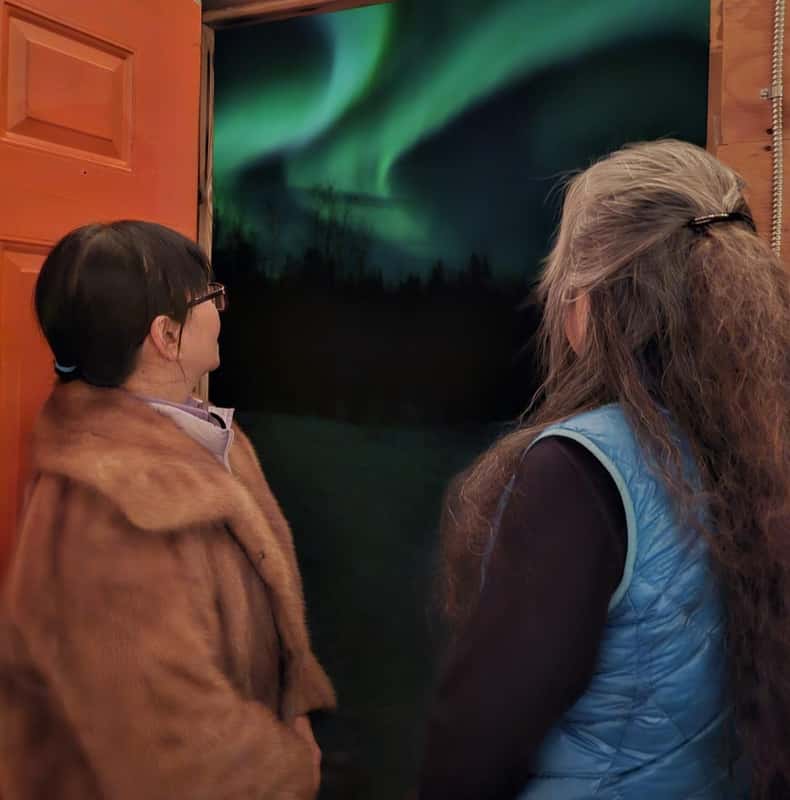
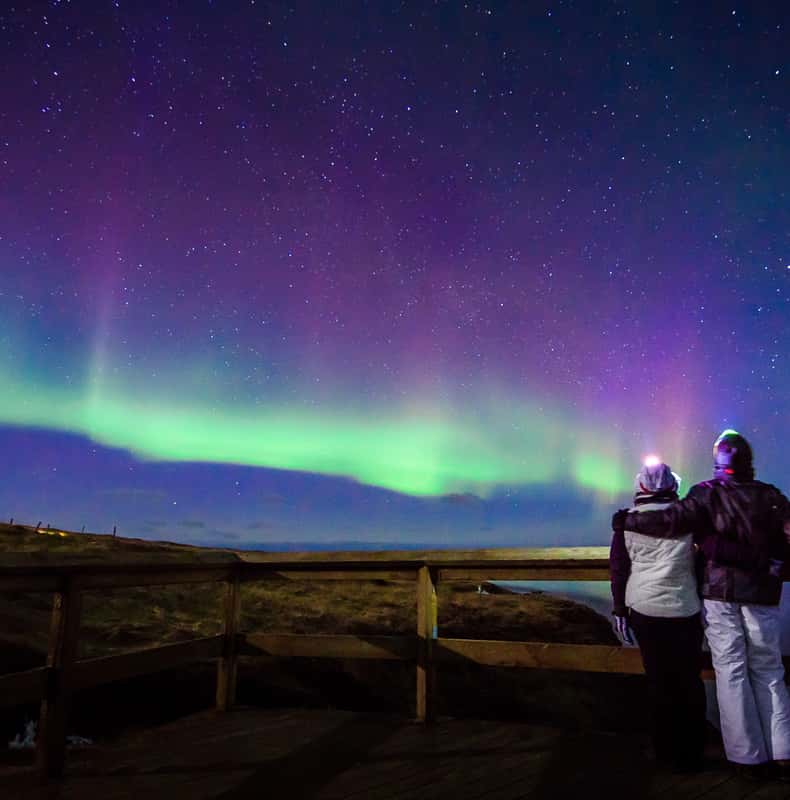
Aurora tours in Tromsø, Fairbanks, Yellowknife and Reykjavik
Tours are selected for quality, not commission. I earn a small fee if you book — at no extra cost to you.
Gear and prep
The layering and battery-in-the-cold logic is destination-agnostic even though the only gear-specific writing on this site so far comes out of one place. Yellowknife's arctic winter packing list, aurora photography gear guide, and aurora smartphone photography guide all apply just as directly to a trip to Fairbanks, Abisko, or Finnish Lapland as they do to the city they were written about. Cold stiffens tripod legs and drains batteries at -20°C everywhere, not only on Great Slave Lake.
If photography, not just watching, is the goal, how to photograph the northern lights covers the camera settings and framing that transfer to any of the six destinations above. None of it requires a specific place to make sense, only a dark sky and something worth pointing a lens at.
Frequently asked questions
Does moon phase matter for aurora the way it does for stargazing?
Less than it does for a Milky Way trip, but it isn't nothing. A bright moon washes out a faint, low-Kp aurora arc much the way it washes out the galactic core's dust lanes, though a genuinely strong geomagnetic storm, Kp 6 or higher, can overpower moonlight entirely. Check the moon phase before you travel, but don't let it override the Kp forecast and cloud cover, which decide far more about any given night.
How many nights should I book for an aurora hunting trip?
Three nights is the realistic floor. Fairbanks reports roughly 90% odds of a sighting across a three-night stay checked nightly, and NWT Tourism puts Yellowknife's three-night detection rate at 95% or higher during peak season. Four or five nights buys a spare cloudy night without losing the trip, and leaves room for a daytime activity or two between hunts.
Can I DIY-hunt the aurora, or do I need a guide?
Both work, and the right answer depends on the destination. Iceland's ring road and Fairbanks' short drives out to Cleary Summit or Murphy Dome reward a confident winter driver willing to self-drive to a dark pull-off. Tromsø's coastal cloud and Yellowknife's ice roads are where a guide who already knows tonight's clear pocket earns the fee, and Yellowknife's Dene-owned operators add cultural knowledge no self-drive can replace.
How do I pick among the six northern lights destinations?
Match the trade-off to what you actually want. Yellowknife and Fairbanks sit inside or near the auroral oval with the highest single-city odds. Tromsø trades some of that reliability for whale-watching and Sami culture. Abisko's rain-shadow microclimate clears when Tromsø's tours are cancelling for cloud. Iceland lets you drive toward whichever region has the clearer sky tonight. Finnish Lapland adds glass-ceiling igloos and a Christmas theme park for family groups.
What do I do on a night that clouds out?
Treat it as normal, not a failure. Even the best destinations get an occasional cloudy night, and Iceland's maritime climate pushes cloud cover across roughly 60 to 70% of nights in its darkest months. Swap the plan for the destination's best daytime option, a glacier ice cave, a geothermal soak, a museum, a dog-sled run, and check the forecast again the next evening. This is the real argument for booking a multi-night stay instead of a single shot.
What's the Kp-index, and do I need to understand it before I go?
The Kp index is NOAA's 0-to-9 scale for how disturbed Earth's magnetic field is, measured across rolling three-hour windows. You don't need to master the physics, but knowing your destination's rough threshold helps: Yellowknife and Tromsø both see aurora at Kp 1 to 2 because they sit close to the magnetic pole, while most of continental Europe needs Kp 6 or higher for the same glow. My Kp index explainer walks through the rest.
Further reading