Articles · Gear & packing
Stargazing Gear and Packing Lists: What to Bring for Heat, Cold and Dark
Packing lists for desert, Arctic and mountain trips, from Death Valley heat to Fairbanks cold, plus a primer on binoculars, telescopes and dark adaptation. It is for first-time stargazers who would rather pack the right layers than a bigger telescope.
26 articles
Gear & packing: the big picture

Written by
Maya Okonkwo I've seen dark skies firsthand in the Atacama altiplano, Namibia's NamibRand Nature Reserve, and Morocco's Merzouga dunes; every other destination I write about is built from measured Bortle and SQM data, cloud climatology, and primary sources like park services and the International Dark-Sky Association.
Packing for a dark-sky trip is two problems: staying warm while you stand still, and protecting your night vision. Everything else is detail.
The stargazing packing list is the place to start. Its core kit is five things: warm layers, a red-light headlamp, 10x50 binoculars, something comfortable to sit or lie on, and a way to find your way around the sky without a bright screen. The cold part surprises people. The better the sky looks for observing, the harder your body works to stay warm under it, so pack for the temperature you will feel at 11 pm, not the one on the forecast.
The headlamp is the item people skip, and why astronomers use red light explains the catch. Red is a compromise, not a force field: bright red light can still reduce rhodopsin, which is why the lowest usable setting beats the brightest red mode.
On optics, I'd buy in order: eyes, then binoculars, then everything else. The stargazing gear guide shows why aperture, not magnification, decides what a telescope shows you.
Then check whether your destination needs more than the general list. The Atacama packing list is built around a swing of roughly 20 degrees, from 16°C at 2 pm to -3°C by 3 am. The Fairbanks winter packing list is a harder problem: 2 to 5 hours standing still in air that is regularly −30°F to −40°F, where mittens beat gloves.
More gear & packing articles
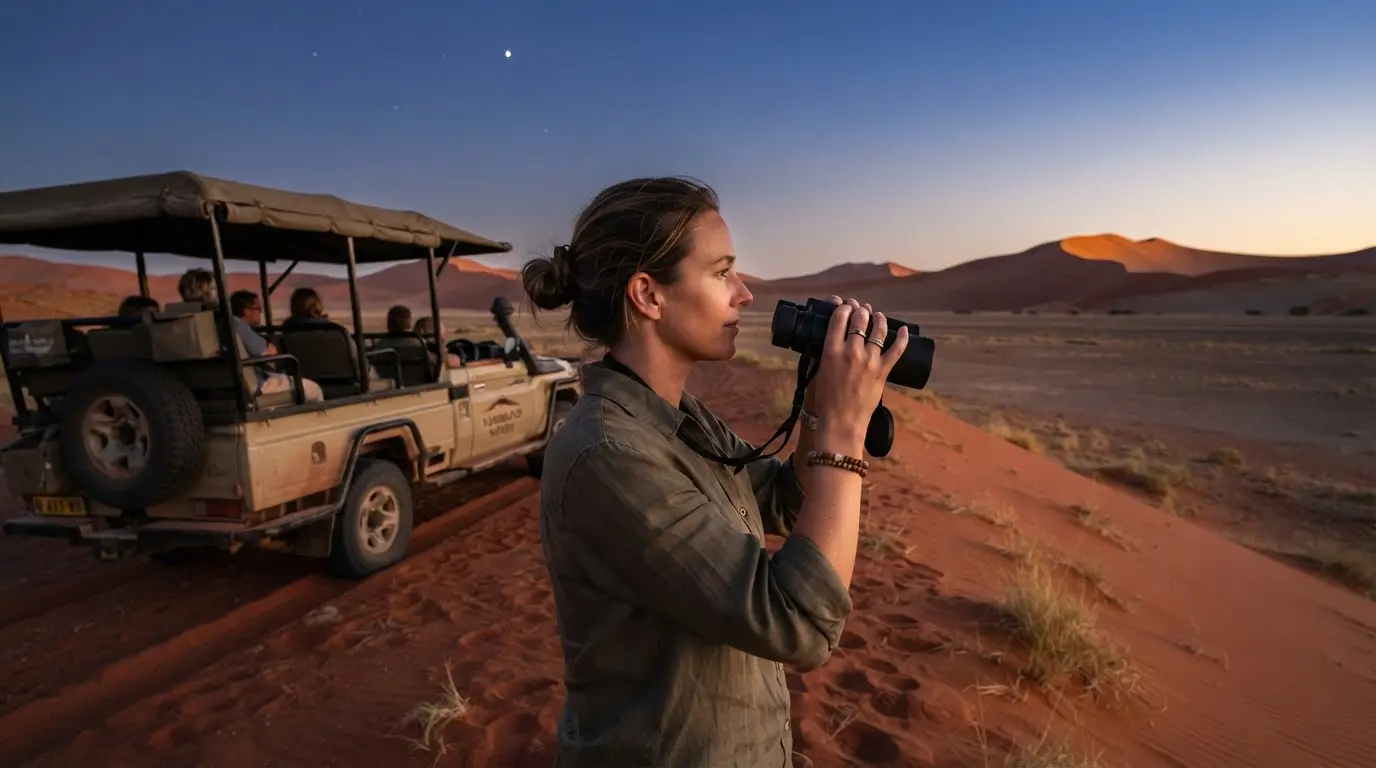
Best Binoculars for Safari & Stargazing in Namibia
Maya Okonkwo 8 min read
One pair must find oryx at dawn and resolve the Magellanic Clouds after dark. Here's the 8x42 vs 10x50 call, settled against NamibRand's real night sky.
Read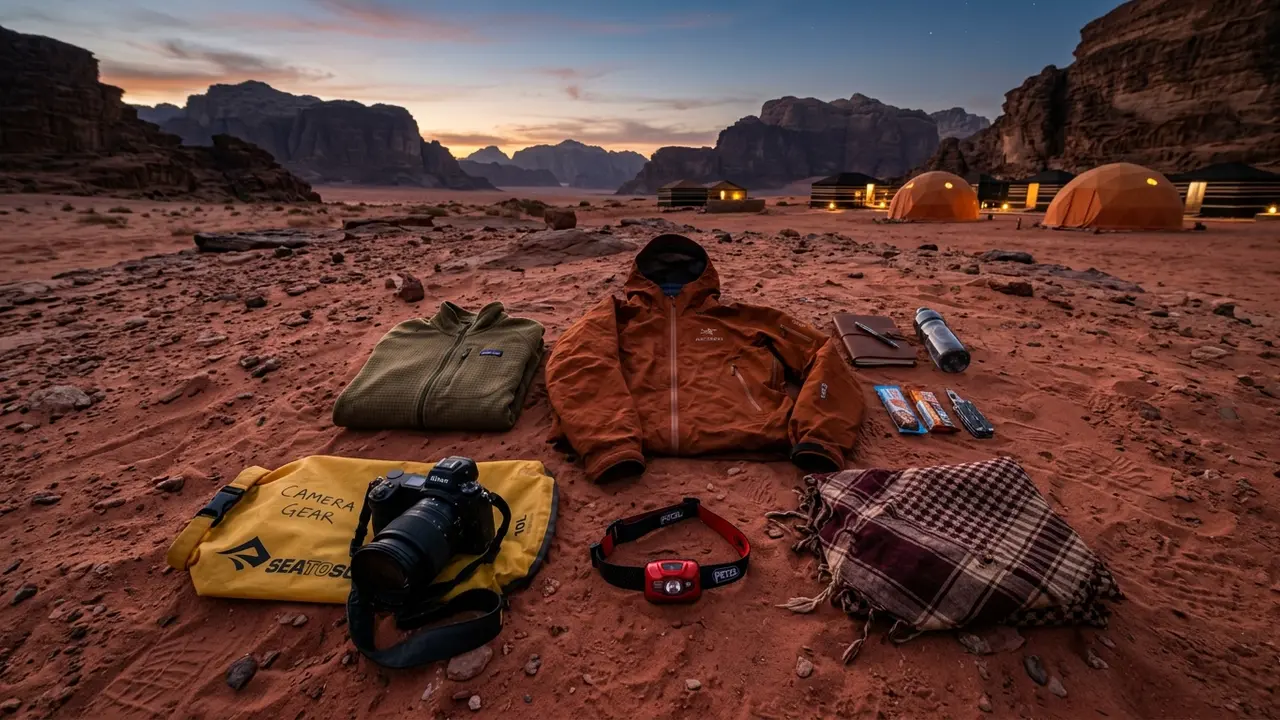
Wadi Rum Desert Packing List: Heat by Day, Cold by Night
Maya Okonkwo Updated 8 min read
Wadi Rum swings from 40°C days to near-freezing nights, and camps supply bedding but not towels. Here's what actually earns a spot in your packing bag.
Read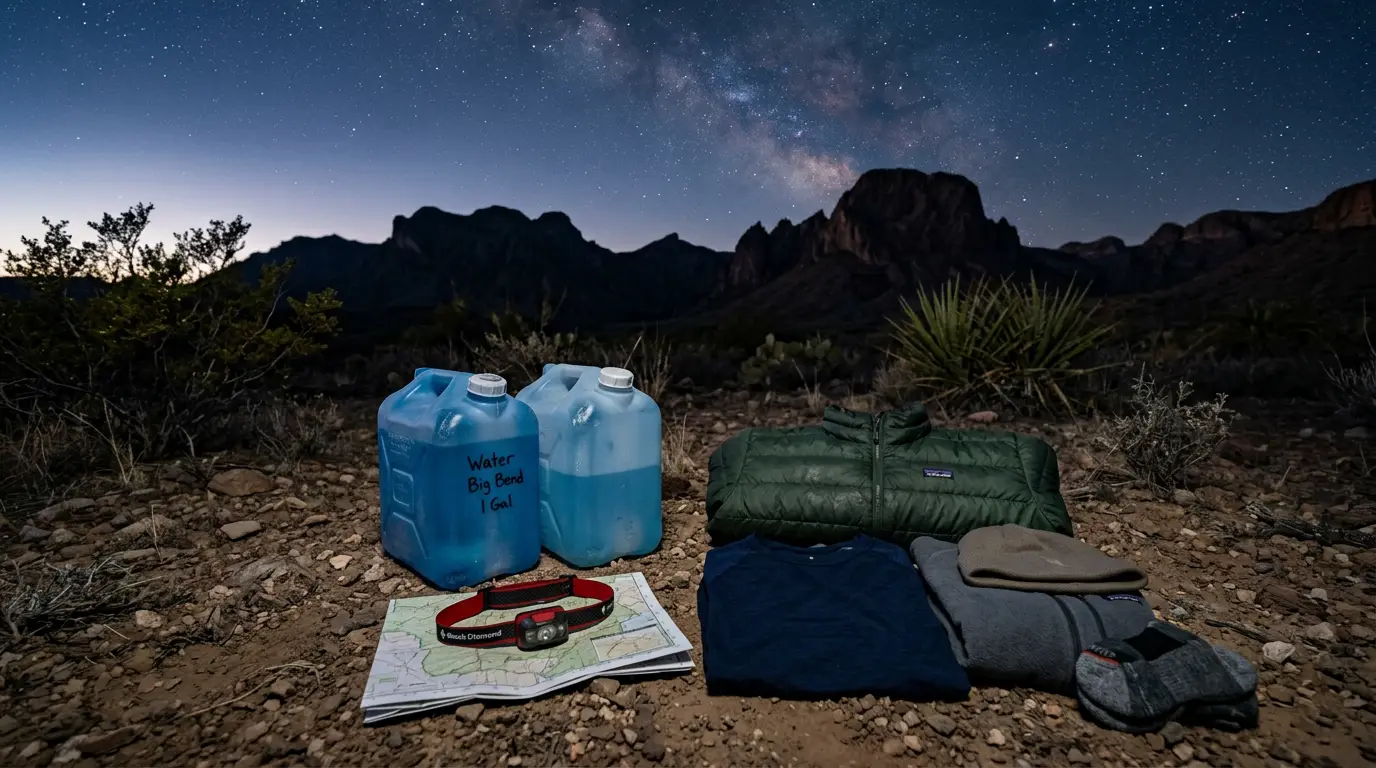
Big Bend Desert Stargazing Packing List: Heat, Cold, No Signal
Maya Okonkwo Updated 6 min read
Big Bend swings from 107°F desert days to near-freezing nights, water sources run dry, gas stations are scarce, and cell service barely reaches the park.
Read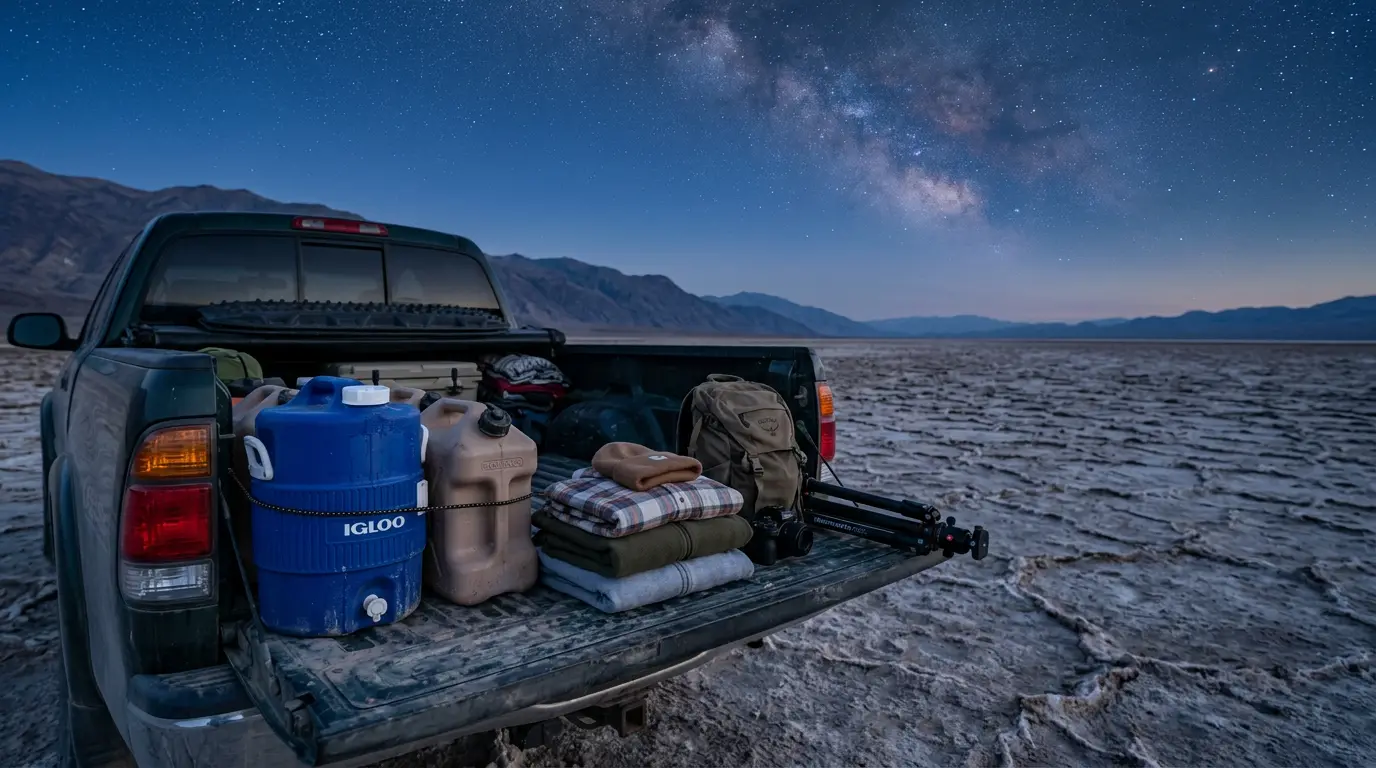
Death Valley Extreme Heat Stargazing Packing List
Maya Okonkwo Updated 6 min read
How much water to carry, how to prep your vehicle, and what gear survives Death Valley's heat swing: a safety-first packing list, not generic desert gear.
Read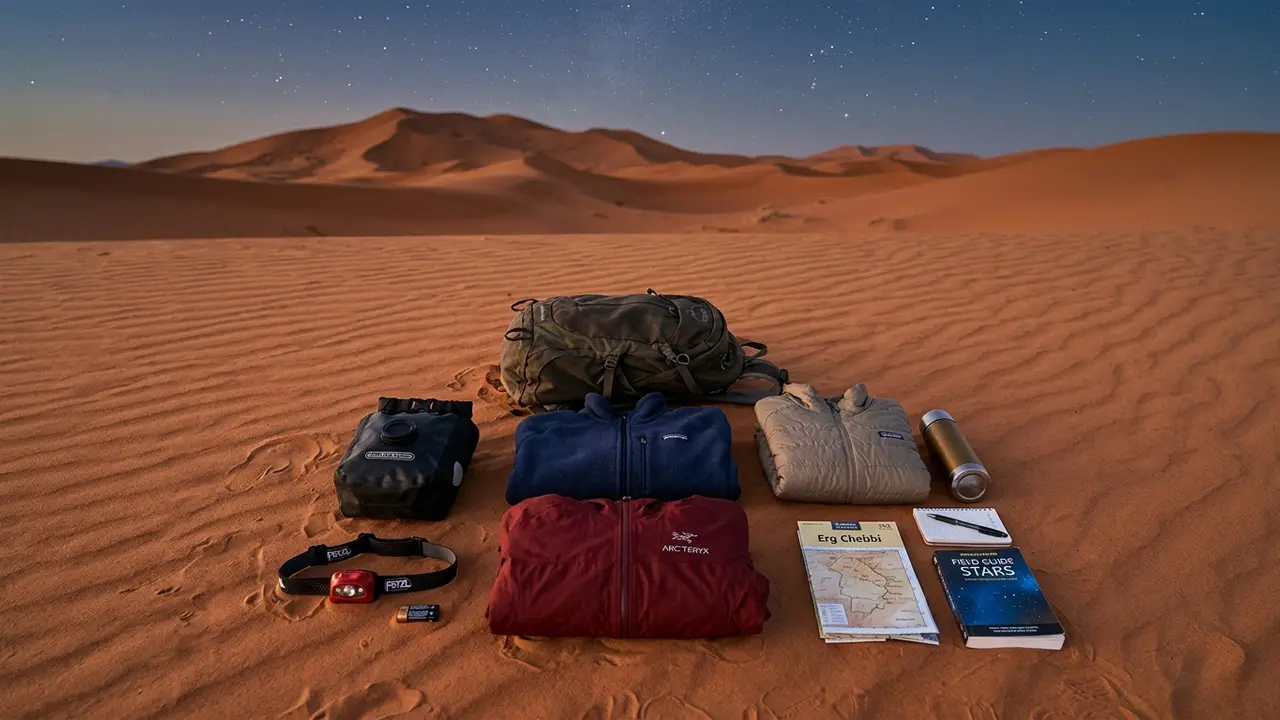
Merzouga Stargazing Packing List: Sand, Heat, and Cold
Maya Okonkwo Updated 7 min read
Erg Chebbi's days top 48°C while nights fall below freezing, and its sand is fine enough to ruin a camera. Here's what earns a spot in your desert bag.
Read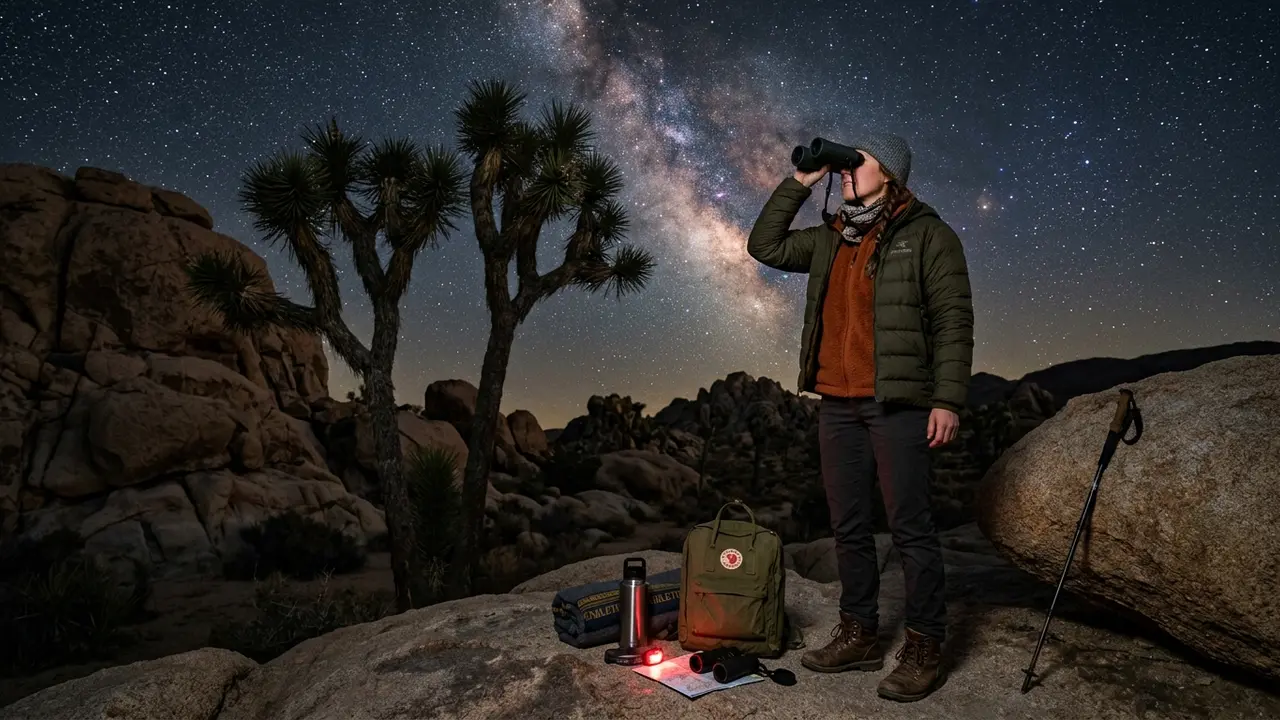
Joshua Tree Stargazing Packing List for a Desert Night
Maya Okonkwo Updated 8 min read
Joshua Tree bakes under the sun and turns cold fast after dark. The park sells no gas, food, or water past the gate. Here's what goes in a stargazing pack.
Read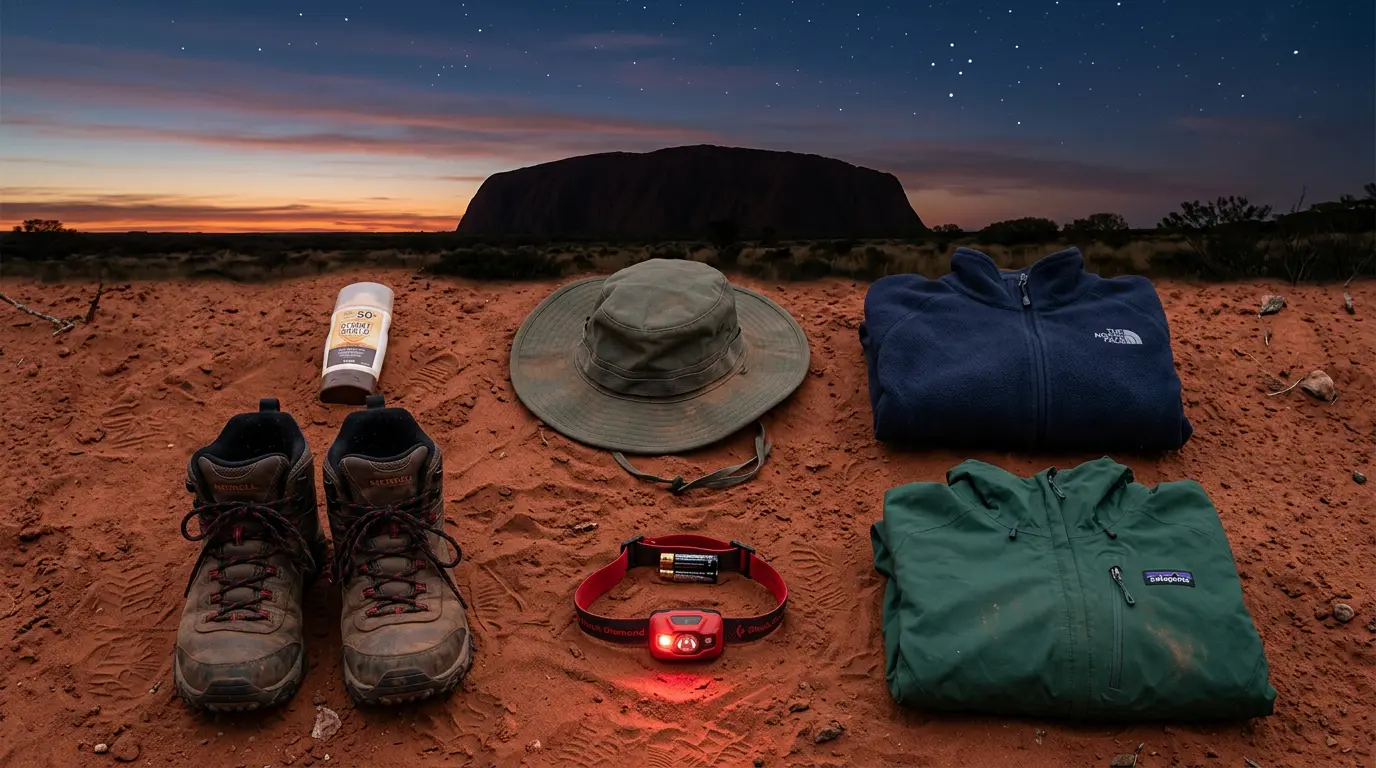
Uluru Stargazing Packing List: Desert Heat to Night Cold
Maya Okonkwo Updated 8 min read
Uluru's summer days push past 40°C while winter nights drop toward freezing. What to pack for sun, dehydration, the cold night tour, and Yulara's limited shops.
Read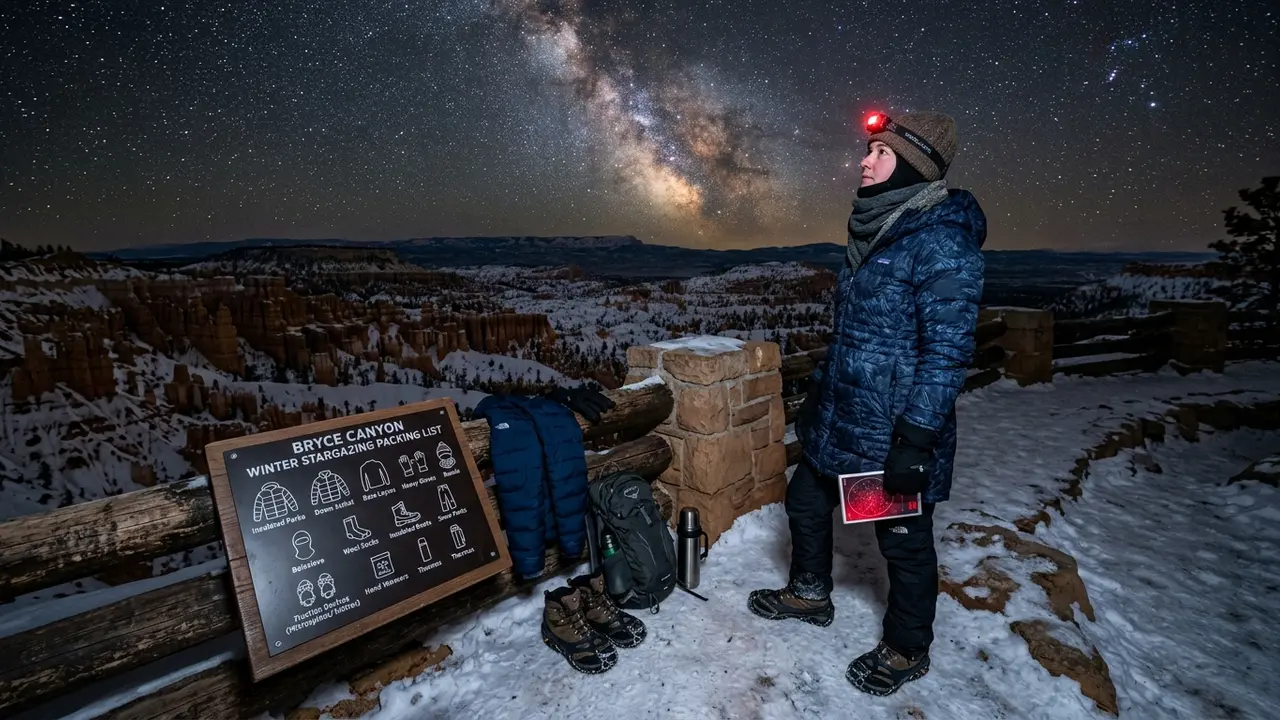
Bryce Canyon Winter Stargazing Packing List
Maya Okonkwo Updated 7 min read
Bryce Canyon's winter cold comes from 8,000+ feet of elevation, not deep-Arctic extremes. What to pack for icy trails, closed roads, and hours on a dark rim.
Read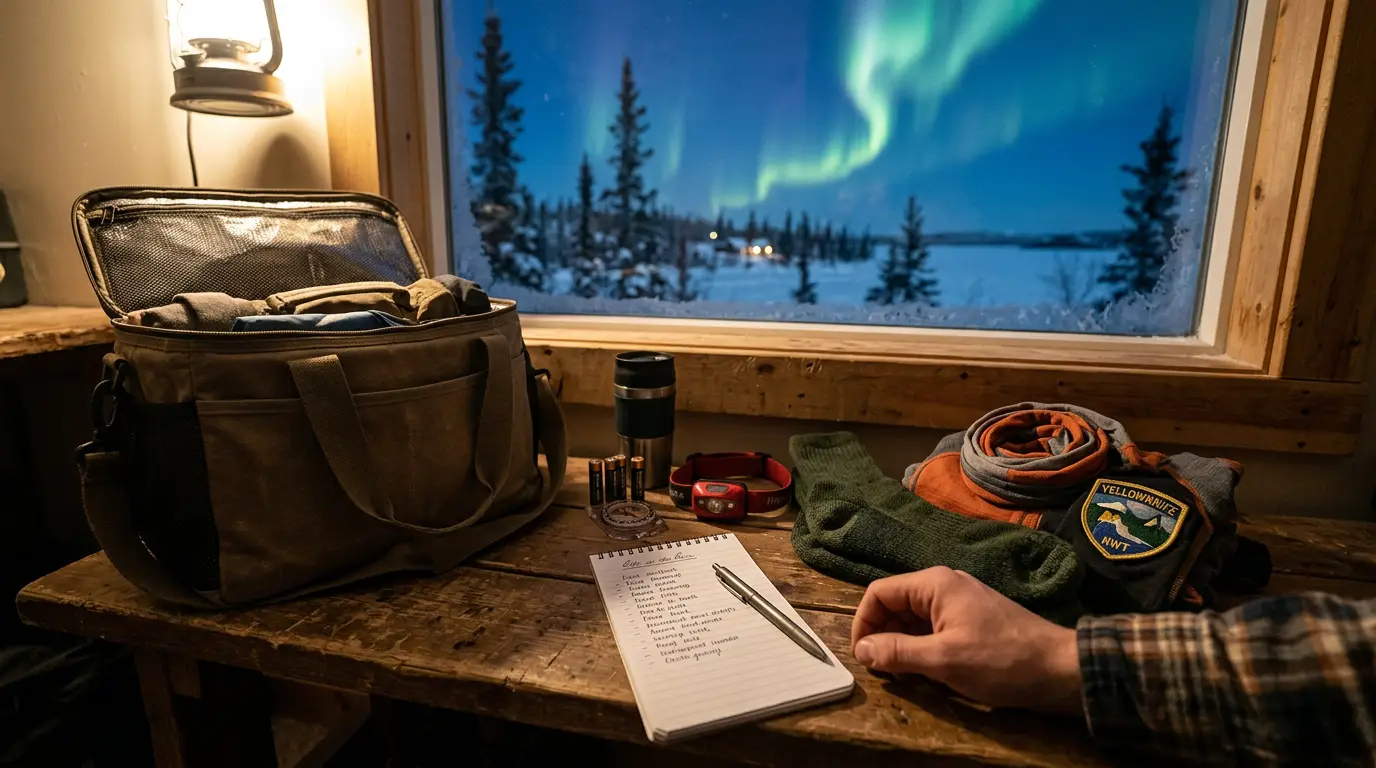
Yellowknife Winter Packing List for Aurora Season
Maya Okonkwo Updated 10 min read
Most Arctic packing guides assume you're skiing. Standing still at -40°C needs different gear. What to bring, what to rent in Yellowknife, and camera survival.
Read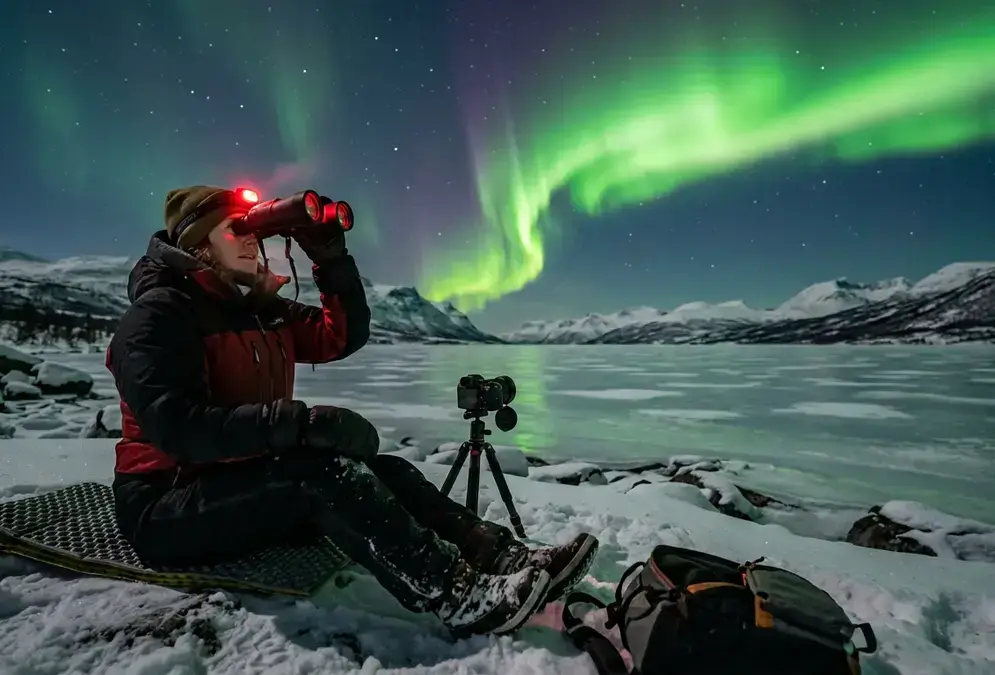
Abisko Arctic Night Packing List for Stargazing Trips
Maya Okonkwo Updated 8 min read
Abisko's cold is subarctic, not Fairbanks-extreme, yet a multi-hour aurora vigil at -15°C still demands layers, boots, and camera-battery care. What to pack.
Read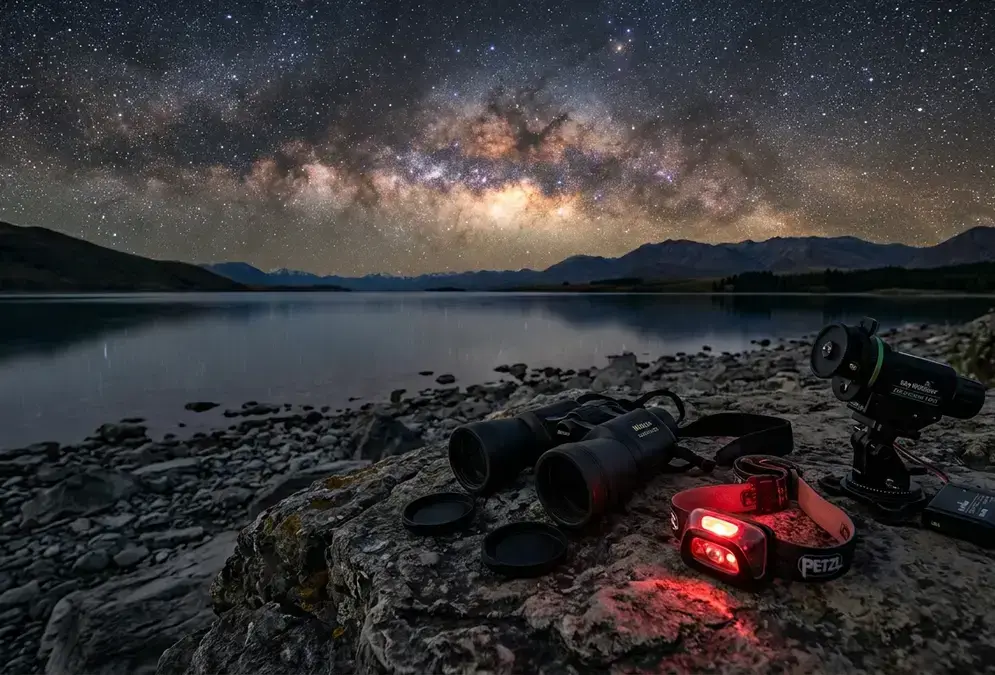
Aoraki Mackenzie Stargazing Gear: What to Pack
Maya Okonkwo Updated 8 min read
Binoculars beat a telescope at Aoraki Mackenzie, and layered wool matters more than fancy optics: the gear that earns its place on this Gold Tier trip.
Read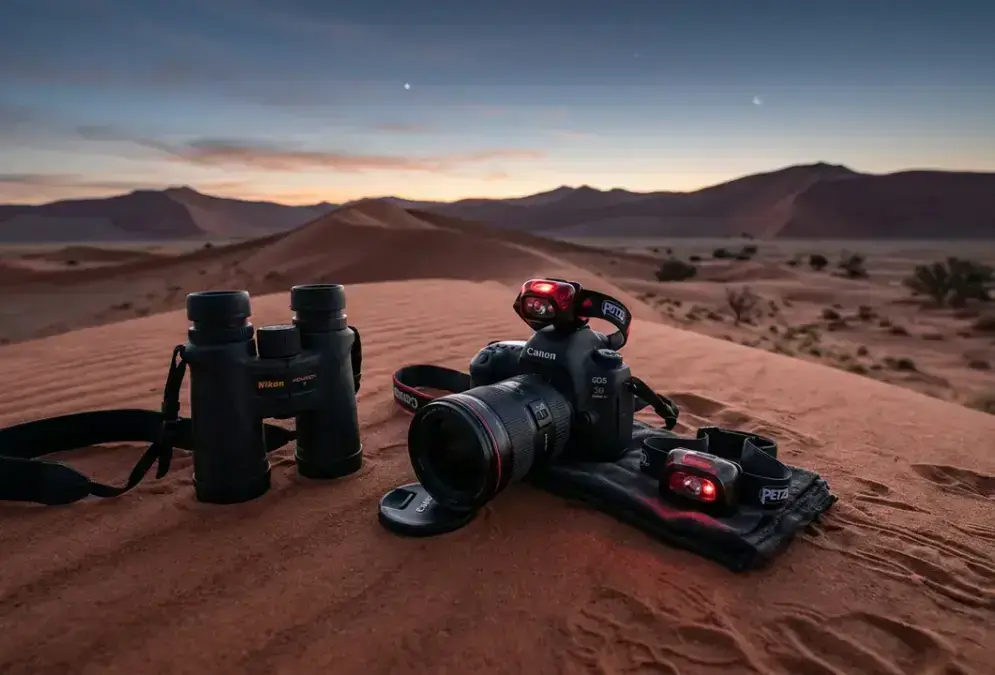
NamibRand Stargazing Gear: Packing for Desert Extremes
Maya Okonkwo Updated 7 min read
NamibRand's 45°C day-to-night swing and fine sand ruin unprepared gear. Here's what actually protects your camera, optics, and night vision out there.
ReadFrequently asked questions
Why do clear nights feel so much colder than cloudy ones?
Clouds act as a blanket. After sunset the ground radiates the heat it absorbed all day back out as infrared, and with no clouds to trap it, that heat escapes into space. A humid, overcast sky holds warmth near the ground. Once you are sitting still, plan on feeling roughly ten degrees colder than the thermometer suggests.
What does cold do to phone and camera batteries on a stargazing night?
It drains them fast. Lithium batteries lose a meaningful share of their charge in cold air, and in Fairbanks an electric hand warmer rated for 6 hours may deliver 3 at −40°F. Keep phones, cameras and a spare battery pack in an inside jacket pocket close to your body, where they hold charge far better than in an outer pocket or bag.
What is exit pupil, and why does it matter when choosing binoculars?
Divide aperture by magnification: 10x50 binoculars give a 5mm exit pupil, 7x50 roughly 7.1mm. That number should roughly match your dark-adapted pupil. A young adult's pupil opens to about 7mm in full darkness but shrinks by roughly a millimeter every decade past thirty, so 7x50 suits younger eyes while 10x50 stays useful well into middle age.
How do I pack for a desert where the days are warm and the nights freeze?
Pack modular layers rather than one heavy jacket: a merino wool base, a fleece or light down mid layer, and an insulated outer jacket rated to at least -10°C. In San Pedro de Atacama in July the town can reach 16°C at 2 pm and fall to -3°C by 3 am, and standing still makes it feel roughly 10°C colder than the air.
Can a stargazing app replace a paper star chart?
Not entirely. Free apps like Stellarium work well once you have downloaded the star database at home, and you should switch them to red or night mode in daylight. But battery drops faster in the cold, so a paper planisphere, which needs no battery and no light beyond a red flashlight, is worth carrying as a backup rather than a replacement.