The temperature swing: why one bag has to cover everything
San Pedro's climate is extreme in a specific way. The diurnal temperature range, the gap between the warmest afternoon and the coldest pre-dawn, is wide enough that one day covers two climates: shirtsleeves at 2 pm in a summer that runs 25 to 30°C by day,[3] a down jacket by 8 pm, and winter nights that routinely drop below 0°C and can reach −10°C.[2] That is not a rounding error, and your packing has to account for both ends.
2,436 m
The reason the swing is so wide is altitude. At 2,436 m,[1] the thin, dry atmosphere holds almost no heat once the sun drops. Sea-level destinations stay warmer through the night because humid air and denser atmosphere act as a thermal blanket. The Atacama has neither. The moment the sun goes below the Andes, the temperature falls fast.
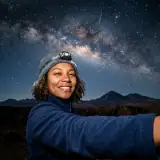
For stargazing specifically, the timing makes this worse. Astronomy tours run from roughly 9 pm to midnight — the coldest window of the night, after sunset chill and well before any warming from dawn. Observation sessions also mean standing or sitting still for two to three hours. Stillness eliminates the body heat generated by walking, so the effective temperature feels well below what the thermometer reads. Pack accordingly.
I learned this the slow way on my own first Atacama trip: shorts-and-a-t-shirt warm on the plaza at 4 pm, reaching for every layer I'd packed by 8 pm. The daytime heat lulls you into thinking the desert doesn't get properly cold, and then the altiplano proves you wrong within a couple of hours of sunset.
The layering system: three pieces that do the work
One heavy jacket is the wrong answer. The right system is modular layers you can add and remove as the day progresses from pre-dawn Atacama walks through the midday heat to an evening observation session. You will use all three in the same day.
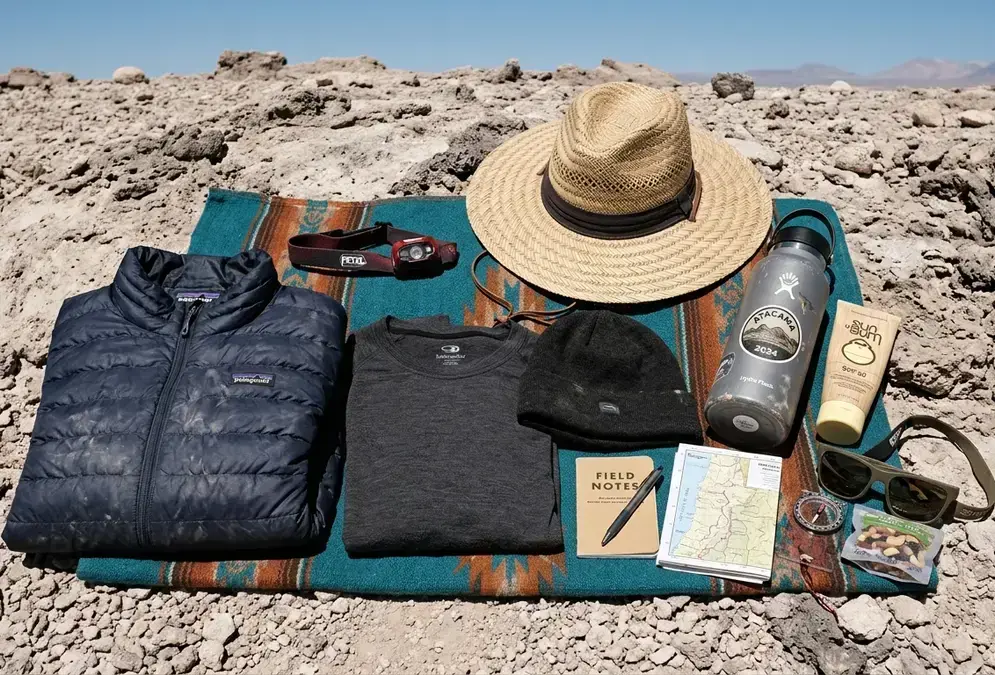
The base layer sits directly against skin. Merino wool is the best material for Atacama travel: it regulates temperature across the full range, resists odour through multi-day desert wear, and stays comfortable even when damp from sweat during afternoon hikes. A synthetic moisture-wicking base layer works too, but merino handles the odour and the temperature extremes better. Lightweight or midweight depending on how cold you run.
The mid layer is your insulation. A fleece or light down sweater is what you pull on as temperatures drop in the late afternoon and what you remove if you are walking to a viewpoint in the midday sun. This layer should be easy to stuff into a day pack. Fleece is more versatile in slightly damp conditions (morning dew on the altiplano); down packs smaller but loses insulation value when wet.
Read next · Article
Stargazing Gear for Beginners: Binoculars to Telescopes
New to stargazing gear? This guide breaks down binoculars, telescopes, and smart telescopes, so you know what to buy first and what to skip for right now.
The outer layer is where most travellers under-invest. A down or synthetic insulated jacket is not optional for evening observing. Down compresses to almost nothing in a day pack and performs well in the Atacama's dry cold. Synthetic insulation is the better choice for shoulder-season travel (March, April, October, November) when you might encounter morning condensation or higher humidity. Choose a jacket rated to at least -10°C.
The optional fourth piece is a wind shell or light hardshell. The Atacama plateau occasionally produces katabatic winds off the Andes at night, cold, dry, and stronger than they look. A thin wind-resistant layer over your down jacket transforms an exposed observation site. It adds almost no weight and compresses to the size of a water bottle.
Extremities: the parts most people forget
Cold extremities end stargazing sessions faster than any other single factor. It is not the torso that gives up first; it is cold feet and numb fingers.
For hands, the right approach is two weights. Thin liner gloves allow fine motor control: adjusting a binocular focus ring, scrolling a phone screen, buttoning a jacket. Heavier insulated gloves or mittens go over the top between adjustments. Mittens are warmer than gloves because fingers share heat, but you cannot operate binoculars in mittens. Liner gloves when active, mitts when waiting. Both pack flat in a jacket pocket.
Read next · Tour
Atacama Stargazing & Astronomy Tour
Evening telescope session under the world's clearest skies. Book near new moon, avoid full moon. SPACE Observatory, San Pedro de Atacama — CLP 45,000.
A wool or fleece hat covering the ears matters more than most travellers expect. The ear canal is one of the body's fastest heat-loss points, and once ears are cold in a desert wind, concentration goes with them. A beanie that folds small enough to fit in a jacket pocket works well. Bring it even in summer: winter nights in San Pedro routinely drop below 0°C at town altitude.[2]
For socks, wool or thermal only, not cotton. Cotton holds moisture and loses insulation value when damp from sweat or morning dew. This is especially relevant at the pre-dawn visit to the geysers at over 4,300 m,[4] where ground steam and a pre-dawn start combine to make cold feet a serious discomfort.
A neck gaiter or buff is one of the most underrated items on this list. The collar gap between a jacket and a hat is where warm air escapes constantly. A buff worn around the neck reduces that loss without adding bulk, and can be pulled up over the lower face on windy nights at the observatory.
Sun protection at altitude: harder than it looks
UV radiation climbs by roughly 10% with every 1,000 m of elevation gain,[6] and measurements in the Atacama region put the rise at about 9% per kilometre up to 2,500 m.[7] At San Pedro's 2,436 m[1] that adds up to roughly a quarter more UV than at sea level, with the sun high overhead for most of the year, so skin burns faster than most visitors expect, including on overcast days when clouds reduce glare but do not block UV-B significantly. The Atacama adds a second problem: there is almost no shade. Most tours involve hours on open salt flats, volcanic plains, and geyser fields.
SPF 50+ sunscreen is the minimum sensible choice. Lower factors provide meaningfully less UV-B protection per unit of time. Apply generously to face, neck, and any exposed skin before going outside, and reapply every two hours. Sweat and wind remove it faster than the tube suggests. A 100 ml travel-size tube lasts about three days of full coverage at Atacama intensity; bring more than one if your trip is longer than a long weekend.
Sunglasses should be rated Category 3 or 4 (UV400). Polarised lenses reduce glare from the Salar de Atacama's salt crust, which is bright enough to obscure detail and cause eye fatigue after an hour. Wraparound frames reduce peripheral UV exposure, which matters on a high-reflectivity white salt flat. Cheap sunglasses that are not genuinely UV400 are worse than nothing: they dilate your pupils in the dark interior of the lens while passing UV straight through.
| Item | Minimum spec | Why it matters at altitude |
|---|---|---|
| Sunscreen | SPF 50+ | UV roughly 25% higher than at sea level at 2,436 m;[6] reapply every 2 hours |
| Sunglasses | Category 3 or 4, UV400 | Salt-flat glare; UV-B penetrates cheap lenses while dilating pupils |
| Lip balm | SPF 30+ | Lips burn before you feel heat; damage arrives hours later |
| Hat | Wide brim or legionnaire-style | Covers ears and neck; reduces sunscreen area and heat stress |
| Long-sleeve shirt | UPF 30-50 lightweight | Cooler than sunscreen alone on full-day excursions in open terrain |
Lip balm with SPF 30+ belongs in every pocket. Lips are frequently the first thing that burns in the desert and the most uncomfortable. The feedback loop is delayed; lips rarely feel hot as they burn, so the damage arrives as a surprise.
A wide-brim hat protects face, ears, and neck simultaneously, reducing the sunscreen area and heat stress. A legionnaire-style cap with a rear neck flap offers the best coverage for long excursions. A regular brimmed hat works for shorter sessions. This is not purely a UV issue: the Atacama's thin, dry air means heat stress develops quickly when the sun is high, and shade from a hat matters even when the air temperature is mild.
Hydration, altitude, and the basics that prevent a ruined day
Dehydration at altitude is easy to confuse with altitude sickness. The symptoms overlap closely (headache, fatigue, nausea, difficulty concentrating), and most travellers cannot tell which they have until they have tried drinking 500 ml of water and waited 30 minutes. At 2,436 m[1] in a very dry desert, the answer is almost always to drink more first.
The Atacama's dry air accelerates moisture loss through breathing. Every breath you exhale at altitude is warm and water-laden; every breath you inhale is cold and nearly dry. You lose more moisture through breathing here than you would at a humid sea-level beach.Carry at least 1.5 to 2 litres of water for any daytime excursion, and aim for 3 to 4 litres across the full day. San Pedro town has reliable drinking water; carry a reusable bottle you can refill at your lodge before each tour.
Electrolytes are worth bringing. Plain water does not replace the sodium and potassium lost through sweat and increased urination at altitude. An electrolyte tablet or powder matters when a headache does not respond to a litre of water, which can signal electrolyte imbalance rather than simple dehydration.
Coca tea (mate de coca) is available at almost every café and hotel in San Pedro. It is a traditional Andean remedy for mild altitude symptoms, widely used across the Atacama region. The peer-reviewed evidence for its efficacy is mixed, but many travellers find it helpful on Day 1 and it is a genuine local custom worth trying. Do not treat it as a substitute for rest and hydration, but drink it.
For the high-altitude excursions, packing additions are straightforward. The El Tatio Geysers tour reaches 4,320 m[5] in a pre-dawn start; the day trip to the high lagoons also climbs well above town. Both require the full layering system described above (El Tatio at dawn in winter sits well below freezing), additional water, and sunscreen reapplied before leaving the vehicle. Tour operators carry supplemental oxygen on El Tatio excursions; if offered, take it.
The consolidated list: what goes in the bag
Below is the practical consolidation. Astronomy optics (binoculars, red headlamp, star tracker) are covered in the separate Atacama stargazing gear guide; this list is clothing and health only.
Clothing — cold and layering:
- Merino wool or thermal base layer (top and bottom)
- Fleece or light down mid layer
- Insulated down or synthetic outer jacket (rated -10°C or colder)
- Wind shell or light hardshell (optional but useful)
- Wool or fleece hat covering the ears
- Thin liner gloves plus warm insulated gloves or mittens
- Wool or thermal socks (at least two pairs)
- Neck gaiter or buff
Clothing — sun and daytime:
- Wide-brim or legionnaire-style hat
- Lightweight UPF 30-50 long-sleeve shirt
- Good walking shoes or hiking sandals for salt flat terrain
Sun protection:
- SPF 50+ sunscreen (plan for 100 ml per 3 days of full coverage)
- Category 3/4 UV400 sunglasses, polarised if possible
- SPF 30+ lip balm (one in every jacket pocket)
Recommended tours
Tours are selected for quality, not commission. I earn a small fee if you book — at no extra cost to you.
Hydration and altitude health:
- Reusable water bottle, 1.5 to 2 L minimum
- Electrolyte tablets or powder
- Ibuprofen or paracetamol for altitude headaches
- Any prescription medication relevant to altitude (consult a doctor before travel)
Electronics and extras:
- Portable battery bank (cold drains phone and camera batteries faster at altitude)
- Lens cloth and small dry bag or zip-lock pouches for optics and electronics
- Dustproof bags for electronics, as the Atacama wind carries fine volcanic dust
A note on luggage: everything above fits in a carry-on-size bag if you choose compressible insulation and lightweight sun layers. The down jacket is the bulkiest item; worn on the flight south, it takes up no bag space at all. The Atacama's remoteness and premium local shop pricing mean it is not somewhere to rely on buying forgotten items on arrival.