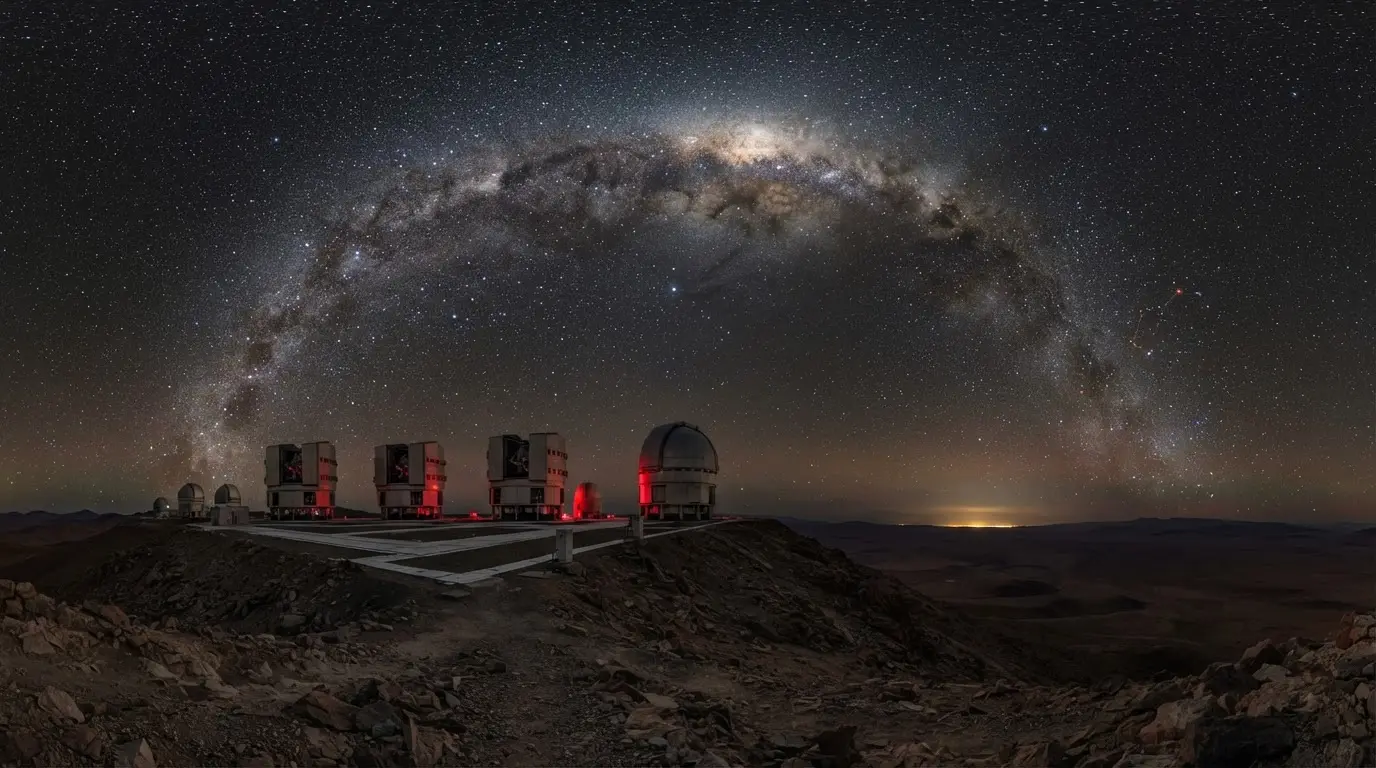
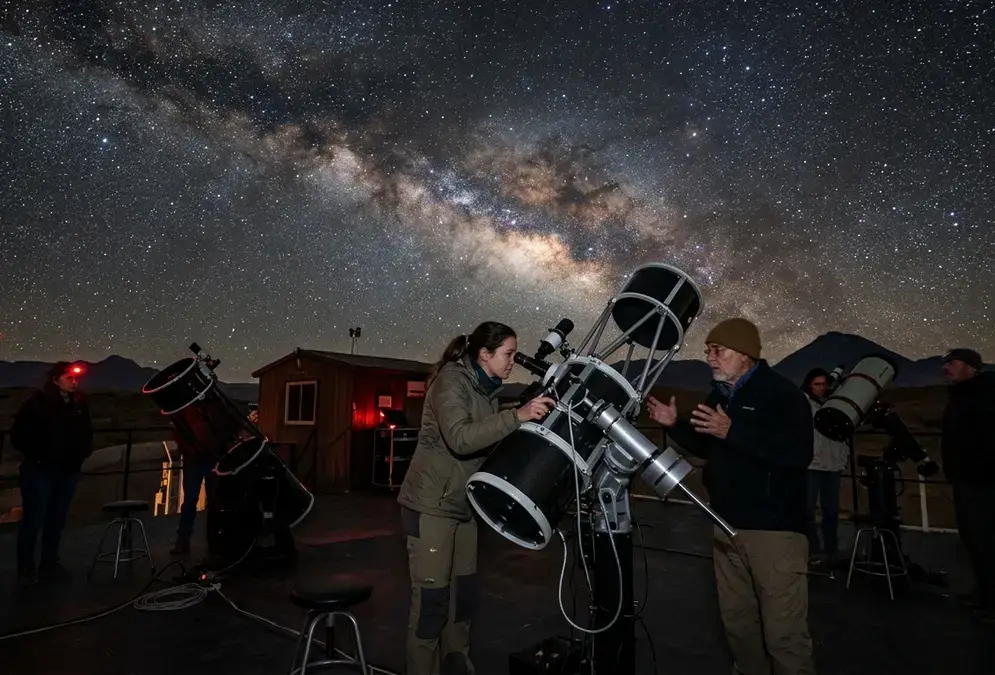
Atacama Stargazing & Astronomy Tour
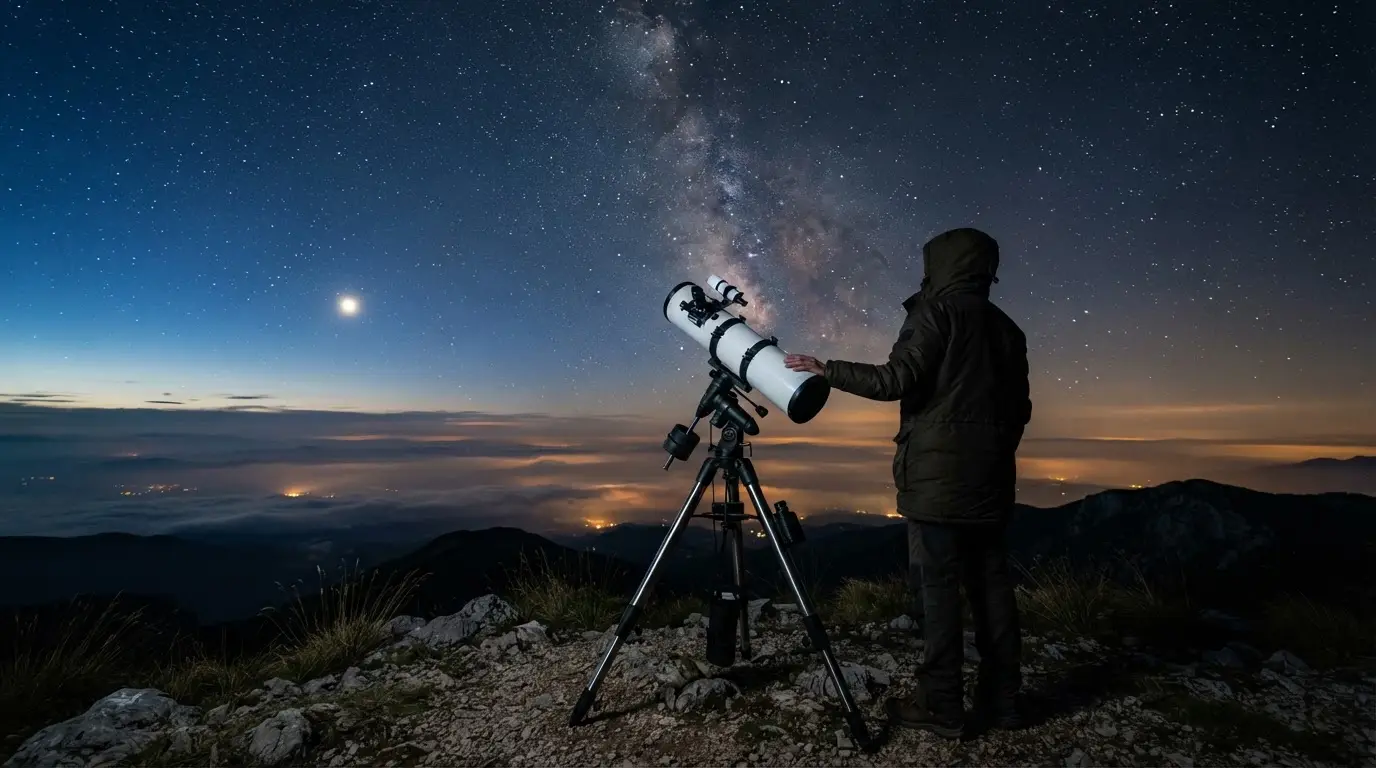
Evening telescope session under the world's clearest skies. Book near new moon, avoid full moon. SPACE Observatory, San Pedro de Atacama — CLP 45,000.
Earth's driest desert delivers Bortle 1–2 skies, 330+ clear nights a year, and the galactic core almost overhead. Guide: tours, lodges, season, getting there.
Photo tour of the lodges, night-sky trips, and guides for this destination.
Best best overall
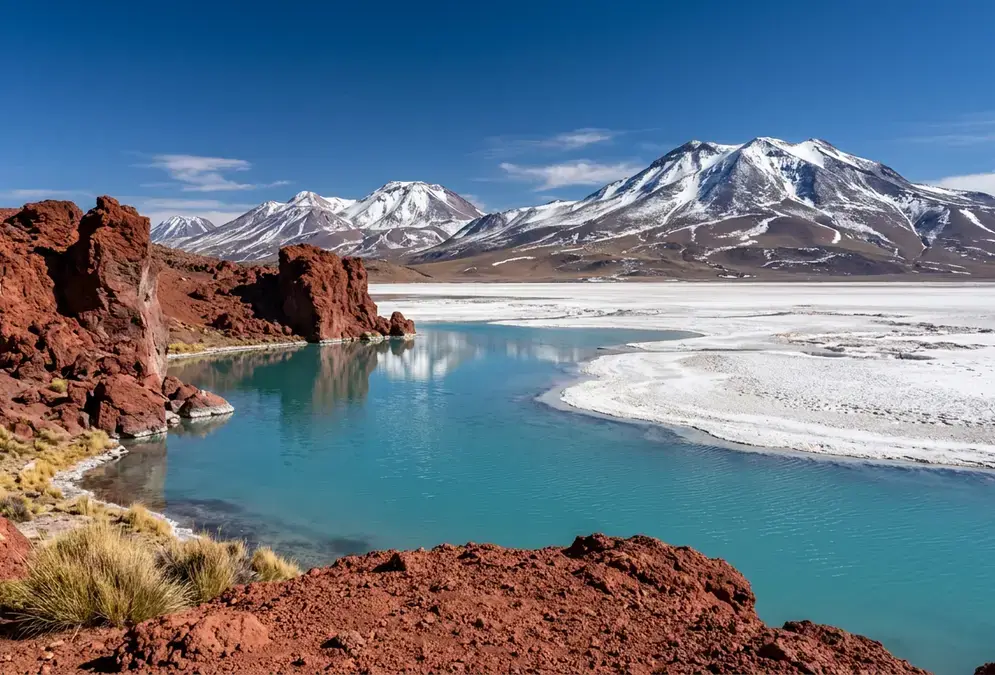
Full-day 4WD tour from San Pedro to Piedras Rojas (4,200 m) and Lagunas Miscanti and Miñiques — flamingos, coloured rocks, altitude acclimatization required.
DarkSky International certifies 250+ places worldwide. Here are 12 best dark sky parks ranked by continent, with tiers, seasons, and moon-phase timing.
Real answers about stargazing at Aoraki Mackenzie: best season, what's visible in the southern sky, tour prices, night-time cold, and Gold Tier status.
Best best boutique observatory
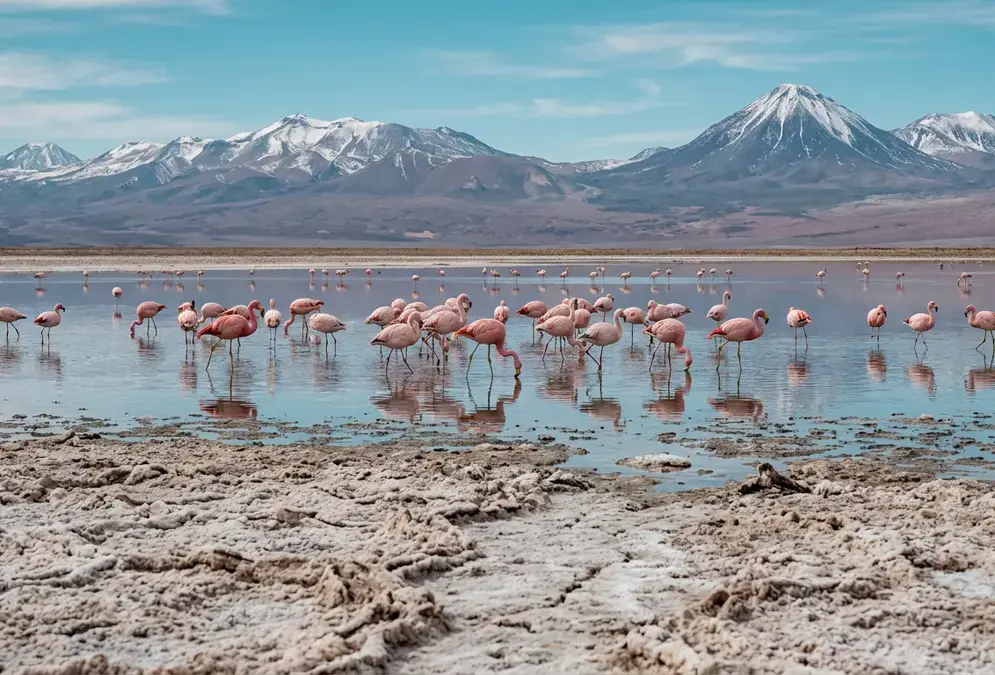
Half-day tour to Salar de Atacama and Laguna Chaxa, where three flamingo species forage in mineral-rich pools just 60 km south of San Pedro de Atacama.
Four Atacama lodges ranked for stargazing: dark-sky access, on-site telescopes, and value. From all-inclusive luxury to budget — use this to pick yours.
Two galaxies, a circumpolar cross and the galaxy's brightest core: the objects only visible from Aoraki Mackenzie's Gold Tier sky, and when to see them.
Weighing it against somewhere else? NamibRand vs Atacama Stargazing: How to Choose
Bortle 1 sky
What the Bortle scale meansThe Milky Way casts a faint shadow. Zodiacal light and airglow are obvious.
This destination rates Bortle 1 on the 9-level Bortle dark-sky scale, where 1 is a pristine dark sky and 9 is an inner-city sky. The Milky Way casts a faint shadow. Zodiacal light and airglow are obvious.
On this page
Updated
San Pedro de Atacama sits at 2,443 m in the Antofagasta Region of northern Chile, surrounded by one of the driest landscapes on Earth. The Atacama receives virtually no rain — some plateaus record zero precipitation over multi-year periods — and that extraordinary aridity is what makes the sky here different from anywhere else a normal traveller can actually reach. No humidity means no light scatter. No clouds means 330+ usable nights per year. The sky above rural sites 10–15 km out is rated Bortle 1–2, and naked-eye limiting magnitude reaches 7.5–8.0 around new moon under optimal conditions.
Computed for Atacama Desert at 23°S. Updates nightly.
First quarter tonight, 36% illuminated
Next new moon August 12. The nights either side of it are the darkest of the month.
About 10 hours of astronomical darkness tonight
The sun drops more than 18 degrees below the horizon, so the sky gets genuinely dark for deep-sky viewing at 23°S.
Hours of astronomical darkness by month at Atacama Desert: January 8 hours, February 8 hours, March 9 hours, April 10 hours, May 10 hours, June 11 hours, July 11 hours, August 10 hours, September 10 hours, October 9 hours, November 8 hours, December 8 hours.
Southern Delta Aquariids active now
Peaks July 28. Up to 20 meteors per hour at maximum. A steady southern shower that overlaps the early Perseid build-up.
Where to go stargazing in July
Four things rarely coincide: extreme dryness, high altitude, a Southern Hemisphere latitude where the Milky Way's galactic core passes nearly overhead, and enough tourist infrastructure that you can get here, sleep well, and book a guided session. The Atacama has all four.
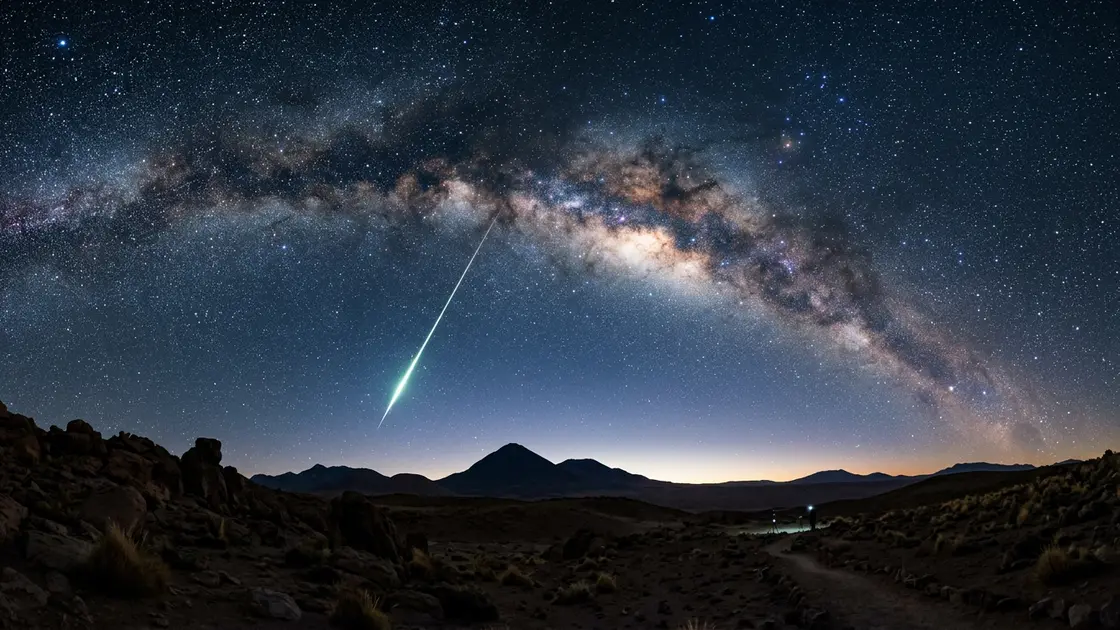
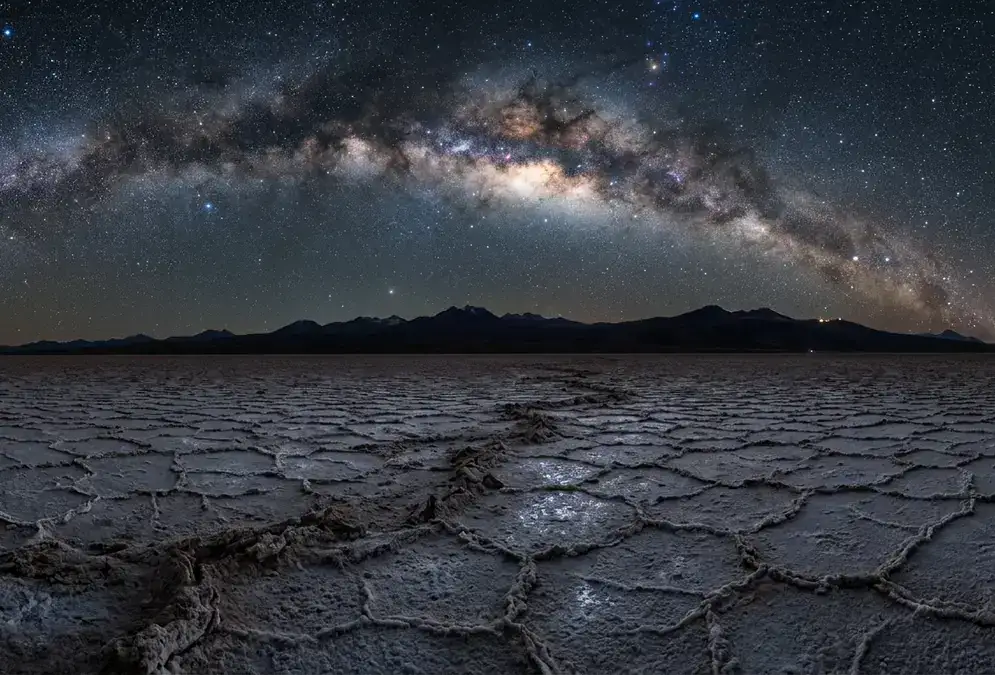
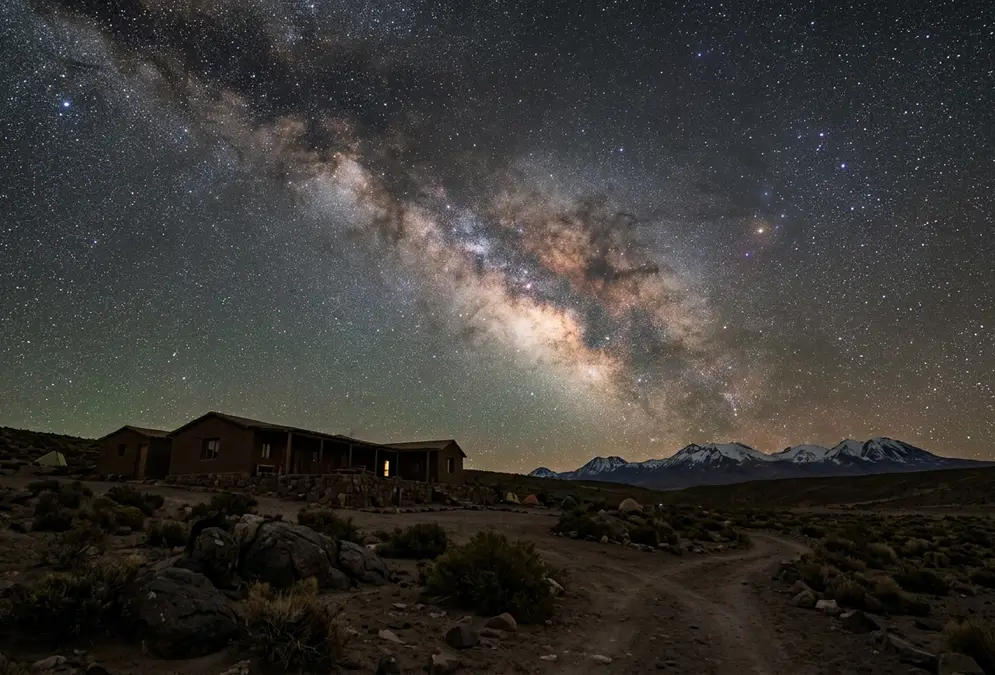
The galactic bulge in Sagittarius transits at roughly 60–70 degrees above the horizon from ~23°S — far higher than it ever climbs from Europe or North America, where it skims the southern horizon and rarely clears the murk. During peak Milky Way season the galactic arm is bright enough to cast faint shadows on the salt pan. European Southern Observatory chose the Atacama plateau for ALMA and the Very Large Telescope at Paranal for the same atmospheric reasons: precipitable water vapour drops below 1 mm on the best nights at altitude — low enough for infrared wavelengths to pass through cleanly. The desert's stable laminar airflow keeps atmospheric turbulence minimal, giving astronomical seeing conditions that outperform La Palma or Mauna Kea on clear nights.
Sky transparency here is not a figure of speech. Professional and amateur astronomy share the same real estate on the Chajnantor plateau, and that tells you everything about the conditions. In 2024, the University of Tokyo opened the TAO telescope (Cerro Chajnantor, ~5,640 m), currently the highest observatory on Earth. It is a research facility, not open to visitors, but its location on the same plateau as ALMA makes the point: this is where the planet's best infrared windows happen to be.
May through August is the prime window: galactic core at its highest, sky transparency at its best, near-zero precipitation. June and July are the coldest months, with pre-dawn temperatures at town level dropping to near freezing (0.3°C average low in June). Dress for it.
April and September are a useful compromise — still excellent skies, nights around 4–5°C. January and February carry real weather risk from the Bolivian winter, a seasonal moisture incursion from the Bolivian altiplano that can bring afternoon cloud cover and occasional evening thunderstorms. Even then most nights clear partially, but it is the main weather gamble for Atacama stargazing.
The moon's phase matters as much as the calendar month. A full moon raises sky brightness roughly 100-fold, washing out faint deep-sky objects and the Milky Way structure. Book within five nights of a new moon window for peak conditions — several observatory operators publish monthly lunar calendars, and the Atacama new moon calendar covers the tradeoffs month by month.
The peak window for Atacama stargazing is May through August, when the galactic core transits high overhead and clear-night probability tops 90%. April and September offer a warmer compromise with still-excellent conditions. January and February carry more cloud risk from the Bolivian winter, though most mornings stay clear even then.
Going in April? See what else the sky offers that month
The southern celestial hemisphere unlocks targets impossible from Europe or North America. The Large and Small Magellanic Clouds — two satellite galaxies of the Milky Way — are visible to the naked eye. Omega Centauri, the sky's largest globular cluster, Eta Carinae Nebula, the Jewel Box open cluster, and the Coal Sack dark-nebula constellation are all accessible. Crux (the Southern Cross) is circumpolar from ~23°S, meaning it never sets, and reaches a maximum altitude of roughly 45° above the horizon.
The Atacama is also one of the best places on Earth to learn Andean sky traditions. The Likan Antai people — the original inhabitants of the San Pedro area, who speak Kunza — mapped the sky through the dark dust lanes of the Milky Way, not just the bright stars. The Yakana, the dark-nebula llama constellation, stretches between the Southern Cross and Scorpio; her eyes are Alpha and Beta Centauri. These dark-nebula constellation figures require a dark sky to see at all. From San Pedro's latitude with the Milky Way nearly overhead, they are unmissable around new moon. The Ahlarkapin observatory specialises in exactly these Atacameño sky traditions.
The town has a cluster of commercial observatories that serve travellers directly. SPACE Observatory (roughly 10 km from San Pedro) runs 2–3 hour guided sessions with 16-inch and 12-inch reflectors, covering southern constellations, the Magellanic Clouds, and deep-sky objects. Sessions run approximately USD 50–90 — verify current rates on operator sites before booking. Atacama Lodge Observatory and Ahlarkapin offer separate programmes; Ahlarkapin is distinctive for its focus on Likan Antai astronomical traditions and the dark-nebula sky figures that the Kunza name Yakana.
For first-time visitors: one or two guided nights with a commercial observatory, then independent time on darker ground outside town, is the practical combination. A 12–16 inch reflector already cooled and aligned on a clear Atacama night is a different experience from squinting at a phone app.
ALMA, the world's largest radio telescope array operating at 5,000 m on the Chajnantor plateau, has suspended public visits as of mid-2026 with no announced reopening date. Check almaobservatory.org for current status before adding it to your itinerary — it remains the scientific infrastructure that makes the Atacama the premier radio-astronomy site on Earth, but right now it is not accessible to visitors.
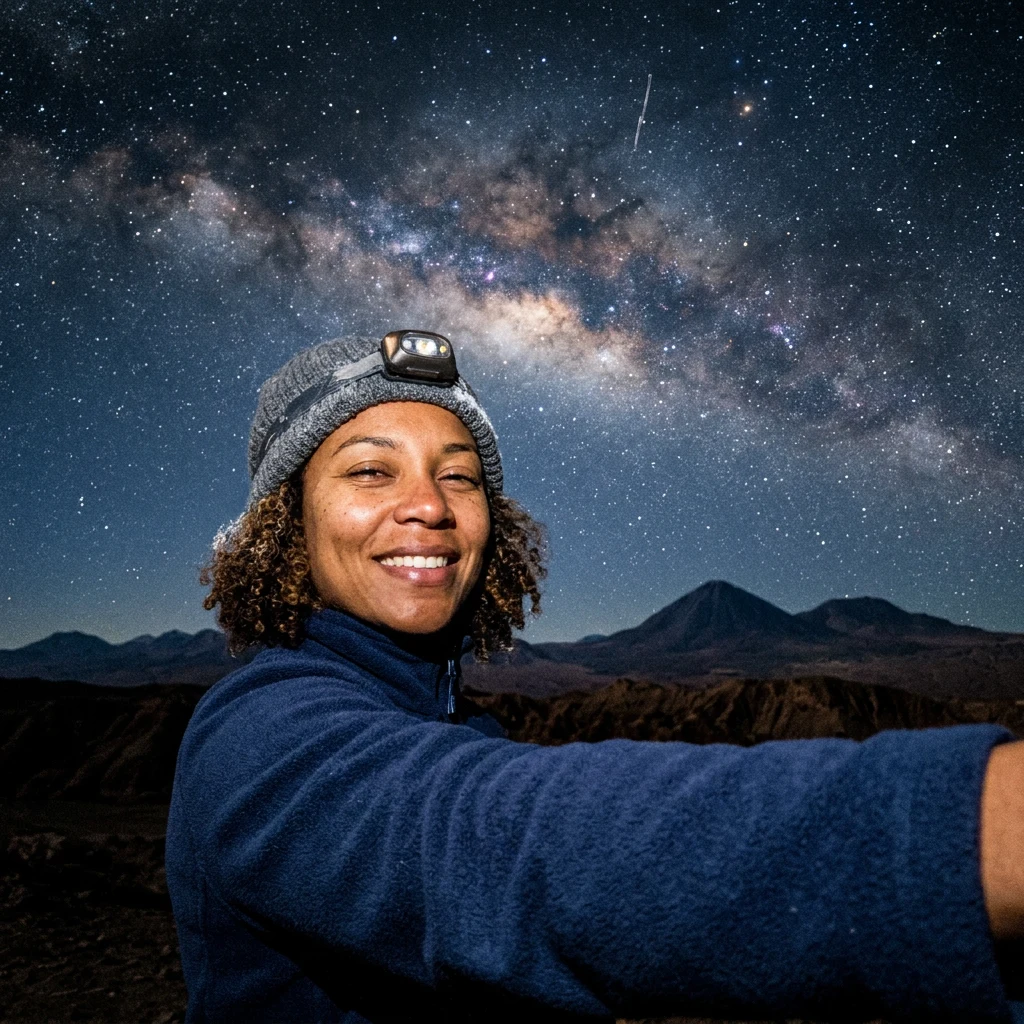
Evening telescope session under the world's clearest skies. Book near new moon, avoid full moon. SPACE Observatory, San Pedro de Atacama — CLP 45,000.
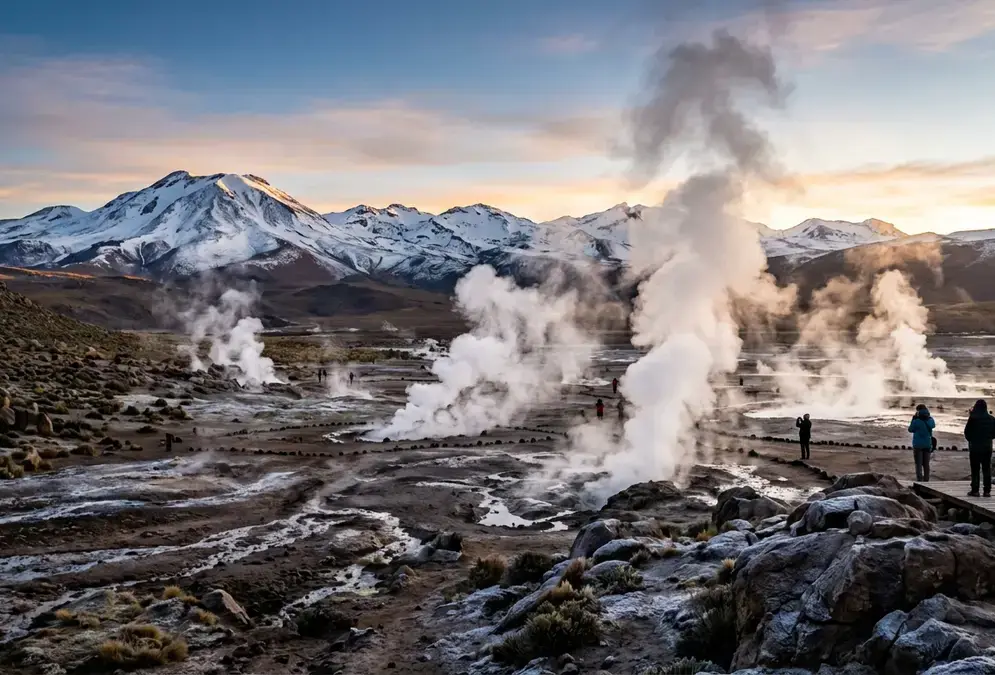
Pre-dawn tour to El Tatio, the Southern Hemisphere's largest geyser field at 4,300 m. Steam columns peak at -5°C. Acclimatize first — altitude is serious.
Float on Laguna Cejar's hypersaline brine inside Reserva Los Flamencos, 14 km from San Pedro. Three stops: Ojos del Salar, the float, flamingos at Tebinquinche.
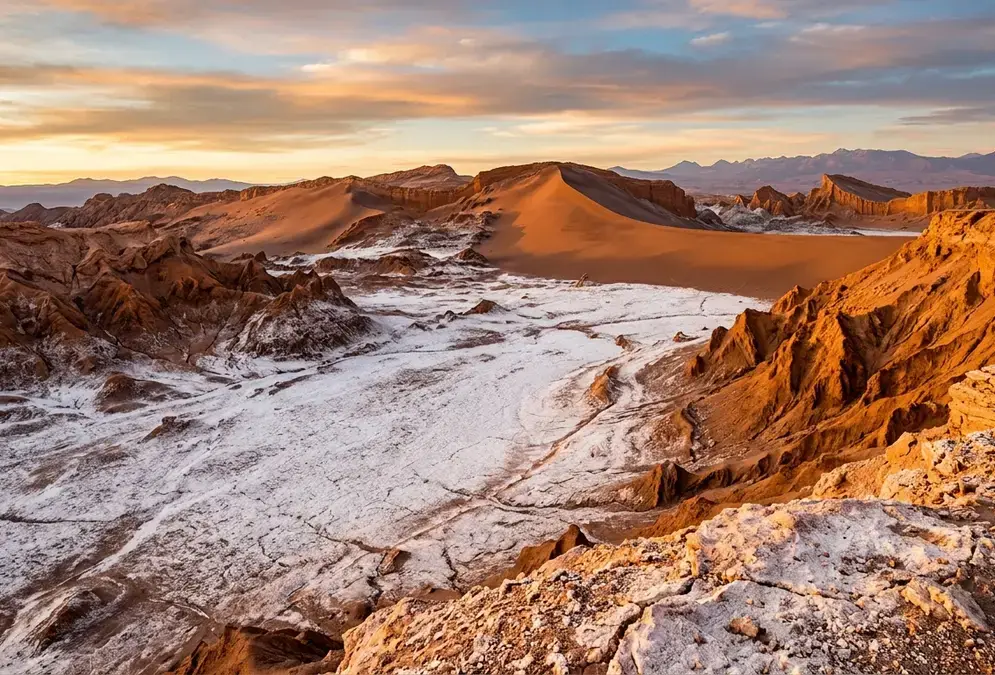
Afternoon tour through Valle de la Luna's salt canyons and dunes, ending at Duna Mayor for sunset. 4 hours, easy. Pairs with an Atacama stargazing night.
Fly Santiago (SCL) to Calama (CJC) — about two hours, operated by LATAM and SKY Airline with roughly 10 daily departures. From Calama airport, take a shared shuttle to San Pedro: 100.5 km on Route 23, approximately 1 hour 10 minutes. Shared shuttles run approximately USD 12–15 per person (confirm current fares locally).
Altitude hits immediately. Calama sits at 2,260 m, San Pedro at 2,443 m, and there is no low-altitude buffer on arrival. Rest on Day 1, hydrate aggressively, skip alcohol, and resist the urge to book El Tatio for your first morning. That excursion climbs to 4,300 m and departs at 04:00 in the cold and dark — schedule it for Day 3 at the earliest. Four or five nights is the practical minimum for a stargazing-focused trip: one night for acclimatisation, two or three astrotourism sessions ideally straddling a new moon, and the main day excursions — Valle de la Luna, El Tatio Geysers, and the altiplanic lagoons circuit.
Tap a pin to open the lodge, tour, or destination page.
Best season
May–August for peak galactic core visibility and minimum humidity; April and September for warmer nights with still-excellent skies
Quietest hours
Post-midnight when day-trippers have gone; observatory tours typically run 21:00–midnight
Visit duration
4–5 nights minimum for a stargazing-focused trip; 6–7 nights if combining full day-excursion circuit
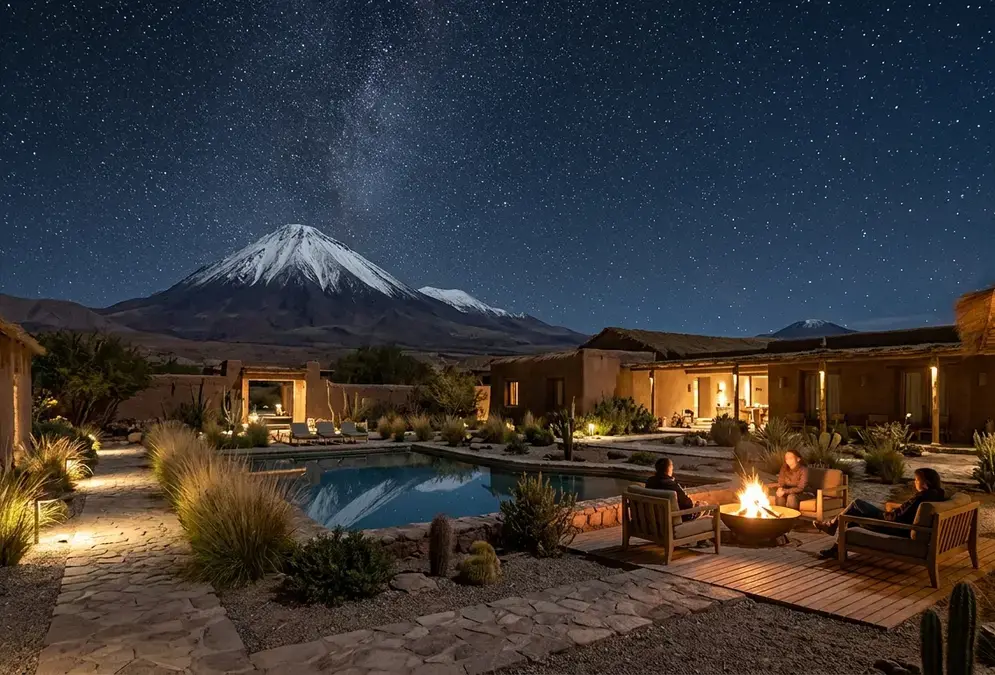
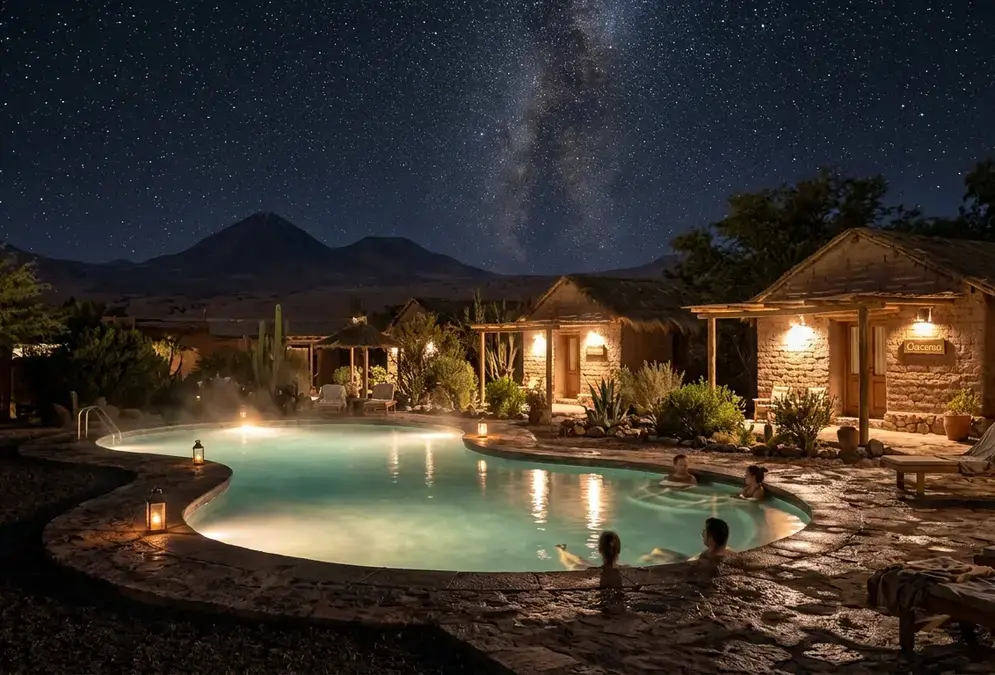
Options range from backpacker hostels in the village to lodge properties with private observatories overlooking the salt flat. Explora Atacama and Tierra Atacama are the benchmark luxury properties; Nayara Alto Atacama sits at the upper-mid tier with a strong in-house stargazing programme. See the complete guide to Atacama stargazing lodges for ranked recommendations across price ranges.
If you are unsure how many nights to book, read how many days in the Atacama before committing. For seasonal planning, the best time to visit the Atacama for stargazing covers month-by-month tradeoffs in detail.
Best best newly renovated
Reopened April 2025; astronomy is guided excursions, not a telescope programme
Best best on a budget
Room-only from ~USD 200-400/night; book SPACE Observatory separately
Reporter notebook
The calendar month matters less than the lunar phase. A June trip on a full moon will wash out the Milky Way almost completely; a March trip on a new moon will still show the galactic arm clearly. Check timeanddate.com for the new-moon date nearest your travel window and aim to be there within three to four nights either side. Several Atacama observatory operators publish monthly phase calendars — use them.
Stargazing means standing still for two to three hours. Even in September, when daytime highs reach 19°C, temperatures at observation sites can drop below 5°C after midnight. If your tour goes to a higher-altitude dark site, add another five degrees of cold. A thermal base layer, mid-layer fleece, and a proper down jacket are not optional — they are the difference between a memorable night and leaving early.
El Tatio sits at 4,300 m and the tour departs at 04:00 — combining maximum altitude, sleep deprivation, and cold in a single excursion. Many travellers underestimate this and end up sick or unable to enjoy the geysers. Give yourself two full nights at San Pedro's 2,443 m altitude before going higher. Your Day 2 acclimatisation is the most important investment you can make in the rest of the trip.
Further reading
The Eta Aquariid meteor shower peaks May 5-6, 2027, under a new moon, delivering up to 60 meteors an hour and often the Southern Hemisphere's best annual show.
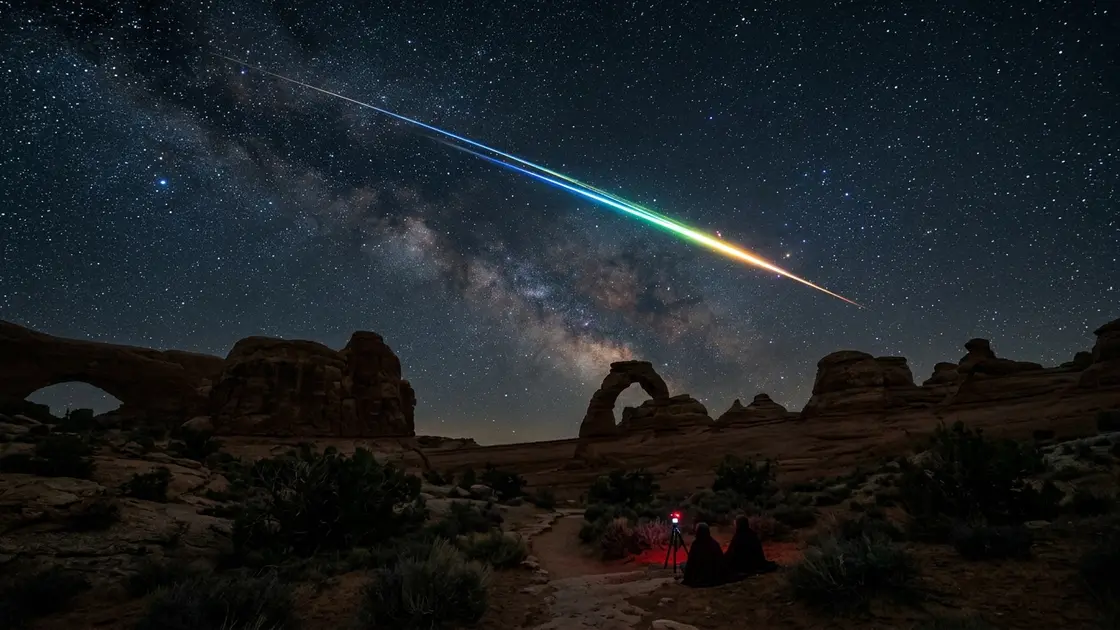
The 2026 Geminid meteor shower peaks December 13–14 under a waxing crescent moon, with up to 120 meteors an hour. Here's when to look up and where to watch.
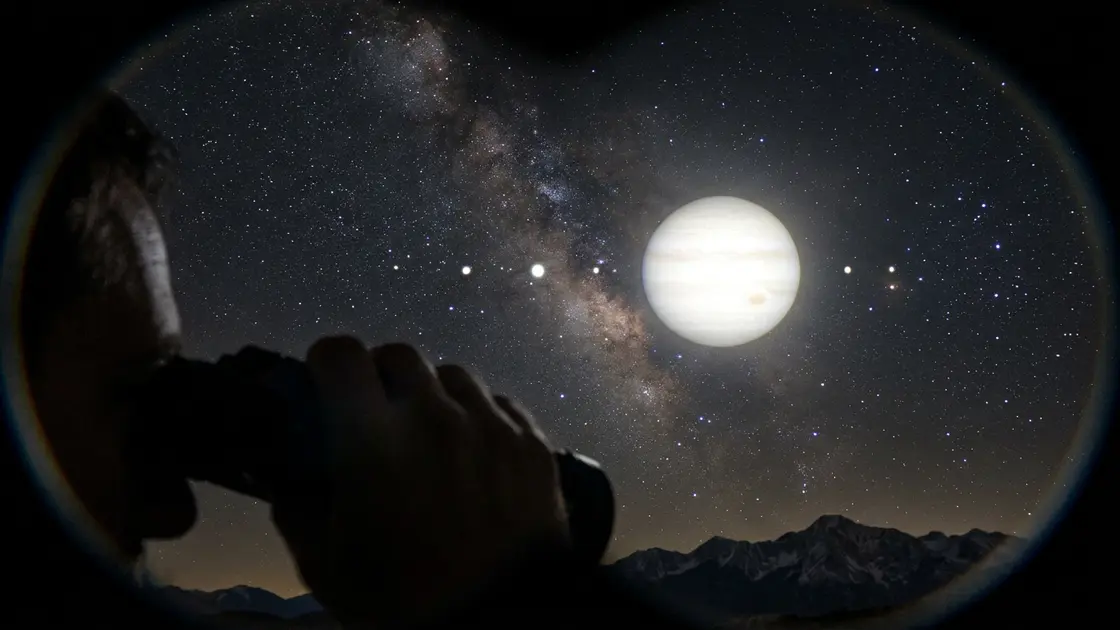
Jupiter opposition happens roughly every 13 months, when the planet rises at sunset, outshines every star, and its four Galilean moons appear in binoculars.
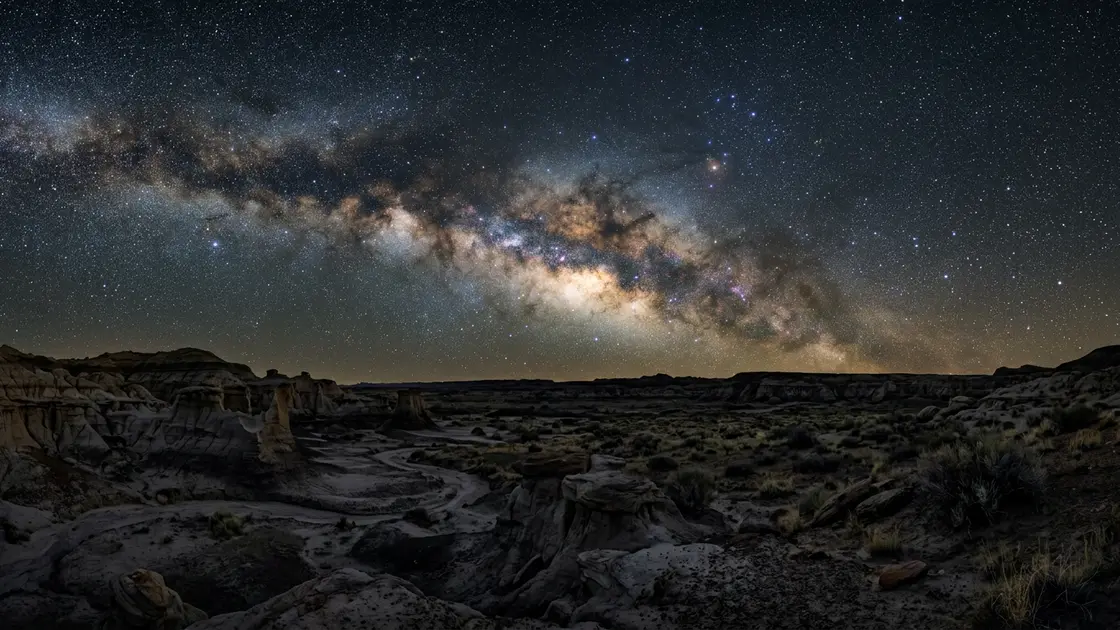
See the Milky Way's core February–October up north, January–November down south, timed right around new moon under Bortle 4 skies at four proven destinations.
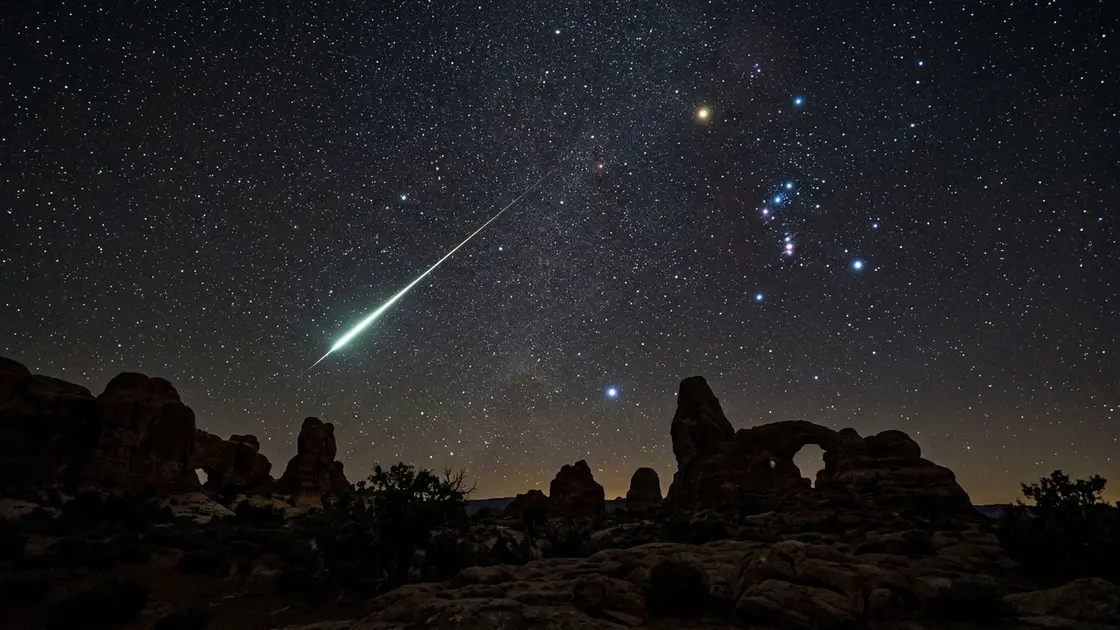
Watch up to 20 meteors an hour during October's Orionid shower, born from Halley's Comet debris. Peak nights Oct 21-22, 2026, best viewed just before dawn.
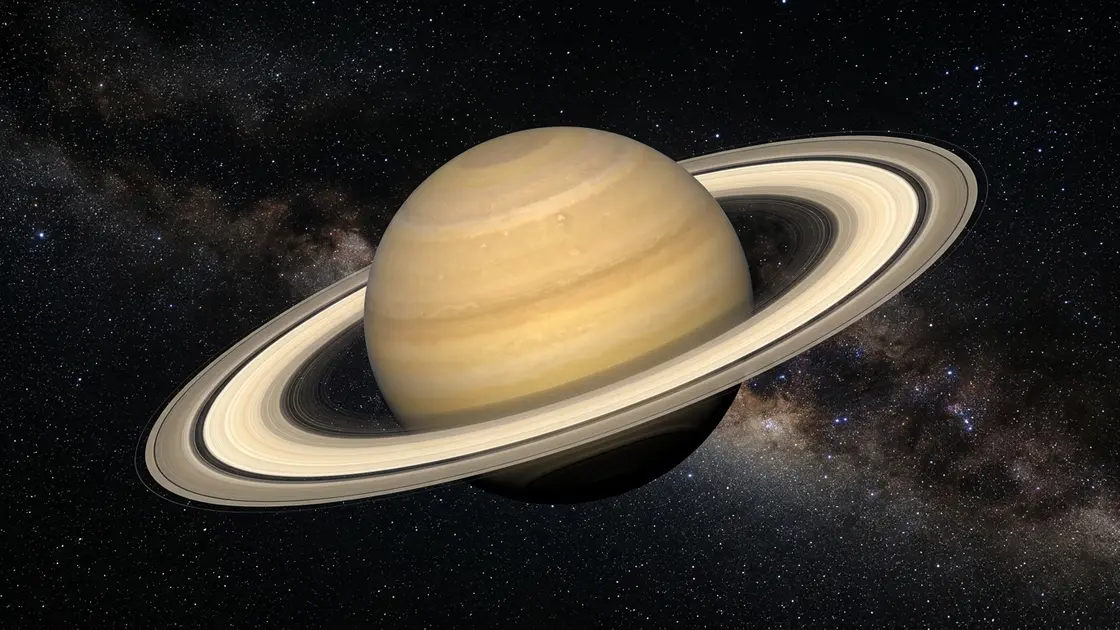
Saturn reaches opposition October 4, 2026, at magnitude 0.3 with rings tilted 7.5° south — naked-eye bright, and striking through even a small telescope.
New Zealand · Best Mar–Oct
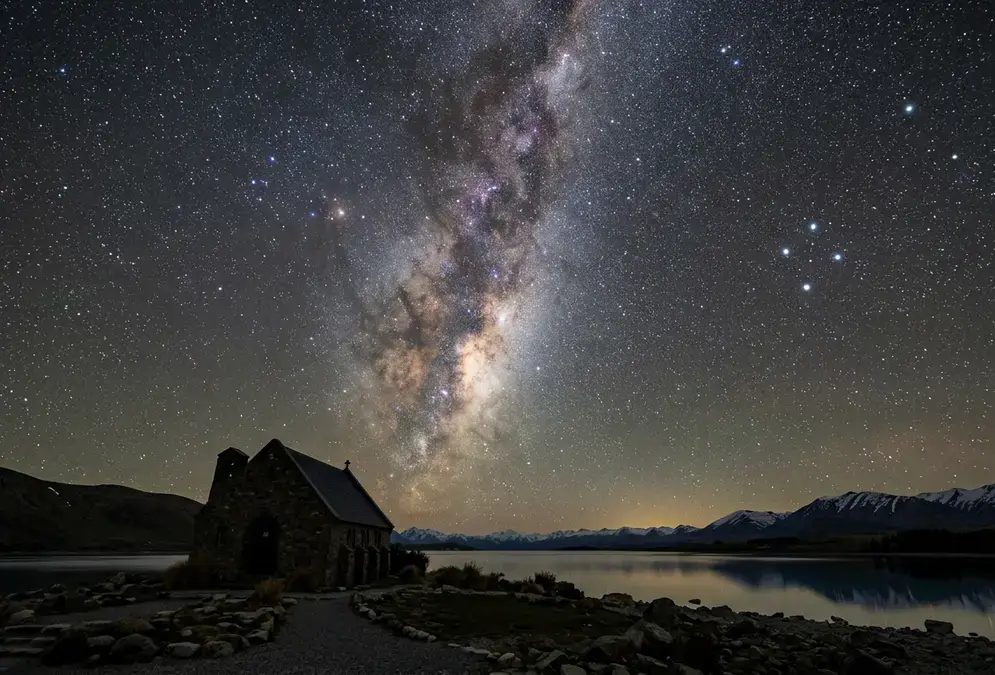
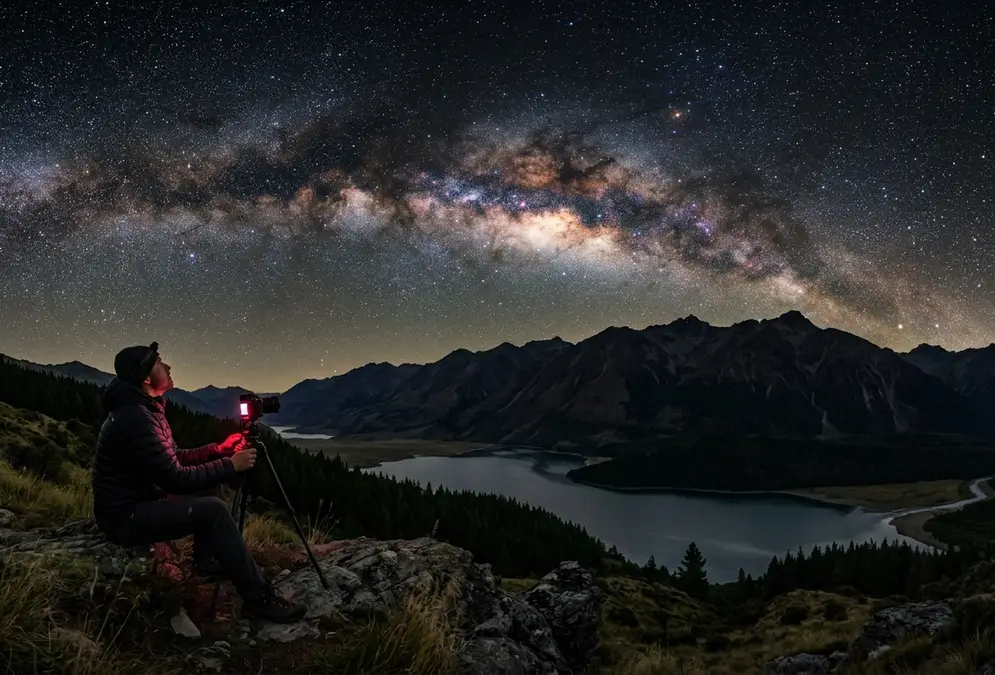
Aoraki Mackenzie is one of only four Gold Tier Dark Sky Reserves on Earth: Bortle 2 skies over Lake Tekapo, the Southern Cross, and Mount John Observatory tour.
Namibia · Best May–Oct
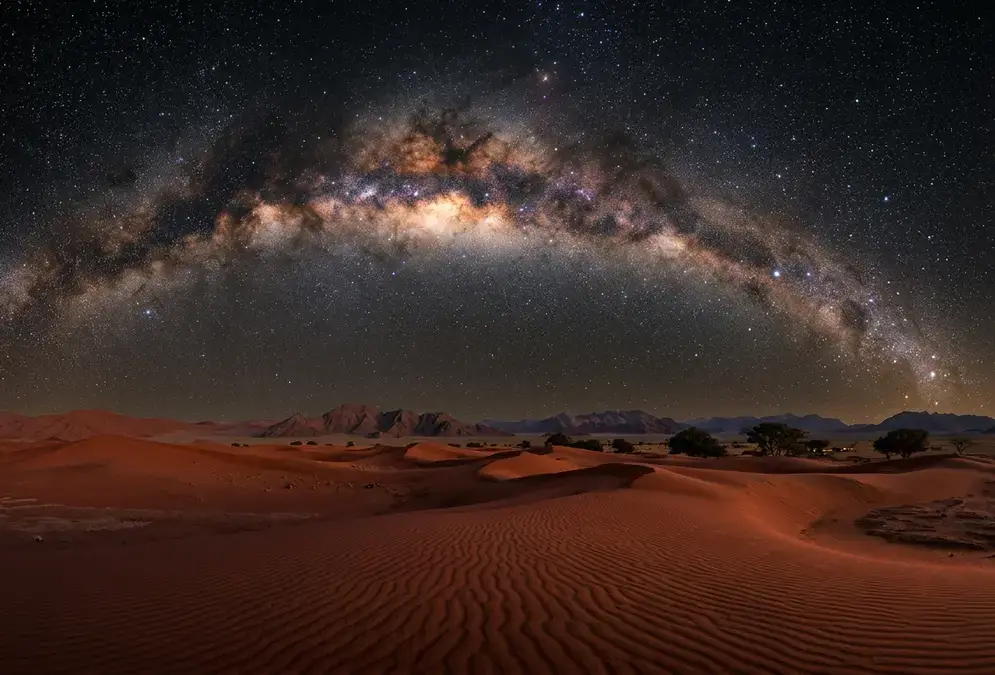
NamibRand is Africa's only Gold Tier Dark Sky Reserve: extreme Namib Desert isolation, the Southern Cross, Magellanic Clouds, and luxury safari lodges.
Australia · Best May-September (dry season, Southern Hemisphere winter)
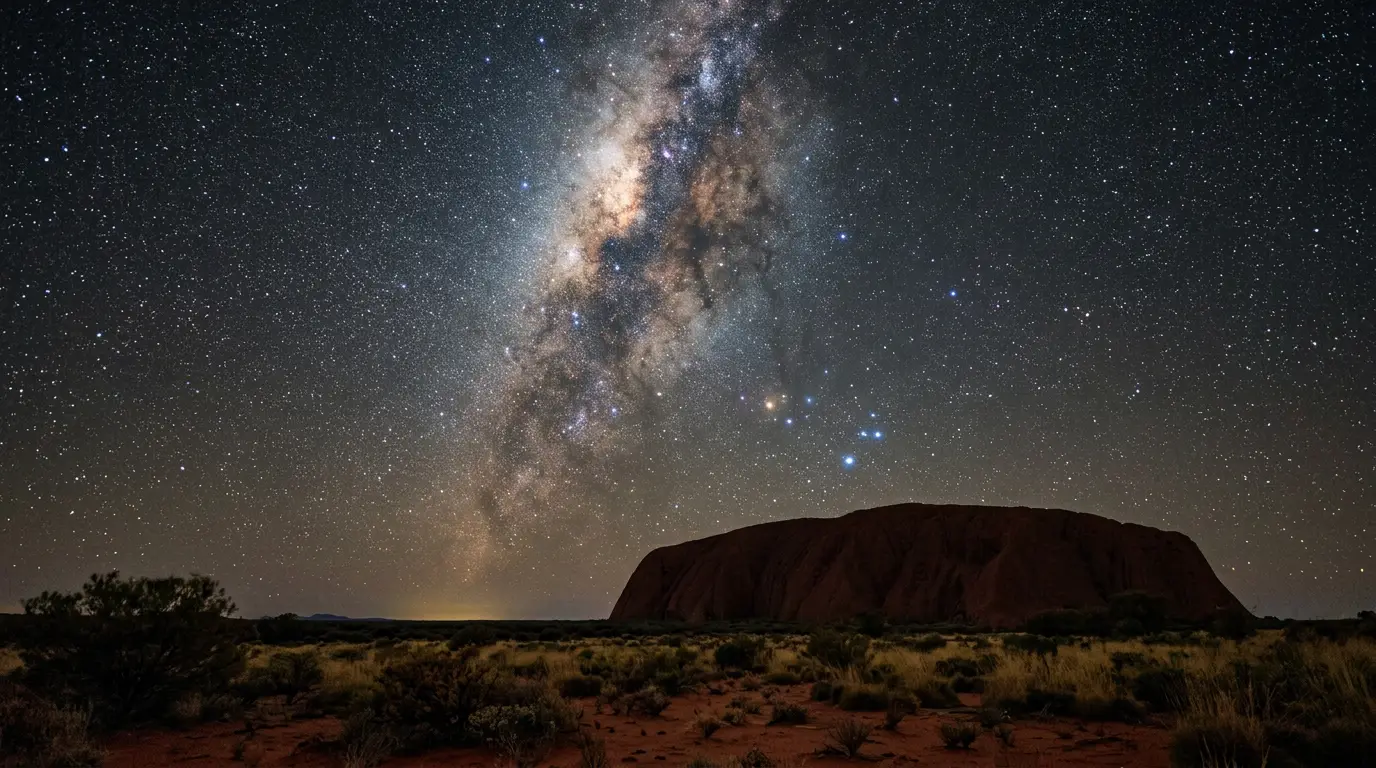
Stargaze at Uluru on Anangu-owned, jointly managed land: the Milky Way's core, Magellanic Clouds and Southern Cross over Australia's red-centre outback.