Once every 13 months or so, Earth swings between the Sun and Jupiter, and the biggest planet in the solar system spends a night parked directly opposite the Sun in our sky. That's opposition: Jupiter rises as the Sun sets, stays up all night, and sets again at dawn, reaching its brightest and largest apparent size of the year. The next one falls on February 10, 2027 across every US time zone (the exact moment is Feb 11 at 00:21 UTC, already Feb 10 evening from coast to coast, so international readers checking a UTC-based source will see Feb 11). Because the cycle repeats on a predictable clock, this page is built to stay useful past that date too, so if you're reading this well after February 2027, skip to the section on working out the next date yourself.
What "opposition" actually means
At opposition, Earth sits directly between the Sun and Jupiter, so from our vantage point the planet is opposite the Sun in the sky. That geometry is what makes the planet rise at sunset and set at sunrise, visible all night rather than ducking below the horizon early or hanging around only in the pre-dawn sky. It's also the point in Jupiter's orbit when the planet sits closest to Earth for that cycle, which is why brightness peaks here too: an apparent magnitude around −2.7, occasionally reaching −2.94 at the very best oppositions, bright enough to outshine every star and rival Venus for the title of most obvious thing in the night sky.
None of this requires special equipment to notice. Step outside on opposition night and Jupiter is the steady, non-twinkling "star" low in the east at dusk, climbing higher through the evening.
When Jupiter is next at opposition, and why the date keeps shifting
Jupiter reaches opposition on a 13-month cycle, not a clean 12, because Earth and Jupiter both keep moving during the year it takes Earth to lap the Sun. Earth's faster orbit needs an extra month or so to catch back up to the same alignment with a slower-moving Jupiter, which is why opposition drifts later on the calendar each time rather than landing on the same date annually.
Layered on top of that shorter cycle is a longer one: Jupiter takes roughly 12 years to complete a full orbit around the Sun, and that longer period means the specific calendar date of opposition creeps forward by about 4 to 7 days each time the 12-year cycle comes back around. So the exact date isn't fixed even from one 12-year loop to the next, it just shifts within a narrow window.
The practical upshot: after February 10, 2027, the next opposition lands roughly 13 months later, in March 2028, then April 2029, and so on, sliding later each year until the 12-year pattern resets. This page is checked and refreshed every November ahead of the following opposition, so treat the February 2027 date as the current confirmed one and the surrounding explanation as the part that keeps this page accurate long after.
What you'll actually see
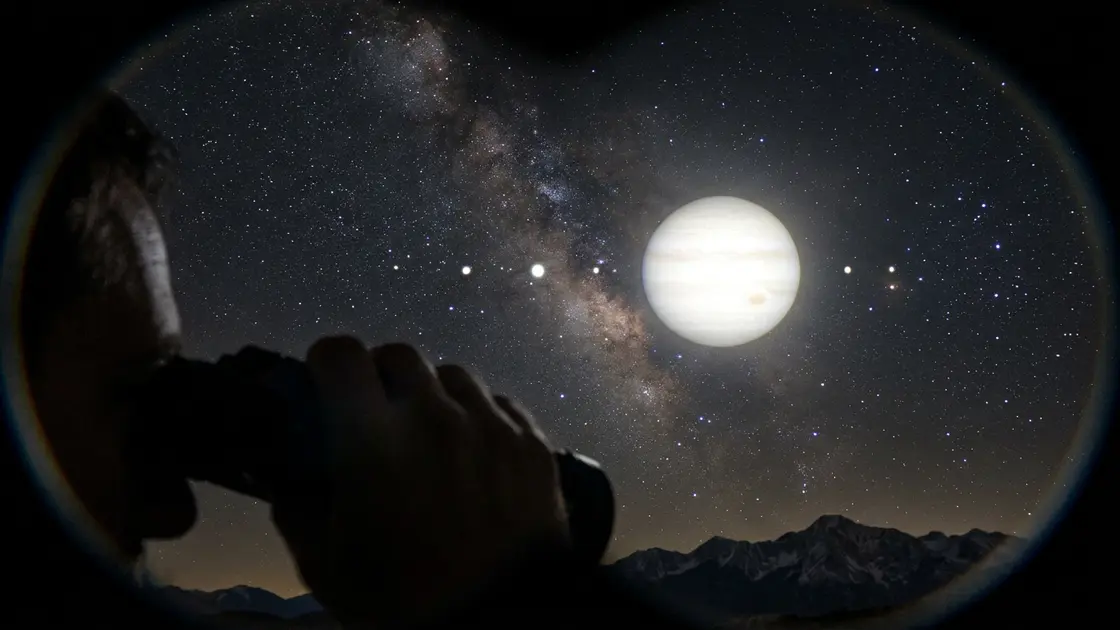
Jupiter itself needs no equipment: it's the brightest point of light in the sky that night, easy to pick out with the naked eye alone. Binoculars change the experience entirely. Through even a modest 7×50 or 10×50 pair, Jupiter's four largest moons, Io, Europa, Ganymede, and Callisto, often resolve as tiny pinpoints of light strung out in a rough line to either side of the planet's disk, though how many you catch on a given night depends on where each moon sits in its orbit. Most nights you'll pick out one or two easily; catching all four takes steady hands and a bit of luck with the timing. These are the Galilean moons, named for Galileo, who first spotted them in 1610 and used them as evidence that not everything in the sky orbits Earth.
A telescope adds a further layer of detail: Jupiter's banded clouds become visible as faint stripes across the disk, and the moons resolve as slightly more than pinpoints. None of this requires a big instrument. Because Jupiter is at its closest and brightest right around opposition, even a small backyard telescope shows more than it would on an ordinary night months away from opposition.
Gear: what you actually need
Binoculars alone are enough to turn Jupiter from a bright star-like dot into a small disk with visible moons, and that's the single biggest upgrade available for the smallest investment. A telescope brings the cloud bands into view but isn't required to enjoy opposition night. If you're deciding what to buy before this and future oppositions, the stargazing gear guide covers binocular and telescope basics for beginners, and the best telescope under $300 roundup is a reasonable starting budget for anyone who wants Jupiter's bands rather than just its moons.
Where to watch it: dark sky helps more than you'd think
Jupiter is bright enough to spot from a city balcony, but light pollution still costs you the fine detail: cloud bands wash out first, then the fainter of the four moons starts to disappear into the sky glow. A genuinely dark site doesn't change whether you can see Jupiter, it changes how much of it you can actually make out.
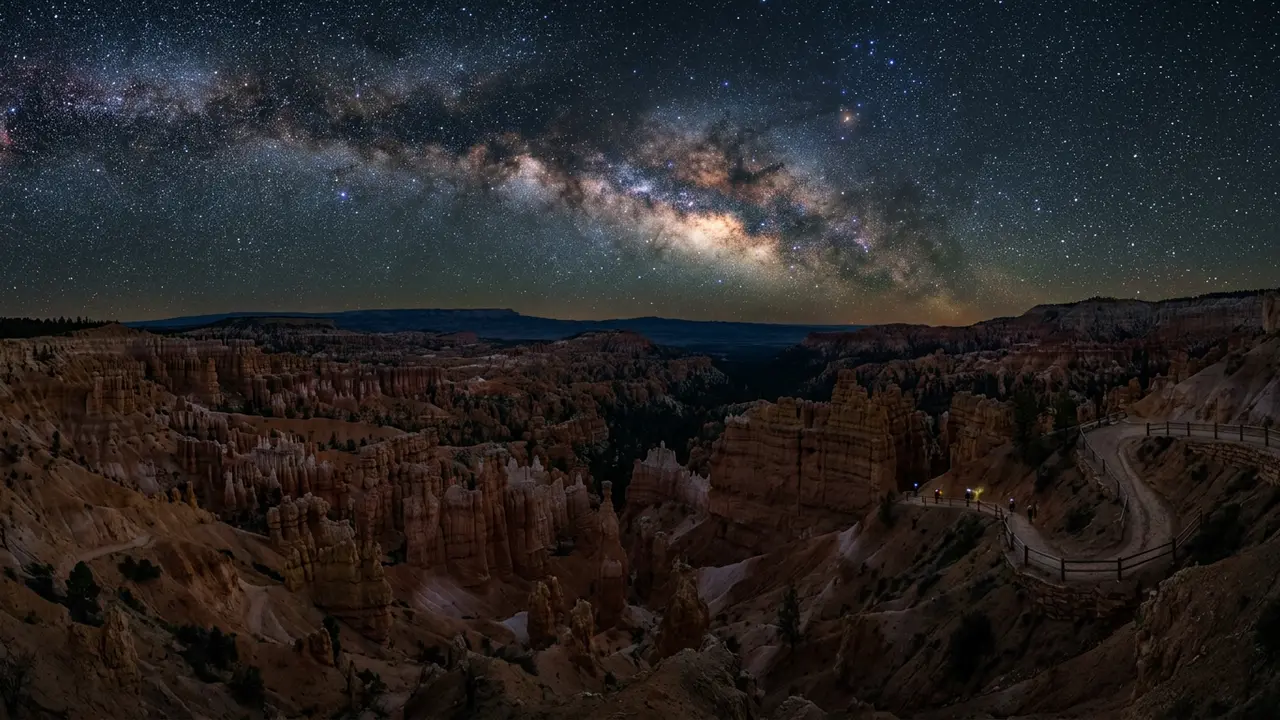
- Bryce Canyon, Utah — Gold-Tier certified skies and an easy drive-in from Las Vegas or Salt Lake City, good for a binocular or small-telescope session with no flight required.
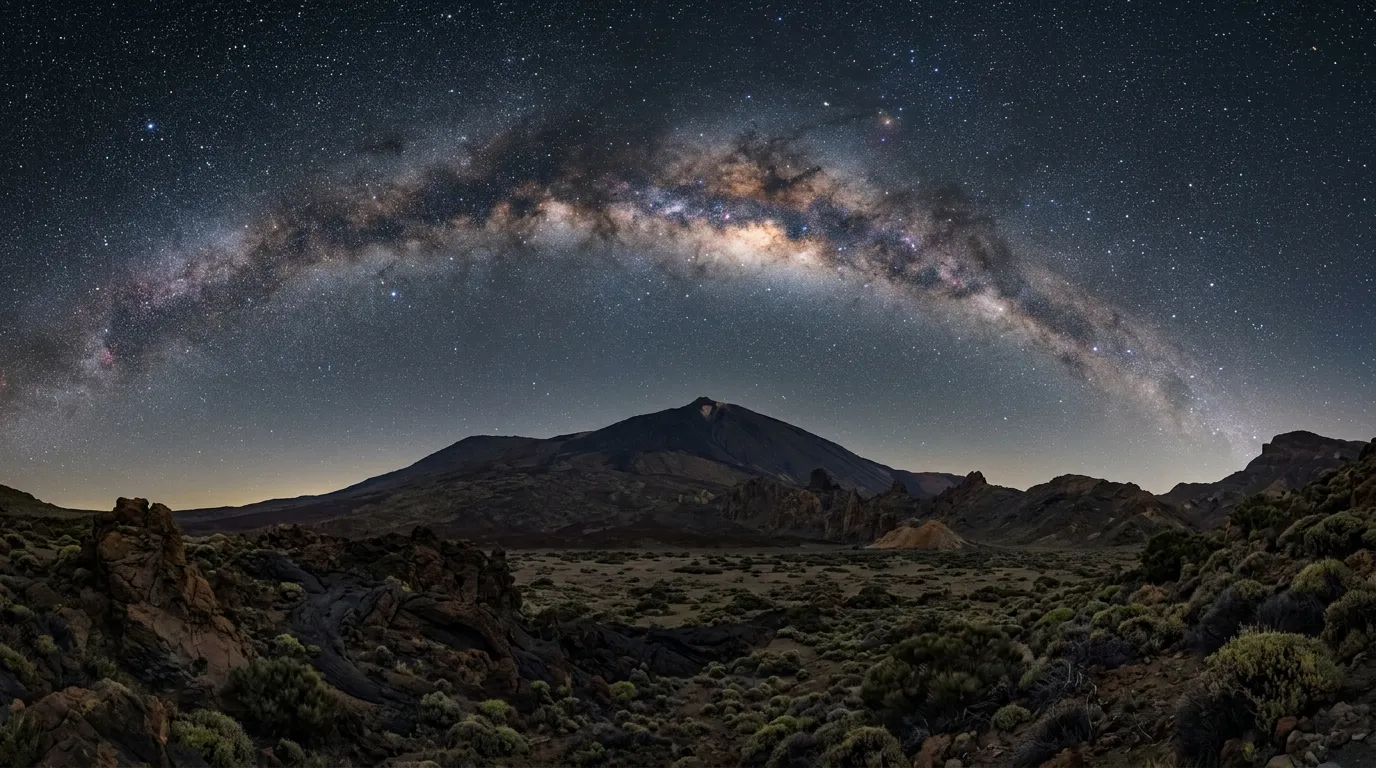
- Tenerife, Canary Islands — Bortle-2 skies at Teide National Park and a mature tour market if you'd rather borrow a telescope than pack one.
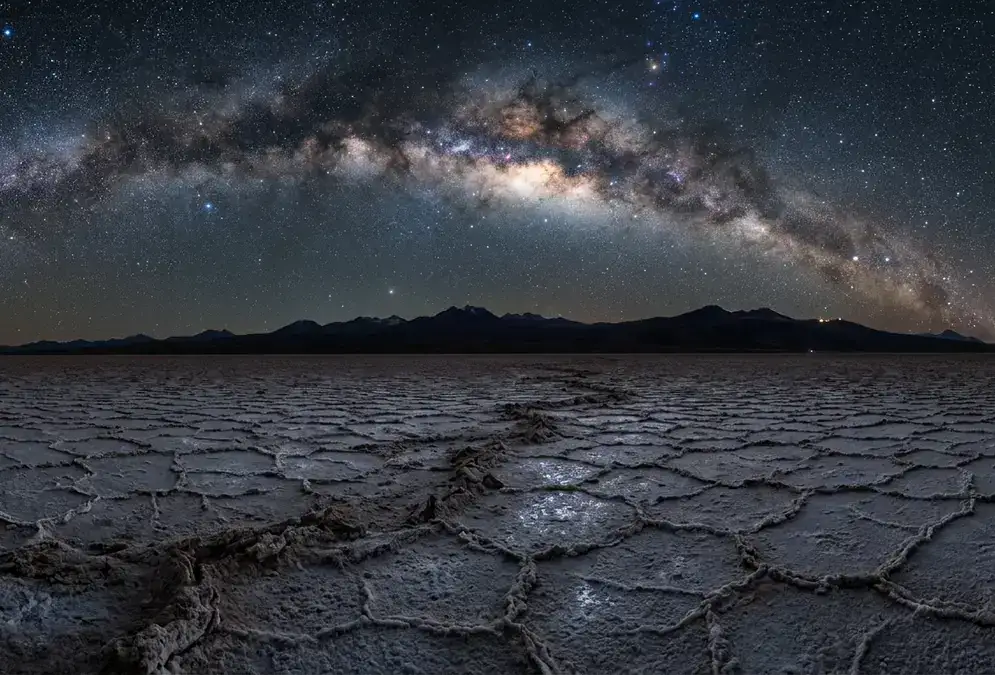
- Atacama Desert, Chile — some of the darkest, driest skies anywhere on Earth, where Jupiter's cloud bands show up with noticeably more contrast than from a hazier site.
None of these are Jupiter-specific destinations. Any of the dark-sky places covered on this site will show the same opposition night with less atmospheric haze and less sky glow than an average backyard, which matters more for the moons and bands than for spotting the planet itself.
Opposition doesn't need a special trip to be worth watching. It's a night you can step into your own backyard for, and the gear or the dark sky just decide how much of Jupiter you get to see once you're out there.