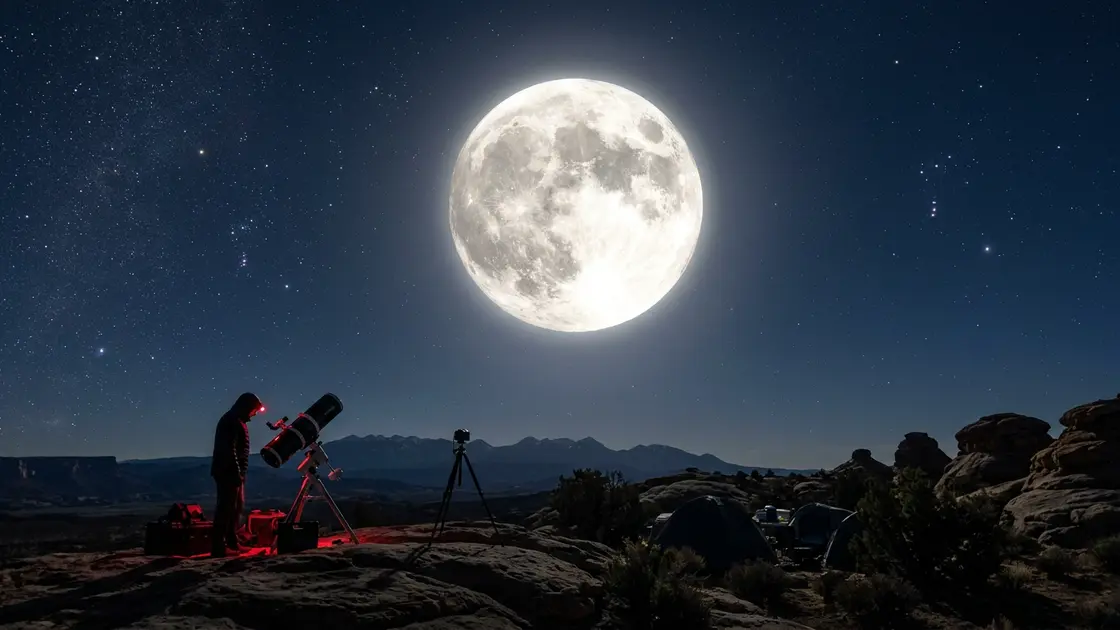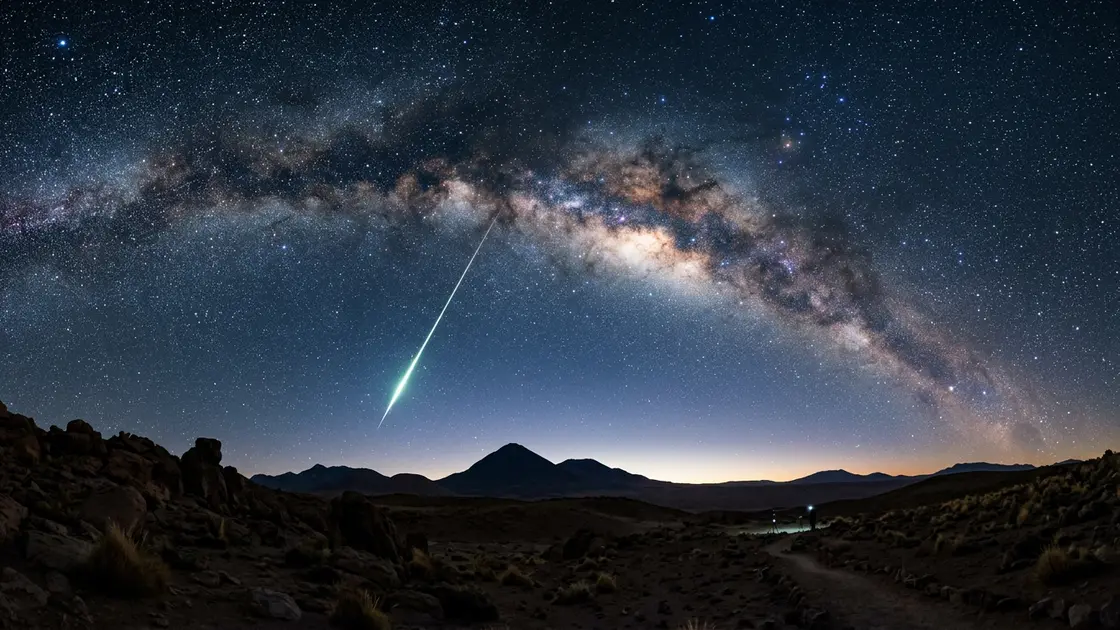
The Eta Aquariid meteor shower is Halley's Comet's spring calling card, and the 2027 edition lines up about as well as this shower ever gets for Southern Hemisphere skies. The peak arrives on the night of May 5-6, with the predicted maximum landing at 9:28 UTC on May 5. A new moon falls barely a day later, at 10:58 UTC on May 6, so the peak night runs almost moonless from dusk to dawn. Under a dark sky the zenithal hourly rate (ZHR) reaches up to 60 meteors an hour, though that number splits sharply by latitude: Northern Hemisphere observers typically see 20-30 an hour, while Southern Hemisphere skies routinely deliver 50 or more, one of the widest hemisphere gaps of any annual shower.
Peak night: May 5-6, 2027
The activity window runs April 19 through May 28, 2027, but the real show is a single pre-dawn stretch. With the peak pinned at 9:28 UTC on May 5, observers across the Americas and the Pacific are watching the night before that instant, while Europe, Africa, and Asia catch the hours just after it. In practice, both the mornings of May 5 and May 6 are worth being outside for, since the shower's broad peak doesn't collapse the moment the clock hits the forecast maximum. The radiant sits in the constellation Aquarius, close to the star Eta Aquarii, and it doesn't clear the horizon until after midnight. It keeps climbing through the night and reaches its highest point right as twilight begins, which is exactly why the last two or three hours before dawn are the only window worth setting an alarm for.
Why the Southern Hemisphere sees this shower best
Most meteor showers treat both hemispheres more or less equally. The Eta Aquariids don't. Because the radiant in Aquarius sits well south of the celestial equator, it climbs much higher into the pre-dawn sky for observers below the equator than it ever does north of it, and radiant altitude is the single biggest factor in how many meteors actually clear the horizon. That's the mechanical reason Southern Hemisphere counts run 50-plus an hour against 20-30 in the north, and it's also why this shower is often cited as the Southern Hemisphere's best annual meteor shower outright.
Where the Eta Aquariids come from
Every Eta Aquariid meteor is a grain of dust shed by Halley's Comet, officially 1P/Halley, on one of its past swings through the inner solar system. Halley seeds two showers a year: Earth crosses its debris trail in May for the Eta Aquariids and again in October for the Orionids, since the comet's orbit intersects Earth's path at two separate points. The two showers are easy to confuse since they share a parent body, but the geometry of each crossing is different, and May's version is the one built for southern skies. Halley itself returns to the inner solar system only every 75-76 years, its last close pass was 1986, its next isn't due until 2061, but the dust it already shed centuries ago keeps producing this shower every spring regardless. Chinese astronomers recorded meteor activity tied to this stream as far back as 839 CE, making it one of the longest continuously observed showers on record.
Earthgrazers and persistent trains
Eta Aquariid meteors move fast, among the quicker debris streams Earth crosses each year, and a high share of them leave persistent trains, glowing streaks of ionized gas that linger in the sky for a second or more after the meteor itself has burned out. The shower is also one of the more reliable sources of Earthgrazers: bright meteors that enter the atmosphere at a shallow angle and skim nearly horizontally across the sky rather than streaking straight down, producing some of the longest, slowest-looking trails of any annual shower. Earthgrazers show up most often in the early part of the night, before the radiant has climbed very high, so it's worth glancing up even before the main pre-dawn window opens.
Best places to watch the 2027 Eta Aquariids
Given the Southern Hemisphere advantage baked into this shower's geometry, where you watch from matters more here than for most annual showers.
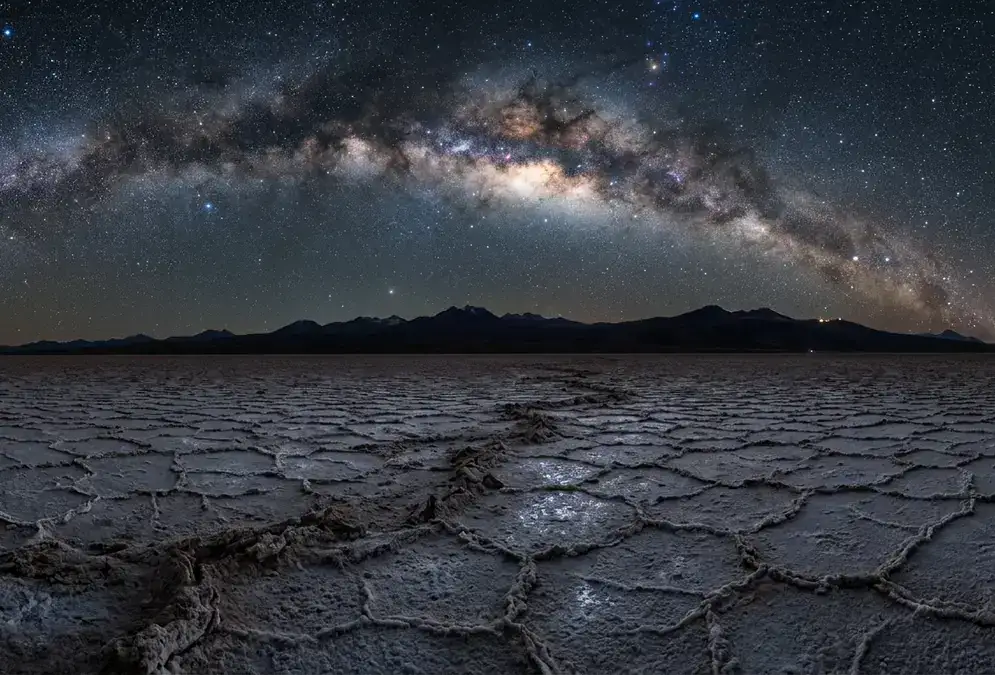
- Atacama Desert sits at roughly 23°S, squarely inside its dry-season window through May, with Bortle 1-2 skies that put almost nothing between the radiant and your eyes.
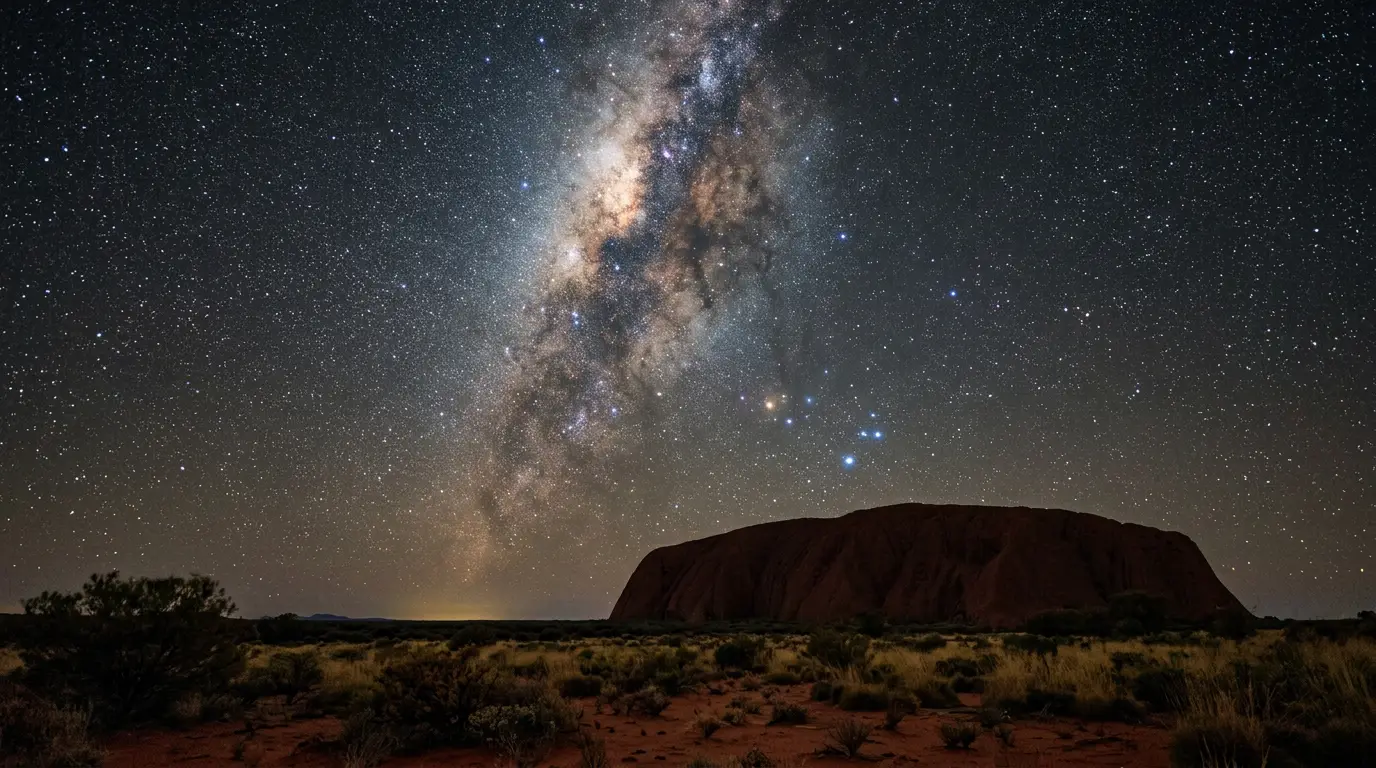
- Uluru falls within its own May-September dry season right as the shower peaks, and the nearest sizeable town sits roughly 470 km away, so the radiant climbs into a genuinely dark red-centre sky.
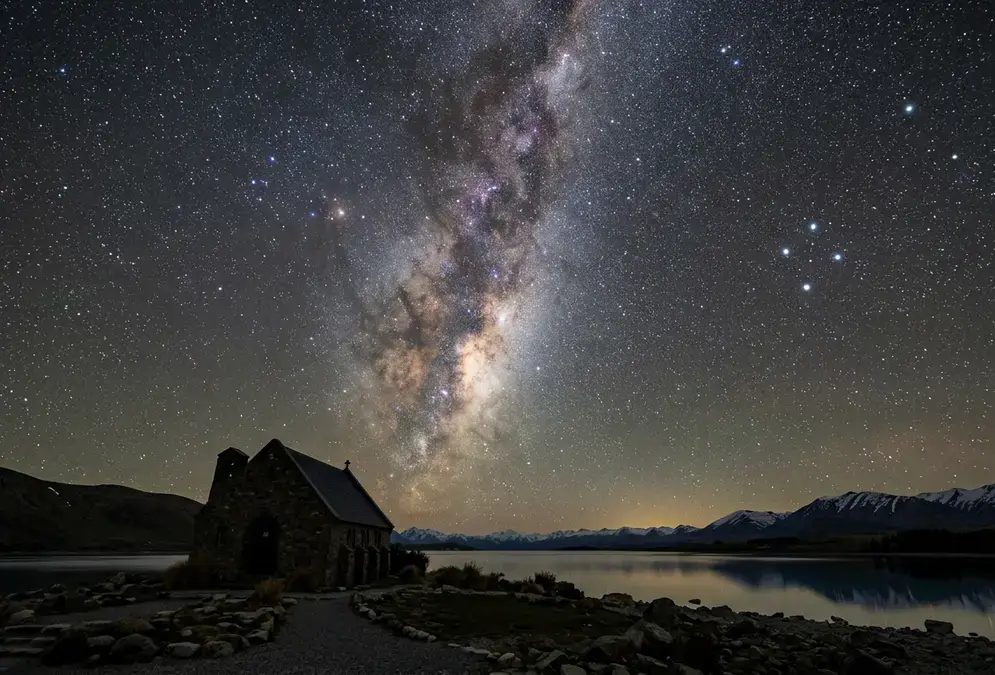
- Aoraki Mackenzie, one of only four Gold Tier Dark Sky Reserves on Earth, sits at 44°S, further south than either of the others, inside its own March-October viewing window, though its higher latitude trims a little of the radiant's altitude advantage compared to Atacama and Uluru.
Any of the three works for the May 5-6 peak. The deciding factor is usually a clear-sky forecast three or four days out, not which destination sits furthest south.
For the full-year meteor calendar, general viewing technique, and how the Eta Aquariids compare to the Perseids, Geminids, and the rest of the annual lineup, see the meteor showers guide.