Field of Light at Uluru
Bruce Munro's Field of Light at Uluru: what's included in the viewing-only and dinner packages, current pricing, run status through 2029, and how to book.
Stargaze at Uluru on Anangu-owned, jointly managed land: the Milky Way's core, Magellanic Clouds and Southern Cross over Australia's red-centre outback.
Photo tour of the lodges, night-sky trips, and guides for this destination.
Best best signature stargazing dinner
Four Ayers Rock Resort lodges ranked for stargazers: proximity to Uluru, signature dark-sky dinners, bookability, and price from AUD $185 to $1,377 a night.
Uluru's five viewing areas were built for sunrise and sunset, not deep-night stargazing. Here's where they work after dark, and the one licensed night tour.
Best best for serious stargazers
Ranked by Bortle darkness, clear-night odds, and galactic-core season: 14 places worldwide where the Milky Way is genuinely visible, from Atacama to Uluru.
Uluru's desert sky is dark almost year-round, but the park closes at night, and only one licensed tour gets you in when winter's cool, dry air is at its best.
Weighing it against somewhere else? Uluru vs Aoraki Mackenzie Stargazing: How to Choose
Bortle 2-3 sky
What the Bortle scale meansThe Milky Way is richly structured overhead; the Andromeda Galaxy is an easy naked-eye smudge.
This destination rates Bortle 2-3 on the 9-level Bortle dark-sky scale, where 1 is a pristine dark sky and 9 is an inner-city sky. The Milky Way is richly structured overhead; the Andromeda Galaxy is an easy naked-eye smudge.
On this page
Updated
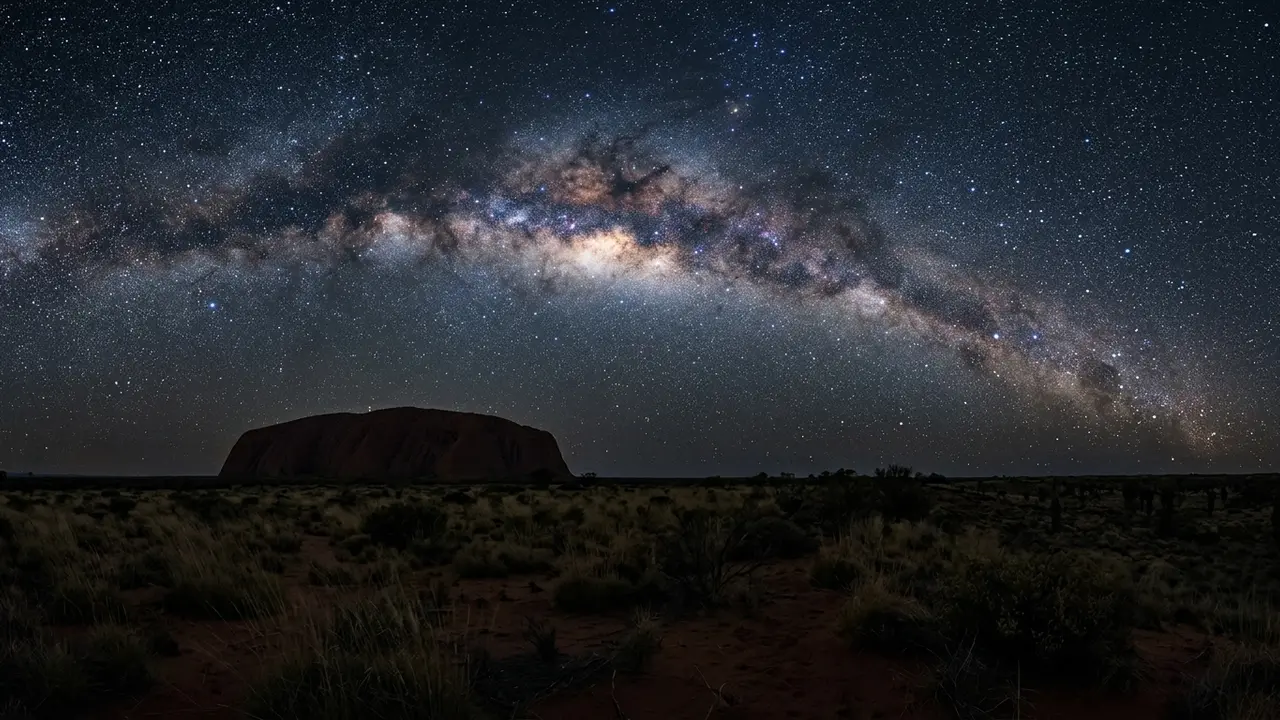
Uluru sits inside Uluru-Kata Tjuta National Park, land whose title was formally handed back to the Anangu Traditional Owners in 1985 and has been run ever since under a joint management agreement between Anangu and Parks Australia. That arrangement, not the sky, is where a stargazing visit here has to start: nearly every rule about where you can walk, what you can photograph, and how the rock is talked about traces back to it. Within that framework, what draws stargazers is a genuinely dark, genuinely remote outback sky with no comparable rival within a day's drive: the Milky Way's galactic core climbing directly overhead through the dry winter months, the Large and Small Magellanic Clouds visible to the naked eye, and the Southern Cross sitting low enough to trace with a finger.
Computed for Uluru at 25°S. Updates nightly.
First quarter tonight, 36% illuminated
Next new moon August 12. The nights either side of it are the darkest of the month.
About 11 hours of astronomical darkness tonight
The sun drops more than 18 degrees below the horizon, so the sky gets genuinely dark for deep-sky viewing at 25°S.
Hours of astronomical darkness by month at Uluru: January 8 hours, February 8 hours, March 9 hours, April 10 hours, May 10 hours, June 11 hours, July 11 hours, August 10 hours, September 9 hours, October 9 hours, November 8 hours, December 7 hours.
Southern Delta Aquariids active now
Peaks July 28. Up to 20 meteors per hour at maximum. A steady southern shower that overlaps the early Perseid build-up.
Where to go stargazing in July
The joint management model at Uluru-Kata Tjuta National Park pairs Anangu law, known as Tjukurpa, with Australian park administration, and Parks Australia describes it plainly: the arrangement demonstrates 'Tjukurpa and Australian law working together in joint management.' The clearest recent expression of that model was the permanent closure of the Uluru climb on 26 October 2019 — a date chosen deliberately, the 34th anniversary of the 1985 Handback. The Uluru-Kata Tjuta Board of Management, which has an Anangu majority, voted to end the climb after the share of visitors attempting it had already fallen below 20%; the route itself crossed a men's sacred site. Anangu leadership was explicit that the closure was 'not something to feel upset about but a cause for celebration' — worth remembering if you arrive expecting to hear about a lost activity rather than a decision Anangu had wanted for decades.
Photography carries its own rules, and they matter more at night, when a long exposure captures far more detail than a daylight snapshot. Along the rock's north-east face, between Kantju Gorge and Kuniya Piti, Anangu ask visitors to take only wide shots from a distance and avoid framing detail on the top-left side of the rock. At a small number of other sites, specific formations hold information Anangu describe as equivalent to sacred scripture, and photographing them outright is prohibited, full stop, not a matter of angle or distance. These sites are marked with on-site signage and shown on visitor maps, so there is no ambiguity to navigate alone; if you're not sure, the Cultural Centre near the base of the rock is the place to check before you set up a tripod anywhere.
For the fuller picture behind all of this, including the climb closure, the Board of Management, and everyday etiquette beyond photography, see our deep dive on Uluru's cultural significance and visitor etiquette.
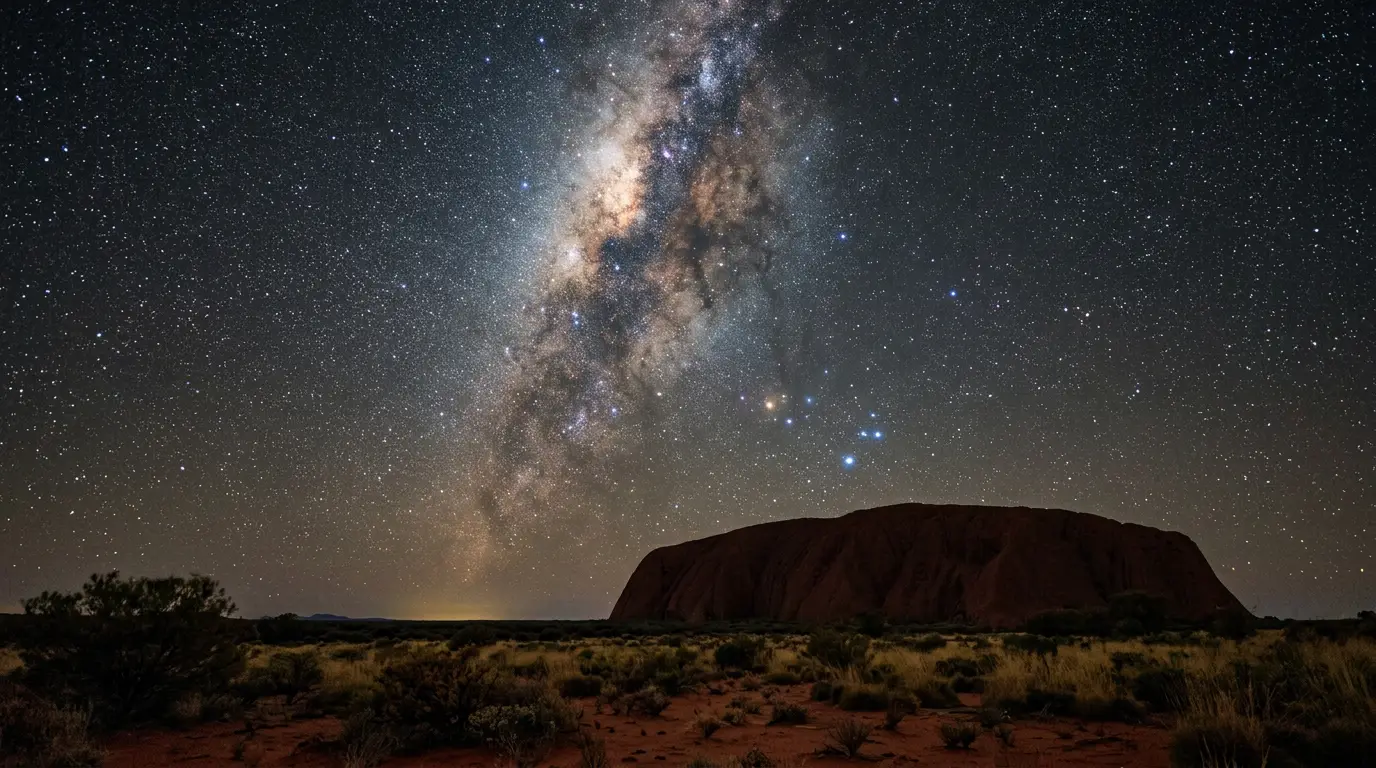
None of the astronomy here needs a telescope to be worth the trip, though a telescope helps. During the Southern Hemisphere winter, roughly May through September, the galactic core of the Milky Way rises high overhead rather than skimming the horizon the way it does for most Northern Hemisphere stargazing destinations, so you're looking straight up into the densest part of our own galaxy, not craning toward a distant glow. The Large and Small Magellanic Clouds, two dwarf satellite galaxies orbiting the Milky Way, show up to the naked eye as faint, cloud-like smudges, something almost no traveler from Europe or North America has ever seen from home. Lower toward the horizon, the Southern Cross (Crux) does the orienting work the North Star does up north: the smallest constellation in the sky by area, and still one of the most useful out here.
There's no certified Bortle scale rating for Uluru on record from a dark-sky authority, so treat any specific number you read elsewhere with some skepticism. What holds up is the practical case: the nearest sizeable town, Alice Springs, sits roughly 470 km away by road, and the desert in between doesn't throw enough light to dent a clear night. That's the same underlying logic behind reserves like New Zealand's Gold Tier Aoraki Mackenzie, though Uluru isn't formally certified the way Aoraki Mackenzie is, so don't expect a Dark Sky Park sign at the gate. For a broader look at what certification actually means and where the officially rated reserves are, see our guide to the world's best dark sky parks. For the fuller picture of why this sky stays dark without a badge, see Uluru dark sky, explained. Weighing these two Southern Hemisphere icons against each other? Our Uluru vs Aoraki Mackenzie stargazing comparison lays out the governance, landscape, and access differences side by side.
May through September lines up the year's driest, clearest air with the galactic core sitting highest overhead after dark, so the two things that matter most stack on top of each other across the same five months. Nights are also cold by outback standards, dropping toward freezing well before dawn, so the trade-off for the best sky of the year is a jacket you wouldn't otherwise pack for the desert. Outside that window the core sits lower and the air runs hotter and hazier, though the Southern Cross and Magellanic Clouds stay visible year-round regardless of season. Whatever month you land on, check the moon phase before you check the calendar: a bright moon flattens the Magellanic Clouds and mutes the fainter stretches of the Milky Way no matter how dry the air is. For the full season-by-season breakdown, including why the park's nightly closure matters more than the calendar does, see the best time to see stars at Uluru.
None of these four lodges have a true off-season for stargazing, but the Red Centre's weather does swing. Dry season, roughly April through October, brings the clearest air and the least cloud cover; wet season adds heat, humidity, and a real chance of overcast nights.
Going in April? See what else the sky offers that month
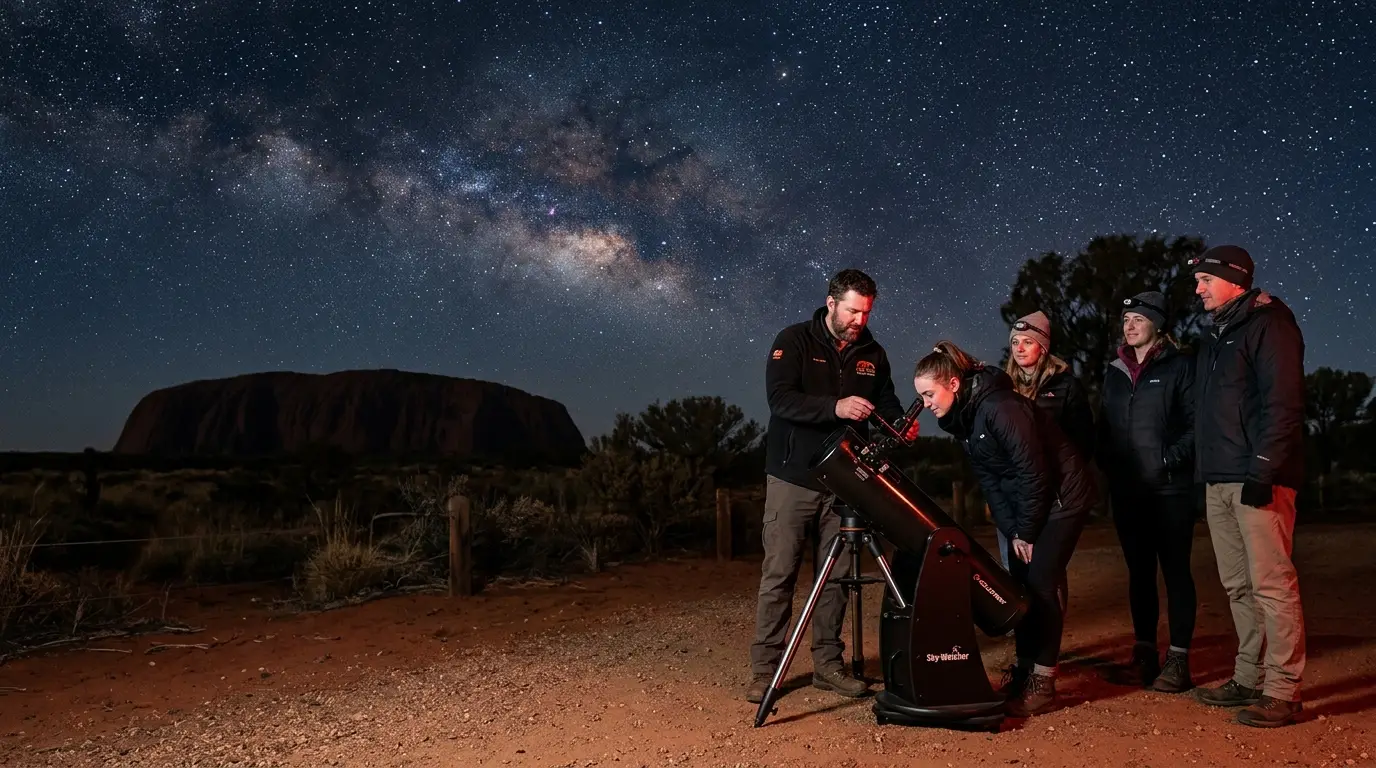
Uluru Astro Tours is the operator most sources point to for guided night sessions inside the park itself. Sessions run roughly two-and-a-half to three hours, mixing naked-eye constellation talks with telescope viewing, and they're the most direct route to real detail on the Magellanic Clouds without hauling your own gear across the world. Book ahead rather than on arrival; groups are small by design and the best slots fill during the May-September peak season.
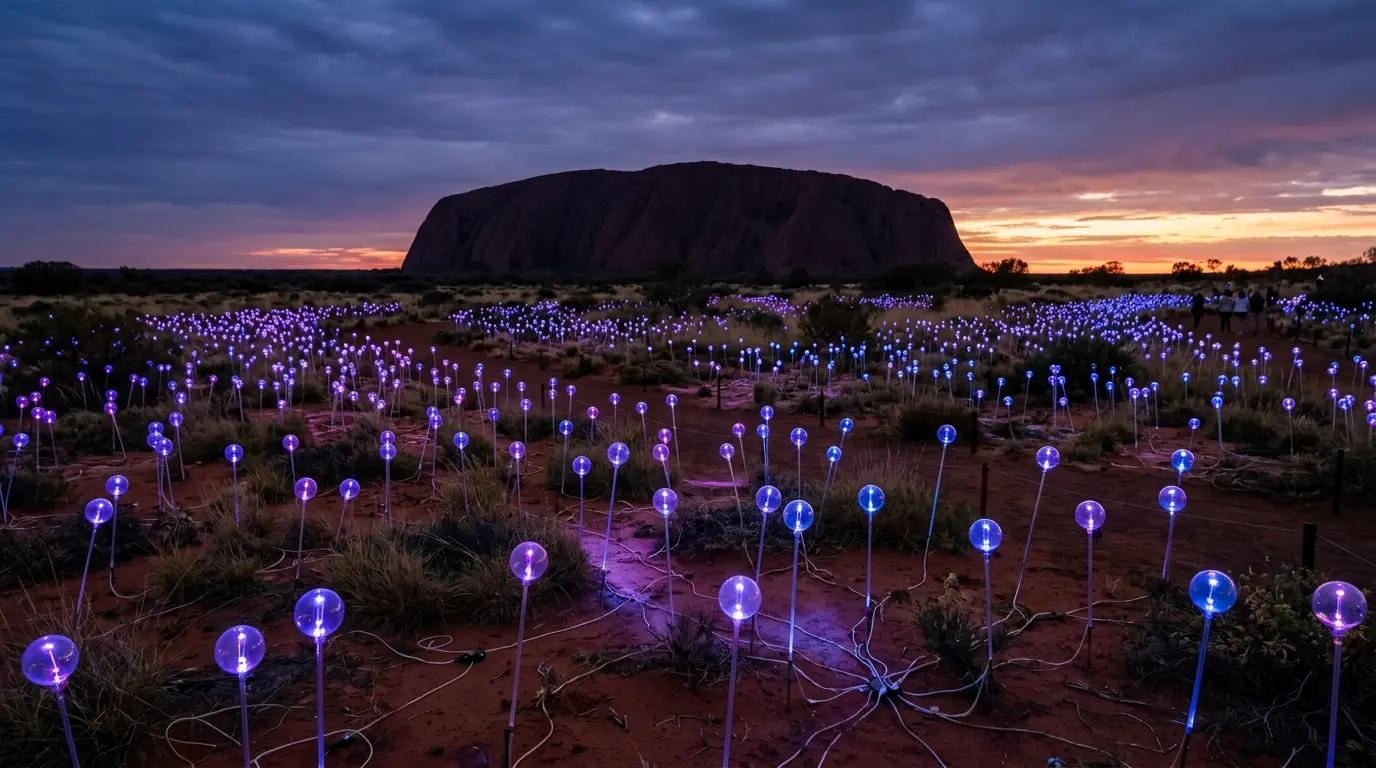
Beyond a dedicated astro tour, two of Yulara's signature after-dark experiences are worth building a night around even though neither is astronomy-first. Field of Light, the installation of tens of thousands of solar-lit stems spread across the desert near the rock, is at its best once full dark sets in and the Milky Way is visible behind it. The dedicated sunrise and sunset viewing points, including Talinguru Nyakunytjaku, aren't restricted sites and make a reliable, sanctioned spot to photograph the rock before you turn a camera or a telescope skyward later that night.
Bruce Munro's Field of Light at Uluru: what's included in the viewing-only and dinner packages, current pricing, run status through 2029, and how to book.
Uluru Astro Tours is the only operator licensed for night astronomy access inside Uluru-Kata Tjuta National Park. What's included, price, and how to book.
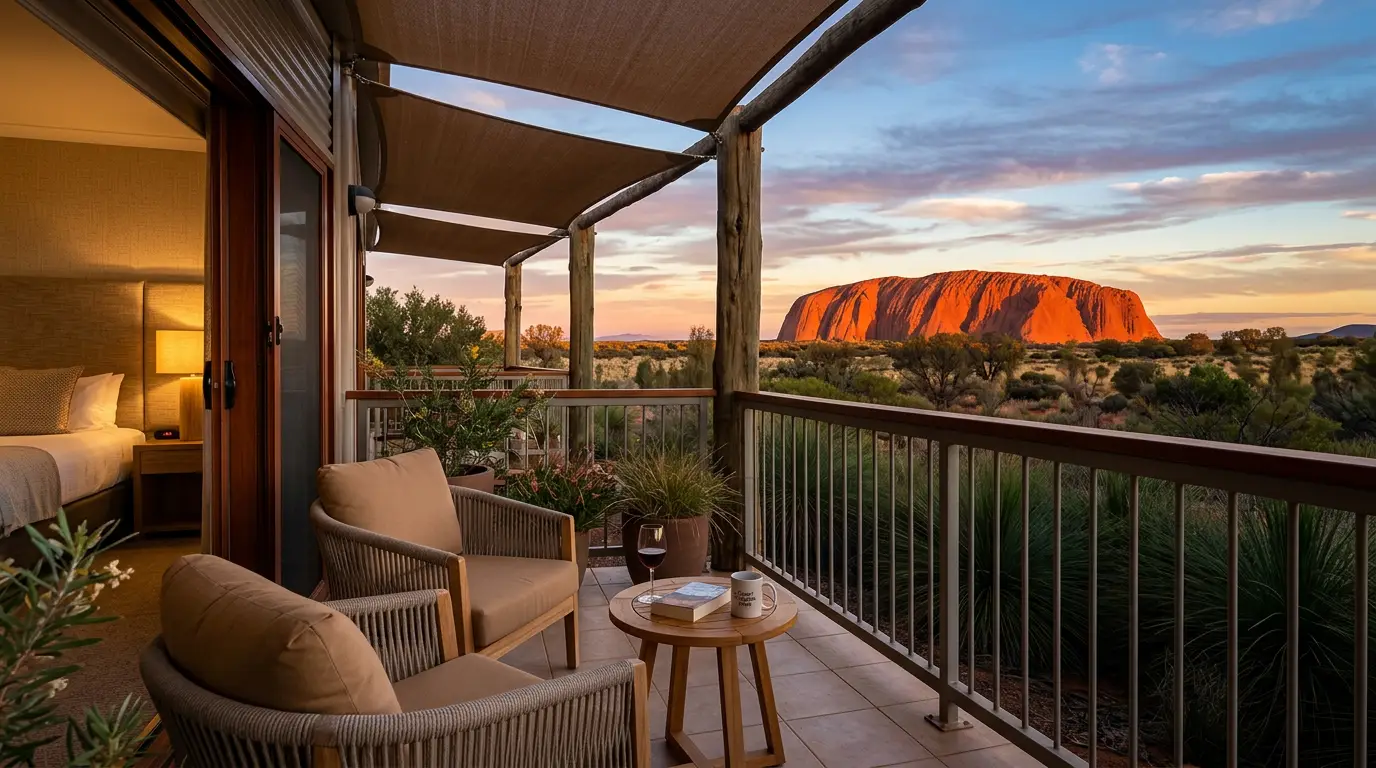
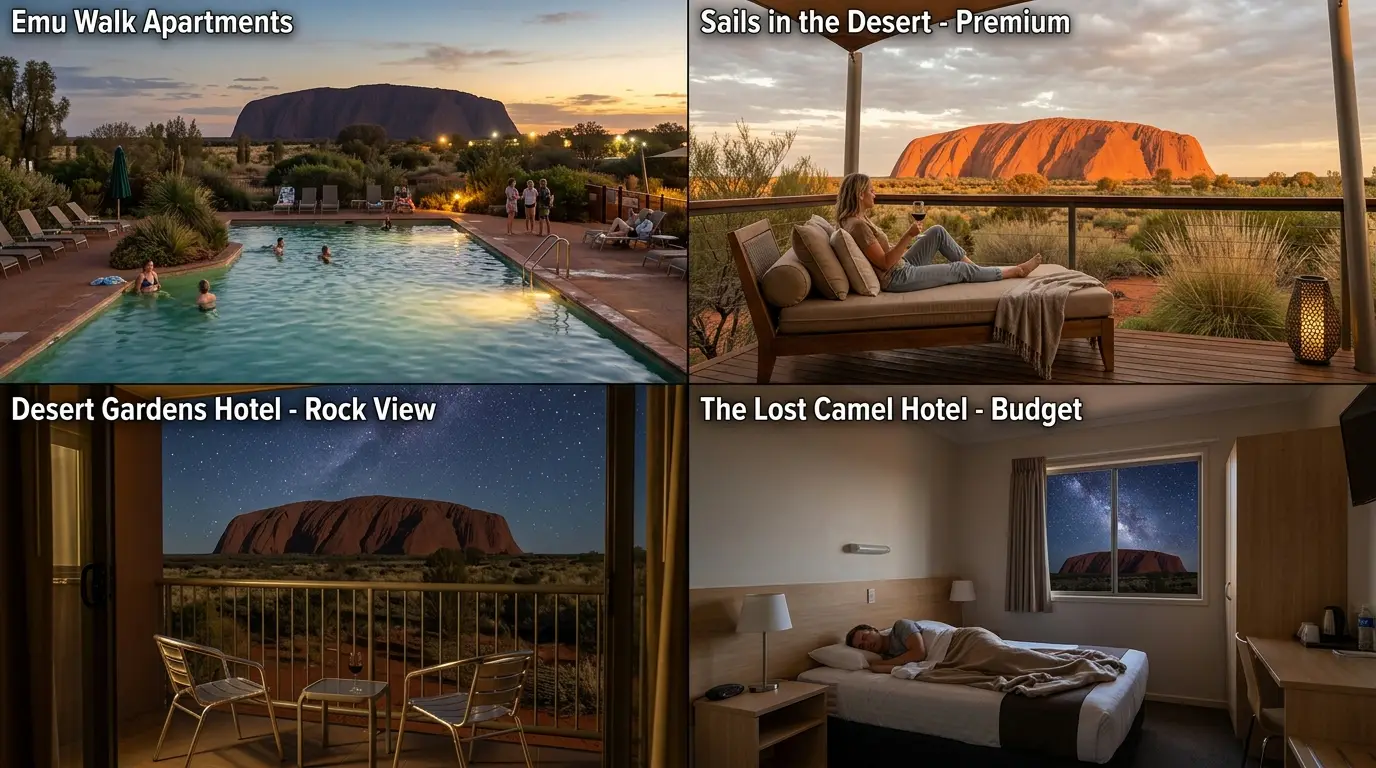
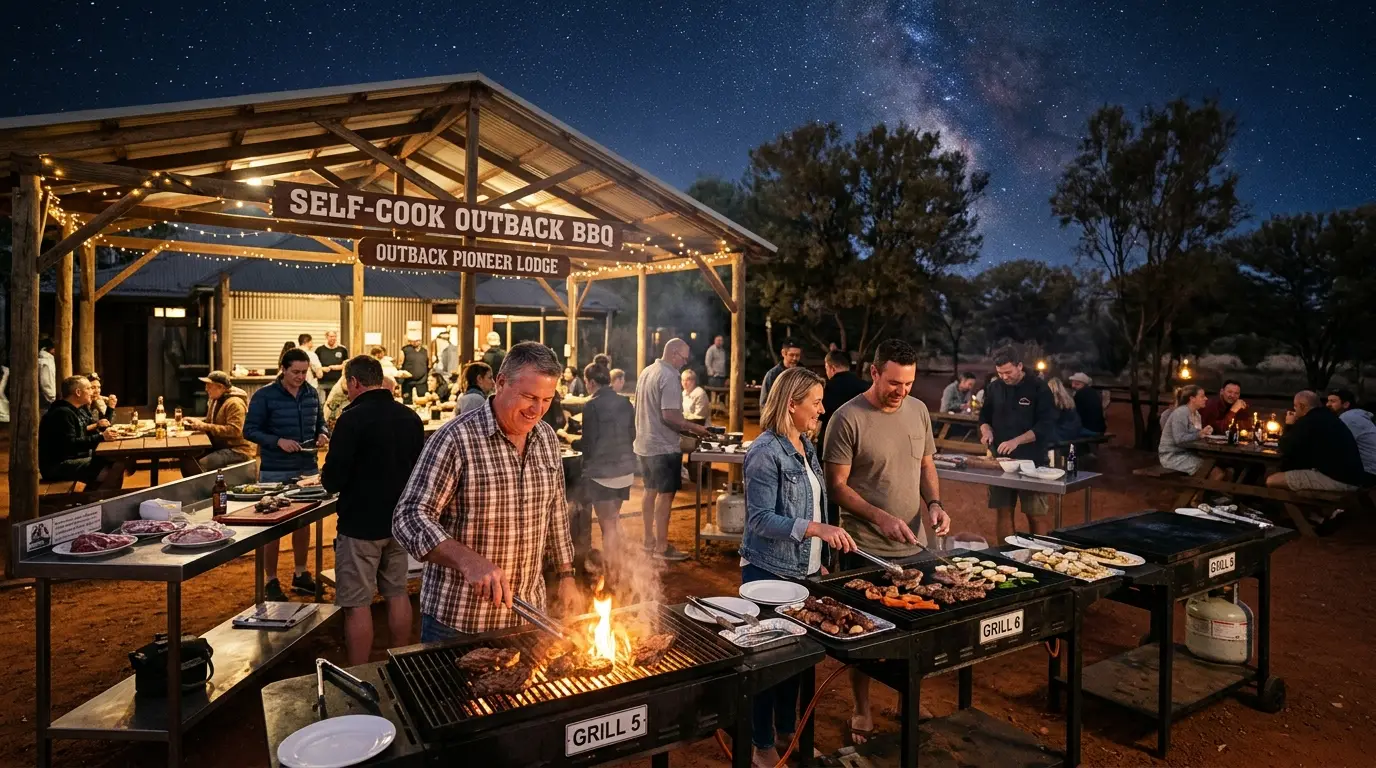
Fly directly into Ayers Rock Airport (Connellan), a short hop from most Australian capitals, or drive the roughly 470 km from Alice Springs via the sealed Stuart and Lasseter Highways; no 4WD is required either way. Yulara (Ayers Rock Resort) is the only accommodation and services hub for the whole park, sitting about 8 km from the park entrance and 18-20 km from Uluru itself, and it covers everything from camping to five-star. For a stay built around the desert sky, Longitude 131° puts guests in glass-fronted tented pavilions facing the rock, and Sails in the Desert and Desert Gardens Hotel offer a more conventional resort base a short walk from Yulara's town square. Budget travelers should look at Outback Pioneer, the resort's hostel-and-cabin option, which puts you inside the same gate for a fraction of the price.
Book both accommodation and any astro tour well ahead of a May-September trip. That's peak season for exactly the reason you're going, the driest and darkest stretch of the year, and Yulara's room stock doesn't grow to match the demand.
Best best value with an uluru view
Only Ayers Rock Resort room tier with a private Uluru sightline
Best best budget / most bookable
Cheapest of the four, from AUD $185/night
Tap a pin to open the lodge, tour, or destination page.
Best season
May through September, the Southern Hemisphere dry season — driest air and clearest skies of the year, with the Milky Way's galactic core riding high overhead after dark
Quietest hours
Well after sunset once day-trippers clear out for dinner at Yulara, typically from around 9pm; the deepest dark comes once Field of Light and sunset-viewing crowds have dispersed
Visit duration
2-3 nights minimum, to allow for a cloud-free window and to fit in both a night tour and daytime cultural orientation at the Cultural Centre
Start at the Cultural Centre, open 7:00am to 5:45pm daily, a fixed schedule separate from the park's gate hours. It's the place to pick up the sensitive-sites map before you go anywhere near the rock with a camera, and it's the honest starting point for understanding Tjukurpa rather than a preamble to skip.
Park gate hours shift with sunrise and sunset through the year: as early as 5:00am and as late as 9:00pm in December and January, narrowing to 6:30am-7:30pm in June and July. A park pass, valid for three consecutive days, is required and purchased online through Parks Australia; check current adult and child pricing before you book, since the fee is set centrally and does change, so don't rely on a figure from an old blog post.
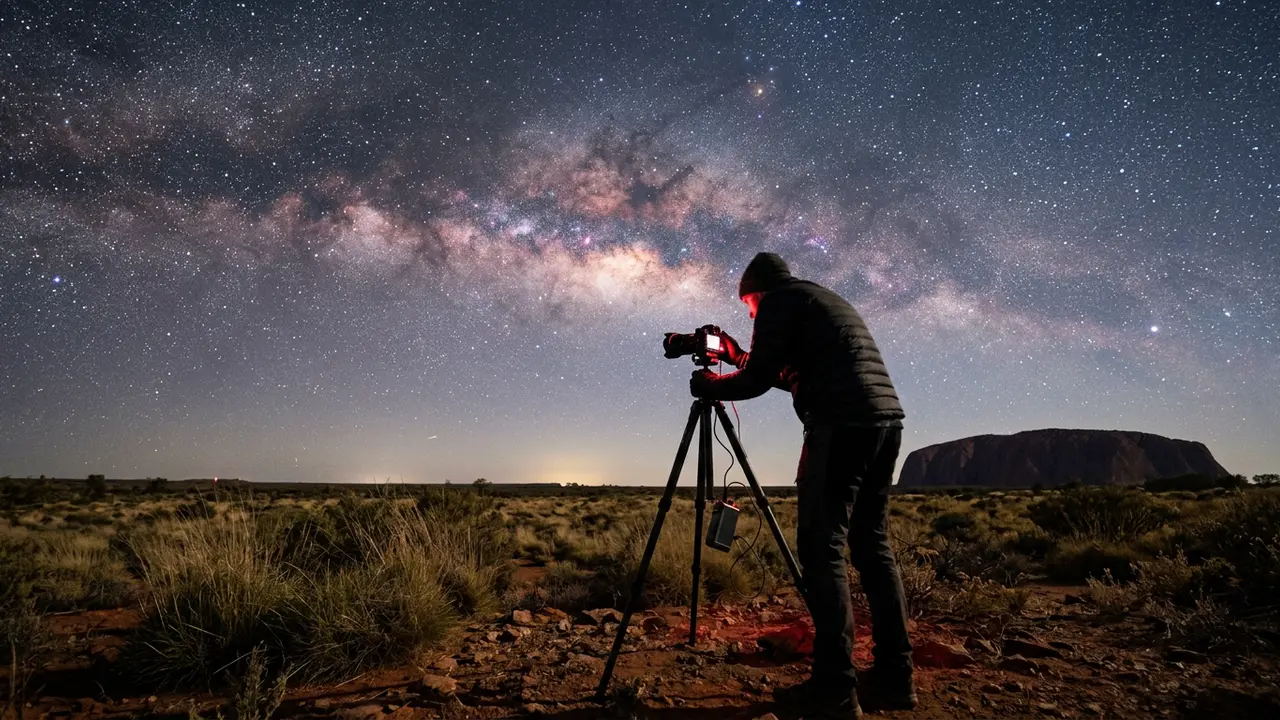
For quick answers on tours, park passes, weather, and etiquette all in one place, see our Uluru stargazing FAQ. And before you pack, remember the desert's day-night swing is real: our Uluru stargazing packing list covers what actually earns a spot in the bag. Bringing a camera? Uluru astrophotography gear covers lenses and tripods for a dedicated setup, or smartphone stargazing photography at Uluru if you'd rather travel light.
Reporter notebook
Pick up the sensitive-sites map and get oriented in Tjukurpa before you go anywhere near Uluru with a camera after dark. It's open 7:00am-5:45pm daily, a fixed schedule separate from the park's gate hours, and it's the difference between guessing where the no-photography zones are and knowing.
The Southern Hemisphere dry season delivers the driest, clearest air of the year in the same months the galactic core rides highest overhead after dark. Pack a proper jacket regardless: desert nights drop toward freezing well before dawn even in this famously hot country.
The dedicated sunrise/sunset viewing point isn't a sensitive site and gives a clean, sanctioned angle on the rock to shoot before dark. Save the north-east face for wide shots only, as Anangu ask, and check the Cultural Centre's map if you're ever unsure where a restriction applies.
Further reading
The Eta Aquariid meteor shower peaks May 5-6, 2027, under a new moon, delivering up to 60 meteors an hour and often the Southern Hemisphere's best annual show.
See the Milky Way's core February–October up north, January–November down south, timed right around new moon under Bortle 4 skies at four proven destinations.
Watch up to 20 meteors an hour during October's Orionid shower, born from Halley's Comet debris. Peak nights Oct 21-22, 2026, best viewed just before dawn.
New Zealand · Best Mar–Oct
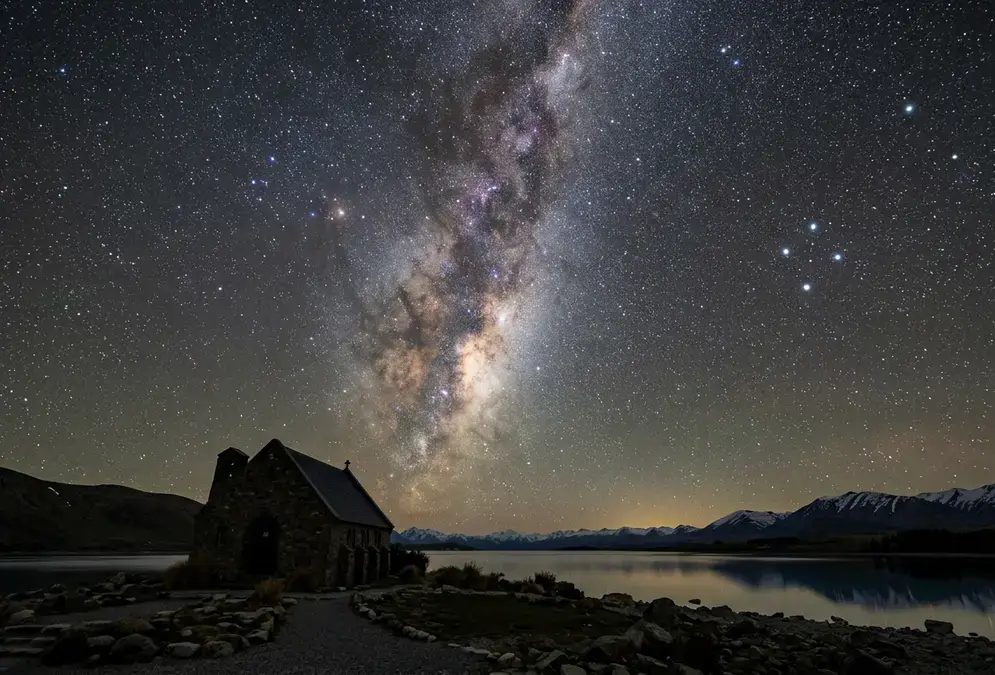
Aoraki Mackenzie is one of only four Gold Tier Dark Sky Reserves on Earth: Bortle 2 skies over Lake Tekapo, the Southern Cross, and Mount John Observatory tour.
Namibia · Best May–Oct
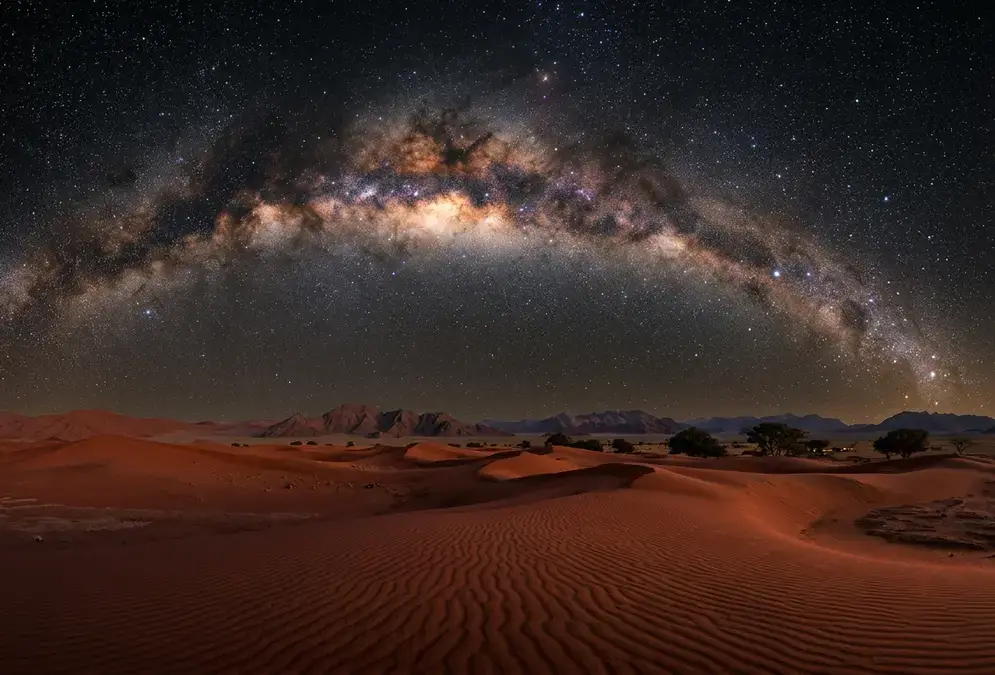
NamibRand is Africa's only Gold Tier Dark Sky Reserve: extreme Namib Desert isolation, the Southern Cross, Magellanic Clouds, and luxury safari lodges.
Chile · Best Apr–Sep
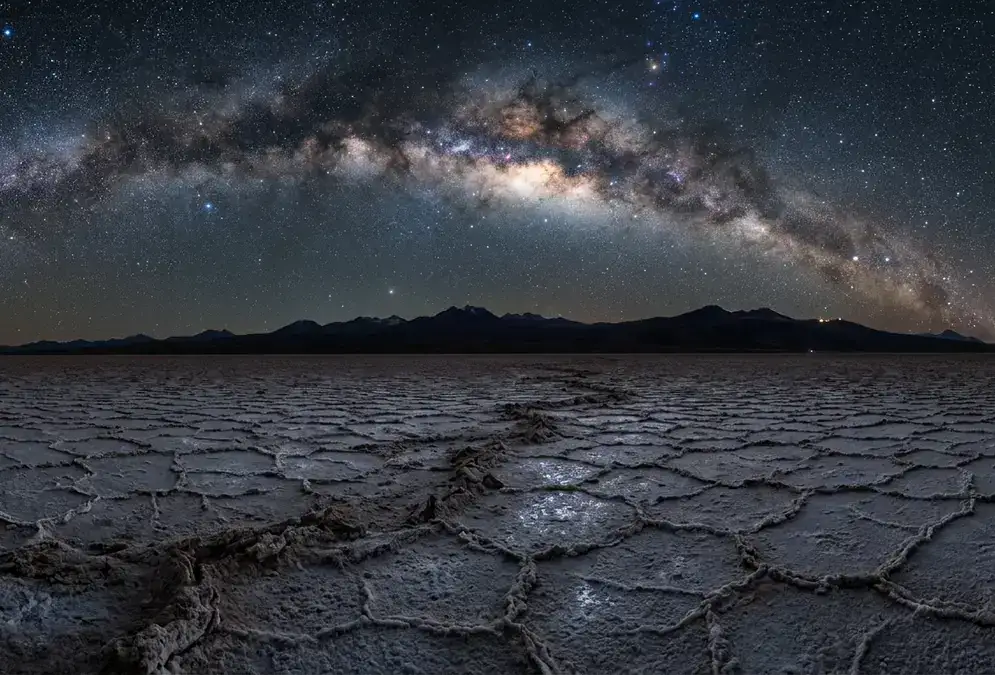
Earth's driest desert delivers Bortle 1–2 skies, 330+ clear nights a year, and the galactic core almost overhead. Guide: tours, lodges, season, getting there.