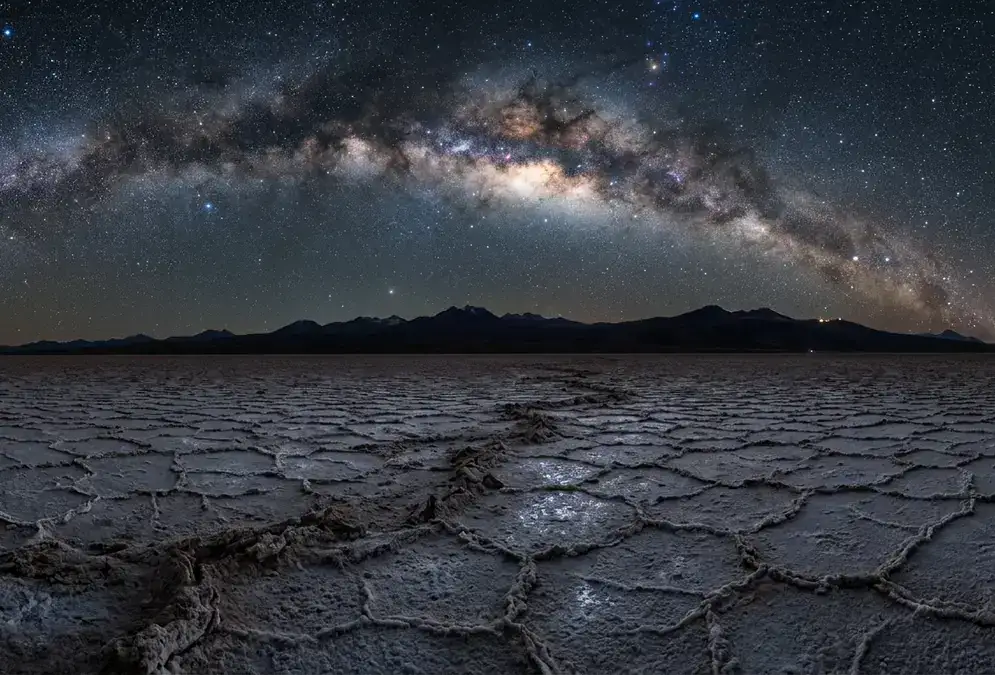
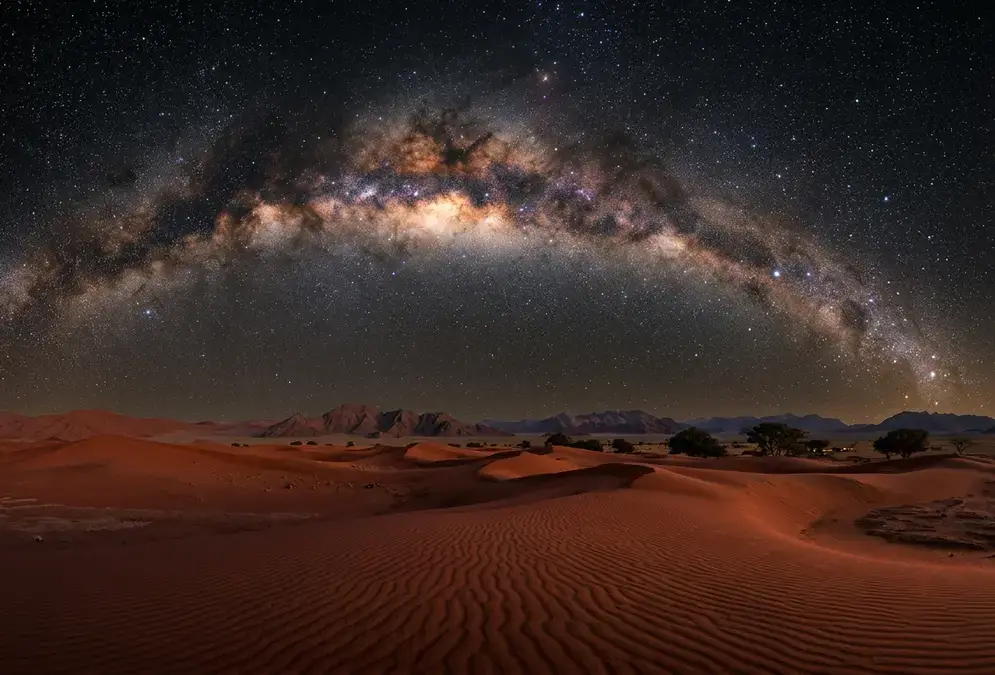
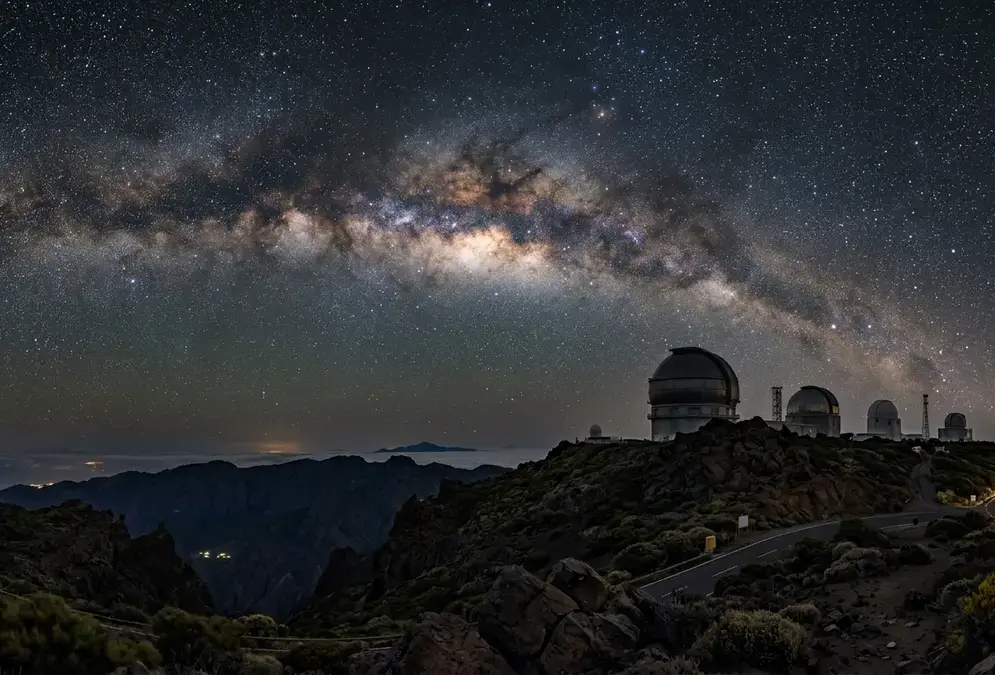
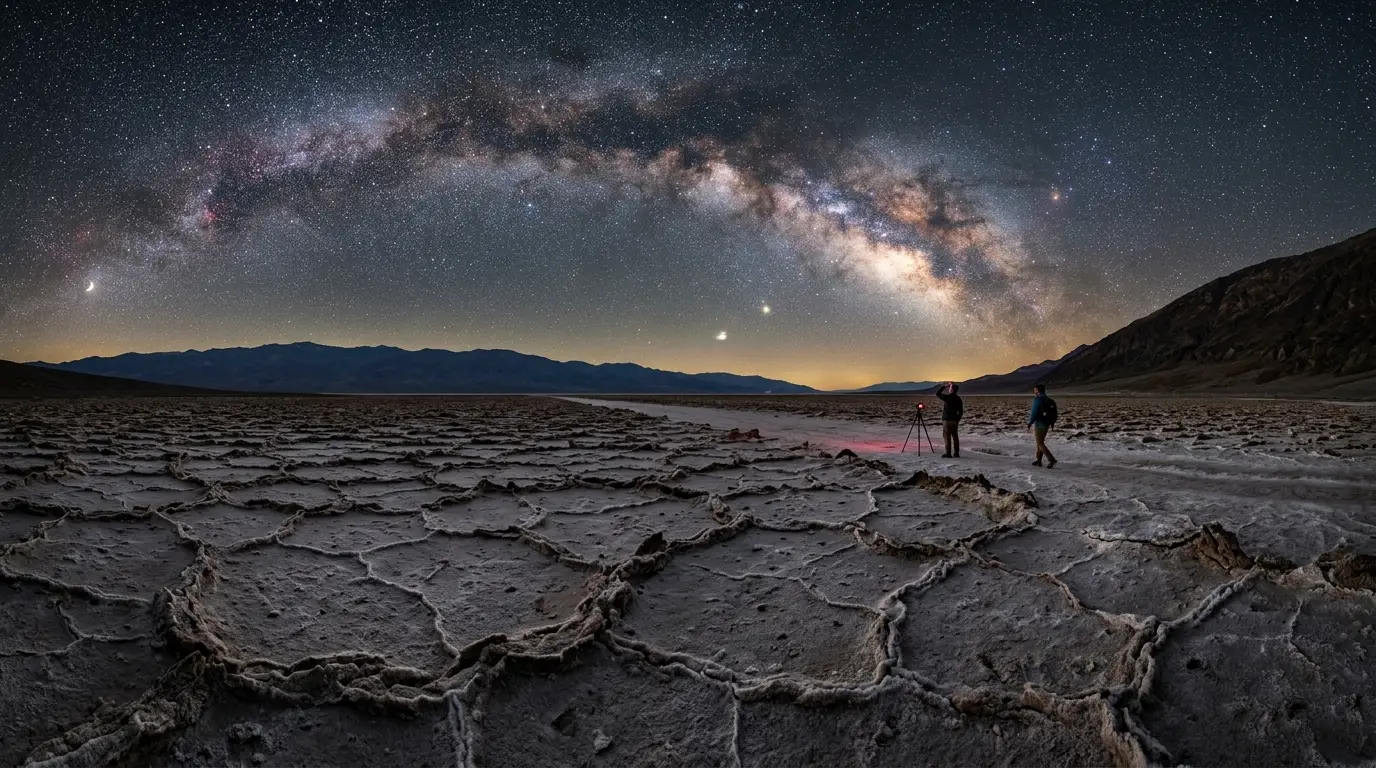
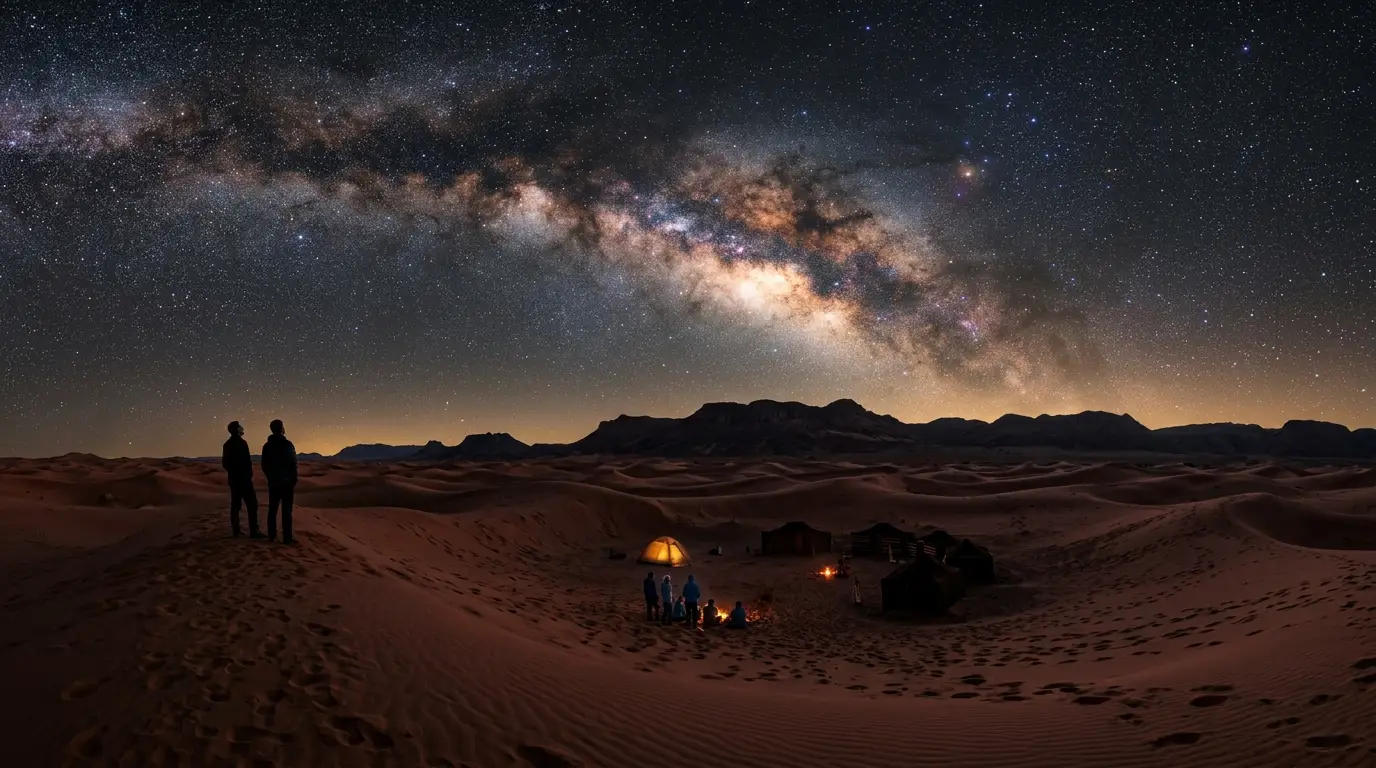
Wide-angle night photograph of the Milky Way's galactic core rising over red desert dunes, illustrating the best places to see the Milky Way for stargazing travelers

Best Places to See the Milky Way: 14 Destinations Ranked

Ranked by Bortle darkness, clear-night odds, and galactic-core season: 14 places worldwide where the Milky Way is genuinely visible, from Atacama to Uluru.

Our top pick

Atacama Desert Stargazing

Best overall

Atacama wins on the numbers that matter for actually seeing the galactic core: Bortle 1 darkness, 340-plus clear nights a year, and humidity under 20 percent, at 2,400 meters where thin, dry air sharpens the contrast further. NamibRand ties it on raw darkness and adds a certified Gold Tier reserve designation, but publishes less clear-night data, which is the only reason it sits at number two.

340 clear nights a year in the Atacama — more than one clear sky per day, on average.

Runner-up: #2 NamibRand Nature Reserve — ties Atacama's Bortle 1 darkness with a certified Gold Tier reserve

The best places to see the Milky Way aren't quite the same list as the best dark sky parks. A certified park can still put the galactic core low on the horizon for most of the year; an uncertified desert camp in Jordan or a private reserve in Namibia can show more of it, more reliably, than a park with an official badge. What decides whether a destination belongs on this list is narrower: Bortle darkness class, how often a clear-night percentage turns theoretical darkness into an actual view, and how high the galactic core actually climbs during the months a traveler can realistically go. Fourteen places worldwide clear that bar, led by the Atacama Desert, where humidity below 20 percent and 340 clear nights a year make Bortle 1 darkness a near-daily occurrence rather than a lucky night.

The galactic core, the dense, bright band at the Milky Way's center, is the part most travelers actually mean when they say they want to see the Milky Way, and it isn't visible year-round from everywhere. In the Northern Hemisphere it climbs highest roughly April through October; in the Southern Hemisphere the window runs March through September, the region's cooler months. Match a destination's hemisphere to that calendar before booking flights: a trip to Uluru or NamibRand timed for July lands in the Southern winter's best window, while the same month is already past its clearest stretch for Mauna Kea.

Access matters as much as the calendar. Death Valley, Big Bend, and Joshua Tree need nothing more than a rental car and a red flashlight; the darkest ground at NamibRand, the Atacama, and Wadi Rum tends to sit on private land, reached through a lodge or guided camp rather than a public gate. For travelers weighing a private desert stay over a drive-in park, our desert stargazing lodges roundup covers the camps and lodges that run their own guided sessions.
Ranked list

How we chose

The places on this list were selected against the following editorial criteria.

  • Bortle darkness class — Bortle 1 is the darkest rating on the nine-step scale; most entries here sit at Bortle 1 to 3, and we say so honestly where no formal rating has ever been published
  • Clear-night percentage and atmospheric dryness — humidity and cloud cover decide how often a dark rating actually turns into a visible galactic core
  • Galactic-core elevation and seasonal visibility — how high the core climbs, and during which months, by hemisphere
  • Accessibility and practical logistics — a road, flight, or guided camp that gets a traveler there, and somewhere to sleep nearby
  • Natural drawbacks — climate extremes, remoteness, or infrastructure gaps that shape a real trip, not just a spec sheet

On the map

Pin numbers match the ranking below.

Interactive map — loads as you scroll (requires JavaScript)

Reporter notebook

Insider tips

Best time

Match hemisphere to the new moon

Pick your hemisphere's core season first (April–October north, March–September south), then narrow to the five nights around a new moon inside that window. A full moon erases the same detail everywhere, Bortle 1 or not.

Booking tip

Private reserves need a lodge booking, not a park gate

NamibRand, the Atacama, and much of Wadi Rum's darkest ground sit on private or lodge-managed land. Book a stargazing-inclusive lodge stay well ahead of a new-moon weekend rather than assuming you can just drive in and park.

In this guide

14 places
  1. Atacama Desert Stargazing

    Best overall

    Atacama Desert Stargazing

    The Atacama earns the top spot for the same reason the European Southern Observatory built the Very Large Telescope and the ALMA array on this exact plateau: skies here reach Bortle 1, the darkest rating on the international scale, with humidity below 20 percent and 340 clear nights a year, more than one clear sky per day on average. At 2,400 meters, San Pedro de Atacama sits above enough of the atmosphere to sharpen the view, and its walkable town center means a rental car isn't required to book a session. May through August, the Austral winter, is the driest and clearest window, though nights get cold enough that a proper jacket matters as much as a tripod. The nearest major city, Antofagasta, sits 300-plus kilometers away, so the darkness here isn't a marketing claim.

    Pros

    • 340+ clear nights per year
    • Lowest humidity on Earth (<20%)
    • Altitude removes atmospheric distortion
    • World-class observatories (Las Campanas, ALMA, ESO)

    Cons

    • High altitude (2,400m) requires acclimatization
    • Limited infrastructure outside San Pedro de Atacama
    • Austral winter (May–August) brings cold nights
  2. NamibRand Nature Reserve

    Best raw darkness

    NamibRand Nature Reserve

    NamibRand is the only site on this list certified Gold Tier by the International Dark Sky Association, its strictest and darkest category, and the reserve sits hundreds of kilometers from any significant settlement, well south of Windhoek across open Namib Desert. That isolation, paired with dry desert air through the May–October season, produces a sky that rivals Atacama's for raw darkness, and its position at about 25°S puts the Magellanic Clouds and Omega Centauri well within reach, deep-sky sights invisible from most of the Northern Hemisphere. Access runs almost entirely through private lodges rather than a public gate, so budget for a stay that includes or offers a guided astronomy session rather than expecting to park and wait for your eyes to adjust. It ties Atacama on darkness but publishes less clear-night data, the only reason it sits at number two rather than one.

    Pros

    • Extreme isolation, hundreds of km from any significant settlement
    • Bortle 1 darkness, Gold Tier IDSR certified
    • Dry winter climate (May–October)
    • Magellanic Clouds and Omega Centauri visible

    Cons

    • Limited clear-night percentage documentation versus Atacama
    • Remote logistics; few professional-grade observatories nearby
    • Accessible mainly via private lodge stays
  3. La Palma Stargazing

    Best protected Reserve sky

    La Palma Stargazing

    La Palma became the world's first Starlight Reserve in 2012, a UNESCO-backed designation built specifically to protect skies near working observatories, and the island passed its own sky-protection law back in 1988, years before light pollution had a name outside astronomy circles. The Roque de los Muchachos Observatory sits at 2,396 meters, above the cloud layer that blankets the coastline most evenings, and April through October puts the galactic core comfortably within view from the Northern Hemisphere. Because it's a legally protected Reserve rather than an uncertified patch of desert, a visitor gets guaranteed infrastructure: flights from mainland Spain, hotels, and an observatory with a public program. The trade-off is a Bortle 2 to 3 rating, not the true Bortle 1 of Atacama or NamibRand, and Atlantic humidity that takes some shine off transparency compared to a true desert sky.

    Pros

    • World's first Starlight Reserve, protected since 1988
    • Roque de los Muchachos Observatory infrastructure
    • Altitude of 2,396m removes atmospheric distortion
    • April–October is an accessible spring/summer season

    Cons

    • Bortle 2–3, not true Bortle 1 like Atacama or NamibRand
    • Atlantic humidity moderates transparency
    • Island weather variability
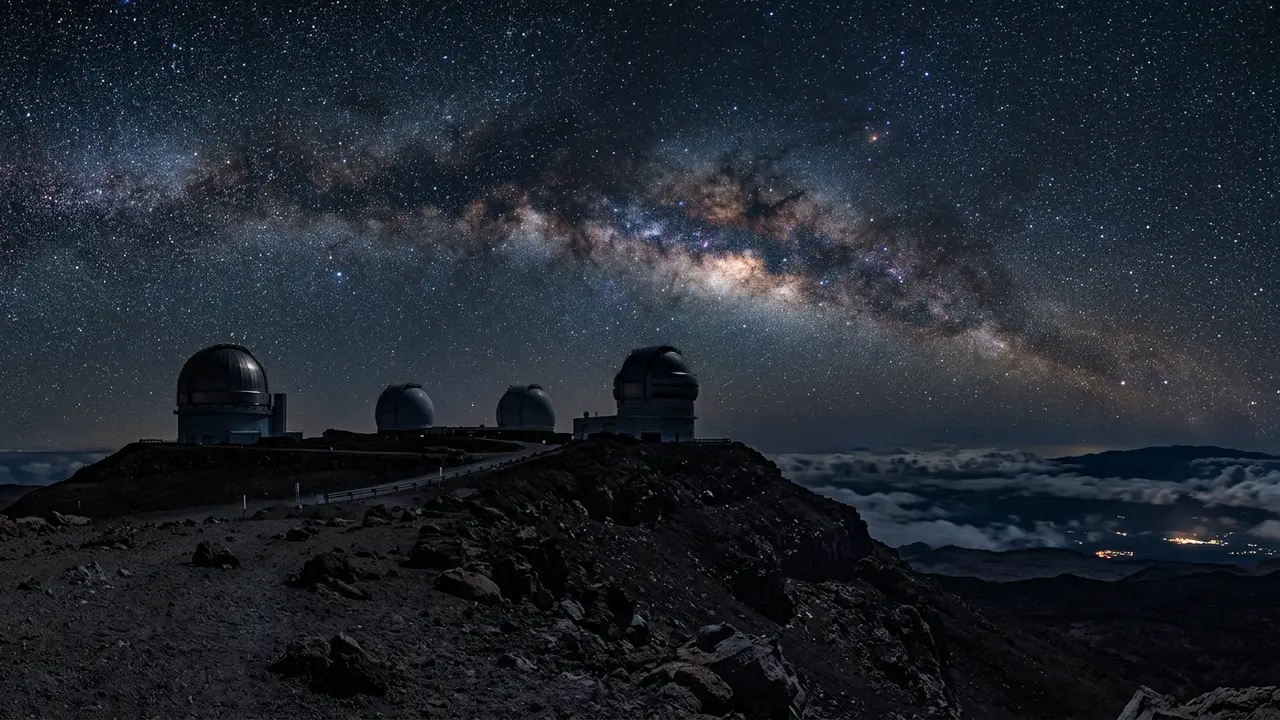
  4. Mauna Kea

    Best Northern Hemisphere Bortle 1

    Mauna Kea

    Mauna Kea's summit sits at 13,796 feet, above 40 percent of the atmosphere and roughly 90 percent of its water vapor, the altitude edge that sets it apart from every other entry on this list and the reason the mountain has hosted working observatories for decades. Clear nights run 300-plus a year, spectacular from April through October by our assessment, though some local guides stretch the window back into March. That season also overlaps Hawaii's busiest tourist months, so a stargazing session at the mid-level visitor center, the safe minimum elevation at 9,200 feet, can mean sharing the view with a crowd. Mauna Kea is also sacred ground to Native Hawaiians, and visitor access has been actively contested; go through an operator that acknowledges that history rather than treating the summit as a simple viewpoint.

    Pros

    • Highest accessible elevation (13,796 ft) removes 40% of the atmosphere
    • 300+ clear nights annually
    • Highest-altitude entry on this list, above 40% of the atmosphere
    • Island infrastructure: flights, hotels, restaurants nearby

    Cons

    • Sacred Hawaiian site with real access restrictions
    • Altitude sickness risk; 9,200 ft visitor center is the safe minimum
    • Peak season draws tourist crowds
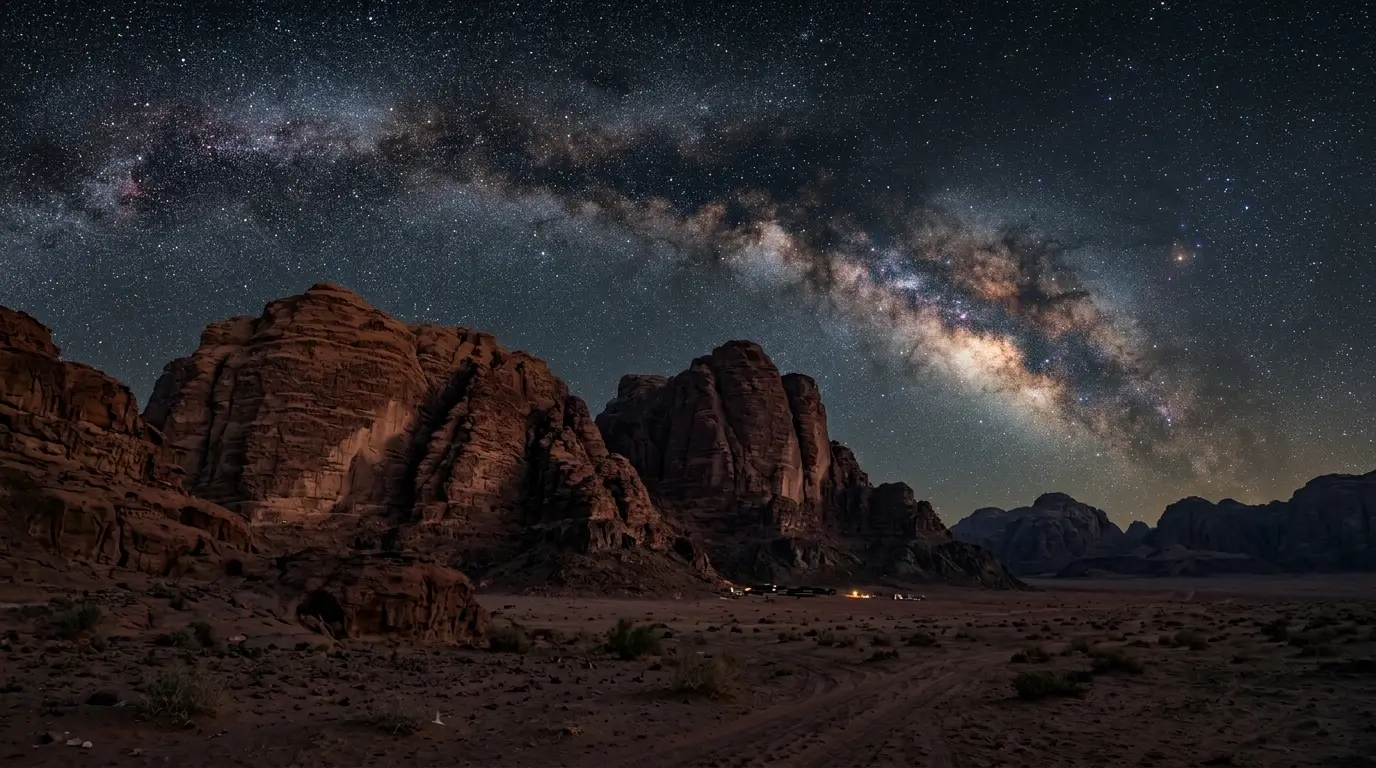
  5. Wadi Rum

    Best desert culture pairing

    Wadi Rum

    Wadi Rum delivers desert darkness that behaves like Bortle 1 in practice and over 300 clear nights a year in air dry enough that transparency rarely suffers, though it isn't in DarkSky International's official Places registry and nobody has published a formal Bortle number for it, likely because Jordan's astrotourism infrastructure has grown faster than its measurement and certification programs. March through October covers spring, summer, and fall, giving more scheduling flexibility than sites locked to a narrow seasonal window, and Bedouin-run camps make this one of the more culturally distinctive entries on the list. The catch: the closest camps to the main visitor areas sit within 15 kilometers of villages, so the darkest sky requires booking a camp specifically positioned farther out, not just any Wadi Rum stay.

    Pros

    • 300+ clear nights annually, highly reliable
    • Desert dryness produces excellent transparency
    • March–October covers three full seasons for flexible planning
    • Bedouin camps offer a distinctive cultural experience

    Cons

    • No formally certified Bortle rating published
    • Hot summer nights; winter brings occasional cloud
    • Darkest camps require 15+ km from villages
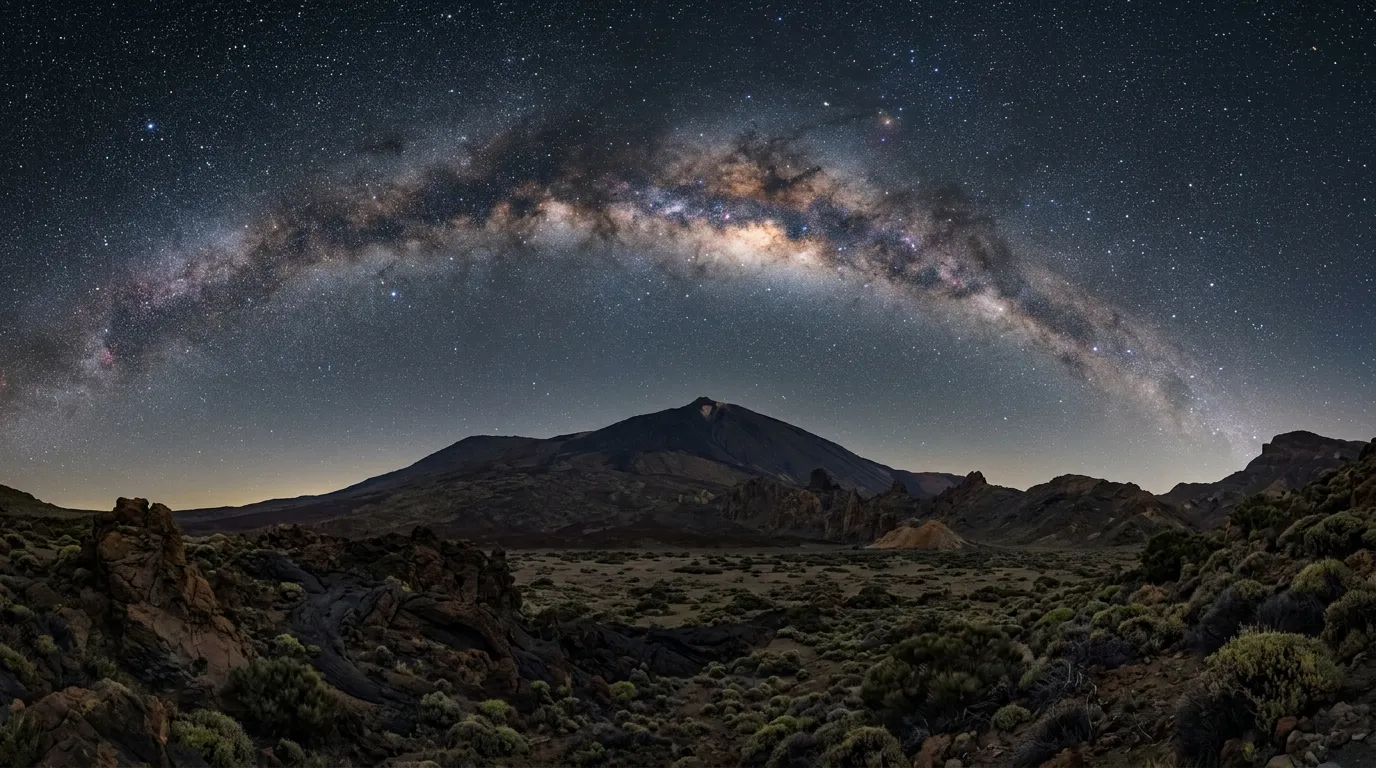
  6. Tenerife Stargazing

    Best high-altitude observatory access

    Tenerife Stargazing

    Tenerife's Mount Teide, at 3,718 meters Spain's highest peak, rises above most of the cloud layer that gathers over the Canary Islands, and the Teide Observatory here has hosted international research for decades under the same strict lighting laws that protect La Palma. Bortle readings run 2 to 3, April through October brings the galactic core into range for Northern Hemisphere viewers, and the island's existing tourism infrastructure, flights, hotels, rental cars, makes this one of the easier entries on the list to actually reach. It ranks below La Palma mainly because Tenerife's lower elevations have grown more built up over the past decade, and Atlantic cloud formation remains a real risk even at altitude.

    Pros

    • Mt. Teide's 3,718m elevation sits above most cloud layers
    • Strict Canary Islands light-pollution laws
    • Teide Observatory hosts international research
    • Island infrastructure accessible from Europe

    Cons

    • Bortle 2–3, not a true Bortle 1 site
    • Atlantic cloud formation is common
    • Tourist development creeping into lower-elevation areas
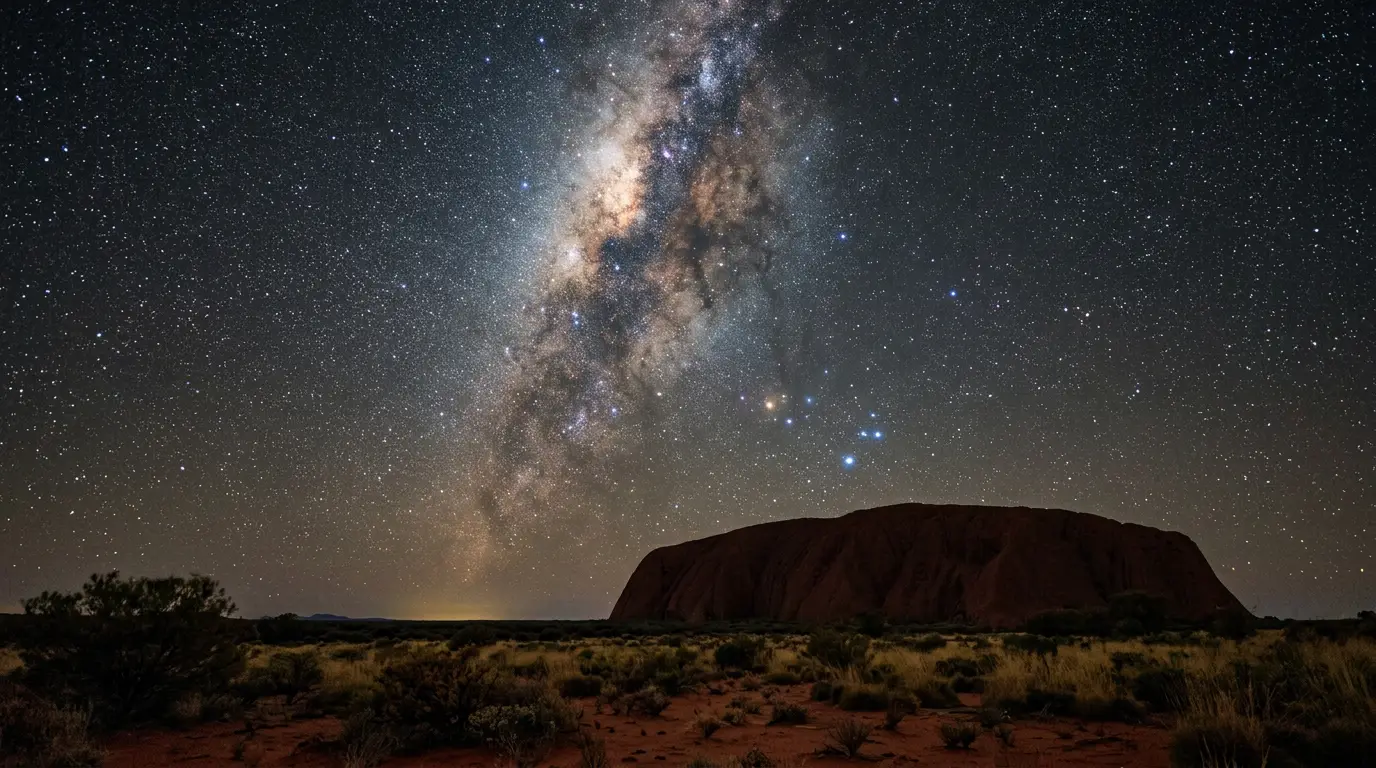
  7. Uluru

    Best Southern Hemisphere landscape

    Uluru

    Uluru's interior desert location keeps artificial light minimal for hundreds of kilometers, and while nobody has published a formal Bortle rating for the site, the remoteness alone puts it well into genuinely dark territory. March through September, Australia's cool season, is both the most comfortable time to be outside after dark and the window when the Southern Hemisphere's dense star fields, including the Magellanic Clouds, sit highest. Uluru is sacred to the Anangu people, and stargazing here happens at designated dark-sky campsites rather than at the rock itself, so plan around the access rules rather than treating this as an open desert free-for-all. Infrastructure is thinner than at the parks further down this list, so budget extra time for the drive in and out.

    Pros

    • Southern-hemisphere interior, isolated from city lights
    • March–September is Australia's comfortable cool season
    • Iconic rock silhouette for Milky Way photography
    • Designated dark-sky campsites

    Cons

    • No formal Bortle rating published
    • Sacred Aboriginal site with restricted access
    • Thin infrastructure; extreme remoteness
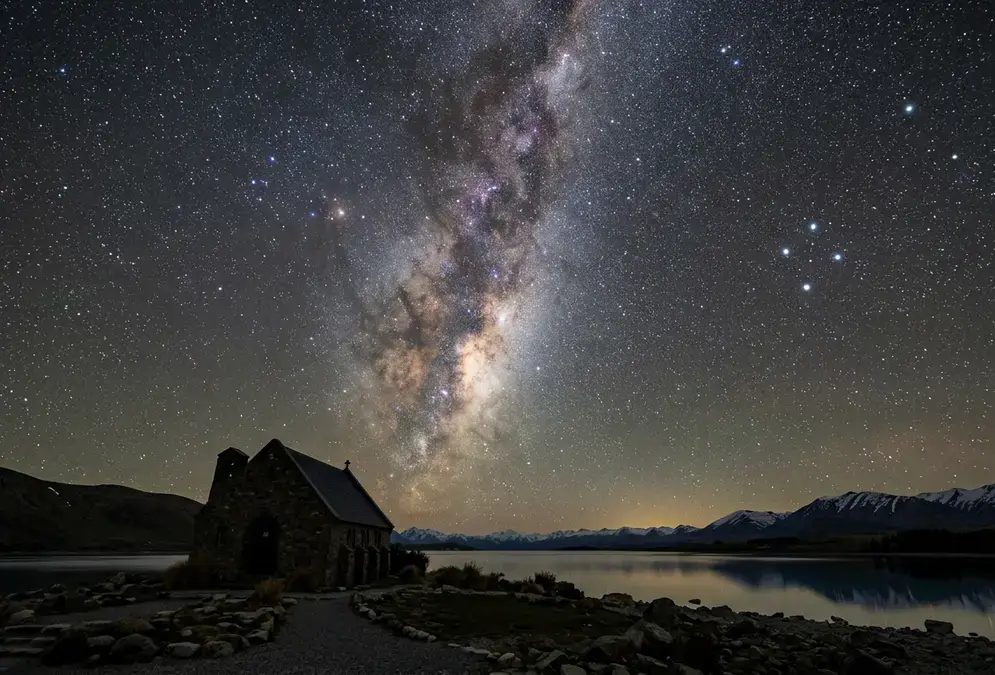
  8. Aoraki Mackenzie Stargazing

    Best alpine dark-sky reserve

    Aoraki Mackenzie Stargazing

    Aoraki Mackenzie carries one of the strictest dark-sky reserve designations in the Southern Hemisphere, and while there's no published Bortle number for the basin specifically, its 2,000-plus meter elevation strips out much of the atmospheric water vapor that dulls transparency elsewhere in New Zealand. March through October is the best window, when the Magellanic Clouds and other southern-sky objects sit well up, and alpine scenery around Aoraki/Mount Cook gives it a more dramatic foreground than most desert entries on this list. Its 44°S latitude means the galactic core never quite climbs overhead the way it does closer to the equator, and mountain weather is genuinely unpredictable, so build in more than one night if the trip depends on seeing it.

    Pros

    • Certified International Dark Sky Reserve
    • 2,000m+ elevation strips out atmospheric water vapor
    • March–October covers autumn through spring
    • Alpine scenery frames the Milky Way

    Cons

    • 44°S latitude means the galactic core never passes overhead
    • Mountain weather is highly variable
    • Few published clear-night records
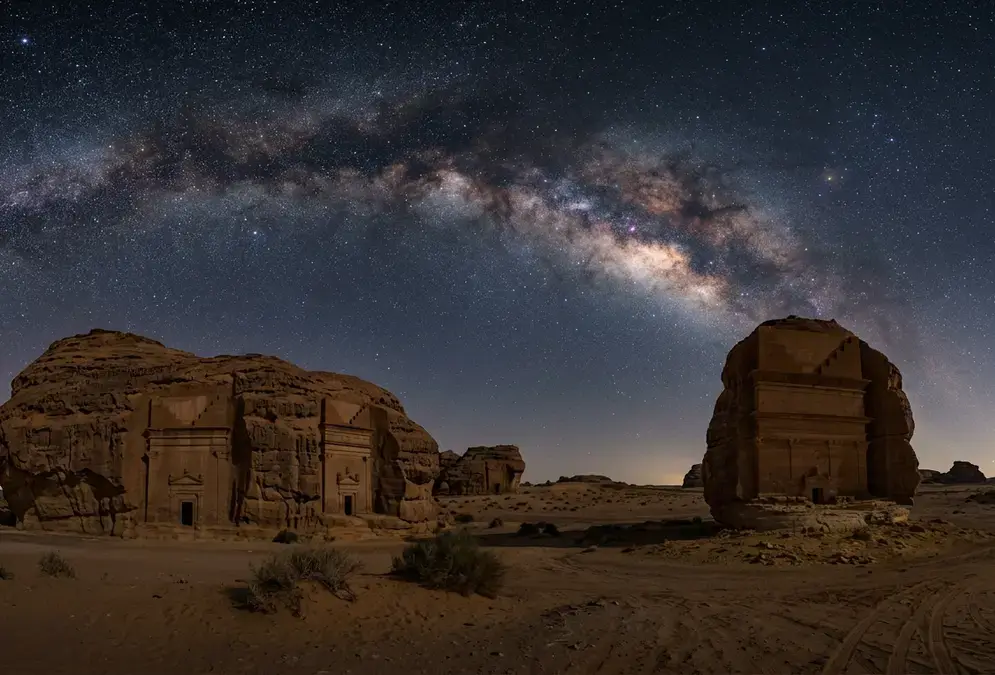
  9. AlUla Stargazing

    Best emerging destination

    AlUla Stargazing

    AlUla is the newest and least-documented entry here: desert dryness keeps humidity low and light pollution minimal, but no formal Bortle rating has been published for the site, and clear-night statistics are thinner than for more established destinations. April through October puts the galactic core within reach from this 26°N location, and nearby Nabataean archaeological sites give the destination a backdrop few others on this list can match. Saudi Arabia's Vision 2030 tourism push is actively building out astrotourism infrastructure here, so expect the experience to keep improving, but also expect fewer independent reviews and less third-party verification than at Wadi Rum or the Atacama. Summer heat makes winter the more comfortable season for an actual visit.

    Pros

    • Desert dryness keeps humidity and light pollution low
    • Minimal artificial light in remote areas
    • Nabataean archaeological sites frame the sky
    • Growing dark-sky tourism infrastructure

    Cons

    • No formal Bortle rating published
    • Thinner clear-night documentation than established sites
    • Summer heat; winter is the more comfortable season
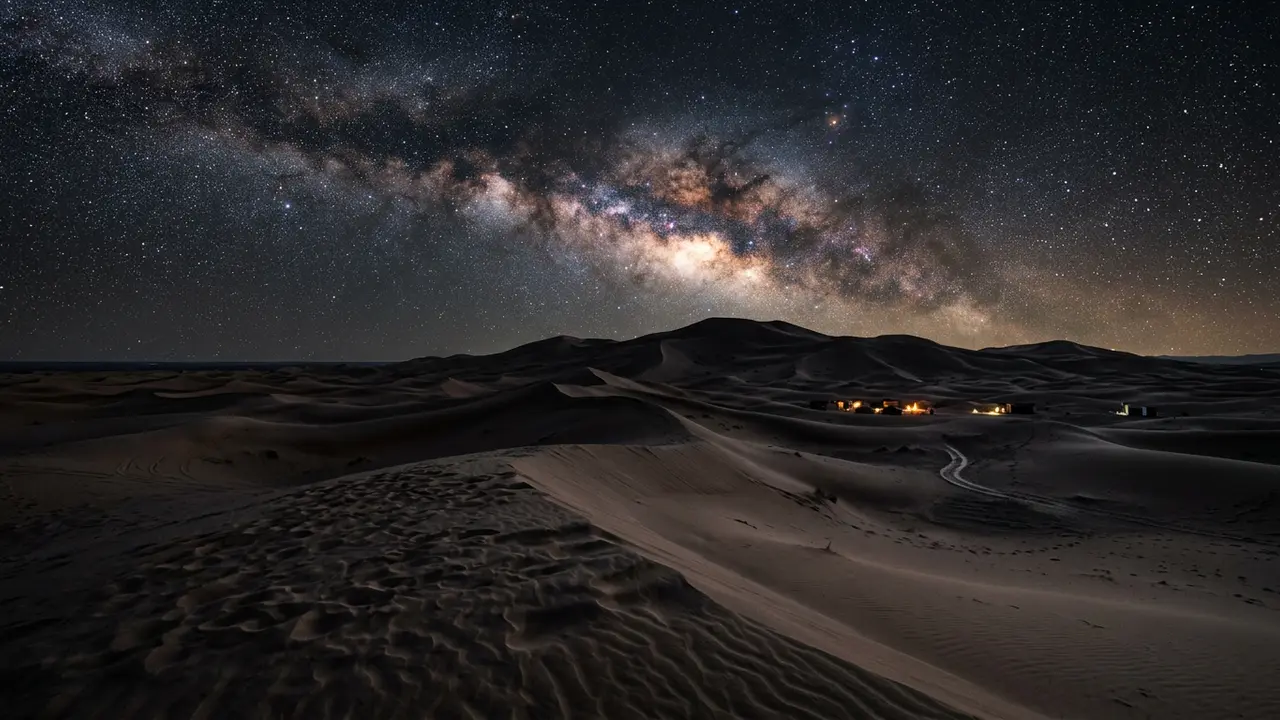
  10. Merzouga Stargazing

    Best budget Sahara trip

    Merzouga Stargazing

    Merzouga is the budget-friendly entry on this list: Sahara dryness keeps humidity low, clear nights run past 300 a year, and cheap flights from Europe make this one of the more affordable desert-sky trips here. No formal Bortle certification exists for the site, and the tourist camps clustered around town add real light pollution of their own, so the true dark sky sits 30-plus kilometers out, not at the first camp a driver suggests. April through October covers galactic-core season from this 31°N location, and established desert tourism means guides, camel treks, and overnight camps are easy to book without much advance planning.

    Pros

    • Sahara dryness keeps humidity very low
    • 300+ clear nights per year
    • Budget-friendly with established tourist camps
    • Easy access from Europe and North Africa

    Cons

    • No formal Bortle certification published
    • Tourist camps near town add real light pollution
    • True darkness requires traveling 30+ km out
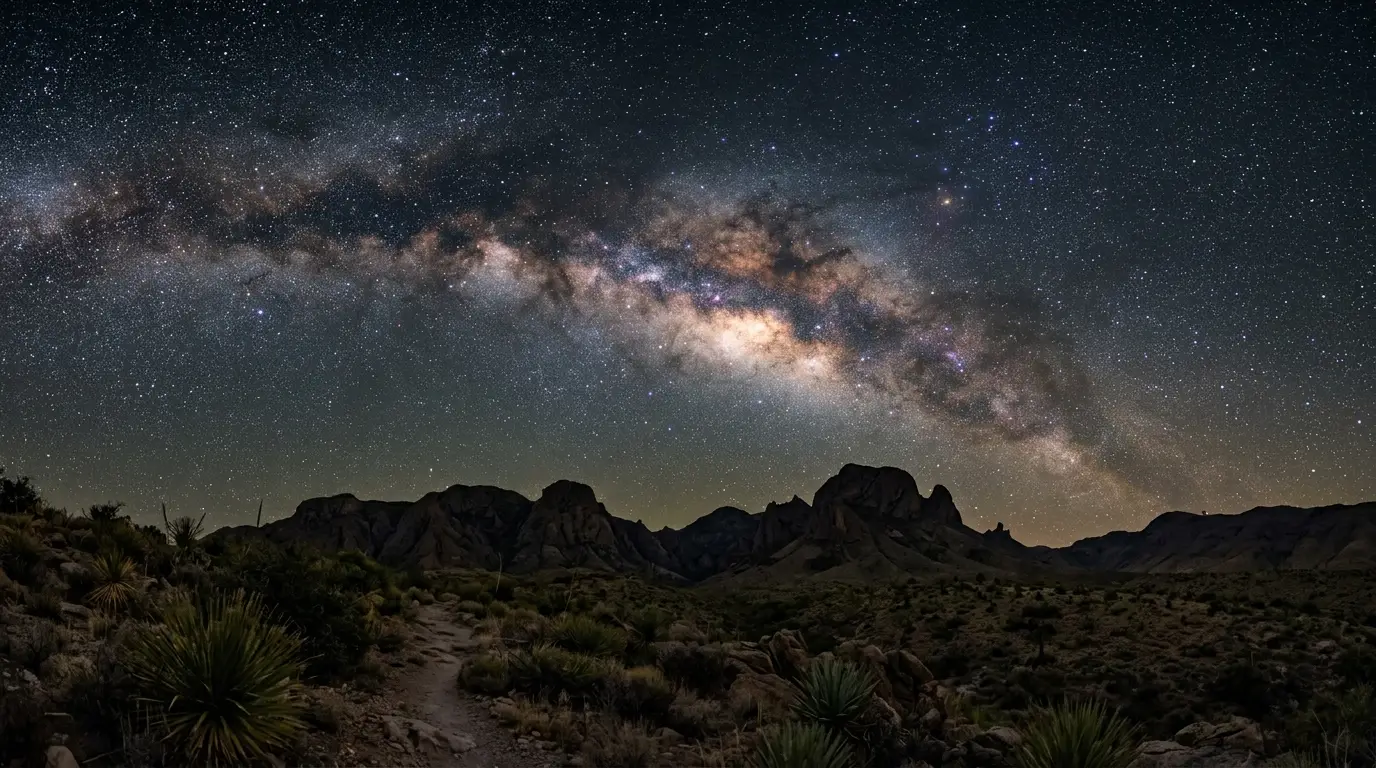
  11. Big Bend National Park

    Best remote US Bortle 1

    Big Bend National Park

    Big Bend is consistently the darkest national park in the lower 48 states, sitting inside the Greater Big Bend International Dark Sky Reserve, and its remote zones reach a genuine Bortle 1, matching Atacama and NamibRand on paper. April through October brings the galactic core into view, and the park's mountainous terrain lets photographers frame it setting behind a real skyline rather than a flat horizon. Developed areas near campgrounds run closer to Bortle 3 to 4, so the darkest ground still requires a drive away from the visitor facilities, and Texas heat during peak season rewards planning around April and October rather than midsummer.

    Pros

    • Consistently the darkest national park in the lower 48
    • Greater Big Bend International Dark Sky Reserve designation
    • Galactic core can be framed setting behind mountains
    • US park infrastructure: campgrounds and roads

    Cons

    • Texas heat during April–October peak season
    • Extreme remoteness; long drive from major cities
    • Developed areas run Bortle 3–4, not the darker remote zones
  12. Death Valley

    Best contrast and lowest humidity

    Death Valley

    Death Valley carries a genuine Bortle 1 rating and the lowest humidity anywhere in North America, conditions that produce the sharpest brightness contrast between the Milky Way and the surrounding dark on this entire list. April through October covers the galactic-core season here, though April through June brings genuinely dangerous heat, 110 to 130 degrees Fahrenheit in the daytime, and October through November is the more comfortable stretch for anyone planning to actually spend a night outside. Sitting 282 feet below sea level gives the park a horizon perspective no other entry on this list can match, though the landscape itself is stark enough that photographers looking for a scenic foreground may prefer Bryce Canyon or Big Bend instead.

    Pros

    • Genuine Bortle 1 rating
    • Lowest humidity anywhere in North America
    • 282 feet below sea level gives a unique horizon
    • National park infrastructure

    Cons

    • Extreme heat April–June (110–130°F)
    • Occasional winter cloud cover
    • Stark landscape with little scenic foreground
  13. Stargazing in Bryce Canyon National Park

    Best scenic foreground

    Stargazing in Bryce Canyon National Park

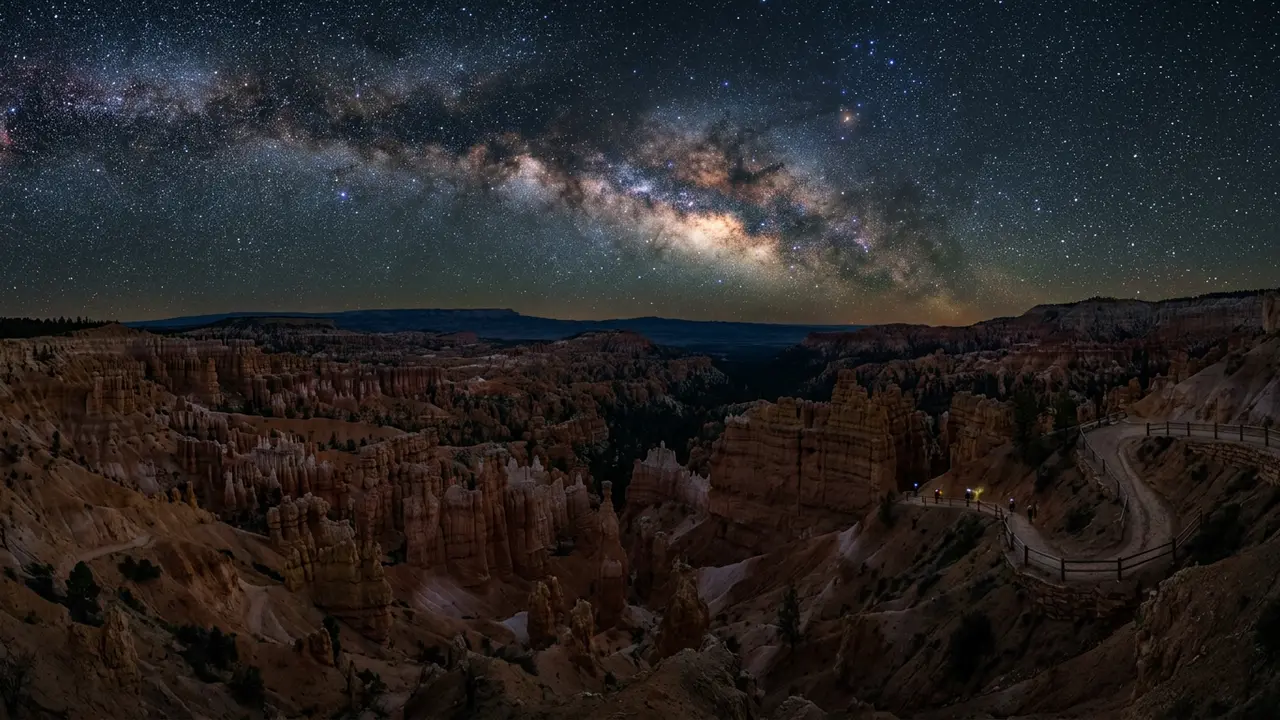
    Bryce Canyon combines a Bortle 1 to 2 rating with the most distinctive foreground on this list: the park's hoodoo rock formations silhouette against the galactic core in a way flat desert sites simply can't replicate. Elevation above 9,000 feet strips out atmospheric water vapor, and Utah's statewide dark-sky protections keep nearby development from creeping into the park's night skies. April through October brings the core into range, but mountain weather here is less consistent than in the true deserts further up this list, winter snow closes the higher roads entirely, and lodge lighting near the rim can wash out the darkest views if you don't walk far enough from the parking areas.

    Pros

    • Dramatic hoodoo formations frame the galactic core
    • 9,000+ ft elevation strips out atmospheric water vapor
    • Bortle 1–2 darkness inside a national park
    • Utah statewide dark-sky protections

    Cons

    • Less consistent clear nights than desert sites
    • Winter snow closes higher-elevation roads
    • Lodge lighting near the rim can wash out views
  14. Joshua Tree National Park

    Best big-city accessibility

    Joshua Tree National Park

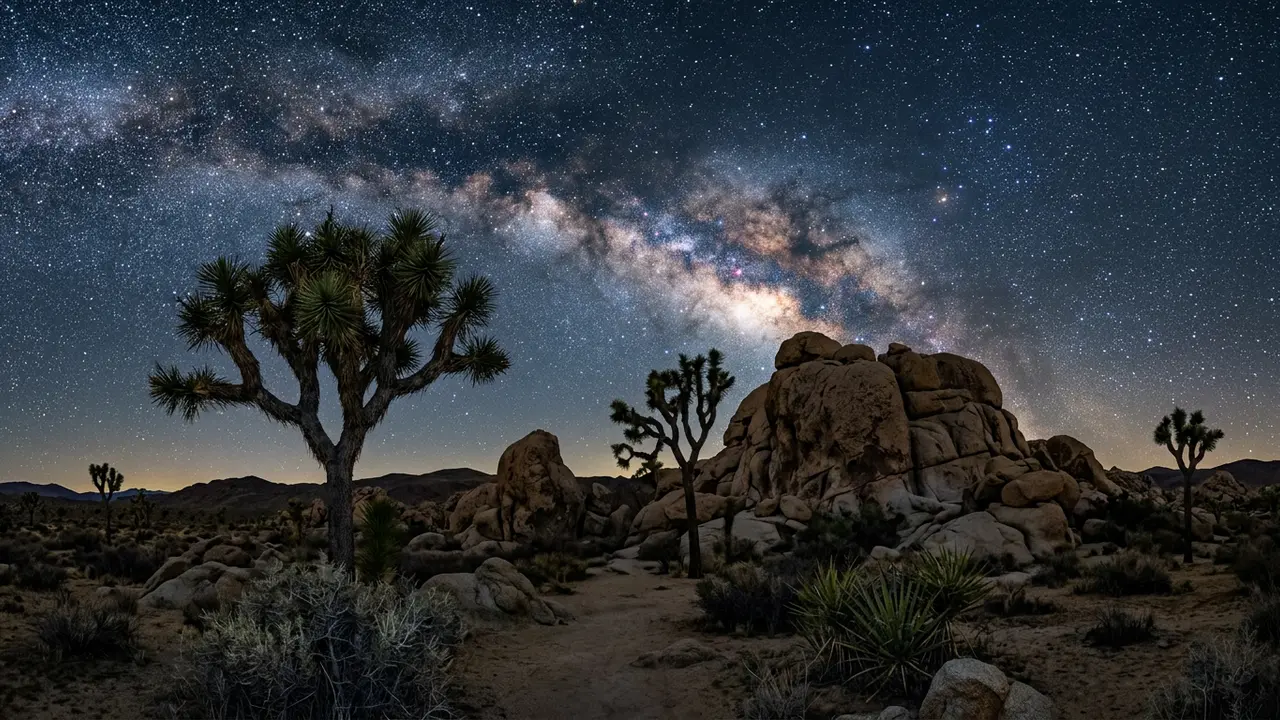
    Joshua Tree is the accessibility pick: a Bortle 2 to 3 sky reachable in about two hours from Los Angeles, which makes it the closest genuinely dark sky to one of the most light-polluted metro areas in North America. Iconic Joshua Tree silhouettes frame the galactic core from April through October, and established park infrastructure, marked trails, visitor centers, nearby towns, makes this the least intimidating entry on the list for a first stargazing trip. The trade-off for that convenience is real: light domes from Twentynine Palms and Yucca Valley are visible on the horizon, and weekend crowds during peak season can turn a quiet dark-sky pull-off into a busy parking lot.

    Pros

    • Closest Bortle 2–3 dark sky to Los Angeles (about 2 hours)
    • Iconic Joshua Tree silhouettes frame the Milky Way
    • Established tourism and park infrastructure
    • Genuine desert dryness

    Cons

    • Bortle 2–3, not a true Bortle 1 site
    • Light pollution from Twentynine Palms and Yucca Valley
    • Weekend crowds during peak season

Start with hemisphere, not distance from home. South of the equator, the galactic core climbs far higher in the sky than it ever does from most of Europe or North America, which is the real reason Atacama, NamibRand, and Uluru dominate the top half of this list. North of the equator, Mauna Kea and Death Valley come closest to that same Bortle 1 darkness, and both reward planning around their narrow comfortable seasons rather than a single fixed month.

Moon phase decides the rest. A full moon washes out the Milky Way's dust lanes from a Bortle 1 site as easily as from a Bortle 4 one, so book within about five nights of a new moon regardless of which destination makes the trip. None of the darkness on this list survives by accident: an observatory, a lodge, or a park service keeps the lights off nearby, and travelers who respect that, red flashlights, headlights off, staying put once your eyes adjust, are the reason it stays that way for the next visitor.

Frequently asked questions

What's the best place in the world to see the Milky Way?

The Atacama Desert in Chile ranks first on this list: Bortle 1 darkness, 340-plus clear nights a year, and humidity under 20 percent combine to make the galactic core visible on more nights than almost anywhere else on Earth. NamibRand Nature Reserve in Namibia is the closest runner-up, tying Atacama's darkness with a certified Gold Tier reserve designation, though it publishes less clear-night data.

How is this different from a "best dark sky parks" list?

This list ranks places by how well and how often you can actually see the Milky Way's galactic core, including private reserves, desert camps, and uncertified sites like the Atacama that have no official dark-sky designation at all. Our separate ranking of the [best dark sky parks in the world](/guides/best-dark-sky-parks-world) instead ranks places by DarkSky International or equivalent certification tier, access, and infrastructure, a different, sometimes overlapping list.

When is the best time to see the Milky Way's galactic core?

In the Northern Hemisphere, the core is highest roughly April through October, peaking in June and July. In the Southern Hemisphere, the equivalent window runs March through September, the region's autumn and winter. Check your specific destination's latitude, since sites near the equator, like Wadi Rum or AlUla, see a longer usable window than sites at higher latitudes like Aoraki Mackenzie.

Do I need a Bortle 1 rating to see the Milky Way clearly?

No. Bortle 2 to 3 sites like La Palma, Tenerife, and Joshua Tree all show a clearly visible Milky Way, including the galactic core in season; Bortle 1 mainly adds fainter detail and better astrophotography contrast, not a yes-or-no threshold. A few genuinely dark places on this list, including Uluru, Aoraki Mackenzie, AlUla, and Merzouga, have no formally published Bortle rating at all, which reflects thinner measurement infrastructure rather than a lesser sky.

What's the best moon phase for Milky Way viewing?

Plan around the five nights closest to a new moon. A full moon brightens the sky enough to wash out the Milky Way's dust lanes from even a Bortle 1 site, so checking the lunar calendar matters as much as picking the right destination.

Which of these destinations don't require a tour or guide?

Death Valley, Big Bend, Bryce Canyon, and Joshua Tree are all drive-in US national parks where a rental car and a red flashlight are genuinely enough. NamibRand, the Atacama, and Wadi Rum work better through a booked lodge or camp, since the darkest ground often sits on private land or benefits from a guide with a telescope already set up.

Is the Atacama Desert an official dark-sky park?

No, and that's notable: the Atacama carries no DarkSky International or equivalent certification at all, yet reaches Bortle 1 with 340-plus clear nights a year, largely because European Southern Observatory facilities like the Very Large Telescope and ALMA effectively protect the site by requiring dark conditions for their own research.

Can beginners see the Milky Way without special equipment?

Yes. The galactic core is visible to the naked eye from any Bortle 1 to 3 site during its seasonal window, appearing as a bright, textured band across the sky within about 20 minutes of your eyes adjusting to the dark. A camera helps reveal color and detail the naked eye can't quite catch, but no equipment is required to see the core itself.

Further reading

Sources

  1. atacamastargazing.com (opens in a new tab)

    “Its skies hold 340 clear nights per year”

  2. atacamastargazing.com (opens in a new tab)

    “a Bortle Class 1 darkness rating — the absolute maximum on the international scale for sky quality”

  3. atacamastargazing.com (opens in a new tab)

    “At 2,400 meters above sea level”

  4. namibrand.com (opens in a new tab)

    “The NamibRand Nature Reserve has been designated a Gold Tier International Dark Sky Reserve by the International Darks Sky Association.”

  5. namibrand.com (opens in a new tab)

    “In May 2012, IDA endorsed the recommendation of their advisory board to inscribe the NamibRand Nature Reserve as an International Dark Sky Reserve (IDSR) at the 'Gold' tier level – the darkest and the strictest available category.”

  6. lapalmastars.com (opens in a new tab)

    “La Palma is a Starlight Reserve. This certification awarded in 2012 by the UNESCO's Starlight Initiative, has made La Palma the first place in the world with this honour.”

  7. starsislandlapalma.es (opens in a new tab)

    “In 1988 a specific law was passed designed to protect the quality of the night sky for the purpose of astrophysical observation.”

  8. iac.es (opens in a new tab)

    “2396 metres above sea level”

  9. hawaii-guide.com (opens in a new tab)

    “300+ clear nights per year”

  10. hawaii-guide.com (opens in a new tab)

    “spectacular March through October”

  11. go-astronomy.com (opens in a new tab)

    “Big Bend National Park is rated Bortle Class 1.”

  12. go-astronomy.com (opens in a new tab)

    “Death Valley National Park is rated Bortle Class 1.”

  13. zamantours.com (opens in a new tab)

    “Zero Light Pollution: Far from urban centers, Wadi Rum is a certified Dark Sky location.”

  14. zamantours.com (opens in a new tab)

    “With over 300 clear nights per year, your odds are incredible.”