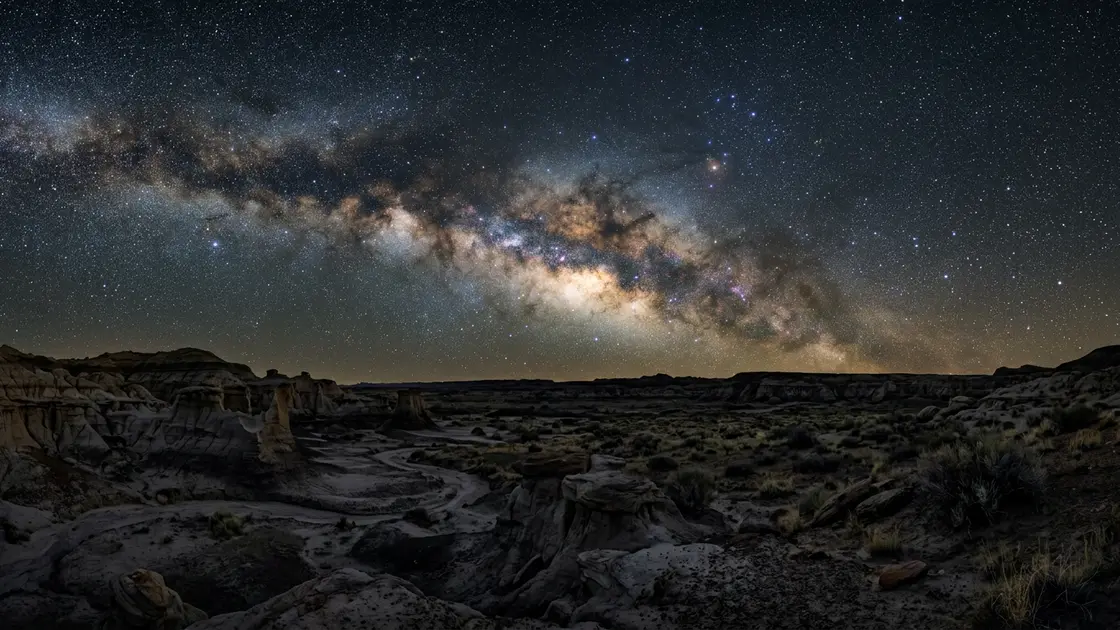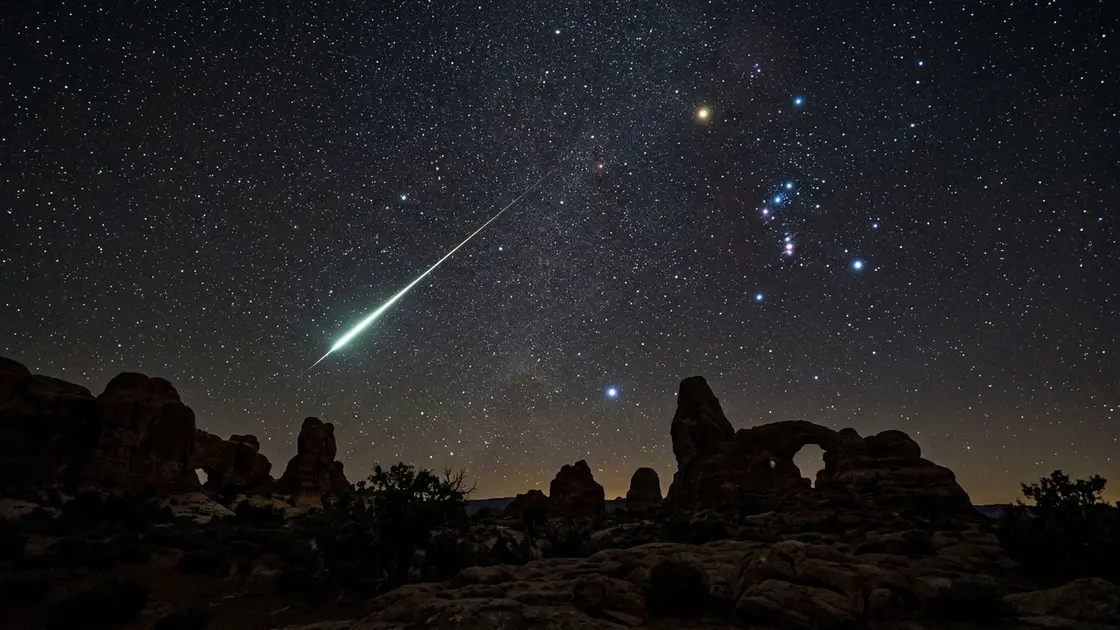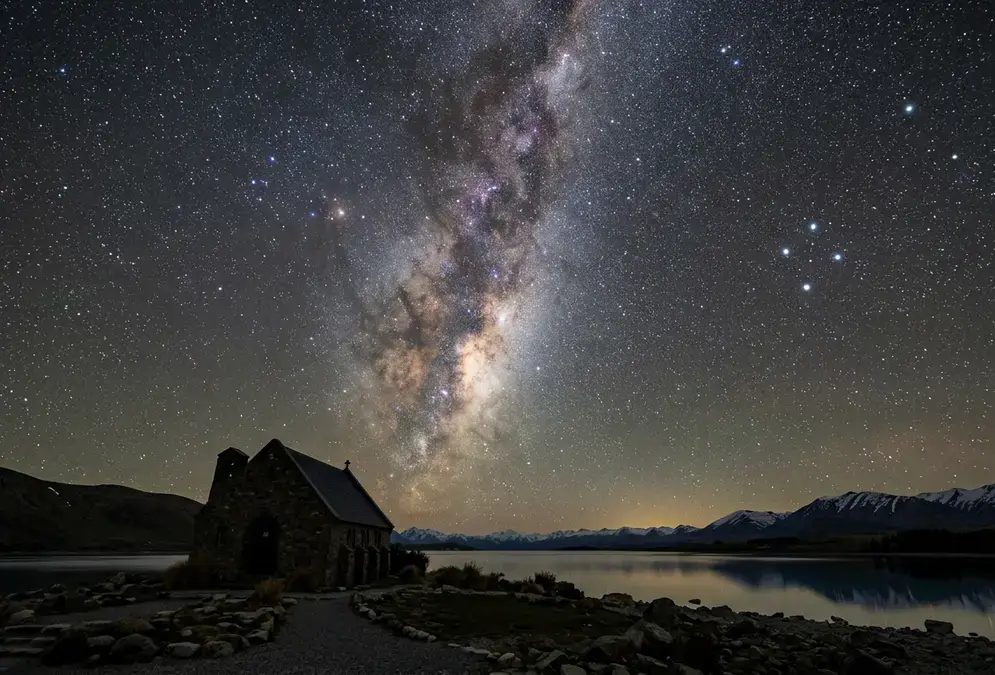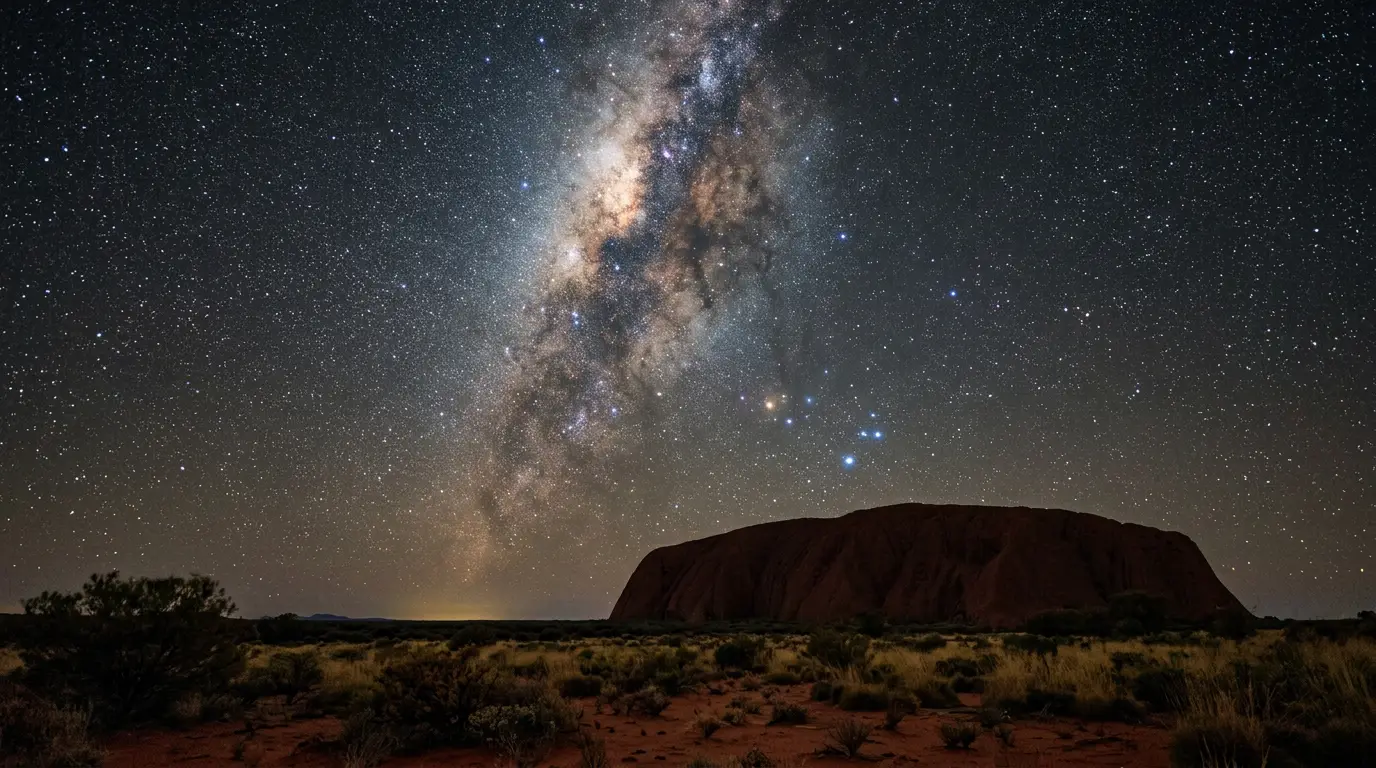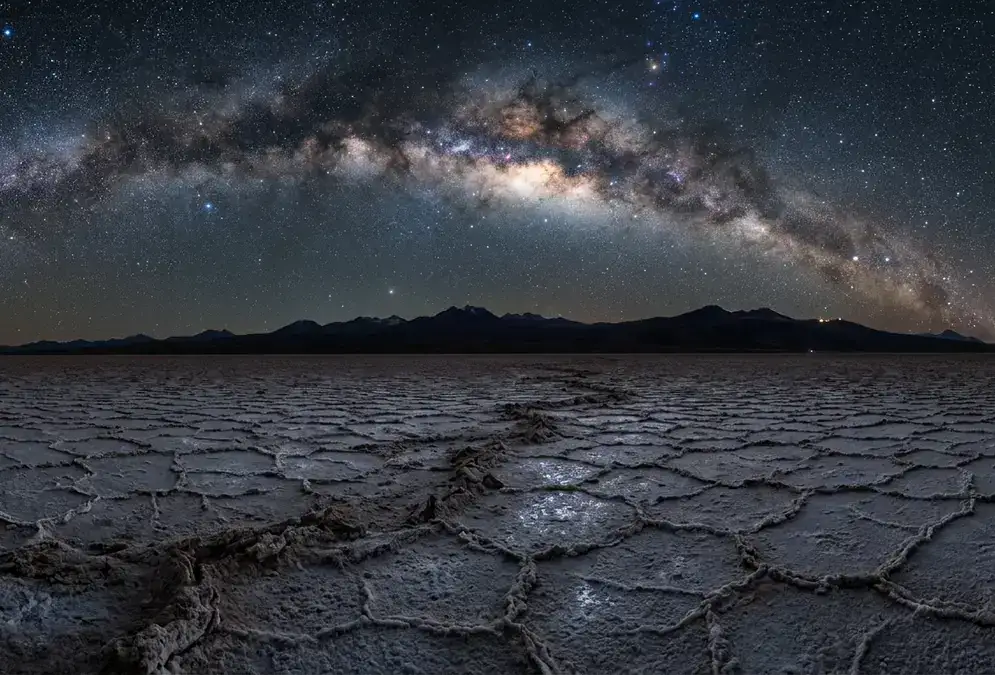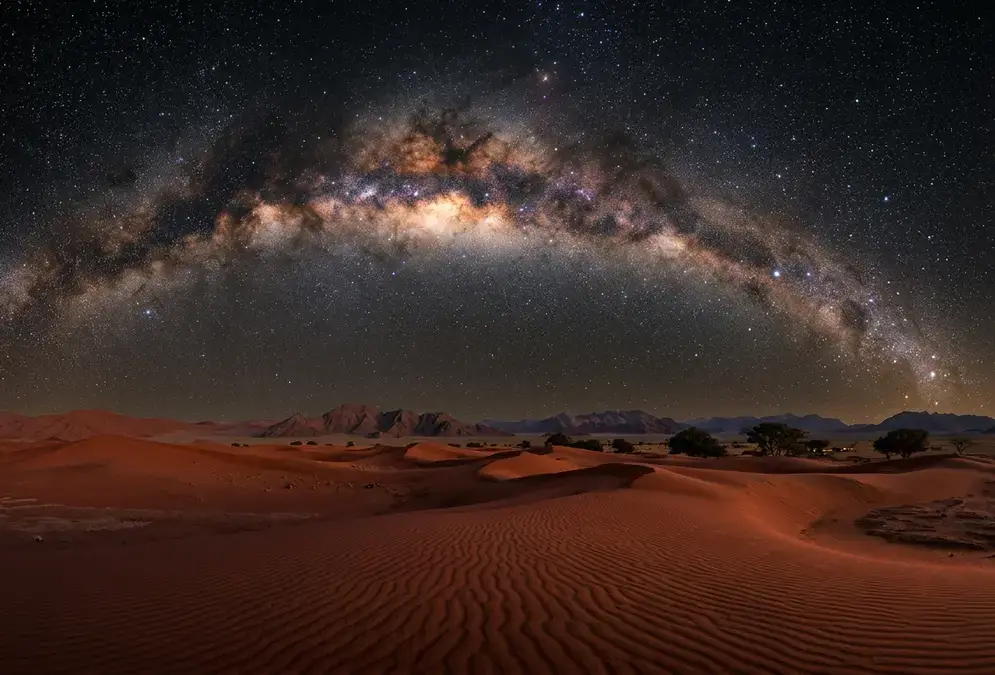
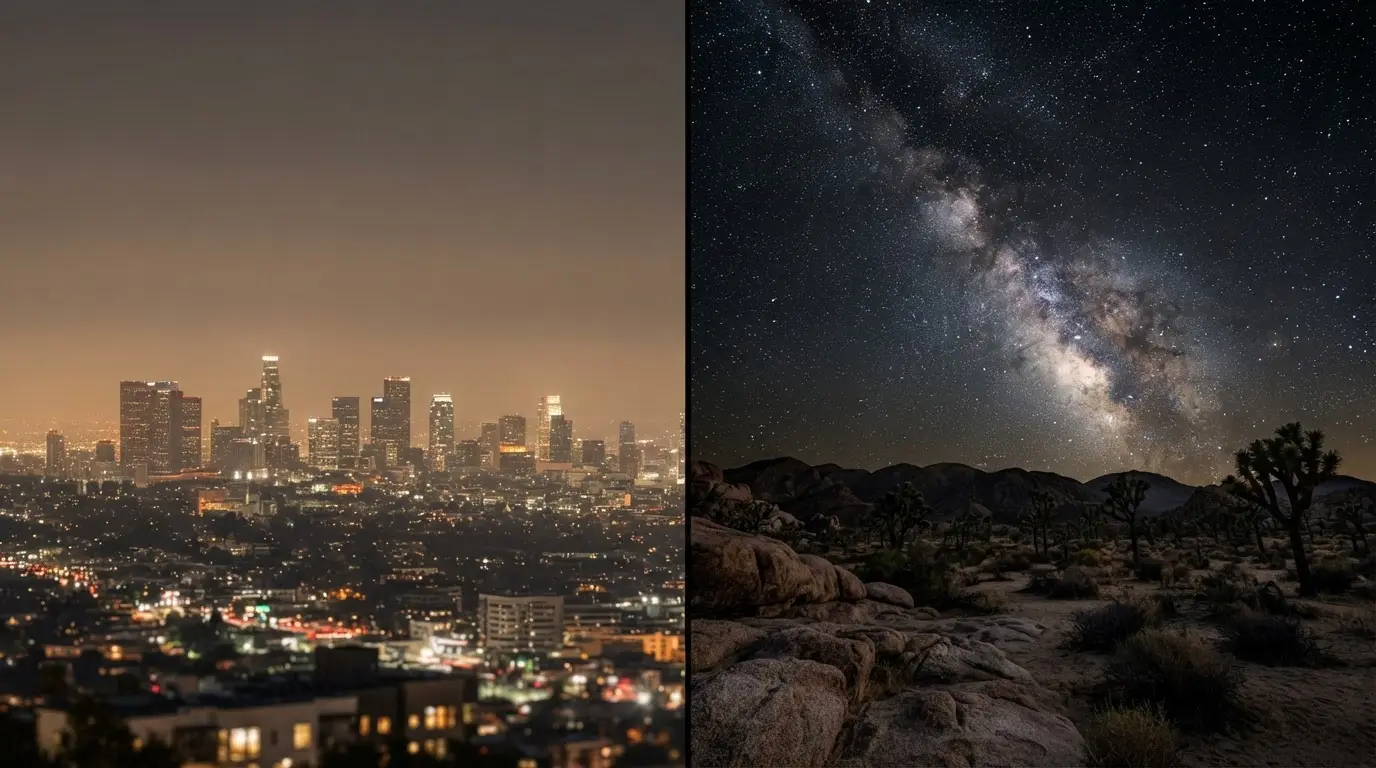
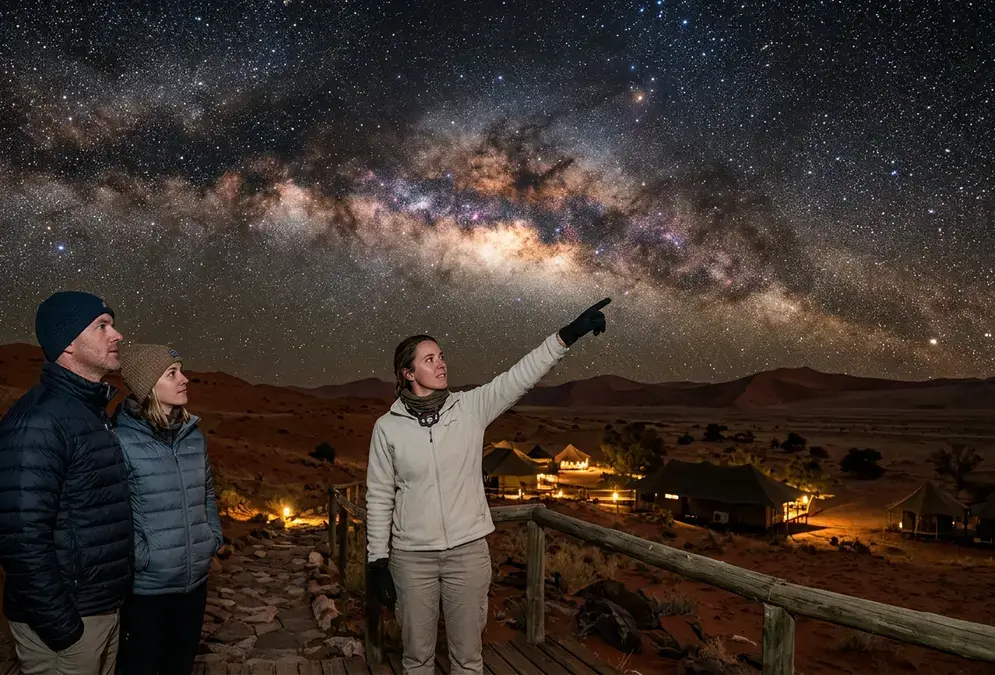
Milky Way and Southern Cross arcing over red dune sand in NamibRand Nature Reserve, Africa's Gold Tier Dark Sky Reserve in the Namib Desert at new moon
stargazing dark sky milky way

NamibRand: Africa's Gold Tier Dark Sky Reserve

NamibRand is Africa's only Gold Tier Dark Sky Reserve: extreme Namib Desert isolation, the Southern Cross, Magellanic Clouds, and luxury safari lodges.

Darkness: Bortle 1
Latitude: 25°S
Best months: May–Oct

Explore NamibRand Nature Reserve

Photo tour of the lodges, night-sky trips, and guides for this destination.

Dark-sky facts

Darkness
Bortle 1 · Exceptional (Gold Tier)
Best months
May–Oct
Country
Namibia
Coordinates
24.97°S, 15.95°E
Designation
NamibRand International Dark Sky Reserve
Night access
No public entry; the reserve is accessible only as an overnight guest of a partner lodge. Stargazing activities run most clear nights, scheduled independently by each lodge.
Costs & fees
No standalone entry fee; access is bundled into each lodge's per-night rate. Day-visitor access generally isn't available, and rates vary widely between properties and seasons, so confirm current pricing directly with the lodge or a specialist Namibia operator.

The Milky Way casts a faint shadow. Zodiacal light and airglow are obvious.

This destination rates Bortle 1 on the 9-level Bortle dark-sky scale, where 1 is a pristine dark sky and 9 is an inner-city sky. The Milky Way casts a faint shadow. Zodiacal light and airglow are obvious.

On this page

Updated

NamibRand Nature Reserve became Africa's first International Dark Sky Reserve in May 2012, and it did so at Gold Tier, the strictest category DarkSky International (then the International Dark-Sky Association) awards. It was only the second reserve on the planet to earn that rating. The distinction sits on a 200,000-hectare private reserve in the southern Namib Desert, bordering the dune fields of Namib-Naukluft National Park, where the nearest town lies some 60 miles off and no meaningful light source interrupts the horizon in any direction. There's no lake here to reflect the sky, no altitude to fight for breath at. What NamibRand sells is the driest air and the emptiest horizon on the continent, and a night sky ranked among the darkest ever measured.

The sky this month

Computed for NamibRand Nature Reserve at 25°S. Updates nightly.

  • First quarter tonight, 36% illuminated

    Next new moon August 12. The nights either side of it are the darkest of the month.

  • About 11 hours of astronomical darkness tonight

    The sun drops more than 18 degrees below the horizon, so the sky gets genuinely dark for deep-sky viewing at 25°S.

    Hours of astronomical darkness by month at NamibRand Nature Reserve: January 8 hours, February 8 hours, March 9 hours, April 10 hours, May 10 hours, June 11 hours, July 11 hours, August 10 hours, September 9 hours, October 9 hours, November 8 hours, December 7 hours.

  • Southern Delta Aquariids active now

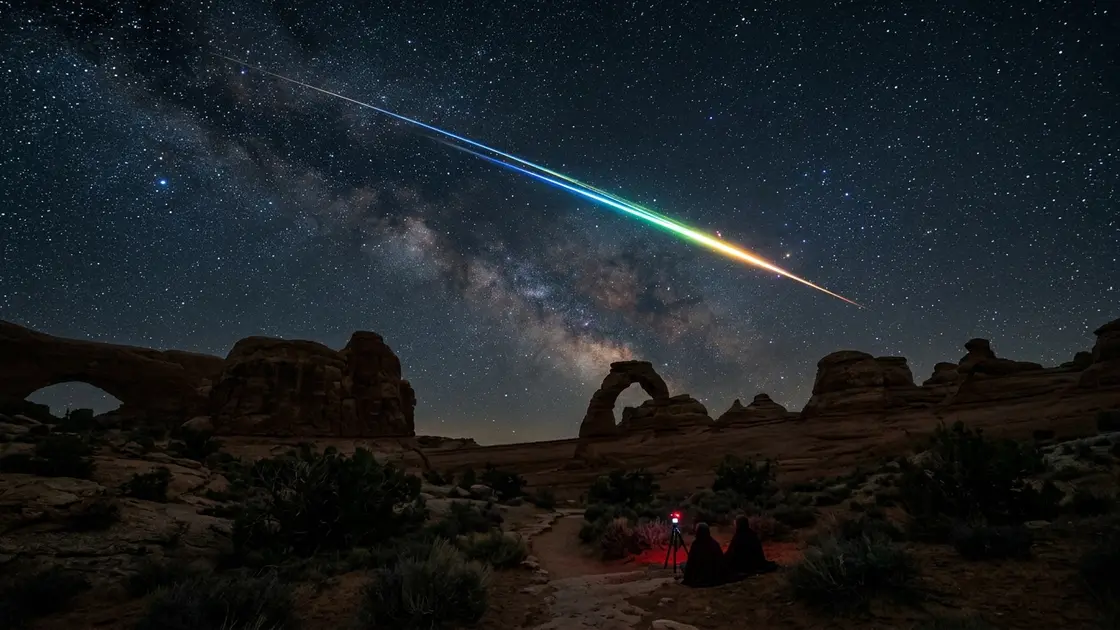
    Peaks July 28. Up to 20 meteors per hour at maximum. A steady southern shower that overlaps the early Perseid build-up.

New moons August 12 September 10 October 10
Add new-moon reminders Full sky calendar

Where to go stargazing in July

Why NamibRand earned Gold Tier status

The 2012 designation didn't happen because someone measured one exceptional night. DarkSky International's advisory board inscribed NamibRand at Gold Tier because its darkness held up, night after night, against the organization's strictest category. Spacenews reported at the time that the designation was historic on two counts: NamibRand was the first Dark Sky Reserve in Africa, and the first in any developing nation. It was also only the second reserve worldwide to reach Gold Tier, a bar few reserves anywhere have since cleared.

Scale and governance both do real work here. The reserve spans more than 200,000 hectares, roughly 2,000 km², one of Africa's largest private nature reserves. It was consolidated in the early 1990s from a patchwork of former sheep and cattle farms into a single conservation unit, with responsible tourism beginning around 1994. It isn't run by a national parks authority. A consortium of lodge and landowner partners funds it through tourism revenue, reinvested into desert ecology and dark-sky protection rather than filtered through a state budget. That private-consortium model is why NamibRand can enforce lighting discipline most public reserves can't: every partner lodge agrees to the reserve's dark-sky rules as a condition of operating inside it.

Isolation does the rest. NamibRand's own materials describe the nearest neighboring communities as roughly 60 miles distant, small enough and far enough that the reserve's sky is, in their words, one of the darkest yet measured. There's no ambient glow creeping over a ridge, no distant town lighting up the horizon at the edge of a long exposure. It's dark in every direction, for as far as the eye or the camera can reach.

The southern sky over the Namib Desert

That darkness buys a naked-eye view of the deep southern sky that few travelers anywhere get to see this clean. The Large and Small Magellanic Clouds, companion galaxies to the Milky Way, sit low in the southern sky on any clear night, visible without a telescope and invisible from anywhere north of the tropics. The Southern Cross (Crux) anchors the same view; Namibia values the constellation enough to put it, alongside a stylized sun, on its own national flag.

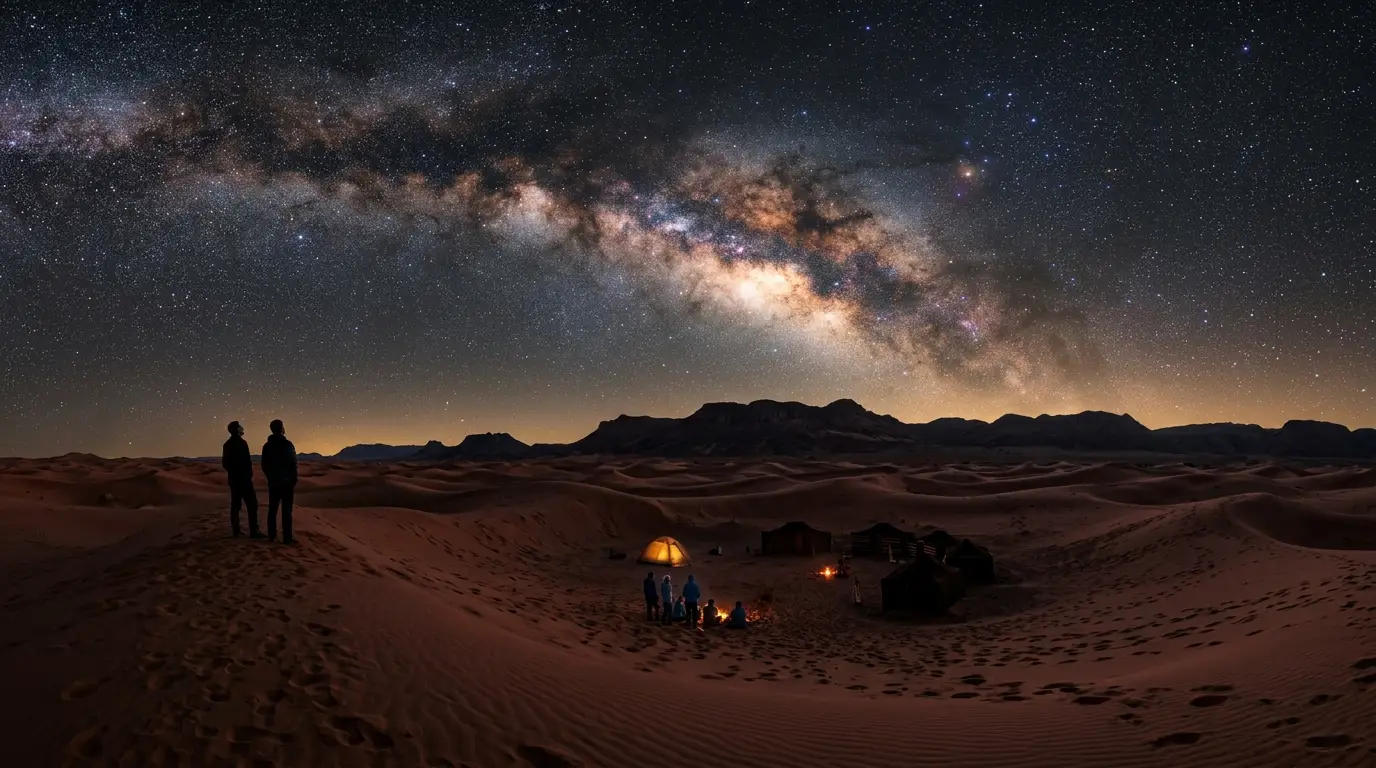
Time the trip for austral autumn and winter, roughly March through September, and the galactic core, the bright, dust-choked center of the Milky Way, climbs high and stays up for hours instead of skimming the horizon the way it does from temperate-latitude dark-sky sites. Add the desert's near-total absence of atmospheric moisture, no haze and no humidity to scatter light, and even a first-time stargazer with nothing but a blanket and a flask of coffee will pick out structure in the Milky Way that takes a proper astronomy trip almost anywhere else to find.

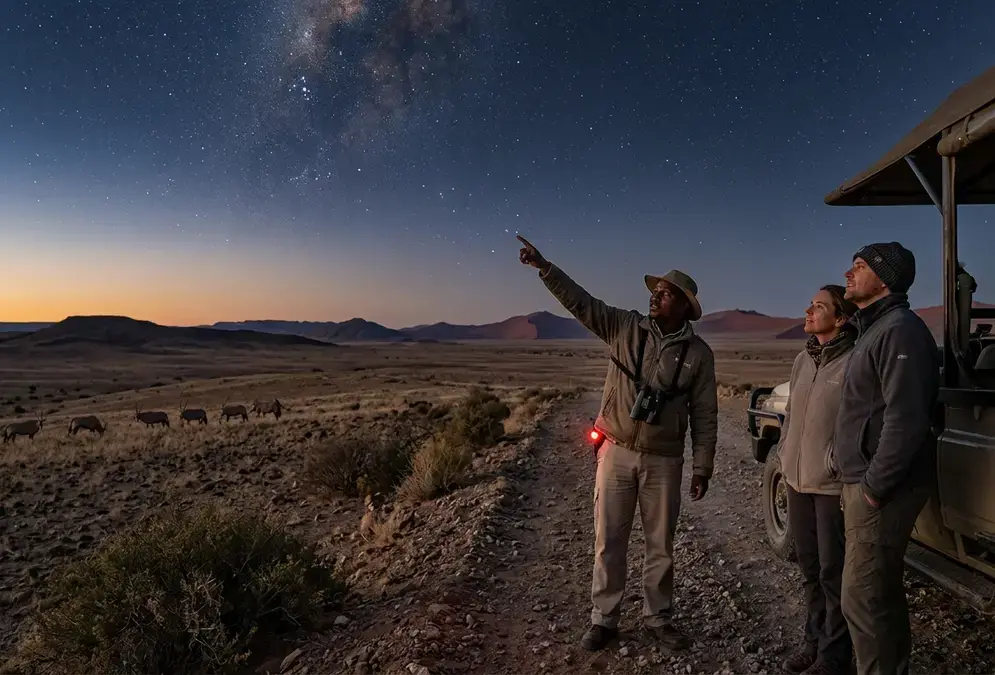
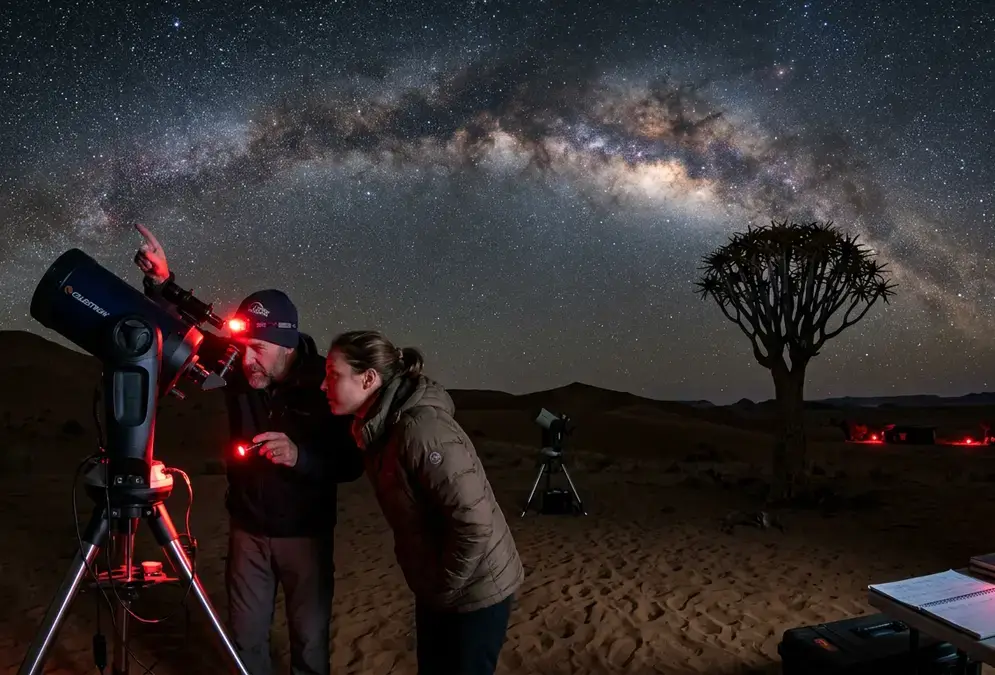
None of it needs a telescope. NamibRand's pitch was never about domes and eyepieces the way an observatory town's might be. It's about handing over the whole naked-eye sky intact and letting the desert do what the desert does — a lodge-based guided stargazing experience does the constellation orientation for you if you'd rather not go in cold.

Still weighing whether the trip earns its cost and distance? Is NamibRand worth it for stargazing? and NamibRand vs Atacama both work through the trade-offs against the other Gold Tier and Bortle-1 destinations on this site.

When to go: dry season versus wet season

Namibia runs on a southern-hemisphere calendar, and the dry season, May through October, is the safer bet for stargazing: daytime highs of 20-28°C, nights that drop to 7°C and sometimes below freezing out in the open desert, and skies that stay reliably clear night after night. Pack for genuine cold after dark even though the days run warm. Desert temperature swings are the whole point, and the reason to bring a proper jacket rather than a fleece.

The wet season, November through April, gets written off too quickly by travelers who've only stargazed in temperate climates. Daytime highs do climb to 30-35°C, sometimes past 40°C in the desert interior, and afternoon thunderstorms roll through, mostly January to March. But Namibia's aridity means even its wet season rarely brings the sustained cloud cover that would ruin a trip somewhere like the UK or the Pacific Northwest. A wet-season visit trades a small chance of an overcast evening for lower prices and thinner crowds, and the sky itself stays close to dry-season quality most nights regardless.

Whichever season lands the trip, check the moon phase before checking the month. A full moon washes out the Magellanic Clouds' fine detail here exactly the way it does everywhere else — the best time for NamibRand stargazing breaks the calendar down month by month.

Where to stay: lodges, not hotels

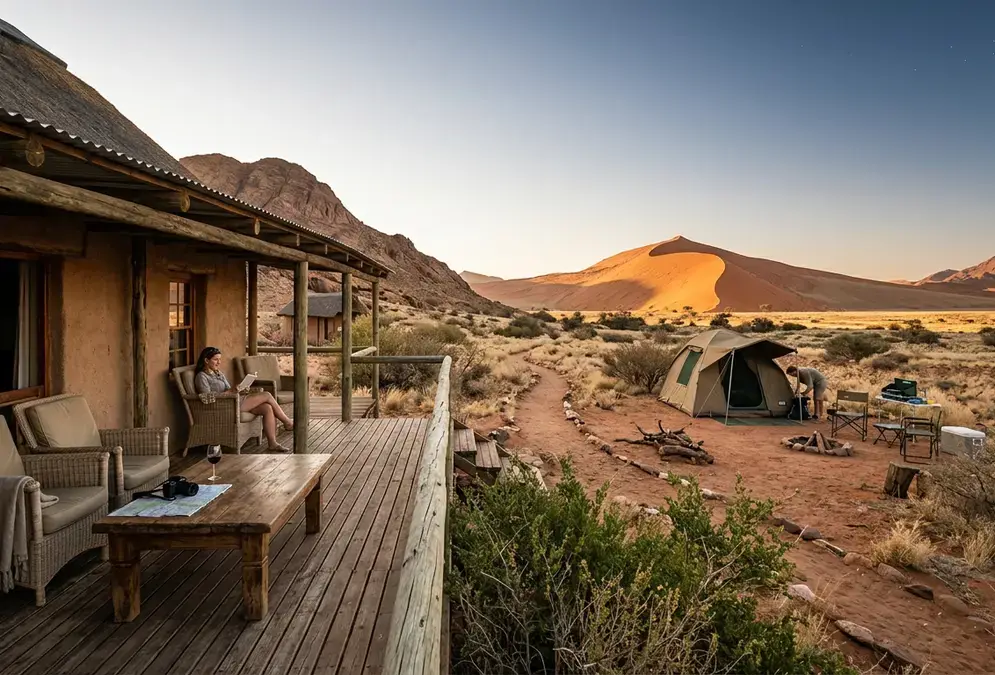
There's no budget tier inside NamibRand itself, and no OTA booking button either. Every property inside the reserve is a private, high-end lodge or tented camp, and most run direct-booking or specialist-operator channels rather than listing on Booking.com. That follows from the reserve's private-consortium model: every property operating here is a landowner partner, not a franchise, and pricing and booking follow accordingly. The full ranked guide to NamibRand's stargazing lodges compares all four properties on dark-sky access, star-bed facilities, and booking path.

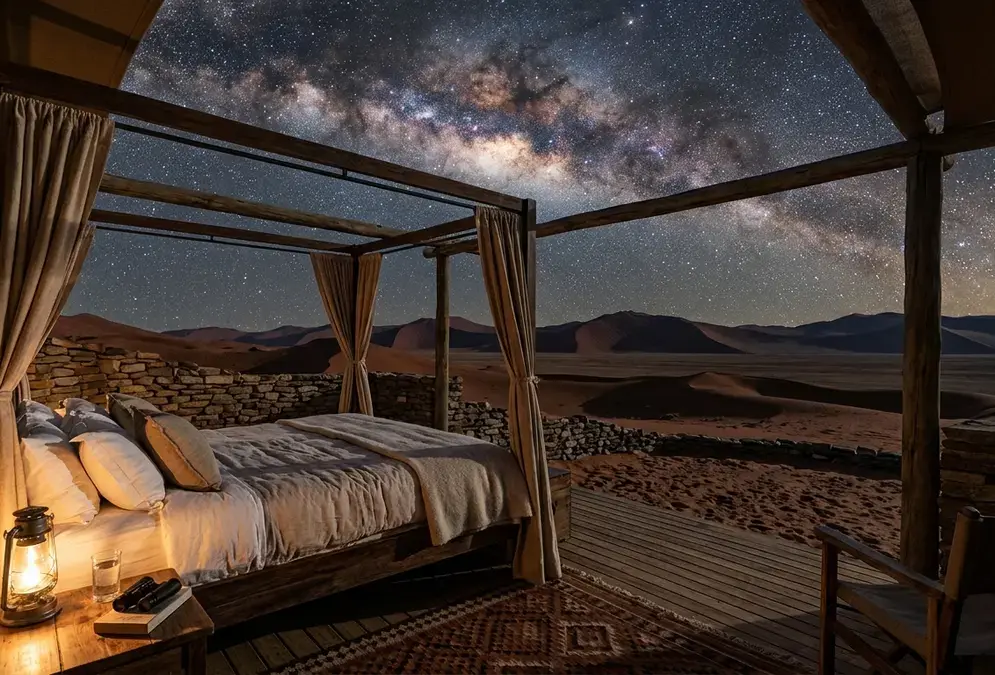
Wolwedans is the name most associated with the reserve. It's one of the founding land partners and runs several camps at different price points, from Dune Camp and Boulders Camp up to the fully private Mountain View Suite. &Beyond Sossusvlei Desert Lodge borders the reserve and builds its stargazing programme, including a guided astrophotography experience, around dedicated viewing decks and an on-site observatory. Kwessi Dunes sits inside its own 15,000-hectare concession within NamibRand, with reserve-wide access for guests, and a self-catering family-friendly option exists for travelers priced out of the luxury camps.

If that price tag doesn't fit the trip, the honest move is basing outside the reserve, in Sesriem or Solitaire, both a few hours' drive south and both far cheaper to sleep in. That trade gives up NamibRand's Gold Tier certification and its lodges' dedicated stargazing decks for a public-park stay, but it still lands deep in the same desert, under close to the same sky, with Sossusvlei an easy morning drive away.

Pairing NamibRand with the wider Namibia safari circuit

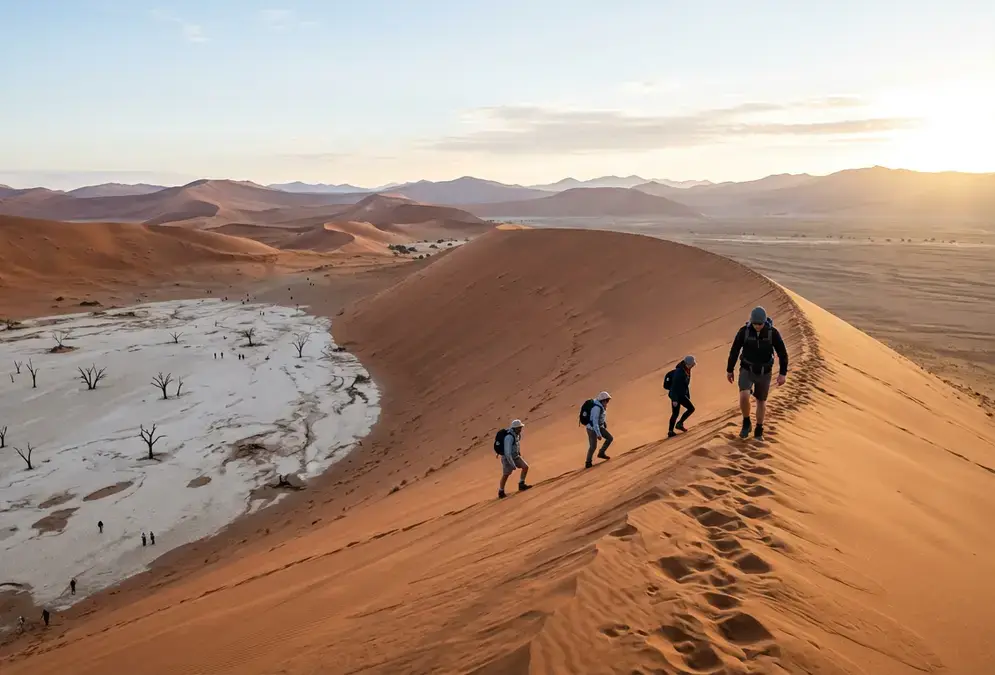
NamibRand's border with Namib-Naukluft National Park puts one of Namibia's signature sights within a short drive of any lodge stay: the towering red dunes of Sossusvlei and the bone-white, cracked clay pan of Deadvlei, its dead camel-thorn trees still standing centuries after the water that fed them dried up. It's the country's most photographed landscape, and it's typically a sunrise excursion, timed to beat both the heat and the tour buses.

Most multi-day Namibia itineraries build around exactly this pairing: two or three nights inside NamibRand for the stargazing and the desert-adapted wildlife, then a Sossusvlei/Deadvlei sunrise run before moving on — the Sossusvlei safari and stargazing combo tour and the beginner-friendly Namib Desert Sky Safari both package that pairing directly. Travelers with more time extend the loop north to Etosha National Park for big-game viewing, turning a stargazing stop into the anchor of a full Namibia circuit rather than a stand-alone trip. Given how remote and expensive it is to get out here in the first place, that's the sensible way to spend the extra flight or drive time, not a single-purpose trip for the sky alone; see what to do in NamibRand beyond stargazing for the fuller list of dune walks, wildlife, and balloon flights.

Getting to NamibRand from Windhoek

Be honest about the commitment before booking. This isn't a stargazing detour tacked onto another trip. Hosea Kutako International Airport in Windhoek is the country's main international gateway, and from there it's a genuine half-day of onward travel before reaching a lodge.

Self-drive covers roughly 500 km and 7 to 8 hours total: about five hours from Windhoek or Swakopmund to Sesriem via Solitaire, with a fuel stop, then a further two and a half hours on well-maintained gravel roads to reach lodges such as Wolwedans' village reception. The roads mix tarred national highway and graded dirt. A 4x4 is recommended for the final stretch but isn't strictly mandatory, depending on the exact route and season.

Charter flight cuts that to about an hour. Most upscale lodges arrange a roughly 60-minute charter from Windhoek or Swakopmund directly to a private airstrip inside or near the reserve, followed by a 15 to 20 minute transfer to camp. Regional carrier FlyNamibia also runs scheduled flights from Windhoek and Swakopmund to Keerweder Airstrip, a 45-minute road transfer from lodges like Wolwedans, for travelers who want a faster, lower-cost option between full self-drive and a private charter. The full getting to NamibRand breakdown covers the charter-versus-self-drive decision in more detail.

Planning your visit

How many nights? Two minimum, three if the budget allows — see how many days for NamibRand stargazing for how that scales once Sossusvlei and Etosha are added to the trip. NamibRand's lodges price by the night and most build a game drive or two around the stargazing, so a single overnight barely leaves time to adjust to the desert cold before heading back to the airstrip.

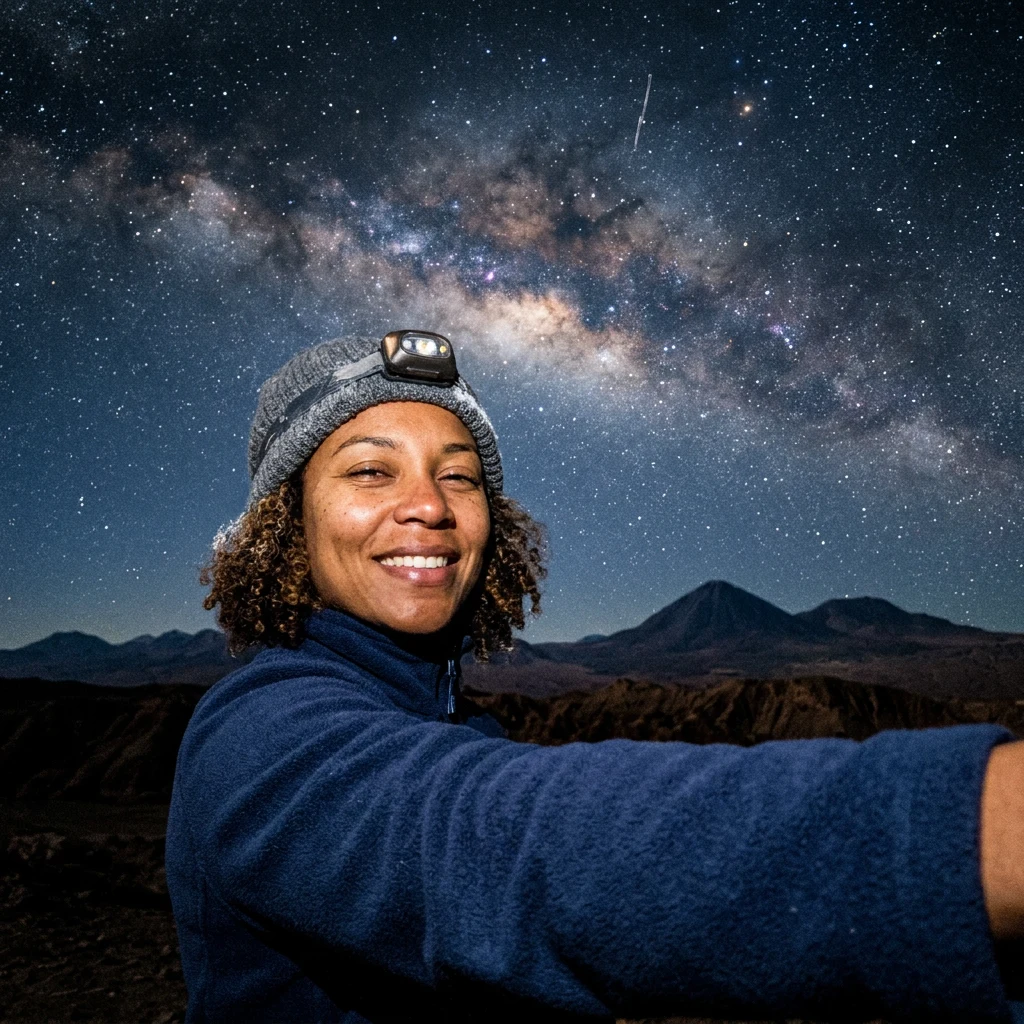
What to bring? Layers, non-negotiably. Daytime desert heat and near-freezing desert nights sit inside the same 24 hours here, dry season or wet. A red-light headlamp protects night vision on the walk back from a dune-top viewing spot, and binoculars resolve real structure in the Magellanic Clouds that the naked eye can only guess at — the NamibRand stargazing gear guide covers the full packing list for the desert's temperature swings.

Moon phase still rules everything. Build the trip around a new-moon window if the whole point is the Milky Way and the Magellanic Clouds; a bright moon mutes both no matter how dark the underlying sky rates. Build in an extra day or two for the Sossusvlei/Deadvlei excursion too. Skipping the dunes next door to save one day, this deep in the Namib, is the kind of decision most travelers only regret once they're home.

Month by month

NamibRand's stargazing calendar follows Namibia's dry season. May through October brings the driest air and clearest skies of the year, with the galactic core visible for much of the night during the austral winter months of June to August. The wet season, November through April, brings higher humidity and more cloud cover, and the occasional rain shower can wash out a night's viewing, though clear stretches still happen.

  • January: Fair — Wet season peak; humidity and cloud cover are highest of the year.
  • February: Fair
  • March: Good — Transitional; skies begin clearing as the rains taper off.
  • April: Good
  • May: Good — Dry season begins; nights get colder and clearer.
  • June: Peak — Peak dry season: driest air of the year, galactic core visible for most of the night.
  • July: Peak
  • August: Peak — Coldest, clearest nights; pack for near-freezing temperatures after midnight.
  • September: Good — Still dry, warming up, galactic core lower after midnight.
  • October: Fair — Transition toward the wet season; haze and dust increase.
  • November: Fair
  • December: Fair — Rains typically arrive, raising the odds of overcast nights.

Going in June? See what else the sky offers that month

How long to stay

Best season

May through October (southern-hemisphere dry season) for the clearest, driest skies; March through September for the galactic core riding highest; November through April is warmer with brief afternoon storms but still very low light pollution

Quietest hours

Any time after the lodge's dinner service winds down; with no towns or through-traffic for dozens of miles, NamibRand's night sky doesn't have a genuine "crowded" window the way an observatory town does

Visit duration

2–3 nights minimum inside the reserve; add a day or two more to combine with a Sossusvlei/Deadvlei sunrise excursion or a wider Namibia safari circuit

Interactive map — loads as you scroll (requires JavaScript)

Tap a pin to open the lodge, tour, or destination page.

All tours

Top lodges at a glance

3 Luxury

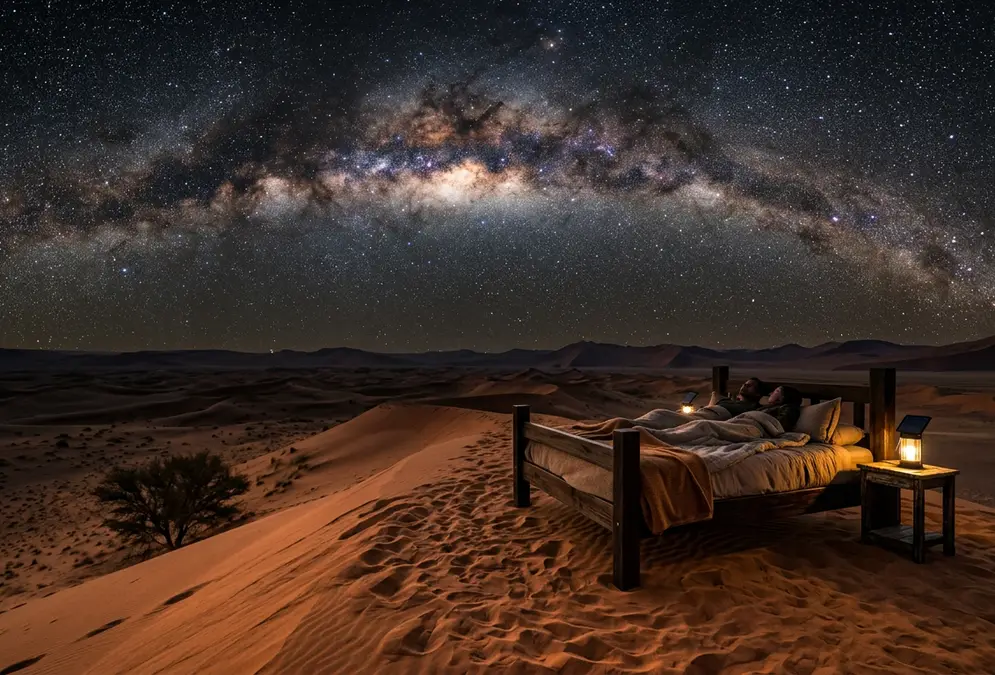
Best best for a private star-gazing bedroom in a boutique camp

Kwessi Dunes

12 chalets, each with a private open-air stargazing bedroom, rates via consultant enquiry

NAD 10,845–20,495 per night (all-inclusive) View lodge
4 Glamping

Best best budget and family base under the same gold tier sky

NamibRand Family Hideout

Self-catering 3-bedroom farmhouse plus 2 campsites, ~110 km south of Sossusvlei, direct-enquiry booking

Price on request · not published on the official site or third-party listings · from $100/night View lodge
See the full ranking: Best Stargazing Lodges in NamibRand

Reporter notebook

Insider tips

Best time

Don't write off the wet season

November through April brings brief afternoon thunderstorms, mostly January to March, but Namibia's aridity means even the wet season rarely delivers the sustained cloud cover that would ruin a trip in a temperate climate. If dry-season prices or crowds are the obstacle, a wet-season NamibRand stay still gets close to dry-season sky quality most nights.

Money tip

Base in Sesriem or Solitaire if the lodges are out of budget

NamibRand itself has no budget tier; every property inside the reserve is a high-end lodge booked direct or through a specialist operator. Sesriem and Solitaire, just outside the reserve boundary, cost far less, sit within easy reach of Sossusvlei, and still put you deep in the same dark desert, even without the Gold Tier certification or a dedicated stargazing deck.

What to bring

Pack for the temperature swing, not the season

Desert days and nights sit at opposite extremes here regardless of month: daytime highs in the high 20s to mid-30s°C, nights that can drop to 7°C or below freezing in the dry season. Bring real layers, not a single fleece, and a red-light headlamp to protect night vision walking back from a dune-top viewing spot after dark.

Frequently asked questions

What makes NamibRand Nature Reserve the darkest place on Earth?

Extreme isolation. NamibRand's nearest neighboring communities lie roughly 60 miles away, and no meaningful artificial light source interrupts the horizon for hundreds of kilometers in most directions. Combined with the Namib Desert's near-total absence of humidity and haze, that isolation earned the reserve Gold Tier International Dark Sky Reserve status in May 2012, the strictest classification DarkSky International awards.

What is a Gold Tier Dark Sky Reserve?

Gold Tier is the darkest and strictest classification DarkSky International (formerly the International Dark-Sky Association) awards to International Dark Sky Reserves. NamibRand earned it in May 2012, becoming the first Dark Sky Reserve in Africa and in any developing nation, and only the second reserve on Earth to reach Gold Tier at the time.

When is the best time to see stars at NamibRand?

May through October, Namibia's dry season, gives the most reliably clear, driest skies, with nights dropping to 7°C or below freezing. March through September is best for the galactic core, which rises high overhead rather than skimming the horizon. The wet season (November–April) brings brief afternoon storms but still keeps light pollution near zero, so it's not a write-off, just a slightly less certain bet.

Can you see the Milky Way's galactic core from Namibia?

Yes. From NamibRand's latitude, the galactic core climbs directly overhead during austral autumn and winter, roughly March through September, rather than staying low on the horizon as it does from most Northern Hemisphere dark-sky sites. The Large and Small Magellanic Clouds, both visible to the naked eye, are also on view year-round from the reserve.

How do you get to NamibRand Nature Reserve from Windhoek?

Self-drive takes 7 to 8 hours total: roughly five hours from Windhoek or Swakopmund to Sesriem via Solitaire, then about two and a half hours further on gravel roads to reach lodges inside the reserve. A charter flight cuts that to about an hour, landing at a private airstrip near camp, and regional carrier FlyNamibia also runs scheduled flights to nearby Keerweder Airstrip, a 45-minute transfer from lodges such as Wolwedans.

What is the difference between NamibRand and Sossusvlei?

NamibRand is a private nature reserve certified for its dark sky and built around lodge-based stargazing and desert wildlife. Sossusvlei and the Deadvlei clay pan sit just next door inside neighboring Namib-Naukluft National Park and are the region's signature dune-and-photography draw. Most travelers combine the two: a NamibRand lodge stay for the night sky, plus a Sossusvlei/Deadvlei sunrise excursion.

Can you combine NamibRand stargazing with a wider Namibia safari?

Yes, and most multi-day Namibia itineraries do exactly that. A common pattern is two or three nights at a NamibRand lodge for stargazing and desert-adapted wildlife, a Sossusvlei/Deadvlei sunrise excursion, and then an extension north to Etosha National Park for big-game viewing, turning the dark-sky stay into one leg of a full safari circuit.

Are there budget accommodation options for stargazing near NamibRand?

Not inside the reserve itself. Every property operating within NamibRand's boundaries is a high-end private lodge or tented camp, priced and booked directly or through specialist operators rather than general travel sites. Travelers on a tighter budget typically base in Sesriem or Solitaire, just outside the reserve, which cost far less and still sit deep in the same desert.

Is NamibRand a Dark Sky Reserve or a Dark Sky Park?

A Dark Sky Reserve. The designation applies to a large protected area, usually with a dark core zone surrounded by a populated periphery that supports it, rather than a single park boundary. NamibRand holds that designation at Gold Tier, the strictest tier in the category and one only a handful of reserves worldwide have reached.

Further reading

Sources