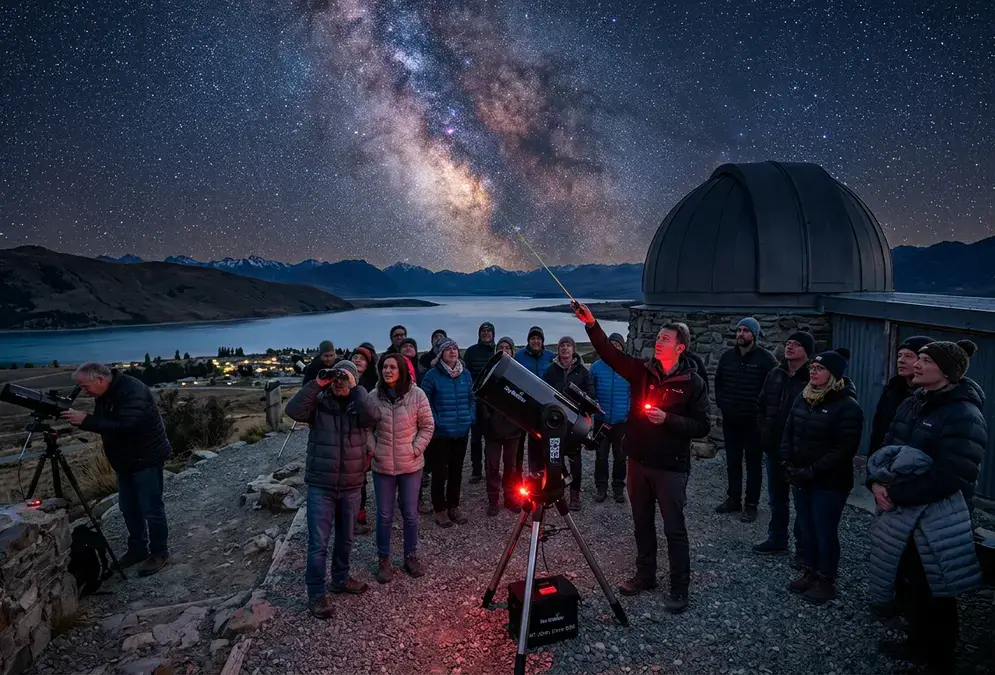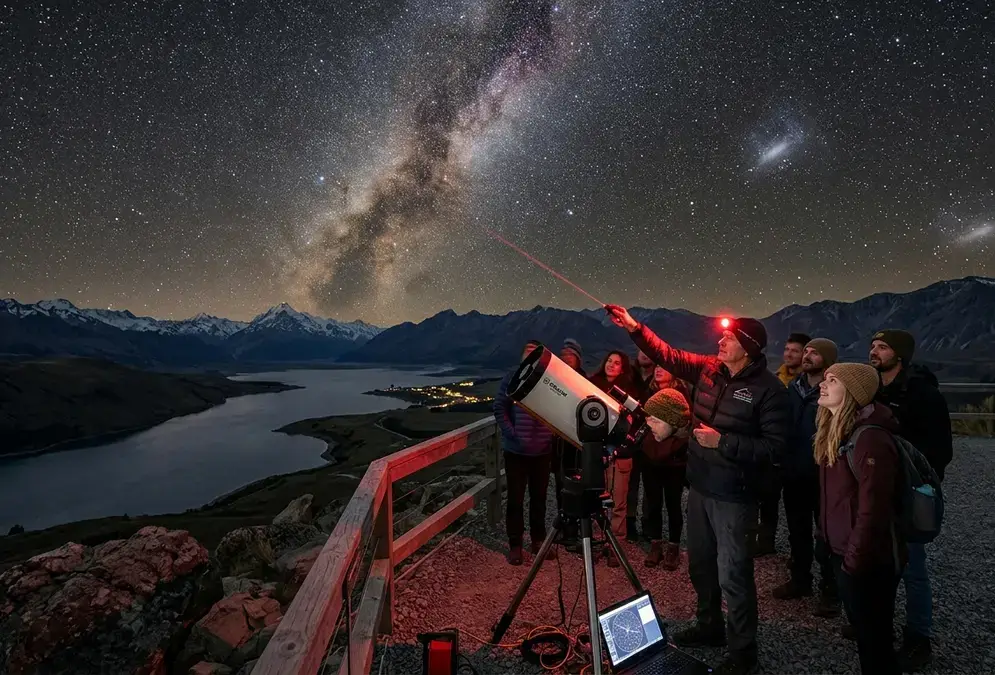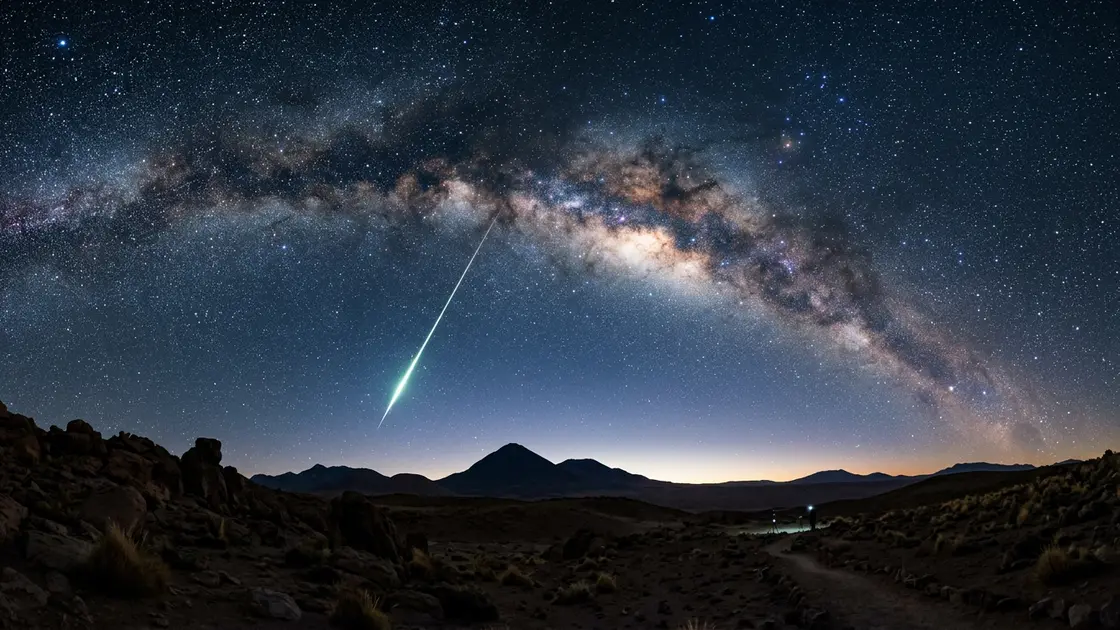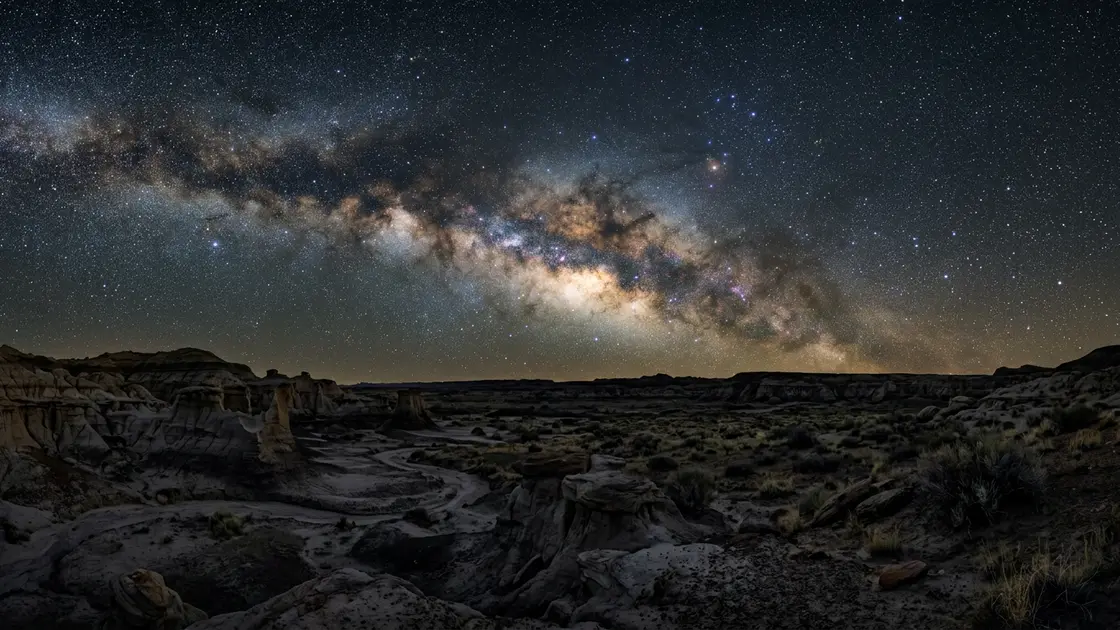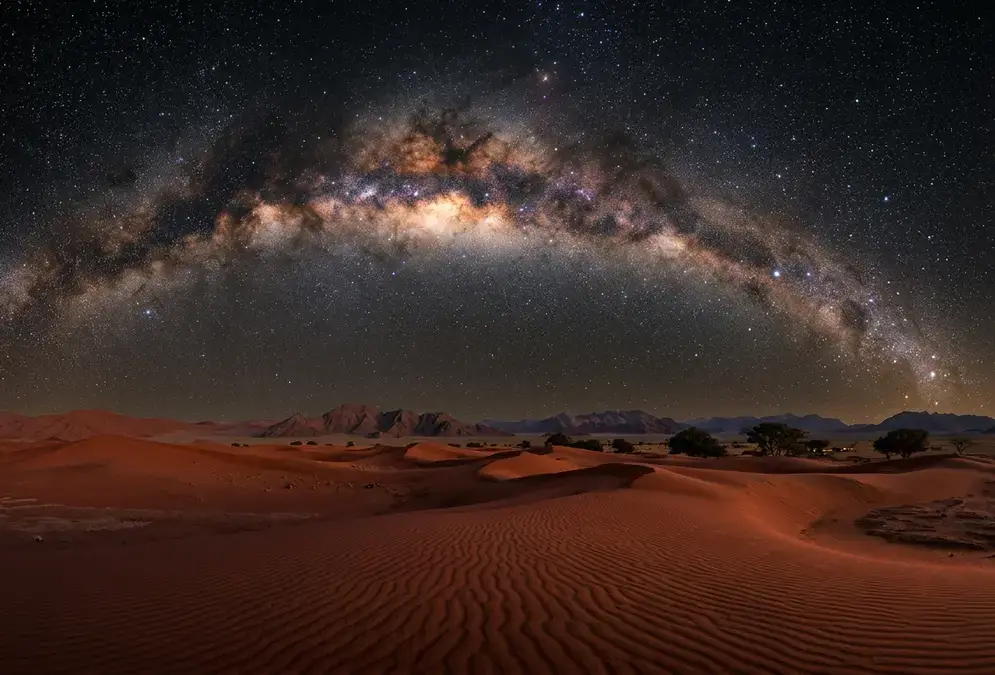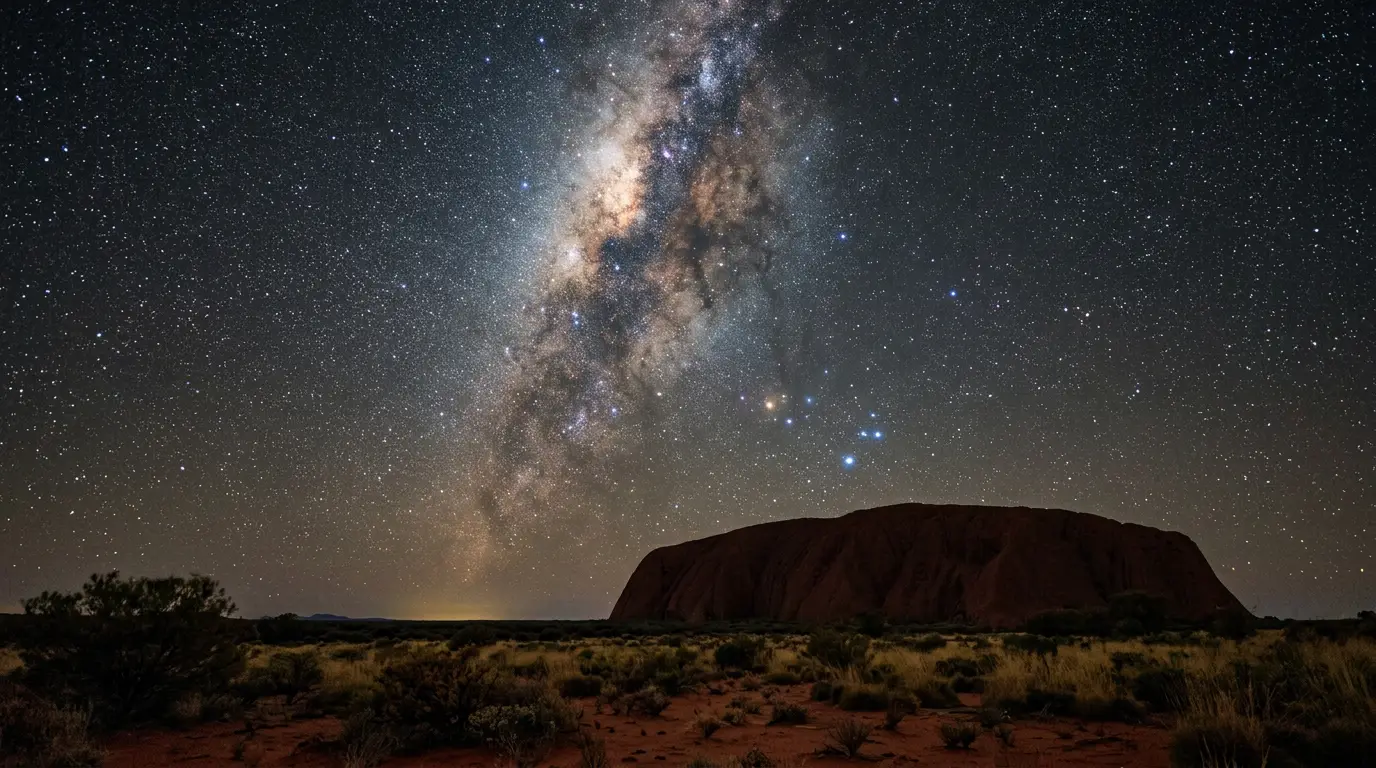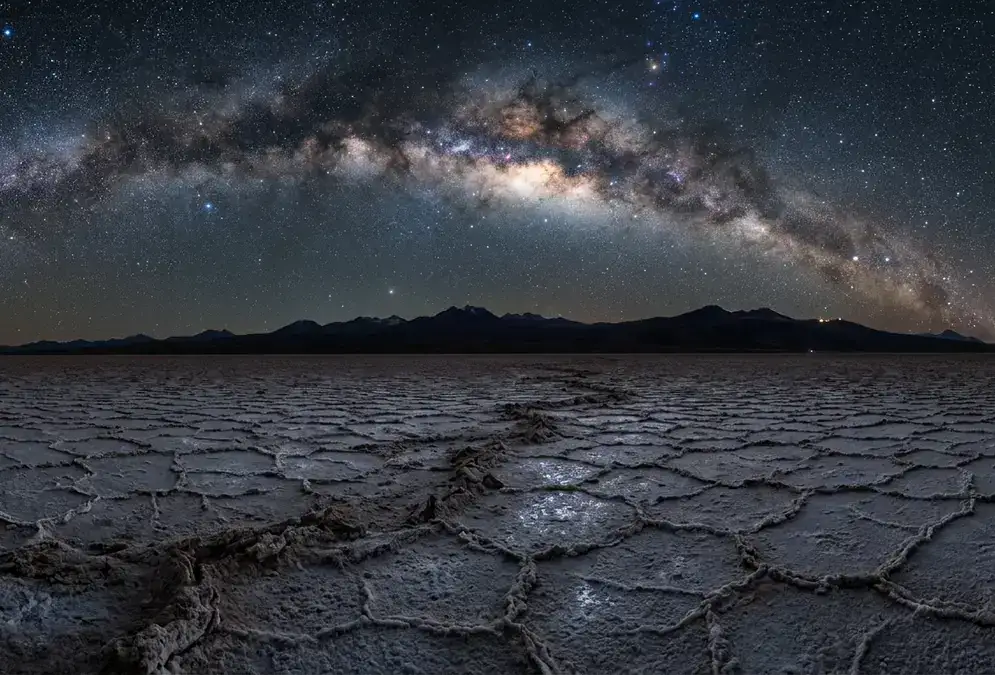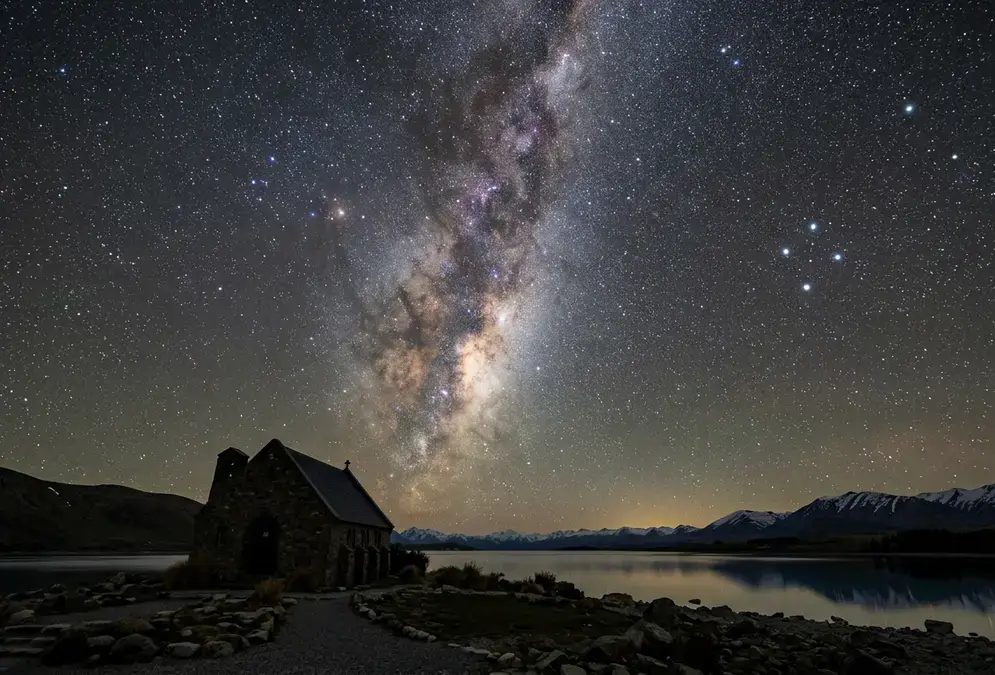
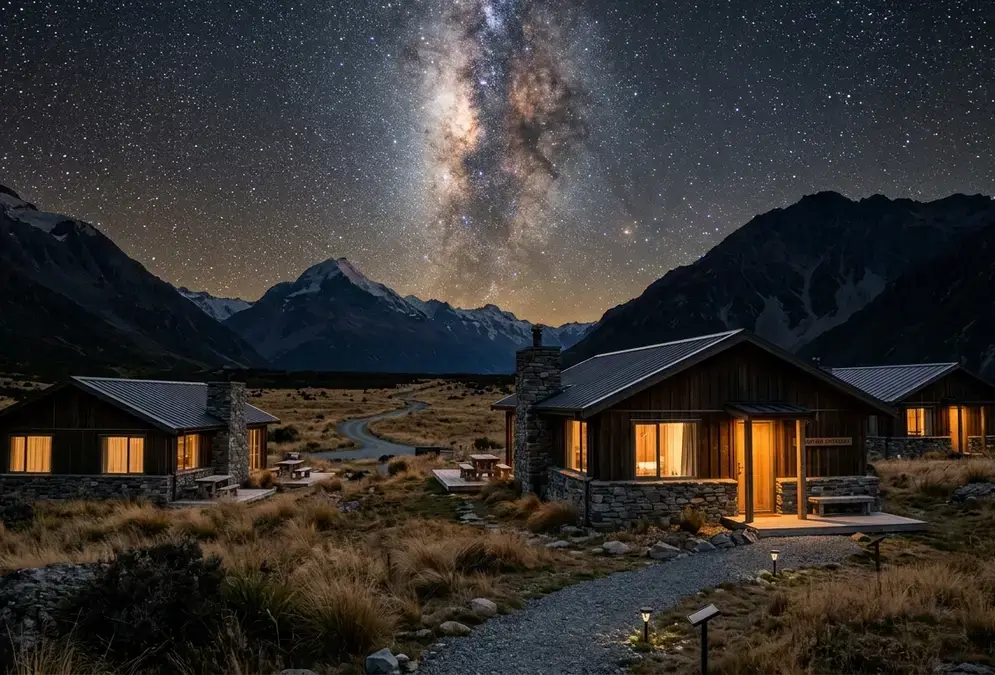
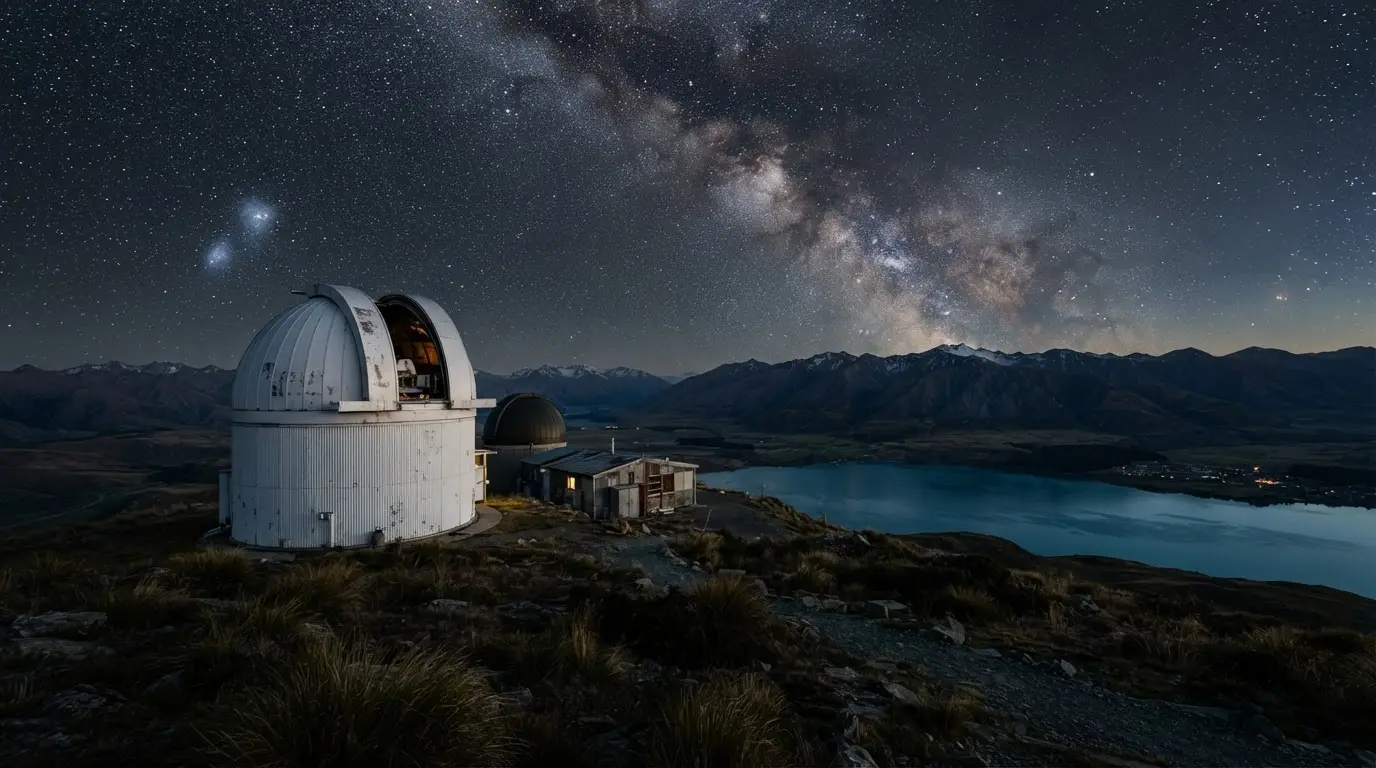
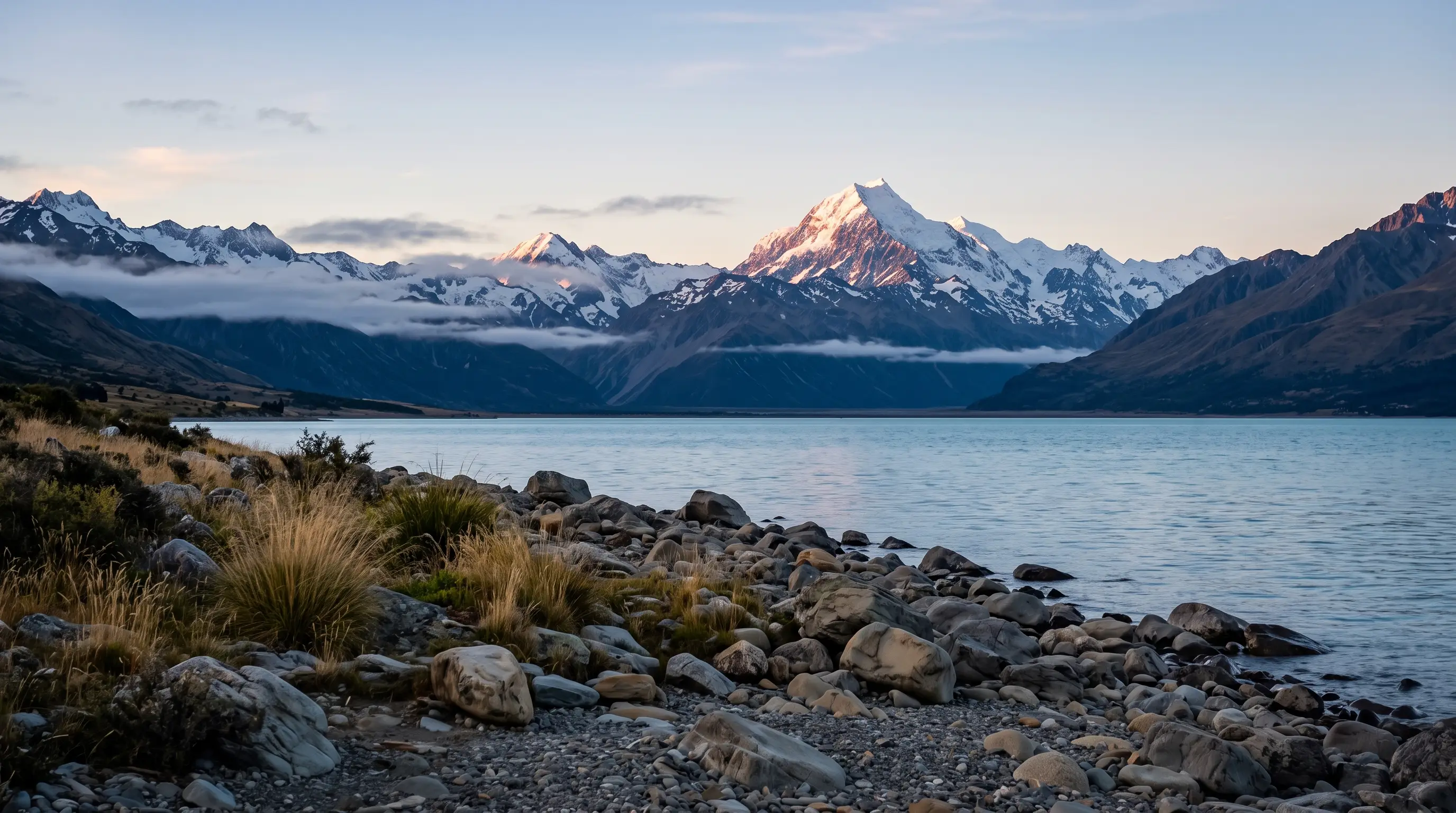
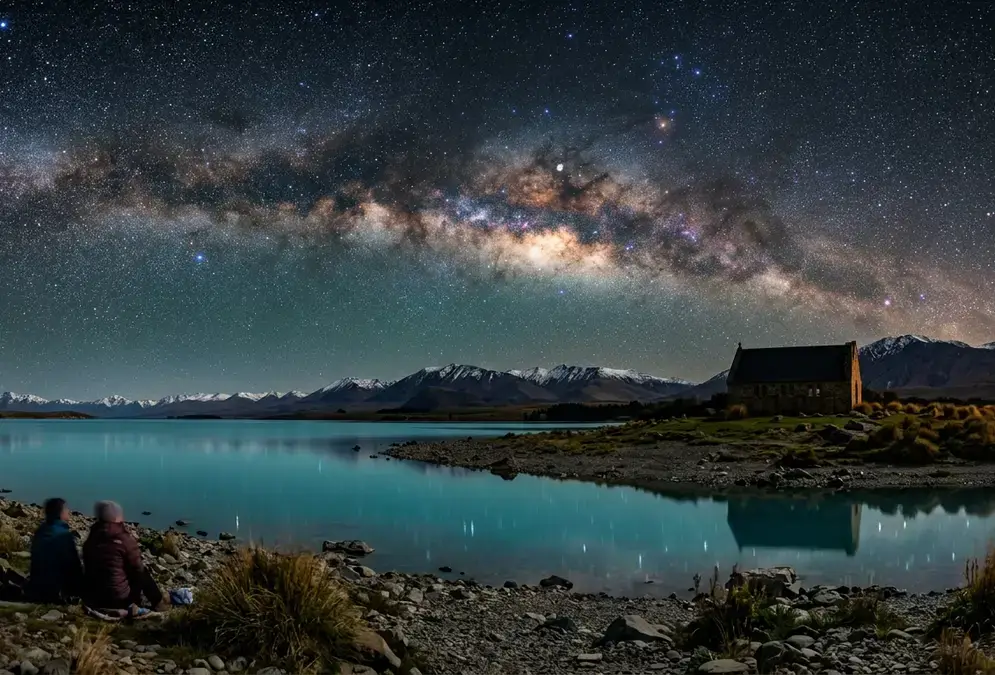
Milky Way arching directly overhead above Lake Tekapo and the Church of the Good Shepherd, Southern Cross visible, Aoraki Mackenzie Gold Tier dark sky reserve at new moon
stargazing dark sky milky way

Aoraki Mackenzie: New Zealand's Gold Tier Dark Sky Reserve

Aoraki Mackenzie is one of only four Gold Tier Dark Sky Reserves on Earth: Bortle 2 skies over Lake Tekapo, the Southern Cross, and Mount John Observatory tour.

Darkness: Bortle 2
Latitude: 44°S
Best months: Mar–Oct

Dark-sky facts

Darkness
Bortle 2 · Dark sky
Best months
Mar–Oct
Country
New Zealand
Coordinates
44.01°S, 170.48°E
Designation
Aoraki Mackenzie International Dark Sky Reserve
Night access
Reserve open 24/7 year-round; Dark Sky Project's Mount John Observatory tours run nightly by reservation, weather permitting; cloud cover is the main reason tours get cancelled, so check the forecast before you book
Costs & fees
Free to enter the reserve; Dark Sky Project's Summit Experience tour from $219 NZD adult ($169 child, age 10+), pricing valid through 30 September 2026; accommodation and other tours priced separately

Weighing it against somewhere else? Uluru vs Aoraki Mackenzie Stargazing: How to Choose

The Milky Way is richly structured overhead; the Andromeda Galaxy is an easy naked-eye smudge.

This destination rates Bortle 2 on the 9-level Bortle dark-sky scale, where 1 is a pristine dark sky and 9 is an inner-city sky. The Milky Way is richly structured overhead; the Andromeda Galaxy is an easy naked-eye smudge.

On this page

Updated

Aoraki Mackenzie was one of the first two International Dark Sky Reserves to earn Gold Tier status, the highest classification the International Dark-Sky Association awarded at the time, granted in November 2013 alongside NamibRand in Namibia, and it remains one of only four Gold Tier reserves worldwide today, joined since by Kerry (Ireland, 2014) and Central Idaho (US, 2017). The reserve spans 4,367 km² across the Mackenzie Basin and Aoraki/Mount Cook National Park on New Zealand's South Island, and it earned the tier by never losing what most stargazing destinations have had to fight to reclaim: a sky that stayed dark because the Mackenzie Basin never grew a city large enough to threaten it. What that rating buys you is a naked-eye view of the Magellanic Clouds, the Southern Cross, and a galactic core that sits directly overhead rather than smeared along the horizon, the way it does from every stargazing destination in Europe or North America.

The sky this month

Computed for Aoraki Mackenzie at 44°S. Updates nightly.

  • First quarter tonight, 36% illuminated

    Next new moon August 12. The nights either side of it are the darkest of the month.

  • About 11 hours of astronomical darkness tonight

    The sun drops more than 18 degrees below the horizon, so the sky gets genuinely dark for deep-sky viewing at 44°S.

    Hours of astronomical darkness by month at Aoraki Mackenzie: January 4 hours, February 6 hours, March 8 hours, April 10 hours, May 11 hours, June 12 hours, July 11 hours, August 10 hours, September 9 hours, October 7 hours, November 5 hours, December 4 hours.

  • Southern Delta Aquariids active now

    Peaks July 28. Up to 20 meteors per hour at maximum. A steady southern shower that overlaps the early Perseid build-up.

New moons August 12 September 10 October 10
Add new-moon reminders Full sky calendar

Where to go stargazing in July

Why Aoraki Mackenzie is a Gold Tier dark sky reserve

The Aoraki Mackenzie International Dark Sky Reserve was designated in June 2012, and at the time it was the largest dark-sky reserve anywhere in the world and the only one of its kind in the Southern Hemisphere. Eighteen months later, in November 2013, it became one of the first two reserves worldwide to earn Gold Tier status, the IDA's top rating at the time, shared only with Namibia's NamibRand Nature Reserve. Two more reserves, Kerry in Ireland (2014) and Central Idaho in the US (2017), have since joined them, bringing the total to four Gold Tier reserves worldwide. The classification tracks measured sky darkness, and this reserve's sky rates Bortle Class 2 on the nine-level Bortle Dark-Sky Scale: a truly dark site, the kind where the Milky Way casts a faint shadow and the unaided eye resolves detail most travelers have never seen.

Where Chile's Atacama earns its reputation from bone-dry, high-altitude desert, Aoraki Mackenzie earns its from something rarer: a working alpine lake district, glacier-fed and sheep-farmed, that simply never grew the light pollution to lose its sky. The reserve covers 4,367 km² of the Mackenzie Basin and Aoraki/Mount Cook National Park, protected not by remoteness alone but by lighting rules that keep Lake Tekapo's streetlights shielded and low. You don't need four-wheel drive or an oxygen bottle to stand under it. You need a rental car and a clear night.

The southern sky: what Europe and North America never see

Four things separate the view here from anything north of the equator. The Large Magellanic Cloud, a companion galaxy roughly 170,000 light years away, holds an estimated 10 billion stars and is bright enough to see with the naked eye, no telescope required and no long-exposure photo needed to convince yourself it's real. Its smaller companion, the Small Magellanic Cloud, sits nearby and stays visible year-round from the reserve. Neither ever clears the horizon from anywhere in Europe or the continental United States.

The Southern Cross (Crux), the smallest constellation by area but the sky's most recognized shape, is circumpolar here: visible every single night of the year, never dipping below the horizon. Point a telescope at Omega Centauri and you're looking at the sky's most striking globular cluster, roughly 100,000 stars packed into a spherical mass that resolves, through even a modest telescope, into a grainy field of individual points rather than the fuzzy smudge it shows to the naked eye.

Then there's the galactic core itself. From the Northern Hemisphere, the center of the Milky Way skims low along the southern horizon, fighting through the thickest slab of atmosphere and whatever light sits on that skyline. From Aoraki Mackenzie during the southern winter, it climbs directly overhead. You're not craning your neck toward a horizon glow. You're looking straight up into the brightest, densest part of our own galaxy.

Mount John Observatory and the Dark Sky Project

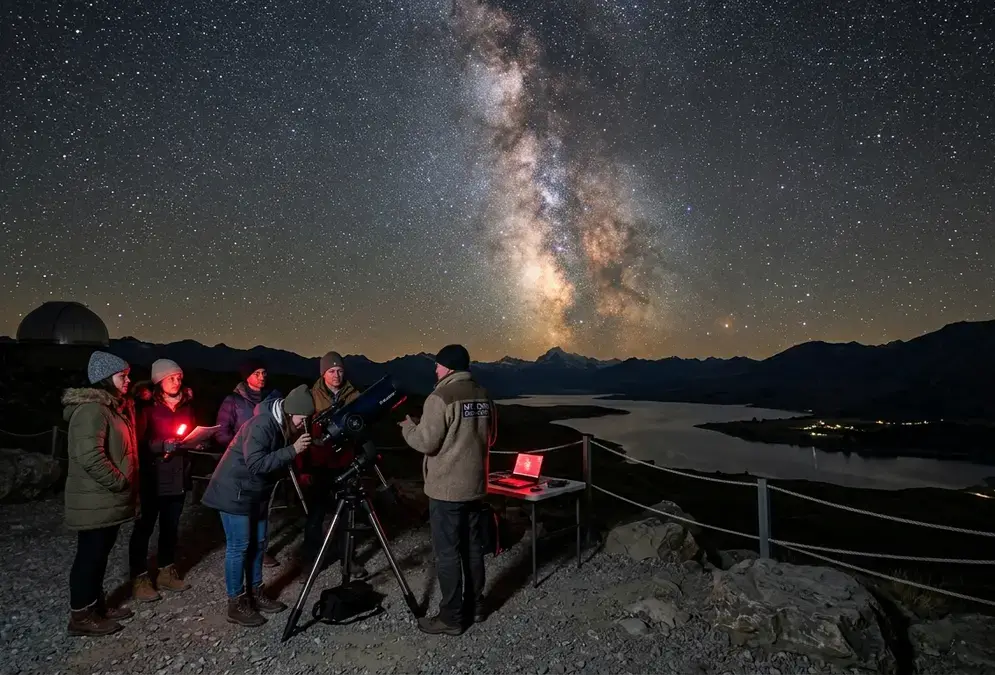
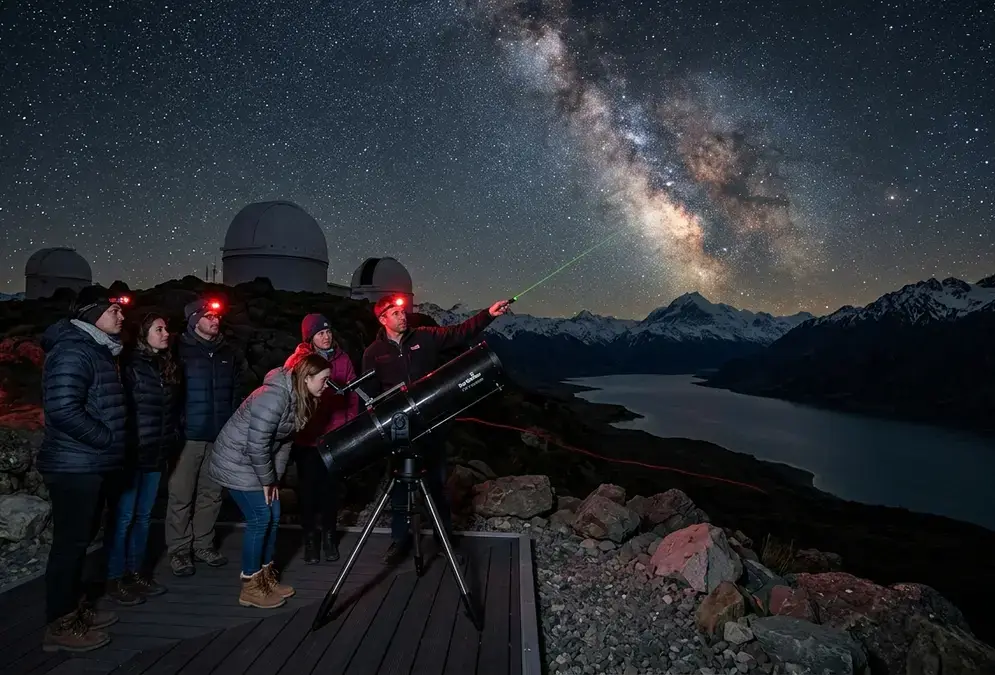
Mount John Observatory, on the summit above Lake Tekapo, is New Zealand's largest professional research observatory, and it anchors the reserve's public stargazing programme too. Dark Sky Project runs the Summit Experience, a 1-hour-45-minute guided session inside the private observatory dome using a 16-inch telescope, led by working astronomy guides. Adult tickets run $219 NZD ($169 for children aged 10 and up; younger children aren't admitted), pricing confirmed through 30 September 2026 — check current rates before booking, since operators revise them season to season.

Build the honest odds into your trip, not just the ticket. Cloud cover is the biggest variable in whether a tour runs at all, and cancellations happen often enough that operators plan around them. Dark Sky Project runs an Alternative Weather Experience indoors when the sky doesn't cooperate, so a cancelled night isn't entirely wasted, but if seeing the Milky Way through a professional telescope is the actual point of your trip, build at least two nights into your Tekapo stay rather than betting everything on one booking.

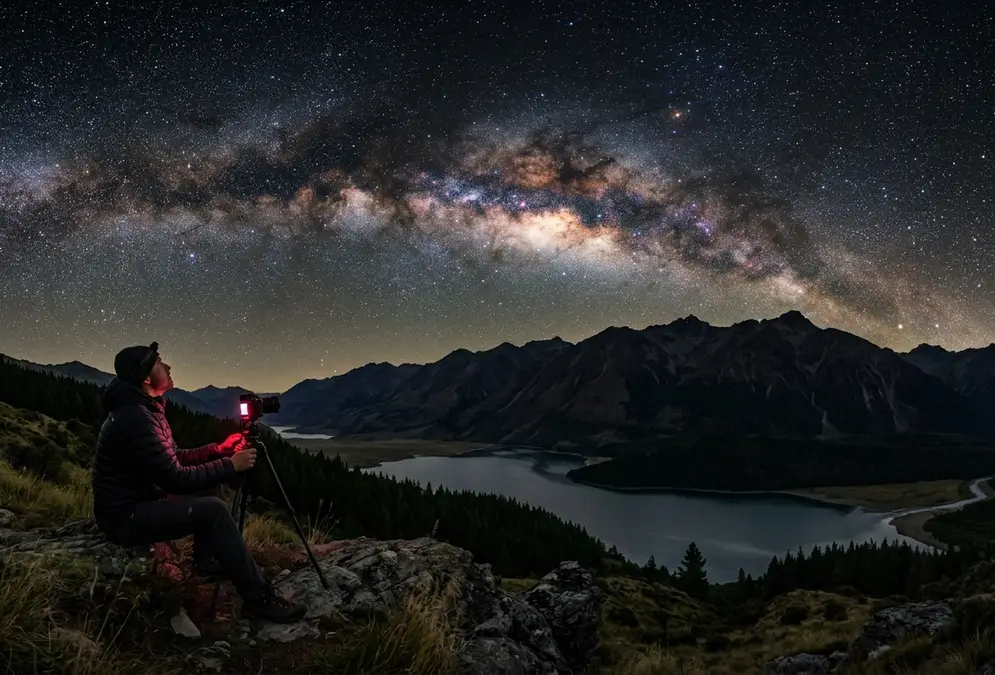
Beyond the Summit Experience, the reserve's tour scene has grown well past a single operator. Independent guides run astrophotography sessions for anyone chasing a Milky Way shot rather than a telescope view, Aoraki/Mount Cook Village runs its own on-site Big Sky Stargazing sessions deeper in the national park, and a handful of small-group operators around Lake Tekapo teach the southern sky itself, Southern Cross and Magellanic Clouds included, for travelers who'd rather learn the constellations than just look at them.

All tours

The Church of the Good Shepherd: New Zealand's most photographed foreground

Ask any astrophotographer what a New Zealand Milky Way photo looks like, and they'll describe this building before they describe the sky. The Church of the Good Shepherd, a small stone chapel on the Lake Tekapo shoreline, is one of the country's most photographed structures, and it earns that reputation as a foreground: a low, dark silhouette against the lake and the galactic arch, framed by the Southern Alps behind it. During the day it's a genuine tourist stop, busy with tour buses and photographers working the same three angles. Visit at sunrise or sunset instead, when the daytime crowds thin out, or come back after dark for the shot the building is actually known for: just you, the lake, and whatever the sky is doing that night.

When to go: New Zealand's inverted stargazing season

If you've read about stargazing seasons anywhere else, forget the rule of thumb. New Zealand's calendar runs opposite to Tromsø's, Iceland's, or Lapland's: winter here means June through August, and it's the strongest stretch for stargazing, not the weakest. Longer nights, the driest and clearest air of the year, and a galactic core sitting directly overhead rather than low on the horizon all line up in the same three months.

Southern summer, December through February, isn't a write-off. Nights are shorter, but the galactic core is still high overhead once darkness falls, and conditions run warmer and more forgiving for anyone unused to standing still in the cold for two hours. The tradeoff is crowds and cost: December through February is also peak booking season for Tekapo accommodation and observatory tours, and everything sells out faster. The reserve's own guidance points to March through October as the broadest window for moonless, clear-night viewing, with the shoulder months of March and October splitting the difference between winter's darkness and summer's convenience.

Whichever season you pick, check the moon phase before you check the calendar month. A full moon in July washes out fine Magellanic Cloud detail just as thoroughly as it would in January.

Month by month

New Zealand's dark-sky calendar runs backward from what most Northern Hemisphere travelers expect. NZ winter, June through August, delivers the longest, driest nights of the year, with the galactic core sitting almost directly overhead. NZ summer, December through February, trades night length for comfort, and higher demand on rooms. Whichever season you land on, the moon phase matters more than the calendar month: a new moon in any season shows you more than a full moon in peak winter.

  • January: Good — Southern summer; galactic core still high after dusk, warm nights, but among the busiest and priciest booking windows.
  • February: Good
  • March: Good — Shoulder month; skies clearing as summer crowds thin out.
  • April: Fair — Transition month with more variable weather before winter's dry stretch sets in.
  • May: Good
  • June: Peak — NZ winter begins: longest nights and the driest, clearest runs of the year, with the galactic core almost directly overhead.
  • July: Peak
  • August: Peak — Peak winter darkness; expect sub-zero nights at altitude around Aoraki/Mount Cook.
  • September: Good — Spring transition; nights shorten but skies often still clear.
  • October: Fair
  • November: Fair — Unsettled spring weather and the year's shortest dark-sky window before summer twilight sets in.
  • December: Good — Southern summer begins; short nights but a still-high galactic core after dusk.

Going in June? See what else the sky offers that month

Getting to Lake Tekapo and the Mackenzie Basin

Be honest with yourself about the commitment before you book. Of every dark-sky cluster worth comparing, Aoraki Mackenzie is among the most remote: there's no short regional flight or overnight train the way there is to Tromsø from Oslo, or to Lapland from Helsinki. Most travelers are looking at a long-haul flight into Auckland or Christchurch, then a domestic connection or a multi-hour drive, before they see a single star. Weigh that honestly against Iceland's or Norway's shorter-haul convenience: the payoff is a sky nobody in the Northern Hemisphere sees from home, but the travel day is real.

Once you're on the South Island, the drive is straightforward. From Christchurch, it's roughly three hours via State Highway 1 and State Highway 8. From Queenstown, it's closer to two hours via the Lindis Pass route, one of the more scenic mountain drives on the island. Either way, rent a car. There's no meaningful public transport into the Mackenzie Basin, and you'll want the flexibility to chase a clearer patch of sky if the forecast shifts.

Interactive map — loads as you scroll (requires JavaScript)

Tap a pin to open the lodge, tour, or destination page.

How long to stay

Best season

March through October for the broadest window of moonless, clear-night viewing; June–August (NZ winter) delivers the longest, driest nights with the galactic core directly overhead; December–February (NZ summer) offers shorter nights but a still-high galactic core and warmer conditions

Quietest hours

Well after Summit Experience tour groups clear out, typically after 22:30; independent stargazers along Lake Tekapo's shoreline pull-offs get the reserve nearly to themselves post-midnight

Visit duration

2–3 nights minimum to buffer against cloud cover, the region's main reason for tour cancellations; add a night or two if combining Aoraki/Mount Cook hiking

Where to stay

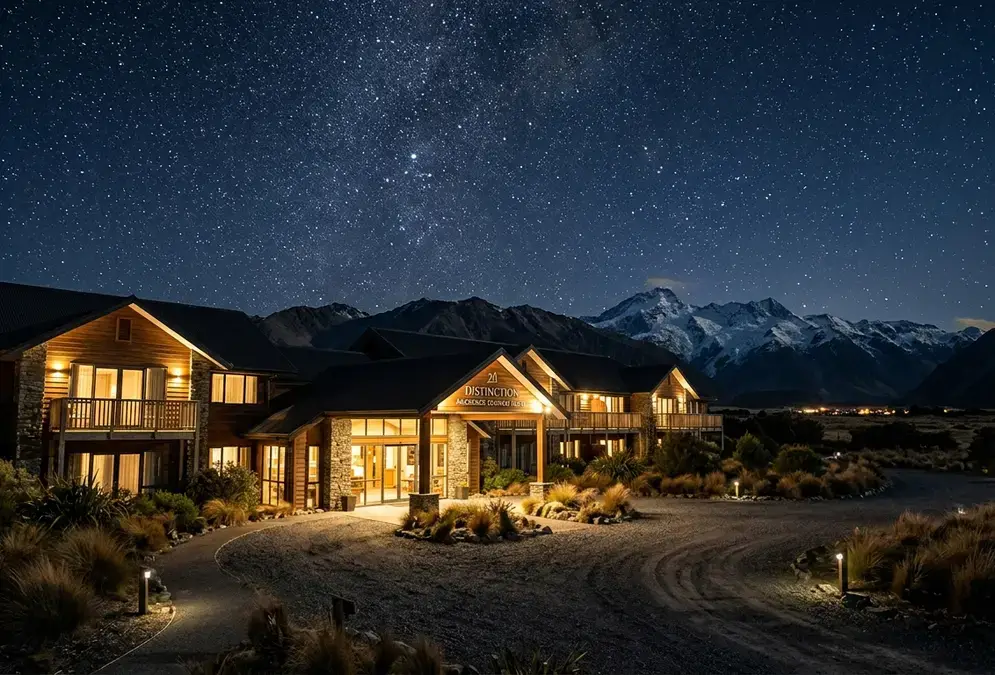
Lake Tekapo township is the obvious base: it's where Dark Sky Project's tours depart from, and it puts you within walking distance of the Church of the Good Shepherd for a pre- or post-tour photo. For a room built around the sky itself, Galaxy Boutique Hotel puts a skylight directly above the bed in its Deluxe Lake View rooms, 500 metres from the lakeshore. Twizel, a quieter town roughly 40 minutes south, works well if Tekapo is booked out or you'd rather skip the daytime tour-bus crowds. Aoraki/Mount Cook Village, deeper inside the national park, is the pick if you're pairing stargazing with hiking beneath New Zealand's tallest peak.

Book early. The Mackenzie Basin's small hotel stock fills fast during the December–February peak, and Dark Sky Project's own tours are the first thing to sell out. If your trip is anchored to a specific new-moon window, lock in accommodation and the Summit Experience as soon as your dates are fixed.

For a full ranked breakdown of every stargazing-worthy stay in the reserve, from skylight rooms to a hot-tub-under-the-stars cottage near Twizel, see our guide to the best places to stay for stargazing in Aoraki Mackenzie.

Top lodges at a glance

3 4.3 Traditional

Best best for alpine isolation and national park immersion

The Hermitage Hotel

Only hotel inside Aoraki/Mount Cook National Park, on-site Big Sky Stargazing, from ~USD 330/night

$$$ · from ~USD 330/night (Standard Mt Cook View Queen, indicative) View lodge
4 5.0 Charming

Best best for an intimate hot-tub stargazing experience

Night Sky Cottages

Cedar-clad outdoor hot tub, self-contained cottage near Twizel, from ~USD 220/night plus a cleaning fee

$$$ · from ~USD 220/night (Kahu Cottage, indicative — rates not published; compare Airbnb, Bookabach, and Expedia for current 2026 pricing) View lodge
See the full ranking: Best Places to Stay for Stargazing in Aoraki Mackenzie

Planning your visit

How many nights? Two at minimum, three if you can manage it. Cloud cover is the main reason Summit Experience tours get cancelled, and it happens often enough that a single-night booking is a gamble; two or three nights gives cloud cover somewhere to move on to.

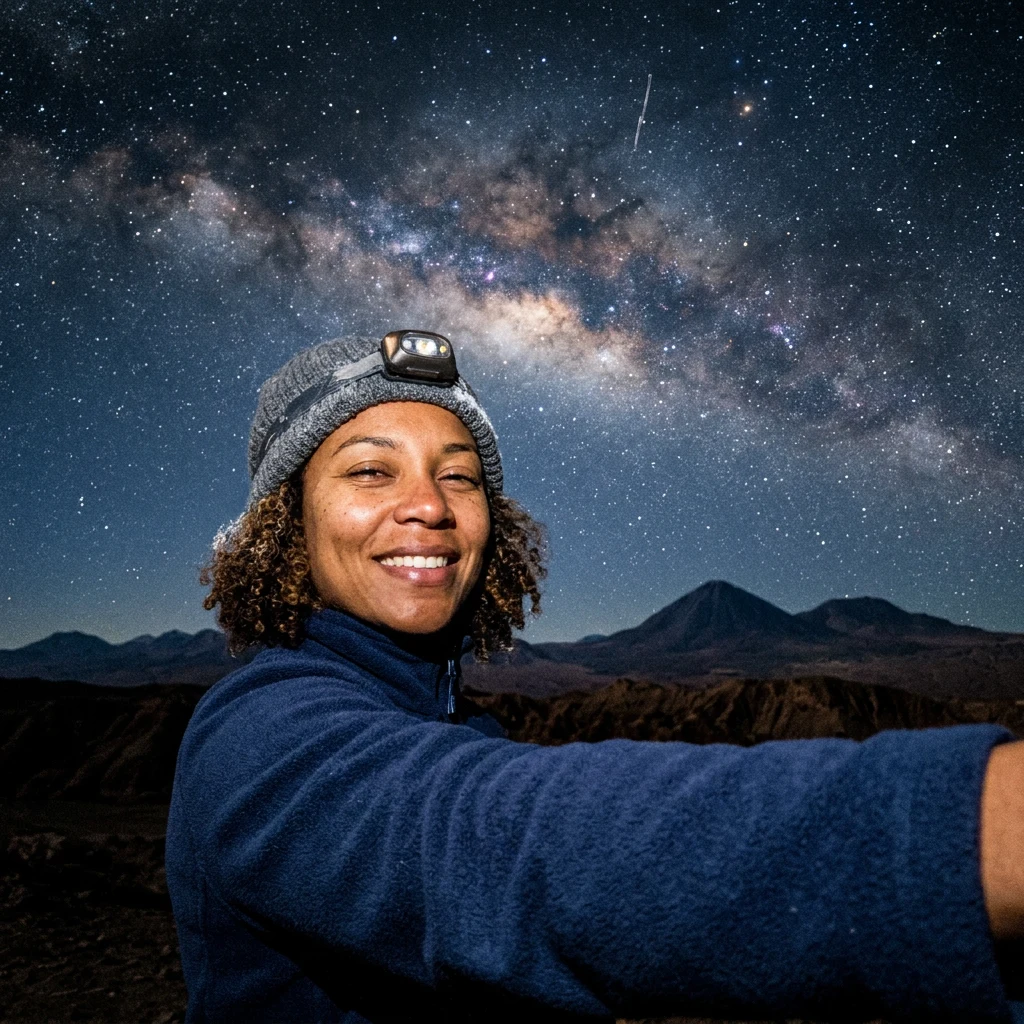
What to bring? Layers, regardless of season. This is alpine lake country, and post-midnight temperatures drop fast even in summer. A red-light headlamp protects your night vision on the walk back from a viewpoint, and binoculars will resolve real structure in the Magellanic Clouds that the naked eye can only guess at.

Moon phase still rules everything. Check the lunar calendar before you lock in dates, whichever season you're traveling in, and aim to be on the ground within a few nights of new moon. A bright moon erases the Magellanic Clouds' fine detail and mutes even Omega Centauri's grainy structure, no matter how good the underlying sky is.

Weighing this reserve against another Southern Hemisphere icon? See our Uluru vs Aoraki Mackenzie stargazing comparison for how governance, landscape, and access actually stack up.

Reporter notebook

Insider tips

Best time

Winter isn't the safe default here — check both windows

New Zealand's stargazing calendar runs opposite to Tromsø's or Iceland's: June–August (NZ winter) gives the longest, driest nights and puts the galactic core directly overhead, but December–February (NZ summer) still delivers a high galactic core after dark, with warmer standing-around conditions and more crowds and cost. Pick winter for the darkest sky, summer for comfort — then check the moon phase before locking in either.

Photo spot

Shoot the Church of the Good Shepherd off-peak

Tour buses crowd the same three angles on the church all day. Arrive at sunrise or sunset to catch it with soft light and no crowds, or come back after full dark for the shot it's actually known for: the stone chapel as a silhouette against the lake with the Milky Way arching behind it.

Booking tip

Book two nights with Dark Sky Project, not one

Cloud cover is the main reason Summit Experience tours get cancelled, and it happens often enough that a single-night booking is a gamble. Book at least two nights in Tekapo and reserve the tour for both, well ahead of a December–February trip when accommodation and tours sell out fastest.

Frequently asked questions

What is the Aoraki Mackenzie Dark Sky Reserve and why is it famous?

It's a 4,367 km² International Dark Sky Reserve across the Mackenzie Basin and Aoraki/Mount Cook National Park on New Zealand's South Island, designated in June 2012 and upgraded to Gold Tier, the highest IDA rating at the time, in November 2013. It was one of the first two Gold Tier reserves ever awarded, alongside NamibRand in Namibia, and it's still one of only four Gold Tier reserves worldwide today. Its sky rates Bortle Class 2, dark enough for the Milky Way to cast a faint shadow on a clear night.

When is the best time to visit for stargazing in New Zealand's South Island?

March through October gives the broadest window of moonless, clear-night viewing. June through August (New Zealand winter) delivers the longest and driest nights, with the galactic core directly overhead. December through February (summer) has shorter nights but the core is still high after dark, and it's the busiest and priciest season to book. Whichever window you pick, check the moon phase, not just the month.

How do I get from Christchurch to Lake Tekapo for stargazing?

It's roughly a three-hour drive via State Highway 1 and State Highway 8. From Queenstown it's closer to two hours via the Lindis Pass route. A rental car is essential either way; there's no meaningful public transport into the Mackenzie Basin, and driving yourself lets you chase a clearer patch of sky if the forecast changes.

What can you see in the southern sky that you can't see from the Northern Hemisphere?

The Large and Small Magellanic Clouds, two companion galaxies visible to the naked eye, never rise above the horizon in Europe or the continental United States. The Southern Cross is circumpolar here, visible every night of the year. Omega Centauri, the sky's largest and most striking globular cluster, and a galactic core that climbs directly overhead in winter rather than skimming the horizon, round out the list.

How much does the Dark Sky Project's Summit Experience cost, and how do I book it?

The Summit Experience runs $219 NZD per adult and $169 for children aged 10 and up (younger children aren't admitted), with pricing confirmed through 30 September 2026. Book directly through Dark Sky Project's website well ahead of your trip: cloud cover is the main reason tours get cancelled, and popular dates sell out.

What is the Church of the Good Shepherd and why is it famous for night sky photography?

It's a small stone chapel on the Lake Tekapo shoreline, one of New Zealand's most photographed buildings, and it works as a Milky Way photo foreground: a low, dark silhouette against the lake with the galactic arch and Southern Alps behind it. It's busy with day-trippers and tour buses in daylight, so visit at sunrise, sunset, or after dark to get the shot without the crowds.

What is Omega Centauri and why is it considered the best globular cluster in the sky?

Omega Centauri is a globular cluster containing roughly 100,000 stars packed into a spherical mass, making it the most striking cluster visible anywhere in the sky. To the naked eye it looks like a hazy patch; through even a modest telescope at Aoraki Mackenzie's Bortle 2 skies, it resolves into a grainy field of individual stars.

How many nights should I plan for stargazing at Aoraki Mackenzie?

Two nights minimum, three if you can manage it. Cloud cover is the main reason Summit Experience tours get cancelled, so a single-night booking is a gamble. Add a night or two more if you're combining the trip with hiking in Aoraki/Mount Cook National Park.

Further reading

Sources