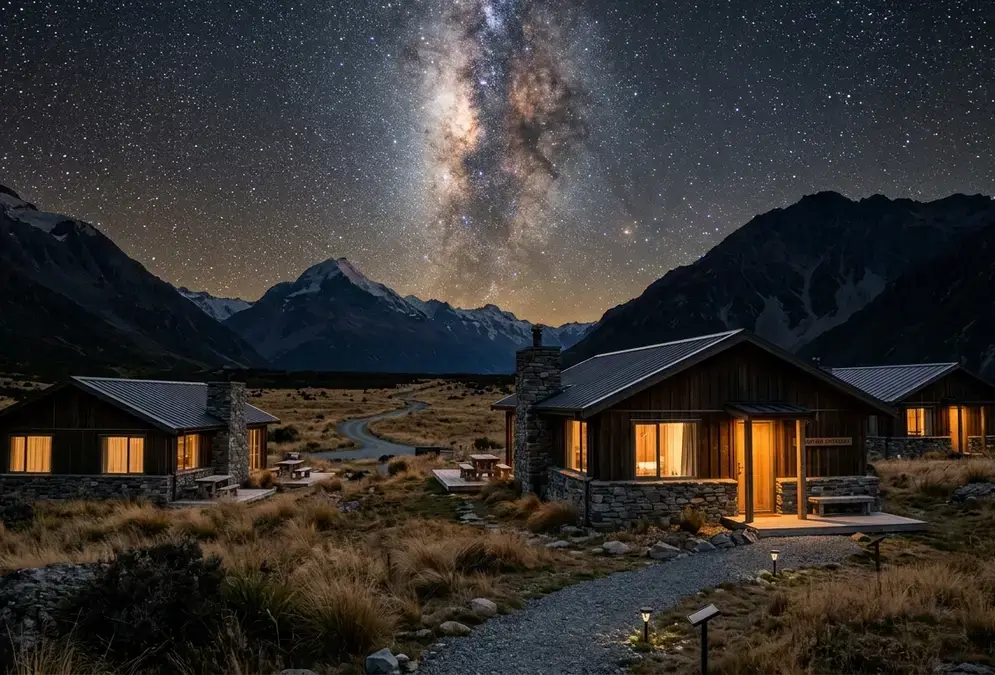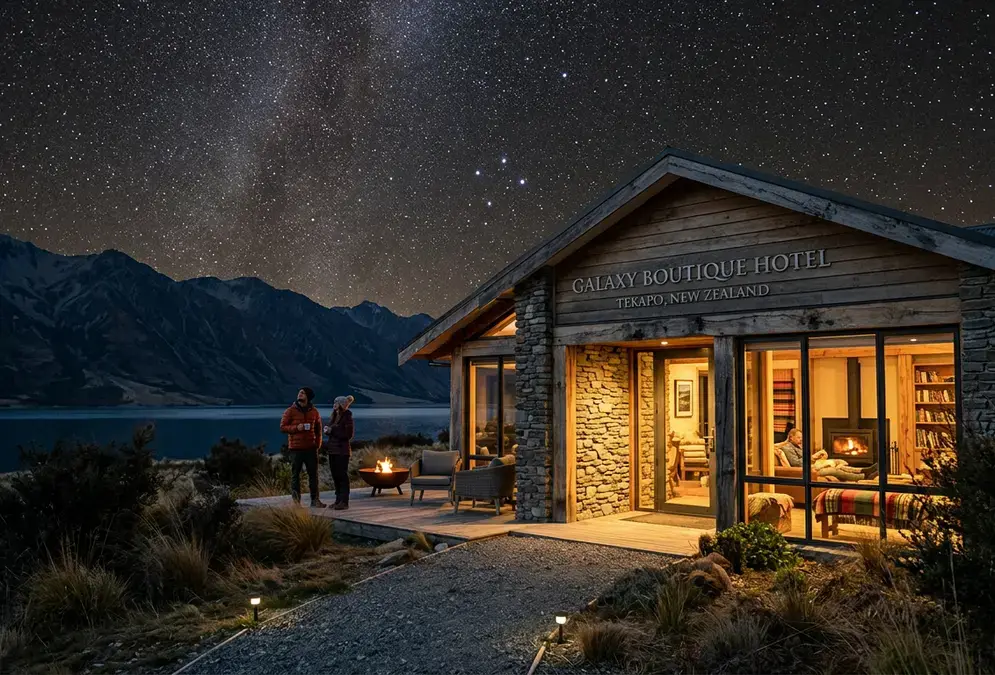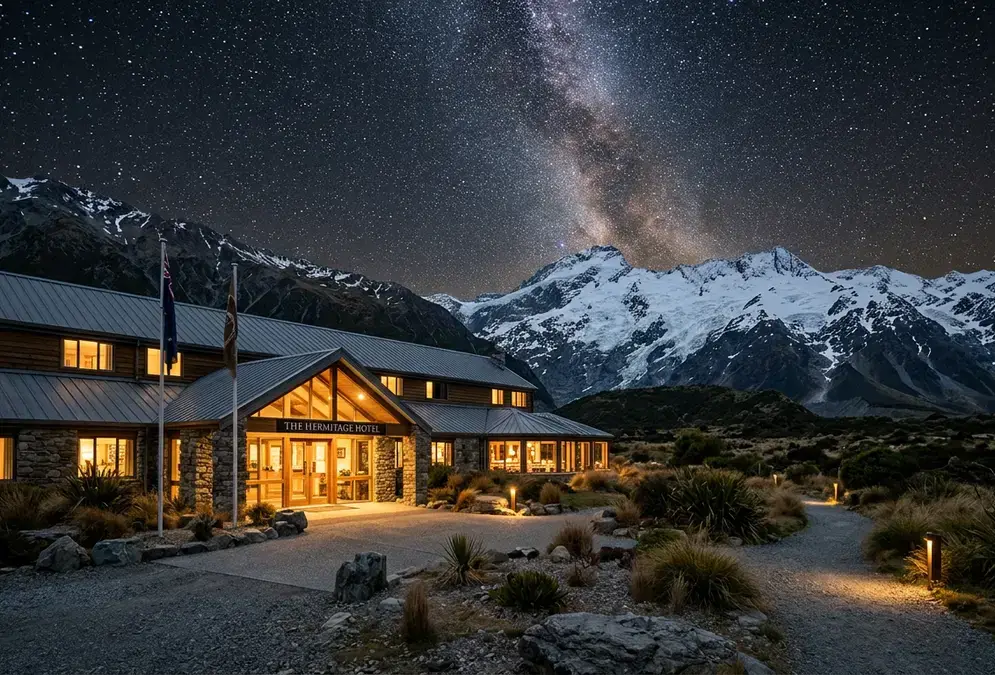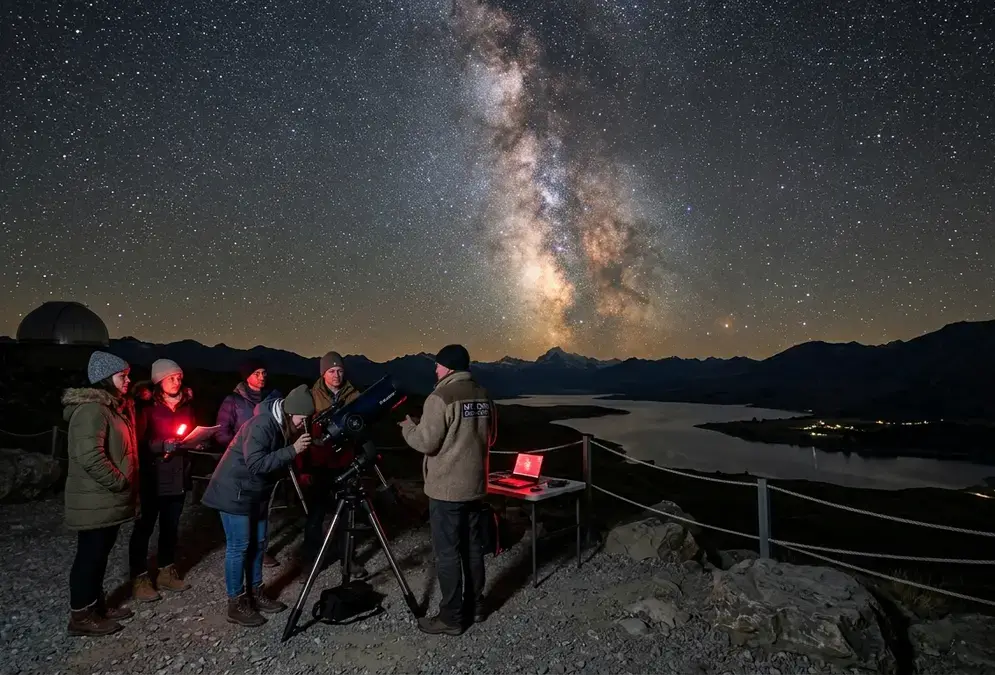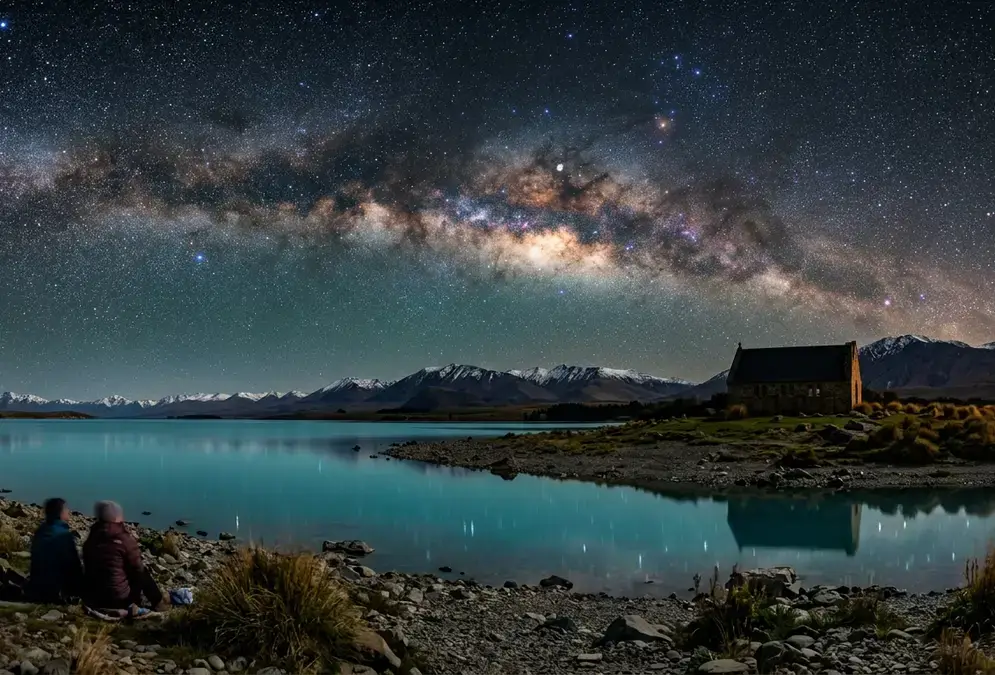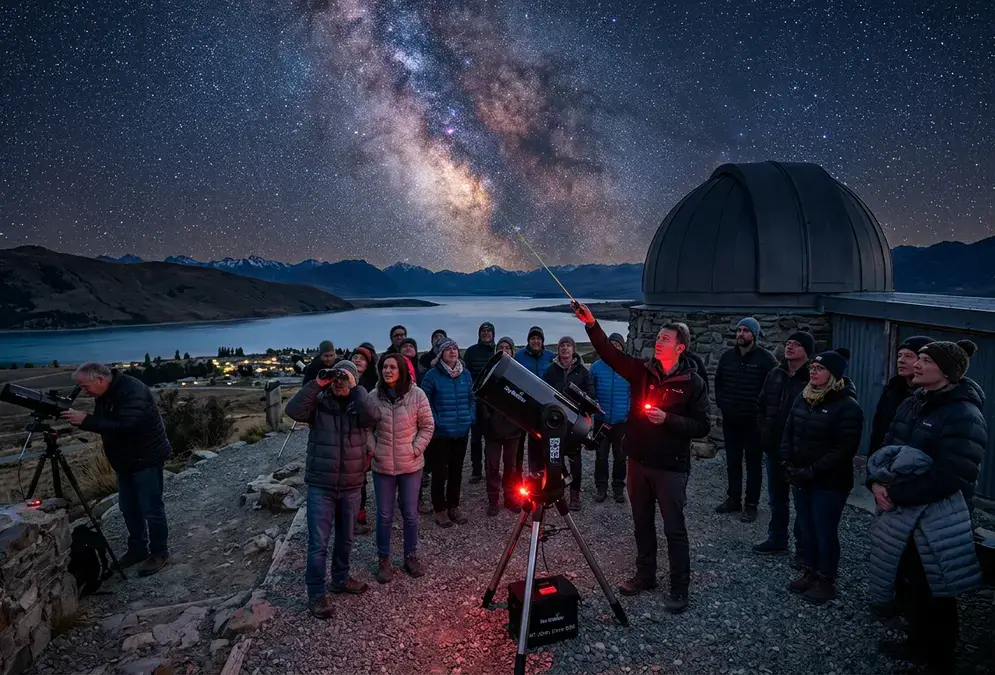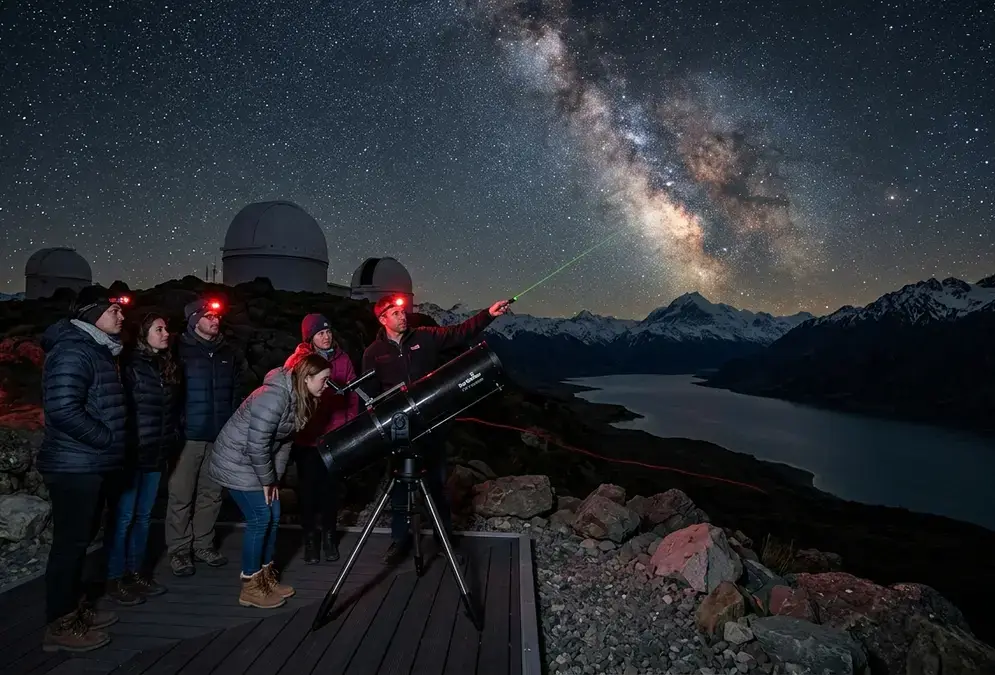
Every other guided stargazing tour inside the Aoraki Mackenzie International Dark Sky Reserve departs from Lake Tekapo, a 40- to 45-minute drive south. Big Sky Stargazing is the exception. Run by The Hermitage Hotel out of Aoraki/Mount Cook Village, it checks guests in at the hotel lobby, drives them a short distance to a dedicated observing platform called Star Base, and points a 14-inch reflecting telescope at a sky that helped earn this reserve its Gold Tier rating, a distinction shared with three other reserves on Earth: NamibRand, Kerry, and Central Idaho.
Why this tour and not the Tekapo tours
The Aoraki Mackenzie Dark Sky Reserve covers 4,367 km² across the Mackenzie Basin and Aoraki/Mount Cook National Park, and its sky rates Bortle Class 2 on the standard nine-level scale, dark enough that a clear night reveals the Milky Way as a genuine shadow-caster. Most visitors reach that sky through Dark Sky Project's Summit Experience at Mount John Observatory above Lake Tekapo. Big Sky Stargazing operates from inside the national park itself, roughly 40–45 minutes further along the road from Tekapo. If you're basing your trip at Aoraki/Mount Cook Village to hike beneath New Zealand's tallest peak as much as to look up at night, this tour skips the drive back to Tekapo after dark, and it's the only operator running a stargazing programme from inside park boundaries.
What the 90 minutes actually covers
Check-in happens at the Activities Desk inside The Hermitage Hotel lobby on Terrace Road. From there, a short drive takes the group to Star Base, where a professional astronomy guide runs the session using 14-inch and 11-inch reflecting telescopes, large enough to resolve real structure in deep-sky targets rather than leave them as faint smudges. The full experience, including the drive, runs 75 to 90 minutes. Guides work in English and Mandarin, and the minimum age is 8.
Expect the guide to move between naked-eye orientation and telescope targets across the evening. Typical sights include:
- The Milky Way's galactic band overhead
- The Large and Small Magellanic Clouds
- The Southern Cross (Crux)
- Saturn's rings, when the planet is above the horizon
- Jupiter's Galilean moons
- Omega Centauri, the sky's densest globular cluster
- Nebulae, galaxies, and seasonal meteor showers
Weather, schedule, and the planetarium backup
The tour runs year-round with two nightly departures, currently 7:30 PM and 9:30 PM, though times shift with the season and should be confirmed at booking. New Zealand's stargazing calendar runs opposite the Northern Hemisphere's: June through August is winter here, and it delivers the longest, driest nights with the galactic core sitting almost directly overhead. December through February gives shorter nights and warmer standing-around conditions, but it's also the busiest and most expensive booking window.
Cloud cover is the real variable. From 1 April onward, a weather cancellation includes a 45-minute session in The Hermitage's 360-degree digital dome planetarium, plus a 75% refund, so a clouded-out night isn't a complete loss. Confirm the policy that applies before April 1 directly with the operator when you book.
Booking, price, and what to bring
Adult tickets run NZD 159; children aged 8 to 14 pay NZD 89 (current pricing, subject to change, confirm at booking). Book through Big Sky Stargazing's page on the Hermitage site directly, or via GetYourGuide, which offers free cancellation up to 24 hours ahead. Reserve well in advance for December through February, when Mount Cook Village's small accommodation stock and this tour both sell out fastest, and check the lunar calendar before you lock in dates: a bright moon will wash out the same faint detail here as anywhere else.
Dress for an alpine village after dark, not for the daytime temperature. You'll be standing outdoors for most of the session, so bring a proper jacket, a hat, and gloves even if you've packed light for a summer visit.