Articles · Astrophotography
Night Sky Photography: Camera Gear, Phone Techniques, Aurora and Milky Way
Destination-specific camera, lens and tripod setups, smartphone guides for iPhone and Android, and how to photograph the Milky Way and northern lights, including in extreme cold. It is for beginners who want a usable shot without a professional kit.
37 articles
Astrophotography: the big picture

Written by
Maya Okonkwo I've seen dark skies firsthand in the Atacama altiplano, Namibia's NamibRand Nature Reserve, and Morocco's Merzouga dunes; every other destination I write about is built from measured Bortle and SQM data, cloud climatology, and primary sources like park services and the International Dark-Sky Association.
Astrophotography starts with a gap most guides skip: the sky a camera records and the sky your eyes see are not the same picture. A sensor can stay open for 1 to 30 seconds and stack faint light into one bright frame, while your eyes work in real time. Why Don't Northern Lights Look Like the Photos? explains the rod-and-cone science, and it is where I would start before spending money on kit.
For the Milky Way, the order of decisions matters more than the camera. How to Photograph the Milky Way puts the calendar first: shoot within five to seven days of a new moon, from a sky at Bortle 4 or darker, during galactic-core season. Only then does it split by device, whether a smartphone in Night mode, a DSLR or mirrorless body, or a smart telescope that stacks for you. On a camera, use the NPF rule rather than the old 500 rule.
Aurora work fails in different places. How to Photograph the Northern Lights argues that a slow kit lens and a flimsy tripod ruin most aurora photos: a sharp f/2.8 frame on a solid tripod beats a blurry f/1.8 frame on a shaky one. Cold adds its own cost, since battery performance drops 30 to 40% below -10°C.
A phone on a tripod works under a bright aurora, but a faint one needs a dedicated camera with a fast prime lens. Decide which sky you are chasing, then buy for it.
More astrophotography articles
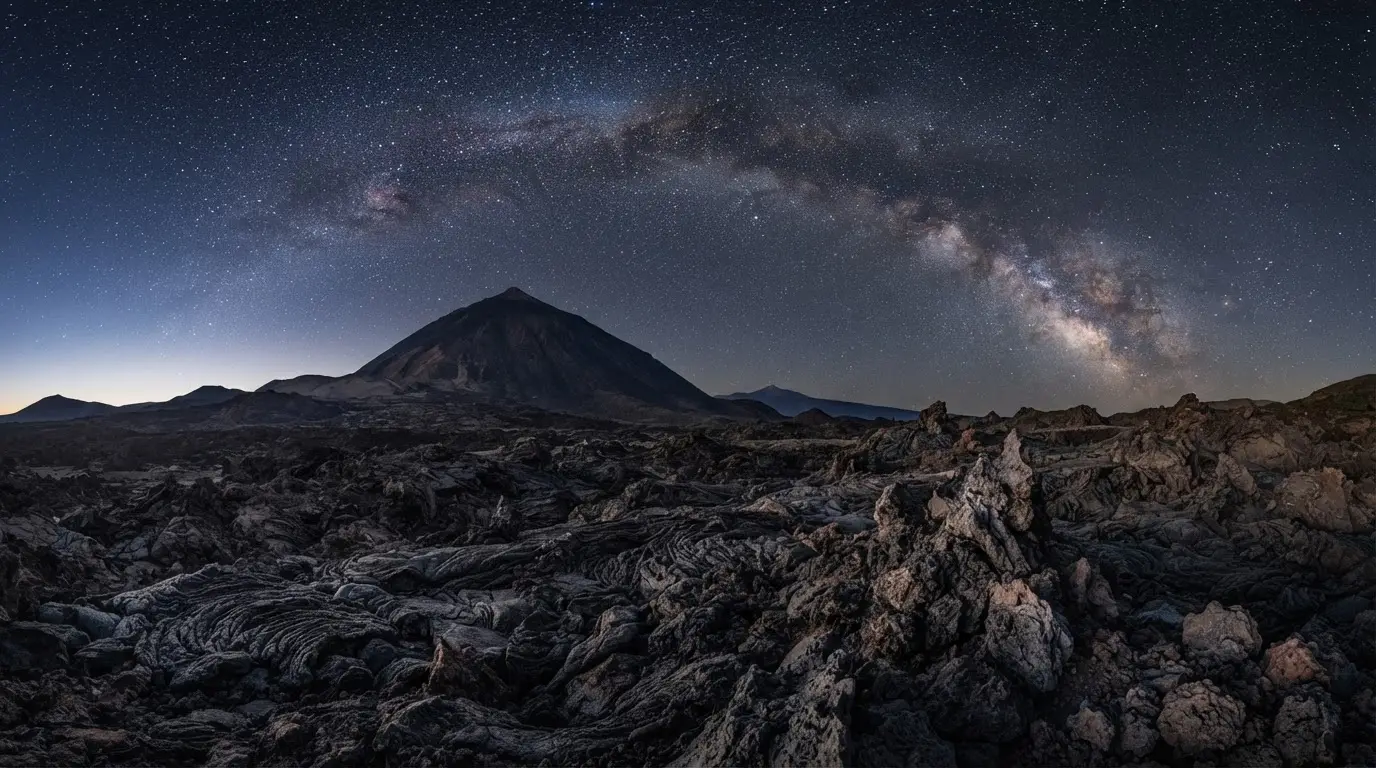
Chinyero Volcano: Astrophotography on Tenerife's Youngest Peak
Maya Okonkwo 6 min read
Chinyero, Tenerife's youngest volcano, erupted in 1909. Its dark lava fields make a striking astrophotography foreground close to Teide's Starlight sky.
Read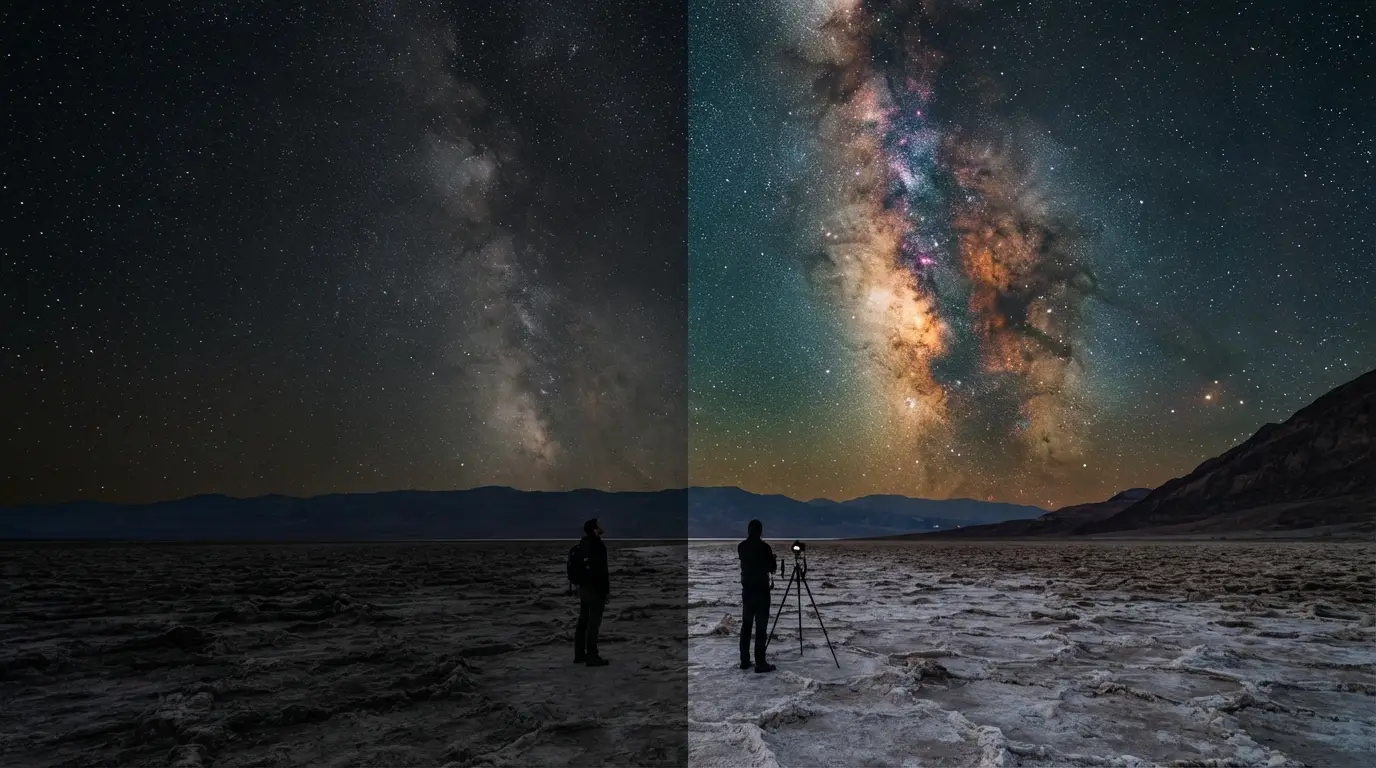
What Does the Milky Way Look Like in Death Valley?
Maya Okonkwo 7 min read
Under Death Valley's Gold Tier sky the Milky Way reads as a pale gray band to dark-adapted eyes; a camera's long exposure reveals the color your eyes miss.
Read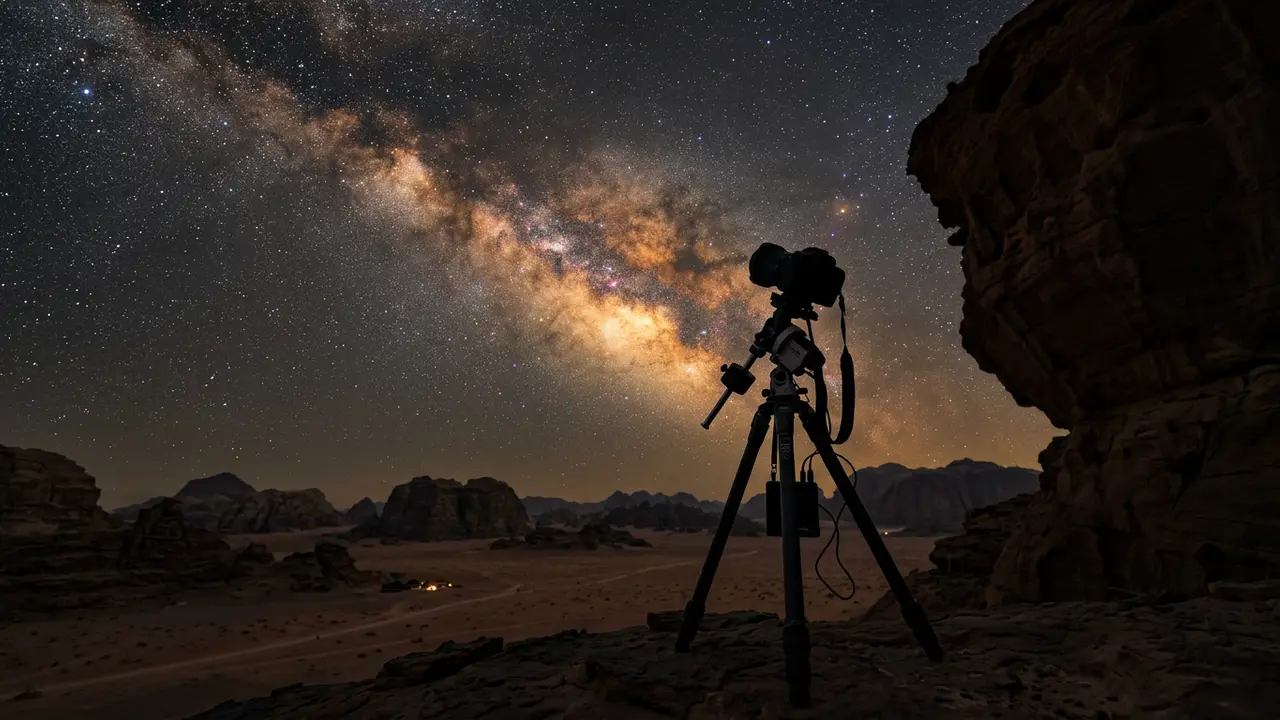
Wadi Rum Astrophotography Gear: Camera, Lens & Tripod
Maya Okonkwo Updated 10 min read
Camera, lens, and tripod picks for Wadi Rum's red sandstone skies: wide apertures for the Milky Way, monolith foregrounds, and sand/heat-proofing gear.
Read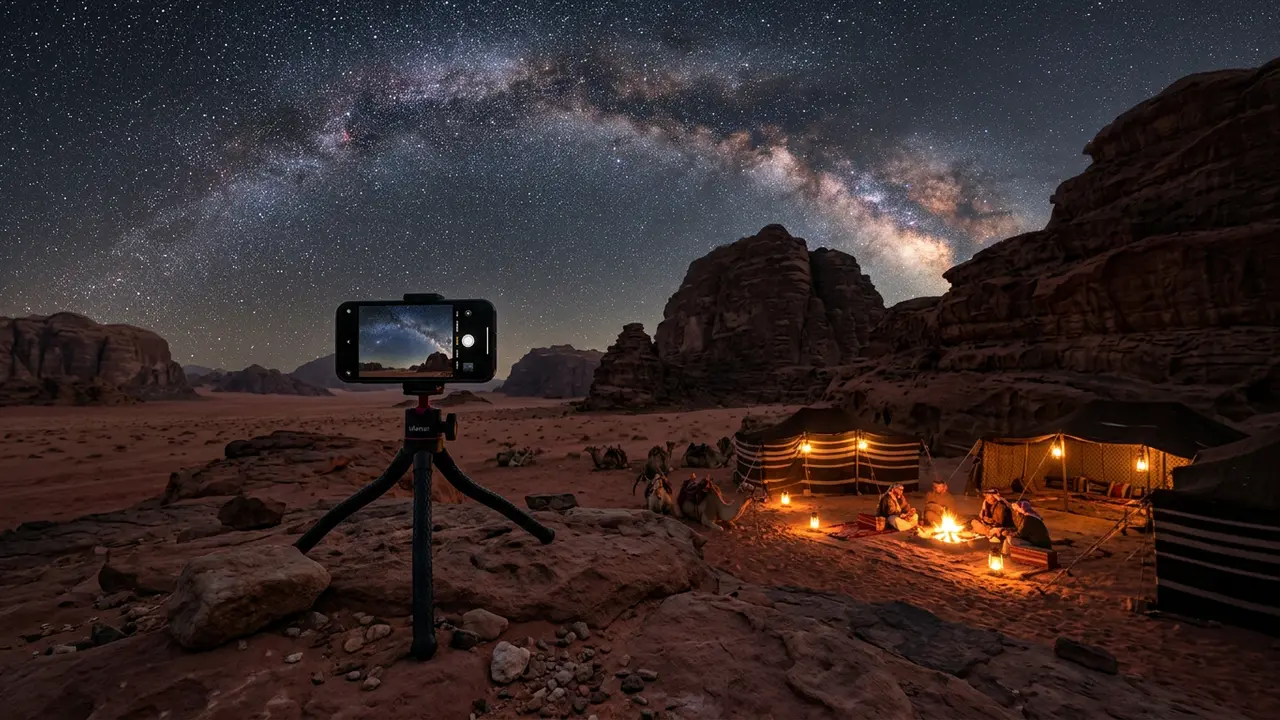
Wadi Rum Smartphone Stargazing Photography: What Works
Maya Okonkwo Updated 7 min read
Wadi Rum smartphone stargazing photography works if you brace against sandstone and beat the desert's brutal day-to-night swing before your battery does.
Read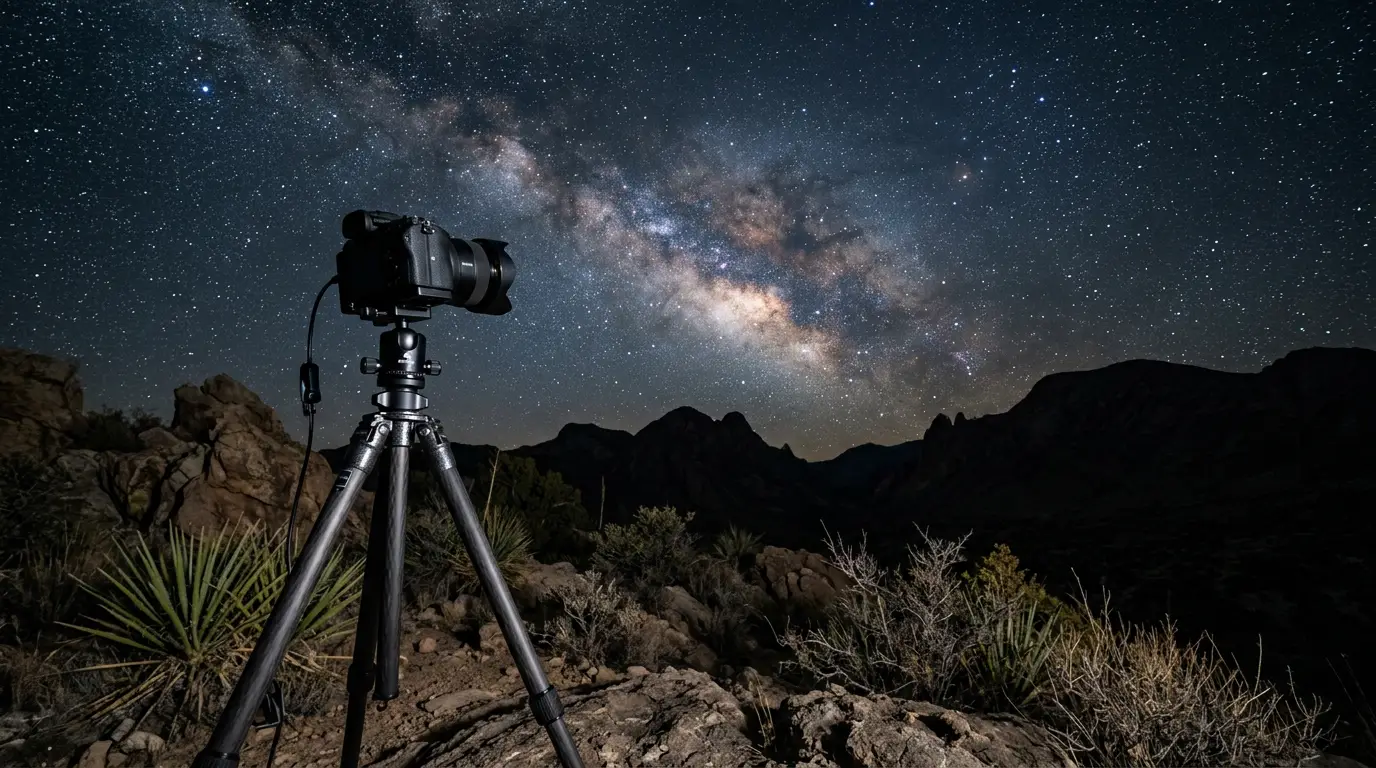
Big Bend Astrophotography Gear: Camera, Lens & Battery Care
Maya Okonkwo Updated 7 min read
Full-frame camera, fast wide lens, sturdy tripod: the gear that captures Big Bend's Bortle 1 Milky Way, plus battery care for 106°F days and 29°F desert nights.
Read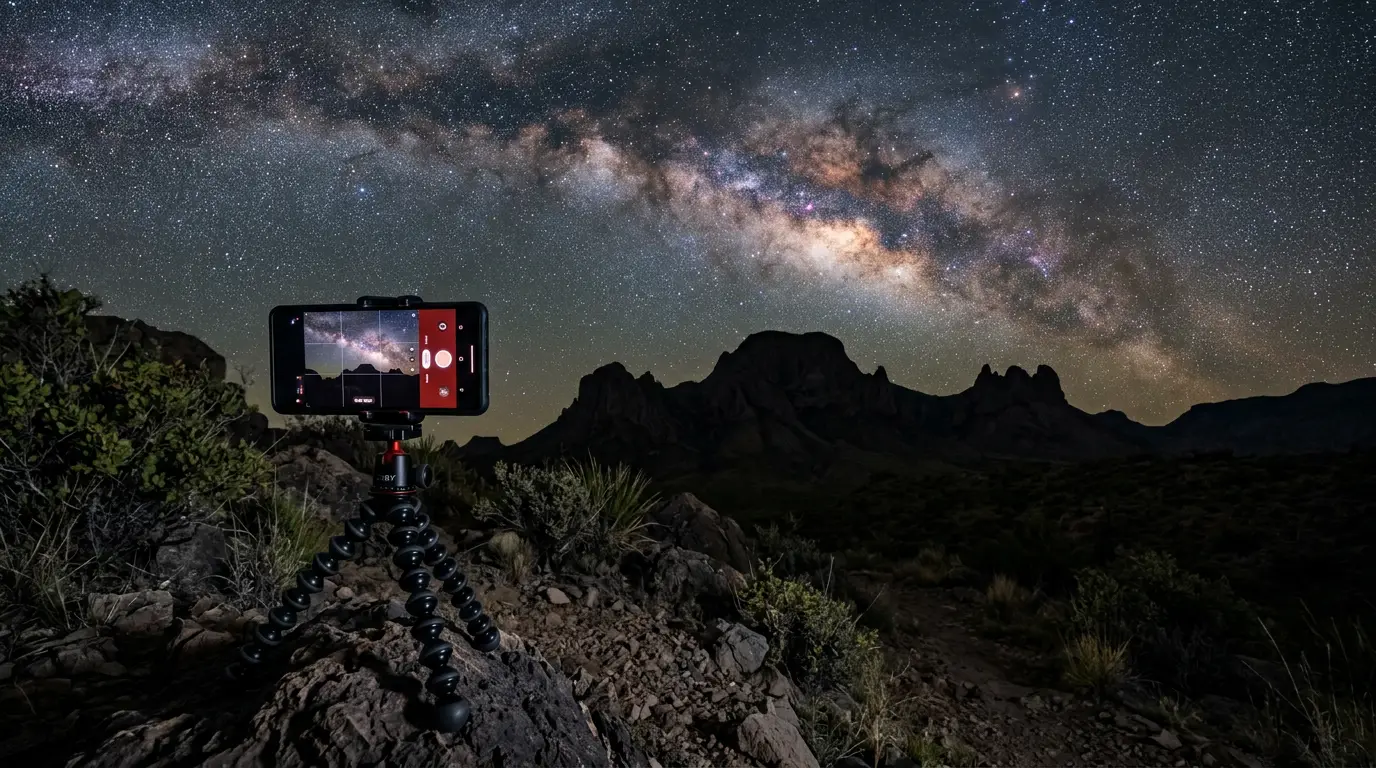
Smartphone Night Sky Photography at Big Bend National Park
Maya Okonkwo Updated 7 min read
A beginner's guide to shooting Big Bend's Milky Way on a smartphone: night mode settings, tripod setup, and battery care for desert heat and cold swings.
Read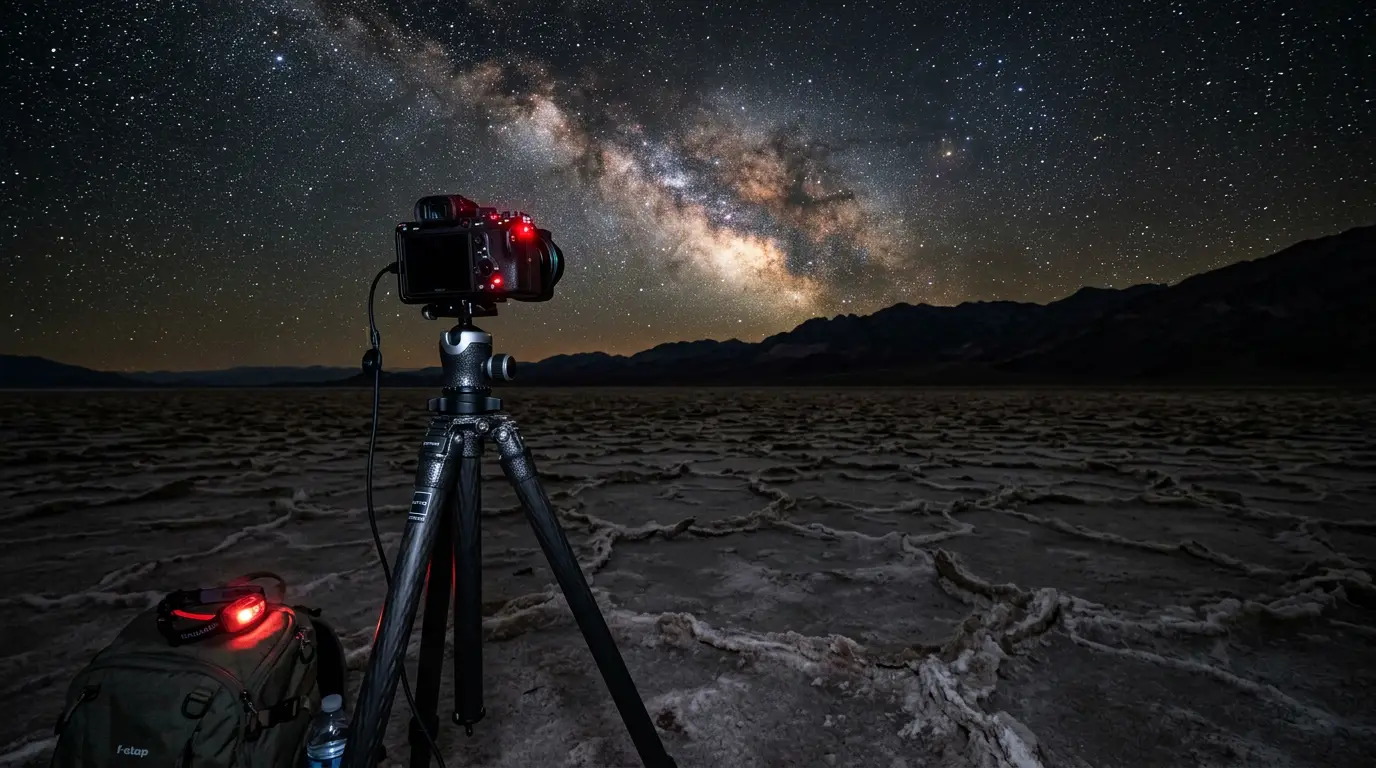
Death Valley Astrophotography Gear: Camera, Lens & Tripod
Maya Okonkwo Updated 8 min read
Camera, lens, and tripod picks for Death Valley's Gold-tier sky: wide apertures for the Milky Way, salt-flat foregrounds, and gear care for extreme heat.
Read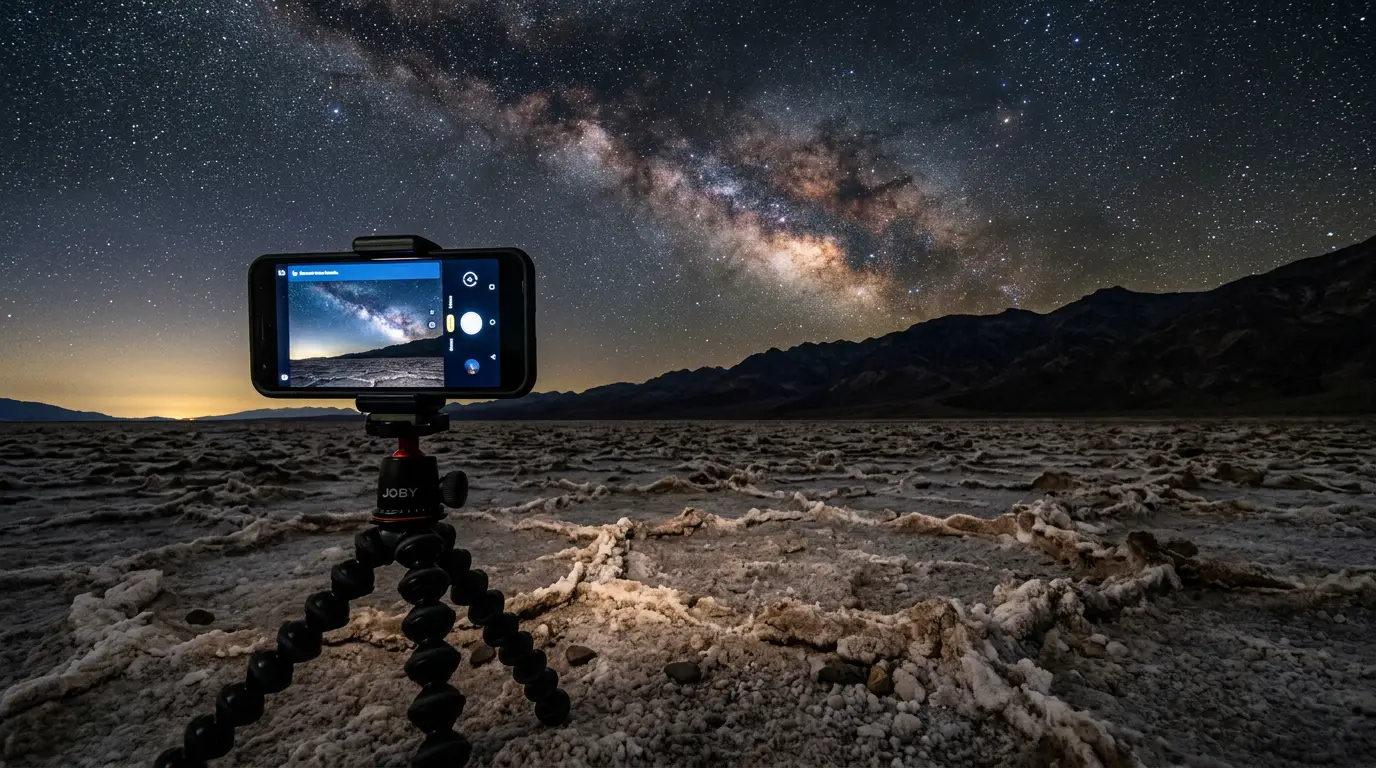
Death Valley Stargazing Photos With Your Phone
Maya Okonkwo Updated 8 min read
iPhone and Pixel Night mode can capture Death Valley's Milky Way with no extra gear: a steady phone, manual focus, and battery care for warm desert nights.
Read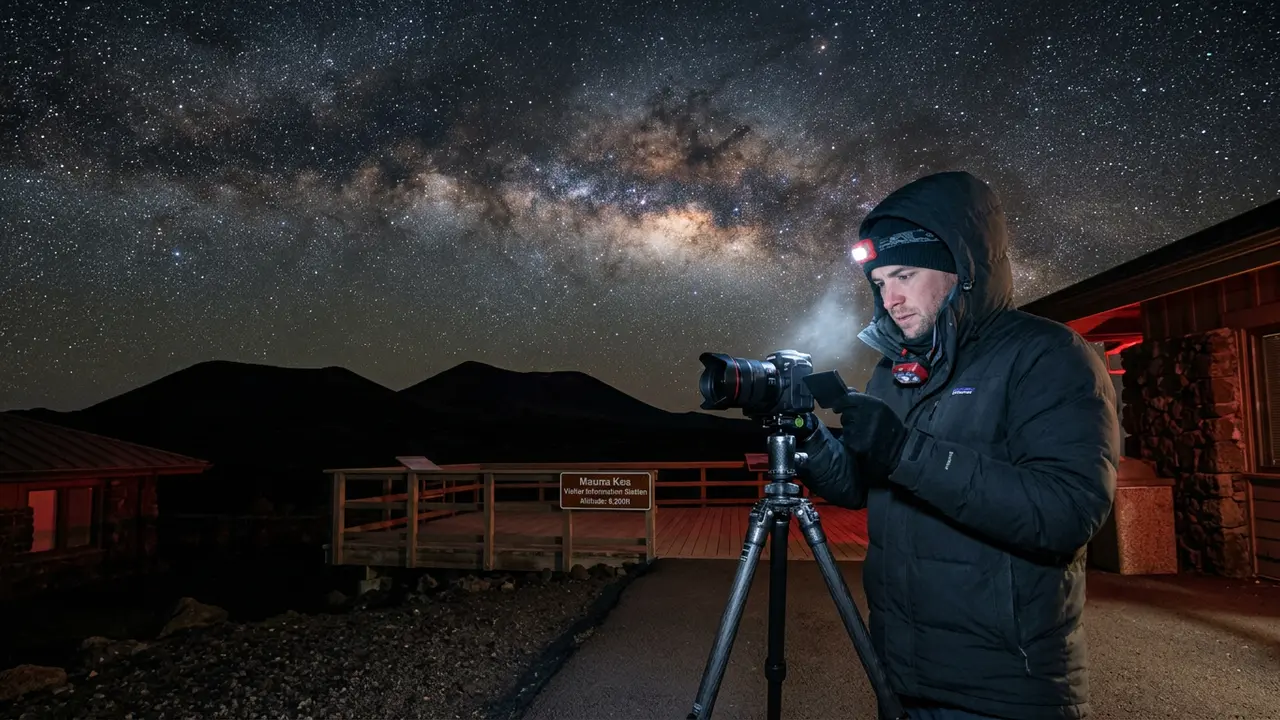
Mauna Kea Astrophotography Gear: A Cold-Weather Guide
Maya Okonkwo 8 min read
Cold, thin air, and wind change how cameras behave on Mauna Kea. A gear guide for astrophotographers shooting respectfully from the Visitor Information Station.
Read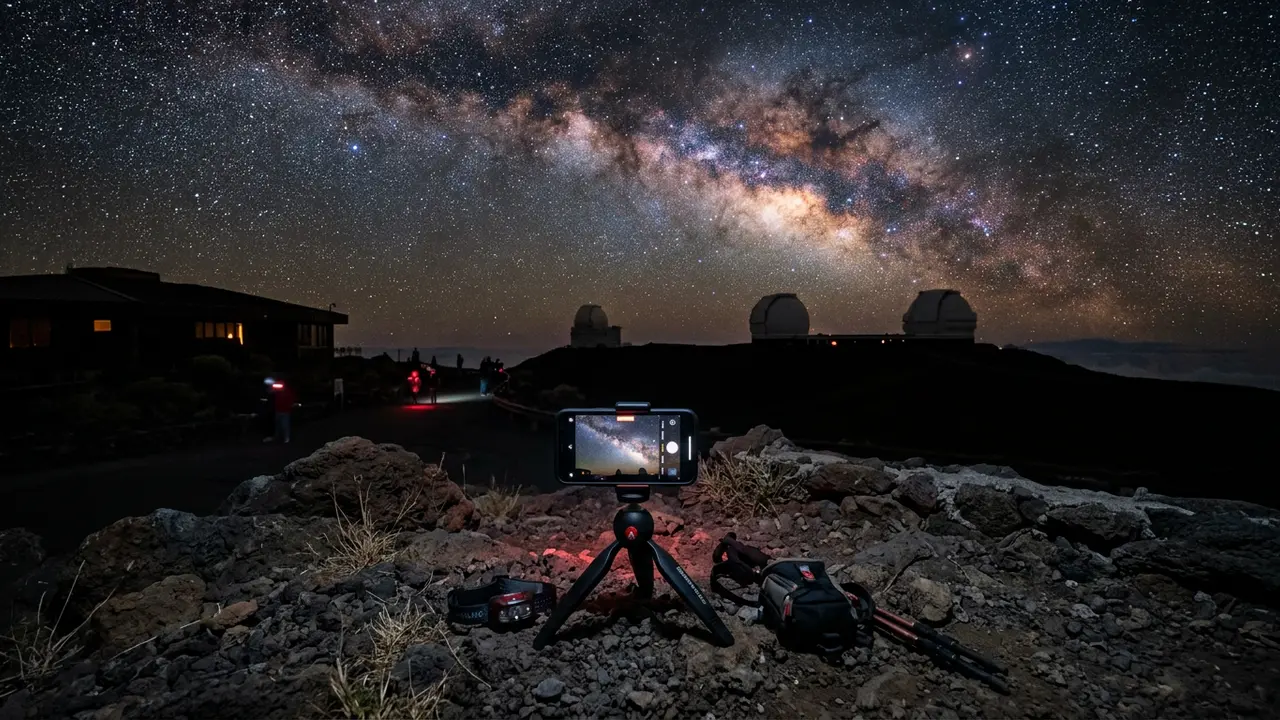
Mauna Kea Smartphone Stargazing Photography Guide
Maya Okonkwo Updated 7 min read
Photograph the Milky Way at Mauna Kea's Visitor Station using only a phone: night mode, tripod tricks, manual focus, framed by the mountain's sacred history.
Read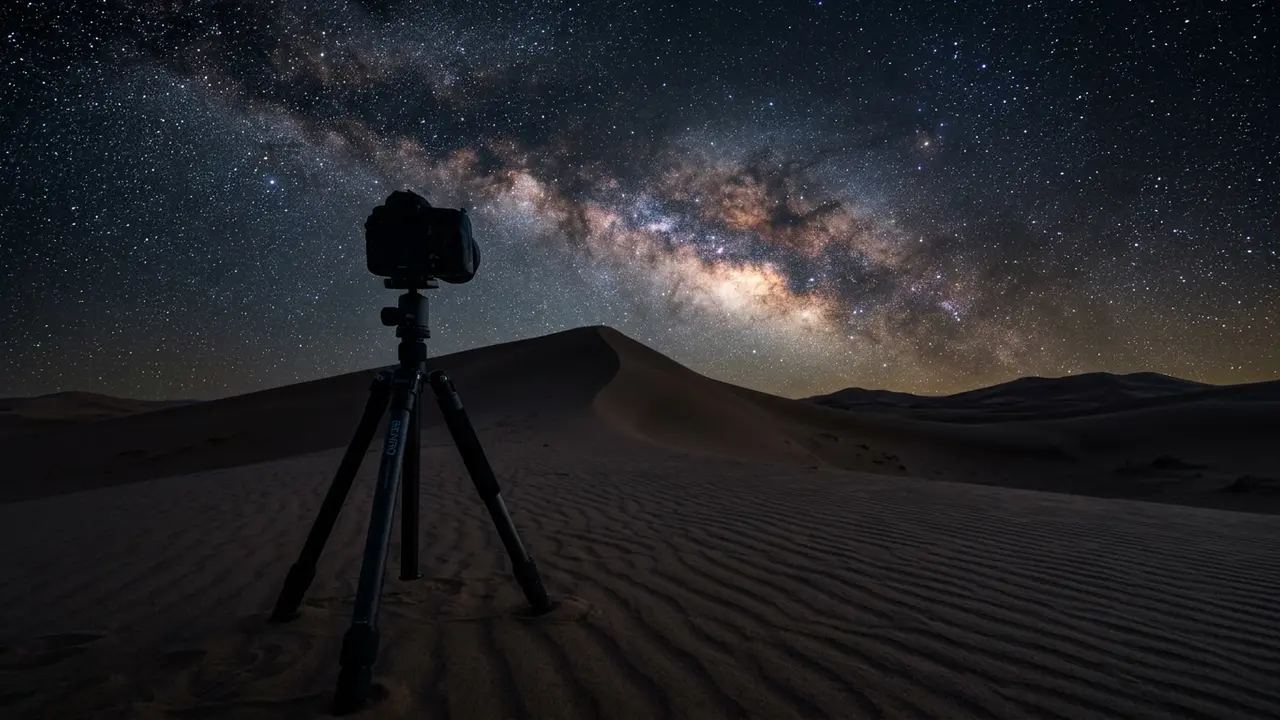
Merzouga Astrophotography Gear: Camera, Lens & Tripod
Maya Okonkwo Updated 10 min read
Camera, lens, and tripod picks for Erg Chebbi's dune skies: wide apertures for the Milky Way, dune-crest foregrounds, and sand/heat-proofing your gear.
Read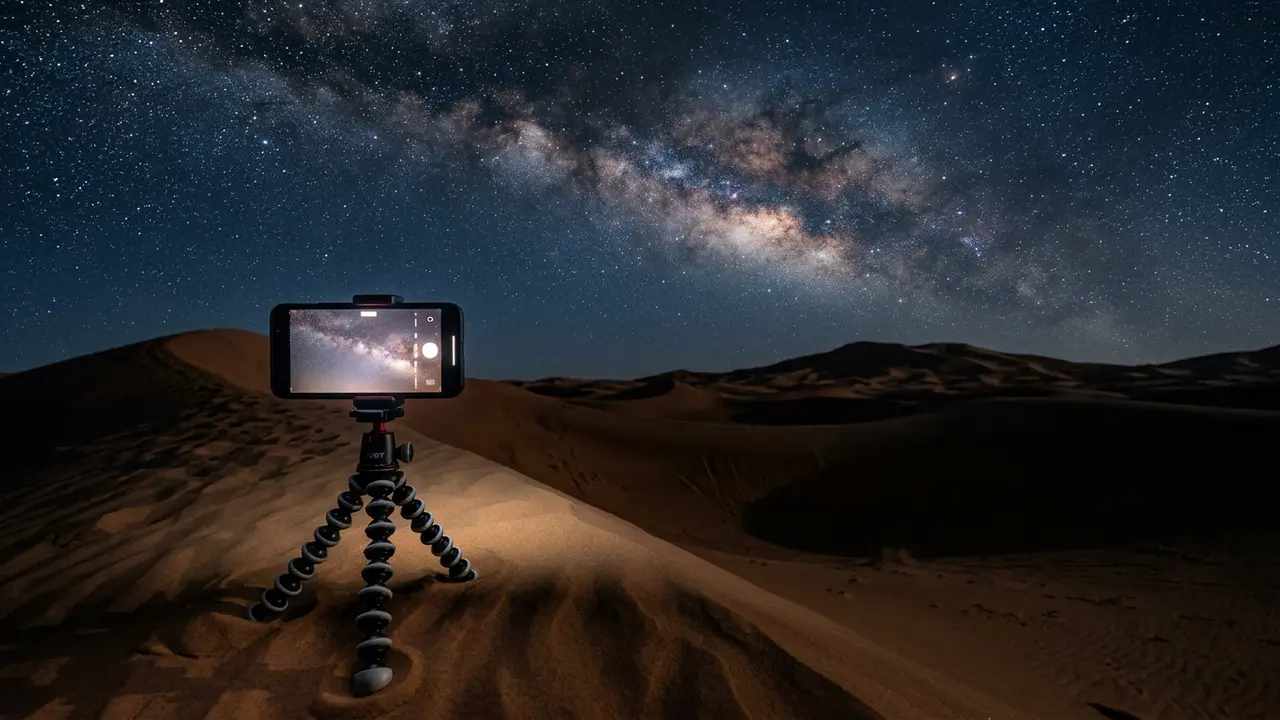
Smartphone Astrophotography in Merzouga: A Practical Guide
Maya Okonkwo Updated 8 min read
No dedicated camera? A recent phone with Night mode, a cheap tripod mount, and Erg Chebbi's dark desert sky can still capture a real Milky Way photo tonight.
ReadFrequently asked questions
Is it worth shooting RAW for aurora photos?
Yes. RAW keeps the full bit depth the sensor recorded, so the subtle colors of an aurora survive into editing. Oxygen produces deep reds rarely visible to the naked eye but reliably captured by modern sensors, and nitrogen adds blue and purple fringes along the lower edge of a bright display. JPEG processing in-camera discards those gradations before you ever open the file.
When should I schedule a Milky Way shoot?
Shoot within five to seven days of a new moon. Once the moon is more than half lit, its glow washes out the core's contrast even from a genuinely dark site. From the northern hemisphere, core season peaks between May and August, with a longer window running from February through October. Check a moon-phase calendar before you check the weather forecast.
Do I need a tripod to photograph the Milky Way with a phone?
Yes. A tripod is not optional: even the steadiest hands introduce blur at a 15-second exposure, and none of this works handheld. Set ISO between 800 and 1600, switch to manual focus, and tap the brightest star in frame, because autofocus hunts and usually fails in near-total darkness.
Does the camera body or the lens matter more for aurora photos?
The lens. Kit lenses that top out at f/3.5 to f/4 give up a lot of light next to f/2.8 (at f/4, roughly half), which forces either high-ISO noise or a shutter so long that a moving aurora blurs. A crop-sensor body with a fast f/1.8 prime still outperforms a full-frame body behind a slow kit lens.
How do I check my exposure once the aurora is overhead?
Check the histogram, not the preview screen, because camera displays are bright enough to make an overexposed image look correct in the dark. If the right edge is hard against the wall, shorten the shutter by one stop. If the histogram sits too far left and the image looks muddy, add a stop. Fire with a remote release.