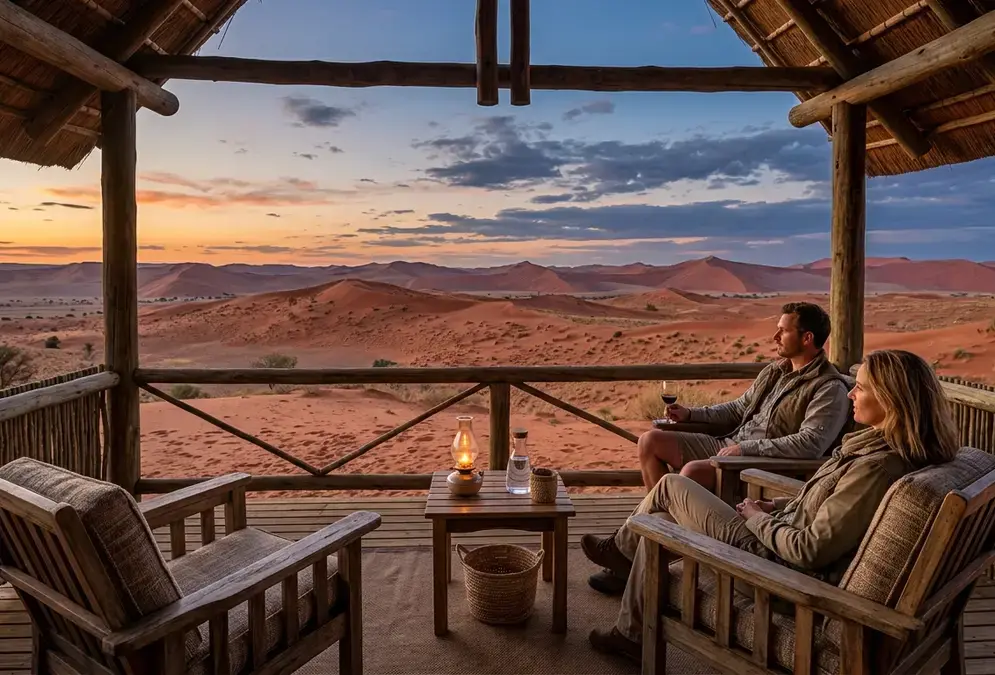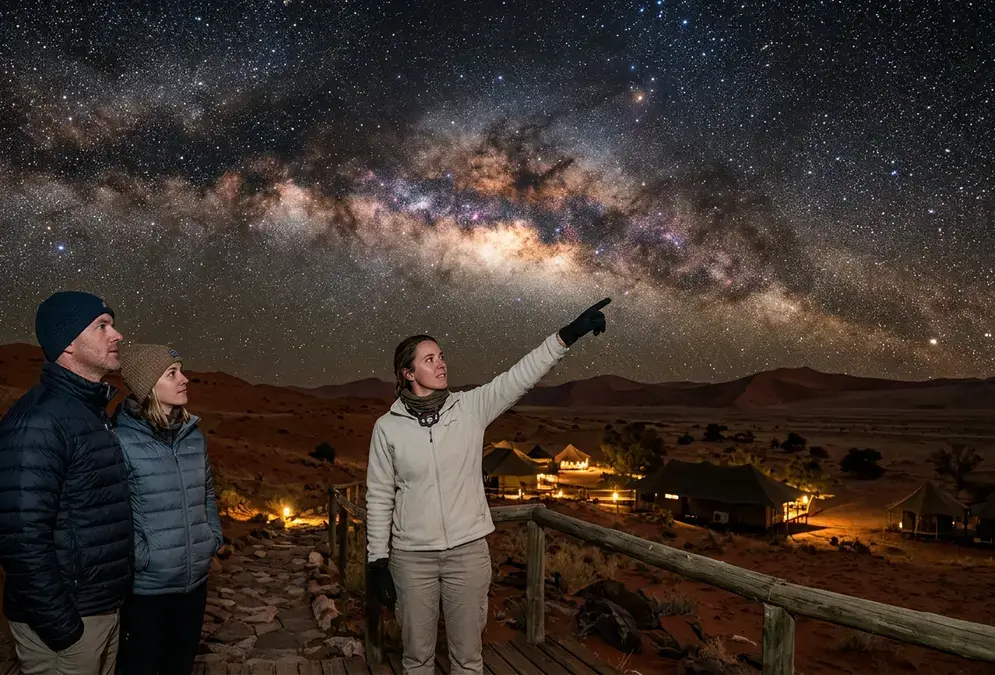
NamibRand Nature Reserve became Africa's first International Dark Sky Reserve in 2012, and it still holds the top Gold Tier rating the designation offers. At andBeyond Sossusvlei Desert Lodge, that status turns into a bookable evening rather than an abstract claim: a visiting astronomer walks you through the sky by eye and by telescope, and if you've packed a camera and a tripod, the reserve's dune fields and quiver trees give you a foreground most stargazing tours simply don't have on offer.
Why NamibRand's sky rates Gold Tier
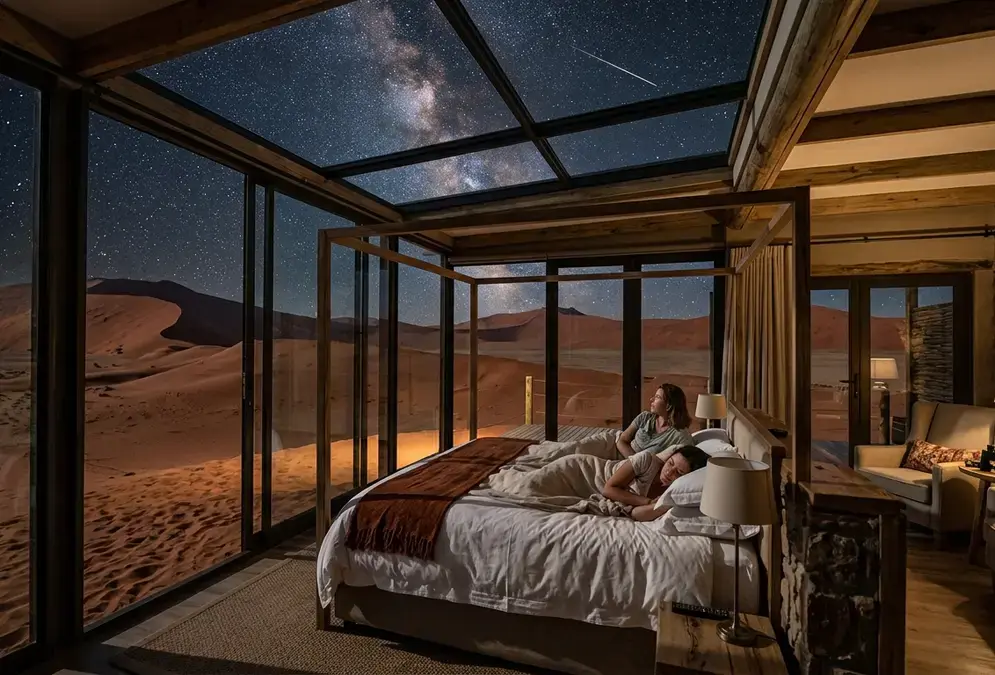
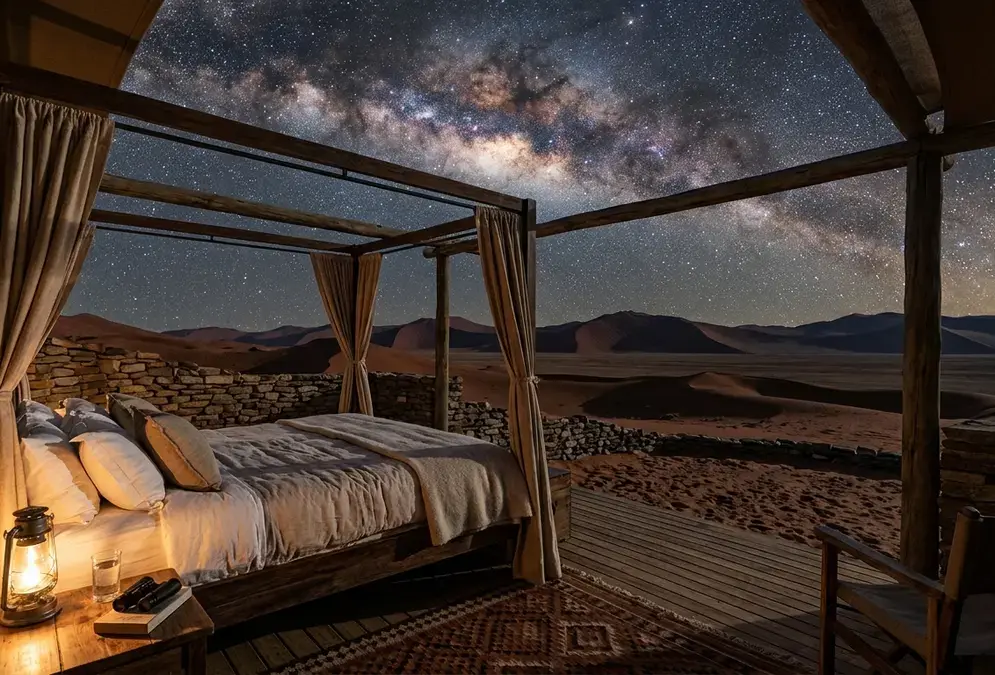
The reserve covers 1,500 km² of southern Namibian desert, and the nearest villages sit roughly 97 km away. That isolation matters more than any equipment: there's no light dome to shoot around, no orange glow on the horizon competing with the galactic core. The lodge itself is built into that darkness rather than against it. Guest rooms have a skylight above the bed, so you can watch the sky from under the covers, and every stay includes the use of a pair of Swarovski binoculars for casual sky-watching outside the formal session.
What the session covers, and where it can fall short
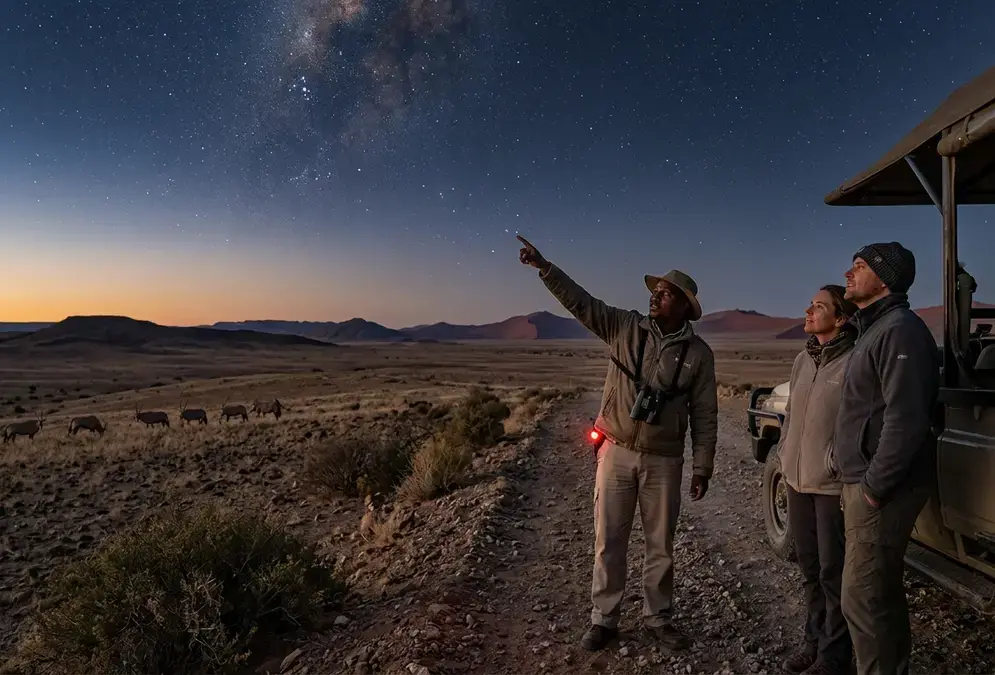
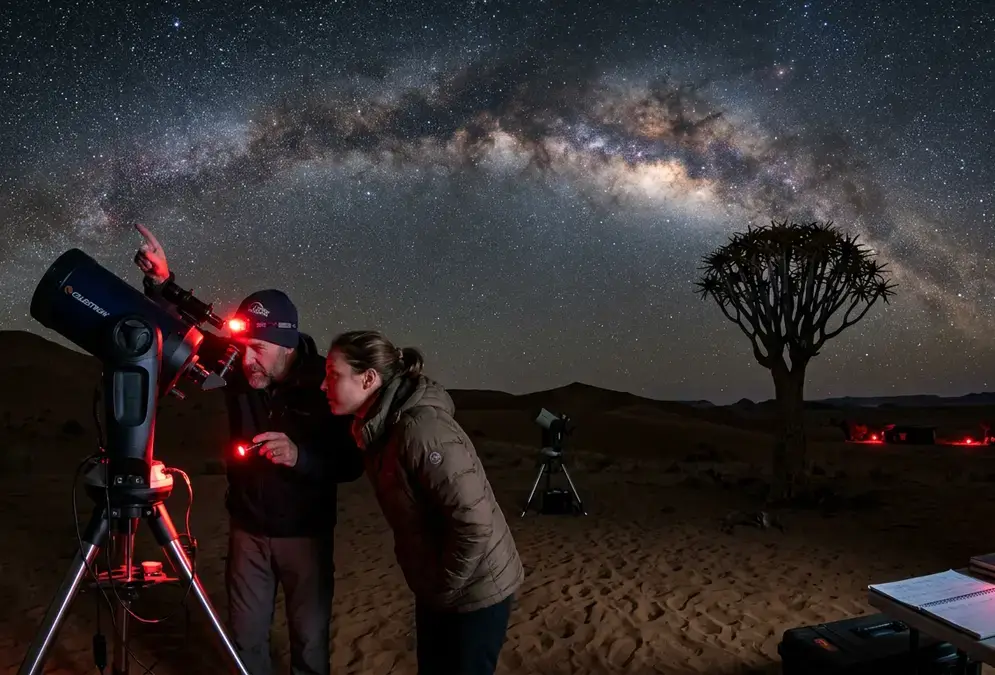
The formal astrophotography evening runs 2 to 3 hours and is built around the lodge's Celestron CPC 1100 GPS (XLT) computerized telescope, a large-aperture reflector that finds and tracks deep-sky targets automatically once it's aligned. A visiting astronomer runs the session, moving between naked-eye orientation, telescope views, and coaching on framing your own shots.
Be clear-eyed about the one real limitation here: the astronomer programme is voluntary, run by whichever astronomer is in residence, and it can change at short notice. The telescope itself is only accessible when an astronomer is on-site — it isn't a self-serve instrument you can book independently of the programme's calendar. If a specific date matters to your trip, confirm with the lodge before you travel rather than assuming the telescope and guide will be waiting for you.
Framing the Milky Way over dune and quiver tree
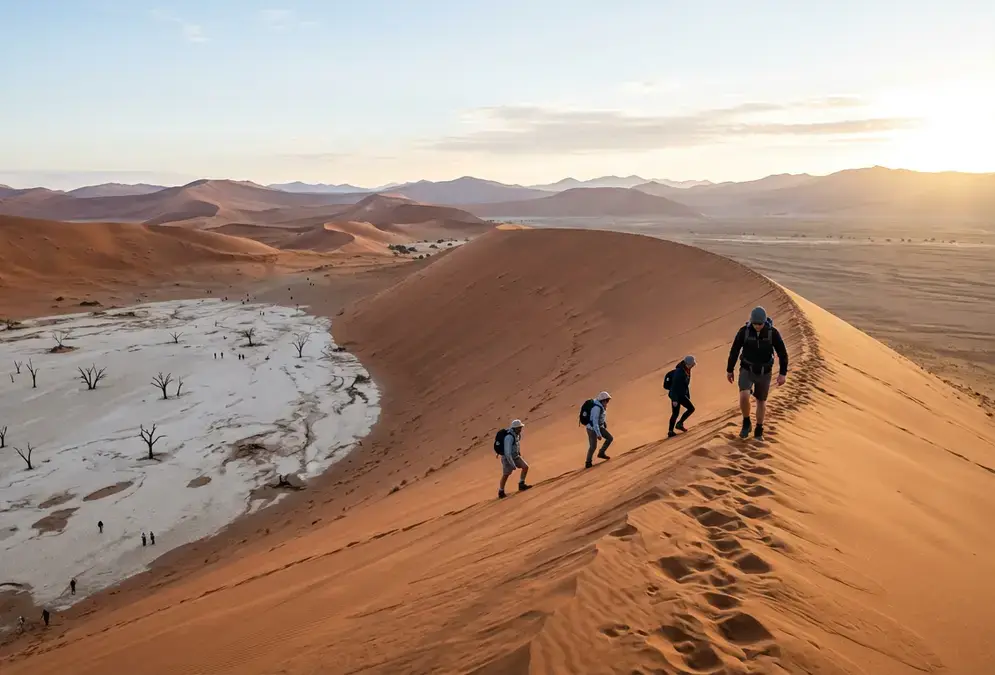
NamibRand rewards photographers who think about foreground, not just exposure. Quiver trees, with their thick, forked silhouettes, give strong contrast against the galactic band and are one of the reserve's signature compositions. The open dune fields do the same job at a larger scale: a bare curved ridge of sand holds a 360-degree sky without a single artificial light to crop out. Neither element needs special access — both sit within easy reach of the lodge, and the astronomer can point you toward whichever framing suits the night's moon phase and the core's position.
When to book
The Milky Way is visible January through November from NamibRand, but May through September is the window worth planning around: dry season, minimal cloud, and the clearest atmosphere of the year. Within that stretch, ask for a date close to new moon — moonlight washes out the same faint detail here as anywhere else, and the lodge's booking calendar will usually accommodate the request if you flag it early. Because pricing runs through the lodge's own packages rather than a published rate card, treat this as a conversation to have when you book your room, not a line item to compare against other tours in isolation. If andBeyond isn't the right fit for your budget or dates, see the best stargazing lodges in NamibRand for three alternative properties inside the same Gold Tier reserve.
Camera gear to pack
Bring a camera with full manual mode and a wide-angle lens, ideally 14–24mm at f/2.8 or wider, which is what dune-foreground Milky Way shots actually need. A sturdy tripod is not optional for long exposures, and an ISO range up to 3200 or beyond with manual shutter control lets you balance noise against exposure time on a genuinely dark sky. A remote shutter release or an intervalometer helps avoid shake on longer frames, though a self-timer works in a pinch. Pack warm layers regardless of the daytime heat; desert nights here drop fast once the sun is down. And bring a flashlight with a red-light mode — white light kills the night vision you and everyone else at the telescope just spent twenty minutes building.