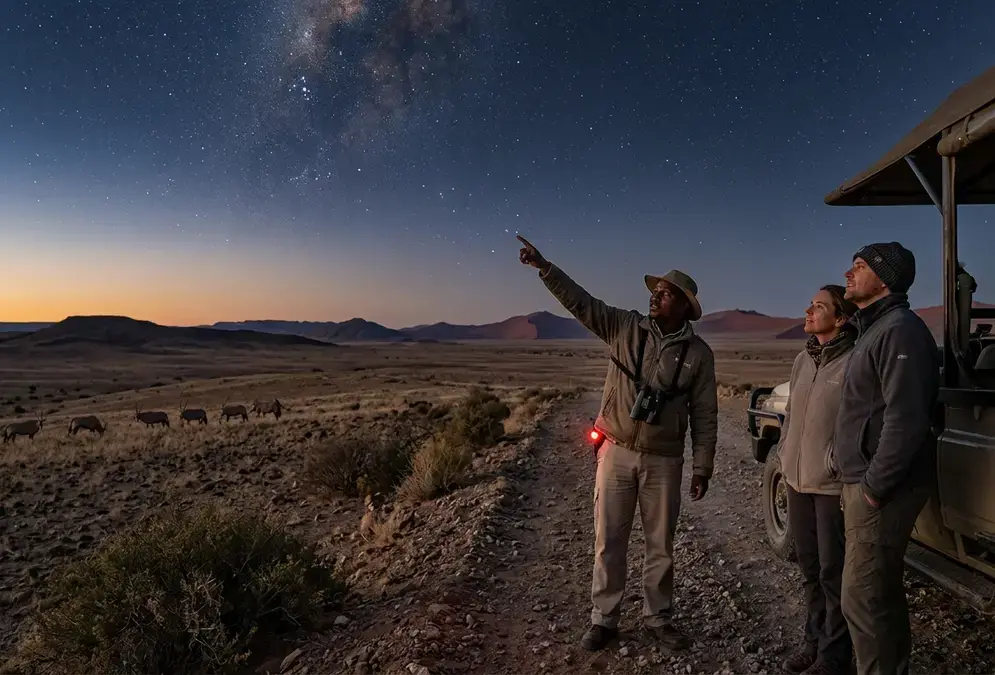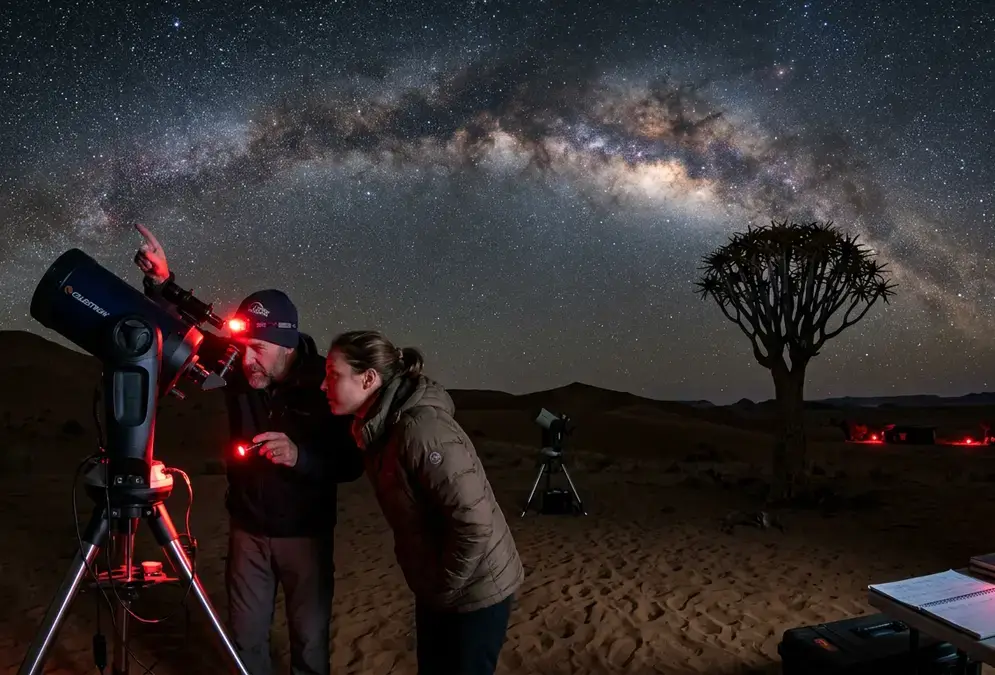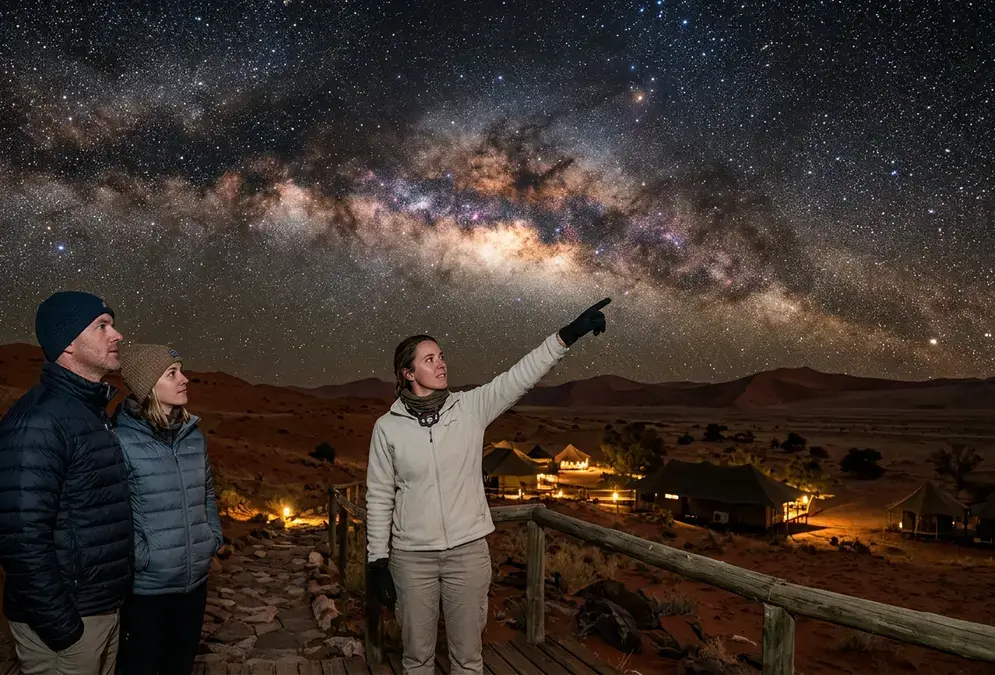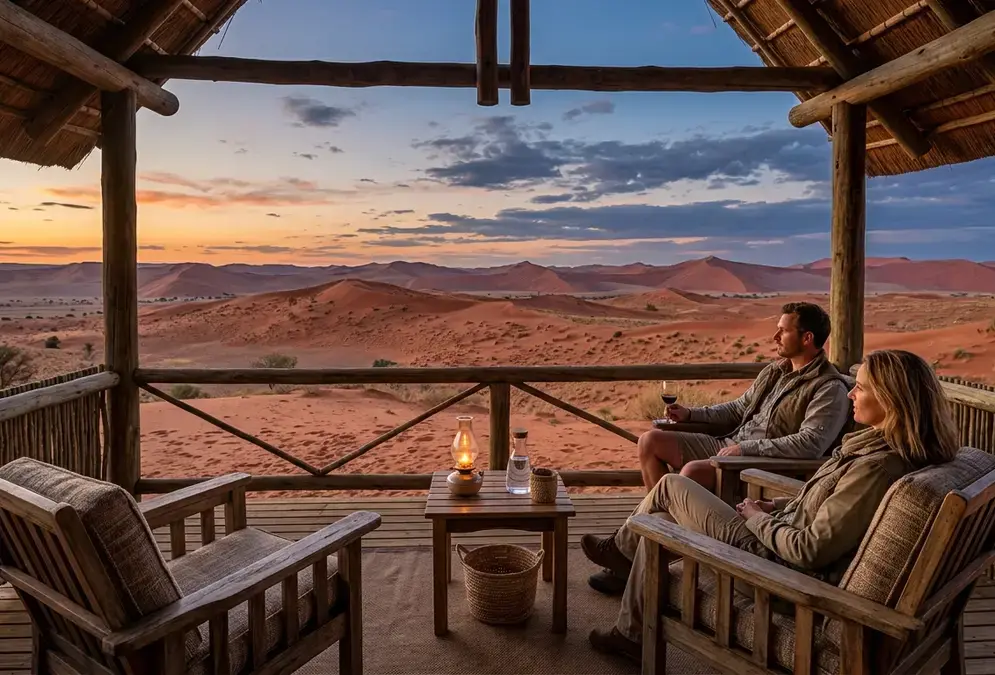
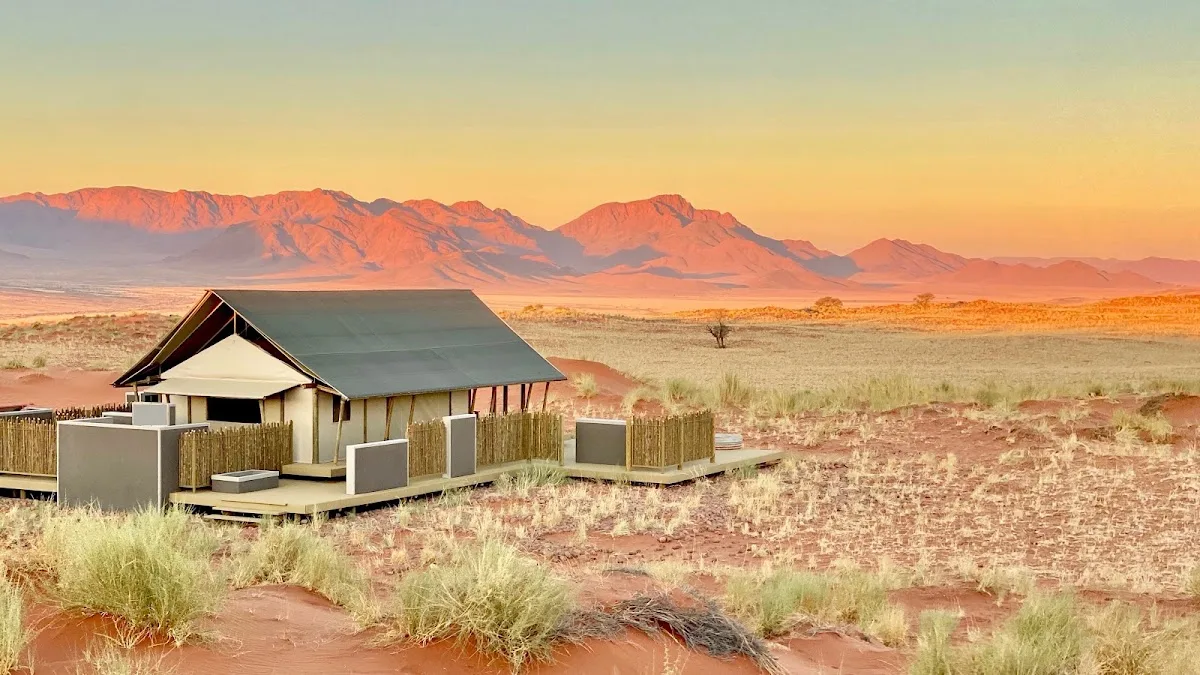
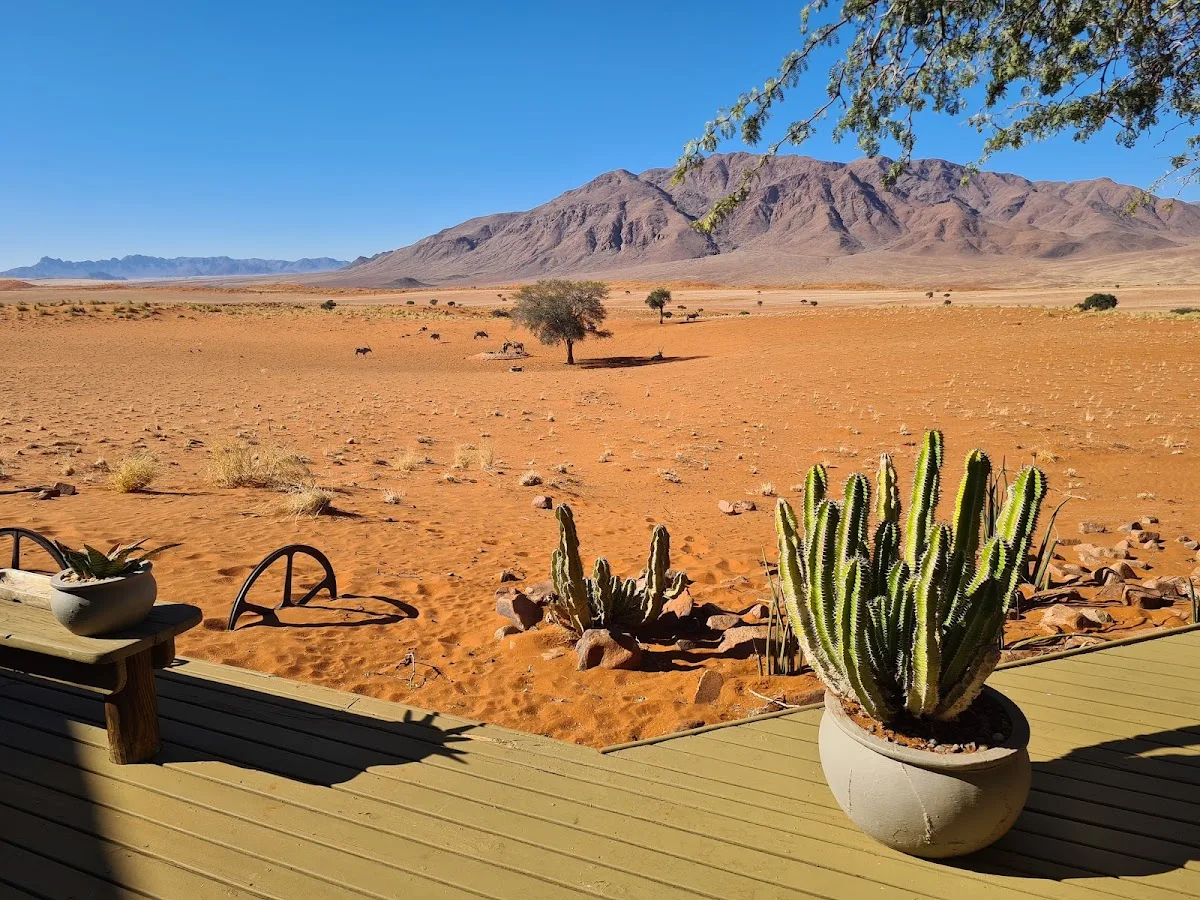
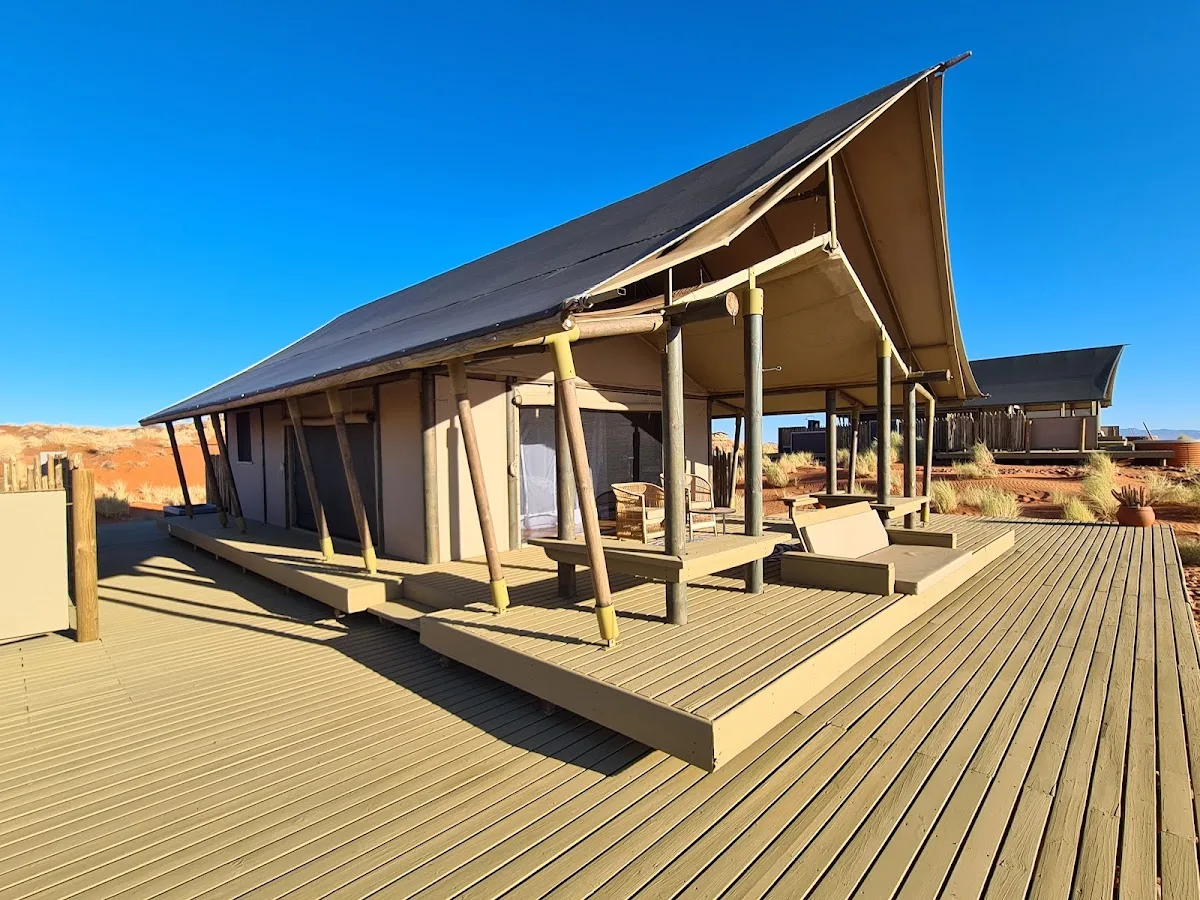
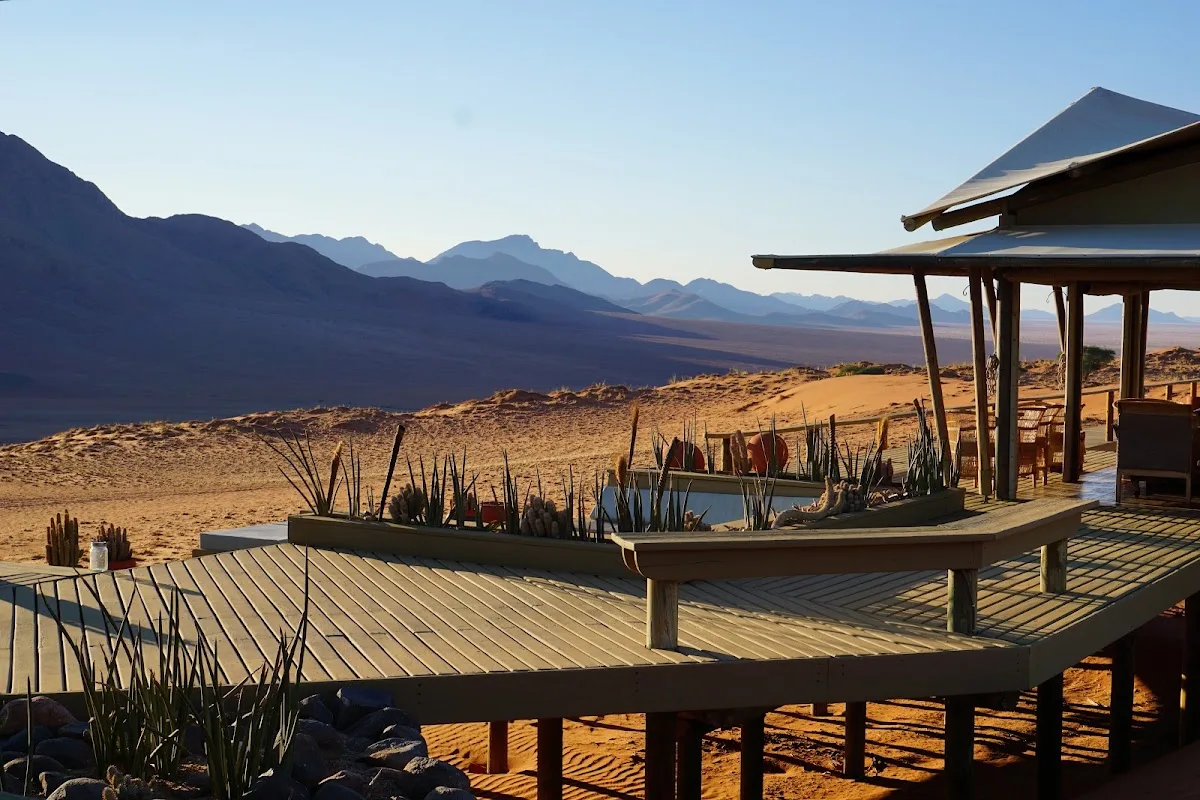
Nine chalets sit under the red dunes of the NamibRand Nature Reserve, built with the ambience of a tented camp but the comfort of a permanent roof. Wolwedans Dunes Lodge is one of the operators whose early land purchases helped stitch NamibRand together as a private reserve, and it has spent the decades since turning that conservation project into a stargazing destination: Star Beds on private decks, Desert Sleepouts in the open dunes, and a night sky that earned this reserve its International Dark Sky Reserve designation in 2012. There is no restaurant strip or resort sprawl here, just chalets, sundowner decks, and a sky with almost nothing between you and it.
Star Bed or Desert Sleepout: two ways to sleep outside
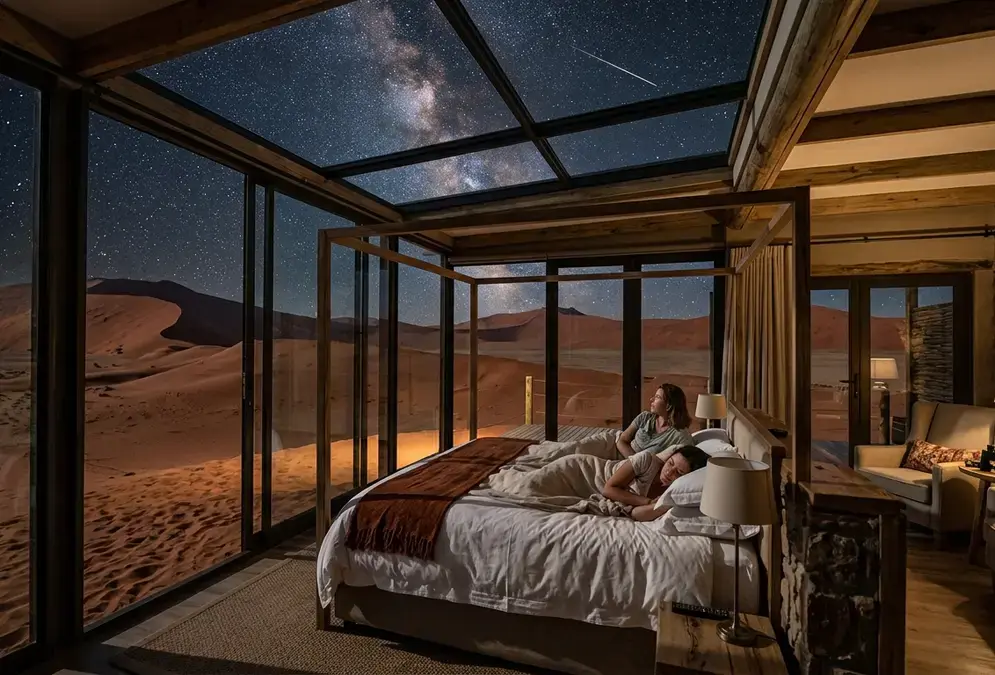
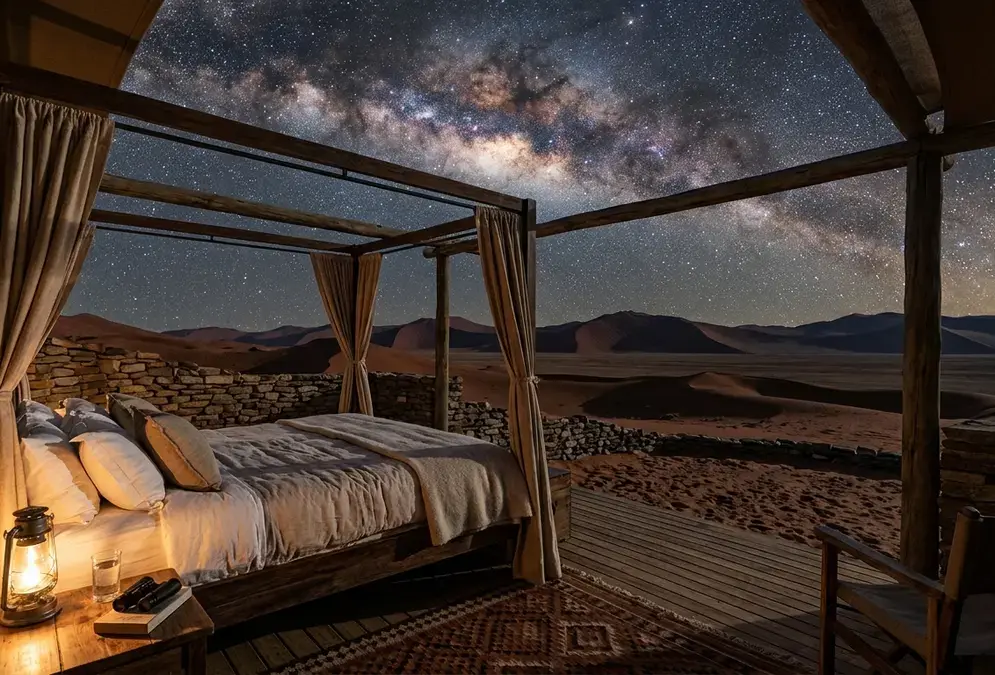
Wolwedans built its stargazing reputation on two distinct experiences, and choosing between them matters more than picking a room category usually does. The Star Bed puts you on a private deck attached to your own space, open to the sky but with the practical comforts of a proper bed close by. The Desert Sleepout goes further: a night spent out in the dunes themselves, away from any structure, with nothing but the reserve's silence and the open sky above. Both trade on the same asset, minimal light pollution across the reserve, but the Sleepout is the more committed version of the idea. First-timers who want a taste of open-air stargazing without leaving the property's comfort zone should start with the Star Bed; those chasing full immersion should book the Sleepout.
Inside the chalets: tented-camp romance, hotel comfort
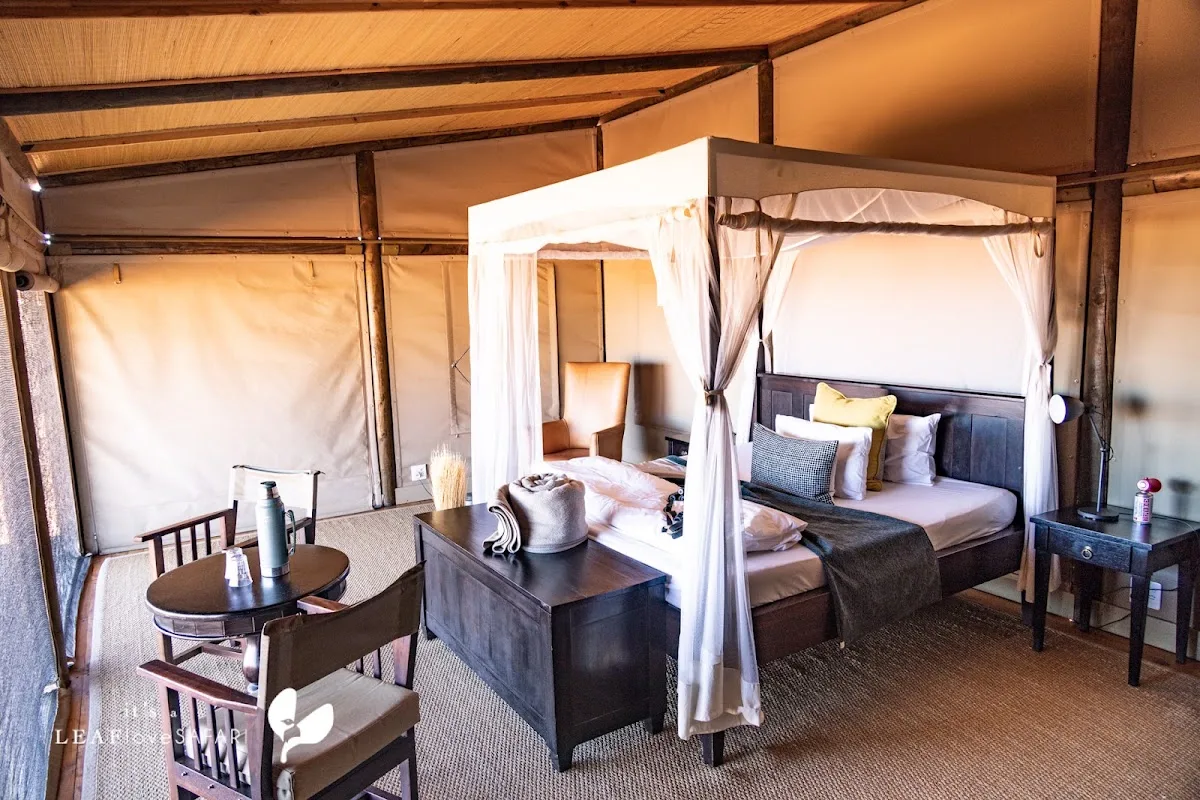
The nine chalets each carry an en-suite bathroom, a rainfall showerhead, and a private verandah, the kind of setup meant to blur the line between canvas camp and proper lodge. Two dining rooms, a wine cellar, a library, and a tea deck round out the shared spaces, alongside multiple lounges and an outdoor pool for the heat of the day. It is worth knowing before you book what this is not: there is no WiFi in the rooms (only in the main area), no in-room fridge, and no air-conditioning. That is a deliberate trade, not an oversight, in a lodge built around getting guests outside after dark rather than glued to a screen or a minibar.
The reserve Wolwedans helped build
NamibRand did not exist as a protected landscape by accident. Wolwedans is widely credited among the operators whose early consolidation of former farmland shaped the reserve that now carries the International Dark Sky Reserve designation, awarded in 2012, one of the darkest stretches of protected land on the continent. That history is why the lodge's stargazing programme feels less like an add-on and more like the point of the place: sundowner decks positioned for the transition from golden light to full dark, chalets sited with sky views built in, and an operating philosophy that treats the reserve's darkness as the asset worth protecting, not just marketing.
Booking direct, and what it costs
Rates begin at 6900 NAD a night (roughly USD equivalent varies with the exchange rate, so confirm current pricing directly). Wolwedans Dunes Lodge is not listed on Booking.com or the other major OTAs; reservations run through the operator's own team, by email at reservations@wolwedans.com or by phone at +27 (0)21 876 2153, or via the booking pages at wolwedans.com. That is standard practice across Wolwedans' full portfolio of properties in the reserve, Dune Camp, Plains Camp, Desert Lodge, and the rest, so build in a few extra days for a direct-booking back-and-forth rather than expecting an instant OTA checkout. See the full ranked guide to NamibRand's stargazing lodges for how this property compares with the reserve's other three stargazing stays.
Getting there and what to pack
Wolwedans Dunes Lodge sits roughly 60 kilometres south of Sesriem, deep enough into the NamibRand Nature Reserve that a 4WD vehicle is recommended for the access roads — see getting to NamibRand for the charter-flight alternative if the drive doesn't suit your itinerary. Pack for a genuinely remote stay:
- warmer layers than the daytime heat suggests, since desert nights drop sharply once the sun is down
- a torch or headlamp for the walk between chalets and the main lounge after dark
- a camera or phone tripod if you're planning to shoot the Milky Way from the Star Bed deck
The reserve's clear skies hold up across the year, but a Desert Sleepout in the coldest winter months (roughly June through August) means colder nights than a summer booking, so match your gear to the season you pick rather than assuming one packing list covers both. I've made this drive myself, and it's worth budgeting as a full day of the trip in its own right, not a delay before the stay starts.