
Two nonprofits measuring two different senses
The two systems are unrelated: different nonprofits, different tests, different senses. DarkSky International runs the International Dark Sky Places program, which has certified towns, parks and reserves alike, with lighting policy and public education as the common thread[5]. That scope reaches beyond wild land, since a Dark Sky Community can be a town or city that has shown exceptional dedication to protecting its night sky[6].
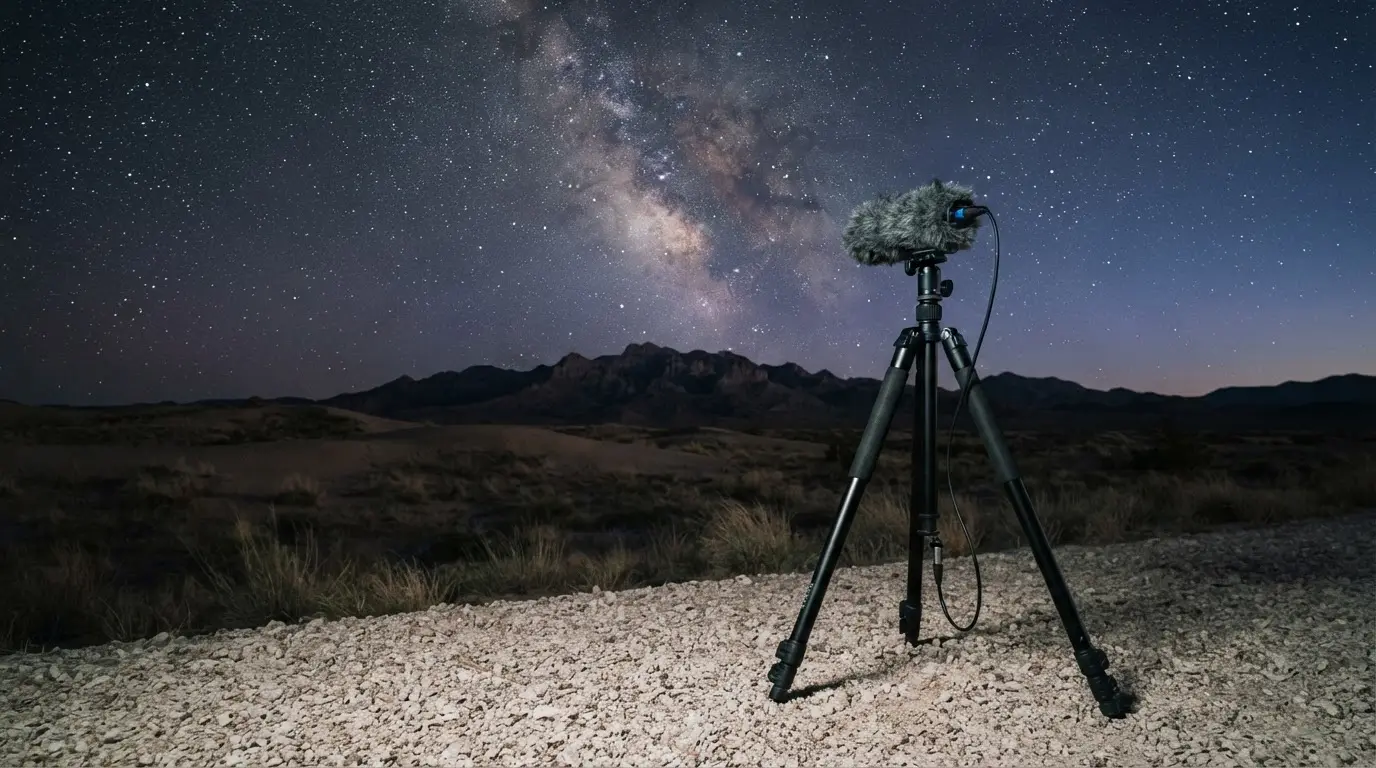
Quiet Parks International covers the other half of a night outdoors. It defines natural quiet as the sounds of nature without human-made noise, which is not the same as silence[7], and the problem it exists to address is that transport noise, from highways, rail, air and boats, pervades every corner of the planet[8]. A Quiet Park is a place that has kept a rare thing, not a place that has achieved a hush.
| Criterion | Dark Sky Place | Quiet Park |
|---|---|---|
| Issuer | DarkSky International | Quiet Parks International |
| What it protects | The night sky and outdoor lighting policy | Natural quiet: nature's sounds without human-made noise |
| How it is checked | Sky brightness and Milky Way visibility; lighting policy for towns | Acoustic studies, repeated after certification |
| Categories | Park, Reserve, Sanctuary, Community, Urban Night Sky Place | Urban Quiet Park, Wilderness Quiet Park, Quiet Trail |
| NamibRand | Gold Tier Reserve, May 2012 | Wilderness Quiet Park, 20 June 2024 |
That difference in what is being protected shapes a trip more than the label does. A floodlight ends a dark sky and a low-flying aircraft ends natural quiet, and the fixes differ: lighting retrofits in one case, flight routes and development limits in the other. My bias, for a stargazing trip, is to book on the sky badge and treat the quiet badge as the bonus.
It also changes how you research a destination. For a dark sky you look up Bortle ratings, moon phase and cloud climatology; for quiet you look at flight paths, road traffic, wind and the weeks when boats and visitors peak. Both searches start from the same question, which is what the place is like on the night you actually go, and neither badge answers it for you.
How each badge is measured
DarkSky's tests are about the sky itself. A Dark Sky Park or the core of a Reserve has to demonstrate that the Milky Way is visible on a typical night[9], and a Sanctuary has to hold zenith sky brightness at or darker than 21.5 magnitudes per square arcsecond[10]. If those numbers mean little to you, the Bortle scale turns the same idea into a nine-step naked-eye rating.
Quiet Parks International measures with microphones, not eyes. Its goal for an Urban Quiet Park is background noise no higher than 45 decibels[3], and it keeps running acoustic studies after a park is certified to confirm it still qualifies[11]. That 45 dB figure is specific to urban parks, so it tells you nothing about a wilderness one.
Featured · Destination
NamibRand Nature Reserve
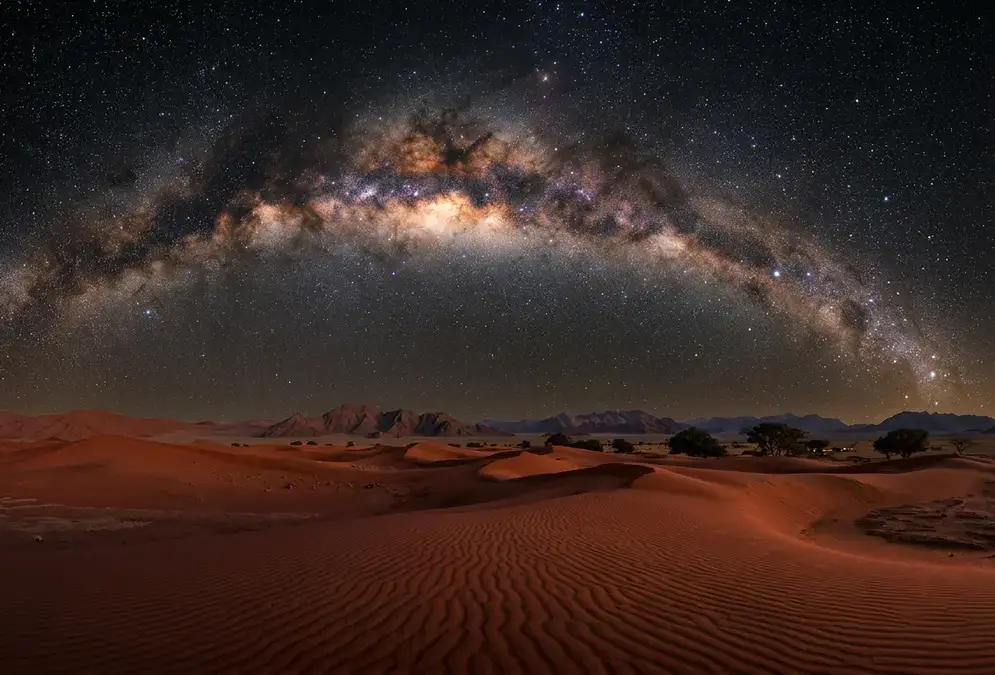
NamibRand is Africa's only Gold Tier Dark Sky Reserve: extreme Namib Desert isolation, the Southern Cross, Magellanic Clouds, and luxury safari lodges.
A traveler can sanity-check a DarkSky claim by stepping outside and looking up. A Quiet Park claim needs a recorder and a long listen, which is why QPI repeats its studies after certification. The practical upshot is to ask what monitoring sits behind a quiet claim before you plan a trip around it.
The two badges also fail in different ways. A Dark Sky Place is protected mainly by lighting policy, so its enemy is creeping glow from new fixtures and nearby development. A Quiet Park depends on a soundscape that one new road, flight path or event venue can change, and no lighting rule fixes that. When you compare two destinations, ask which of those risks is more likely at the place and in the month you plan to visit.
Dark Sky Place types and Quiet Park kinds compared
DarkSky certifies five types of Dark Sky Place, each against a different standard[12]. They are Parks, Reserves, Sanctuaries, Communities and Urban Night Sky Places, and the definitions show how differently they are built:
- Park: the type most travelers mean when they search for a dark sky park
- Reserve: a core area meeting minimum criteria for sky quality, wrapped in a peripheral area that supports dark sky preservation in the core[13]
- Sanctuary: typically a very remote site with few, if any, nearby threats to its dark night skies[14]
- Community: a town or city committed to protecting its night sky, as described above
- Urban Night Sky Place: a site whose planning and design promote an authentic nighttime experience in the midst of significant artificial light[15]
Quiet Parks International's awards for parks and trails come in three kinds. Urban Quiet Parks began with Taiwan's Yangmingshan on 5 June 2020[16], Wilderness Quiet Parks with the Zabalo River in Ecuador, the first certified in the world[17], and Quiet Trails with Taiwan's Cuifeng Lake Circular Trail on 18 July 2022[18].
No official table lines the two ladders up, so what follows is my comparison, not a conversion chart. An Urban Quiet Park and an Urban Night Sky Place share a setting, a city that still wants to keep something of the natural night, though one is judged on sound and the other on lighting design, and DarkSky says such sites do not necessarily provide dark skies[19]. The overlap that matters to a traveler comes where land is remote, because a Wilderness Quiet Park and a Reserve both need a lot of thinly developed ground. Two awards are also two separate sets of evidence, one about the sky and its lighting rules and one about the soundscape, so each can be checked against its own list.
What each badge tells you before you book
A badge describes how a place was judged at the time of its audit, not what you will see or hear on the night you arrive. Moon phase, cloud and season still decide what you see, and wind, weather and local events still decide what you hear, so use the badge to build a shortlist, then check conditions for your own dates before you pay for anything.
Waterton-Glacier shows how a dark-sky badge is earned. When the two parks received provisional designation in April 2017, they had three years to retrofit their remaining non-compliant lighting fixtures[20], and Waterton Lakes now lists its International Dark Sky Park status as dated 2021[21]. A retrofit is a job a parks department can schedule, which is part of why the Dark Sky list has grown steadily.
Behind that sits an application DarkSky puts at one to three years from first inquiry to certification[22], ending in a final review by an external Dark Sky Places Committee[23]. The full walk-through lives in how dark sky certification works; what matters here is that the slow part is usually lighting, not paperwork.
That list now covers more than 160,000 square kilometres across 22 countries[24]. The Quiet Parks roster is far newer: Hampstead Heath in London became Europe's first Urban Quiet Park on 18 July 2021[25]. A quiet award is harder to find on a map, so check QPI's own list rather than assuming a famous park qualifies.
NamibRand: a reserve that holds both
NamibRand Nature Reserve is the cleanest case I can source of a place that holds both awards. The International Dark-Sky Association, now DarkSky International, designated it an International Dark Sky Reserve at Gold Tier in May 2012[26], and QPI named it Africa's first Wilderness Quiet Park on 20 June 2024[4]. Gold was a sky-quality tier: DarkSky's 2015 Reserve guidelines required a Reserve core's night-sky quality to fit one of three tiers[27], and Gold was defined by superior nighttime lightscapes[28]. That is the sense in which NamibRand's 2012 designation is Gold.
Lodges there are held to one bed per 1,000 hectares, a density cap that thins out headlights and engine noise alike[29]. That is how a single rule serves two badges, and it is part of the longer story of Namib Desert dark-sky conservation.
Recommended tours
Tours are selected for quality, not commission. I earn a small fee if you book — at no extra cost to you.
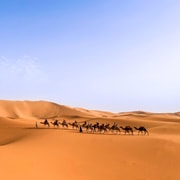
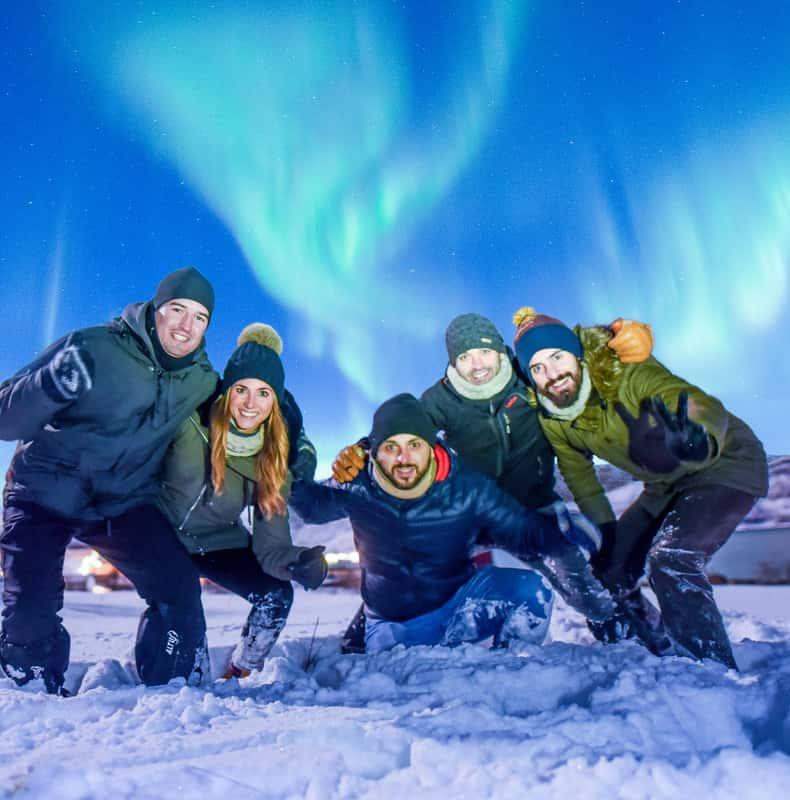
The darkest sky I have personally seen was at NamibRand, and what made it dark was the absence of glow from horizon to horizon rather than any Bortle figure. That is a first-hand judgement about the sky only; I would not pretend to rate the soundscape.
No official tier mapping
No official mapping exists between QPI's tiers and DarkSky's place types, so any pairing in this article, such as Reserve with Wilderness Quiet Park, is an editorial comparison. Check each organization's own award list before you book around a badge, since a place can sit on one list and not the other.
For planning, the double badge changes less than it sounds. You are still booking a remote lodge, a long drive and a southern-hemisphere sky, and the quiet award mainly confirms that the reserve keeps its footprint small.
Which badge should you plan around?
Plan around the Dark Sky Place list if the trip is about the night sky. A certified sky is something you can test by looking up, and the best dark sky parks in the world guide covers the places that have earned it. Which reader you are decides the rest:
- You want the Milky Way on a single trip: choose a Dark Sky Park, Reserve or Sanctuary and ignore Quiet Park status.
- You travel for birdsong, wind and water: look at Wilderness Quiet Parks and Quiet Trails, and expect natural quiet rather than silence.
- You are stuck in a city and want a night outside: an Urban Night Sky Place or an Urban Quiet Park is the realistic target, and each protects a different thing.
- You want both in one stay: NamibRand is the documented example, with a remote lodge stay to match.
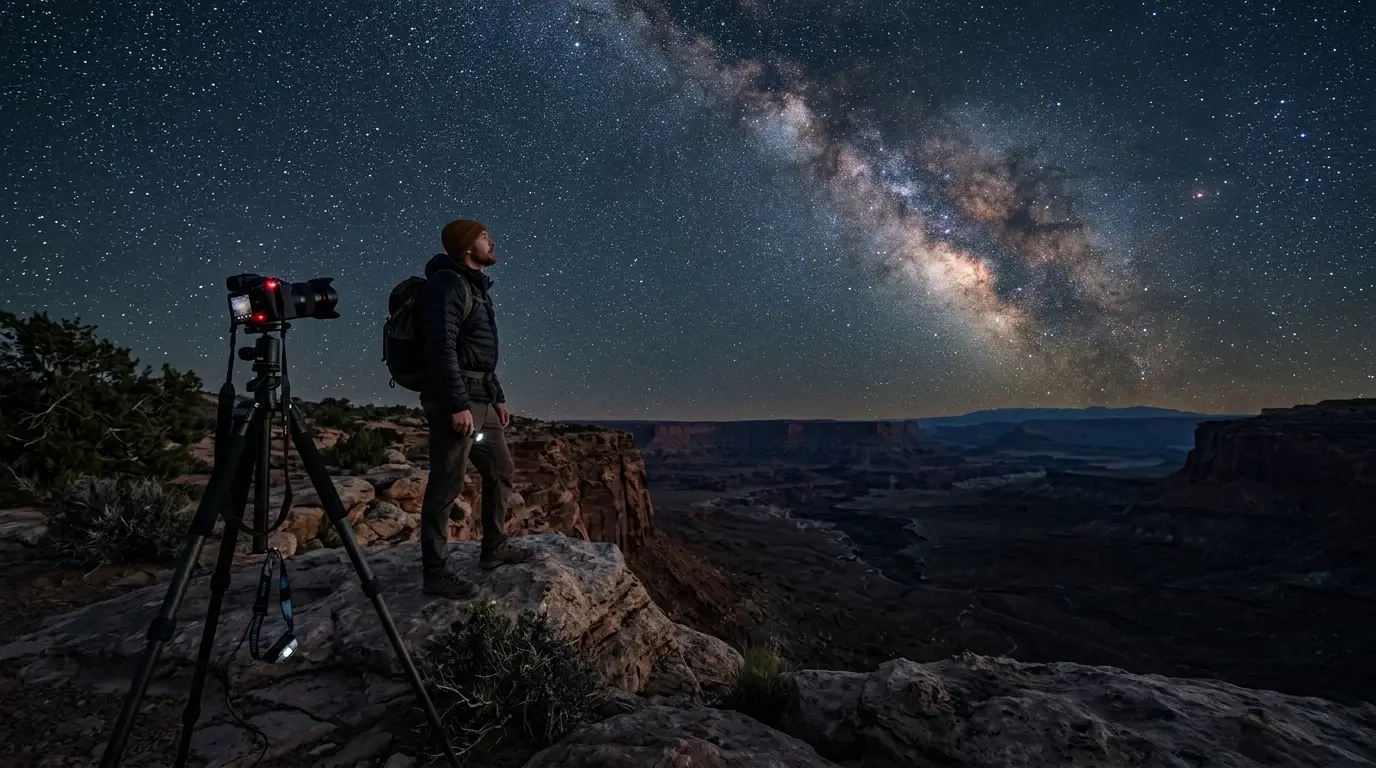
Featured · Article
What Is Astrotourism? The Complete Beginner's Guide
Astrotourism means travel built around dark skies: meteor showers, auroras, the Milky Way. What it means, where to go, and how to plan your first trip.
Treat a double badge as a bonus, not a filter. Holding one award tells you nothing about the other, so I would not book a stargazing holiday on a Quiet Park label alone.