Articles

Dark sky travel stories and planning essays

Long-form editorial pieces by stargazing correspondents — aurora science, astrophotography how-tos, destination deep-dives, and practical planning essays for dark-sky trips.

Aurora & northern lights

Reading for your Abisko Stargazing trip

Reading for your AlUla Stargazing trip

Reading for your Aoraki Mackenzie Stargazing trip

Reading for your Atacama Desert Stargazing trip

Reading for your Big Bend National Park trip

Reading for your Stargazing in Bryce Canyon National Park trip

Reading for your Death Valley trip

Reading for your Fairbanks Northern Lights trip

Reading for your Northern Lights in Finnish Lapland trip

Reading for your Northern Lights in Iceland trip

Reading for your Stargazing in Jasper National Park trip

Reading for your Joshua Tree National Park trip

Reading for your La Palma Stargazing trip

Reading for your Merzouga Stargazing trip

Reading for your NamibRand Nature Reserve trip

Reading for your Tenerife Stargazing trip

Reading for your Northern Lights in Tromsø trip

Reading for your Yellowknife Northern Lights trip

Skills & fundamentals

All articles

The full chronological archive. Every piece, newest first.

Star-filled night sky over Furnace Creek's salt flats in Death Valley, illustrating a clear Death Valley stargazing forecast with the Milky Way core rising above the valley floor

Death Valley Stargazing Forecast: How to Check the Sky

Maya Okonkwo 6 min read

Death Valley's Gold Tier sky doesn't guarantee clear nights. Here's how to read the Furnace Creek Clear Sky Chart and time a trip around the moon phase.

Read
Getting to Big Bend National Park: a lone car on an empty desert highway at dusk, mesquite scrub stretching toward distant mountains under a deepening indigo sky, illustrating the long, remote drive required to reach the park

Getting to Big Bend: Airports, Drive Times, and No Signal

Maya Okonkwo 7 min read

The nearest airport to Big Bend sits 235 miles away, and only 6.78% of the park has 4G service. Here's the honest logistics on airports and drive times.

Read
The paved desert highway most visitors take when getting to Death Valley National Park, sun low over the Panamint Range, a single car on the two-lane road leading into the valley from Las Vegas

Getting to Death Valley: Routes From Las Vegas and LA

Maya Okonkwo 7 min read

Death Valley is two hours from Las Vegas, five from LA, on paved roads any rental car handles. The fastest routes, entrance fees, and when you need 4x4.

Read
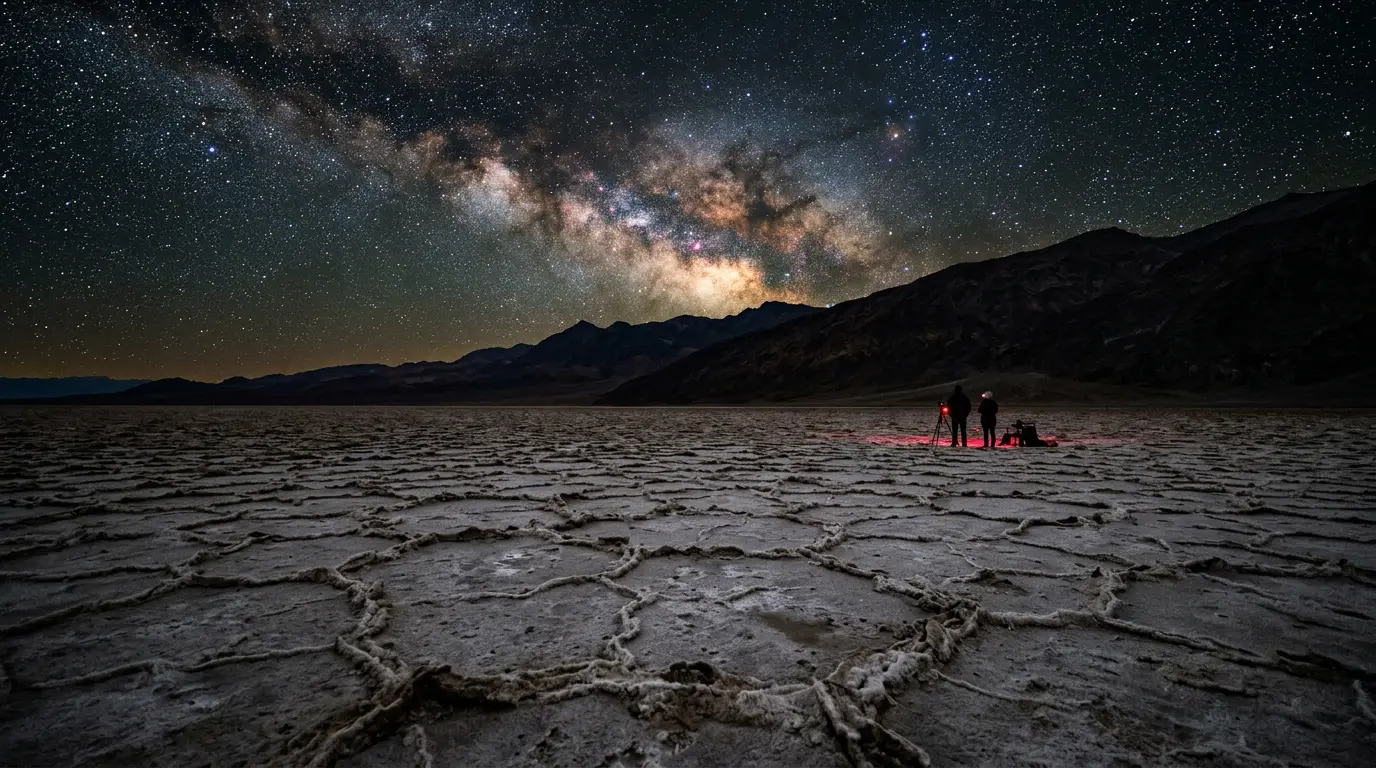
Night sky over Death Valley's Badwater Basin salt flats with the Milky Way arching overhead, illustrating how many days to plan for Death Valley stargazing across the park's Furnace Creek, Badwater, and Mesquite Flat zones

How Many Days for Death Valley Stargazing? 2 vs 3 Nights

Maya Okonkwo 6 min read

Death Valley's 3.4M-acre Gold Tier sky rewards 2-3 nights: one risks a washout, two adds a weather backup, three covers Badwater, Mesquite Flat, Furnace Creek.

Read
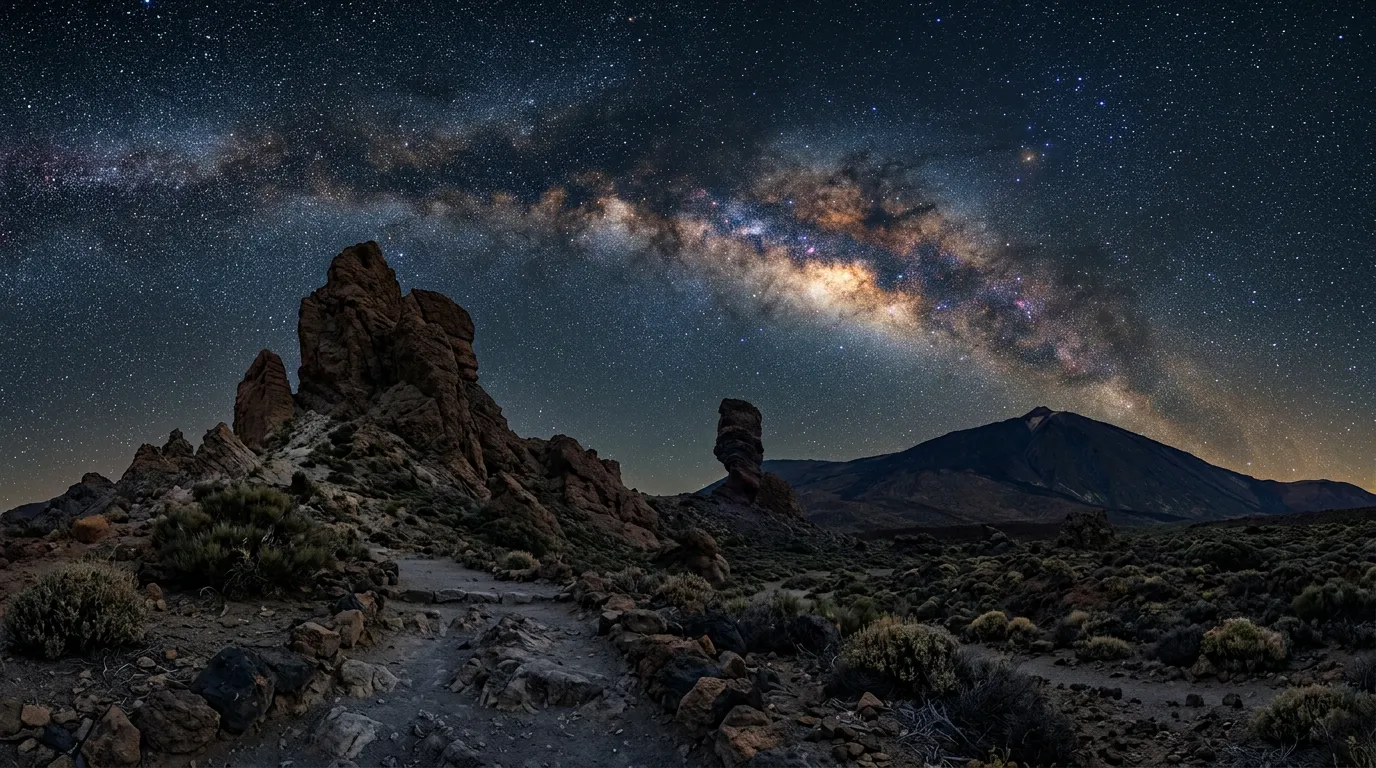
Milky Way over the Chisos Mountains in Big Bend National Park at night, illustrating whether Big Bend is worth it for stargazing despite the long drive and summer heat

Is Big Bend Worth It for Stargazing? An Honest Look

Maya Okonkwo 8 min read

Big Bend is the darkest national park sky in the Lower 48 — but is it worth the five-hour drive, dead cell service, and 100°F summer days? An honest verdict.

Read
Is Death Valley worth it for stargazing? Wide desert view of Mesquite Flat Sand Dunes under a star-streaked Milky Way sky, dry lakebed stretching to distant mountains lit only by starlight.

Is Death Valley Worth It for Stargazing?

Maya Okonkwo 7 min read

Death Valley's skies are Gold Tier and Bortle 1-2, but summer highs can top 120°F and the nearest city is two hours away. Here's the honest trade-off.

Read
Photorealistic Milky Way over red sandstone formations in Wadi Rum, Jordan, above a lit Bedouin desert camp, illustrating whether Wadi Rum is worth it for stargazing

Is Wadi Rum Worth It for Stargazing?

Maya Okonkwo 8 min read

Wadi Rum has no official dark-sky status, but its desert darkness, Bedouin camps, and UNESCO World Heritage landscape may still be worth the long flight.

Read
Things to do in Big Bend besides stargazing: hikers on a sunlit desert canyon trail with the Rio Grande and layered rock walls in the midday distance

Things to Do in Big Bend Besides Stargazing

Maya Okonkwo 8 min read

Big Bend hides more than 150 miles of trails, a natural hot spring on the Rio Grande, canyon float trips, and a 30-mile scenic drive worth doing before dark.

Read
Hexagonal salt crystal patterns stretching across Badwater Basin's white salt flat in Death Valley National Park at sunrise, distant brown mountains rimming the horizon under a pale desert sky, one of the top things to do in Death Valley beyond stargazing

Things to Do in Death Valley Beyond Stargazing

Maya Okonkwo 7 min read

Death Valley's daytime side beats the heat with Badwater Basin's salt flats, Artist's Palette's colors, and Dante's View's panorama above the valley floor.

Read
Red sandstone cliffs and valley floor of Wadi Rum, Jordan, seen at golden hour, illustrating things to do in Wadi Rum beyond stargazing

Things to Do in Wadi Rum Beyond Stargazing

Maya Okonkwo 7 min read

Pair Petra with Wadi Rum, climb graded sandstone routes, ride a dawn balloon, and spot the Lawrence of Arabia and Martian cliffs between stargazing nights.

Read
Wadi Rum astrophotography gear setup: a camera and tripod silhouette framing a red sandstone monolith against the Milky Way core over Jordan's desert at night

Wadi Rum Astrophotography Gear: Camera, Lens & Tripod

Maya Okonkwo 10 min read

Camera, lens, and tripod picks for Wadi Rum's red sandstone skies: wide apertures for the Milky Way, monolith foregrounds, and sand/heat-proofing gear.

Read
Wadi Rum dark sky UNESCO explained: Milky Way core rising over red sandstone formations in Jordan's UNESCO World Heritage desert at night, no artificial light on the horizon

Wadi Rum's UNESCO Dark Sky Status, Explained

Maya Okonkwo 9 min read

Wadi Rum is a UNESCO World Heritage site, not a DarkSky-certified reserve. Here's what the 2011 designation protects, and why its desert sky stays this dark.

Read