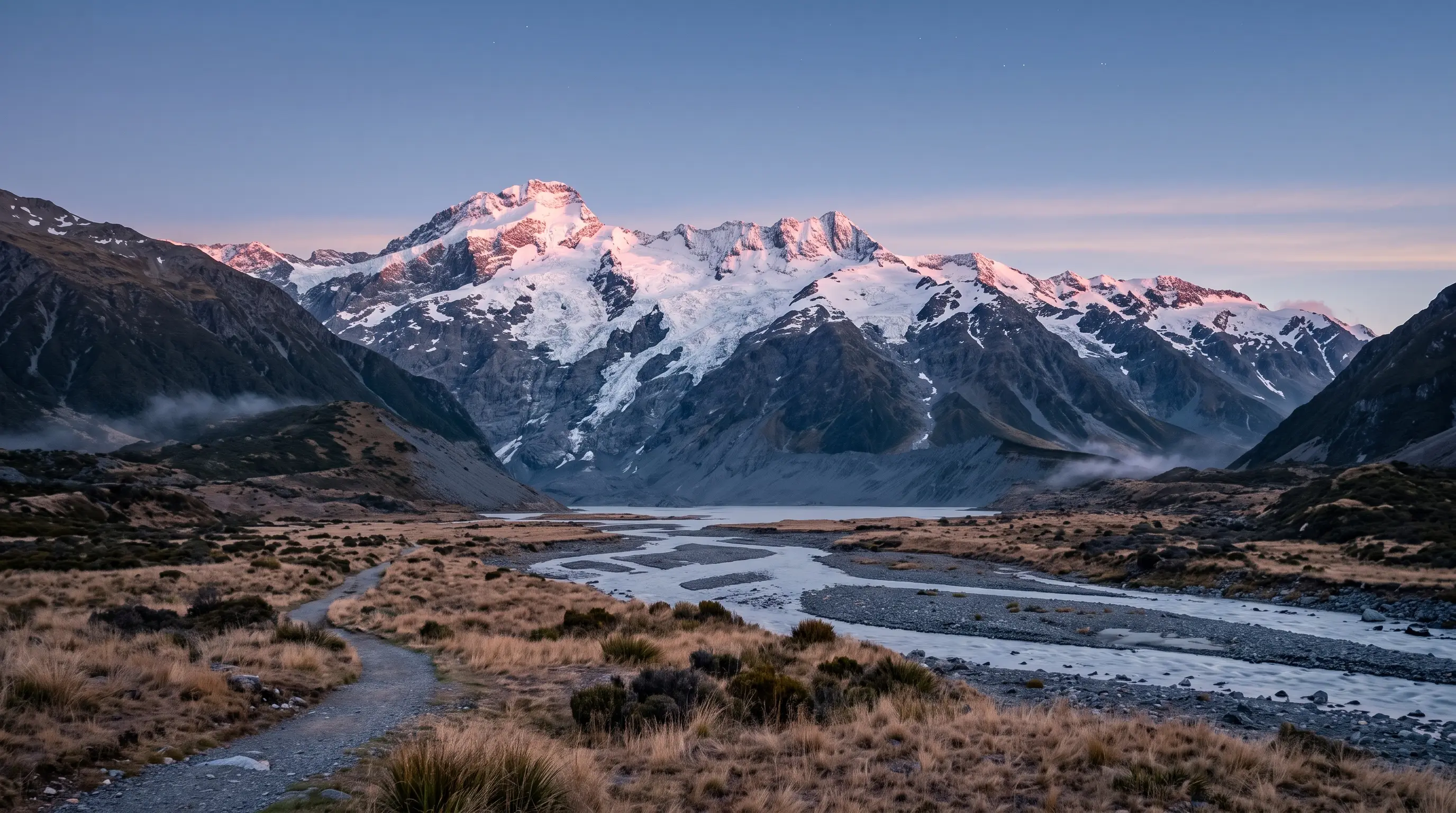

Stokes, 1851: a name for a man who never saw it

Mount Cook is a tribute, not a discovery. Captain Stokes attached it in 1851 while sailing down the West Coast[1], and the man it honours never laid eyes on the peak[2].
The label did not settle at once. Four years after the naming, a revised set of Stokes's charts still carried Mount Cook on another peak, and the name reached Aoraki only afterwards, with Stokes's own name taking over on the first mountain[6].
Ngāi Tahu already had a name, and it has been written more than one way. Older texts spell it Aorangi, the northern-dialect form[7]. Same mountain, different dialect. The story behind the name is a separate subject, and the Aoraki creation legend tells it, so I won't retell it here.

Wai 27: the claim that reached the mountain
The rename came out of a land claim, not a naming committee. It was lodged with the Waitangi Tribunal in August 1986, five years before the Tribunal's first report, by Henare Rakiihia Tau and the Ngāi Tahu Māori Trust Board under its chair, Tipene O'Regan[8]. Registered as Wai 27, it went to hearings between 1987 and 1989[9].
On 1 February 1991 the Tribunal reported on the main elements of the claim, which it grouped as the "Nine Tall Trees"[10]. Its finding on land was blunt. In buying some 34.5 million acres for £14,750, the Crown "acted unconscionably and in repeated breach of the Treaty of Waitangi"[4]. Spread across the acreage, that price is about a tenth of a penny an acre.
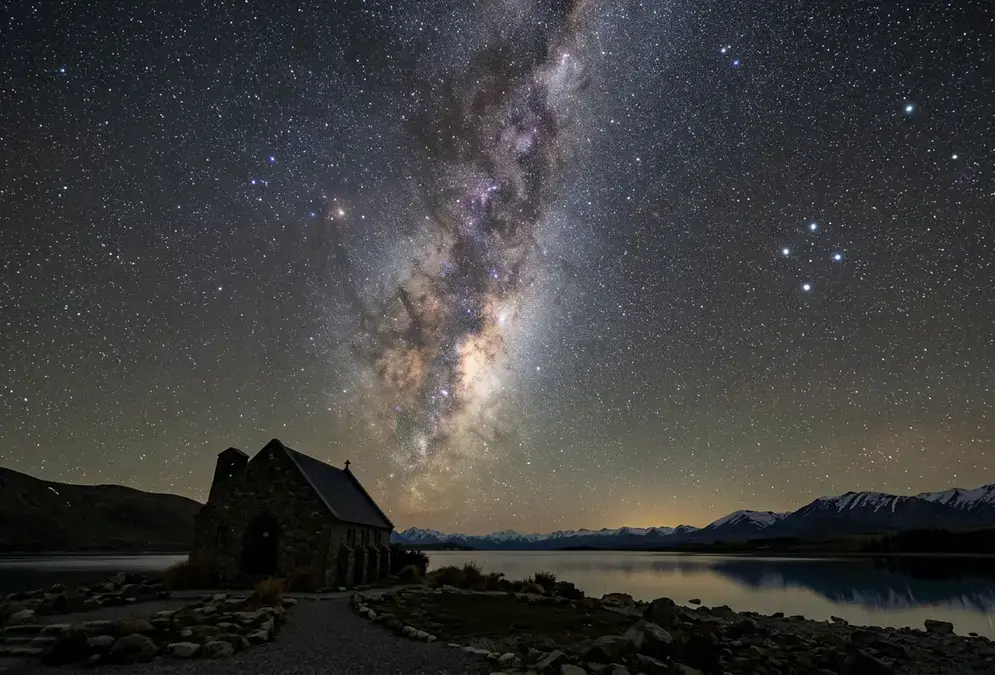
Milky Way arching directly overhead above Lake Tekapo and the Church of the Good Shepherd, Southern Cross visible, Aoraki Mackenzie Gold Tier dark sky reserve at new moon

Featured · Destination

Aoraki Mackenzie Stargazing

Aoraki Mackenzie is one of only four Gold Tier Dark Sky Reserves on Earth: Bortle 2 skies over Lake Tekapo, the Southern Cross, and Mount John Observatory tour.

Aoraki was one item in that settlement, not its centre. It is the part a visitor reads on a map, which is why the history belongs in a stargazing guide.

The 1998 Act: what it renamed, and what it didn't

The Crown's apology is recorded in the deed of settlement, executed on 21 November 1997[11]. Parliament then passed the Ngāi Tahu Claims Settlement Act 1998, Public Act 1998 No 97[12].
Two provisions do the renaming. Section 162 changes the national park's name to Aoraki/Mount Cook National Park[13]. Schedule 96, headed alteration of place names, covers the mountain and the township, both amended to Aoraki/Mount Cook[14]. The Act's own definition ties the name to land: the mountain within the national park[3].
Timeline
  1. 1851

    Stokes names the mountain Mount Cook

    Named in honour of Captain James Cook[1]

  2. 26 Aug 1986

    Ngāi Tahu claim lodged

    Submitted to the Waitangi Tribunal[8]

  3. 1 Feb 1991

    Tribunal reports

    Main elements grouped as the Nine Tall Trees[10]

  4. 21 Nov 1997

    Deed of settlement executed

    The Crown's apology is recorded in it[11]

  5. 1998

    Settlement Act renames the park

    Section 162 makes it Aoraki/Mount Cook National Park[13]

The odd part is title to the summit. Under Part 3 the Governor-General vests the mountain in Te Rūnanga o Ngāi Tahu by Order in Council, and the Rūnanga then hands a deed of gift to the Prime Minister on the gift date, seven days after vesting[15]. Ngāi Tahu describe the intent as a gift to the nation, "an enduring symbol of their commitment to the co-management" of places of high historic, cultural and conservation value[16]. The Act also says the mountain remains part of the national park[17]. I could not confirm from a primary source that either transfer has happened, so I won't call anyone the owner.
Naming sat inside a larger package. Ngāi Tahu's page on the Aoraki offer lists these among the redress[18]:
  • a Statutory Acknowledgement
  • a Deed of Recognition
  • a Tōpuni
  • a role as Statutory Adviser
The rename then flowed downhill: the village became Aoraki / Mount Cook Village[19]. How the iwi read the night sky has its own article, Ngāi Tahu astronomy at Aoraki Mackenzie.

Aoraki or Mount Cook: which name to use today
New Zealand's tallest peak, 3,724 m by DOC's measure, goes by Aoraki among Māori[5]. My habit is the slashed form once, then plain Aoraki. Nobody needs correcting for saying Mount Cook, and nobody should be corrected for saying Aoraki.
The order inside the slash is a convention, not a ranking. Wikipedia's list of New Zealand dual names says the Geographic Board generally leads with the Māori name and departs from that when maritime safety is paramount[20]. Be wary of any claim that Aoraki is the only name written that way; the board's habit is broader than one mountain.
That same list credits the 1998 settlement with 87 dual names, Aoraki / Mount Cook among them[21]. I have not counted the Act's schedules myself, so treat 87 as Wikipedia's figure, not a verified one.
A Treaty name is harder to unpick than an ordinary one. A proposal goes to the Geographic Board and settlement legislation makes the name official[22], and later changes need the consent of the Treaty settlement authority[23].
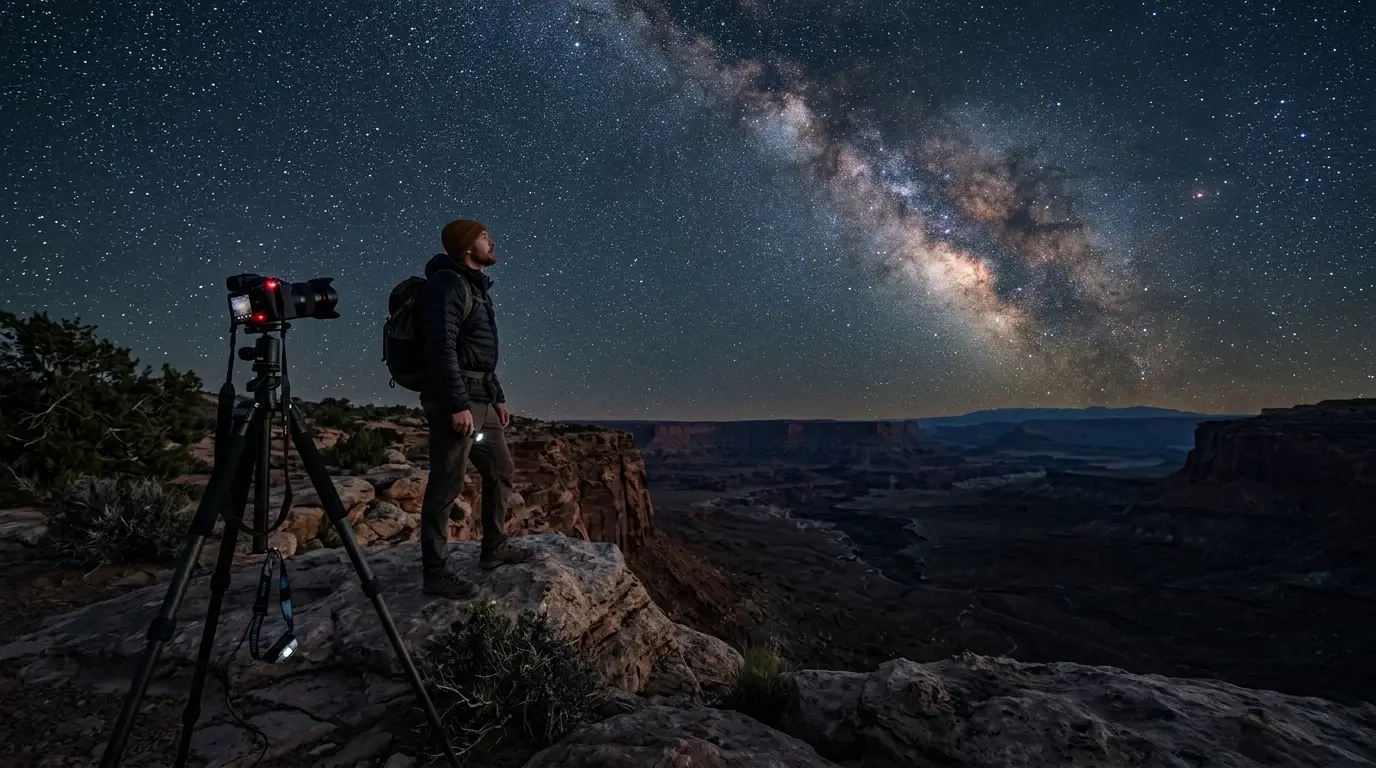
Traveler photographing the Milky Way arc above a dark desert horizon on an astrotourism trip, tripod-mounted camera capturing star trails against a certified dark-sky park backdrop

Featured · Article

What Is Astrotourism? The Complete Beginner's Guide

Astrotourism means travel built around dark skies: meteor showers, auroras, the Milky Way. What it means, where to go, and how to plan your first trip.

The naming did not stop in 1998. In 2013 the Mt Cook Range gained the alternate name Kirikirikatata, Tasman Glacier can be called Haupapa, and a section of the Southern Alps became the Aroarokaehe Range[24].

Recommended tours

Tours are selected for quality, not commission. I earn a small fee if you book — at no extra cost to you.
DOC calls the park one of the best places in New Zealand to view the night sky[25]. Aoraki Mackenzie is on my own list, mostly to test it against NamibRand. For planning, the Aoraki Mackenzie stargazing destination page covers the reserve, getting to Aoraki Mackenzie covers the route in, and the best time to stargaze at Aoraki Mackenzie covers the calendar.