The names on record belong to the Chemehuevi
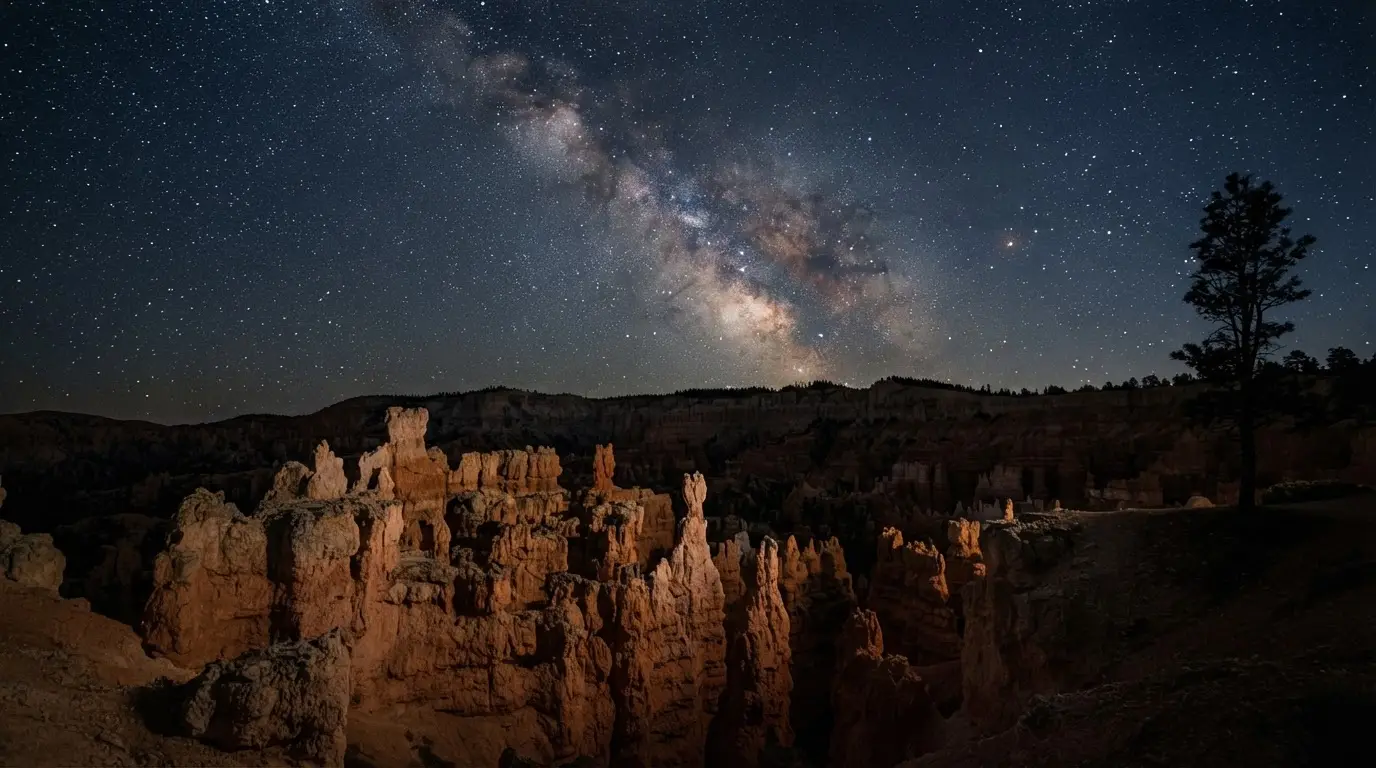
The Chemehuevi used the sky as a calendar, above all to announce spring[3]. Elders versed in star lore rose before dawn and stood in the cold, scanning the horizon for the asterisms that signalled the turn[4]. A star rising just before the sun, which astronomers call a heliacal rising, is an almanac you cannot be late for.
Laird recorded the idea in 1976 in a sentence that earns its quotation marks: "Chemehuevis read the seasons in the stars and not on the white man's calendar."[5] For a visitor, the useful point is that the sky was a working tool, not decoration.
The constellations that survive in writing form one hunting scene, built around Orion:
The myth that once went with Nagawɨ and its companion constellations has been lost[8], so no tidy story is on offer, and I'd distrust anyone who supplies one. The Pleiades also carry a Chemehuevi name, Soniyawɨ, with a Coyote myth that Laird documented in 1976[9]. I'm leaving that story with the record it came from, because it belongs to the Chemehuevi to tell.
Na-gah, the mountain sheep who stands still
The second thread is a story about the North Star. In it the star lived on earth long ago as Na-gah, a mountain sheep and the son of Shinoh[10], and the Paiute name given for him is Qui-am-i Wintook Poot-see, glossed as "the North Star"[11]. The retelling that reaches readers carries no provenance, so I'd call it one telling of a Paiute story, not a Kaibab or Bryce tradition. The page that carries it does not say which tribe or band it comes from.
What it explains is practical. This is the only star always found in the same place, which is why anyone setting a direction or crossing country could trust it[12]. The Big and Little Dipper are other mountain sheep in the same sky[13].
Featured · Destination
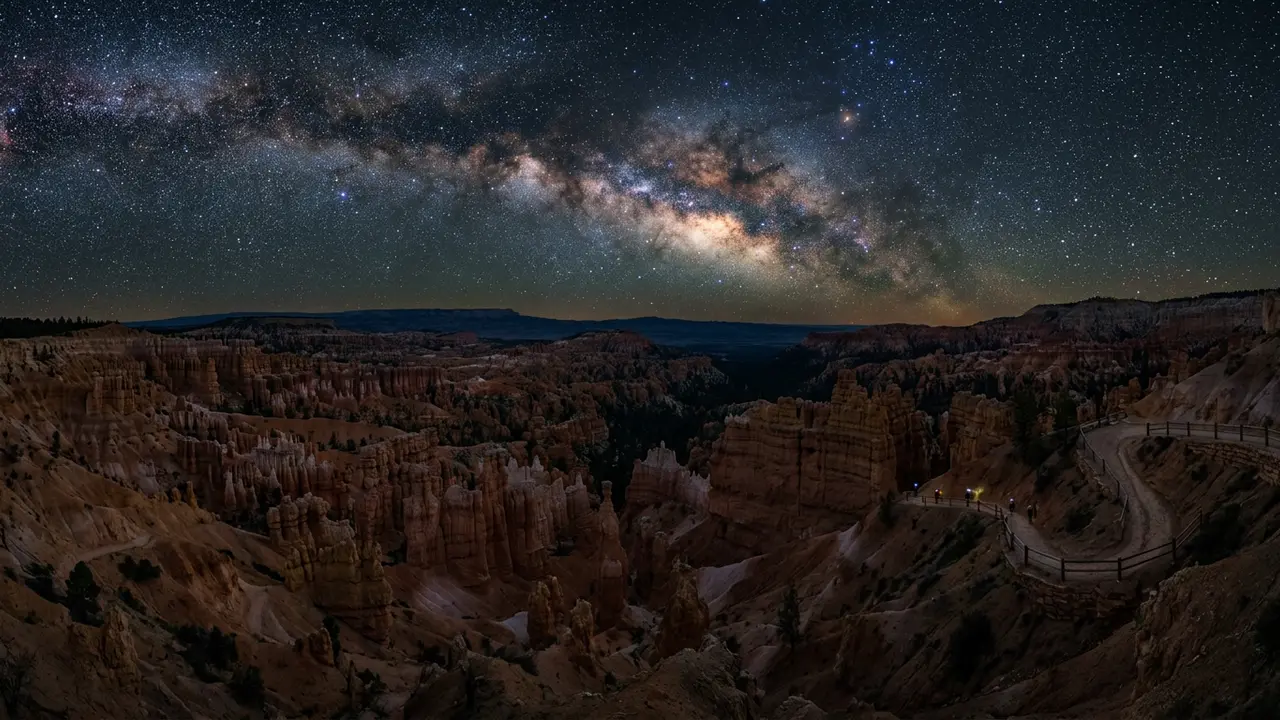
Stargazing in Bryce Canyon National Park
Bryce Canyon earned Gold-Tier Dark Sky Park status in 2019 after 50 years of astronomy programs. Drive in from Vegas or Salt Lake City to see it for yourself.
Mountain sheep run through both this story and the Chemehuevi Orion hunt. That is worth noticing and not worth a theory, with two retellings of uncertain reach. From Bryce, Polaris itself is the easy part: it holds one spot all night, the one fixed anchor a first-timer can find before the telescopes come out.
What the Bryce record does and does not hold
Paiute people have used the Bryce Canyon area since about 1200 A.D.[2], and the National Park Service gathers perspectives from tribal elders of the Southern Paiute, Hopi, Zuni, Ute and Navajo peoples on the canyon[14]. Nothing documented ties the Chemehuevi or North Star material above to the plateau itself, so it stays Paiute-family evidence, not a Bryce sky chart.
The park's handling of Paiute oral tradition is instructive. At the Legend People wayside it declines to repeat the authentic story, because Paiute custom is to tell these stories only in winter[15], the other seasons being for hunting, gathering and storing food[16]. Whether that custom covers every star story is not stated, so I'd apply it to what the wayside covers and no further.
On programming, the Salt Lake Tribune describes Bryce dark rangers talking about the constellations of the Piute tribe in the free astronomy programs[17]. The account is undated and silent on who supplies that content, so confirm against the current schedule before planning around it, including the Dark Ranger telescope tours.
The ranger tradition itself is old. The astronomy programs behind stargazing at Bryce Canyon began when Von Del Chamberlain of Abrams Planetarium inspired the park's chief of interpretation to start them[18].
My reading: a Bryce ranger can speak to the park's astronomy and may mention Paiute constellations. A Paiute voice on the sky is a different thing, and the documented ones are mostly at Pipe Spring.
Who carries Southern Paiute sky knowledge today
The people with the most visible claim are the Kaibab Paiute, one of ten member bands of the Southern Paiute[19]. Their reservation is a community of roughly 250 residents on the Arizona-Utah border, about 50 miles north of the Grand Canyon, and it contains Pipe Spring National Monument[20]. In 2015 the International Dark Sky Association named it the world's first "dark sky nation"[21], officially called Thunder Mountain Pootsee Nightsky[22].
A community designation like this is a different instrument from the park-level status explained in Bryce Canyon's dark sky certification, and the people behind it are the ones whose sky it is. The Kaibab Paiute and the Chemehuevi are both Southern Paiute, which is why the Orion names above are family evidence and not Kaibab names.
One person stands out in the record. Autumn Gillard is a dark sky ranger at Pipe Spring and a member of the Paiute Indian Tribe of Utah[23]. Her 2021 Virtual Grand Canyon Star Party talk, "Southern Paiute Astronomy", covered her efforts to rediscover Paiute astronomy and to carry that knowledge through contemporary society[24]. The verb is telling. This is knowledge being recovered, and it echoes the lost Chemehuevi myth above.
Recommended tours
Tours are selected for quality, not commission. I earn a small fee if you book — at no extra cost to you.
Pipe Spring is where Paiute voices turn up in practice. One star-party evening paired traditional Paiute songs sung by tribal members with warm drinks and telescopes[25], and a solar session offered Paiute perspectives on the Sun's significance[26]. The monument's December evening lit the fort by lantern alongside Southern Paiute drumming and storytelling, and the 2024 edition ran 4 to 8 p.m.[27] With one evening for this subject, spend it there before hunting for the same thing at Bryce.
Featured · Article
What Is Astrotourism? The Complete Beginner's Guide
Astrotourism means travel built around dark skies: meteor showers, auroras, the Milky Way. What it means, where to go, and how to plan your first trip.
The songs, the solar session and the talk are three different formats: music, daytime observing and a lecture. That spread is useful: a Paiute perspective on the Sun is a different kind of sky knowledge from a constellation name. These are dated reports, and current dates for the December evening are not confirmed, so check the NPS Pipe Spring page before you drive. The grounds are open daily 8:30 a.m. to 4:30 p.m. Arizona time[28], standard entry is $10 per person aged 16 and over[29], and no published drive time links Bryce and Pipe Spring, so map the route before committing a whole evening.
In 2026 Gillard was scheduled to take the subject to Bryce, to present The Nuwu Universe at the park's Astronomy Festival[30]; she is described there as a descendant of the Cedar Band of Paiutes. The mix is the lesson. Songs, the Sun and the night itself all appear in these programs, so star names are one thread among several. Arrive at Pipe Spring ready to listen, not hoping for a constellation chart to photograph.
Engaging with the sky at Bryce respectfully
At Bryce itself, the programs are the park's. The 2026 Bryce Canyon Astronomy Festival was scheduled for Thursday June 11 to Saturday June 13, free with park admission[31], timed to a June new moon[32]. The NPS festival page lists that 2026 edition, so check it for later dates. Its keynote, Star Stories, was billed as presenting the sky as compass, clock, calendar and time machine[33]: a frame the Chemehuevi seasonal practice fits, without being part of that program. Evenings bring telescope viewing and constellation tours for families[34], alongside the Paiute-led talk above.
Outside the festival, Bryce gives about 100 astronomy programs a year, led by astronomy rangers and volunteers[35]. No fixed days or times are published: the schedule lives on the NPS Ranger Programs page, the online calendar and at the Visitor Center[36], so check those before building a night around one.
Etiquette starts with attribution. Say Chemehuevi when you mean Nagawɨ, call the Na-gah story a Paiute story and no more, and resist stitching the two into a Bryce constellation map. A ranger is not obliged to act as a Paiute spokesperson, so ask what the program covers instead of asking for "the Paiute name" of a star. Keep the same restraint the park shows at the Legend People wayside: a story that belongs to winter and to its tellers stays there. Red-light discipline follows the usual dark sky etiquette.
Before you quote or visit
- Name the group: Chemehuevi for Nagawɨ, Paiute, no more, for the Na-gah story
- Do not label any star name as Bryce-area unless a source says so
- Confirm the current ranger schedule before expecting a Paiute constellation talk
- Plan a Pipe Spring evening if you want Paiute voices on the sky
- Leave winter stories for winter and for their tellers
My verdict: go to Bryce for the sky and the ranger programs, go to Pipe Spring for Paiute voices on it, and read the Chemehuevi Orion hunt as what it is, a rare written glimpse of a Southern Paiute people using the stars as a calendar.