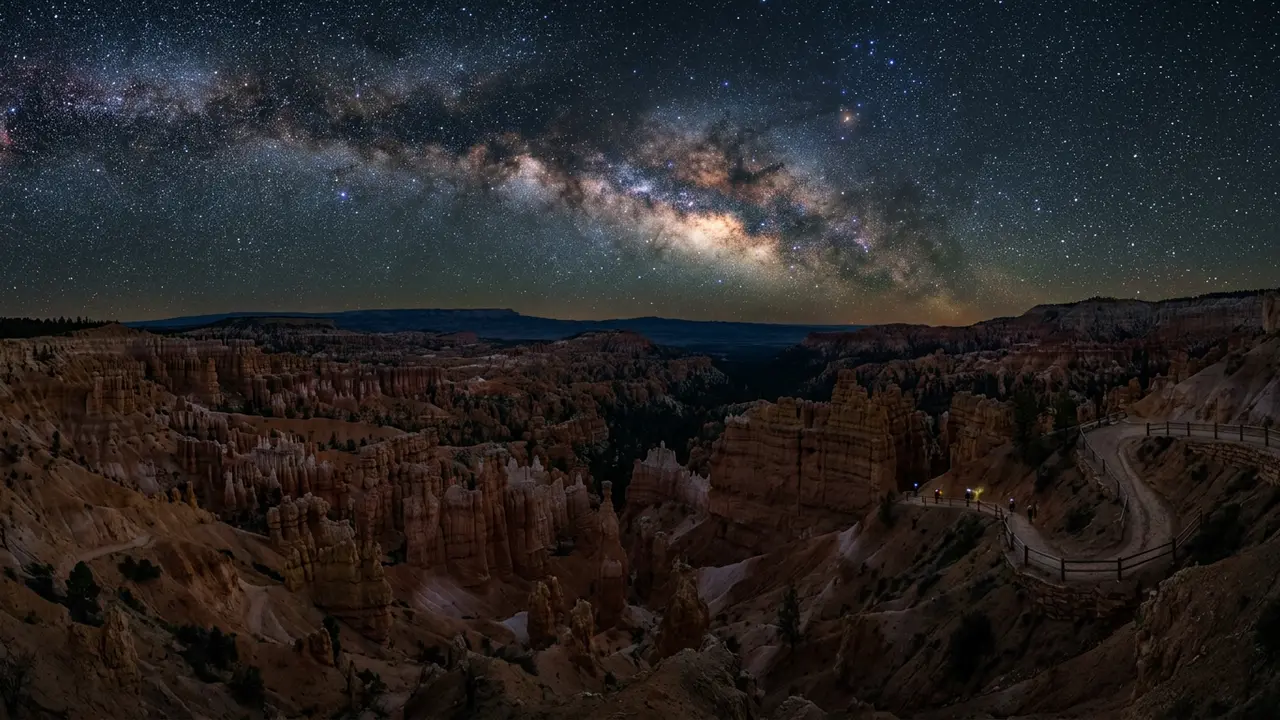
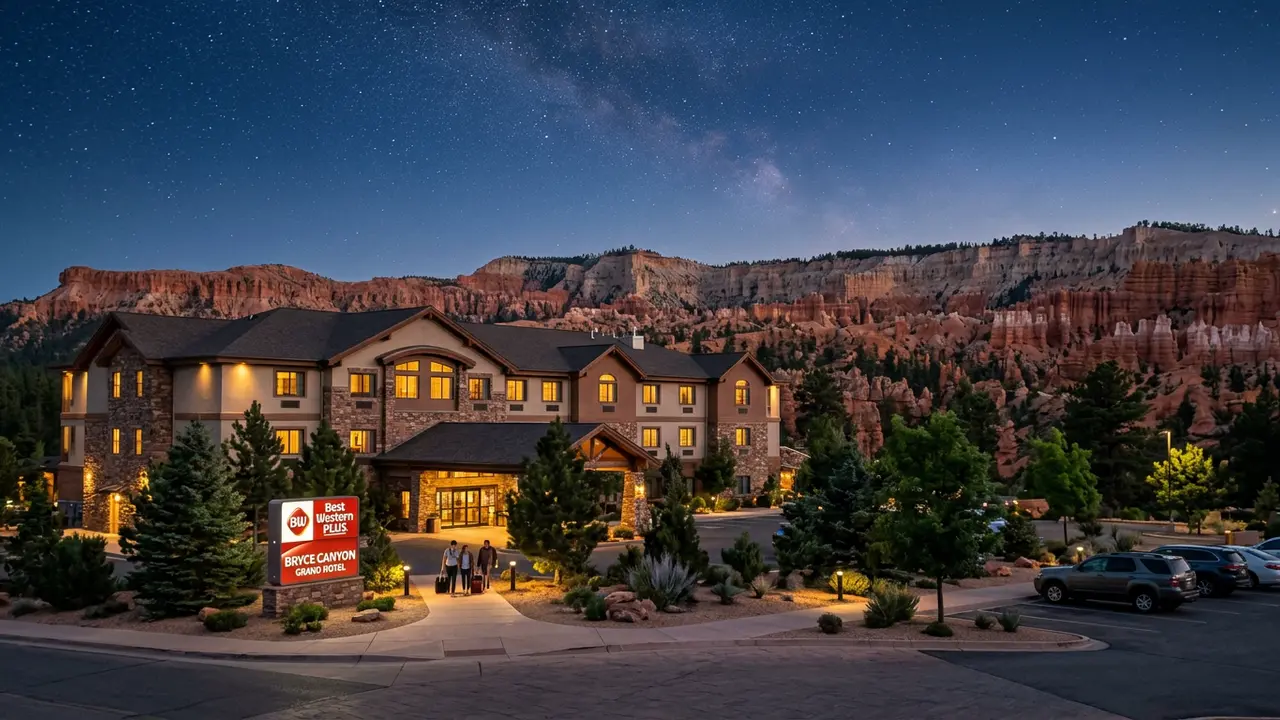
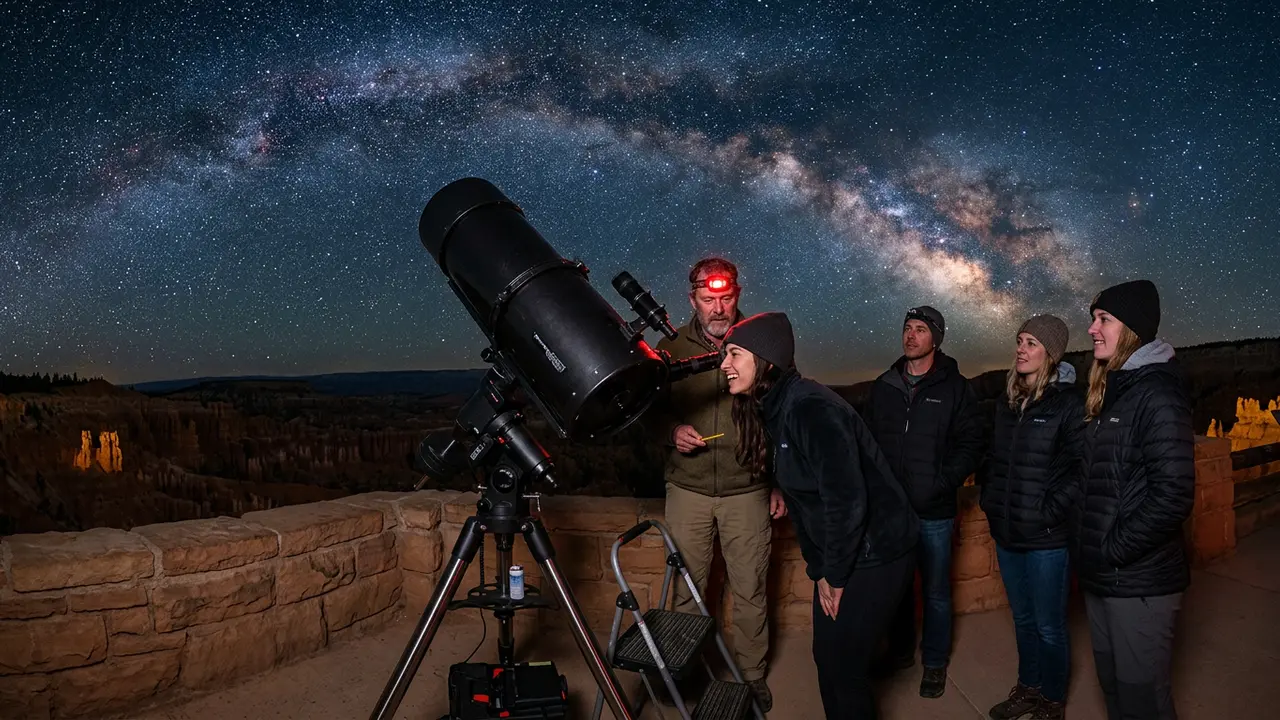
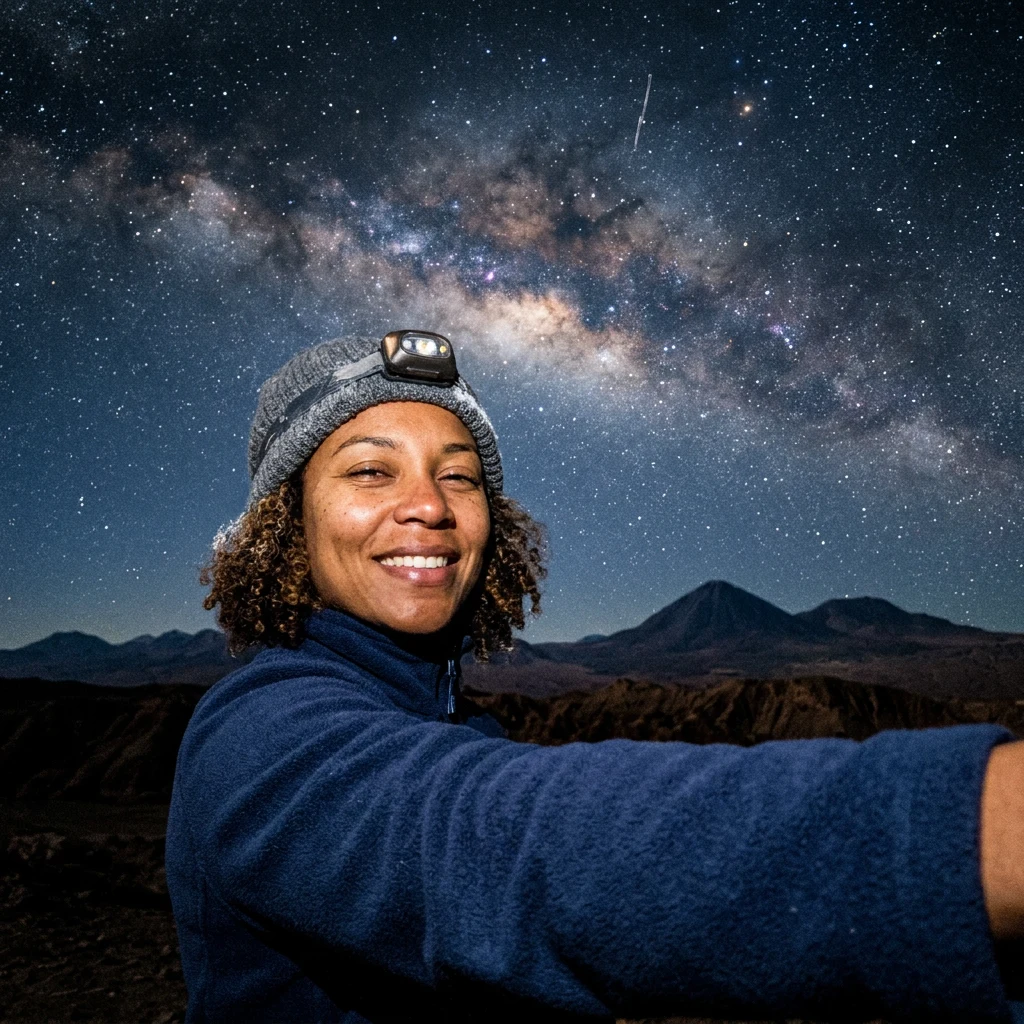
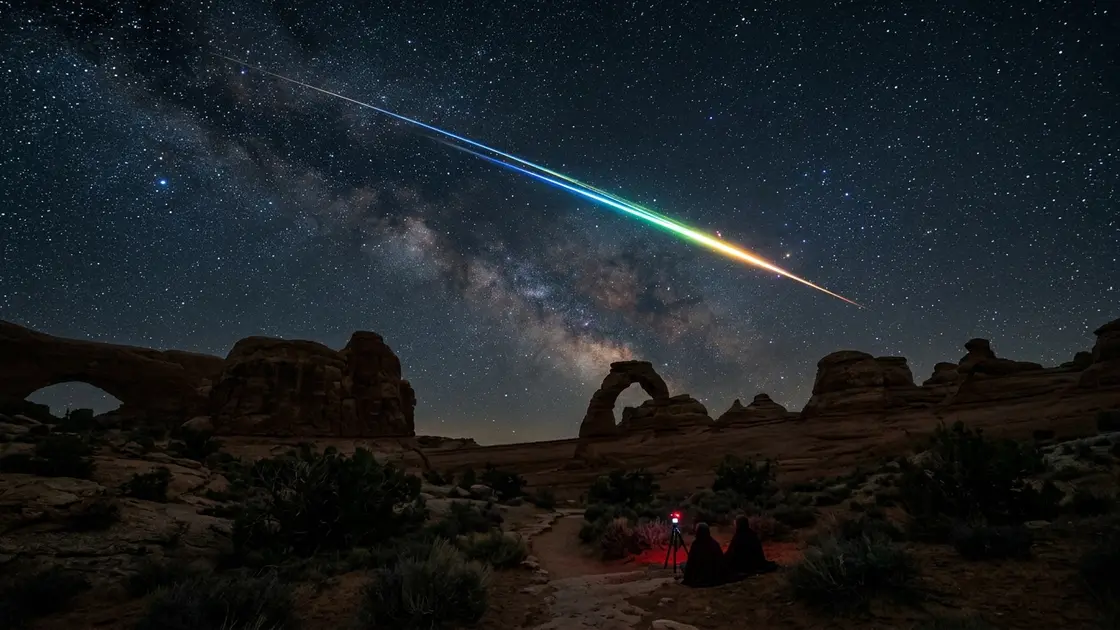
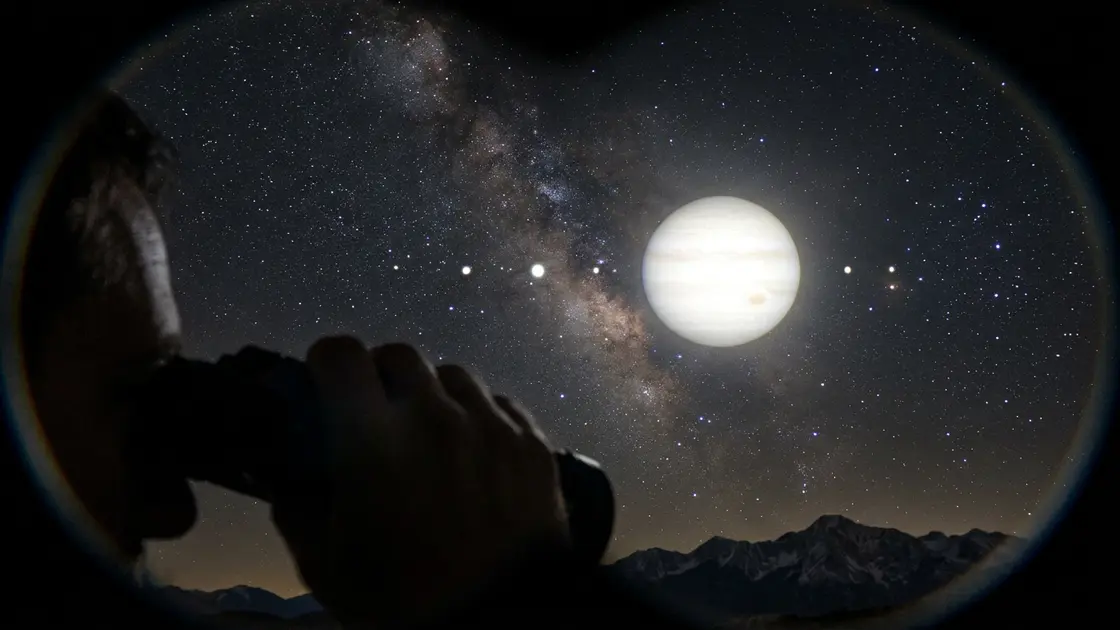
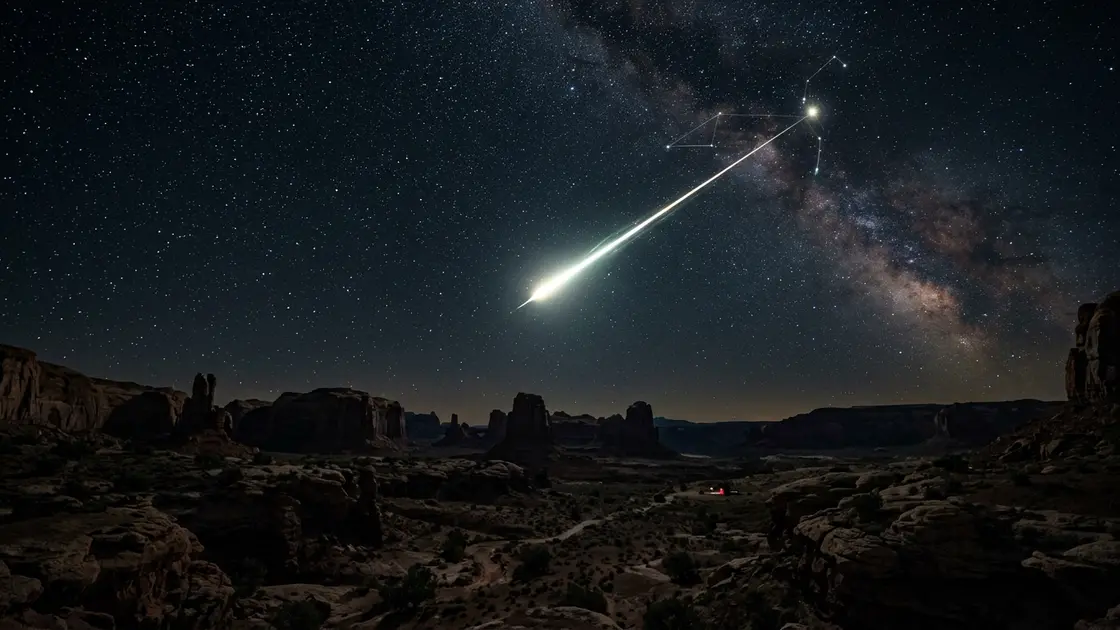
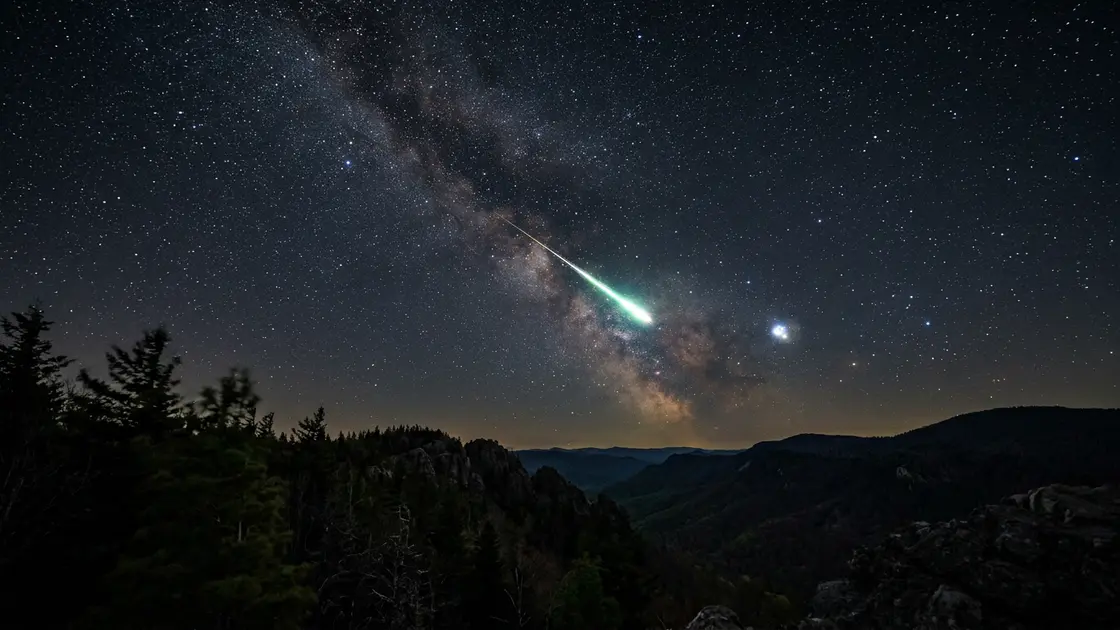
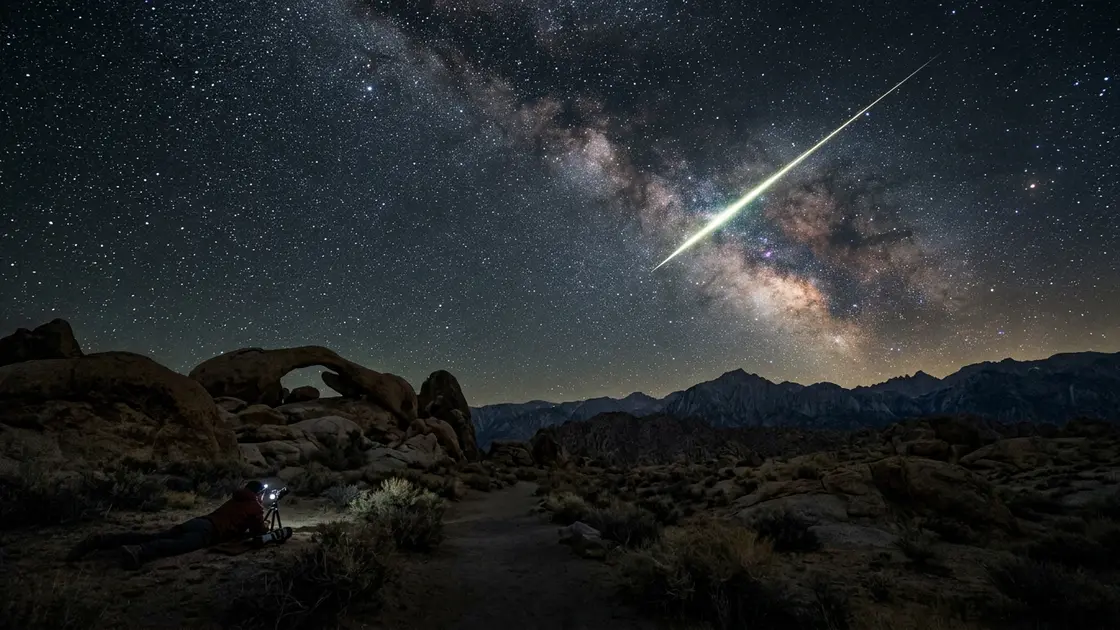
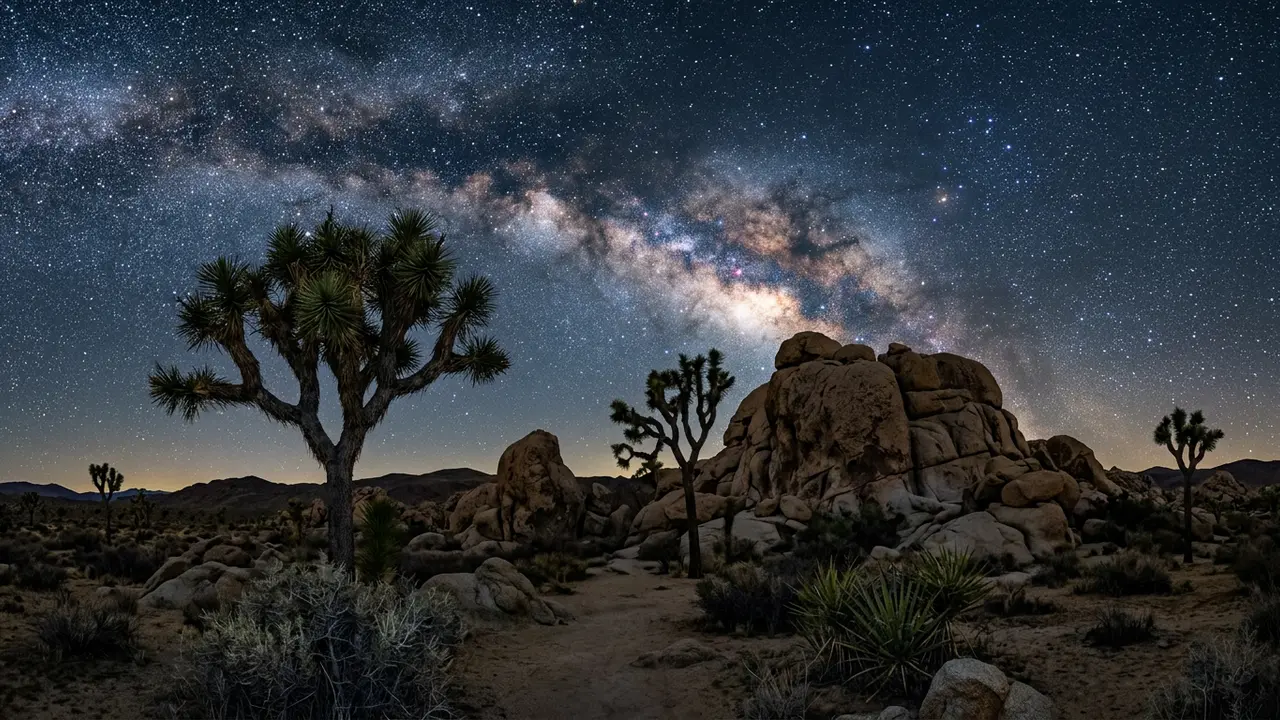
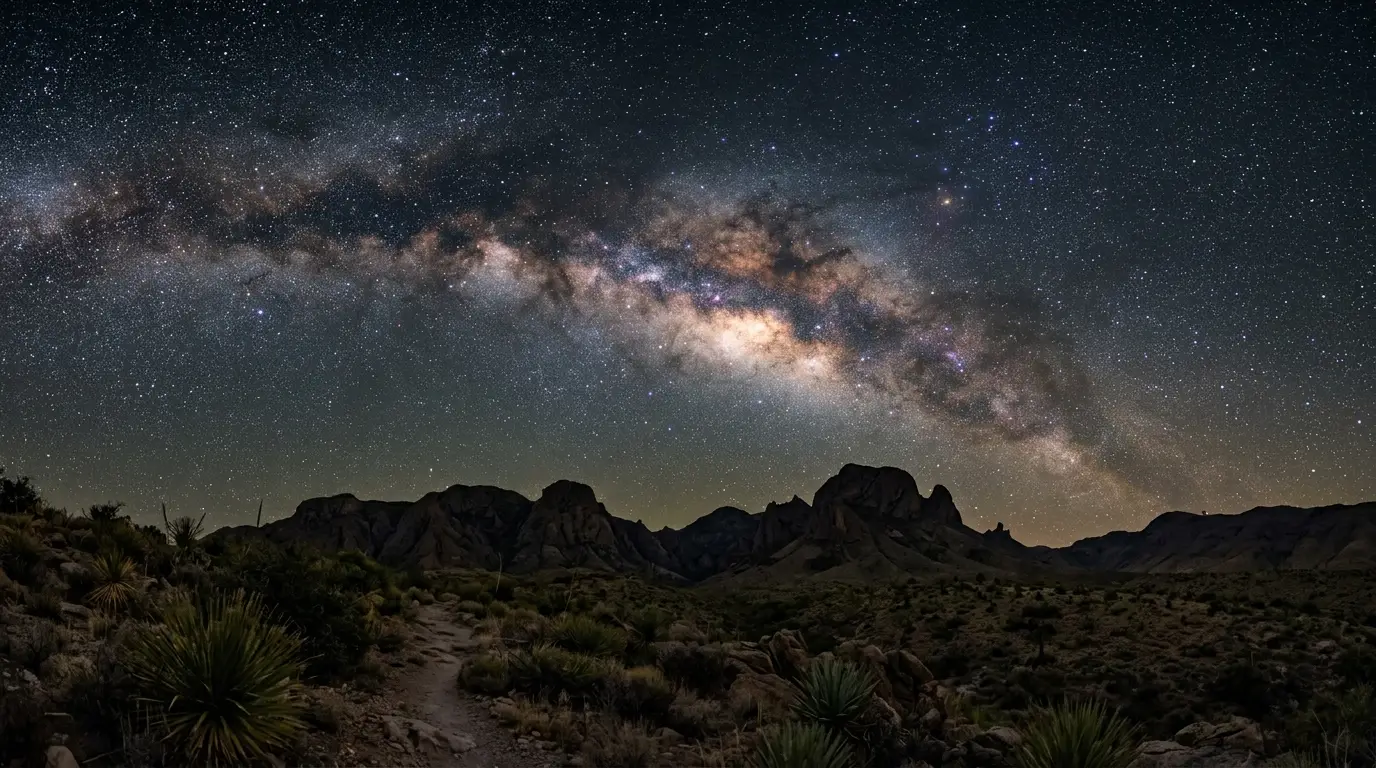
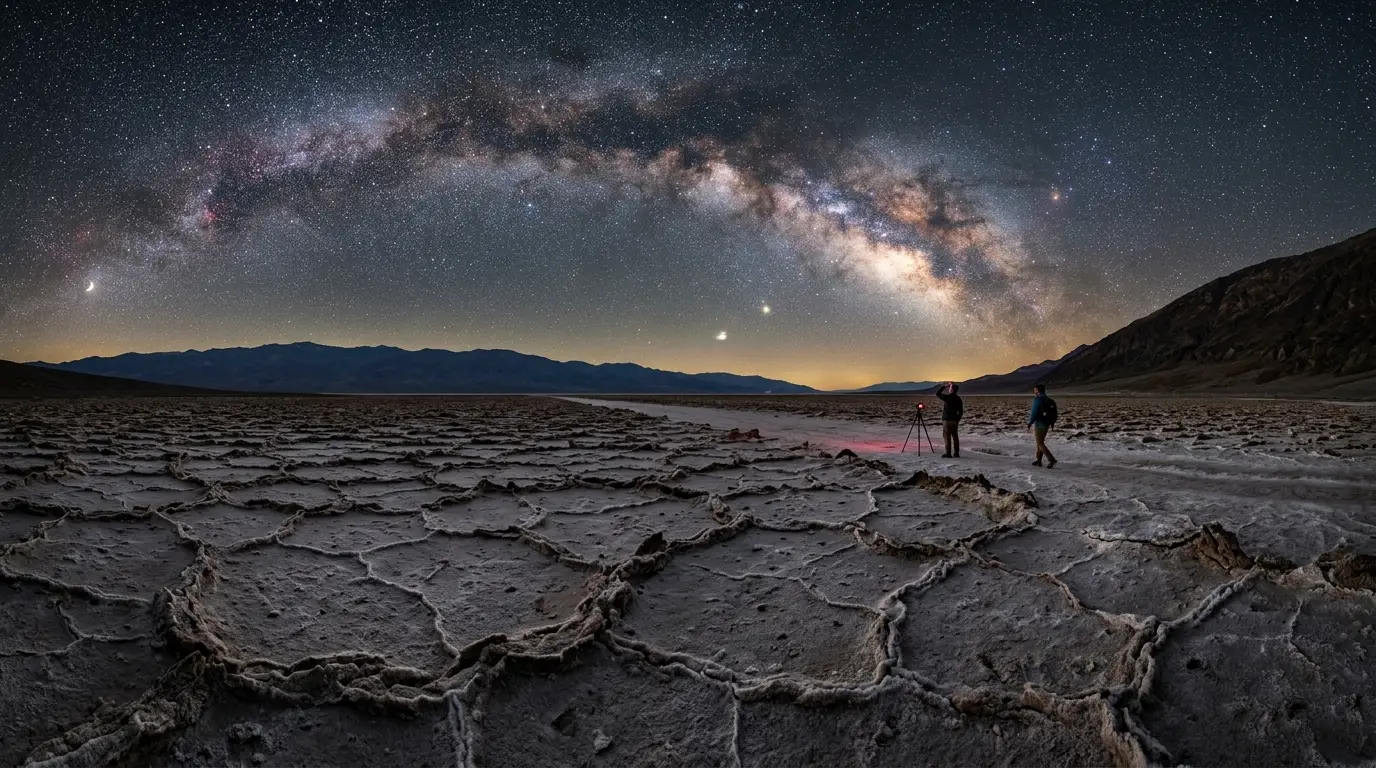
Star-filled night sky over the hoodoo amphitheater at Bryce Canyon National Park, a Gold-Tier certified dark sky park in Utah
dark sky park bryce canyon utah

Bryce Canyon: America's Gold-Tier Dark Sky Park

Bryce Canyon earned Gold-Tier Dark Sky Park status in 2019 after 50 years of astronomy programs. Drive in from Vegas or Salt Lake City to see it for yourself.

Darkness: Bortle 1-2
Latitude: 38°N
Best months: Year-round (Astronomy Festival in June)

Dark-sky facts

Darkness
Bortle 1-2
Best months
Year-round (Astronomy Festival in June)
Country
United States
Coordinates
37.59°N, 112.19°W
Night access
Park accessible year-round, 24 hours; night sky viewing is best on clear, new-moon nights, with the Astronomy Festival held annually each June around the new moon.
Costs & fees
A per-vehicle or America the Beautiful park pass is required to enter Bryce Canyon National Park; stargazing viewpoints along the rim are free once inside. The Astronomy Festival itself is free with park admission, though evening telescope-viewing programs require free same-day tickets from the Visitor Center.

The Milky Way casts a faint shadow. Zodiacal light and airglow are obvious.

This destination rates Bortle 1-2 on the 9-level Bortle dark-sky scale, where 1 is a pristine dark sky and 9 is an inner-city sky. The Milky Way casts a faint shadow. Zodiacal light and airglow are obvious.

On this page

Updated

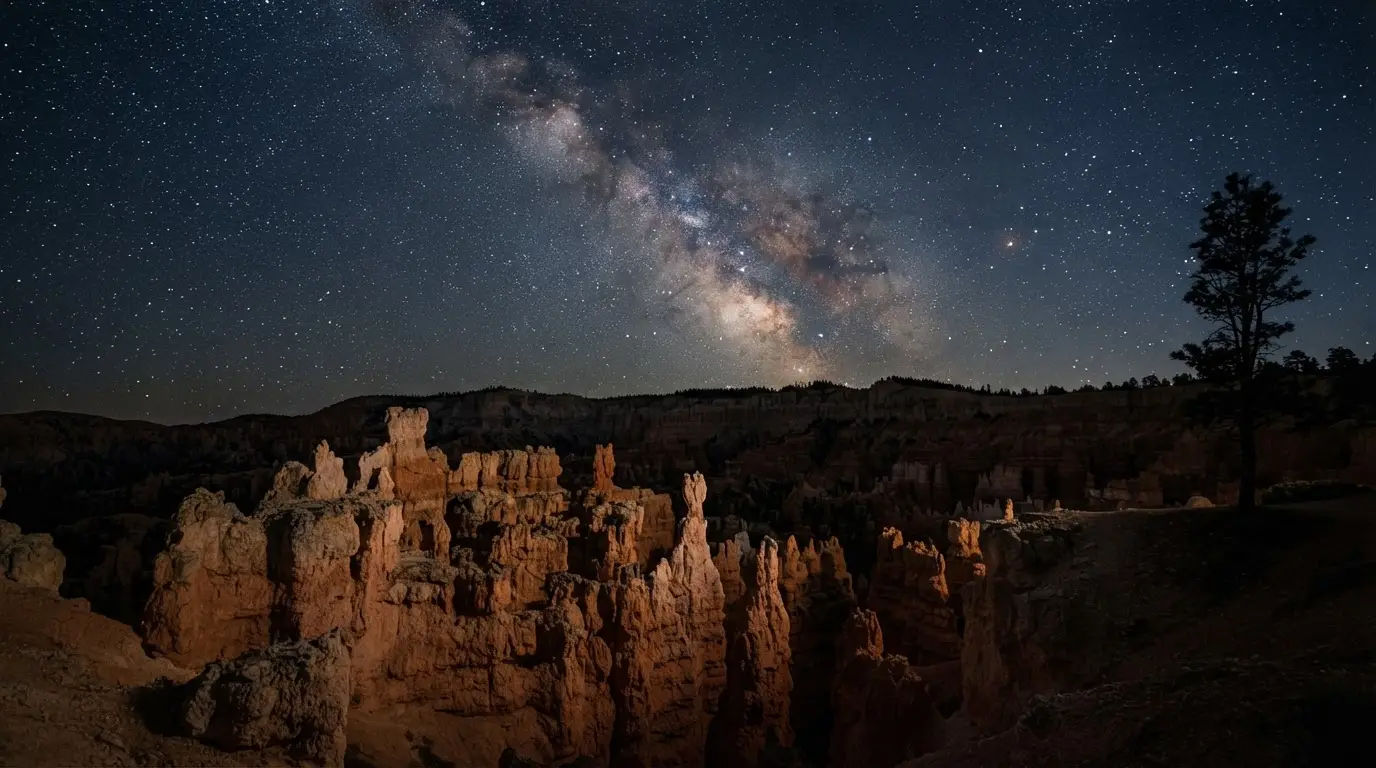
Stand at Sunset Point after the day-trippers clear out, and the hoodoos stop being an odd rock formation and start being a foreground. Thousands of thin, banded spires rise out of the amphitheater below, pale against a sky that, on a clear moonless night, shows the Milky Way's core as a bright smear directly overhead. Bryce Canyon National Park earned International Dark Sky Park certification from DarkSky International in August 2019, and the outlets that covered it at the time called it something more specific: Gold Tier, the certifying body's highest rating.

This hub covers what that certification actually means, the hoodoo amphitheater that makes Bryce's sky look different from anywhere else on this site, when to time a visit around the annual Astronomy Festival or just a good new-moon week, where to stay, and how to get here. That last part matters more than it sounds: Bryce is genuinely road-accessible, a drive-in park reachable from Las Vegas, Salt Lake City, or a much shorter hop from southern Utah, not a fly-in expedition.

The sky this month

Computed for Bryce Canyon National Park at 38°N. Updates nightly.

  • First quarter tonight, 36% illuminated

    Next new moon August 12. The nights either side of it are the darkest of the month.

  • About 6 hours of astronomical darkness tonight

    The sun drops more than 18 degrees below the horizon, so the sky gets genuinely dark for deep-sky viewing at 38°N.

    Hours of astronomical darkness by month at Bryce Canyon National Park: January 11 hours, February 10 hours, March 9 hours, April 8 hours, May 6 hours, June 5 hours, July 6 hours, August 7 hours, September 9 hours, October 10 hours, November 11 hours, December 11 hours.

  • Perseids active now

    Peaks August 12. Up to 100 meteors per hour at maximum. The 2026 peak lands on a new moon — a dark-sky year with zero lunar washout.

    See the Perseids guide
New moons August 12 September 10 October 10
Add new-moon reminders Full sky calendar

Where to go stargazing in July

A Gold-Tier Dark Sky Certification

The National Park Service's own announcement is specific about the date and the reasoning. Bryce Canyon was certified on August 13, 2019, a recognition of the exceptional quality of the park's night skies, meant to enhance visitor experiences through astronomy-based programming. The timing wasn't an accident: the certification landed as the park marked 50 years of astronomy programming, one of the longest-running such programs anywhere in the National Park System. This wasn't a park discovering its dark sky for the first time. It was catching its paperwork up to five decades of ranger-led star talks.

At the time, Bryce joined more than 100 IDA-certified Dark Sky Places worldwide, each vetted through a process the NPS describes as demonstrating robust community support alongside measured sky-quality data. That's a meaningful bar. Certification isn't a badge a park can simply request; it requires buy-in from surrounding communities on things like outdoor lighting ordinances.

Independent reporting on the 2019 certification, including coverage from National Parks Traveler, Utah's KUER, and St. George News, described the rating more precisely as Gold Tier, DarkSky International's highest classification, reserved for places with the least light pollution and the most protected night skies. One honest caveat: the certifying body's own original press release wasn't directly viewable while researching this piece, so treat Gold Tier as well-corroborated across multiple independent outlets rather than a single directly quoted source. For how Gold, Silver, and the other tiers compare across the roughly 250 certified places worldwide, our guide to the best dark sky parks in the world breaks the full system down.

Stargazing in the Hoodoo Amphitheater

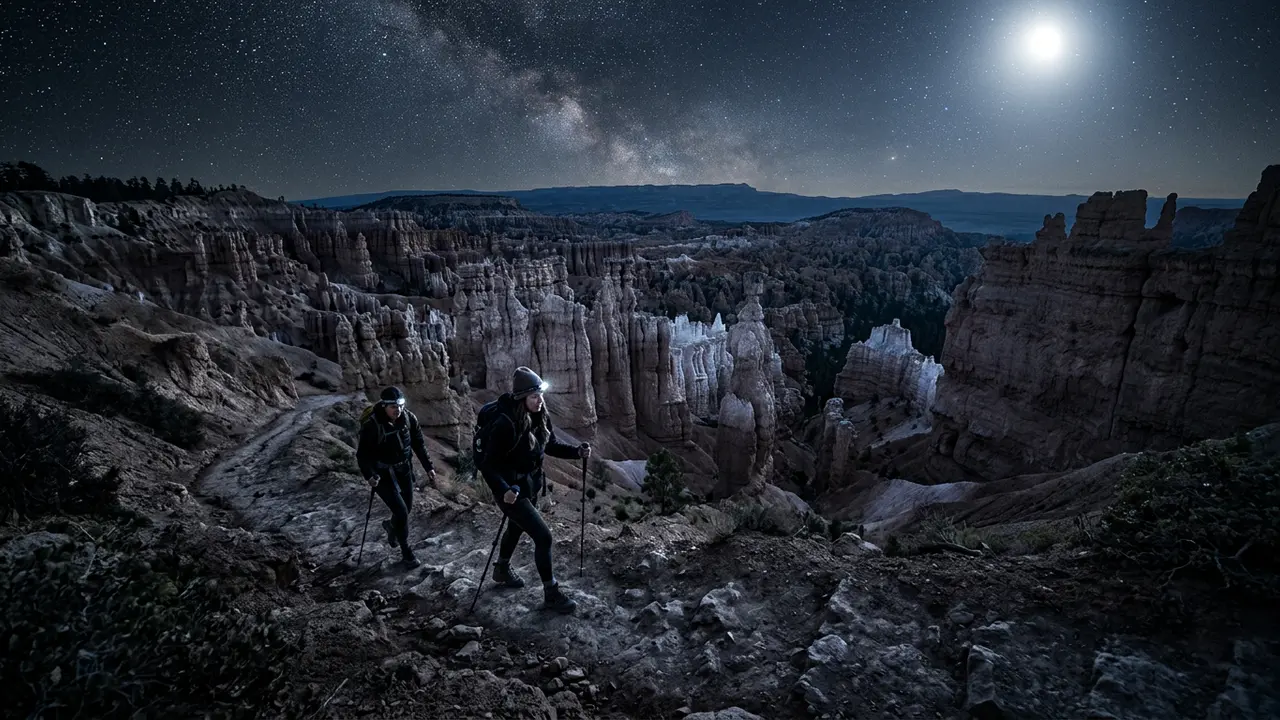
What Bryce has that no other stop in this cluster does is a foreground built from stone. The Bryce Amphitheater, the natural bowl holding the park's densest concentration of hoodoos, sits along the main park road between Sunset Point, Sunrise Point, Inspiration Point, and Bryce Point. Walk out to any of them after dark and the hoodoos read as pale silhouettes against the sky, a texture no lake, glacier, or desert dune elsewhere on this site quite matches.

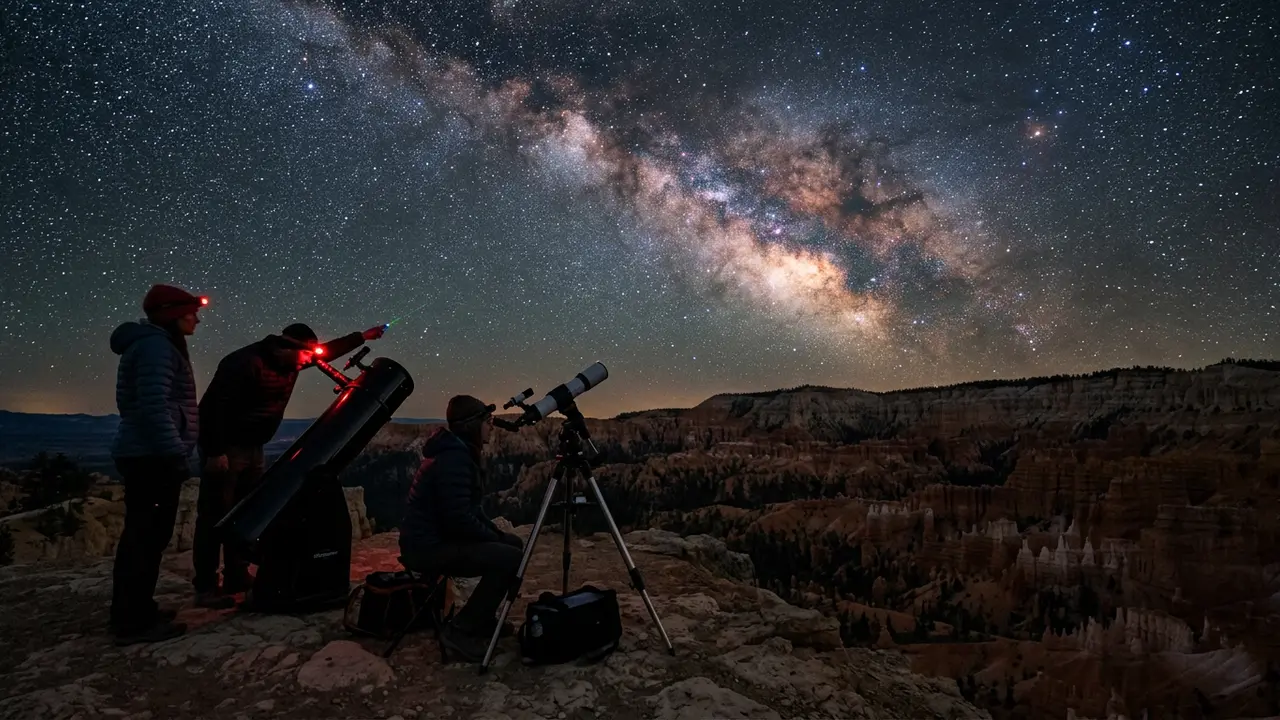
The Park Service is blunt about one practical detail before you go: it can take well over thirty minutes for eyes to fully readjust to the park's darkness. That's why rangers ask visitors to leave white-light flashlights off, or in the car, once eyes have adjusted. A dim red light preserves night vision; a phone screen or a bright headlamp resets the clock to zero, for you and for everyone else standing at the rail.

On the number of visible stars, it's worth being honest rather than impressive: no NPS or DarkSky source publishes a specific star count for Bryce, and the thousands-of-stars figures floating around some travel blogs don't trace back to anything checkable. What's actually documented is the Gold Tier rating itself, plus 50 years of a park actively teaching people to look up. That's a better reason to go than an invented number.

Bryce isn't the only drive-in dark sky park on this site worth knowing about. Jasper National Park in the Canadian Rockies runs on similar logic: an institutionally certified night sky reachable without a backcountry permit or a flight. For a full side-by-side, including the different certifying bodies and the one thing Jasper can offer that Bryce can't, see our Bryce Canyon vs Jasper comparison.
When to Visit: The Astronomy Festival and the Rest of the Year

Bryce Canyon runs its Astronomy Festival every June, deliberately timed to the new moon, on the logic that there's no place quite like Bryce by day and no time like a new-moon week in June to see it by night. The 2026 edition runs June 11-13. It's free with regular park admission, though evening telescope-viewing programs need their own ticket: free, but same-day only, available starting at 8 a.m. at the Visitor Center. Get there early if a specific night's program matters to you; the tickets don't last.

You don't need the Festival to see a good sky here. Bryce's dark-sky status holds year-round, and outside festival week you'll have viewpoints to yourself in a way June doesn't allow. A few things worth weighing when picking your week:

  • New-moon windows anywhere on the calendar give the darkest sky, festival or not
  • Winter nights run colder but longer and often clearer, with far fewer visitors at the rim after dark
  • Summer nights are shorter and the park is busiest by day, though the amphitheater still empties out well after sunset

Whichever week you land on, a Gold Tier certification isn't a promise for that specific night. Our Bryce Canyon stargazing forecast guide covers how to read the Clear Sky Chart and time a visit around both weather and moon phase before you commit to the drive.

Whichever month you land on, Bryce's elevation works in the sky's favor. The Visitor Center itself sits at 7,894 feet (2,406 meters), and thinner air at that altitude means less atmospheric haze between you and the stars, along with genuinely cold air after dark even in summer. Pack for it.

Month by month

Bryce Canyon's dark skies don't really have an off-season, but the four lodges on this list do. Two of them close or scale back for winter, and Utah's high-desert summer brings its own monsoon storms. Shoulder season, May and September through October, is when the most lodges are open, the skies are clearest, and the rim viewpoints are least crowded.

  • January: Fair — Bryce Canyon Lodge is closed for the season; skies are dark but nights routinely drop below 0°F.
  • February: Fair
  • March: Good — Bryce Canyon Lodge and Clear Sky Resorts both reopen for the season.
  • April: Good
  • May: Peak — All four lodges are open, skies are clear, and summer crowds haven't arrived yet.
  • June: Good
  • July: Fair — Peak crowds at the rim, plus Utah's summer monsoon storms can cloud out a clear-night plan.
  • August: Fair
  • September: Peak — The month every property on this list recommends first: clear, cooler, and quieter.
  • October: Peak
  • November: Good — Bryce Canyon Lodge closes November 30 and Clear Sky's Sky Nova Restaurant shuts for winter.
  • December: Fair

Going in May? See what else the sky offers that month

Getting to Bryce Canyon: Road-Accessible by Design

Compare Bryce against some of the aurora and remote-observatory destinations elsewhere on this site, and the difference is obvious: nobody needs a flight to get here. The NPS lists the two closest major airports, Las Vegas (LAS) and Salt Lake City (SLC), as each roughly 270 miles from the park, about a four-hour drive either direction. Regional airports cut that down considerably:

  • Cedar City, about 80 miles from the park
  • St. George, about 125 miles from the park

Either regional airport turns Bryce into a half-day drive instead of a full one, and a rental car is genuinely the whole plan here, not a fallback for a park with no other option. That's the differentiator worth repeating: this is a dark sky destination you can build into a wider Utah road trip alongside Zion or Capitol Reef, not a single-purpose expedition that eats a week just getting there and back. For the full turn-by-turn breakdown, flying into Vegas or Salt Lake City, driving in through Zion from the south, and using the free in-park shuttle once you've arrived, see our complete guide to getting to Bryce Canyon.

Interactive map — loads as you scroll (requires JavaScript)

Tap a pin to open the lodge, tour, or destination page.

How long to stay

Best season

Year-round for Gold-Tier dark skies; new-moon nights give the darkest views, and June adds the Astronomy Festival as a reason to time a trip around it.

Quietest hours

Well after the Visitor Center closes and day-trip crowds clear the main overlooks, roughly 10 PM to 2 AM, especially outside festival week.

Visit duration

2-3 nights covers the highlights; longer trips let you pair a clear night at Sunset Point or Bryce Point with the wider Utah road trip corridor toward Zion or Capitol Reef.

Where to Stay and What to Book

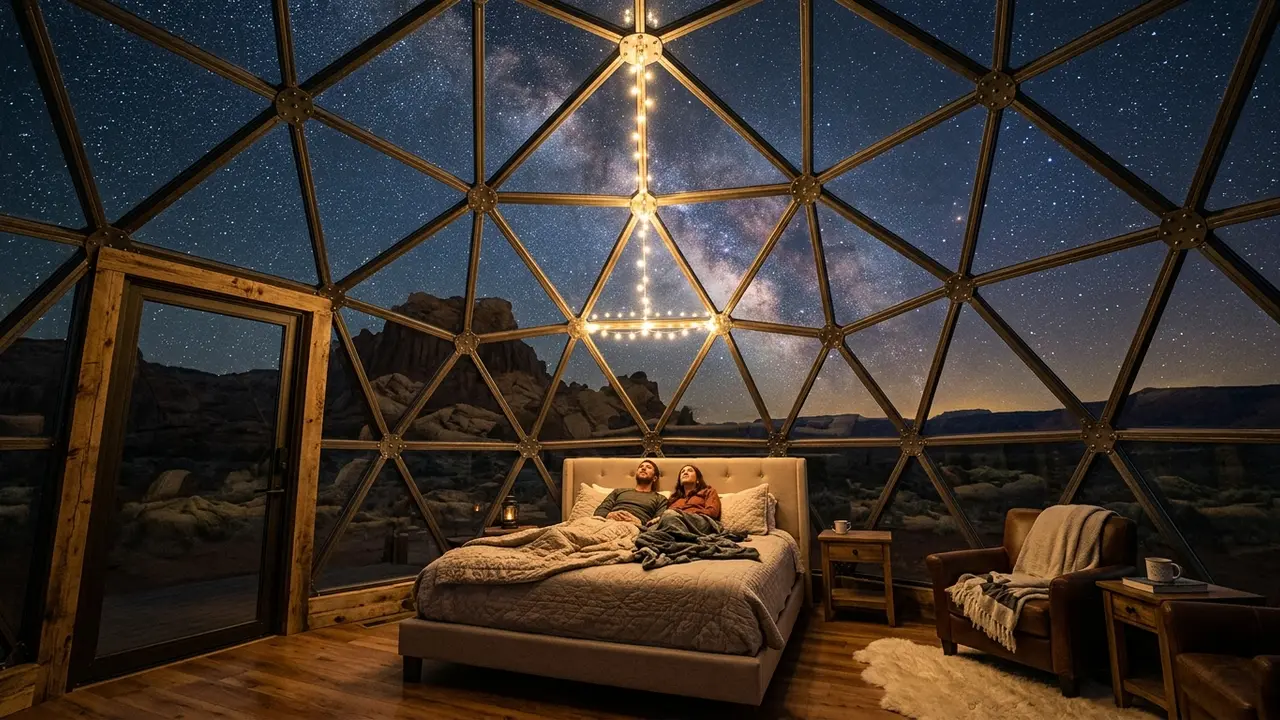
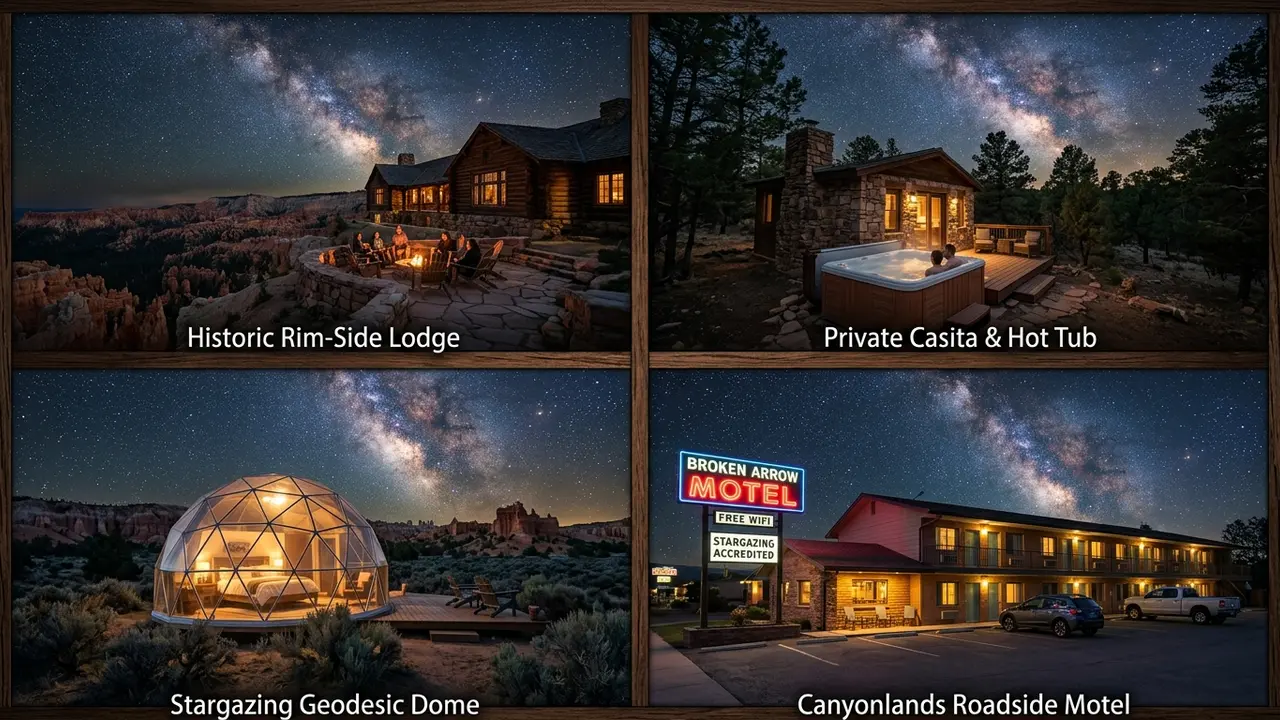
Lodging clusters two ways: inside the park, at the historic lodge a short walk from the amphitheater rim, or in the small towns just outside the boundary, trading a short drive back after dark for more choice of restaurants and rates. Staying inside the park buys you the thing that actually matters for a stargazing trip, the ability to walk from your room to a dark overlook without getting back in a car. Book well ahead, especially around the June Astronomy Festival and through the busier summer months, when in-park rooms sell out first.

For the full lodge-by-lodge comparison, weighing proximity, dark-sky amenities, and price across all four properties, see our ranked guide to Bryce Canyon's stargazing lodges.

Top lodges at a glance

See the full ranking: Best Lodges for Bryce Canyon Stargazing

Planning the Rest of Your Trip

A few things round out the trip. Bryce runs ranger-led telescope programs tied to the Astronomy Festival, and independent operators in the area run dedicated night-sky tours if you'd rather have someone else handle the logistics and equipment. Book a guided night out with Dark Ranger Telescope Tours, time a visit around the Astronomy Festival itself, or join the park's free monthly Full Moon Hike along the Rim Trail.

Stargazing isn't the only reason to stay more than one night. Things to do in Bryce Canyon beyond stargazing covers the daytime hikes, horseback rides, and winter snowshoeing that round out a trip, and how many days to plan for Bryce Canyon stargazing walks through the two-versus-three-night math. Still weighing whether the drive, the entrance fee, and the altitude are worth it? Is Bryce Canyon worth it for stargazing? answers that directly, and our stargazing FAQ covers the smaller questions, permits, cold, and whether kids can handle a night on the rim, that come up before every trip.

For exactly what Gold Tier certification requires, how Bryce earned it in 2019, and how the tier system compares to Silver and Bronze, see our full explainer on Bryce Canyon's Dark Sky certification.

For now, the shape of the trip is simple. Pick a new-moon week, whether that's June's Festival or a quieter month, book a stay inside the park if you want to walk to the rim after dark, and drive in rather than treating this as a fly-to destination. Bryce's sky doesn't need a festival to earn the trip.

All tours

Reporter notebook

Insider tips

What to bring

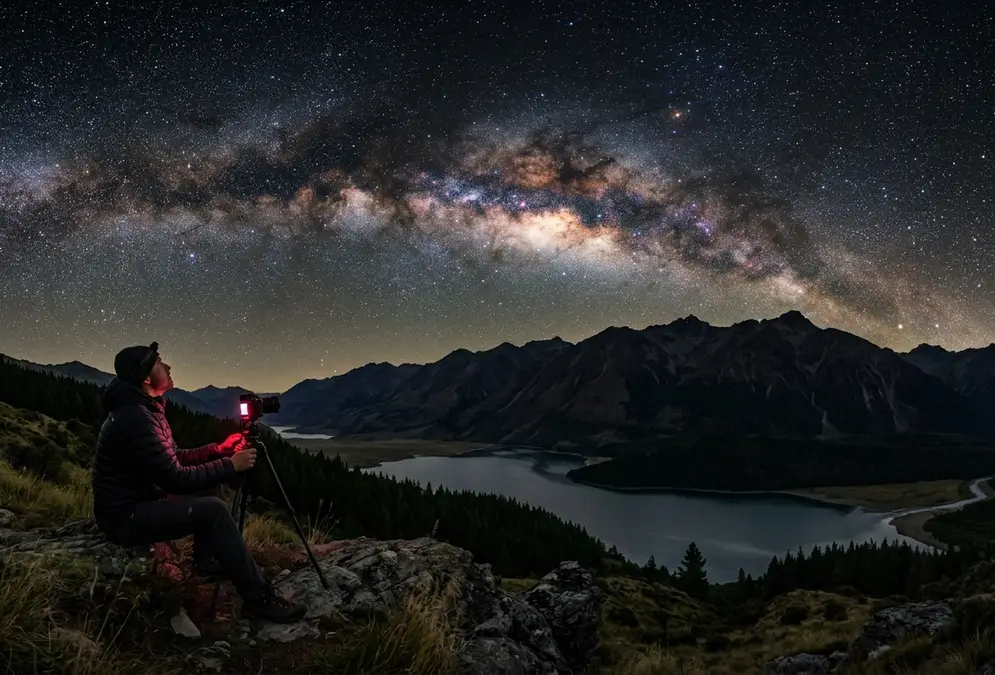
Bring a red-light flashlight, not a white one

The Park Service warns it can take well over thirty minutes for eyes to fully adjust to Bryce Canyon's darkness. A dim red light preserves that adjustment; a phone screen or white headlamp resets it, for you and everyone else at the rail.

Best time

Skip Festival week if you want an empty overlook

June's Astronomy Festival is the marquee event, but it also brings the fullest parking lots and viewpoints of the year. A clear new-moon night in almost any other month gives you the same Gold-Tier sky with a fraction of the company.

Booking tip

Grab evening program tickets at 8 a.m., same day

Telescope-viewing tickets during the Astronomy Festival are free but same-day only, released at the Visitor Center starting at 8 a.m. Show up early if a specific night's program matters to you; they run out.

Frequently asked questions

Is Bryce Canyon a certified Dark Sky Park?

Yes. The National Park Service certified Bryce Canyon as an International Dark Sky Park on August 13, 2019, as the park also marked 50 years of astronomy programming.

What tier of Dark Sky Park designation does Bryce Canyon hold?

Independent reporting from outlets including National Parks Traveler, KUER, and St. George News describes Bryce's certification as Gold Tier, DarkSky International's highest rating, reserved for places with the least light pollution and the most protected night skies.

When is the Bryce Canyon Astronomy Festival in 2026?

The 2026 Bryce Canyon Astronomy Festival runs June 11-13, timed to that month's new moon.

Is the Bryce Canyon Astronomy Festival free?

Festival programming is free with regular park admission. Evening telescope-viewing programs need their own ticket, which is also free but only available same-day, starting at 8 a.m. at the Visitor Center.

How far is Bryce Canyon from Las Vegas and Salt Lake City?

Both Las Vegas (LAS) and Salt Lake City (SLC) airports sit roughly 270 miles from the park, about a four-hour drive. Cedar City (about 80 miles) and St. George (about 125 miles) are closer regional options.

Do you need a car to stargaze at Bryce Canyon?

Yes, a rental car is the standard way to reach and get around Bryce Canyon. Unlike some dark-sky destinations that require a flight into a remote hub, Bryce is a straightforward drive from Las Vegas, Salt Lake City, or nearby regional airports.

What is the best time of year for stargazing in Bryce Canyon?

Bryce's dark sky holds year-round. New-moon nights give the darkest views in any season; June adds the Astronomy Festival, while winter brings longer, often clearer nights with fewer visitors at the rim.

Can you see the Milky Way from Bryce Canyon?

Yes, the Milky Way's core is visible to the naked eye on clear, new-moon nights. No official source publishes an exact star count for Bryce, so treat any specific figure you see quoted elsewhere with some skepticism.

Do you need a permit to stargaze in Bryce Canyon National Park?

No permit is required. A standard park entrance pass covers access to overlooks after dark. Evening telescope-viewing programs during the Astronomy Festival require a free same-day ticket, not a permit.

Further reading

Sources

Events visible from here