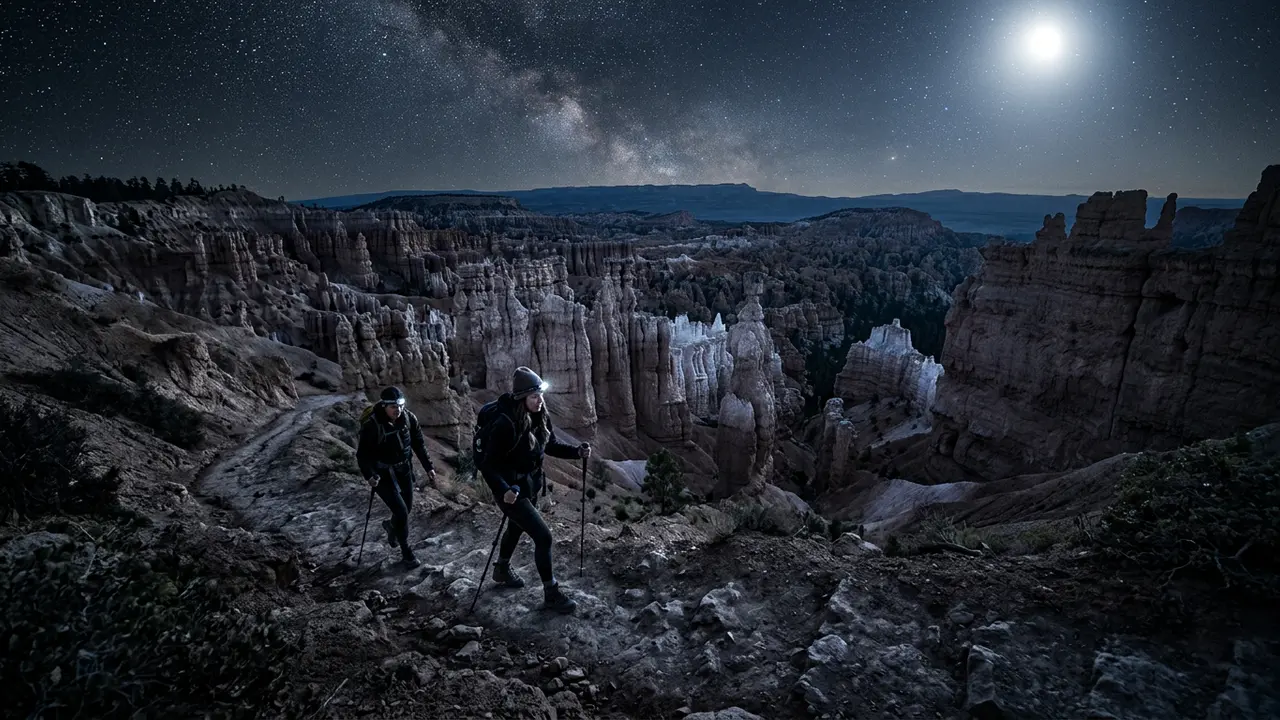
The easiest time to see Bryce Canyon's famous red hoodoos is the one most people miss. When the full moon is up, the canyon walls illuminate without artificial light, and the National Park Service offers a ranger-led hiking program that takes advantage of that moonlight to walk the Rim Trail after dark. It's free, it runs every month, and unlike stargazing tours that rely on clear skies or telescope availability, this one works because of the moon — the larger the moon, the better the experience.
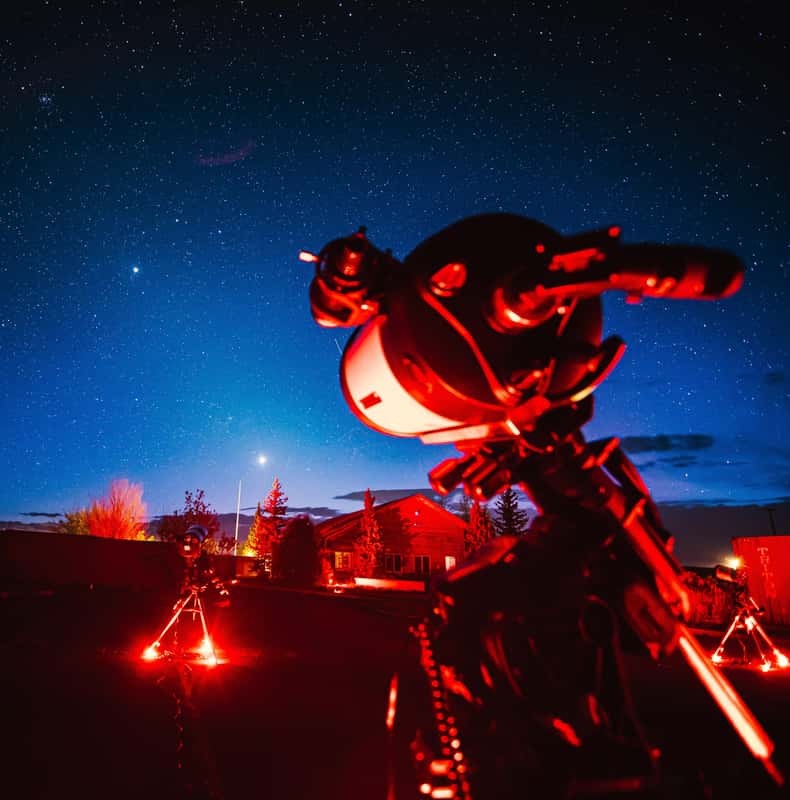
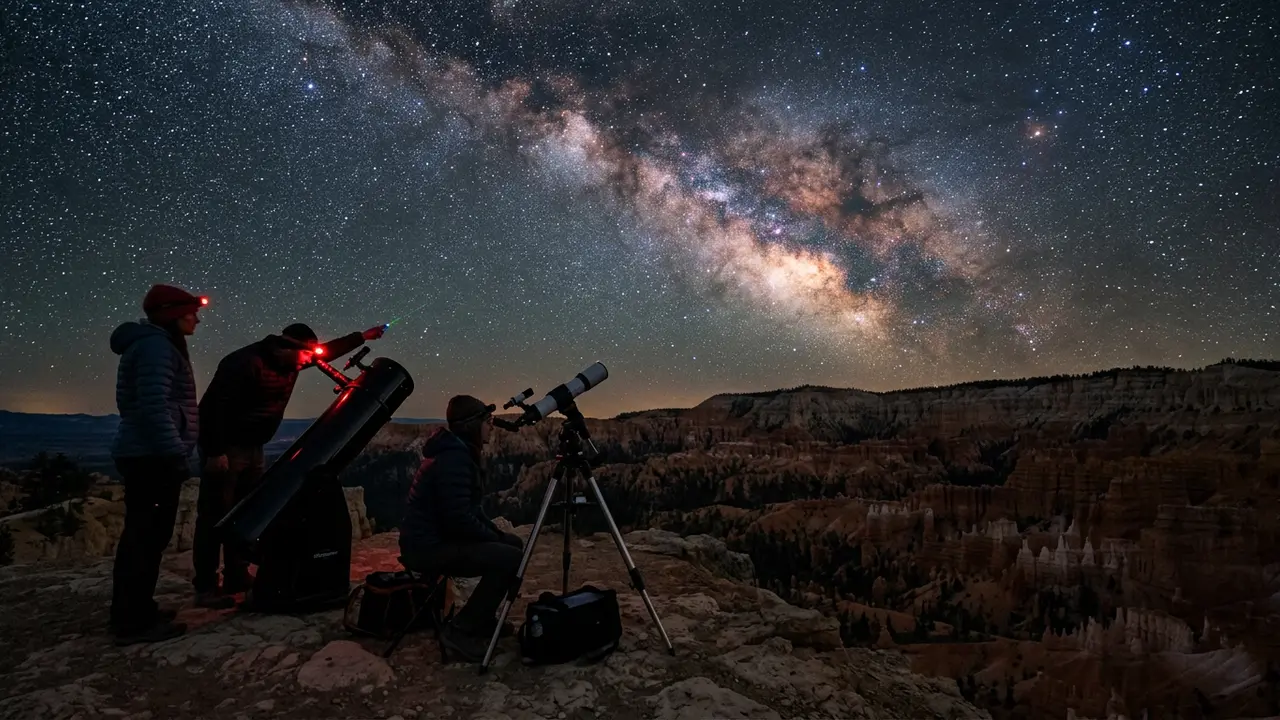
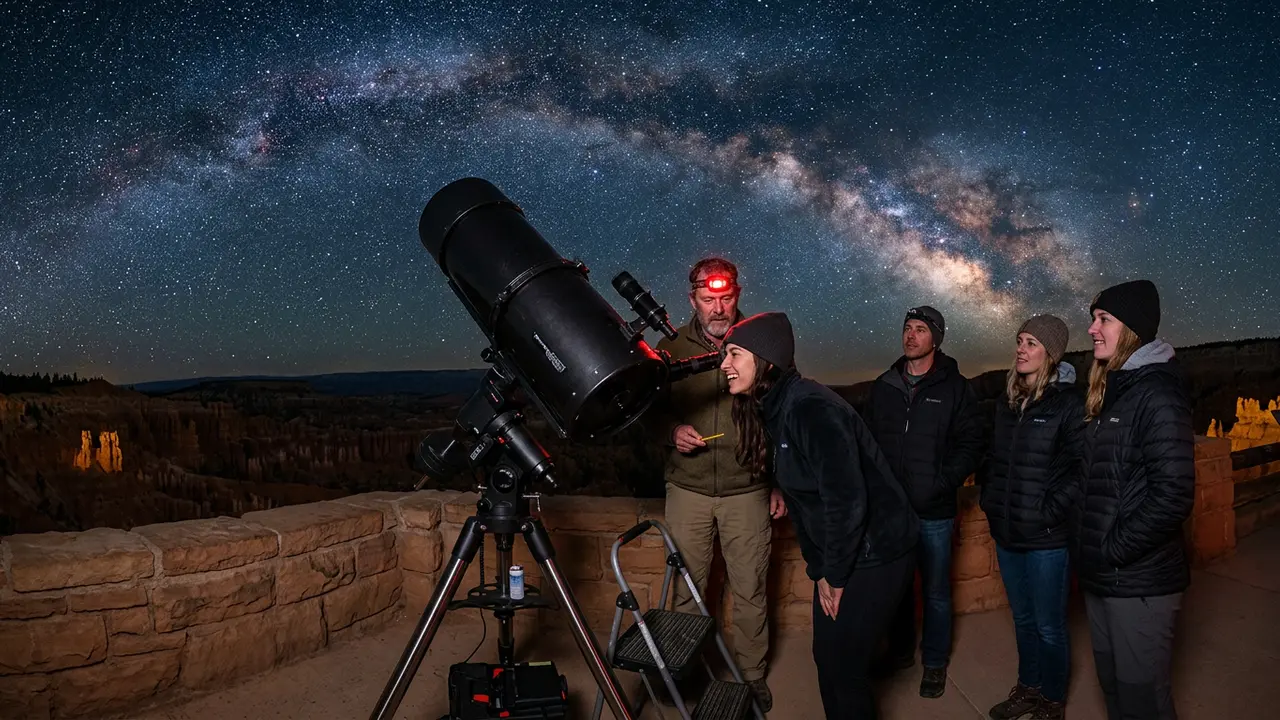
This is not a telescope tour. It's not the Astronomy Festival, which is a multi-day event in June with ranger-led talks and astronomy-club equipment. It's separate from the Dark Ranger Telescope Tours, which focus on night-sky observation with binoculars and telescopes and run most nights of the year. The Full Moon Hike is specifically designed to experience Bryce's geology and landscape under natural moonlight, the way the canyon has been navigated for centuries. The trade-off: you're limited to the nights when the moon is bright enough to hike safely, which means roughly one date per month.
What you'll actually do
You'll meet at the Bryce Canyon Visitor Center by 3:00 p.m. on the day of your hike (with a confirmation email that acts as your receipt). The ranger verifies you're wearing lug-sole hiking boots or hiking shoes in good condition — this is mandatory, not a suggestion; the terrain is rocky and steep enough that slippery soles cause injuries. Then you'll walk somewhere between 1 to 2 miles of the Rim Trail, which means either an easy rim walk on well-maintained sections or a strenuous descent into the canyon itself, depending on which route the ranger chooses that night. Either way, the moonlight handles the visibility for the trail itself, leaving the sky above dark enough for stars to appear — a rare mix that works because the moon is bright but not so bright that it washes out the Milky Way entirely.
Rangers discuss the geology, point out constellations if the sky is clear enough, and take questions as you walk. The entire program runs roughly 1.5 to 2 hours from check-in to finish.
Booking: two-phase release, 14 days + 5 days in advance
Most popular Bryce hikes fill fast because the park sits in a heavily visited corner of Utah. This program fills faster. Recreation.gov releases tickets in two waves: 15 tickets go live 14 days before the hike at 10:00 a.m. ET (8:00 a.m. Mountain Time), and 10 more tickets are released 5 days in advance at the same time. You can only book on Recreation.gov; there is no in-person, phone, or third-party booking.
Up to 6 people per reservation, but you'll be in a ranger-led group, so your party travels with other hikers, not solo.
Because the releases are tight (15 tickets on the first date, 10 on the second), you need to be online at the exact release time to have a realistic chance. Setting an alarm and being ready at 8:00 a.m. MT is not paranoid — it's necessary.
What to bring and what you can't
Required: Lug-sole boots or hiking shoes in good condition. Verification happens before departure.
Strongly recommended:
- Drinking water — the desert and the hike will dehydrate you
- Jacket or fleece — even in summer, nighttime temperatures at Bryce's 9,000-foot elevation drop significantly
- Red-light flashlight — white flashlights are prohibited because they ruin night-vision for you and the group
Not permitted: Pets and visitors under 8 years old.
Cancellation and weather
The ranger reserves the right to cancel if heavy cloud cover blocks the moonlight or if temperatures drop below 10°F (-12°C). Winter hikes sometimes convert to a snowshoe version if snow depth exceeds 16 inches. If your scheduled date is canceled, your Recreation.gov reservation rolls over or refunds automatically; you don't have to rebook manually. That said, once you've claimed a ticket for a specific date, you're committed — cancellations through Recreation.gov have no penalty, but good luck finding a replacement slot if you change your mind.
Why this, not the telescope tour or the festival?
The Dark Ranger Telescope Tours run nearly every night of the year, weather permitting, and focus on stargazing equipment and constellations. You're looking up at the sky. The Full Moon Hike is looking at the canyon by moonlight, incidentally revealing the stars above. The Astronomy Festival happens once a year in June and combines ranger talks with astronomy-club telescope observation — it's a weekend-long event with specific sessions and a fixed schedule. The Full Moon Hike is monthly, free (except the processing fee), and available year-round as long as the moon is full and the weather cooperates.