Sweden · Best Aug-Apr
Abisko Stargazing
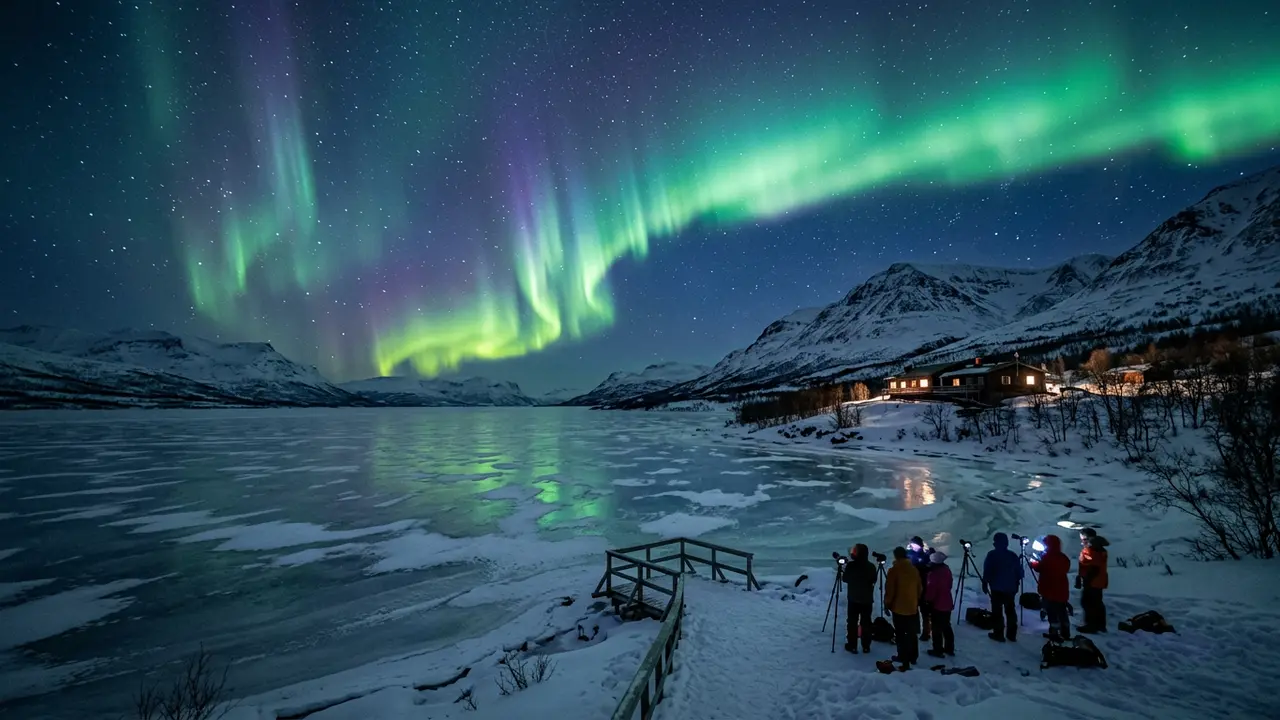
Abisko's rain-shadow microclimate keeps skies clear when nearby Arctic spots cloud over. Aurora season, the Sky Station, ICEHOTEL, and getting there by train.
Discover
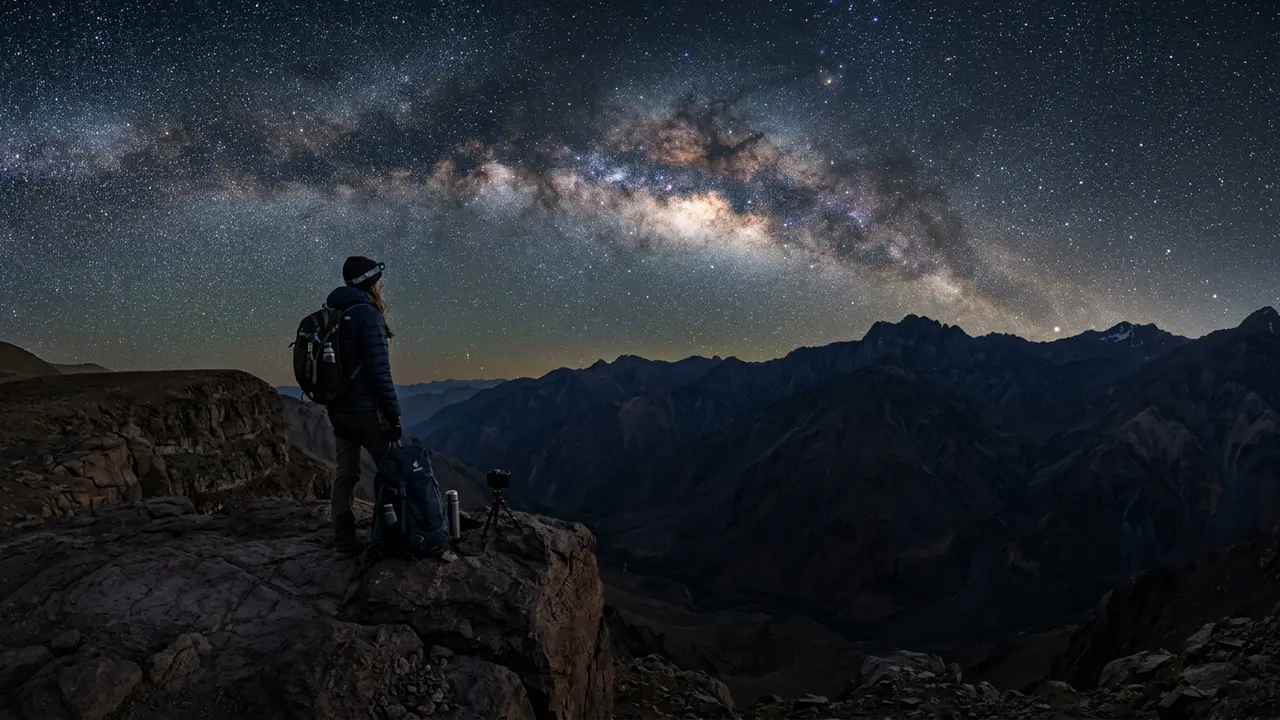
Two very different reasons to leave the city behind: chasing the aurora at high latitude, or standing under a galactic core so bright it casts a shadow on the sand. Compare Bortle ratings, best months, and real moon-phase odds before you book.
Aurora corridors sit near the poles and the galactic core sits near the equator: here's where all of them actually land on the map.
Tap a pin to open the destination or lodge page.
Open the full atlas — filter by month, region & sky darkness
These six sit inside or near the auroral oval, so geomagnetic activity, not moon phase or desert clarity, decides whether the sky performs on any given night. Pick this group if flexible dates and a real tolerance for waiting out cloud cover matter more to you than a guaranteed photograph; book at least three nights and treat any sighting as a bonus, not a certainty.
| Destination | Best months | Why go | Book or view |
|---|---|---|---|
| Abisko Stargazing Sweden · Bortle 1–2 Editor's pick | Aug-Apr | Abisko's rain-shadow microclimate keeps skies clear when nearby Arctic spots cloud over. | Explore |
| Northern Lights in Finnish Lapland Finland · Bortle 1–5 | Sep–Oct & Feb–Mar | Finnish Lapland's whole-region aurora guide: glass igloos, Santa Claus Village, six bases from Rovaniemi to Inari, aurora season Sep–Mar, no road drama. | Explore |
| Yellowknife Northern Lights Canada · Bortle 1–5 | mid-Aug to mid-Apr | Yellowknife sits beneath the auroral oval: up to 240 aurora nights per year. | Explore |
| Northern Lights in Iceland Iceland · Bortle 2–5 | Sep–Oct & Feb–Mar | Iceland's whole-country aurora guide: best regions to base in, aurora season Sep–Mar, ice caves, winter driving reality, and where cloud cover ends every plan. | Explore |
| Northern Lights in Tromsø Norway · Bortle 3 | October–March | At 69.6°N inside the auroral oval, Tromsø sees aurora at Kp 2. | Explore |
| Fairbanks Northern Lights United States · Bortle 4 | Aug–Apr (Feb–Mar peak) | Fairbanks sits directly under the auroral oval at 64.8°N. | Explore |
Abisko Stargazing
Sweden · Bortle 1–2
Northern Lights in Finnish Lapland
Finland · Bortle 1–5
Yellowknife Northern Lights
Canada · Bortle 1–5
Northern Lights in Iceland
Iceland · Bortle 2–5
Northern Lights in Tromsø
Norway · Bortle 3
Fairbanks Northern Lights
United States · Bortle 4
These six trade aurora chances for near-total dryness and a galactic core that climbs high overhead on almost every clear night, which out here is most nights. Pick this group if you want the Milky Way itself, not a lights show, and you're willing to fly a long way and sleep somewhere remote to get it.
| Destination | Best months | Why go | Book or view |
|---|---|---|---|
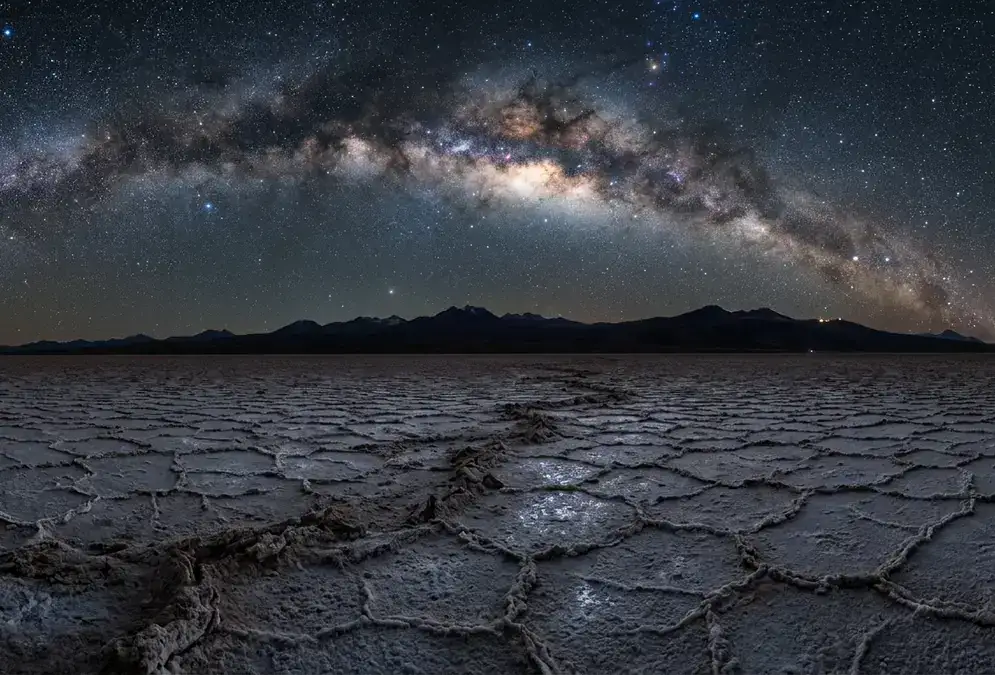
| Atacama Desert Stargazing Chile · Bortle 1 Editor's pick | Apr–Sep | Earth's driest desert delivers Bortle 1–2 skies, 330+ clear nights a year, and the galactic core almost overhead. | Explore |
| AlUla Stargazing Saudi Arabia · Bortle 1–2 | Oct–Apr | Stargaze above Hegra's 2,000-year-old Nabataean tombs in AlUla, the Gulf's first DarkSky-accredited Dark Sky Park. | Explore |
| Merzouga Stargazing Morocco · Bortle 1–2 | Oct-Apr | Erg Chebbi's dunes rise 150m above Morocco's Sahara, hours from city light. | Explore |
| NamibRand Nature Reserve Namibia · Bortle 1 | May–Oct | NamibRand is Africa's only Gold Tier Dark Sky Reserve: extreme Namib Desert isolation, the Southern Cross, Magellanic Clouds, and luxury safari lodges. | Explore |
| Uluru Australia · Bortle 2–3 | May-September (dry season, Southern Hemisphere winter) | Stargaze at Uluru on Anangu-owned, jointly managed land: the Milky Way's core, Magellanic Clouds and Southern Cross over Australia's red-centre outback. | Explore |
| Wadi Rum Jordan · Bortle 2–3 | Year-round (spring & autumn mildest) | See the Wadi Rum night sky from a Zalabieh Bedouin camp in Jordan's UNESCO desert: bare tents to glass domes, Bortle 2-3 skies, and year-round stargazing. | Explore |
Atacama Desert Stargazing
Chile · Bortle 1
AlUla Stargazing
Saudi Arabia · Bortle 1–2
Merzouga Stargazing
Morocco · Bortle 1–2
NamibRand Nature Reserve
Namibia · Bortle 1
Uluru
Australia · Bortle 2–3
Wadi Rum
Jordan · Bortle 2–3
These five are US and Canadian national or provincial parks with established road access, campgrounds, and ranger-led night-sky programs, several of them formally DarkSky-certified. Pick this group for the easiest logistics on this page, road trips and rental cars instead of long-haul flights, though the skies rarely match the raw darkness of the Atacama or NamibRand.
| Destination | Best months | Why go | Book or view |
|---|---|---|---|
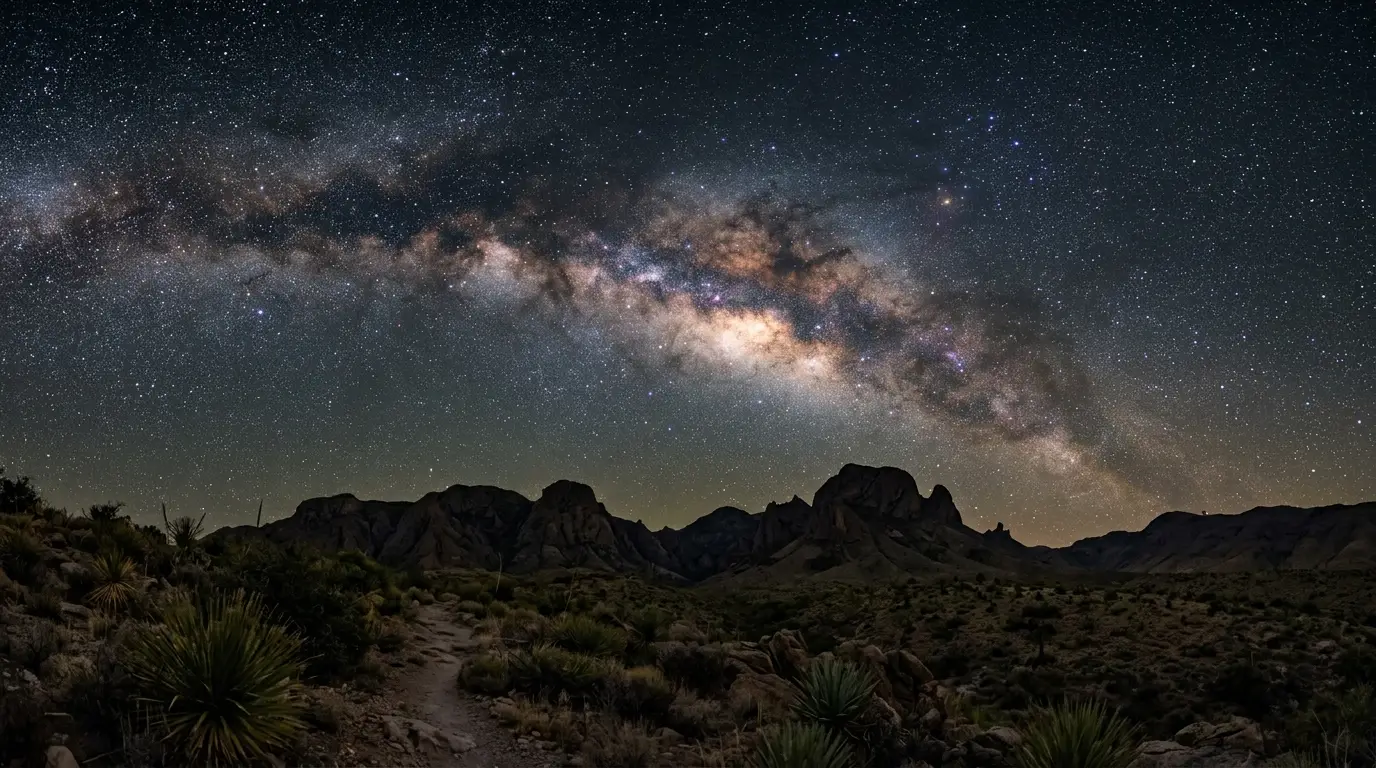
| Big Bend National Park United States · Bortle 1 Editor's pick | Year-round (avoid summer heat) | Big Bend National Park is Bortle Class 1, the darkest rating the Bortle scale has. | Explore |
| Stargazing in Bryce Canyon National Park United States · Bortle 1–2 | Year-round (Astronomy Festival in June) | Bryce Canyon earned Gold-Tier Dark Sky Park status in 2019 after 50 years of astronomy programs. | Explore |
| Death Valley United States · Bortle 1–2 | Oct–Apr (Dark Sky Festival in spring) | Death Valley's Gold-tier dark sky sits at the lowest point in North America. | Explore |
| Joshua Tree National Park United States · Bortle 2–3 | Year-round (moonless summer nights best) | Joshua Tree earned International Dark Sky Park status in 2017, just two hours from LA. | Explore |
| Stargazing in Jasper National Park Canada · Bortle 3–5 | Year-round (Dark Sky Festival in October) | Jasper National Park is widely called the largest accessible Dark Sky Preserve in Canada: 11,228 km², an October Dark Sky Festival, and a 38-seat planetarium. | Explore |
Big Bend National Park
United States · Bortle 1
Stargazing in Bryce Canyon National Park
United States · Bortle 1–2
Death Valley
United States · Bortle 1–2
Joshua Tree National Park
United States · Bortle 2–3
Stargazing in Jasper National Park
Canada · Bortle 3–5
These four sit at altitude or on volcanic islands with professional observatories already in place, so the astronomy infrastructure, summit tours, research-grade telescopes, is more developed here than almost anywhere else on this list. Pick this group if you want to pair stargazing with real astronomy, not just a view, but budget for altitude acclimatization and weather that can turn in minutes at a summit.
| Destination | Best months | Why go | Book or view |
|---|---|---|---|
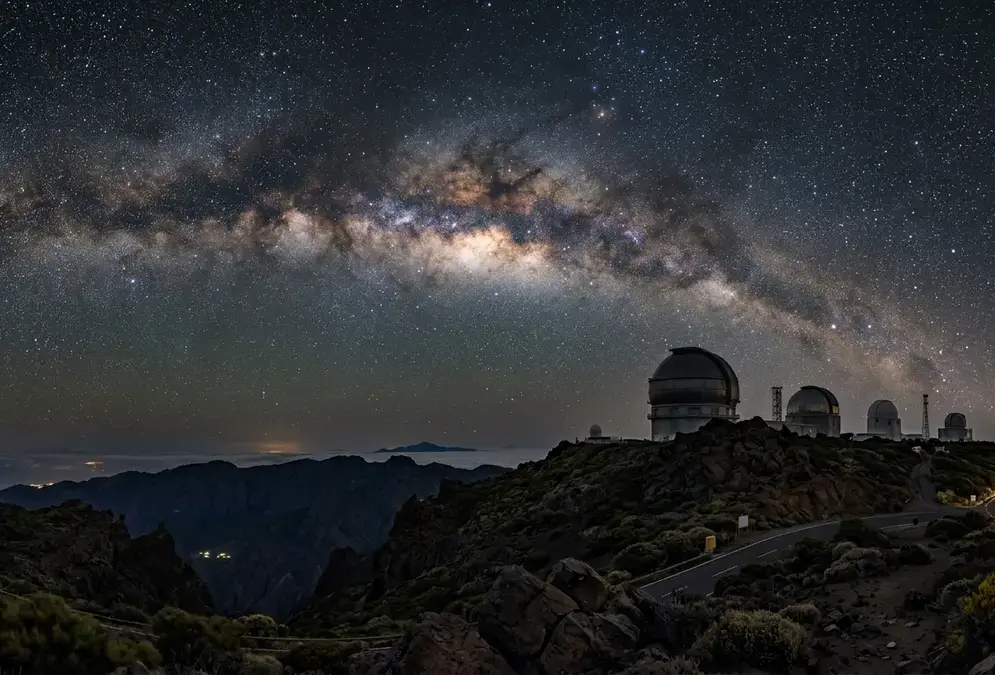
| La Palma Stargazing Spain · Bortle 2 Editor's pick | Year-round | La Palma stargazing guide: the world's first Starlight Reserve since 2012, Bortle 1-2 skies above Roque de los Muchachos, plus where to stay and go year-round. | Explore |
| Mauna Kea United States (Hawaii) · Bortle 1–2 | Apr–Oct (dry season, most reliable summit road access) | Mauna Kea is sacred to Native Hawaiians and home to world-class observatories. | Explore |
| Aoraki Mackenzie Stargazing New Zealand · Bortle 2 | Mar–Oct | Aoraki Mackenzie is one of only four Gold Tier Dark Sky Reserves on Earth: Bortle 2 skies over Lake Tekapo, the Southern Cross, and Mount John Observatory tour. | Explore |
| Tenerife Stargazing Spain · Bortle 2 | May–Sep | Tenerife stargazing guide: Teide National Park's UNESCO Bortle-2 skies, 83 constellations visible. | Explore |
La Palma Stargazing
Spain · Bortle 2
Mauna Kea
United States (Hawaii) · Bortle 1–2
Aoraki Mackenzie Stargazing
New Zealand · Bortle 2
Tenerife Stargazing
Spain · Bortle 2
Already have dates? Every destination scored 0–3 for each month of the year, so you can see at a glance where the sky is at its best when you can actually travel.
Pick a month to see where the sky is at its best.
New moon Oct 10 Draconids peak Oct 8 Aurora season: on
Also good this month
The whole year in one grid: every destination scored 0–3 for each month, so you can scan across a row or down a column.
Full month-by-month guides: January February March April May June July August September October November December
Head-to-head comparisons for the decisions that come up most often when two destinations are on the shortlist.
A DarkSky International certification means a place has been formally assessed and approved for how well it manages artificial light, not how dark its sky actually is. The organization audits lighting policy, shielding, and long-term commitment from a park authority or reserve manager, then awards a tier: Park, Reserve, Sanctuary, or Community. It is a measured management standard, closer to a building code than a magnitude reading. Eight of the 21 destinations here carry a formal designation, including NamibRand's Gold Tier reserve status and Death Valley's Gold Tier park certification. Several of the darkest skies here, including the Atacama Desert, carry no certification at all: the sky there is measurably darker than most certified sites, yet no reserve designation has ever been sought there. Treat certification as one signal alongside Bortle rating and regional dryness, not a substitute for either. Full designation list at darksky.org.
See the full designation list at DarkSky International (opens in a new tab)
Every destination on this page asks something different of you. Tromsø and Fairbanks sell you a shot at the aurora. San Pedro de Atacama sells you the galactic core straight overhead, with no cloud, no moisture, and no argument. Before picking one, it helps to know what actually separates a good night sky from a wasted flight — and if the whole idea of planning a trip around the night sky is new to you, what astrotourism actually means is the place to start.
Start with the Bortle scale, the 1-to-9 rating astronomers use for sky darkness. Bortle 1 is the rarest tier: no artificial glow on the horizon, the Milky Way bright enough to cast a faint shadow. Bortle 4 or 5 is what most rural travelers already have at home: decent, but washed out at the edges. The destinations on this page range from Bortle 1 at the darkest to 5 at the brightest edge; most sit at the dark end, and a few sites near towns trade some darkness for easier access. Check the number before you book, because Bortle 4 next to a city and Bortle 1 in the middle of a desert are not the same trip.
Then there's a split most first-time planners miss: the aurora and the Milky Way's galactic core run on different calendars entirely. The aurora needs a high latitude, roughly 60 degrees north or south, and a long dark night, which usually means autumn through spring. The galactic core needs the opposite kind of location: low latitude, where it climbs high overhead instead of skimming the horizon. At a site like the Atacama it's less about the calendar season and more about the dry, cloud-free window, which is why San Pedro's clearest stretch runs May through August rather than the Northern Hemisphere's usual summer stargazing months. You cannot chase the aurora and a high galactic core on the same trip, in the same hemisphere, at the same time of year. Pick the phenomenon first, then let that decide the season.
Here's the part that trips up even careful planners: the right month beats the right place. A world-class dark-sky site during a full moon, or in the wrong season, delivers less than a mediocre site at new moon in peak season. Before comparing destinations, read my planning guide to moon phase and seasonal weather. It will save you from booking four nights in the right country during the wrong week.
Once you know what you're chasing and when, my destination guides rank the practical side: which lodges put you under genuinely dark sky, which tours are worth the fee, and how many nights you actually need to hedge against cloud cover. The bands above are the fast comparison; the guides are where the planning gets specific.
A dark-sky park or reserve is a protected area with minimal artificial light, usually certified by DarkSky International (formerly the International Dark-Sky Association) after it meets measured brightness standards. Certification isn't required for a great sky. San Pedro de Atacama and Tromsø aren't certified reserves; they're just remote and dry or dark enough to deliver Bortle 1–4 skies on their own.
Bortle 4 or better gets you a recognizable Milky Way and most naked-eye deep-sky objects. Bortle 1–2, like the rural sites outside San Pedro de Atacama, is where the galactic core starts casting a faint shadow and dim structure becomes visible without a telescope. Bortle 6 or above, which covers most suburbs, still shows planets and bright stars but washes out the Milky Way almost entirely.
Aurora season runs roughly late August through April at high latitudes like Fairbanks and Tromsø, with the equinox months of September and February–March often outperforming the depths of winter. The Milky Way's galactic core is a different trip on a different calendar: from the Atacama, May through August delivers the driest, clearest skies with the core high overhead. There is no single best month that works for both phenomena.
Independent stargazing works anywhere with a dark enough sky and a safe place to stand. A guided tour earns its fee when you're unfamiliar with the terrain (icy roads outside Tromsø, unlit desert tracks near San Pedro), want access to a large, already-aligned telescope, or you're chasing the aurora and need someone actively watching the forecast and driving toward clear patches. For a first visit, one or two guided nights plus independent time is the practical split.
Light pollution maps show Bortle ratings down to a few kilometres for almost any location. As a rule, driving 30 to 60 minutes away from a mid-sized city improves your sky by one to two Bortle classes. Certified dark-sky parks and reserves guarantee a floor of darkness, but plenty of uncertified rural spots, farmland, or high ground without a direct line to a town's light dome work just as well.
Yes, more than most people expect. A full moon raises sky brightness roughly a hundredfold and can wash out the Milky Way and faint deep-sky targets almost completely. Book within four or five nights of a new moon for the darkest possible sky. Check my planning guide before you lock in dates: a mediocre destination at new moon often beats a great destination under a full moon.
Three nights is the realistic minimum anywhere weather-dependent, giving you at least one shot if the first night clouds over. Fairbanks recommends three nights minimum for real odds, Tromsø recommends four, and both push for more if you want real insurance against a run of cloudy nights. The Atacama's dry desert climate is more forgiving, but four to five nights still lets you pair stargazing with day excursions instead of racing through both.
Tromso, Abisko, and Fairbanks are the most reliable picks: all three sit inside the auroral oval, have dark-sky access within a short drive of an airport, and run guided chase tours for nights when cloud cover blocks the view overhead. Iceland and Yellowknife are close behind, with Yellowknife's dry, clear continental winters giving it some of the highest clear-night odds of the group. For a full ranked comparison across all six aurora destinations, see the best places to see the northern lights guide.
There's no single best month, because it depends on what you're chasing: aurora season runs roughly September through March in the far north, while Milky Way core season peaks between April and September in desert and mid-latitude destinations. Southern Hemisphere sites like NamibRand and Aoraki Mackenzie flip that calendar entirely, with their best galactic-core months falling in the northern winter. Check the month-by-month section above to match your travel dates to the right destination and phenomenon.