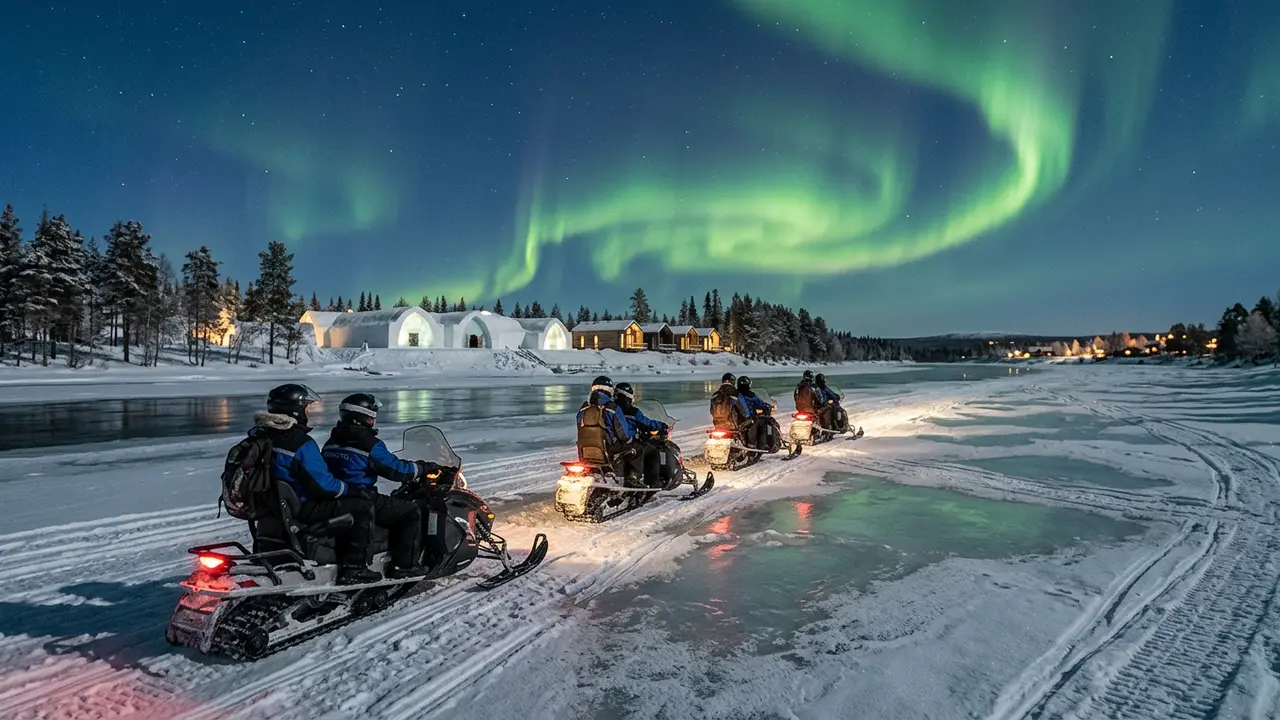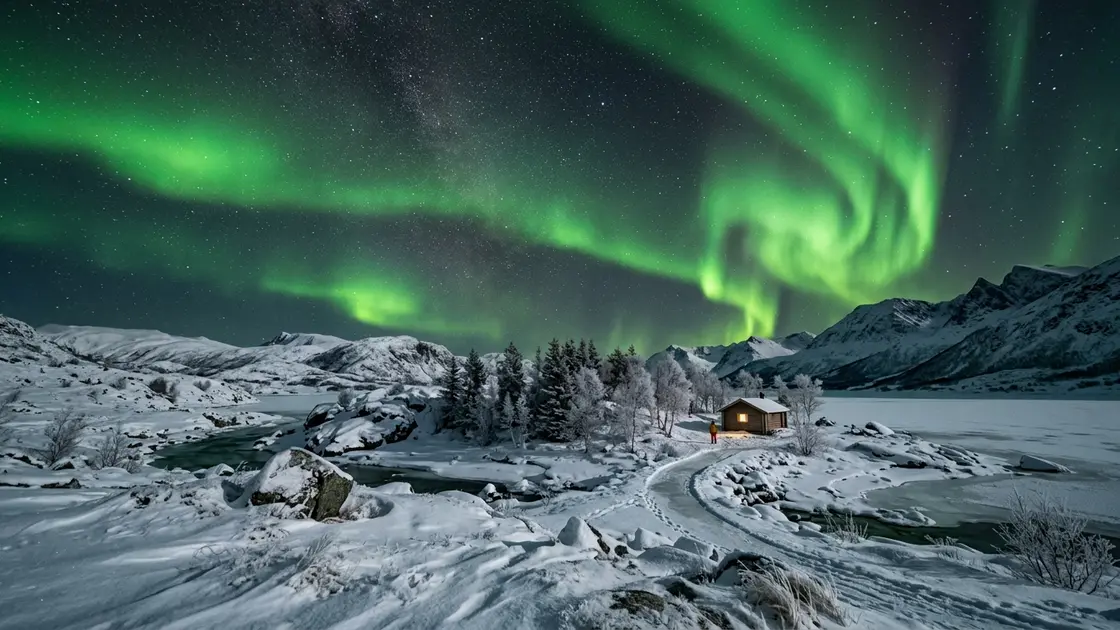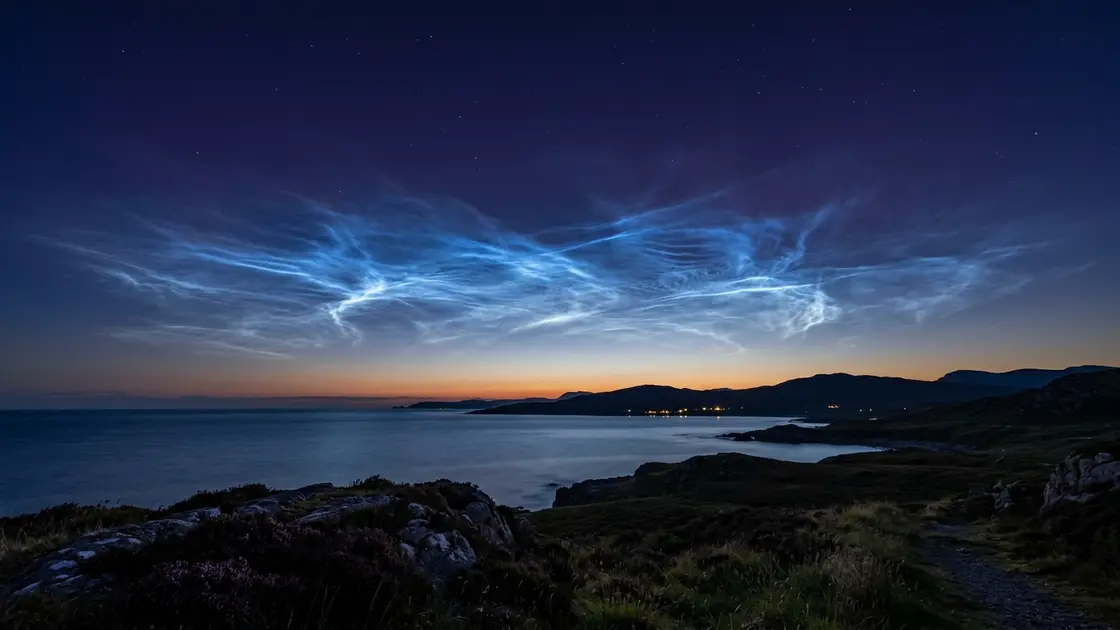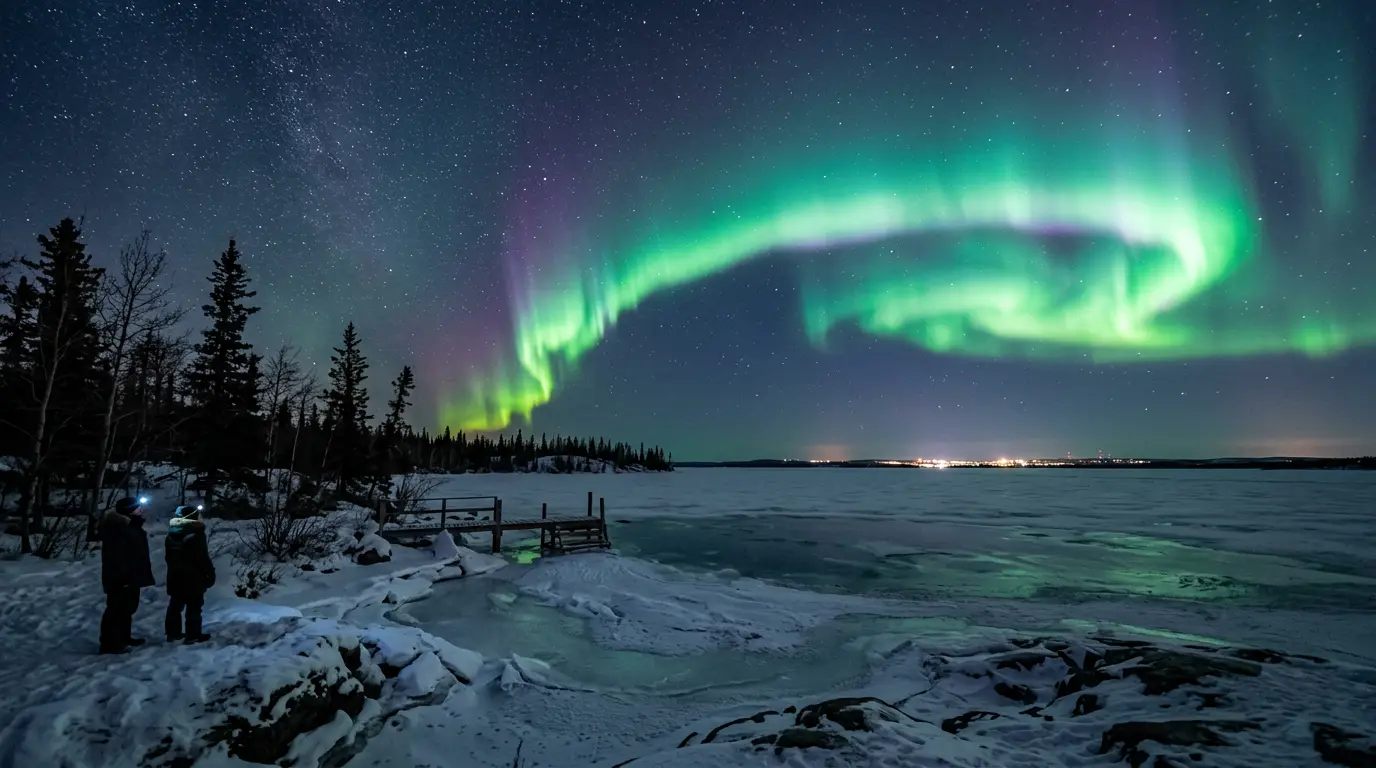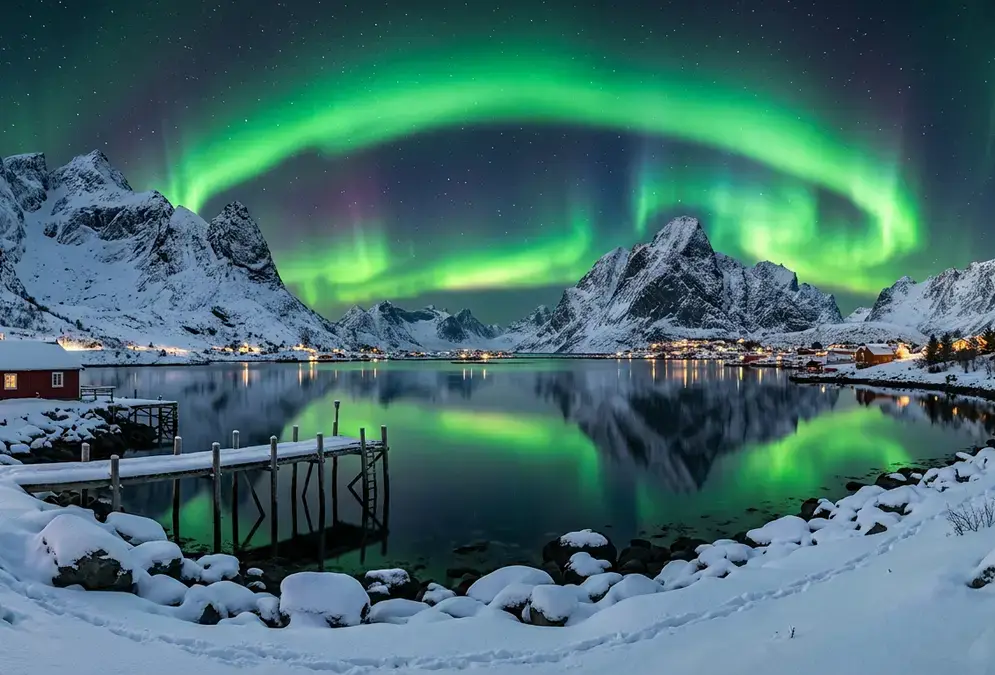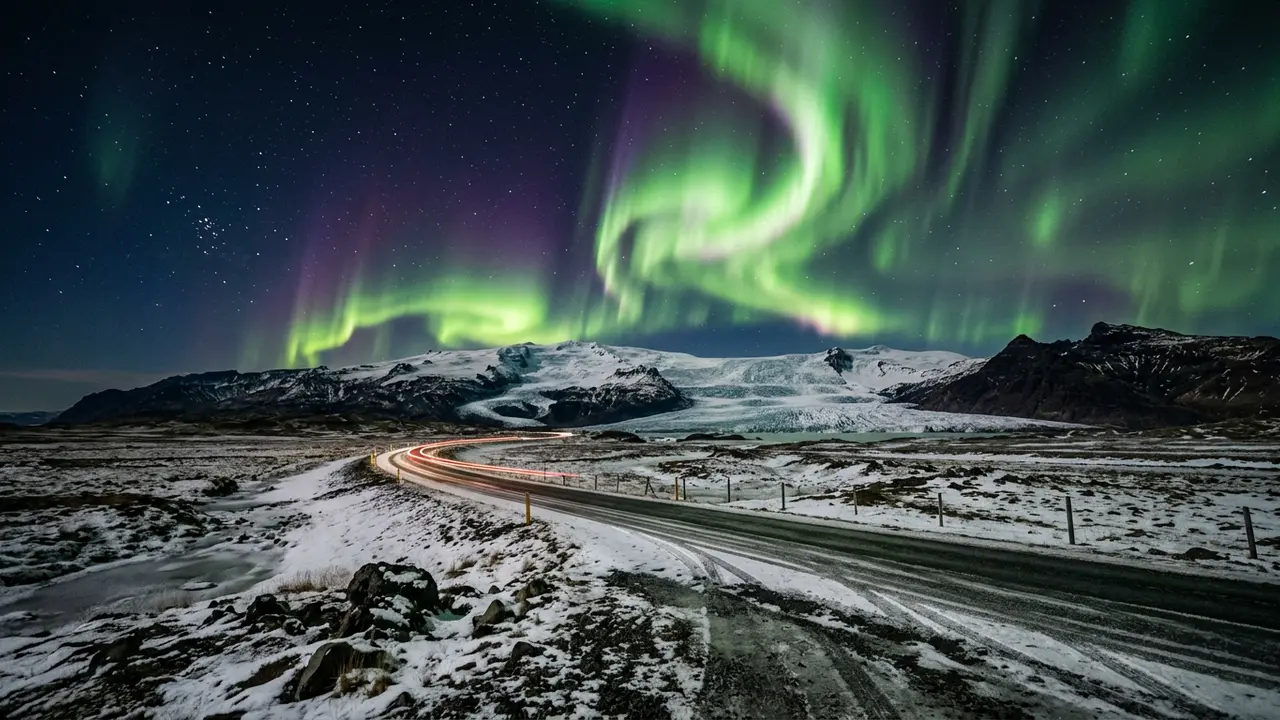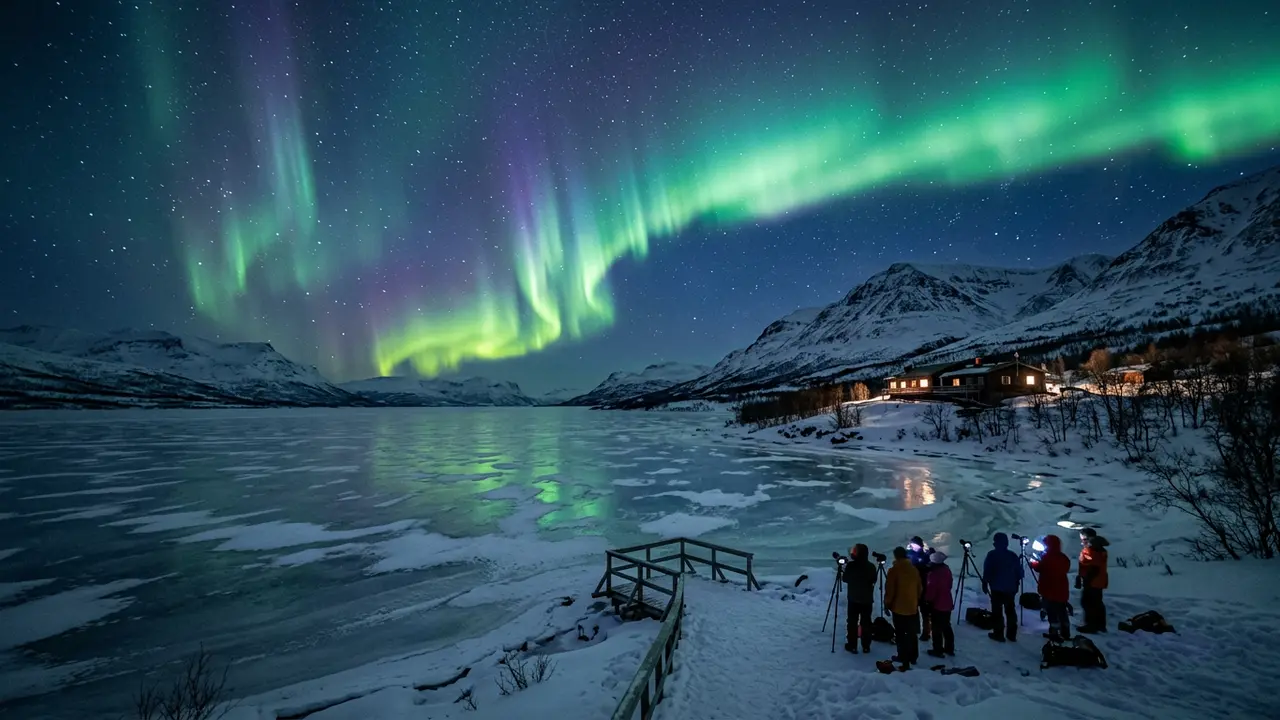
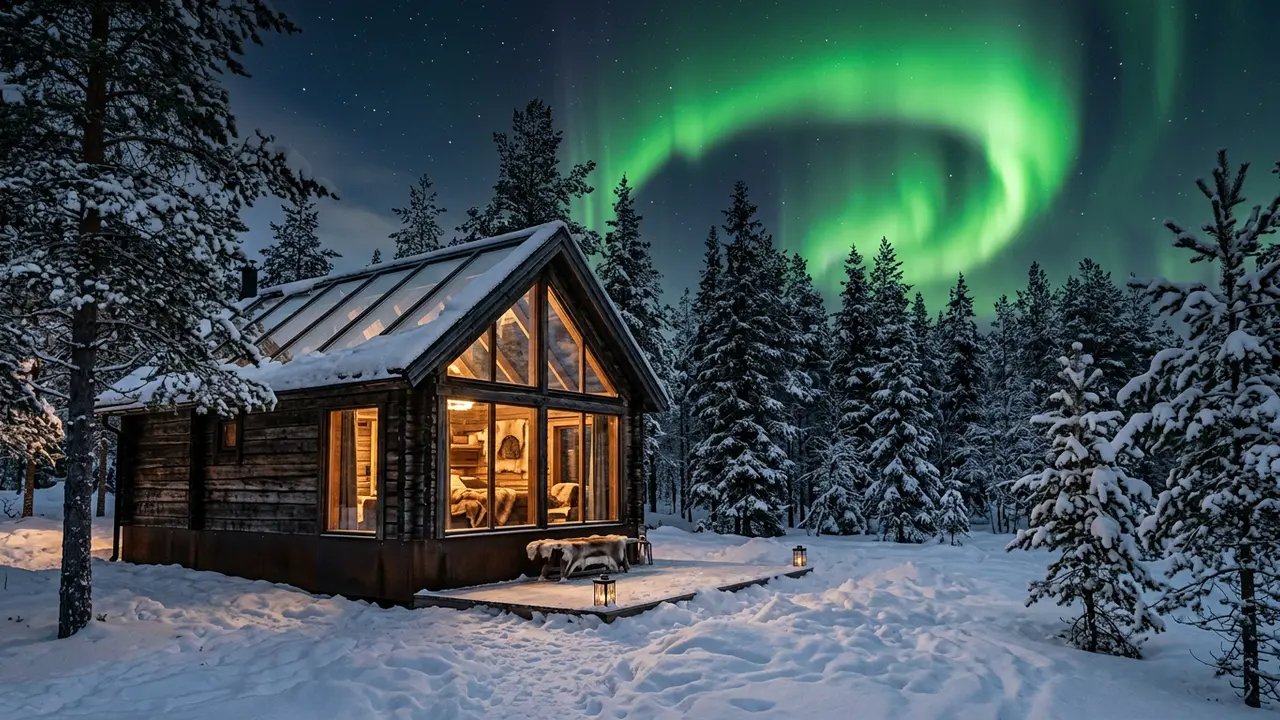
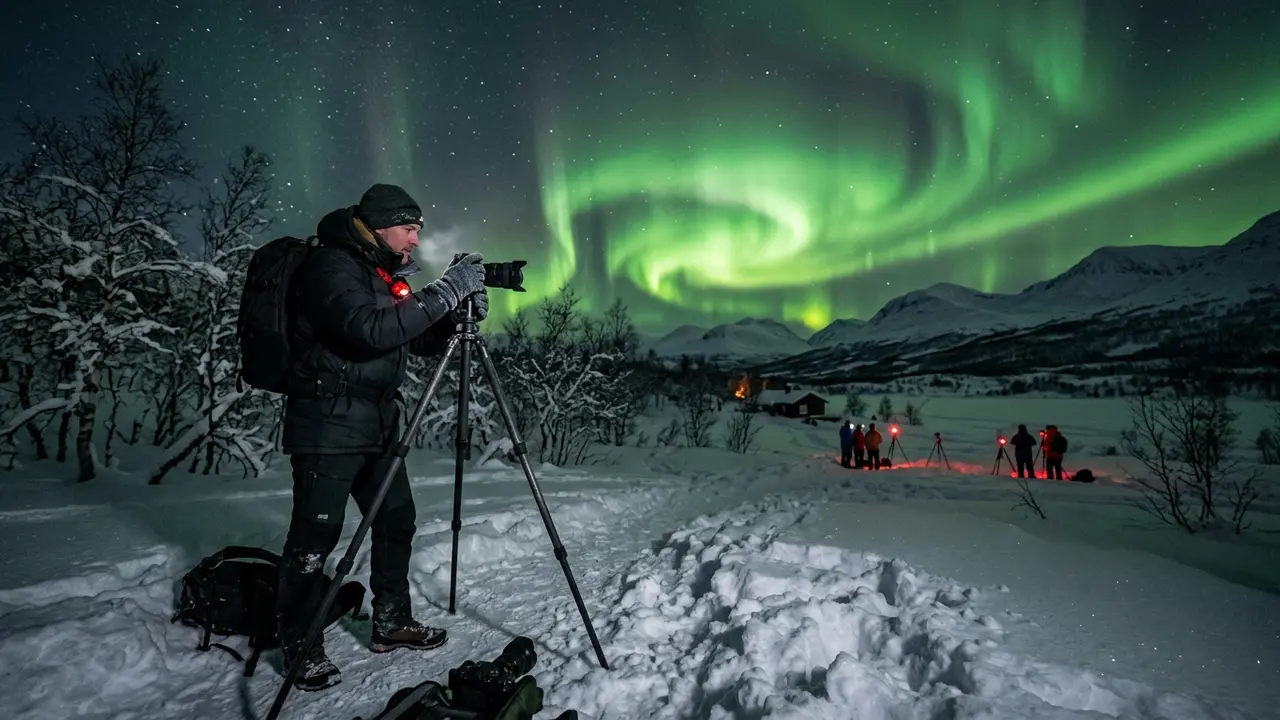
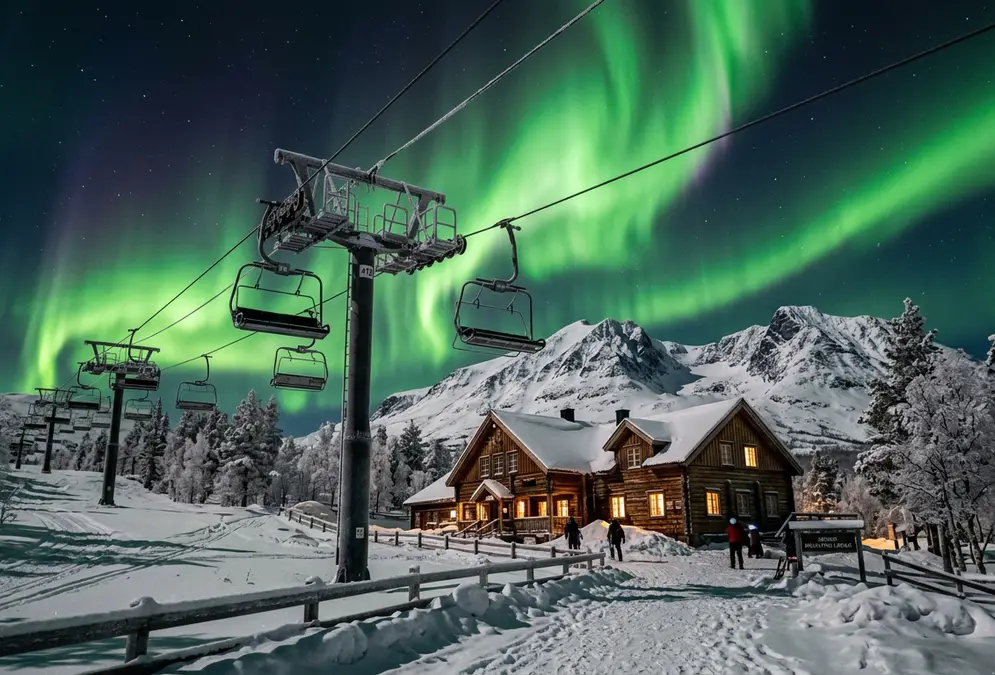
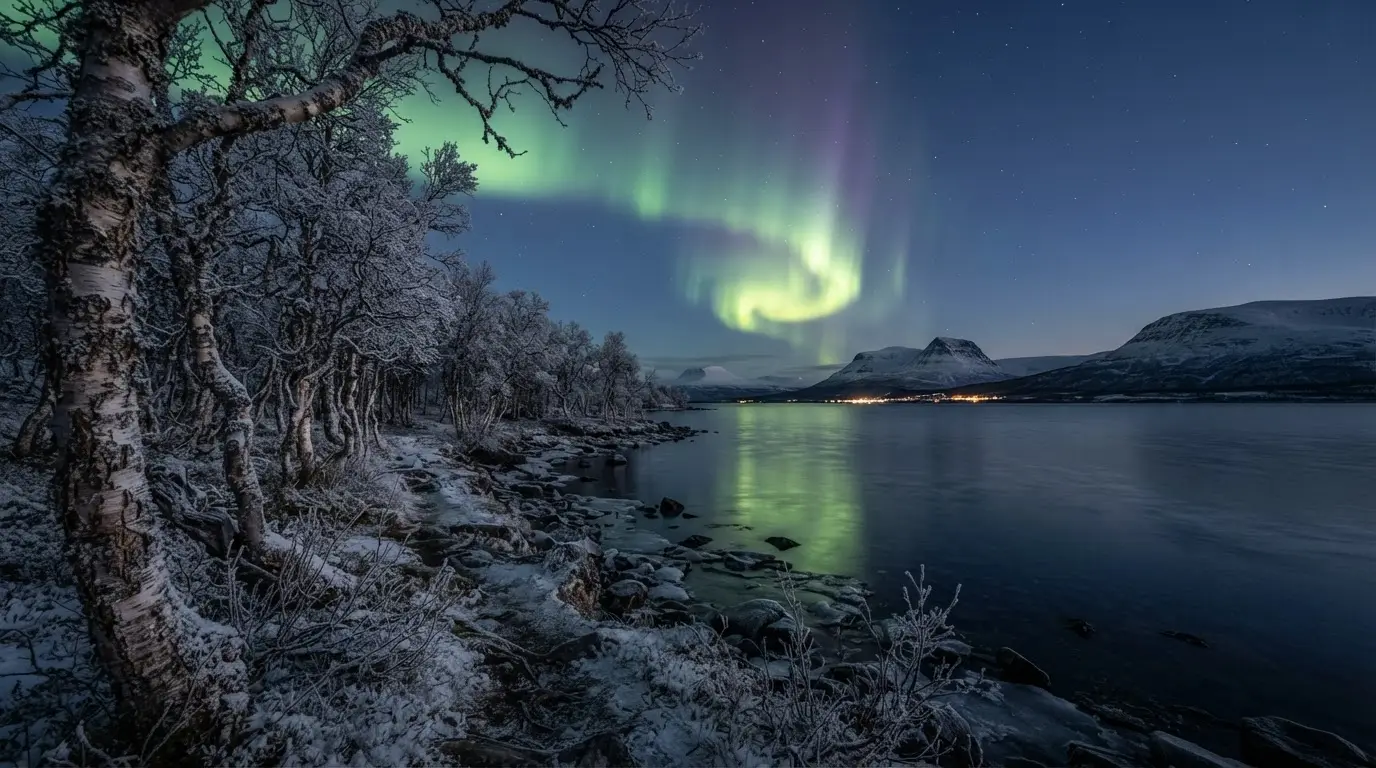
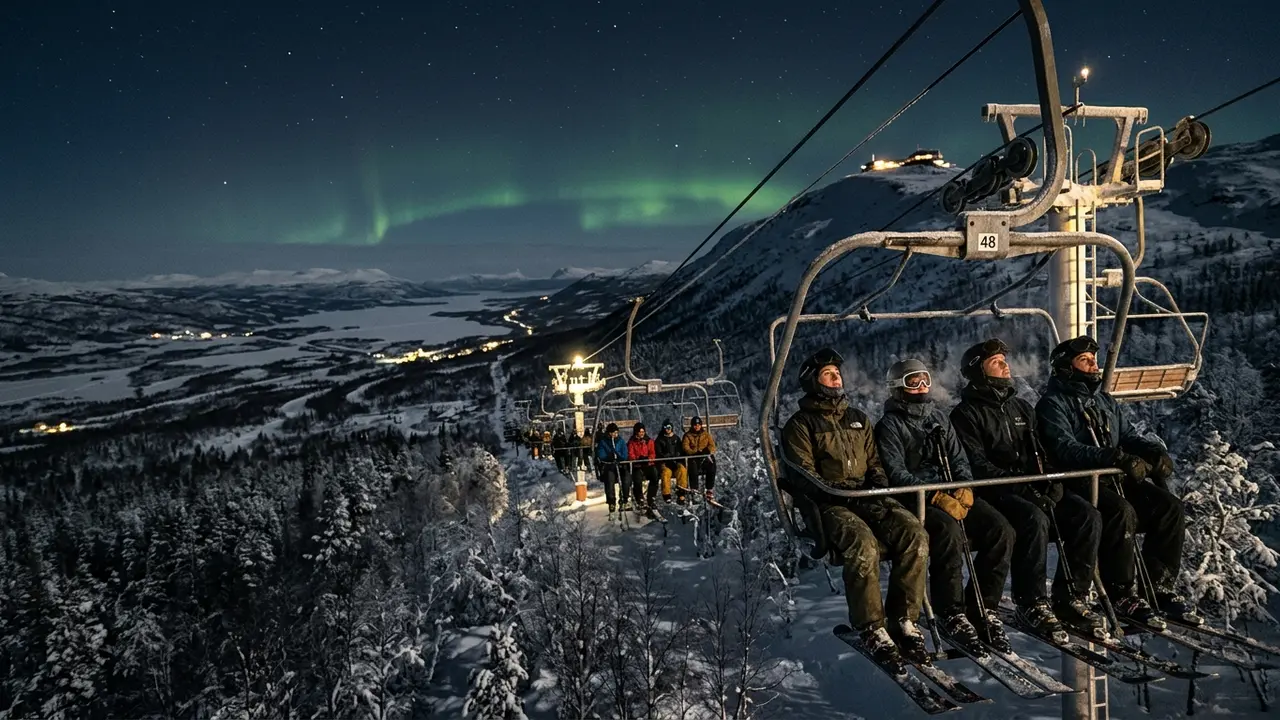
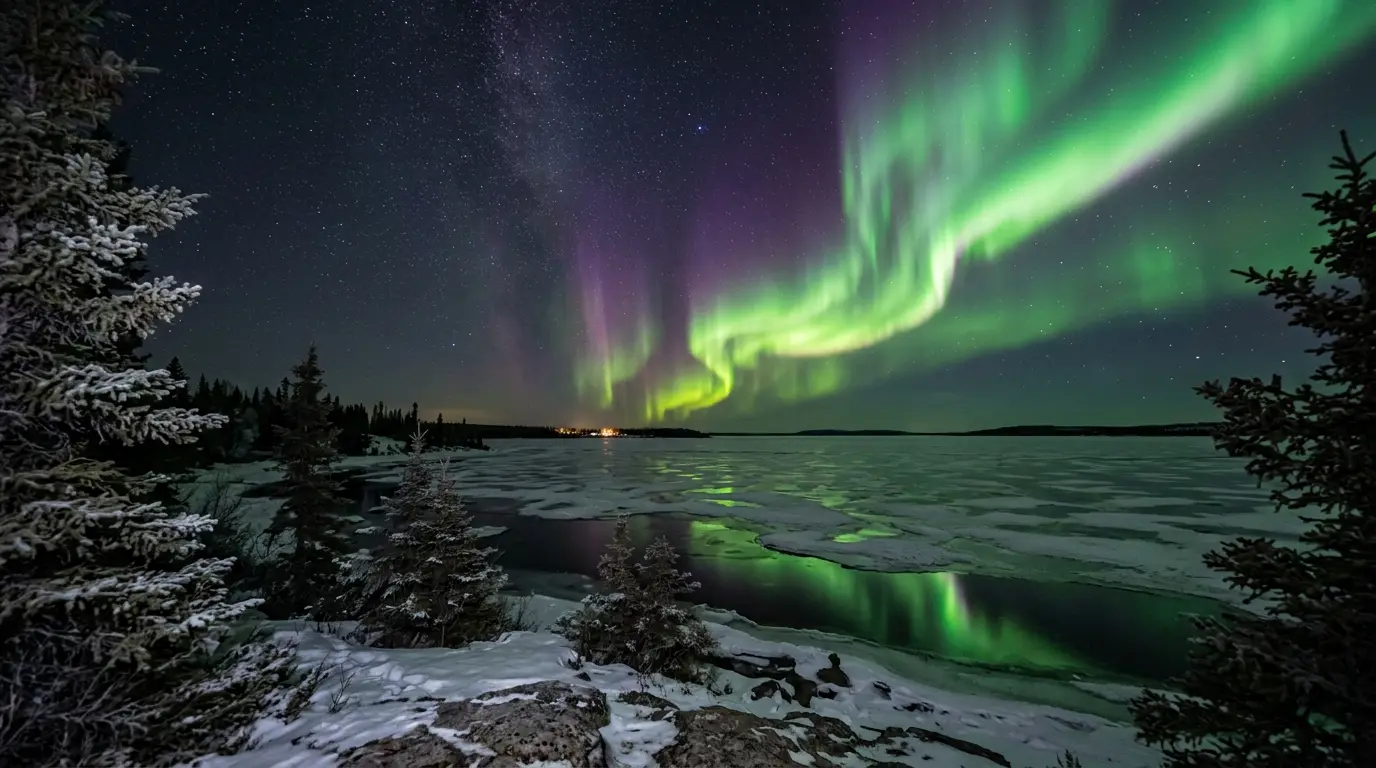
Aurora borealis over Lake Torneträsk near the Aurora Sky Station, Abisko stargazing destination in Swedish Lapland
stargazing dark sky astrotourism

Stargazing in Abisko: Sweden's Clearest Arctic Sky

Abisko's rain-shadow microclimate keeps skies clear when nearby Arctic spots cloud over. Aurora season, the Sky Station, ICEHOTEL, and getting there by train.

Darkness: Bortle 1-2
Latitude: 68°N
Best months: Aug-Apr

Dark-sky facts

Darkness
Bortle 1-2
Best months
Aug-Apr
Country
Sweden
Coordinates
68.35°N, 18.79°E
Night access
Aurora Sky Station's Night Visit programme (chairlift and exhibition, ticketed nightly) runs roughly mid-November through mid-March, not continuously across the wider August-April aurora season; the station closes for shoulder seasons outside that window, and daytime chairlift access runs on its own separate seasonal hours. Abisko National Park and its trails are open year-round. ICEHOTEL 365 in Jukkasjärvi is open daily year-round, while the sleepable ice hotel itself operates only from December to mid-April. Check current schedules directly before booking.
Costs & fees
Aurora Sky Station chairlift tickets are sold online or at the lower station, priced by season and how far ahead you book; entry to Abisko National Park itself is free. ICEHOTEL admission and room rates vary widely by season and room type. Confirm current pricing directly before booking.

The Milky Way casts a faint shadow. Zodiacal light and airglow are obvious.

This destination rates Bortle 1-2 on the 9-level Bortle dark-sky scale, where 1 is a pristine dark sky and 9 is an inner-city sky. The Milky Way casts a faint shadow. Zodiacal light and airglow are obvious.

On this page

Updated

Abisko sits at 68 deg 21' N in Swedish Lapland, well north of the Arctic Circle, on the south shore of Lake Torneträsk. What sets it apart from Tromsø or Finnish Lapland isn't luck. The Scandinavian mountain range along the Norway-Sweden border strips moisture out of incoming Atlantic weather systems before they reach the village, tearing a reliable break in the clouds directly overhead. Locals and aurora guides call it the blue hole, and it's the reason operators here sometimes get clear nights on evenings Tromsø guides are cancelling for cloud. This is a meteorological quirk, not folklore, and it's the single biggest reason to build a Lapland stargazing trip around Abisko rather than a bigger-name destination.

This hub covers Abisko National Park and its purpose-built Aurora Sky Station, the ICEHOTEL and Kiruna area an hour east, when to go, where to stay, and how to get here without a rental car, since Abisko has something few Arctic destinations do: its own train station. If you're still weighing whether this specific trip is worth building, Is Abisko Worth It for Northern Lights Stargazing? works through that question directly.

The sky this month

Computed for Abisko at 68°N. Updates nightly.

  • First quarter tonight, 36% illuminated

    Next new moon August 12. The nights either side of it are the darkest of the month.

  • No astronomical darkness right now

    At 68°N the summer sun never sinks far enough below the horizon for a fully dark sky. Proper darkness returns in September.

    Hours of astronomical darkness by month at Abisko: January 13 hours, February 10 hours, March 6 hours, April 0 hours, May 0 hours, June 0 hours, July 0 hours, August 0 hours, September 3 hours, October 9 hours, November 12 hours, December 13 hours.

  • Perseids active now

    Peaks August 12. Up to 100 meteors per hour at maximum. The 2026 peak lands on a new moon — a dark-sky year with zero lunar washout.

    See the Perseids guide
  • Aurora season resumes in September

    Summer nights stay too bright for the aurora at this latitude. Book for the darker months and plan around the new moon.

    Northern lights season guide
New moons August 12 September 10 October 10
Add new-moon reminders Full sky calendar

Where to go stargazing in July

Why Abisko's sky stays clear: the blue hole microclimate

The mechanism is straightforward. Mountain peaks on the Norwegian side of the border physically tear a hole in incoming cloud cover, creating a rain shadow roughly 10-20 square kilometres wide that sits almost precisely over Abisko. Rain and snow fall on the Norwegian slopes; the sky over the village clears. The result is some of the lowest precipitation totals recorded anywhere in Sweden or the wider Scandinavian region.

That record isn't anecdotal. The Abisko Scientific Research Station (ANS), run by the Swedish Polar Research Secretariat, has logged continuous meteorological data here since 1913 and was named a World Meteorological Organization Centennial Observation Station in 2021, one of the longer unbroken climate records in the Arctic. Don't confuse ANS with the Swedish Institute of Space Physics (IRF) in Kiruna, about 100km east; that institute studies aurora and space-weather physics, not Abisko's rainfall. No published dataset puts a hard percentage on Abisko's clear-night advantage over Tromsø, so treat any specific clear-night percentage claim you see elsewhere with some skepticism. What's actually documented is the rain-shadow mechanism and a century of precipitation records behind it, and that's plenty to plan a trip around.

Abisko National Park and the Aurora Sky Station

Abisko National Park, established in 1909, sits on Lake Torneträsk's south shore and gives the whole area its working darkness: no significant settlement for miles, negligible light pollution, and long sightlines across open water and birch forest that make the sky feel bigger than it does from a Tromsø hotel balcony.

The park's marquee stargazing site is the Aurora Sky Station, run by the Swedish Tourist Association (STF) near the summit of Mount Njulla (Nuolja). A chairlift, about 30 minutes each way, carries visitors to the station itself at 900 metres; the peak goes another 264 metres higher, to 1,164 metres. Up there you get a cafe, a fireplace, an outdoor viewing terrace, a small exhibition on aurora physics, and regular evening talks, all built around the same blue-hole logic: the site is positioned deliberately to catch clear sky even when low cloud sits over the valley floor.

  • Night Visit season: roughly mid-November through mid-March, ticketed and open nightly; the station closes for shoulder seasons outside that window, so it isn't a continuous nightly operation across the whole August-April aurora season
  • Peak conditions: mid-November through mid-March, when nights are longest and darkest
  • Midnight sun season: late May through mid-July, when the station runs guided daytime summit hikes instead of aurora viewing

Book chairlift tickets online in advance, or at the lower station if slots remain; they sell out on forecast-favourable nights during peak season.

All tours

ICEHOTEL and Kiruna: the region's second anchor

Roughly 100km east of Abisko, near the mining town of Kiruna, sits ICEHOTEL in Jukkasjärvi, on the banks of the Torne River. It's rebuilt from river ice and snow every winter and has been doing this for more than three decades. The seasonal, sleep-in-an-ice-room hotel runs roughly December through mid-April, shifting slightly year to year with how thick the river ice gets. ICEHOTEL 365, the permanent cold facility with its art exhibition, ICEBAR, and restaurant, stays open daily year-round; 2026 warm-season hours run from April 1 (bar and restaurant) or April 13 (art exhibition) through November 30.

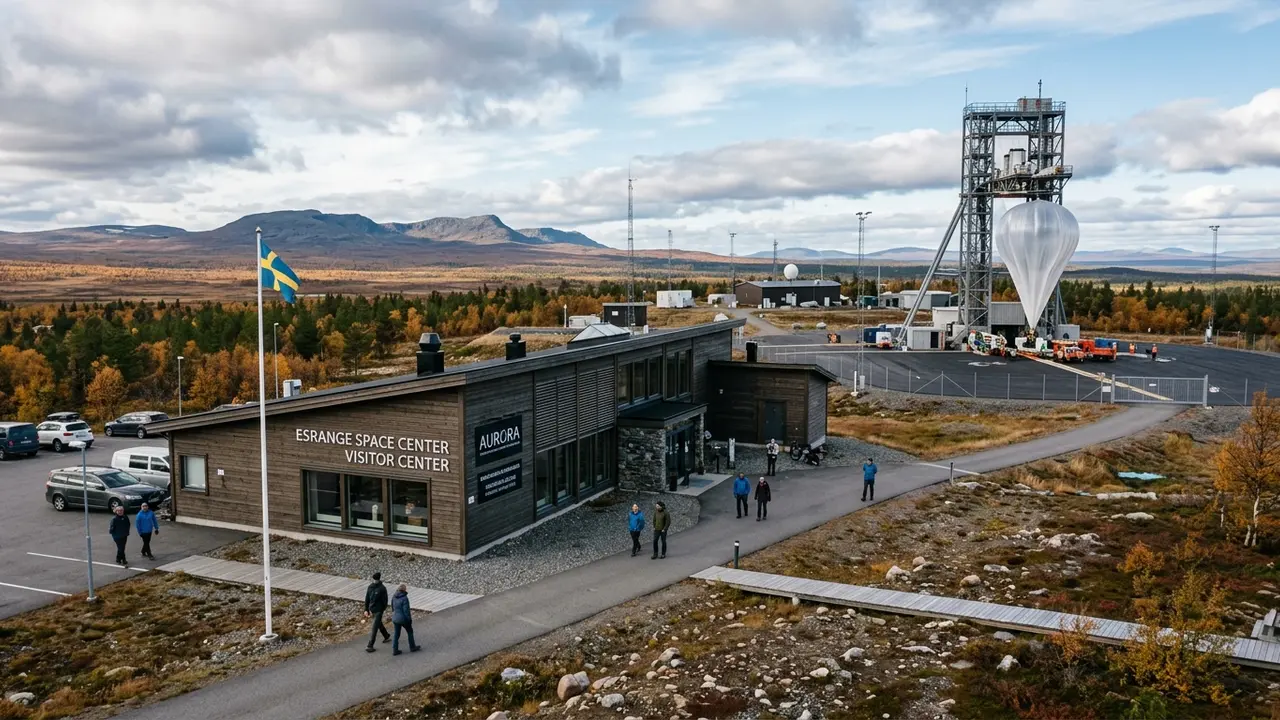
Kiruna itself is also home to the Esrange Space Center, a rocket, balloon, and satellite-tracking facility operated by the Swedish Space Corporation (SSC). The launch site isn't open to casual visitors, but its Visitor Center at the gate welcomes drop-in guests daily. A full tour of the launch pad has to be arranged in advance through the Kiruna tourist office or SSC directly, so don't plan a trip around getting one.

Long Arctic daylight hours between aurora nights need their own plan too: What to Do in Abisko Beyond Stargazing covers the Kungsleden trailhead, the daytime canyon walk, husky sledding, and an ICEHOTEL day visit that doesn't need a room booking.

When to see the aurora in Abisko

Aurora season runs late August or September through late March or April. The darkest, most reliable stretch is mid-November through mid-March, when the sun barely clears the horizon and real winter dark takes over most of the day. For how that stretch compares with five other aurora destinations across the full 2026-27 season, see Northern Lights Season 2026-27. Abisko sits at 68 deg 21' N, well past the Arctic Circle. It's about 1.3 degrees south of Tromsø, so its polar night is shorter, but it's still a real one: several weeks each winter when the sun doesn't clear the horizon at all, with a faint twilight glow still reaching the village around midday even in the darkest week.

Aurora guides here, as elsewhere, often flag the equinox weeks in September and March as especially active for geomagnetic activity, though that's a general pattern worth pairing with a same-week forecast rather than booking a trip around blind. For the mechanics of reading that forecast before you travel, see how the Kp index works for predicting the northern lights and the aurora forecast apps worth using. For how to read the blue-hole microclimate itself night to night, see Abisko Aurora Forecast: Reading the Blue Hole Right.

Winter here is genuinely cold: continental subarctic conditions typically put December through February nights well below freezing, colder still on the clear, calm nights that make for the best aurora viewing. Layer for it, not just for a chilly evening walk.

Month by month

Aurora season across the Abisko-Kiruna corridor runs roughly August through April, though the three lodges on this list don't share identical calendars. STF Abisko Turiststation's Aurora Sky Station chairlift closes for two shoulder seasons, roughly mid-April to mid-June and mid-September to mid-November, so the deepest overlap with reliable aurora infrastructure sits between mid-November and mid-March. ICEHOTEL's full seasonal ice hotel runs roughly December through mid-April, while ICEHOTEL 365 and Camp Ripan's aurora-season program both run closer to the full September-to-March window. Cloud cover, not solar activity, is the biggest variable working against any traveler in a given week.

  • January: Peak — Deep polar night and the Aurora Sky Station chairlift fully open; ICEHOTEL's seasonal ice suites are also running at their peak.
  • February: Peak — Still fully dark with all three lodges' aurora infrastructure open; a reliable month across the whole corridor.
  • March: Peak — The spring equinox brings a statistical uptick in geomagnetic activity, and the chairlift, ICEHOTEL, and Camp Ripan's aurora program are all still running.
  • April: Fair — The Aurora Sky Station chairlift closes for its shoulder season around mid-April, and ICEHOTEL's seasonal ice hotel melts back into the river around the same point; early April still works, late April is marginal.
  • May: Off-season — Midnight sun approaches and the chairlift stays closed for its spring shoulder season; no aurora viewing is realistic this month.
  • June: Off-season — Near-continuous daylight around the summer solstice rules out aurora viewing at all three lodges.
  • July: Off-season — Midnight sun continues through mid-month; darkness doesn't return in time for meaningful viewing.
  • August: Fair — Darkness returns in the final weeks and the Aurora Sky Station chairlift reopens on its summer schedule, though nights are still short.
  • September: Good — The autumn equinox often brings a statistical activity uptick, but the chairlift closes again for its autumn shoulder season around mid-September, so STF's summit facility isn't reliably open the whole month.
  • October: Good — Long, workable dark nights, though the Aurora Sky Station chairlift is closed for its shoulder season through most of the month; ICEHOTEL and Camp Ripan's dark-sky settings are unaffected.
  • November: Peak — The chairlift reopens around mid-November, restoring access to the Aurora Sky Station just as nights lengthen into the peak season.
  • December: Peak — The longest nights of the year, the full ICEHOTEL seasonal build typically open, and the Aurora Sky Station chairlift running on its winter schedule.

Going in January? See what else the sky offers that month

Getting to Abisko

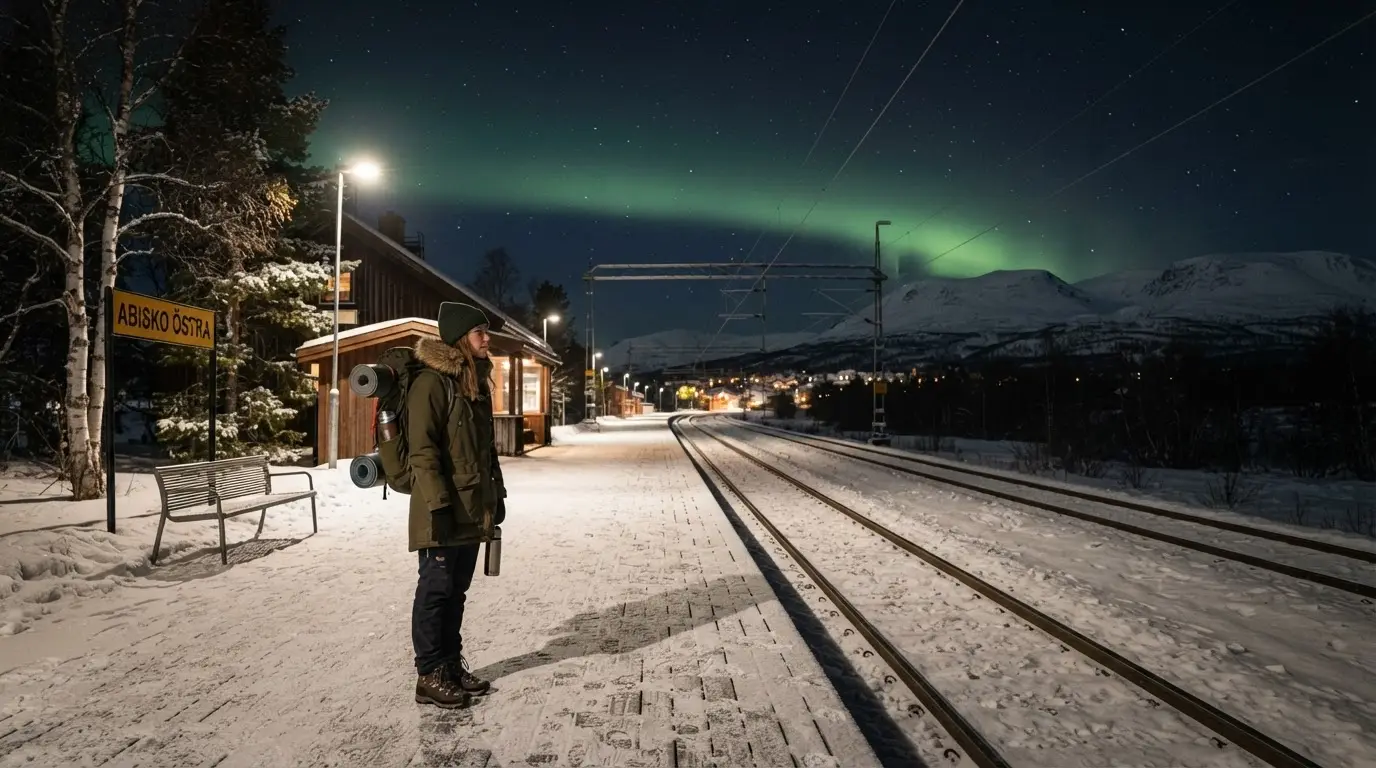
This is Abisko's real differentiator against most Arctic dark-sky destinations: you don't need a car. The Kiruna-Narvik railway (Malmbanan), built originally to move iron ore from Kiruna's mines to the Norwegian port of Narvik, runs directly through the village and stops at both Abisko Turiststation and Abisko Östra.

  • From Stockholm or Malmö: an overnight sleeper train (SJ or Snälltåget) runs north of the Arctic Circle toward Abisko and Kiruna, roughly 15-17 hours, marketed specifically as northern-lights travel
  • From Kiruna Airport: about 90km away, reachable onward by bus, train, or taxi
  • By road: useful for flexibility, but genuinely optional here, unlike more remote Arctic clusters where a rental car is close to mandatory

For the fuller breakdown of routes, fares, and transfer times, see Getting to Abisko: Flights, Trains & Transfers.

Interactive map — loads as you scroll (requires JavaScript)

Tap a pin to open the lodge, tour, or destination page.

How long to stay

Best season

Late August through late March/April for aurora season; darkest and most reliable mid-November through mid-March. Equinox weeks (September, March) are often flagged for stronger geomagnetic activity, but pair that with a same-week forecast rather than betting on it alone.

Quietest hours

After Aurora Sky Station's evening ticketed groups thin out, or away from the chairlift base on nights when independent camping and hiking areas within the national park see the fewest visitors

Visit duration

3-4 nights minimum to allow for cloud, plus time to see both the Aurora Sky Station and the ICEHOTEL/Kiruna area an hour east

Where to stay

Accommodation clusters around two points: Abisko Turiststation, the STF-run lodge and hostel complex at the foot of the Aurora Sky Station chairlift, convenient if your whole trip is built around that one attraction; and Kiruna/Jukkasjärvi, an hour east, where ICEHOTEL and Camp Ripan's glass-roof cabins give you a base for the space center and a wider choice of restaurants. Neither cluster is large by international standards. Book aurora-season stays well ahead; rooms near the chairlift sell out first on clear-forecast weeks. For a fuller comparison across both clusters, see Best Aurora Lodges in Abisko and Kiruna.

Planning your visit

  • Give yourself at least 3-4 nights. One clear night rarely arrives on schedule; more nights means more chances at one. See How Many Days in Abisko for Northern Lights? for the fuller breakdown by trip style.
  • Pre-book Aurora Sky Station chairlift tickets, especially mid-November through mid-March.
  • Layer for real cold, not just mild chill. December-February nights commonly sit well below freezing.
  • Check ICEHOTEL's current-season dates directly before booking a stay in the ice rooms; exact opening dates shift year to year with river-ice conditions.
  • Don't count on visiting Esrange's launch site itself unless you've arranged it in advance; the Visitor Center is the reliable, drop-in option.

Top lodges at a glance

2 Luxury

Best most famous stay, still a genuinely dark aurora setting

ICEHOTEL Jukkasjärvi

World-famous ice suites on the Torne River, no dedicated aurora infrastructure, from €400/night

$$$$ · from €400/night View lodge
3 4.2 Charming

Best best in-bed aurora viewing without leaving town

Camp Ripan

Glass-roof Aurora cabins 10 minutes from Kiruna, White Guide restaurant, from $144/night

$$$ · from ~$144/night (rates rise during peak aurora winter, Dec-Mar) View lodge
See the full ranking: Best Aurora Lodges in Abisko and Kiruna

Reporter notebook

Insider tips

Best time

Book mid-November through mid-March for the darkest nights

That window has the longest true darkness and the Aurora Sky Station's own peak-season framing. September and March equinox weeks get flagged for stronger geomagnetic activity, but check that week's forecast rather than betting the whole trip on the calendar alone.

What to bring

Pack for well-below-freezing nights, not just a cold evening

Continental subarctic winters here commonly drop well below freezing from December through February, colder still on the clear, calm nights that produce the best aurora viewing. Real insulated layers, not a city winter coat, make the difference between an hour outside and a full night watching the sky.

Booking tip

Reserve Aurora Sky Station chairlift tickets ahead of a clear-forecast night

Tickets are sold online or at the lower station, but slots sell out fast once a forecast turns favourable during peak season. Book ahead rather than assuming you can walk up on the one night the sky actually clears.

Frequently asked questions

What is Abisko's blue hole?

The local nickname for a rain-shadow effect: the Scandinavian mountains along the Norway-Sweden border strip moisture from incoming Atlantic weather before it reaches Abisko, tearing a roughly 10-20 square kilometre break in the clouds directly over the village. The century-long climate record kept by the Abisko Scientific Research Station backs up the low precipitation totals behind it, though no published dataset gives a hard percentage advantage over other Arctic destinations.

When is the best time to see the northern lights in Abisko?

Aurora season runs late August or September through late March or April, with the darkest and most reliable window from mid-November through mid-March. Equinox weeks in September and March are often flagged by guides for stronger geomagnetic activity, but check a same-week forecast rather than booking around that alone.

Is Abisko very cold in winter?

Yes. Continental subarctic winters typically bring nights well below freezing from December through February, and it gets colder still on the clear, calm nights that make for the best aurora viewing. Real insulated layers matter more here than in milder Arctic destinations.

Do you need a car to visit Abisko?

No. Abisko has its own stop on the Kiruna-Narvik railway (Malmbanan), reachable from Stockholm or Malmö via an overnight sleeper train, or from Kiruna Airport by bus, train, or taxi. A car adds flexibility but isn't required, unlike more remote Arctic stargazing destinations.

Does Abisko get 24-hour darkness in winter like Tromsø?

Yes, but a shorter one. Abisko sits at 68 deg 21' N, about 1.3 degrees south of Tromsø's 69.65 deg N, so its true polar night (several weeks each winter when the sun never clears the horizon) runs shorter than Tromsø's roughly seven-week stretch. Even in the darkest week, a faint twilight glow still reaches the village around midday.

How do you get from Abisko to ICEHOTEL and Kiruna?

ICEHOTEL, in Jukkasjärvi near Kiruna, sits roughly 100km east of Abisko, about an hour by road. Both towns sit near the same Kiruna-Narvik rail corridor, so combining an Abisko stargazing trip with an ICEHOTEL visit is a straightforward add-on rather than a separate expedition.

Can you visit Esrange Space Center as a tourist?

The Visitor Center at the gate of Esrange, near Kiruna, welcomes drop-in visitors daily. The launch site itself isn't open to casual tourists; a full tour has to be arranged in advance through the Kiruna tourist office or the Swedish Space Corporation directly, and isn't guaranteed.

Is Abisko family-friendly for a stargazing trip?

Largely yes. The Aurora Sky Station chairlift and exhibition suit most ages, but the extreme cold and long dark hours require real preparation for young children. Dog-sledding and snowmobile excursions in the area often carry minimum-age requirements, so check those directly before booking.

Further reading

Sources