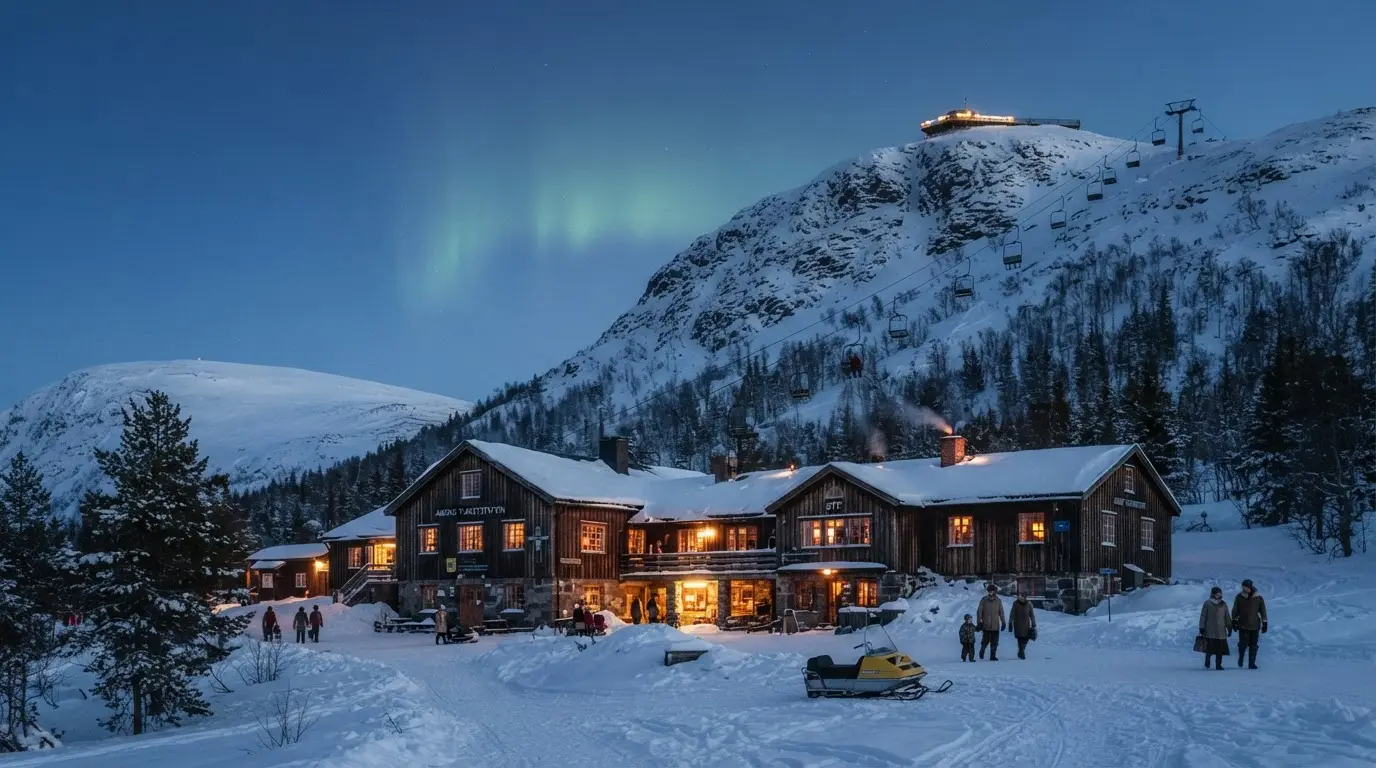

A remark in 2002
STF Abisko Turiststation didn't turn Abisko's Northern Lights into an actual tourism product until 2000[5]. Even then, staff couldn't fully explain a pattern they'd noticed for years: Japanese travelers kept showing up in numbers nobody on site had accounted for.
The explanation arrived from a guest in 2002. Aurora Sky Station's own history names him only as Hirohisa Makino, a Northern Lights fan — no research post, no institutional title, nothing beyond that description, despite how often the popular retelling upgrades him to a scientist. What he told staff was blunt: "Don't you know that Abisko is the best place in the world to see the Northern Lights? Everyone else knows about it."[4] It was the first time anyone on staff had heard the pitch put quite that plainly.
Seventeen million watched, live
Two years later, a Japanese TV crew decided to test Abisko against its opposite number. In 2004 they arranged live, simultaneous broadcasts of Aurora Borealis and Aurora Australiensis, the Northern and Southern Lights, choosing Abisko for the north and a site in Antarctica for the south[6].
The timing broke Abisko's way. The sky opened into what Aurora Sky Station's own account calls a "great northern light," watched live by 17 million Japanese viewers[2], while the Antarctic feed was lost to a blizzard. It's real evidence of rising Japanese interest in Abisko specifically, and STF still tells the story that way today. It is not, in the operator's own account, the reason the station on Mount Njullá eventually got built.
Featured · Destination
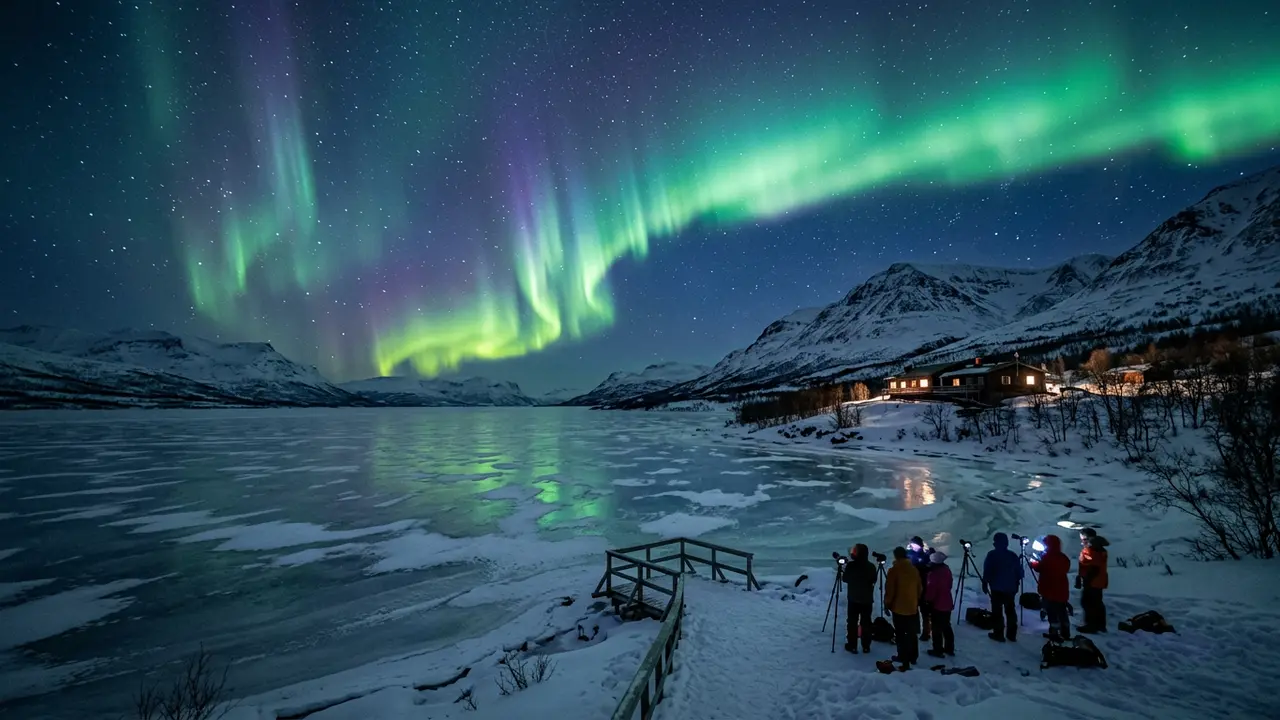
Abisko Stargazing
Abisko's rain-shadow microclimate keeps skies clear when nearby Arctic spots cloud over. Aurora season, the Sky Station, ICEHOTEL, and getting there by train.
The guide, and the myth that followed
By 2005, Makino wasn't just a visitor with an opinion anymore. STF engaged him as a Northern Lights guide[7], giving the operation a direct, ongoing line into the Japanese market instead of a single remark to go on.
It's easy to see how the tidy version of this story got built: one enthusiast, one broadcast, one station. Aurora Sky Station's own history doesn't connect those dots that way. The 2002 remark and the 2004 broadcast are two separate signs of the same rising interest, not cause and effect, and neither is what the operator credits with getting the Sky Station built. That credit goes to someone else entirely, and STF's own site is specific about who.
The knock that actually built it
Sometime between Makino's 2005 hire and the station's 2007 opening, on a late night in November, someone knocked on the door of STF Abisko Turiststation itself, below the STF-run Aurora Sky Station on the mountain above[9]. Staff opened it to a stranger: a frozen, tall, leather-dressed Japanese man, standing outside with no introduction.
He said one word: "Aurora."[8] He had flown from Tokyo, staff later learned, on nothing firmer than a rumor that Abisko had "probably the best Aurora" anywhere[8]. Aurora Sky Station's own account leaves this visitor unnamed — not Makino, not anyone from the 2004 broadcast crew.
He said one word: "Aurora."
What followed moved fast. Staff installed the station's first Northern Lights camera and developed the Northern Lights product that would define the site for the next two decades. The man who started it all was never asked for his name, and none is recorded.
23 February 2007, and the record since
Aurora Sky Station opened on Mount Njullá on 23 February 2007[1]. It's reachable by a roughly 30-minute cable car ride[10], and anyone can go check what the fuss was about on the Aurora Sky Station tour today.
Abisko still markets itself around a so-called "blue hole" of clear sky, a real microclimate effect that's a separate story from this one. What belongs here is simpler: the record STF keeps names a fan, a broadcast, and one visitor who never gave his name, not a tidy single cause. Whether Abisko still lives up to Makino's claim that it's "the best place in the world to see the Northern Lights" is worth checking against whether it's still worth the trip, rather than taking one enthusiast's 2002 remark as the final word.
Featured · Article
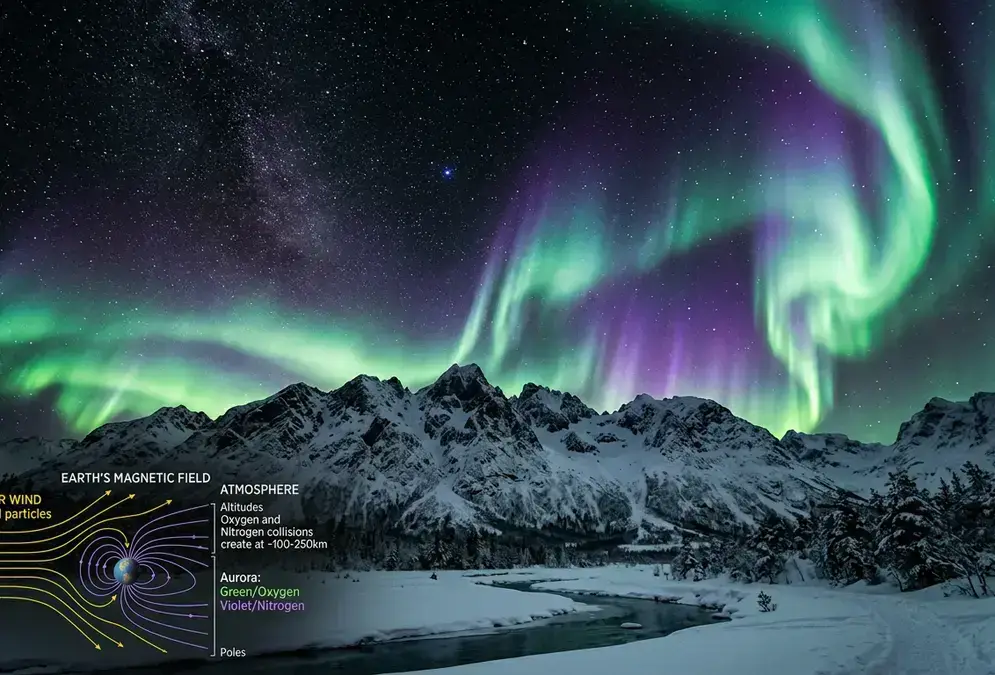
What Causes the Northern Lights? The Science Explained
Solar wind collides with Earth's magnetic field, funneling charged particles toward the poles, where they excite oxygen and nitrogen into glowing color.