
What actually drives the cost of an Abisko trip
An Abisko trip adds up in layers, and none of them are optional extras you can budget your way around. Plan for five separate cost centers before you land:
- International flights to Stockholm or Malmö, the two realistic gateways
- The onward leg to Kiruna or Abisko itself, by connecting flight, overnight train, or bus
- Accommodation, which swings hard between a hostel bunk and a private lodge cabin
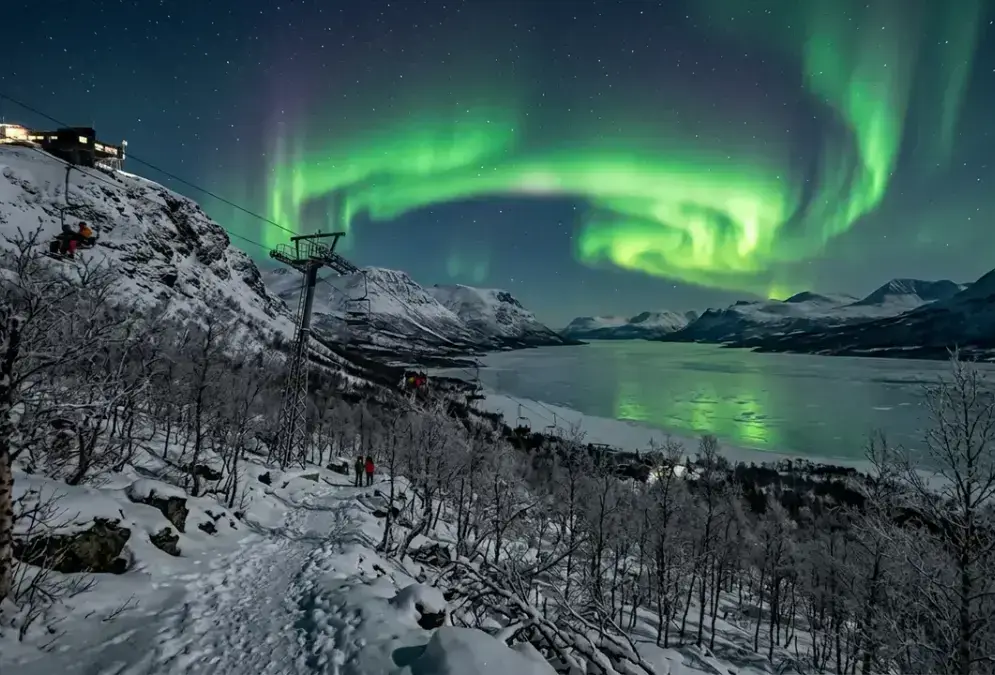
- Aurora Sky Station tickets, the anchor experience most visitors build a night around
- An optional ICEHOTEL leg near Kiruna, if you extend the trip an hour east
Featured · Destination
Abisko Stargazing
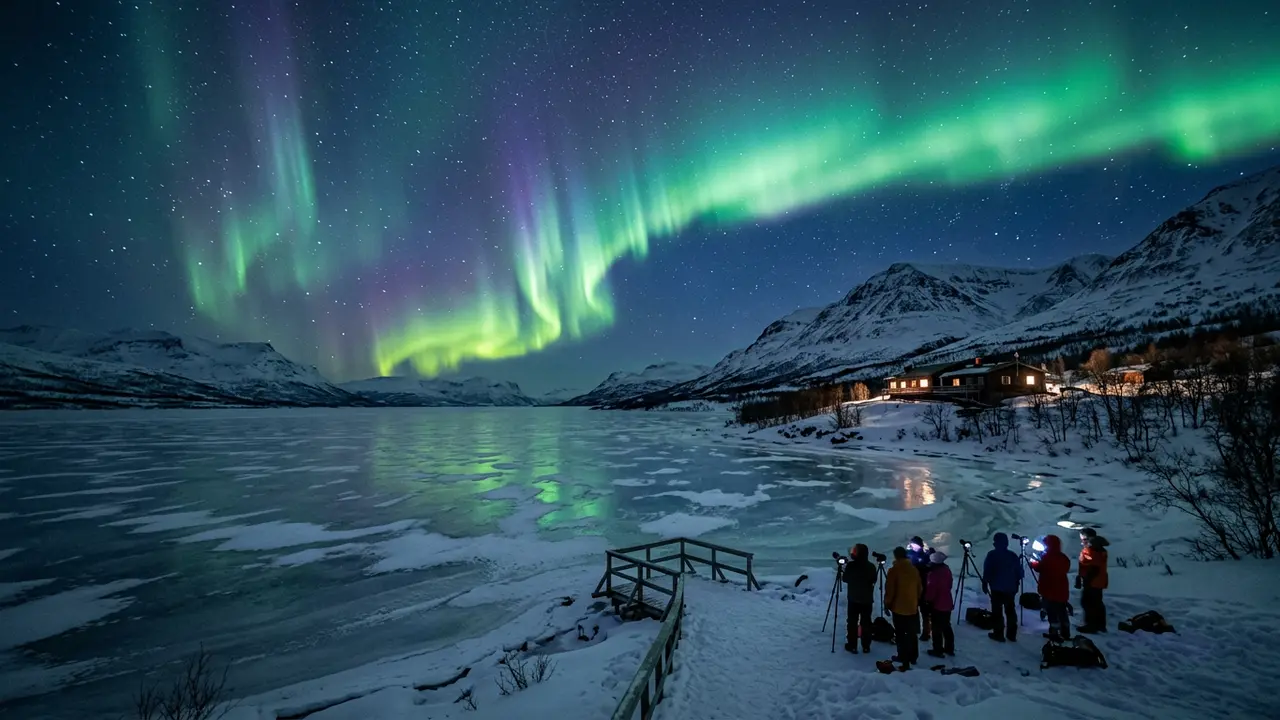
Abisko's rain-shadow microclimate keeps skies clear when nearby Arctic spots cloud over. Aurora season, the Sky Station, ICEHOTEL, and getting there by train.
The first two are the line items travel blogs tend to skate past. Flights to Kiruna add a meaningful cost on top of the Stockholm or Malmö base fare, and that onward leg is where a lot of first-time Abisko budgets quietly overshoot what a traveler expected walking in. Don't plan around a fare you saw once in somebody's old blog post. Check live pricing for your own dates and origin city before committing to anything downstream of it.
Accommodation is the second lever, and it's a real fork in the road. Staying at STF Abisko Turiststation, right at the base of the Aurora Sky Station chairlift, buys convenience: no transfer, no taxi hunt at midnight when the sky finally clears. Basing near Kiruna instead opens up ICEHOTEL and a wider run of restaurants, for the cost of an hour's drive back to Abisko's own dark-sky ground each time you want it.
None of this is expensive by some special Arctic-tax logic. It's expensive the way any far-north trip with a short, weather-dependent booking window tends to be. A trip built around Abisko stargazing deserves an honest budget conversation before you buy a single ticket, not a discount-alternative pitch borrowed from wherever you last saw it compared to Tromsø or Iceland.
The Blue Hole edge, and what it actually promises
Abisko sells itself on a genuine meteorological quirk, not a marketing invention. Mountains along the Norway-Sweden border strip moisture out of incoming Atlantic weather before it ever reaches the village, tearing a break in the cloud cover that locals and aurora guides call the Blue Hole. It's real, it's the reason operators here sometimes catch a clear night while a Tromsø tour cancels for cloud the same evening, and it's the single biggest reason to build a Lapland aurora trip around Abisko rather than a bigger-name coastal destination.
The tourism board that promotes the phenomenon is more honest about its limits than the marketing usually gets credit for. Its own copy states that if you stay three days, you have "an 88% chance of seeing the lights, as long as the sky is clear"[1]. Read the conditional carefully: that figure describes odds given clear skies, not a flat probability that you'll see anything at all on a three-night trip, and the same source adds plainly that a longer stay only improves your odds, never guarantees them.
Aurora Sky Station's own operator is blunter still. Its published terms state the company cannot promise a sighting on any given night[2], and no refund follows a clouded-out chairlift or a quiet sky. That isn't Abisko admitting a weakness unique to itself; every aurora destination on Earth carries the identical disclaimer. Abisko's rain-shadow edge just shortens the odds a little compared with its wetter Nordic and Norwegian neighbors.
“cannot guarantee that you will see the Northern Lights, as it is a natural phenomenon”
One independent travel writer who visited twice put the honest version of this in concrete terms: her first trip delivered strong displays over three nights, while a later autumn visit produced nothing at all, despite Abisko's reputation[3]. The Blue Hole helps your odds. It does not override the sky, and anyone who tells you otherwise is selling something.
Aurora Sky Station and the ICEHOTEL add-on: the numbers that are actually published
The Aurora Sky Station is the one line item every Abisko itinerary revolves around, and it's worth knowing exactly what's confirmed versus what isn't. The daytime chairlift, no guide, no aurora program, has historically started around 220 SEK per person[4], running seasonally outside the Night Visit window. STF's own listing for that product has since changed, so confirm the current daytime chairlift price directly on STF's site rather than budgeting off this figure.
220 SEK
The guided evening program, the Night Visit, is the harder number to pin down. STF caps it at 40 spots per session, running nightly from October through late March, with the activity window roughly 8:30pm to 1am[2]. What STF does not publish anywhere on its own site is a firm Night Visit ticket price. A figure circulating in search results hasn't been confirmed on STF's own booking pages at the time of writing, so treat it as a number to verify directly at booking, not a price to build a budget around.
ICEHOTEL, in Jukkasjärvi near Kiruna, is a separate leg entirely, not part of Abisko itself, and its current room and admission pricing wasn't confirmed for this piece either. If you're weighing whether to extend the trip an hour east for a night in an ice room, check ICEHOTEL's live rates directly before folding that cost into your Abisko budget. It's a genuinely different kind of night, but it's priced and booked independently of anything happening at the Sky Station.
The practical takeaway: treat the daytime chairlift, the Night Visit, and the ICEHOTEL figures all as verify-before-you-book line items, and don't let an unconfirmed number from a random search snippet anchor your whole trip's budget. Aurora Sky Station's Night Visit is worth the ticket for the vantage point alone, above the treeline and away from the village's own lights, regardless of what the final confirmed price turns out to be.
Abisko vs. Finnish Lapland and Fairbanks: the honest trade-offs
Abisko isn't the only serious aurora destination, and it doesn't win on every axis. Tromsø, the coastal Norwegian rival most Abisko itineraries get cross-shopped against, wins on arrival convenience but not on sky reliability. That trade-off gets the full treatment in Abisko vs. Tromsø for the northern lights; the short version is that Tromsø's airport sits closer to the city center, while Abisko's rain-shadow sky clears more reliably.
| Destination | Arrival convenience | Sky/climate edge |
|---|---|---|
| Abisko | Extra leg via Kiruna or Narvik (train, bus, or transfer) | Rain-shadow Blue Hole: drier, clearer nights on average |
| Finnish Lapland | Fewer domestic flight legs from most Rovaniemi gateways | Comparable subarctic season; no published data head-to-head with Abisko |
| Fairbanks | Multiple connecting flights from Europe; longer overall journey | Sits further south (roughly 64.8°N) but has its own real aurora season |
Finnish Lapland, Rovaniemi and its neighbors, offers a comparable subarctic aurora season with its own strong tourism infrastructure, though no reliable published data compares its costs or clear-sky odds directly against Abisko's. What's generally true is that a Rovaniemi-based trip typically means fewer of the domestic flight legs Abisko or Kiruna can require. Fairbanks, Alaska, sits noticeably further south (roughly 64.8°N, against Abisko's roughly 68.35°N) but still has its own real aurora season; reaching it from Europe usually means multiple connecting flights, a genuinely longer journey than the Stockholm-Kiruna-Abisko route.
One independent traveler who has also visited Tromsø, Alta, Svalbard, and Rovaniemi says no place has beaten Abisko for her own northern lights sightings[3], though on a later autumn trip she missed the lights in Abisko itself while catching them in Rovaniemi on the same road trip, a reminder that even a favorite destination isn't a sure thing on any single visit. The best stargazing spots around Abisko matter less than which axis you're optimizing for: arrival ease points to Tromsø, sky reliability points to Abisko, and Finnish Lapland or Fairbanks might win on cost or convenience depending on where you're flying from.
Who Abisko actually suits
Abisko rewards a specific kind of traveler: someone who can commit three to four nights minimum, who treats the aurora as the primary reason for the trip rather than a side hope, and who's willing to plan around STF's Aurora Sky Station schedule and Sweden's own train timetable rather than a rental car. The best time for stargazing in Abisko matters more here than almost any other single decision, since a single clear night rarely arrives on the exact evening you'd pick if you could choose.
It suits budget-conscious travelers less than its reputation suggests. This isn't a cheap detour from a Scandinavian city break; it's a destination with a short season, limited lodging, and a captive market on the anchor experience. If cost is the deciding factor and you're flexible on destination, a cheaper aurora trip probably exists somewhere else in the Nordic countries.
Recommended tours
Tours are selected for quality, not commission. I earn a small fee if you book — at no extra cost to you.


It suits astrophotography beginners and first-time aurora chasers well, because the Blue Hole genuinely improves your odds over a multi-night stay, even though it can't promise anything on a single evening. It also suits travelers who want one dedicated dark-sky anchor experience, the Sky Station, rather than a chase-the-forecast minibus tour, and families who'd rather ride a chairlift to a warm building with a cafe than stand in a parking lot at midnight.
It suits solo travelers and couples on a real trip, not a weekend stopover, since the value only shows up once you've given the sky several chances to cooperate. Anyone expecting a guaranteed light show on a two-night layover, from any Arctic destination and not just this one, is planning around the wrong assumption.
The verdict: is Abisko worth it
Abisko is worth it for the traveler who plans around what actually makes it different: a documented, rain-shadow sky advantage, an unusually easy Arctic arrival by train, and a purpose-built viewing station that removes the need to chase clouds across a rental-car itinerary. It is not worth it for someone expecting a discount trip or a guaranteed sighting; neither exists here any more than anywhere else on Earth.
Do the specific things that make the difference: give yourself at least three to four nights, book the Aurora Sky Station Night Visit as soon as your dates are fixed rather than waiting on the forecast, verify the Night Visit and ICEHOTEL prices directly before you finalize a budget, and don't mistake Abisko's genuine sky edge for a promise. The Blue Hole shortens your odds of a wasted trip. It doesn't erase them.
What you get in return, if the sky cooperates even one night out of three or four, is a genuinely dark, genuinely different Arctic sky, reached without a rental car, anchored by a station built specifically for the job. That combination is rarer than it sounds, and it's the honest reason Abisko keeps earning its reputation instead of just repeating it.