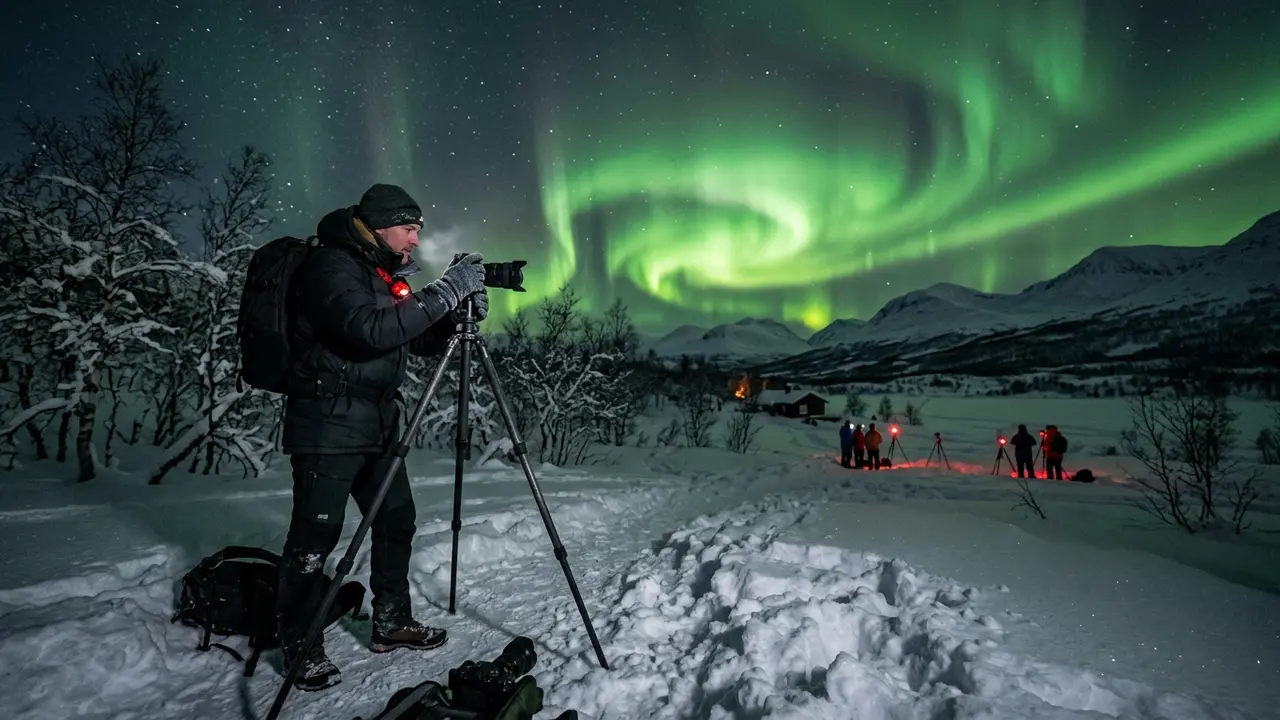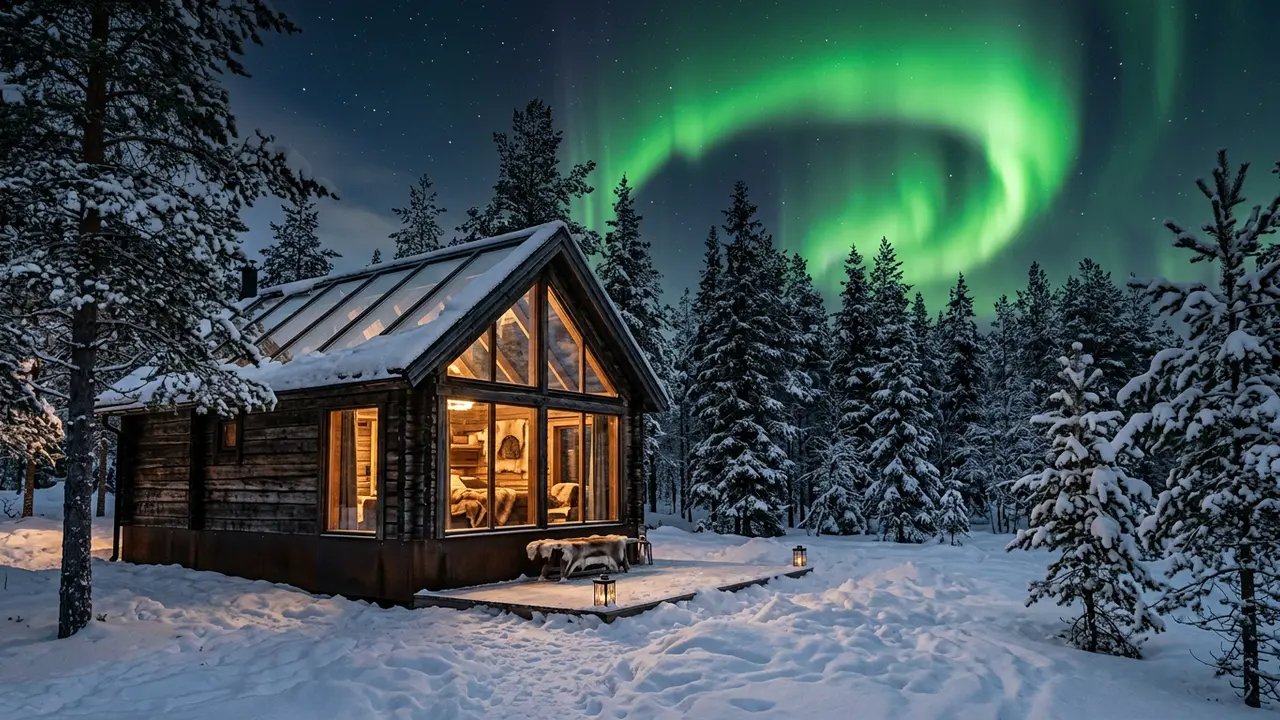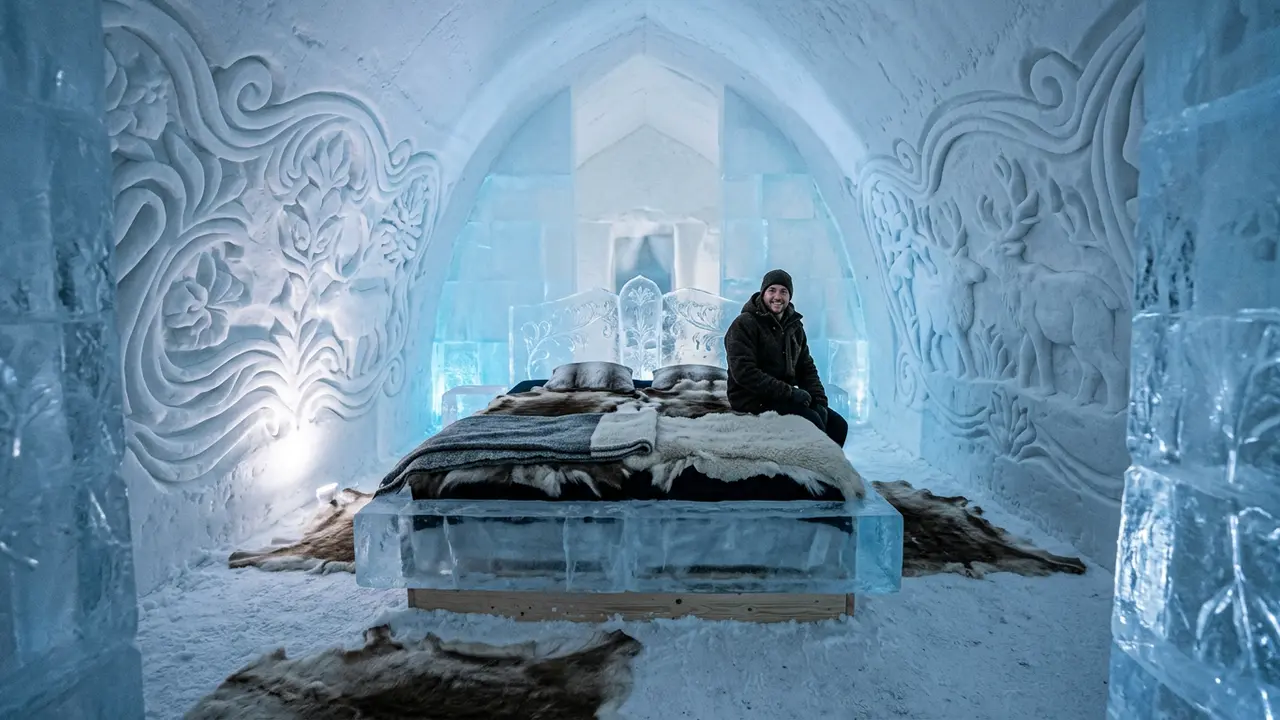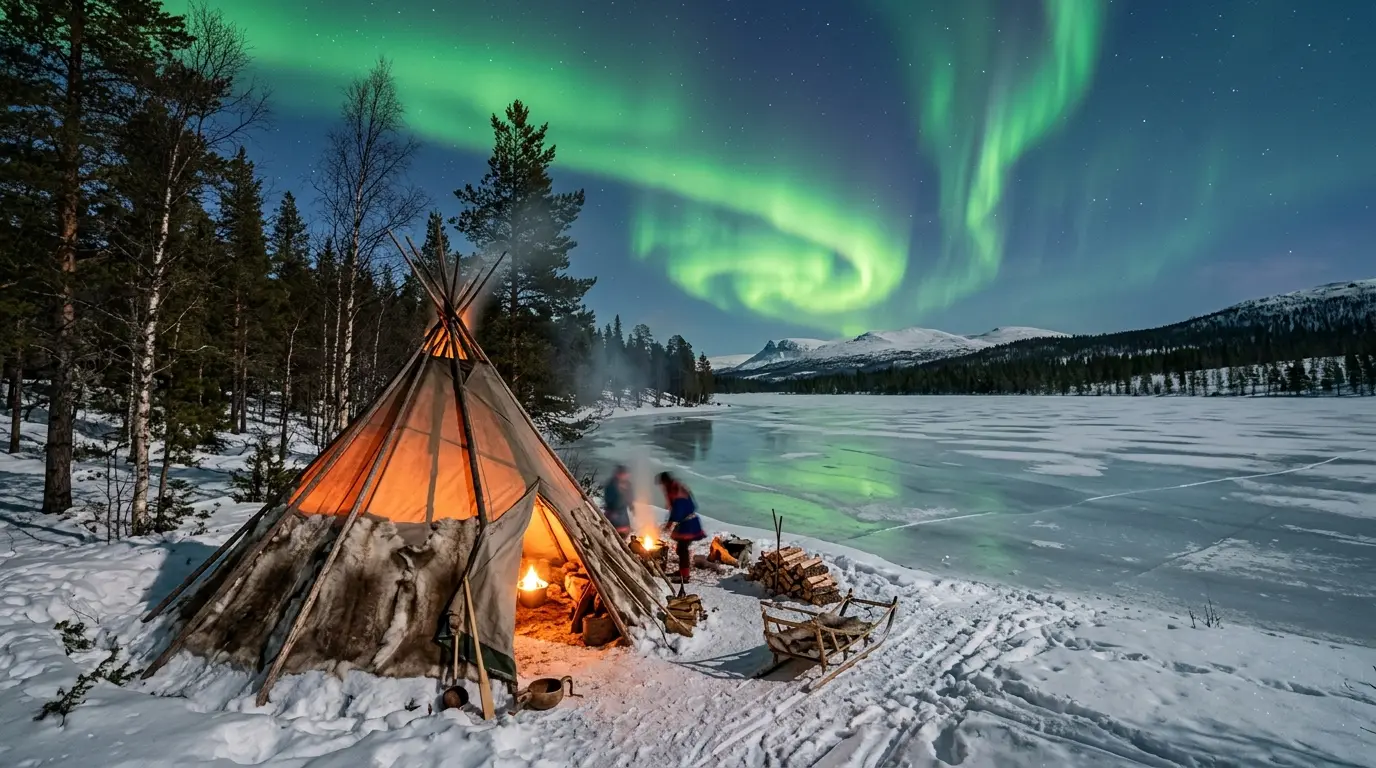
Aurora Safari Camp sits on the shore of Lake Degerselet, deep in the forested Norrbotten County stretch of Swedish Lapland, roughly 1 hour from Luleå Airport and 40 minutes from Boden train station. It isn't the polished, brochure-glossy version of an Arctic stay. The camp runs on solar power, sleeps guests in cabins built to a traditional Sámi lavvu (tipi) form, and floats a sauna on the lake each summer that freezes solid into the ice come winter. The camp's own pitch on the payoff is straightforward: an uninterrupted view of the night sky that, come autumn and winter, turns the property into a genuine Northern Lights outpost.
Five heated cabins, built around a Sámi tipi form
The camp counts three Tipi Cabins and two Glass Igloos among its five heated units, each built specifically for Arctic conditions, with the Tipi Cabins sleeping up to four guests apiece. The Tipi Cabins are the reason to book here over a glass-igloo resort elsewhere in Lapland: canvas walls raised in the lavvu shape long used by the region's Sámi communities, insulated for a Norrbotten winter and en-suite, so nobody's crossing frozen ground for a shower at 3am. The two Glass Igloos sit alongside them for guests who want the glass-roof view without the tipi form, but the lavvu cabins are the camp's actual identity here, not an afterthought parked next to a modern glass box.
A sauna that changes with the season
The camp's sauna does something most Arctic lodges can't claim: it floats on Lake Degerselet through the summer, then freezes directly into the lake ice each winter, with year-round access either way. It's a small detail that says more about this place than any brochure line could — the whole camp is built to work with the lake's seasonal swing rather than around it.
Solar power, home cooking, and gear for both seasons
Aurora Safari Camp runs entirely on solar power, an off-grid setup suited to a site with no real permanent infrastructure around it. All meals, drinks, and snacks are included in the rate, and dinners lean on Northern Swedish cooking; smoked reindeer and Arctic char show up on the evening menu rather than a generic hotel-kitchen take on Lapland food. A lounge lavvu anchors the daytime social space and doubles as the dining room. Seasonal equipment comes with the stay too:
- Winter: snowshoes, Nordic skis, winter bikes
- Summer: paddle boards, canoes, kayaks
Winter aurora, summer lake days
Aurora Safari Camp runs two distinct seasons: winter, November through April, when the long Norrbotten nights and the camp's glass-roofed cabins are built around chasing a display, and summer, June through October, when the same lake becomes a paddling and hiking base under close to round-the-clock daylight. What isn't confirmed anywhere in the camp's own materials is a structured, guided aurora-viewing program — no published nightly forecast briefing or dedicated guide walking guests through the sky. If a guided session matters to your trip, ask before booking rather than assume one's included. What you're guaranteed is the setting: glass ceilings and an open lake horizon, not a promise of green light overhead.
Price and how to book
Aurora Safari Camp doesn't publish nightly rates, and it isn't listed on Booking.com. Booking runs direct only, through the Enquire Now form at aurorasafaris.com, and the all-inclusive model (meals, drinks, snacks, sauna, and seasonal gear bundled in) puts it in premium territory even without a published number. A handful of luxury travel specialists, including Red Savannah and Sunvil, also sell packages here for guests who'd rather book through an agent than fill out a contact form; confirm current availability and pricing with whichever route you choose, since none of it is published for public comparison.
Getting there
The camp sits roughly 1 hour from Luleå Airport and 40 minutes from Boden train station, in a stretch of Norrbotten County that most first-time Swedish Lapland visitors don't have on their radar the way Kiruna or Abisko are. That's part of the appeal: fewer other travellers competing for the same dark patch of sky, and a genuinely rural, off-grid stay rather than a resort a short walk from a town centre.