
What World Space Week actually is
In resolution 54/68, adopted on 6 December 1999, the UN General Assembly created the week[1]. It runs from 4 to 10 October every year, and each edition has a theme; the 2026 one is "Rocket Revolution"[2].
The dates are two anniversaries. Sputnik 1, the first human-made satellite, launched on 4 October 1957[3]. Exactly ten years later, on 10 October 1967, the Outer Space Treaty entered into force, a text the UN itself calls the "Magna Carta of Space"[4].
- 4 Oct 1957
Sputnik 1 launches
The start date of the week.
- 10 Oct 1967
Outer Space Treaty enters into force
The end date of the week.
- 6 Dec 1999
UN General Assembly proclaims the week
Resolution 54/68.
It is not International Dark Sky Week, which is a separate observance about light pollution. World Space Week is about space exploration and outreach. The dark sky is just where I would spend it.
Who runs it and how big it gets
The World Space Week Association picks each year's theme with the UN Office for Outer Space Affairs, UNOOSA[5]. The UN calls the week the largest annual space event in the world, but the best numbers come from the Association itself.
For 2024, its 25th anniversary, the Association told a UN committee it had counted more than 15,000 events across 90 countries[6]. A second Association statement gives the same event count in "80+" countries[7]. Quote the event number and treat the country count as approximate. I could not verify a 2025 total, so I am not giving one.
The recent themes show where the week's attention has gone:
How to mark it with an observing night
The bar is low. Any space-related activity on those seven days counts, whatever its size, format or location[10]. The organisers' own list of ideas includes a stargazing night next to model rocket launches and film marathons[11].
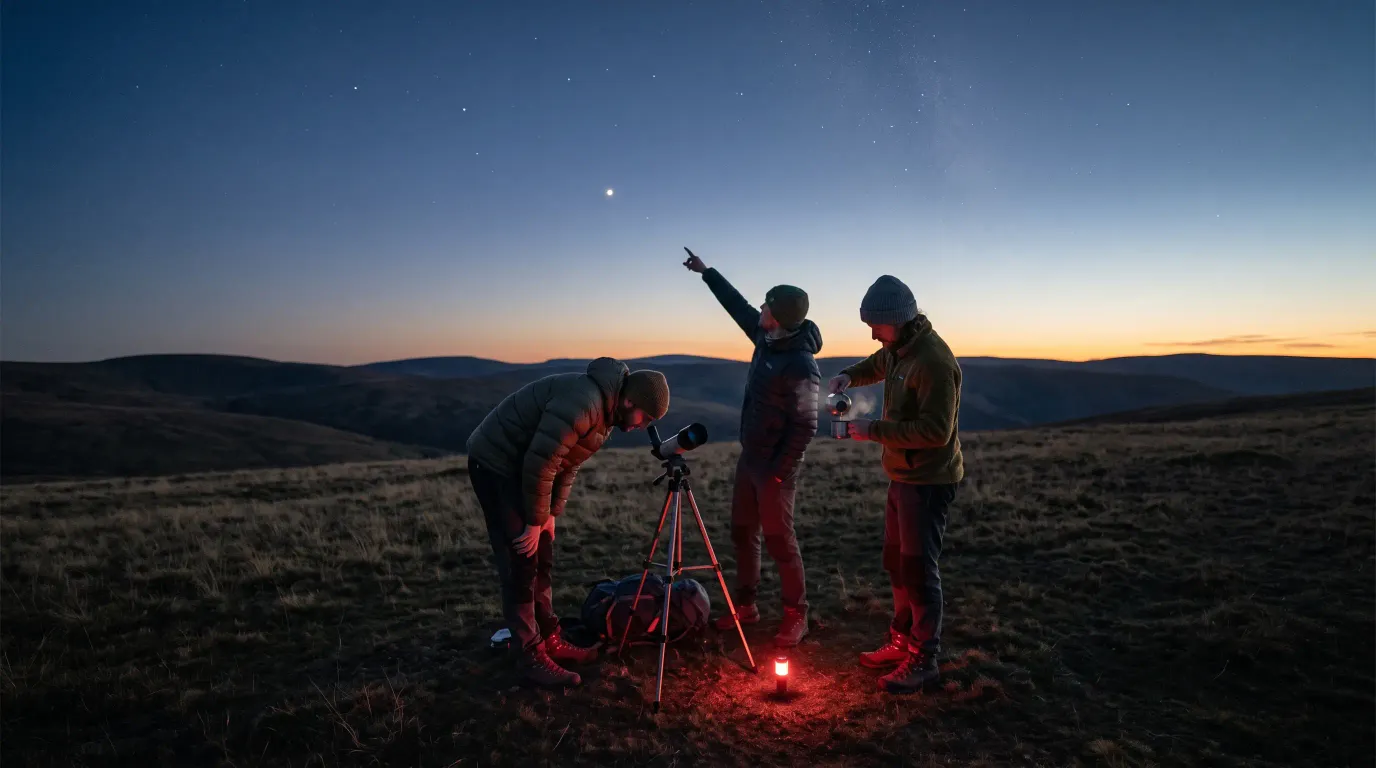
My version is short. Pick the darkest site you can reach in an evening, get there before full dark, and give your eyes far longer to adapt than feels necessary.
Etiquette matters more than gear. A NASA Night Sky Network listing for an early-October 2024 star party at Chiricahua National Monument, run by the Tucson Amateur Astronomy Association, asked everyone to use red flashlights and keep white light, phones included, to a minimum[12]. Public star parties generally work this way.
Your phone is a white light
A bright screen resets everyone's night vision, not just yours. Use red-light mode, or keep the phone away from the group[12].
The Moon decides how dark the night is. The darkest skies come at new Moon or when the Moon is below the horizon[13]. The cycle repeats about every 29.5 days[14], so the phase on 4 to 10 October differs every year. Check a moon-phase calendar for your year and location, then choose the evening, not the other way round.
If it is your first night out, stargazing for beginners covers what to bring and what to expect.
Where to pair it: three sites open in October
On a one-week budget I would choose a Canary island over Hawaii, purely on my own taste for a shorter trip.
None of these hosts a World Space Week event that I could confirm. They are places with visitor access in early October, and the pairing is my own suggestion.
Featured · Destination
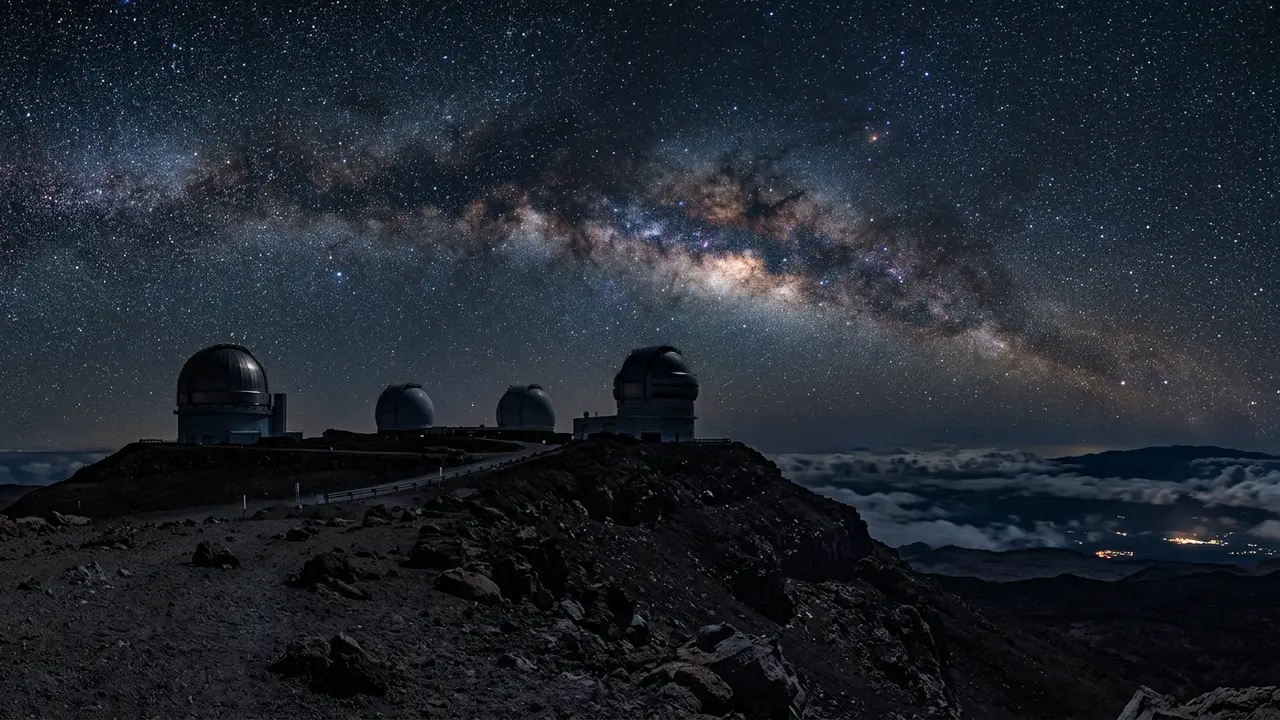
Mauna Kea
Mauna Kea is sacred to Native Hawaiians and home to world-class observatories. Here's how to plan respectful, safe Mauna Kea stargazing at the Onizuka VIS.
Mauna Kea has the Onizuka Center's Visitor Information Station at 9,200 feet (2,804 metres), open every day of the year from 9am to 9pm[15]. Those are the opening hours, not a program. Check what the station schedules for your night before you drive up.
Teide Observatory suspends visits from December to March and resumes them from September[16], so October falls inside the season. Tenerife also slots easily into a European autumn break.
Night visits to Teide are a separate arrangement. The IAC runs an amateur observing platform that needs a reservation approved by the observatory[17]. It is open from 18:00 until dawn[18], and groups are capped at 12 people[19]. Bring a red light only, used sparingly, because professional telescopes are running[20]. The visit can be cancelled for weather or safety reasons[21].
La Palma is the one I most want to test for myself; I have not been. Daytime visits to Roque de los Muchachos run in small groups[22], so the night sky is a separate evening plan. The island's official tourism site lists astronomy tours, workshops and amateur introductions run by local companies[23], and Spain's tourism board suggests booking a night for a guided trip to a dark spot[24].
Skip the flights: pick a night, not the week
Do not book flights for the week itself. Nothing I found says a dark-sky site schedules anything around it, and one chosen night is a bet against cloud. Leave a spare night, the same rule I give for aurora trips.
If you cannot travel, host your own. Anyone can create an event[25], and a backyard night with a borrowed telescope counts as much as a planetarium program.
Featured · Article
What Is Astrotourism? The Complete Beginner's Guide
Astrotourism means travel built around dark skies: meteor showers, auroras, the Milky Way. What it means, where to go, and how to plan your first trip.
If travelling for the sky is a new idea, what astrotourism is explains why people plan whole trips around it.