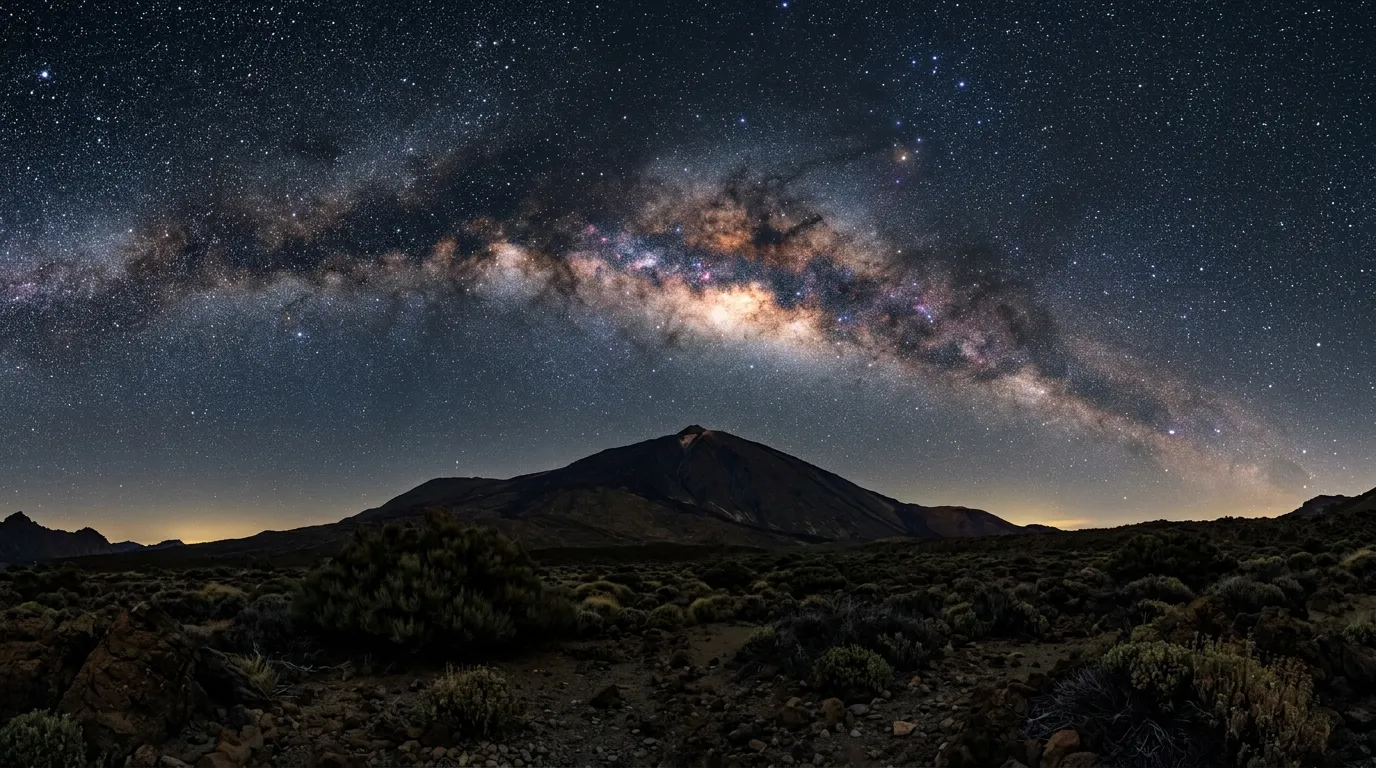

Why Tenerife's sky stays clear when the coast sits in clouds
0.1 mm
When the Milky Way core is visible from Tenerife
- February
Core rising at dawn
First glimpse of the season; core low on the south-eastern horizon just before sunrise. Marginal for photography.
- March
Late-night visibility
Core rises earlier; visible for a few hours after midnight. Still low in the sky.
- April
Second half of night
Core well above the horizon by midnight. Clear-sky probability jumps to roughly 70%.
- May
Excellent: most of night
Core visible from late evening through dawn. ~90% clear nights. Humidity drops sharply. Early-season sweet spot.
- June
Peak: highest altitude
Core reaches 30–35° altitude. ~99% clear nights. Longest dark window of the year.
- July
Peak: driest air
Same altitude as June, but humidity bottoms out at 25%. Best transparency of the year.
- August
Still excellent
Core slightly lower but still well-placed through most of the night. ~95% clear.
- September
Very good: earlier sunset
Core lower and sets earlier, but you catch it sooner after dusk. Best comfort-to-quality ratio.
- October
Fading: western sky
Core low in the west by late evening. Clear-sky probability drops to ~65%. Good for early-night sessions only.
Month-by-month: weather, crowds, and what the sky actually looks like
| Month | Clear nights | Core quality | Night temp | Crowds |
|---|---|---|---|---|
| Jan | ~50% | None (below horizon) | 0–5°C | Very low |
| Feb | ~50% | Rising at dawn only | 0–5°C | Very low |
| Mar | ~55% | Late night, rising | 2–8°C | Low |
| Apr | ~70% | Second half of night | 4–10°C | Low–moderate |
| May | ~90% | Excellent: most of night | 6–12°C | Moderate |
| Jun | ~99% | Peak: 30–35° altitude | 10–15°C | High |
| Jul | ~99% | Peak: 30–35° altitude | 14–18°C | Very high |
| Aug | ~95% | Excellent: slightly lower | 14–18°C | Very high |
| Sep | ~90% | Very good: lower, earlier | 10–15°C | Moderate–high |
| Oct | ~65% | Fading: western sky | 7–12°C | Low–moderate |
| Nov | ~50% | None (behind Sun) | 4–10°C | Low |
| Dec | ~45% | None (below horizon) | 2–8°C | Very low |
Winter on Teide: snow, closures, and the transparency paradox
Aligning your trip with the lunar cycle
- New moon means a fully dark sky, ideal for both naked-eye observing and astrophotography.
- Waxing or waning crescent means part of the night is dark; plan your session for the moonless half.
- First or last quarter means roughly half the night is dark; you can still work, but plan around moonrise or moonset.
- Full moon means the sky is bright enough to read by. Useful for lunar photography or a guided session focused on planets, but do not expect to photograph the Milky Way.
Read next · Article
When to Stargaze: Moon Phase, Season & Weather
When to stargaze depends on moon phase, hemisphere, and cloud cover, not luck. Learn the new-moon window, galactic-core season, and how to read a sky forecast.
What to pack, where to stay, and how to plan around access
- A windproof outer layer
- Insulated boots (trainers lose heat through the sole on cold volcanic rock within twenty minutes)
- Gloves
- A beanie
Recommended tours
Tours are selected for quality, not commission. I earn a small fee if you book — at no extra cost to you.

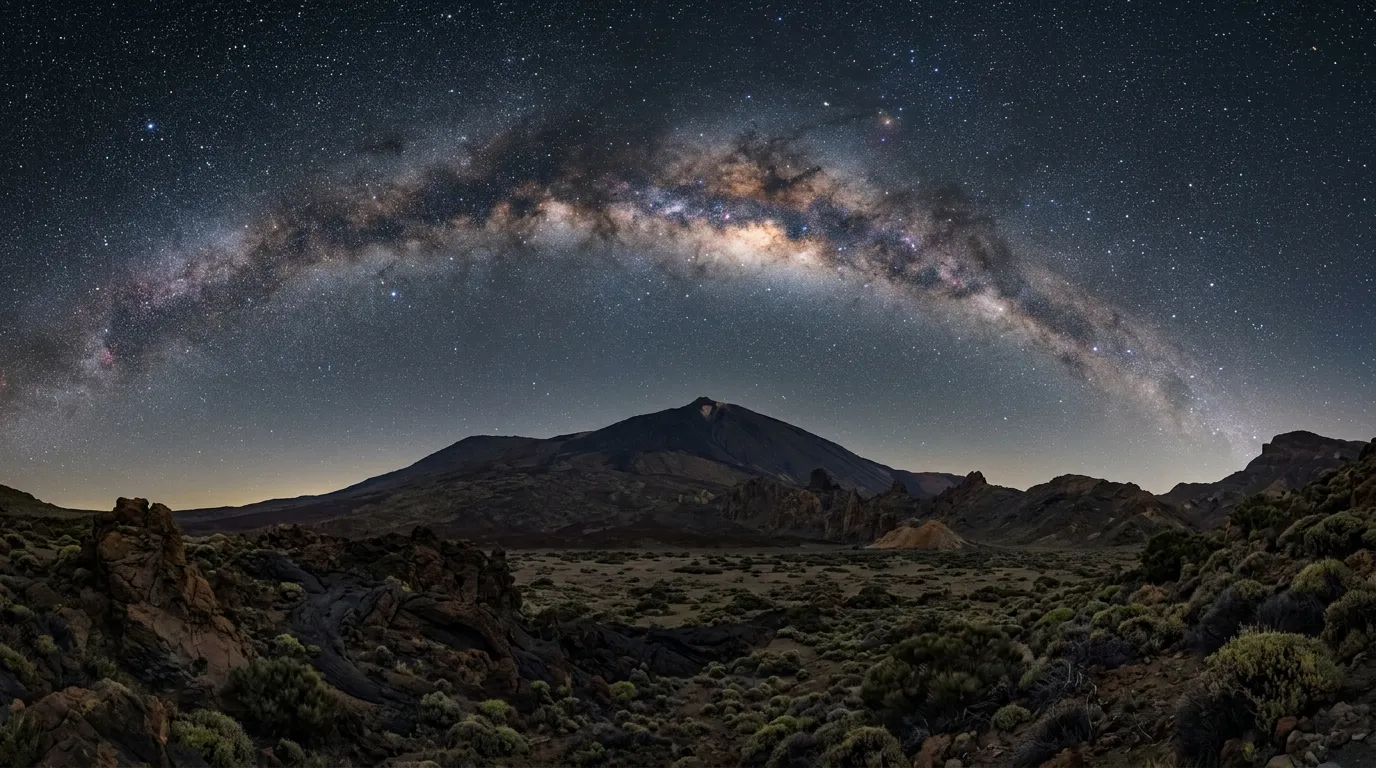
Featured · Destination
Tenerife Stargazing
Tenerife stargazing guide: Teide National Park's UNESCO Bortle-2 skies, 83 constellations visible. Observatory visits from €21, Parador hotel, and best tours.
Access logistics to get right before you arrive:
- Summit access permit: required for the final ascent beyond the cable-car upper station (Montaña Blanca / Pico del Teide trail). Free, limited to 200 per day, issued by the national park authority. Book online at least a week ahead in summer.
- Cable car: runs 09:00–18:40 in summer, 09:00–17:00 in winter. Last descent is an hour before closing. If you intend to stargaze from the upper station and walk down, confirm the descent route and timing with park staff; the trail is not lit.
- Road access: the TF-21 and TF-24 are generally well-maintained but can close in winter for snow. Check the Cabildo de Tenerife road-status page before driving up.
- Fuel: the nearest petrol station to the caldera is in Vilaflor or La Orotava. Fill the tank before you ascend.