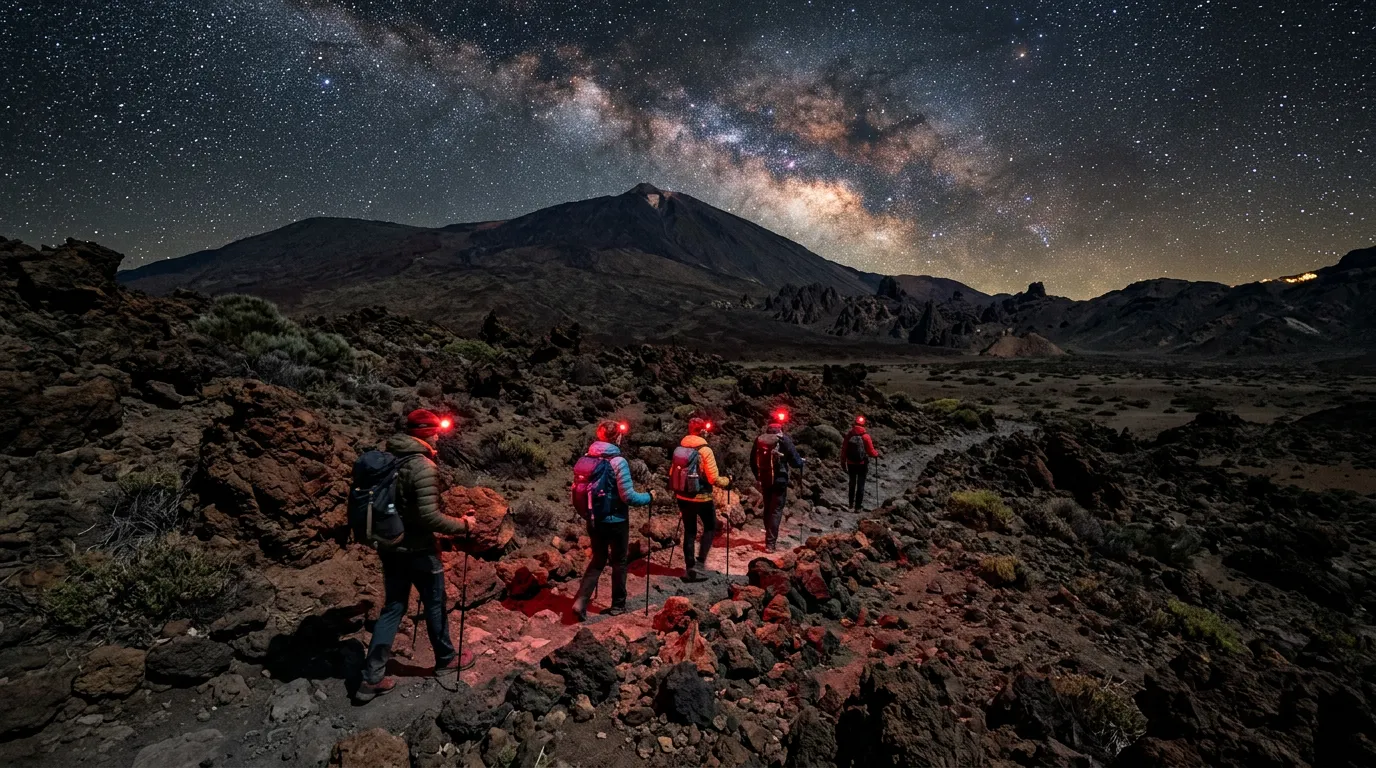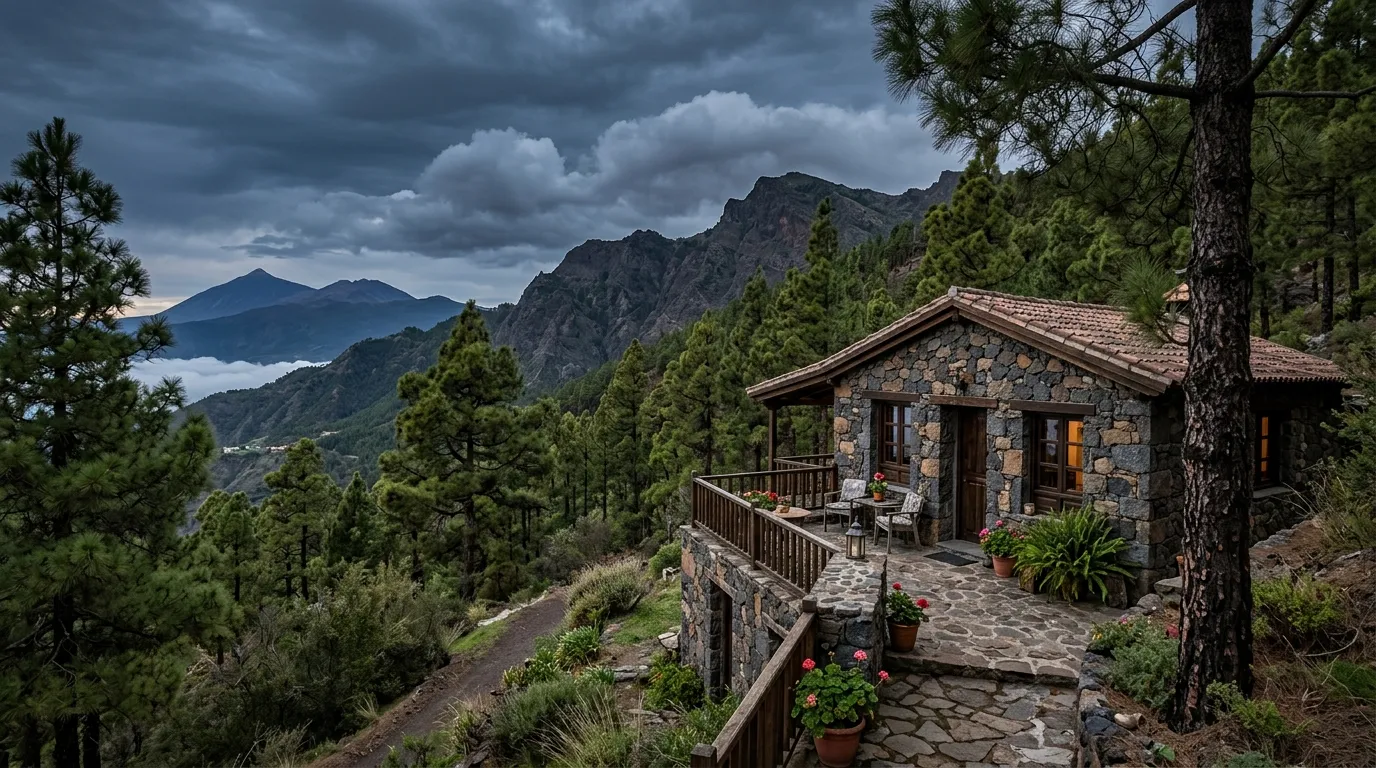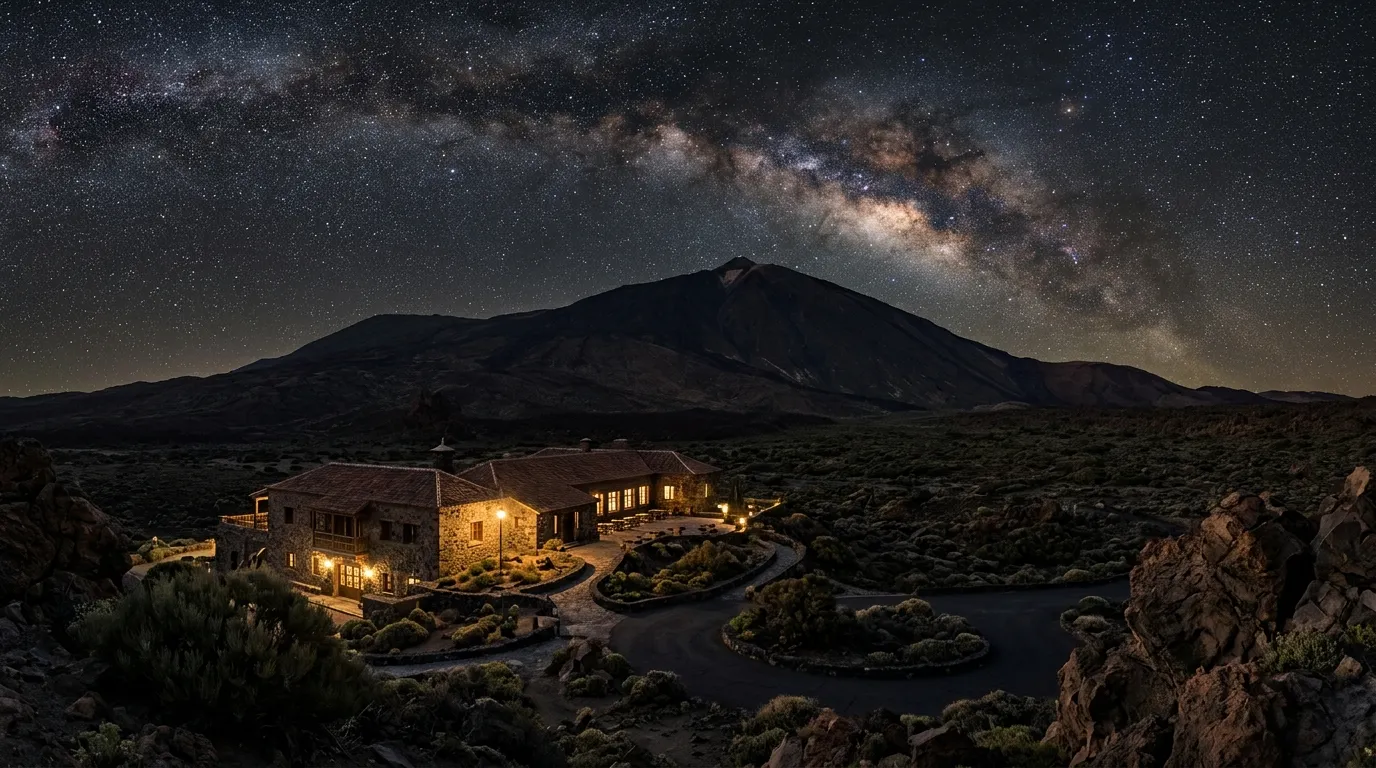
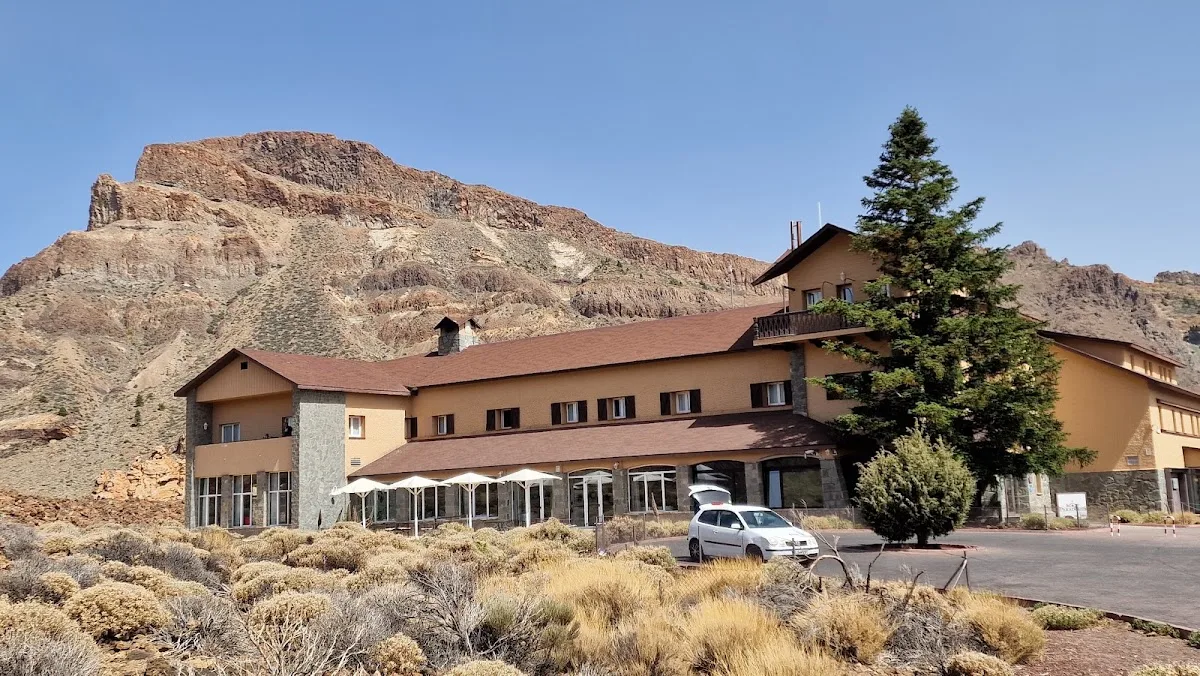
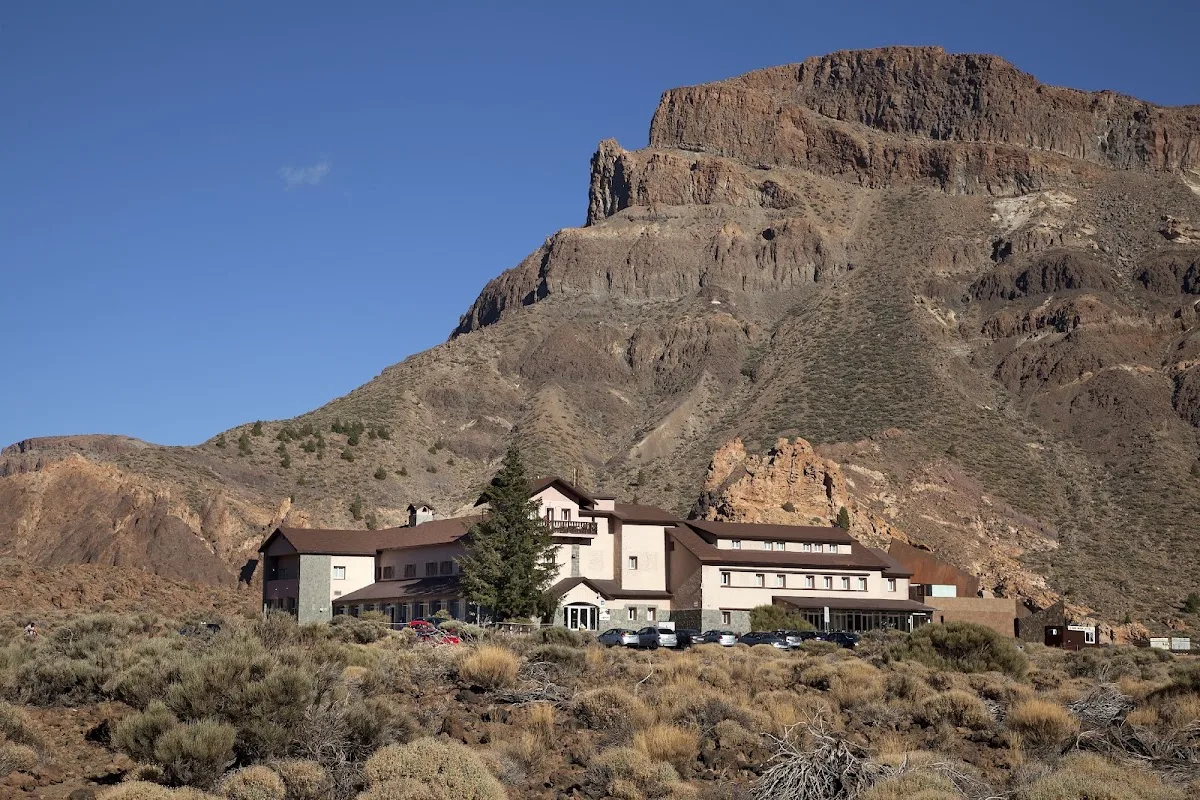
The Parador de Las Cañadas del Teide sits at 2,150 m inside the Las Cañadas caldera, and it is the only hotel inside Teide National Park, a UNESCO World Heritage site and Starlight Reserve since 2013. When the last day visitors leave at sunset, the sky belongs to Parador guests. That is not marketing copy. It is logistics: the park gates close to daytime traffic, the trade-wind inversion layer sits below you at roughly 1,500 m, and the nearest town light dome is 20 km away. On a clear moonless night, you are standing under Bortle 2 skies at alpine altitude with no other artificial light source inside the caldera.
The stargazing case: position, altitude, and the observatory
The Parador's dark-sky value is built into its location, not bolted on as a programme. Three factors combine here that almost no other stargazing lodge in Europe can match.
First, position inside the park. The Parador is the only accommodation within park boundaries. After sunset (roughly 18:30 in winter, 21:00 in summer) the caldera empties of cars and the sky darkens to true Bortle 2 conditions. The nearest population centre, Vilaflor, sits 14 km south-southwest; its faint glow is visible on the southern horizon but does not affect zenith or the northern Milky Way. For a comparison lower on the mountain, the the spa hotel in Vilaflor in Vilaflor trades altitude for easier daytime access but sits under a brighter sky. See the full lodge ranking for how all five Tenerife options compare.
Second, altitude above the inversion layer. At 2,150 m, the Parador sits above the trade-wind cloud layer that blankets Tenerife's north coast most afternoons. From the caldera floor, you look down onto a sea of clouds and up into a dry, stable air column. That stability (low atmospheric seeing) means stars hold sharp rather than twinkling violently, which matters for telescope observation and long-exposure astrophotography.
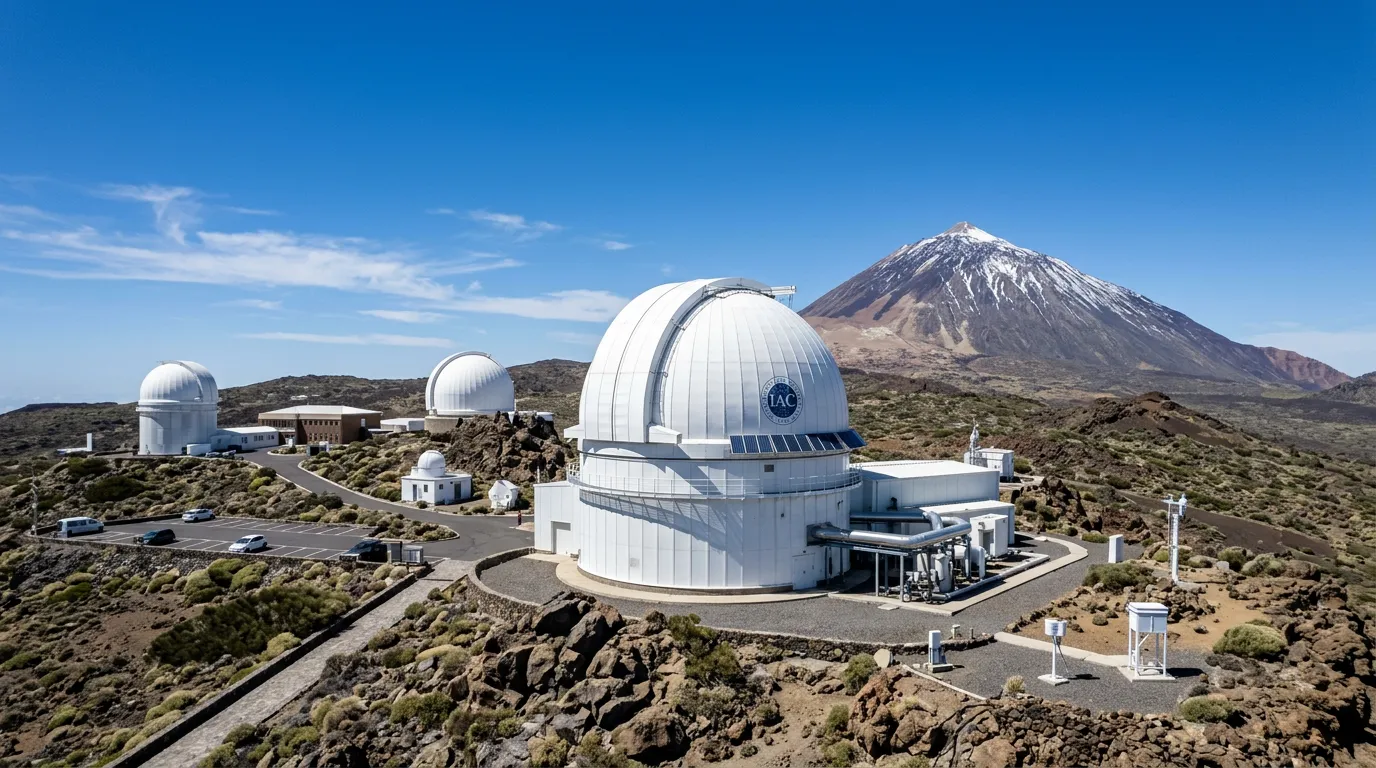
Third, the on-site observatory. The Parador runs a small astronomical observatory with scheduled guest sessions. It is not a research-grade facility, and on a busy night the session may feel more like a group tour than a private deep-sky session. But the critical advantage is that it exists on-site with no drive required. You finish dinner, walk outside, and a telescope is already aligned. In winter, when the caldera drops to -10 °C by midnight, that matters more than you might expect.
Milky Way photography: the Roques de García rock formations sit a 5-minute walk from the hotel car park. The iconic Roque Cinchado spire against the summer Milky Way is the definitive Tenerife astrophotography shot. The galactic core is visible overhead from March through October, peaking June-July when it reaches roughly 80° elevation. Winter months lose the core but gain Orion, Taurus, and the Pleiades with 14-hour nights. For foreground compositions beyond Roques de García, see the best stargazing spots on Tenerife.
What the rooms are like: 37 rooms, 3-star, no luxury pretence
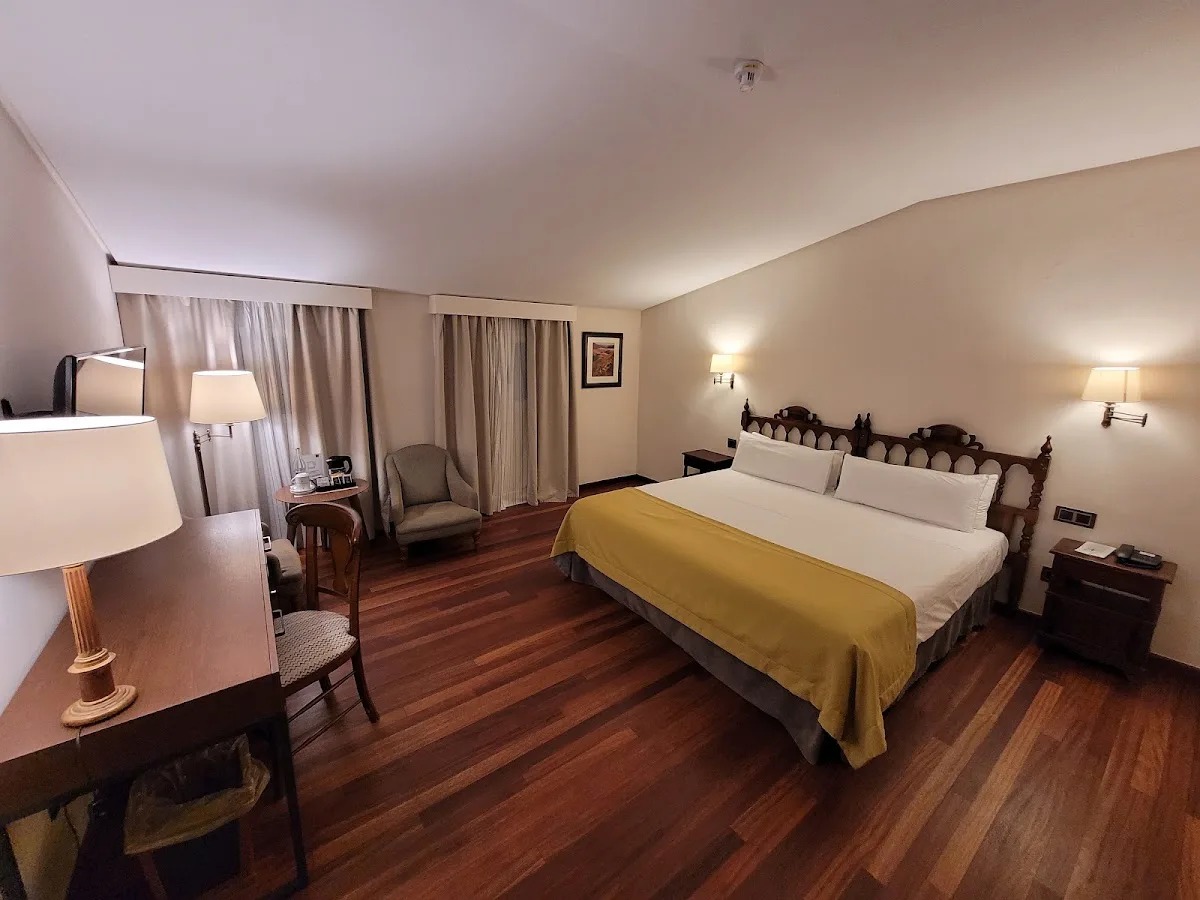
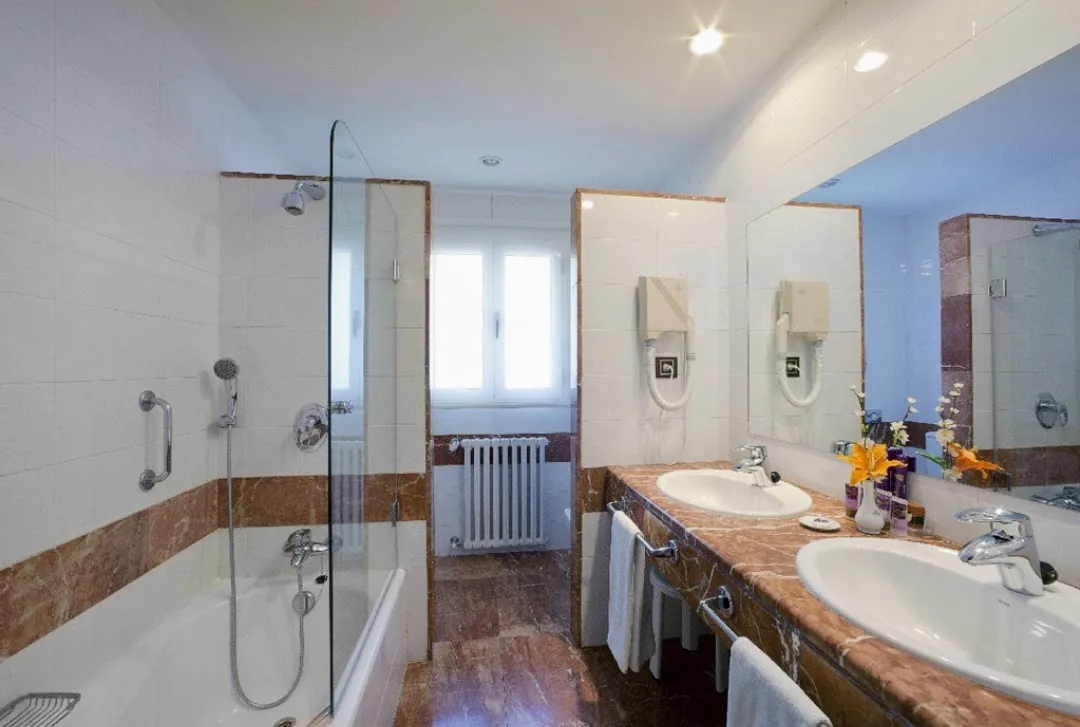
The Parador is a 3-star mountain hotel built in 1960, and the rooms are honest about that. There are 37 across four categories: Standard Double, Superior Double, Junior Suite, and Accessible. All have air conditioning, a minibar, flat-screen TV with ChromeCast, and a laptop safe. Beds are firm, bathrooms functional, decor leaning on dark wood and Canarian textiles rather than design-magazine minimalism. This is not a design hotel. It is a mountain base at altitude, and the rooms deliver exactly that.
The distinction worth paying for is the room orientation. Not all 37 rooms face Teide. Superior Doubles and Junior Suites on the upper floor get the volcano sightline. Standard Doubles may look onto the caldera wall or the car park. If you are here for stargazing, a westward-facing room means you can check sky conditions from your window before walking out.
Altitude affects sleep at 2,150 m. Some guests report lighter sleep, vivid dreams, or mild dehydration the first night. All normal acclimatisation responses. Arrive hydrated and take it easy on the first evening. The stargazing payoff comes on night two.
Facilities: restaurant, pool, sauna, and a fireplace that earns its keep
The restaurant serves Canarian regional cuisine: papas arrugadas with mojo, gofio, rabbit in salmorejo, fresh fish from the island. Dinner runs on a fixed schedule, typically 19:30-21:30. If your astronomy session runs late, coordinate with reception in advance. The kitchen will not wait indefinitely. Room Only, Bed & Breakfast, and Half Board rates are available. Half Board typically adds €20-30 per person and may cost less than ordering à la carte separately.
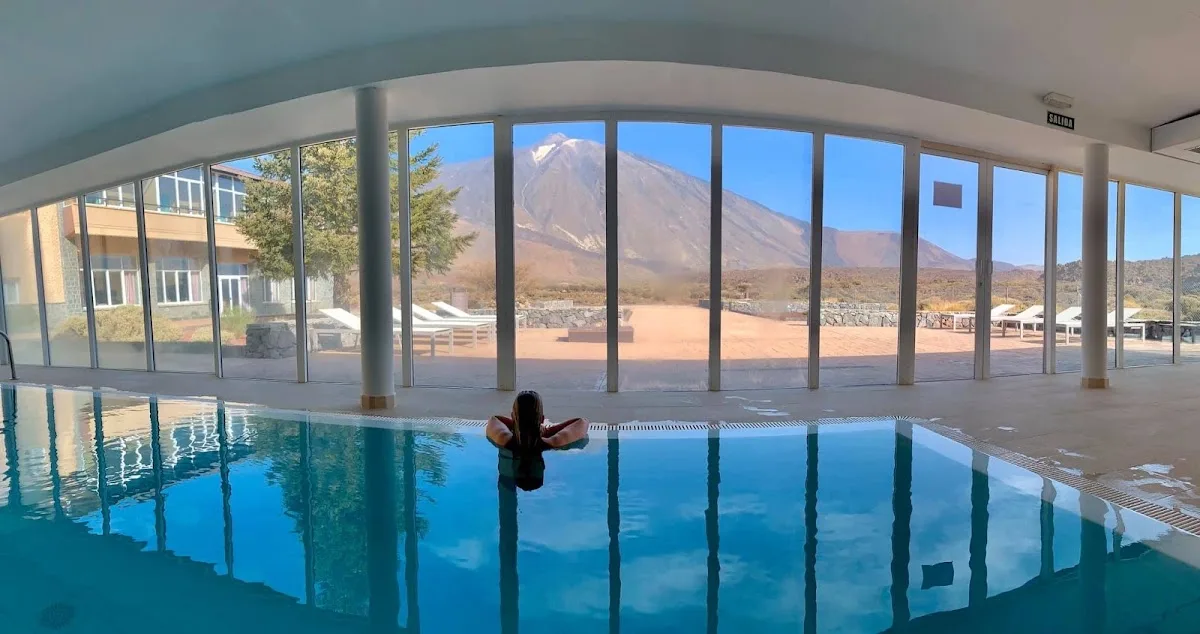
The heated indoor pool and sauna open year-round. At 2,150 m, swimming indoors while snow sits on the caldera rim outside is a genuine novelty, not brochure filler. The fireplace lounge, stocked with local wines and brandies, becomes the social centre on winter nights when outside temperatures drop to -15 °C. There is also a small gym, free outdoor parking, and an elevator. Pets are allowed with conditions.
Trails and access: Roques de García, the cable car, and Montaña Blanca
The Parador's second practical advantage after stargazing is trail access. The Roques de García loop (Sendero 3) starts essentially from the car park: a 3.5 km circular walk past the Roque Cinchado spire and the cathedral-like Los Azulejos mineral walls. It takes 2 hours at a slow pace with photography stops. The Sendero de los Azulejos branch peels off before the main loop for a closer look at the copper-green hydrothermal formations.
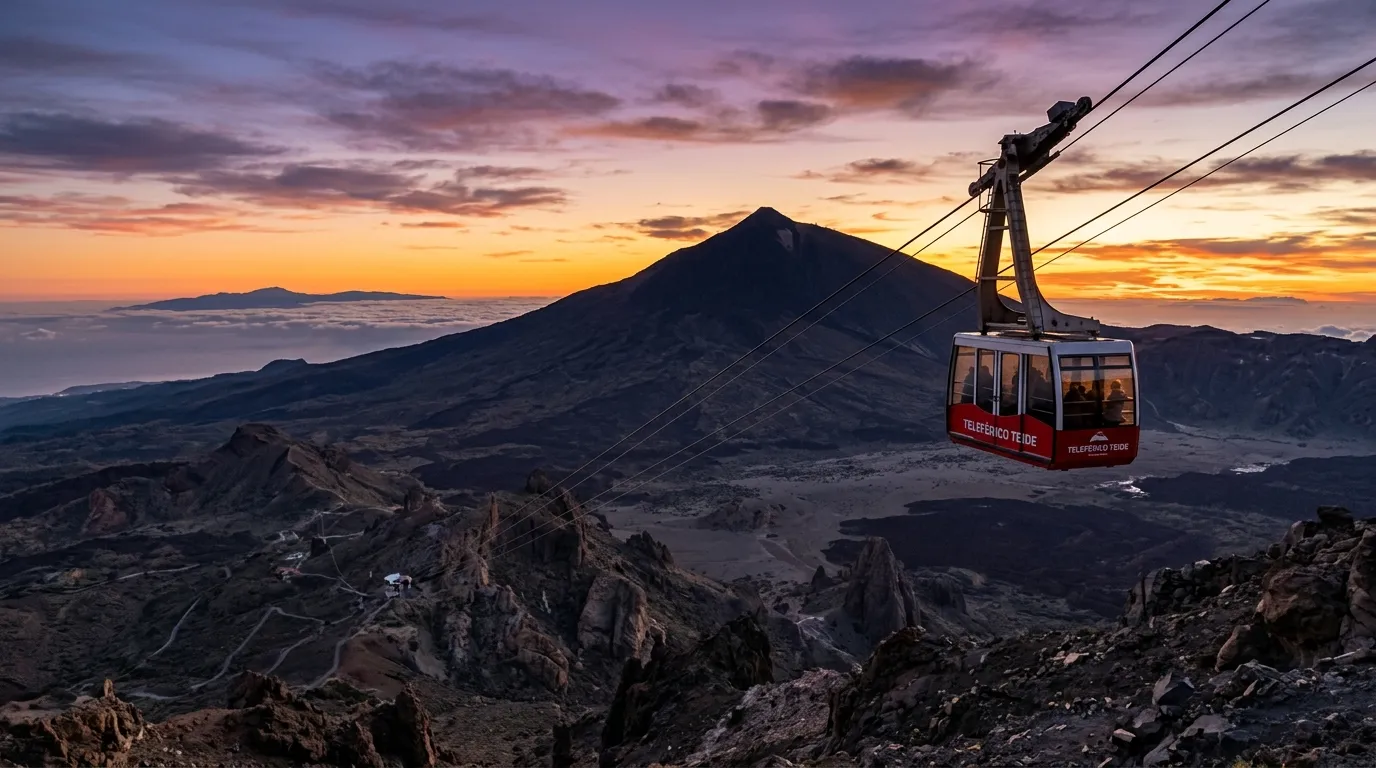
The Teide cable car base station is 2 km by road. The cable car lifts from 2,356 m to 3,555 m in 8 minutes. From the upper station, the trail to the summit crater, Pico del Teide at 3,715 m, requires a summit permit and, since 1 January 2026, an eco-tax for non-residents (roughly €10-15 depending on route and guided-vs-independent access; residents and children are exempt). The daily cap was raised from 200 to 300 visitors, split into three 100-person slots. Book this on the national park reservation site before you book the hotel; summer permits sell out days ahead. Without a permit, you can still walk the Mirador de La Fortaleza and Pico Viejo viewpoints, both reachable from the upper station.
Montaña Blanca trailhead, the free hiking route to the Altavista refuge (no permit needed for the refuge), starts 5 km east of the Parador on the TF-21. The full route to the summit is 8.5 km one-way with 1,400 m of elevation gain, a serious mountain day and not a casual walk.
Caveats: altitude, winter cold, and the dinner clock
Three things you should know before booking. None are dealbreakers, all are real.
Altitude. 2,150 m is not extreme, but it is high enough to affect sleep and appetite on the first night. If you or your partner has a history of altitude sensitivity, book two nights minimum. A one-night stopover at altitude gives the body no time to adjust and you leave before the stargazing payoff.
Winter cold. December through February bring snow to the caldera and nighttime temperatures down to -15 °C. The rooms are heated and the pool is indoors, but stargazing sessions and Milky Way photography in those conditions require proper alpine clothing: insulated boots, thermal layers, gloves. Summer (June-September) nights run 10-15 °C, far more comfortable for standing still at a telescope for an hour.
Fixed dinner schedule. The restaurant operates on a set timetable. If you book a late astronomy session or want to photograph the Milky Way during its optimal 22:00-01:00 window in summer, coordinate meal timing with reception at check-in. Do not assume the kitchen will serve you at 22:30; it will not.