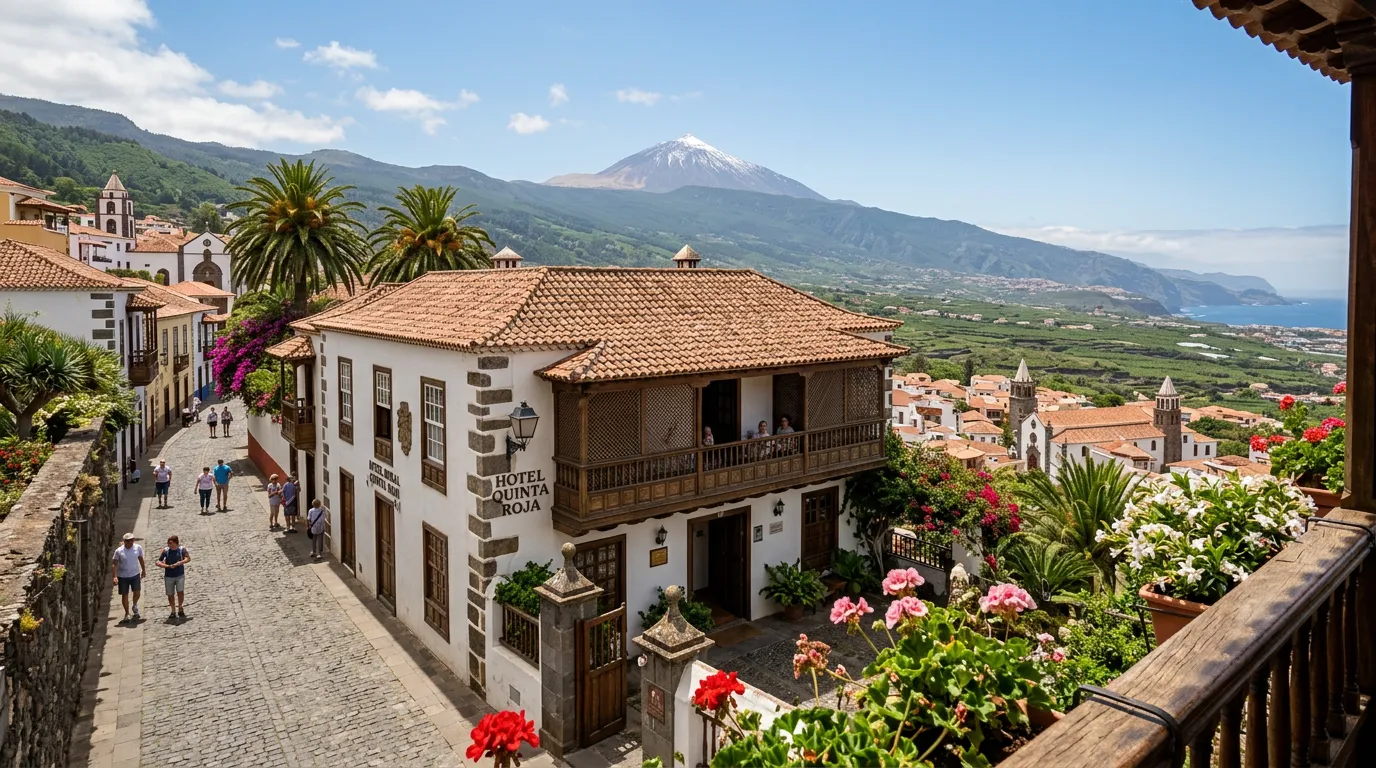
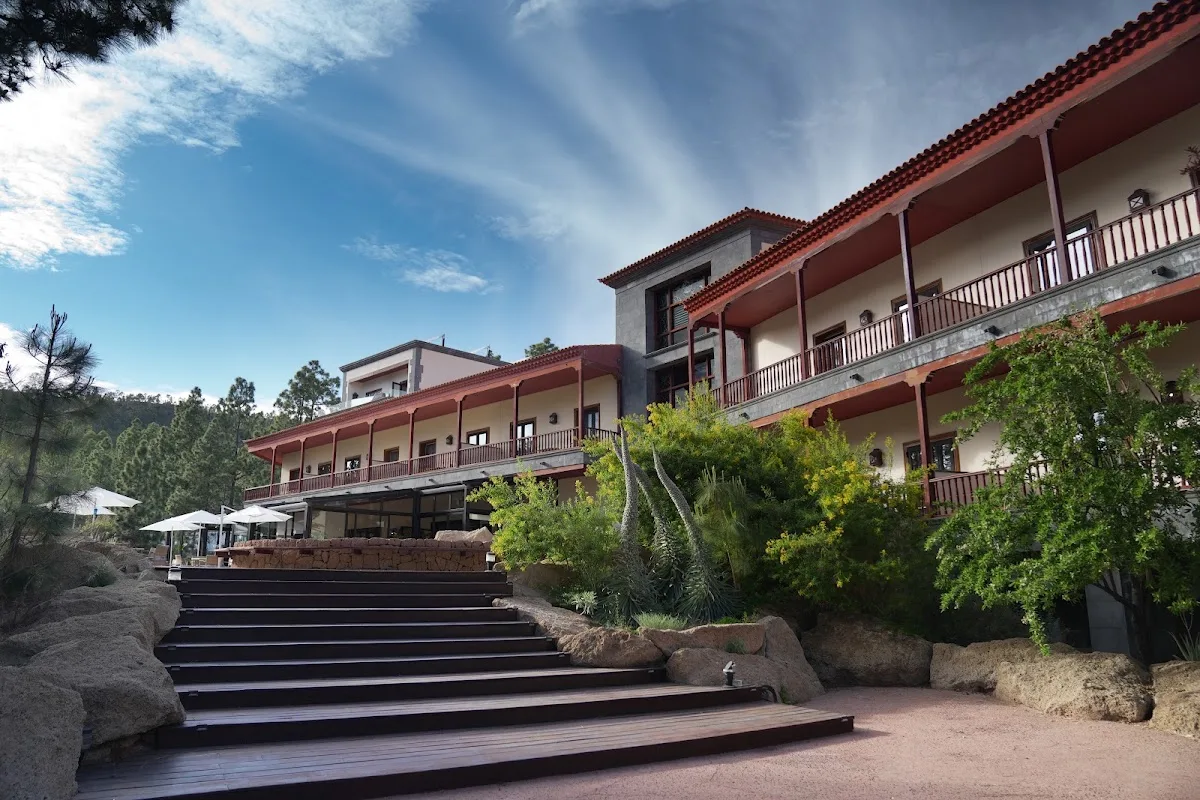
The Hotel Spa Villalba sits in Vilaflor, the highest village in Spain at 1,400 m, roughly 20 minutes south of Teide National Park by car. It is not the best stargazing lodge on Tenerife; that belongs to the Parador de Las Cañadas del Teide. But the Parador has 37 rooms and sells out weeks ahead in peak Milky Way season. When it does, the Hotel Spa Villalba in Vilaflor is the next booking that makes sense.
Why Vilaflor for stargazing
Vilaflor sits high enough to matter. At 1,400 m, it is the highest municipality in Spain, and on many nights it rises above the trade-wind inversion layer that traps cloud and humidity on Tenerife's northern slopes. The mar de nubes (sea of clouds) forms below the village and stays there, a dense grey blanket that blocks light from coastal towns. When the inversion holds, the air above Vilaflor is dry and stable, two conditions that improve atmospheric seeing and sharpen star detail through a telescope.
This is not the same as being inside the park. Vilaflor has streetlights and a few hundred inhabitants, so the sky overhead is closer to Bortle 3–4 than the Bortle 2 you get at the Parador's altitude. You can see the Milky Way from the village edge, but the limiting magnitude is lower than inside the caldera. The real value is access combined with altitude: you are high enough to clear the inversion most nights, but you still have a supermarket, a petrol station, and a restaurant that does not require a 20-minute drive.
The hotel: what you are actually getting
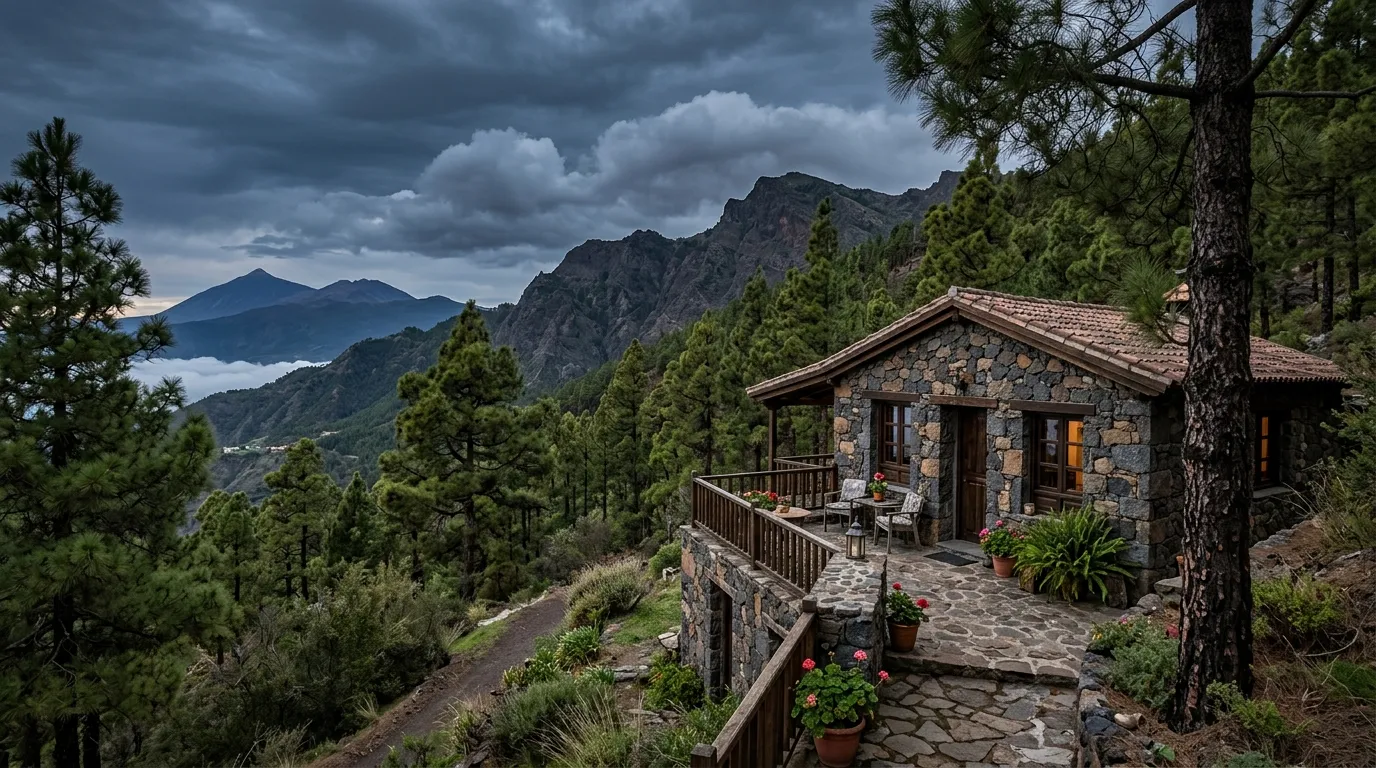
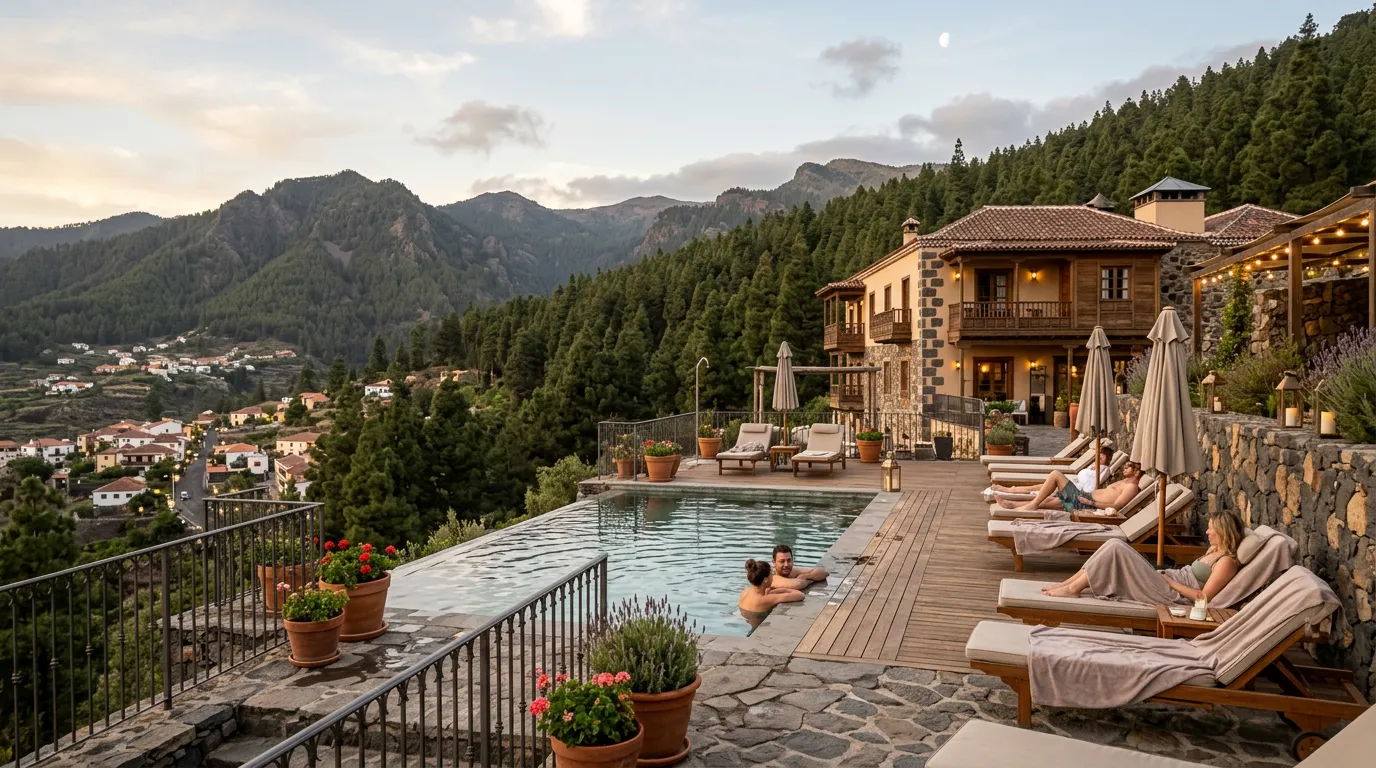
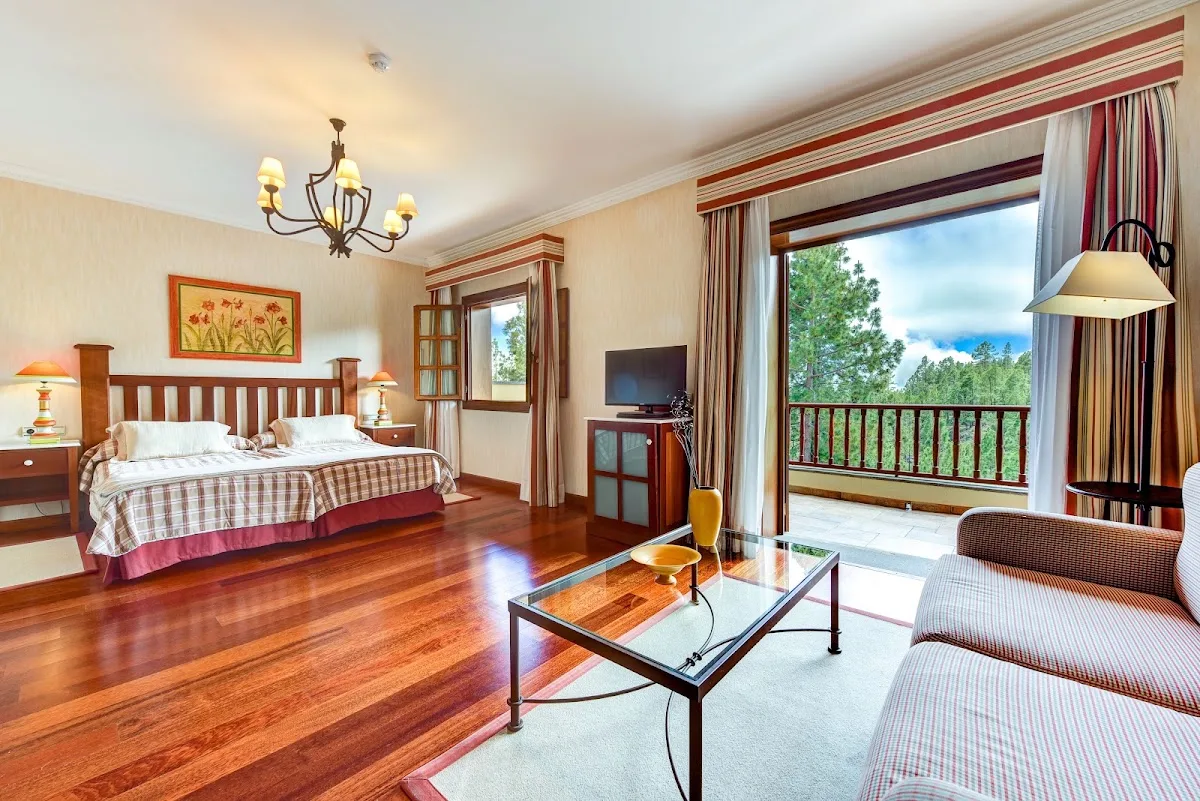
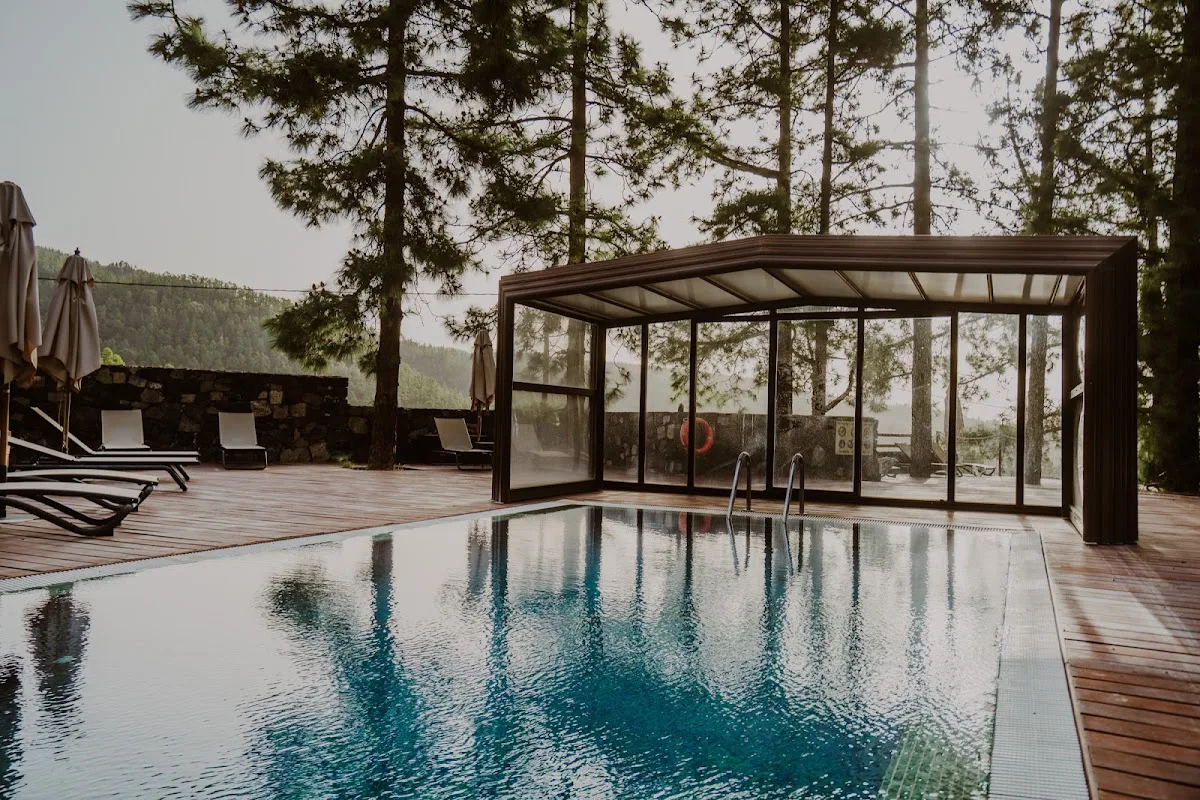
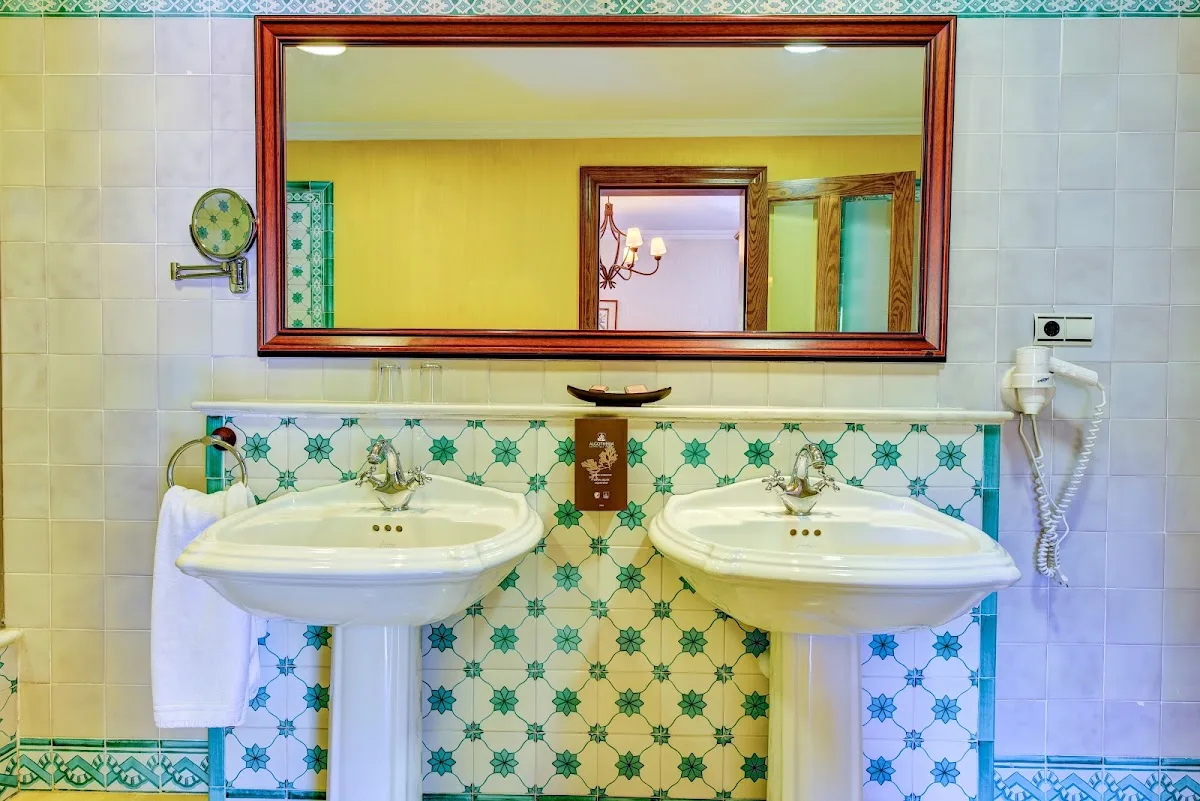
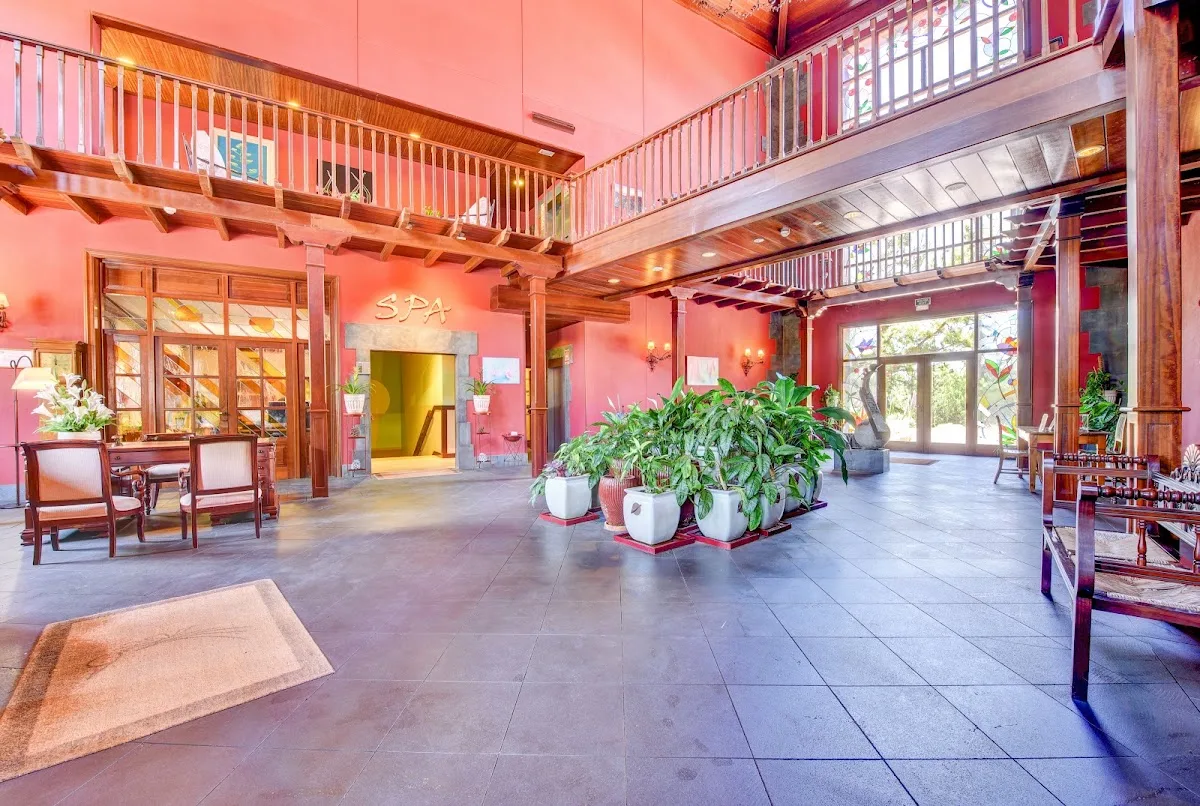
The Hotel Spa Villalba is a three-star property that leans on its spa facilities rather than boutique design. The indoor pool is heated year-round and the sauna is a practical asset: after a cold night in the caldera at 2,000+ m, a warm soak is recovery, not a luxury. Rooms are standard Canarian-hotel fare: tile floors, firm beds, balconies that face either the pine-covered hillside or the village street. Nothing is dated to the point of discomfort, nothing is photogenic enough to post.
Prices run roughly €80–120 per night depending on season, which puts this in the mid-range bracket, not budget territory. Half board adds about €15–20 per person and the restaurant produces competent Canarian cooking: grilled meats, papas arrugadas, mojo sauces. Vegetarian options are limited and vegan choices nearly nonexistent; the nearest proper supermarket is in Granadilla de Abona, 15 minutes downhill, so if you have dietary restrictions, shop before you arrive. For a broader look at where else to stay on the island, see the best stargazing lodges on Tenerife.
Getting to Teide from Vilaflor
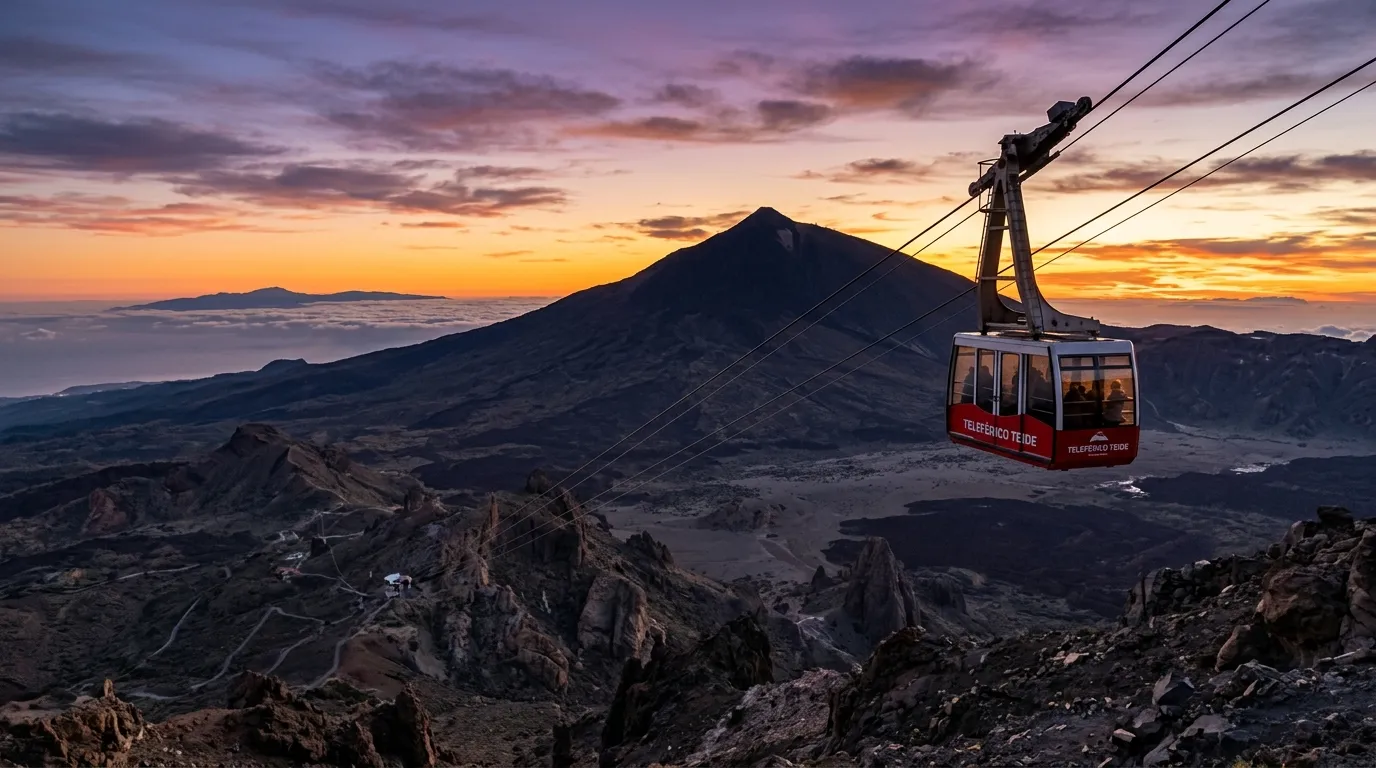
The drive from Vilaflor into Teide National Park takes roughly 20 minutes on the TF-21, the main road that climbs from the south coast through Vilaflor and up into the caldera. The road is paved, well-maintained, and wide enough in most sections for two vehicles. For a detailed breakdown of routes and road conditions, check the getting to Teide guide.
After Vilaflor, the landscape opens into pine forest (Corona Forestal Natural Park) and then to the volcanic terrain of the caldera floor. The route gains nearly 800 m of elevation from Vilaflor to the caldera, so the final few kilometres climb steadily. In winter (December to February), the road can ice over above 2,000 m. Snow is uncommon but happens; the council closes the TF-21 at the Boca de Tauce junction when conditions deteriorate. Check the Cabildo de Tenerife road-status page before setting out on a winter evening.
The advantage of Vilaflor over other base towns is the southern approach: you reach the Roques de García in roughly 25 minutes and the Llano de Ucanca viewpoints faster than someone driving from La Orotava or Puerto de la Cruz on the north side.
Stargazing from Vilaflor: what you gain and lose
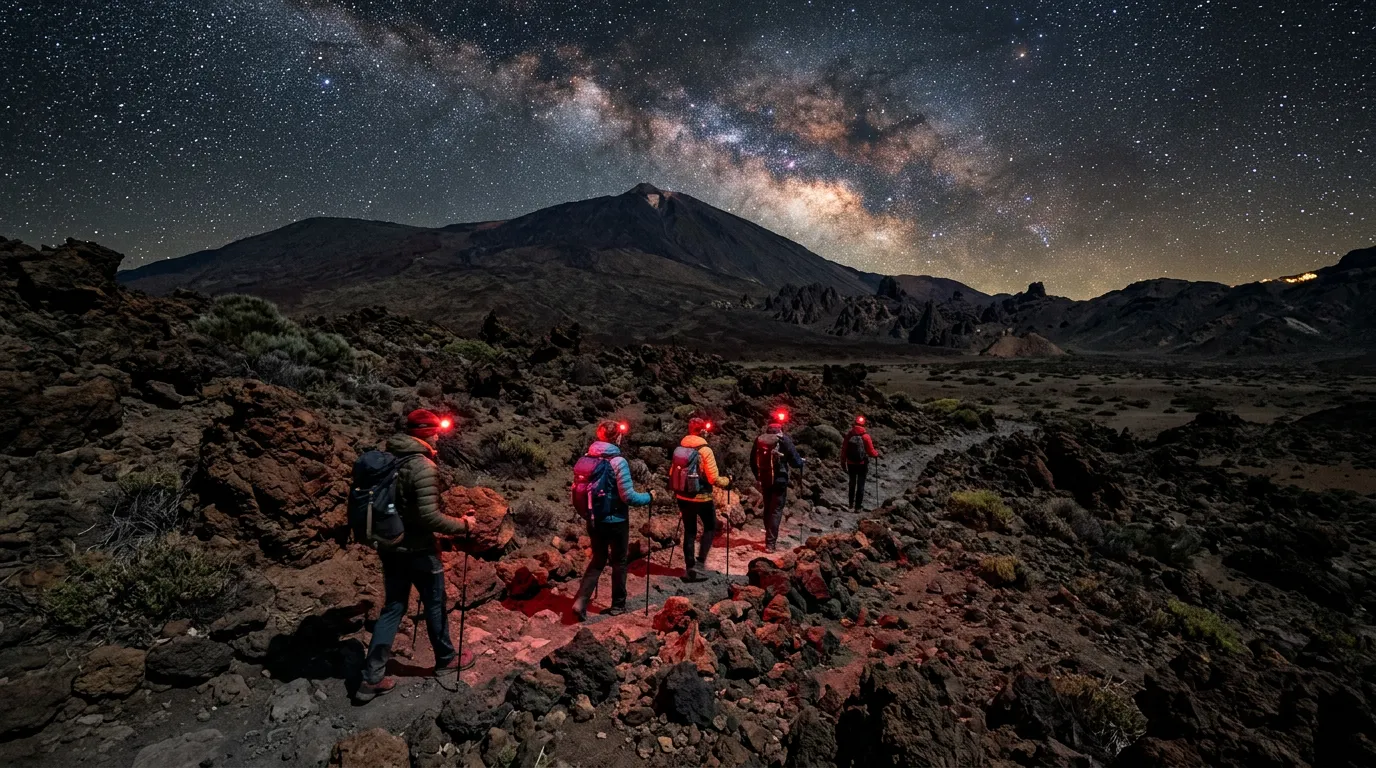
A clear night in Vilaflor gives you a sky most people in Europe never see. The Milky Way is visible to the naked eye from the village outskirts, and the galactic core arches overhead from March through October. The village lights are sodium-vapour streetlamps, warm-toned rather than the harsh white LED that plagues many municipalities, so light pollution is less aggressive than at similar-sized towns elsewhere in Spain.
For serious observing, the best spot near the village is El Pino Gordo, a massive ancient pine tree roughly 2 km east of Vilaflor on the TF-21. It has a wide gravel pull-off and sits just above the village light dome. The southern horizon is open, giving a clean sightline to the Milky Way core in summer. Another option is the Mirador de la Crucita, roughly 15 minutes up the TF-21 towards the park, at about 1,600 m with fewer ambient lights. For more locations, see the best stargazing spots on Tenerife.
If you compare this to the Parador, the honest answer is: the Parador's sky is better. You lose roughly half a magnitude of limiting magnitude by staying in Vilaflor, and you trade stepping out the door for a 20-minute drive. What you gain is a wider choice of rooms, a lower price, spa access, and the ability to eat dinner after 21:00 without coordinating with a fixed hotel schedule.
Caveats and who this lodge is for
The Hotel Spa Villalba is the right choice if: (1) the Parador is fully booked for your dates, (2) you are travelling with someone who cares more about a spa pool than astronomical twilight, (3) you need a two-night base with daytime comfort and plan to drive into the park for both nights of observing.
It is the wrong choice if: (1) you want to step outside your room and be under a dark sky, an experience that only exists at the Parador, (2) you are doing long-exposure astrophotography that needs true Bortle 2 conditions and the lowest possible atmospheric seeing, (3) you cannot or do not want to drive mountain roads at night after a stargazing session.
The drive back from the caldera to Vilaflor after midnight takes about 25 minutes. The TF-21 has no street lighting above Vilaflor, a feature for stargazers and a caveat for nervous drivers. Your rental headlights are sufficient, but bring a sense of direction and a tank with enough fuel. The nearest 24-hour petrol station is in Granadilla, 15 km from Vilaflor and 35 km from the caldera viewpoints.