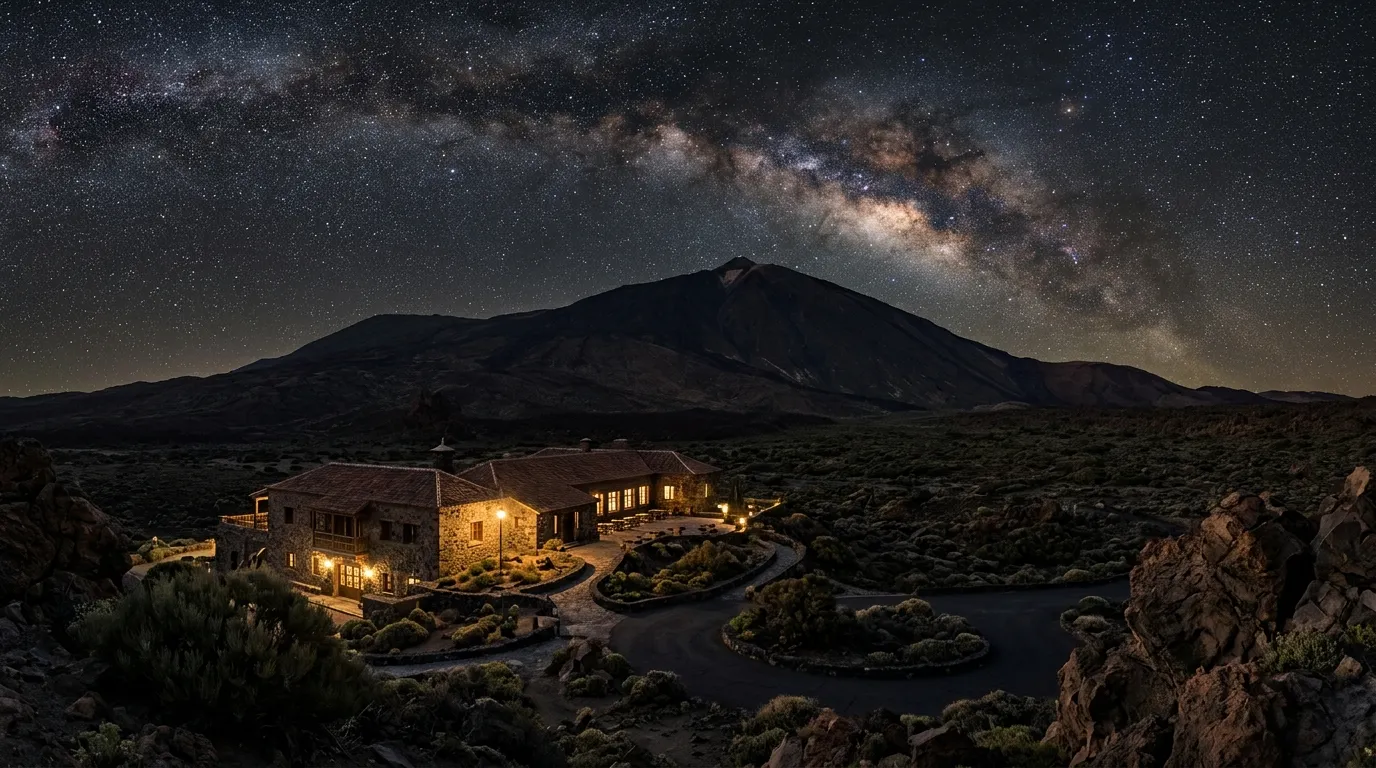
Night sky panorama over the Las Cañadas caldera in Teide National Park, Tenerife: Milky Way galactic core rising above Roques de García rock formations silhouetted against a Bortle 2 sky, stars reflecting on still water

Best Lodges for Stargazing in Tenerife

Five Tenerife lodges ranked for stargazing: Bortle class, dark-sky access, and value. From the only hotel inside Teide NP to budget bases above the clouds.

Our top pick

Parador de Las Cañadas del Teide

Best overall

The Parador de Las Cañadas del Teide wins because no other lodge on Tenerife puts you inside the Starlight Reserve at 2,150 m with Bortle 2 skies and an on-site observatory. From €120/night is expensive for a three-star, but you are not paying for thread count: you are paying for the only bed inside Europe's best stargazing park. When the Milky Way is overhead and the caldera is silent and the nearest artificial light is 20 km away, the price makes sense.

The only hotel inside Teide National Park. Bortle 2 from the car park, on-site observatory, the caldera empties at sunset.

Runner-up: Hotel Spa Villalba in Vilaflor, the highest village in the Canary Islands at 1,400 m, with a heated pool and sauna, 20 minutes from the park

Tenerife has the best stargazing skies in Europe. Bortle 2 inside the Las Cañadas caldera, a Starlight Reserve since 2013, and the trade-wind inversion layer that pins cloud and humidity below 1,500 m. Professional observatories at the Instituto de Astrofísica de Canarias chose this atmospheric corridor for the same reason you should: roughly 300 clear-sky nights per year at altitude.

The real question is where you sleep. Park gates close to day visitors at sunset, and the nearest towns with accommodation are 20 km away. These five lodges are ranked on five criteria: dark-sky access at ground level (the Bortle number that matters when you step outside at midnight, not the park's best reading), proximity to Teide National Park entrances and known dark-sky viewpoints measured in drive-time minutes, whether you can observe without driving, practical amenities for a stargazing trip (a restaurant, parking, somewhere warm to recover after two hours at 2,000 m), and price in euros per night. All rates are from 2025-2026 Booking.com and direct property listings. A rental car is non-negotiable for every option except the Parador de Las Cañadas del Teide, and even then, you want one.

Ranked list

How we chose

The places on this list were selected against the following editorial criteria.

  • Dark-sky access from the property: Bortle class at ground level, not the park's best reading from a viewpoint you have to drive to
  • Proximity to Teide National Park entrances and known dark-sky viewpoints, measured in drive-time minutes
  • On-site stargazing potential: can you walk outside and observe, or must you get in a car?
  • Practical amenities for a stargazing-led stay: restaurant, parking, somewhere warm to recover after midnight at 2,000 m
  • Price-to-value ratio in euros per night for the stargazing experience delivered

All picks at a glance

  • Parador de Las Cañadas del Teide

    Best overall
    From (€/night)
    $$ · from €120/night
    Key dark-sky advantage
    Only hotel inside Teide NP at 2,150 m, on-site observatory, Bortle 2 from the car park, from €120/night
  • Hotel Spa Villalba

    Best amenities at altitude
    From (€/night)
    $$ · from €80/night
    Key dark-sky advantage
    Highest village in the Canary Islands at 1,400 m, heated pool and sauna, 20 min to park south entrance, from €80/night
  • Casa Rural Las Llanadas

    Best budget proximity
    From (€/night)
    $ · from €72/night
    Key dark-sky advantage
    Self-catering house at 1,500 m, Bortle 3 terrace, 5 min drive to El Portillo park entrance, budget
  • La Casona del Patio

    Best above-cloud base
    From (€/night)
    $$ · from €112/night
    Key dark-sky advantage
    925 m above the marine cloud layer, 10 min to park via quiet TF-38, walkable village with restaurants, from €112/night
  • Hotel Rural Victoria

    Best town-and-park combo
    From (€/night)
    $ · from €86/night
    Key dark-sky advantage
    16th-century mansion in La Orotava's heritage zone, from €86/night, 30 min drive to Bortle 2 skies, cheapest base

On the map

Pin numbers match the ranking below.

Interactive map — loads as you scroll (requires JavaScript)

When to go

Tenerife delivers roughly 300 clear-sky nights per year at altitude; the trade-wind inversion layer pins cloud below 1,500 m, and the caldera sits above it. Season matters less than moon phase: a new-moon night in November at 2,000 m beats a full-moon night in July at sea level. Still, summer gives you the warmest observing and the Milky Way core at its highest; winter gives you the longest nights and the sharpest seeing.

  • January: Good — Orion, Taurus, and the Pleiades dominate; caldera temps can drop to -10 °C, snow possible, but air is razor-sharp
  • February: Good — Winter constellations at peak elevation; still cold at altitude, TF-21 can close above 2,000 m in snow
  • March: Good — Transition month; warming at altitude, winter constellations giving way to spring sky; Calima dust risk low
  • April: Good — Milky Way arm becomes visible low on the southern horizon before dawn; inversion layer strengthens
  • May: Peak — Milky Way core rising, nights warm to 10-15 °C at altitude, inversion layer at its strongest; excellent window
  • June: Peak — Galactic core peaks at roughly 80° elevation overhead; warmest nights, clearest skies, highest demand on rooms
  • July: Peak — Peak Milky Way month; nights warm, core dominates the southern sky, book well ahead for the Parador
  • August: Peak — Perseid meteor shower peak around Aug 12-13; Calima dust haze risk is highest this month
  • September: Peak — Shoulder month; still warm, Milky Way still high, fewer visitors, Calima risk drops, excellent value
  • October: Good — Autumn transition; Milky Way setting earlier, nights cooling, but still good observing conditions at altitude
  • November: Fair — Trade winds strengthen; more cloud below the inversion; above it Teide stays clear but coastal bases cloud out
  • December: Good — Longest nights of the year, winter sky at its best; cold at altitude, festive-season demand on flights

Reporter notebook

Insider tips

Best time

Book the new-moon window before you book the lodge

The moon phase determines how much sky you see far more than the lodge you pick. Find the new-moon window in June or July that works for your schedule, then check lodge availability. A new moon at Casa Rural Las Llanadas under Bortle 3 shows you more than a full moon at the Parador under Bortle 2. The 5-night window centred on the new moon gives you two or three genuinely dark hours each night.

Booking tip

Reserve the Parador three months ahead for summer new-moon dates

The Parador has 37 rooms and its peak-season new-moon dates in June and July sell out weeks or months in advance. If you are planning a summer trip, book the Parador first, then lock in flights and the rental car. If the Parador is full, the Hotel Spa Villalba in Vilaflor is the next best-positioned fallback; it sits at 1,400 m, clears the inversion layer, and adds a spa. Check both before committing to dates.

In this guide

5 places
  1. Parador de Las Cañadas del Teide

    Best overall

    Parador de Las Cañadas del Teide

    $$ · from €120/night

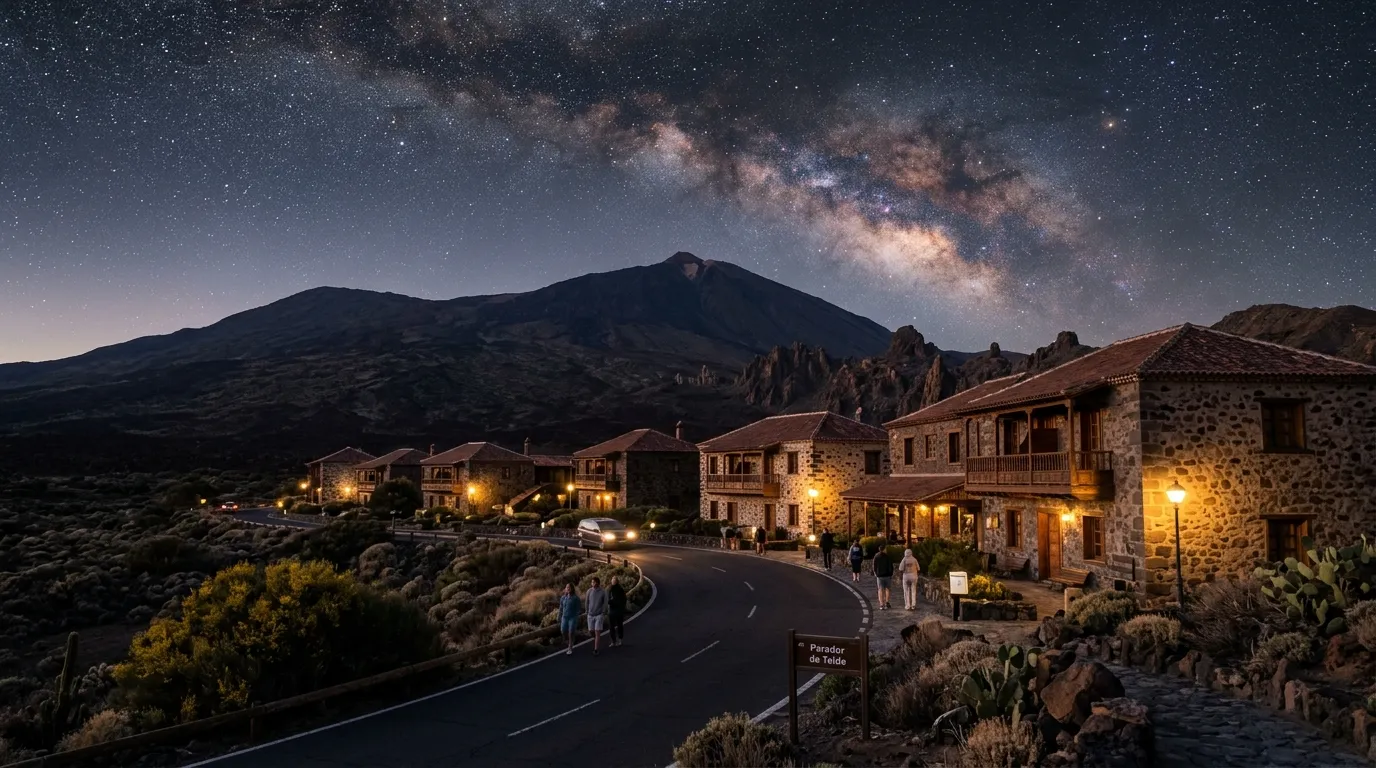
    The Parador de Las Cañadas del Teide is the only hotel inside Teide National Park, and that single fact decides the ranking. At 2,150 m in the Las Cañadas caldera, the sky above the car park measures Bortle 2 on a moonless night. When the last day visitors leave at sunset, the caldera empties of cars and the only artificial light source for kilometres is the hotel itself. You step outside your room and the Milky Way is overhead. No driving, no tour booking, no timing a pickup.

    The Parador runs a small on-site astronomical observatory with scheduled guest sessions. It is not a research-grade instrument, but the key advantage is proximity: the session starts when you walk out the door, not when a third-party van picks you up. The restaurant serves Canarian regional cuisine on a fixed dinner schedule (roughly 19:30-21:30), and the Half Board supplement typically adds €20-30 per person versus Room Only, which is less than ordering à la carte from the same menu. The heated indoor pool and sauna are year-round, and after a night at 2,000+ m in winter when the caldera drops below freezing, a warm soak before bed is recovery, not a luxury.

    The trade-offs are honest: it is a three-star property with 37 rooms, and peak Milky Way season (June-July) sells out weeks ahead. The restaurant is your only dinner option within 20 minutes of driving. Wi-Fi is patchy. But you are not paying €120/night for thread count. You are paying for the only bed inside Europe's best stargazing park.

    Pros

    • Bortle 2 skies from the car park with no driving required; you walk outside and the Milky Way is overhead
    • On-site observatory with scheduled guest astronomy sessions, included in your stay
    • Only accommodation inside the park; the caldera empties of cars and light after sunset

    Cons

    • 37 rooms sell out weeks ahead in peak Milky Way season (June-July)
    • Restaurant is the only dinner option within 20 minutes of driving; order Half Board
  2. Hotel Spa Villalba

    Best amenities at altitude

    Hotel Spa Villalba

    $$ · from €80/night 4.6 (1,433)

    The Hotel Spa Villalba sits in Vilaflor, the highest village in the Canary Islands at 1,400 m, roughly 20 minutes south of Teide National Park by car. When the Parador's 37 rooms sell out, as they do weeks ahead in peak Milky Way season, this is the next booking that makes sense.

    Vilaflor sits high enough to matter. On most nights it clears the trade-wind inversion layer, the blanket of cloud and humidity that sits on Tenerife's northern slopes. When the inversion holds, the air above the village is dry and stable, which improves atmospheric seeing and sharpens star detail through a telescope. You can see the Milky Way from the village outskirts, though the sky overhead (roughly Bortle 3-4) is two classes brighter than the caldera. The real value is access combined with altitude: you sleep high enough to clear the inversion most nights, but you still have a supermarket, a petrol station, and a restaurant that does not require a 20-minute drive.

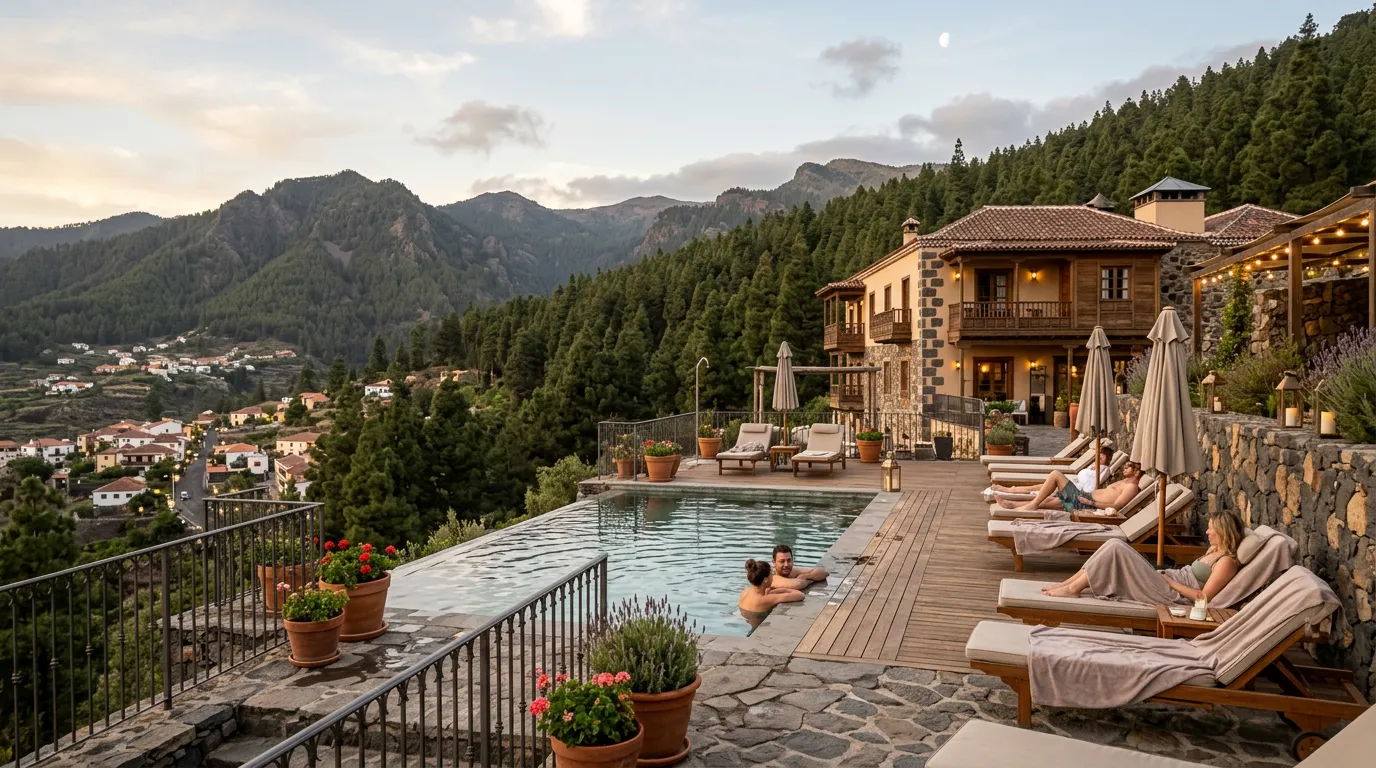
    The hotel is a three-star property that leans on its spa facilities. The indoor pool is heated year-round and the sauna is a genuine asset: after a cold night in the caldera, warming up before bed improves sleep quality noticeably. Rooms are standard Canarian-hotel fare. Ask for a hillside-facing room, not the street; street-facing rooms pick up village light at night. For the best stargazing near the hotel, drive 2 km east to the El Pino Gordo pull-off on the TF-21, which sits just above the village light dome and has an open southern horizon for Milky Way core viewing.

    Pros

    • 1,400 m altitude clears the trade-wind inversion layer on most nights, giving you dry, stable air above the clouds
    • Heated indoor pool and sauna provide real recovery after cold nights in the caldera
    • 20-minute drive to Teide NP via the TF-21 south entrance, village has a supermarket and petrol station

    Cons

    • Bortle 3-4 from the village; two classes brighter than the Bortle 2 inside the caldera
    • Street-facing rooms pick up village light at night; hillside-facing rooms book first
  3. Casa Rural Las Llanadas

    Best budget proximity

    Casa Rural Las Llanadas

    $ · from €72/night 4.8 (19)

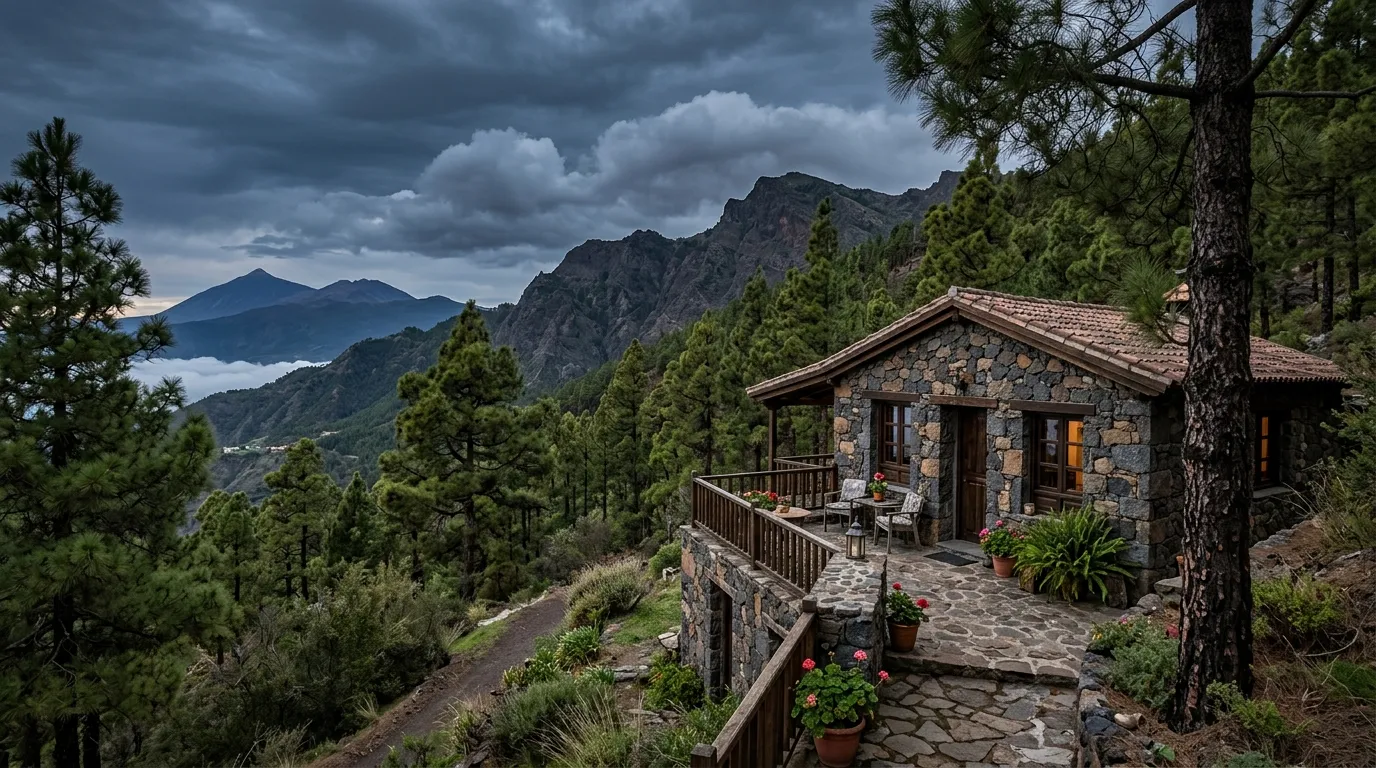
    Casa Rural Las Llanadas is not a hotel. It is a self-catering rural house at roughly 1,500 m in the Canary pine forest above Los Realejos, roughly 3 km south of the El Portillo visitor centre, the northern gateway to Teide National Park. If you want a restaurant, room service, or an on-site observatory, stop reading and book the Parador instead. If you want a quiet, affordable base where you cook your own dinner, step onto a private terrace above the inversion layer, and reach the park's northern entrance in five minutes, this is your pick.

    The house gives you a full kitchen, a private terrace with mountain views, free parking, and not much else. No pool, no reception desk, no restaurant. The nearest supermarket is a 20-minute drive downhill in Los Realejos. You stock up before driving up and you cook every meal yourself. On the terrace at night, at 1,500 m above the cloud line, the sky measures roughly Bortle 3: dark enough that the Milky Way is a visible band, bright enough that faint nebulae need a telescope rather than binoculars. For the darkest conditions, you drive five minutes into the park, where the sky drops to Bortle 2.

    The trade-off is value. Las Llanadas costs less than any other option on this list, and the self-catering kitchen saves you roughly €50 per night versus restaurant dining at the Parador or in Vilaflor. Put those savings toward a summit cable-car ticket or a better wide-angle lens. The house suits self-sufficient stargazers who value park proximity and budget over hotel services: two people with a rental car, a cooler full of food, and a tripod.

    Pros

    • Bortle 3 skies from the private terrace; Milky Way visible with the naked eye May through September
    • 5-minute drive to El Portillo visitor centre and Teide NP northern entrance via the TF-21
    • Full self-catering kitchen cuts food costs by roughly €50/night versus restaurant dining at altitude

    Cons

    • No restaurant, no pool, no reception; you cook every meal and manage everything yourself
    • Must stock food at the supermarket 20 min downhill in Los Realejos before driving up
  4. La Casona del Patio

    Best above-cloud base

    La Casona del Patio

    $$ · from €112/night 4.6 (456)

    La Casona del Patio sits at 925 m in Santiago del Teide, a whitewashed village on Tenerife's drier southwest slope. At this elevation on the island's leeward side, you sit above the marine cloud layer that forms at lower elevations on the south coast and well clear of the persistent cloud bank that blankets the north most afternoons. The result: more usable clear-sky nights than any sea-level or north-coast base on the island.

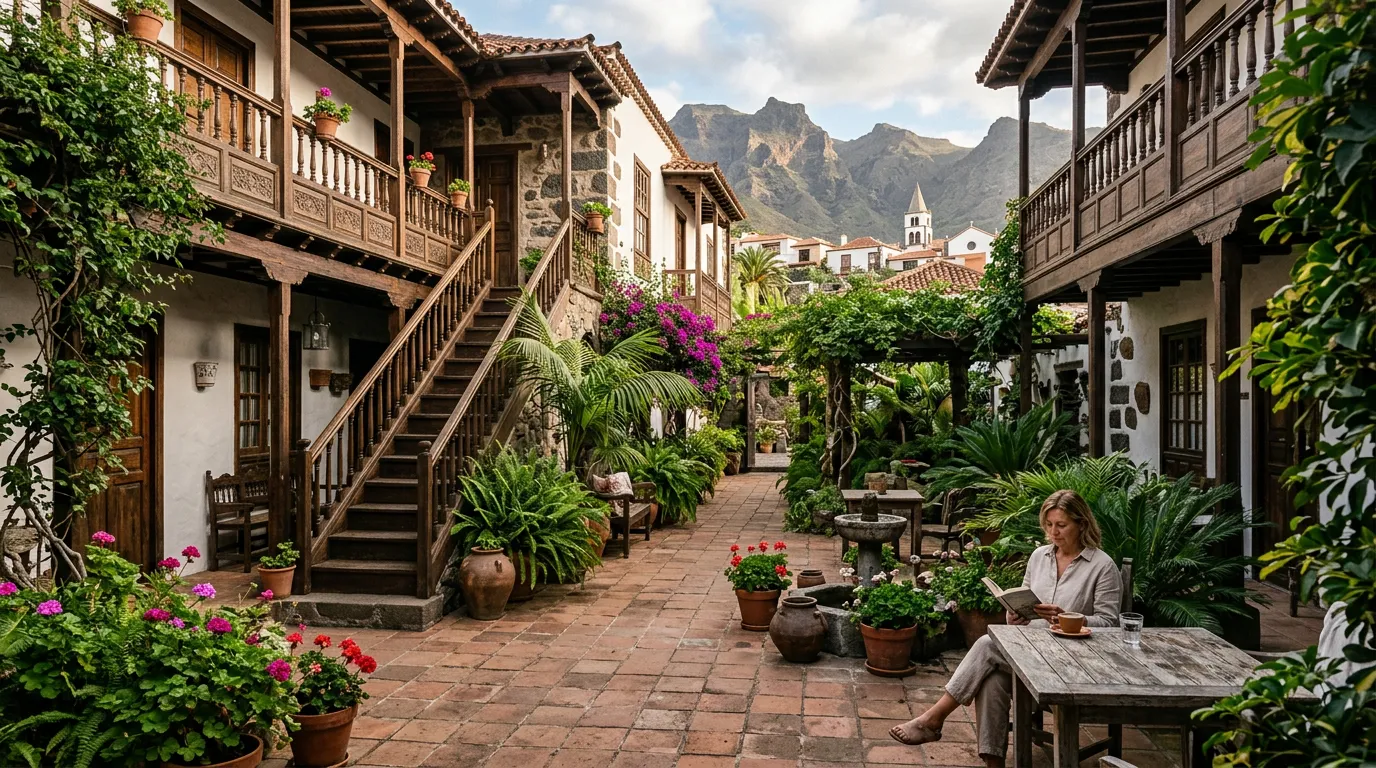
    The hotel wraps around an interior Canarian courtyard with terracotta tiles and a small fountain. Rooms are simple and functional; book a mountain-facing room with a terrace if you can; the upper-floor terraces look across the village rooftops toward the Teno massif. From the terrace at night, the sky measures roughly Bortle 4 at ground level with a noticeably cleaner zenith. The Milky Way is visible from April through September. For the darkest conditions, drive 10 minutes up the quiet TF-38 access road into Teide National Park, where the sky darkens to Bortle 2.

    The real differentiator here is the village itself. Santiago del Teide has restaurants, a bar, and a working-town rhythm, with no resort crowds and no coach-tour breakfast buffets. You walk to dinner, you walk back, and then decide whether to stargaze from the terrace or drive 10 minutes into the caldera. At from €112/night, the value holds up well against Vilaflor, especially for travellers who want somewhere to eat breakfast that is not a hotel buffet.

    Pros

    • 925 m altitude above the coastal marine cloud layer, giving more clear-sky nights than any sea-level base
    • 10-minute drive to Teide NP via the quiet TF-38, no coach traffic on this route
    • Walkable village with restaurants and a bar; eat dinner without getting in the car

    Cons

    • Bortle 4 at ground level; drive into the park for the genuinely dark sky
    • No on-site astronomy programme or telescope of any kind
  5. Hotel Rural Victoria

    Best town-and-park combo

    Hotel Rural Victoria

    $ · from €86/night 4.5 (460)

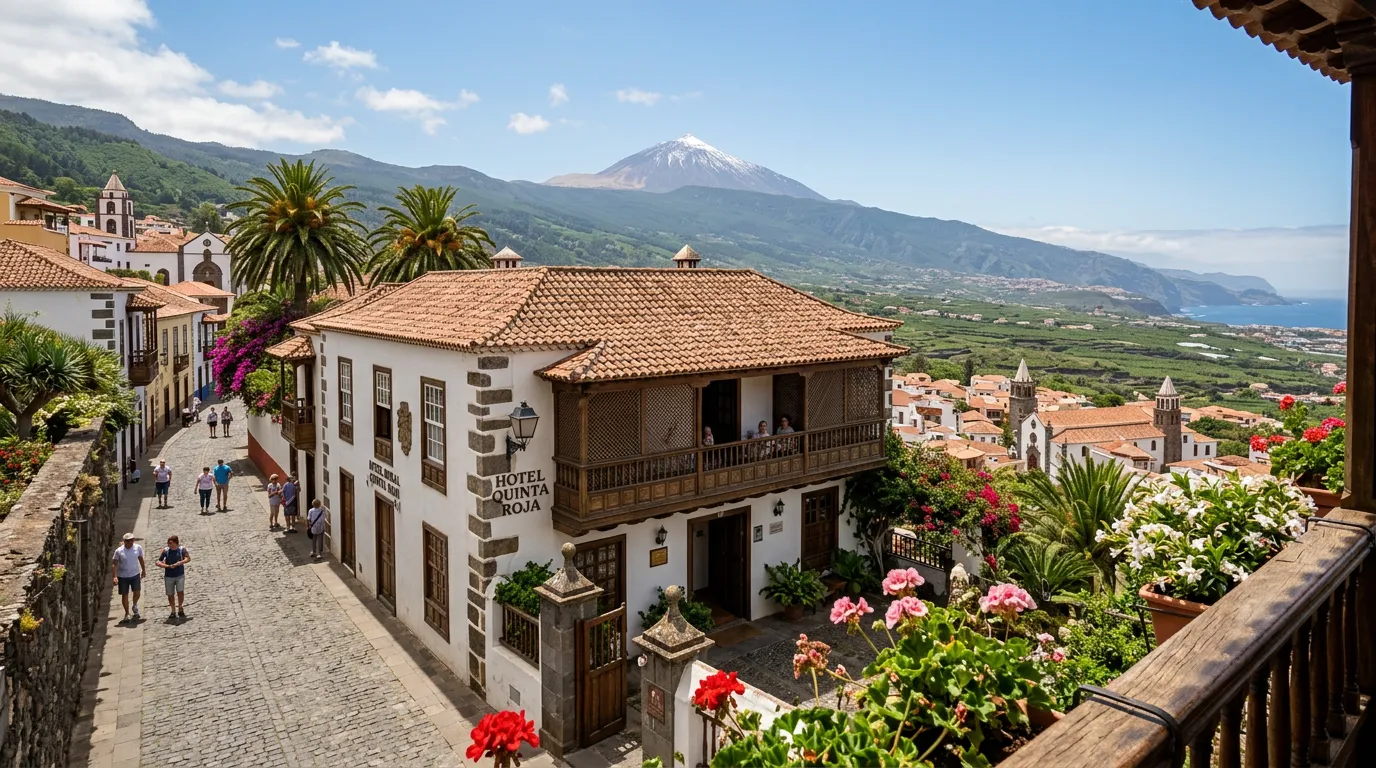
    The Hotel Rural Victoria is a 16th-century Canarian mansion in the historic centre of La Orotava, roughly 30 minutes north of Teide National Park via the TF-21. It ranks fifth because at 400 m altitude you are well below the trade-wind inversion layer, and the sky above the town is Bortle 4, five full classes brighter than the caldera interior. You do not stay here to stargaze from the balcony. You stay here because you want a colonial Canarian town by day and are willing to drive into the caldera for dark skies at night.

    La Orotava was declared a Conjunto Histórico-Artístico heritage zone and is the best-preserved colonial town in the Canary Islands. The Casa de los Balcones, the Iglesia de la Concepción, and the Humboldt viewpoint are within a five-minute walk. For travellers who want more from Tenerife than a parking-lot viewpoint and a long-exposure sequence, the town delivers: cobbled streets, carved wooden balconies, and a lived-in rhythm that Vilaflor and the Parador lack. The hotel itself has a restaurant, a bar, a terrace, and a tour desk that books Teide excursions.

    At from €86/night, the Victoria is the cheapest option on this list. The trade-off is the drive: 30 minutes to the Roques de García, mostly on unlit mountain roads. Fill your tank in La Orotava before heading up; there is no fuel station inside the park. Request an upper-floor room facing Teide; the upper floor has less street-light spill and, on clear mornings, it is the only place in the hotel where you can open the shutters and see the volcano above the tiled rooftops.

    Pros

    • 16th-century colonial mansion in La Orotava's Conjunto Histórico-Artístico heritage zone; real daytime value
    • From €86/night, the cheapest Teide stargazing base on this list
    • Foot of the TF-21 highway north entrance; no detour through the south side of the island

    Cons

    • Bortle 4 at 400 m altitude; you must drive 30 minutes into the caldera for dark skies every night
    • Below the inversion layer, so cloudier than all higher-altitude options on this list

For most stargazing travellers, the decision comes down to budget and how much you want astronomy to be managed for you. The Parador de Las Cañadas del Teide is the only lodge on the island where you walk outside and the sky is already Bortle 2: no drive, no planning, no third-party tour. Hotel Spa Villalba adds a spa and a village at the cost of a 20-minute drive. Casa Rural Las Llanadas is for self-sufficient travellers who cook their own meals and want the closest bed to the park's north entrance without paying hotel prices. La Casona del Patio and Hotel Rural Victoria serve travellers who want the daytime side of Tenerife: a meal in a village square or a walk through a colonial town, and accept the drive to the dark sky in exchange.

In every case, book around the new-moon window closest to June or July. The lodge matters less than the moon phase. A full moon at the Parador is still impressive, but a new moon at Casa Rural Las Llanadas shows you more. Match your dates to the darkness, then pick the lodge that fits what is left of your budget.

Frequently asked questions

Which lodge in Tenerife is best for stargazing?

The Parador de Las Cañadas del Teide wins on every dark-sky metric: Bortle 2 at ground level, 2,150 m altitude inside the Las Cañadas caldera, an on-site observatory with guest astronomy sessions, and no driving required. It is the only hotel inside Teide National Park, a UNESCO World Heritage site and Starlight Reserve. The trade-off is that it is a three-star property with 37 rooms that sell out weeks ahead in peak Milky Way season, and the restaurant is your only dinner option within 20 minutes of driving. If the Parador is full, the [Hotel Spa Villalba in Vilaflor](/lodges/hotel-spa-villalba-vilaflor-review) is the best alternative: 1,400 m altitude, 20 minutes from the park, with a heated pool and sauna.

Can I stargaze from my hotel in Tenerife without driving anywhere?

Yes, from exactly one hotel: the Parador de Las Cañadas del Teide. It sits at 2,150 m inside the park under Bortle 2 skies. You walk out the door and the Milky Way is overhead. No other lodge on Tenerife offers this. The [Casa Rural Las Llanadas](/lodges/casa-rural-las-llanadas-review) comes closest: at 1,500 m with a Bortle 3 private terrace, you can stargaze from the property, but the sky is noticeably brighter than inside the caldera. All other lodges on this list are bases from which you drive into the park for the best sky. At lower elevations (La Orotava, Santiago del Teide), the hotel itself is under Bortle 4 skies; the Milky Way is faint or washed out from the terrace.

Is the Parador de Las Cañadas del Teide worth the price for stargazing?

If stargazing is the main reason for your trip, yes. From €120/night for a three-star hotel looks expensive on paper, but you are paying for location, not luxury. No other hotel on Tenerife sits inside the Starlight Reserve at 2,150 m under Bortle 2 skies. The cost of a guided astronomy tour from a coastal resort (€40-60 per person) plus a coastal hotel room often totals more than a night at the Parador with the observatory session included. The Parador's Half Board supplement (€20-30 per person) also costs less than ordering à la carte from the same menu. If your trip is split between stargazing and beach days or sightseeing, a lower-altitude lodge with a rental car may offer better overall value.

Where should I stay in Tenerife for stargazing on a budget?

[Casa Rural Las Llanadas](/lodges/casa-rural-las-llanadas-review) is the best budget option: a self-catering rural house at 1,500 m with a Bortle 3 private terrace, a full kitchen, and a 5-minute drive to the El Portillo entrance of Teide National Park. You cook your own meals, which saves roughly €50/night versus restaurant dining at altitude. The [Hotel Rural Victoria](/lodges/hotel-rural-victoria-la-orotava-review) in La Orotava is the cheapest serviced option at from €86/night, with a restaurant and bar on site, but you must drive 30 minutes into the caldera for dark skies. Both require a rental car.

Do I need a rental car for a Tenerife stargazing trip?

Yes, for every lodge on this list except the Parador, and even at the Parador you will want one. The park has no public transport after dark, no taxis will wait for you in the caldera at 2 a.m., and the nearest fuel station is 15-35 km from most lodges. If you stay at the Parador and arrive by taxi from the airport, you can stargaze from the car park and observatory without a car, but you will be trapped at the hotel for the duration of your stay with the restaurant as your only food option. Reserve a manual-transmission rental car (automatics are scarce on Tenerife and cost more) when you book your lodge.

What is the Bortle class at Teide National Park?

The core of the Las Cañadas caldera measures Bortle 2 on the nine-level dark-sky scale on a clear moonless night. The zenith limiting magnitude is roughly 7.1-7.5, faint enough that the Milky Way casts a visible shadow and the zodiacal light is obvious after astronomical twilight. The Parador de Las Cañadas sits under Bortle 2 at 2,150 m. Vilaflor (1,400 m) and the El Portillo area (1,500-2,000 m) are Bortle 3. Santiago del Teide (925 m) and La Orotava (400 m) are Bortle 4.

When is the best time of year to book a Tenerife stargazing lodge?

The peak window is May through September, when the Milky Way galactic core is visible, nights at altitude are warm (10-15 °C), and the trade-wind inversion layer is at its strongest, giving the highest probability of clear skies above the clouds. June and July are the best two months: the galactic core reaches roughly 80° elevation overhead. Within any month, book for the 5-night window centred on the new moon. The Parador sells out weeks ahead in June and July; book three months in advance for summer new-moon dates. Winter (December-February) offers the longest nights and the sharpest atmospheric seeing but requires alpine clothing at 2,000+ m.

Are there glass-roof lodges or dedicated astronomy hotels in Tenerife?

No. Unlike Iceland, Finnish Lapland, or the Atacama Desert, Tenerife does not have glass-roof cabins, dedicated astronomy resorts, or lodges purpose-built for stargazing. The Parador de Las Cañadas del Teide is the closest thing: an on-site observatory at 2,150 m under Bortle 2 skies. The other lodges on this list are ordinary hotels and rural houses whose stargazing value comes from their altitude and proximity to the park, not from purpose-built astronomy infrastructure. If you want a glass-roof stargazing lodge in Europe, look at [Malangen Resort](/lodges/malangen-resort-tromso) or the [Aera Panorama Glass Lodge](/lodges/aera-panorama-glass-lodge) in Tromsø, Norway, but those are aurora lodges, not Milky Way observatories.

Further reading

Sources