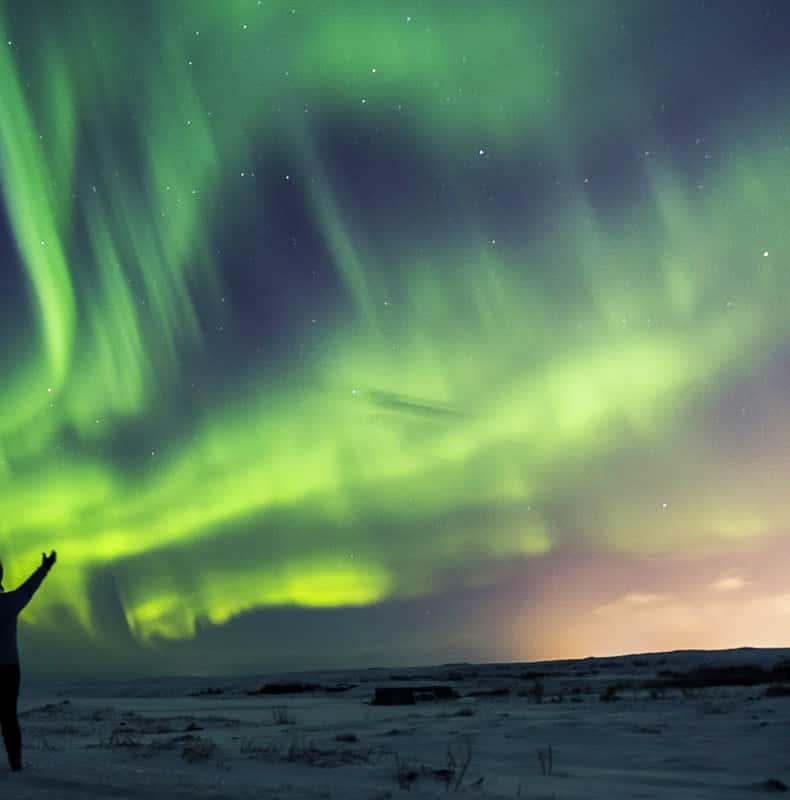
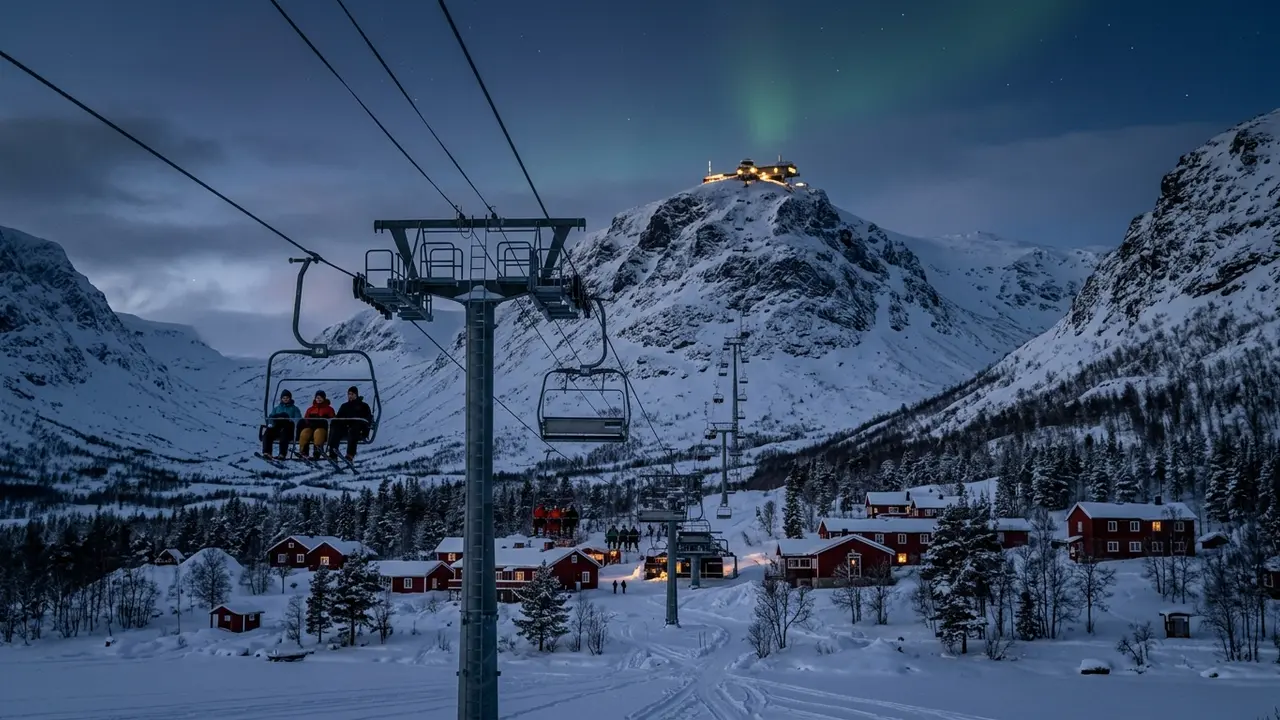
Green aurora borealis over a snow-covered mountain-station lodge in Abisko, Swedish Lapland, with a chairlift line visible in the foreground

Best Aurora Lodges in Abisko and Kiruna

Three Swedish Lapland lodges ranked for aurora viewing near Abisko and Kiruna, compared on dark-sky access, Aurora Sky Station proximity, and bookability.

Our top pick

STF Abisko Turiststation

Best aurora-viewing infrastructure

STF Abisko Turiststation wins this ranking because it isn't just near the Aurora Sky Station, it's the chairlift's own base station, putting guests a 30-minute ride from the single most purpose-built aurora-viewing facility in Swedish Lapland, at budget-to-mid-range prices. ICEHOTEL Jukkasjärvi is the more famous stay and a genuinely dark riverside setting, but it has no comparable aurora infrastructure, which is why it ranks second despite the name recognition. All three lodges book equally easily, direct or through Booking.com, so bookability doesn't separate them.

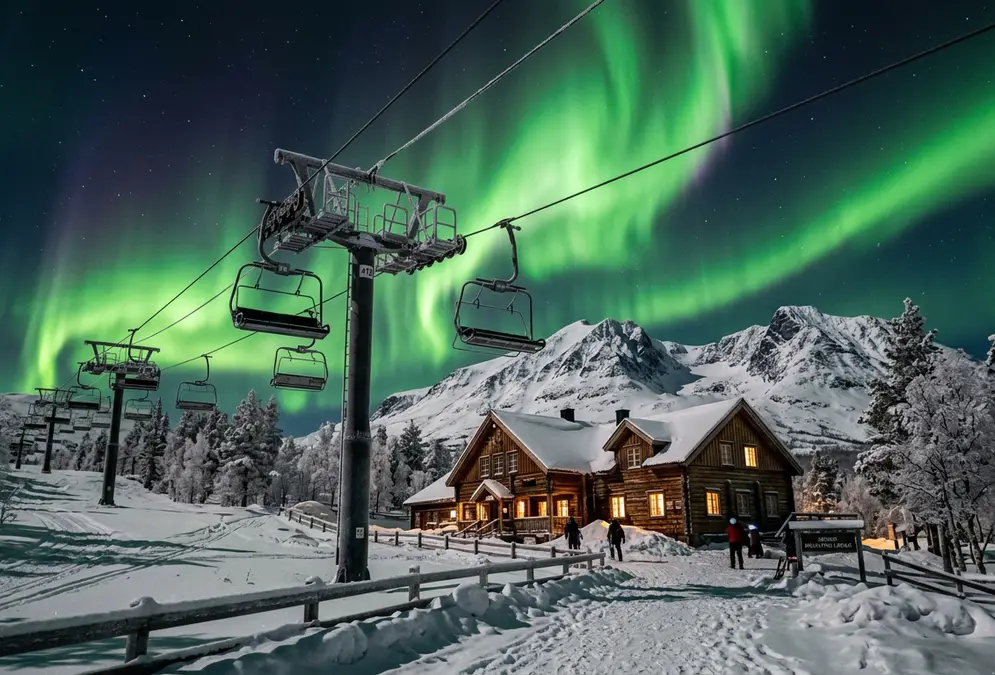
STF Abisko Turiststation sits at the literal base of the chairlift to the Aurora Sky Station, a roughly 30-minute ride to a summit facility built specifically for watching the sky.

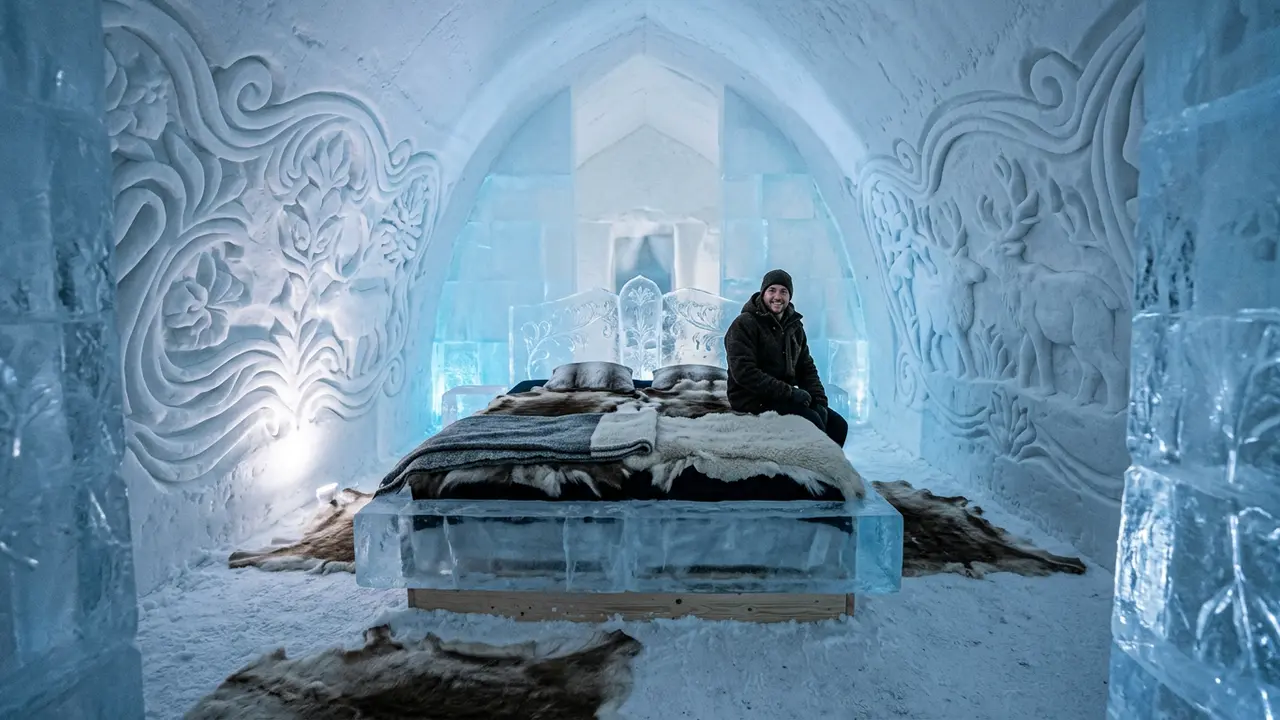
Runner-up: ICEHOTEL Jukkasjärvi, the world-famous ice hotel rebuilt fresh every winter on the Torne River, for travelers who want the ice-suite experience first and treat the aurora as a bonus they chase with a guided safari.

Swedish Lapland's aurora corridor runs from Abisko National Park, where a rain-shadow microclimate keeps the sky clearer than nearby Arctic spots more reliably than luck alone would explain, east to Kiruna and the ice-hotel village of Jukkasjärvi. Three lodges anchor that corridor, and each one asks a traveler to prioritize something different: a purpose-built aurora facility, a world-famous ice suite, or a heated glass-roof cabin in town.

This ranking weighs three factors: dark-sky access (how remote and light-pollution-free the setting genuinely is), aurora-viewing programming and proximity to the Aurora Sky Station on Mount Nuolja, the summit facility built specifically for watching the sky, and bookability. On that last point, all three lodges are equally easy to book, direct through their own sites and through Booking.com, with no restrictions on either channel, so it doesn't separate anyone here. The first two criteria do the actual work of ranking.

STF Abisko Turiststation takes the top spot because it isn't just close to the Aurora Sky Station, it's the chairlift's own base station. ICEHOTEL Jukkasjärvi ranks second: a genuinely dark, remote setting on the Torne River, but no dedicated aurora infrastructure to match STF's. Camp Ripan ranks third; its glass-roofed cabins are a real and distinctive way to watch a display from bed, but the property sits at the edge of Kiruna town, closer to streetlight glow than either of the other two.

Ranked list

How we chose

The places on this list were selected against the following editorial criteria.

  • Dark-sky access: how remote and free of light pollution the lodge's actual setting is
  • Aurora-viewing programming and proximity to the Aurora Sky Station on Mount Nuolja
  • Bookability: ease of booking direct or via Booking.com (a near-tie across all three)

All picks at a glance

  • STF Abisko Turiststation

    Best aurora-viewing infrastructure
    From ($/night)
    $ · from ~$57/night (hotel rooms; hostel dorms and self-catering cabins cost less)
    Key aurora-viewing feature
    On-site chairlift to the Aurora Sky Station, budget-to-mid-range, from $57/night
  • ICEHOTEL Jukkasjärvi

    Most famous stay, still a genuinely dark aurora setting
    From ($/night)
    $$$$ · from €400/night
    Key aurora-viewing feature
    World-famous ice suites on the Torne River, no dedicated aurora infrastructure, from €400/night
  • Camp Ripan

    Best in-bed aurora viewing without leaving town
    From ($/night)
    $$$ · from ~$144/night (rates rise during peak aurora winter, Dec-Mar)
    Key aurora-viewing feature
    Glass-roof Aurora cabins 10 minutes from Kiruna, White Guide restaurant, from $144/night

On the map

Pin numbers match the ranking below.

Interactive map — loads as you scroll (requires JavaScript)

When to go

Aurora season across the Abisko-Kiruna corridor runs roughly August through April, though the three lodges on this list don't share identical calendars. STF Abisko Turiststation's Aurora Sky Station chairlift closes for two shoulder seasons, roughly mid-April to mid-June and mid-September to mid-November, so the deepest overlap with reliable aurora infrastructure sits between mid-November and mid-March. ICEHOTEL's full seasonal ice hotel runs roughly December through mid-April, while ICEHOTEL 365 and Camp Ripan's aurora-season program both run closer to the full September-to-March window. Cloud cover, not solar activity, is the biggest variable working against any traveler in a given week.

  • January: Peak — Deep polar night and the Aurora Sky Station chairlift fully open; ICEHOTEL's seasonal ice suites are also running at their peak.
  • February: Peak — Still fully dark with all three lodges' aurora infrastructure open; a reliable month across the whole corridor.
  • March: Peak — The spring equinox brings a statistical uptick in geomagnetic activity, and the chairlift, ICEHOTEL, and Camp Ripan's aurora program are all still running.
  • April: Fair — The Aurora Sky Station chairlift closes for its shoulder season around mid-April, and ICEHOTEL's seasonal ice hotel melts back into the river around the same point; early April still works, late April is marginal.
  • May: Off-season — Midnight sun approaches and the chairlift stays closed for its spring shoulder season; no aurora viewing is realistic this month.
  • June: Off-season — Near-continuous daylight around the summer solstice rules out aurora viewing at all three lodges.
  • July: Off-season — Midnight sun continues through mid-month; darkness doesn't return in time for meaningful viewing.
  • August: Fair — Darkness returns in the final weeks and the Aurora Sky Station chairlift reopens on its summer schedule, though nights are still short.
  • September: Good — The autumn equinox often brings a statistical activity uptick, but the chairlift closes again for its autumn shoulder season around mid-September, so STF's summit facility isn't reliably open the whole month.
  • October: Good — Long, workable dark nights, though the Aurora Sky Station chairlift is closed for its shoulder season through most of the month; ICEHOTEL and Camp Ripan's dark-sky settings are unaffected.
  • November: Peak — The chairlift reopens around mid-November, restoring access to the Aurora Sky Station just as nights lengthen into the peak season.
  • December: Peak — The longest nights of the year, the full ICEHOTEL seasonal build typically open, and the Aurora Sky Station chairlift running on its winter schedule.

Reporter notebook

Insider tips

Best time

Time an Abisko stay for the chairlift's open window

STF Abisko Turiststation's Aurora Sky Station chairlift closes for two shoulder seasons, roughly mid-April to mid-June and mid-September to mid-November. If reaching the summit facility itself matters to your trip, book between mid-November and mid-March, when it's reliably running.

Booking tip

Book early for the December-to-March overlap

STF's chairlift tickets, ICEHOTEL's cold-room suites, and Camp Ripan's glass-roof Aurora cabins all see the tightest availability during the December-to-March aurora peak. Decide which lodge fits your trip first, then build flights around it rather than the other way round.

3 places
  1. STF Abisko Turiststation

    Best aurora-viewing infrastructure

    STF Abisko Turiststation

    $ · from ~$57/night (hotel rooms; hostel dorms and self-catering cabins cost less)

    STF Abisko Turiststation sits directly beside the base of the chairlift that carries guests up Mount Nuolja (Njulla) to the Aurora Sky Station in roughly 30 minutes, a summit facility built specifically for watching the sky: an outdoor terrace and viewing tower, an indoor fireplace lounge, a small northern-lights exhibition, and evening presentations on how the aurora actually works. No other lodge in this ranking puts you that close to purpose-built aurora infrastructure.

    The station also sits inside Abisko National Park's rain-shadow microclimate, the same mountain-driven pocket of clearer sky that keeps this stretch of Swedish Lapland's weather more forgiving than its neighbors, without a hard percentage to quote, but a documented mechanism behind it. Run by the nonprofit STF (Svenska Turistföreningen), the lodge keeps rates in budget-to-mid-range territory: hotel rooms from roughly $57 to $117 a night, with hostel dorms and self-catering cabins costing less still.

    The catch is the calendar: the chairlift closes for two shoulder seasons, roughly mid-April to mid-June and mid-September to mid-November, so an aurora trip timed outside deep winter needs a checked schedule before booking. Pre-book the chairlift ticket itself; drop-in slots exist at the lower station but aren't guaranteed on a rare clear night.

    Pros

    • Direct, on-site chairlift access to the Aurora Sky Station, arguably the most purpose-built aurora-viewing facility in Swedish Lapland
    • Sits inside Abisko National Park's rain-shadow microclimate, a documented mechanism that keeps the local sky clearer than nearby spots more reliably than chance
    • Budget-to-mid-range pricing from $57/night, well below the region's luxury lodges
    • Doubles as a Kungsleden (King's Trail) trailhead for a hiking-and-aurora dual identity

    Cons

    • Chairlift closes for two shoulder seasons, roughly mid-April to mid-June and mid-September to mid-November
    • No village restaurant strip nearby; hostel and cabin guests should plan to cook on-site
    • A more multi-leg journey from Kiruna Airport (1.5-2 hours by train or bus) than reaching ICEHOTEL or Camp Ripan
  2. ICEHOTEL Jukkasjärvi

    Most famous stay, still a genuinely dark aurora setting

    ICEHOTEL Jukkasjärvi

    $$$$ · from €400/night

    ICEHOTEL Jukkasjärvi doesn't run an observatory or an astronomer-led stargazing program the way STF Abisko Turiststation does; what it offers is a genuinely dark, remote setting on the Torne River, well north of the Arctic Circle, with minimal light pollution. Aurora season runs roughly September through April, and the hotel sells guided northern lights safari tours as a paid add-on for guests who'd rather not go looking alone.

    What ICEHOTEL is actually famous for is the ice itself: individually artist-designed cold rooms rebuilt fresh every winter from river ice and packed snow, held at -5°C to -8°C, with a thermal sleeping bag and a cold-room orientation before the first night. ICEHOTEL 365, the permanent refrigerated wing, keeps a scaled-down version of that experience open year-round. Cold rooms run roughly €400-700 a night; warm rooms, standard heated hotel rooms, cost less.

    For aurora viewing specifically, this ranks below STF because there's no equivalent to the Aurora Sky Station here, and above Camp Ripan because the riverside setting is more remote than a property on the edge of Kiruna town. If the ice suite itself is the draw and the aurora is a genuine bonus you chase with a guide, this delivers; if a dedicated aurora facility matters more, it's a step down from the lodge ranked above it.

    Pros

    • World-famous, individually artist-designed ice suites rebuilt fresh every winter
    • Genuinely dark, remote riverside setting well north of the Arctic Circle with minimal light pollution
    • ICEHOTEL 365 keeps a cold-room experience open year-round, unusual among ice hotels

    Cons

    • No observatory or astronomer-led aurora programming; the safari tour is a paid add-on, not included
    • Cold rooms run €400-700/night, a bucket-list price point rather than a budget stay
    • Ranks behind STF on aurora-specific infrastructure despite the stronger name recognition
  3. Camp Ripan

    Best in-bed aurora viewing without leaving town

    Camp Ripan

    $$$ · from ~$144/night (rates rise during peak aurora winter, Dec-Mar) 4.2 (420)

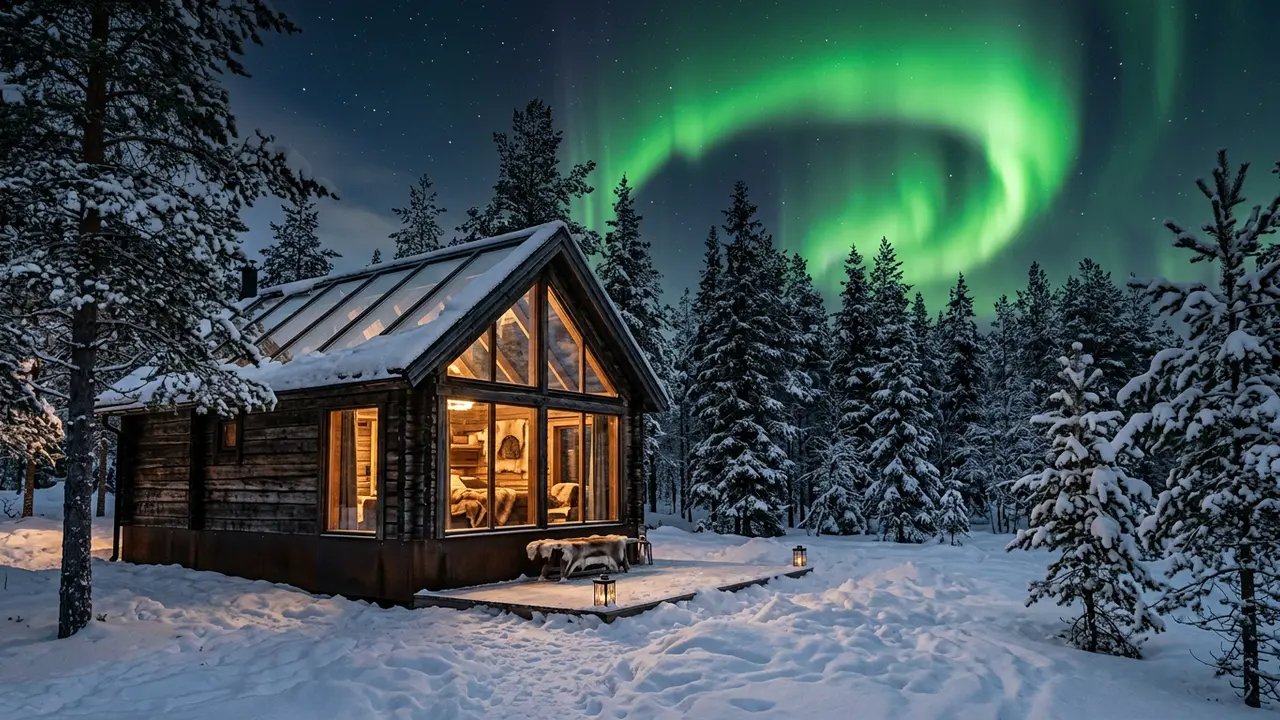
    Camp Ripan sits on the edge of Kiruna, about 10 minutes from the town center, close enough for a restaurant booking but positioned to sit outside the worst of the streetlight glow. It's the weakest of the three on pure dark-sky remoteness, a town-edge property rather than a national-park or riverside setting, but its glass-roofed Aurora cabins are a genuine and distinctive feature: glass panels in the roof and walls mean a display overhead is visible from bed, no boots, no parka, no 2am walk to a viewing deck.

    There's no observatory or guided astronomer program here either; Camp Ripan markets its own dark-sky location and its Aurora Spa rather than dedicated viewing infrastructure. Aurora season runs September through March, peaking around the winter solstice for the longest stretch of darkness. Rates run roughly $144 to $234 a night, and the property carries a 4.2-of-5 rating from more than 400 combined reviews across booking platforms.

    Ranked third on the stated criteria, not on comfort: the family-owned property, its White Guide-certified restaurant, and the rooftop hot tub make a strong case for anyone splitting a Kiruna trip between the aurora, the spa, and a good dinner, just not for anyone chasing the darkest possible sky.

    Pros

    • Glass-roofed Aurora cabins let guests watch a display directly from bed, no walk to a viewing deck
    • Aurora Spa and White Guide-certified restaurant add genuine value beyond the aurora chase
    • 4.2-of-5 rating from 400+ combined reviews, and rates from $144/night undercut both other lodges

    Cons

    • Weakest dark-sky setting of the three: 10 minutes from Kiruna town center, closer to streetlight glow
    • No observatory or dedicated aurora-viewing infrastructure comparable to the Aurora Sky Station

Which of these three you book depends on what you actually want out of the trip. If reaching a purpose-built aurora facility is the priority, STF Abisko Turiststation puts you at the foot of the chairlift to the Aurora Sky Station for less than either other option. If the ice-hotel experience itself is the draw, ICEHOTEL Jukkasjärvi delivers a night that genuinely doesn't exist in the same form the following winter, with a dark, remote setting that happens to sit under solid aurora odds. If you'd rather stay closer to Kiruna's restaurants and a spa afternoon, with a real chance of watching a display from bed, Camp Ripan's glass-roofed cabins cover that without the remoteness of the other two.

Whichever lodge you pick, the two variables that actually decide whether you see anything are cloud cover and geomagnetic activity, not which chairlift or ice suite you booked. Check a same-week aurora and cloud forecast before locking in specific nights, and build in at least three or four nights if a display is the whole point of the trip.

Frequently asked questions

Which lodge is best for seeing the aurora near Abisko and Kiruna?

STF Abisko Turiststation ranks first: it sits at the literal base of the chairlift to the Aurora Sky Station, a purpose-built summit facility for watching the sky, roughly 30 minutes up Mount Nuolja. No other lodge in this ranking offers comparable on-site aurora infrastructure.

Why does ICEHOTEL rank below STF Abisko Turiststation if it's more famous?

Fame and aurora-viewing infrastructure are different measures. ICEHOTEL Jukkasjärvi is a genuinely dark, remote setting on the Torne River, but it has no observatory or dedicated aurora facility; its aurora draw is the setting itself plus a paid guided safari add-on. STF's on-site Aurora Sky Station chairlift gives it the edge on this specific ranking's criteria.

Do I need to book a guided tour to see the aurora at these lodges?

No, though options exist. STF Abisko Turiststation's Aurora Sky Station runs its own evening programming as part of the chairlift ticket. ICEHOTEL sells a separate northern lights safari for guests who'd rather have a guide. Camp Ripan doesn't run a dedicated tour, relying instead on its own dark-sky location and glass-roofed cabins.

Which of these lodges is the cheapest?

STF Abisko Turiststation, with hotel rooms from roughly $57 a night and cheaper hostel dorms and self-catering cabins. Camp Ripan runs from about $144 a night, and ICEHOTEL's cold rooms are the most expensive at roughly €400-700 a night, though its warm rooms cost less.

Is it harder to book one of these lodges over another?

No. All three are bookable both directly through their own websites and via Booking.com, with no restrictions on either channel. STF adds a TripAdvisor-linked channel and a nonprofit-run phone line where staff can confirm chairlift and seasonal closures a little faster, but that's a marginal edge, not a real booking barrier.

When is the best time to visit for the northern lights?

Roughly mid-November through mid-March gives the deepest overlap across all three lodges: STF's Aurora Sky Station chairlift is reliably open, ICEHOTEL's full seasonal ice hotel is typically running, and nights are longest and darkest. Outside that window, from roughly April through August, darkness shortens fast and midnight sun rules out viewing entirely by June.

Further reading

Sources