This is not a stargazing tour, and that is exactly the point. The Teide Observatory Guided Visit is a daytime science tour inside one of the world's most productive astronomical facilities, perched at 2,390 metres on the Izaña ridge in Tenerife. You do not look at stars. You look at the instruments that decode them and, if conditions permit, at the Sun through a portable hydrogen-alpha telescope. The tour runs 1.5 hours, costs from €21 per person, and is booked exclusively online through VolcanoTeide, the official IAC partner. No walk-in tickets exist. Night visits are never permitted: these are working research telescopes, not visitor attractions.
What the tour covers
The visit divides into three blocks of roughly 30 minutes each. You start with solar observation: the guide sets up a portable telescope with a hydrogen-alpha filter that isolates the chromosphere, the Sun's lower atmosphere. What you see through the eyepiece is not a flat yellow disc. On an active day, sunspot filaments snake across the surface, prominences arc upward from the limb, and you can track the granulation pattern of rising and sinking plasma cells, each one roughly the size of France. If clouds block the Sun, the guide shifts to a spectroscopy demonstration, splitting white light into its component wavelengths with a handheld diffraction grating and explaining how astronomers read chemical compositions from a star's spectrum.
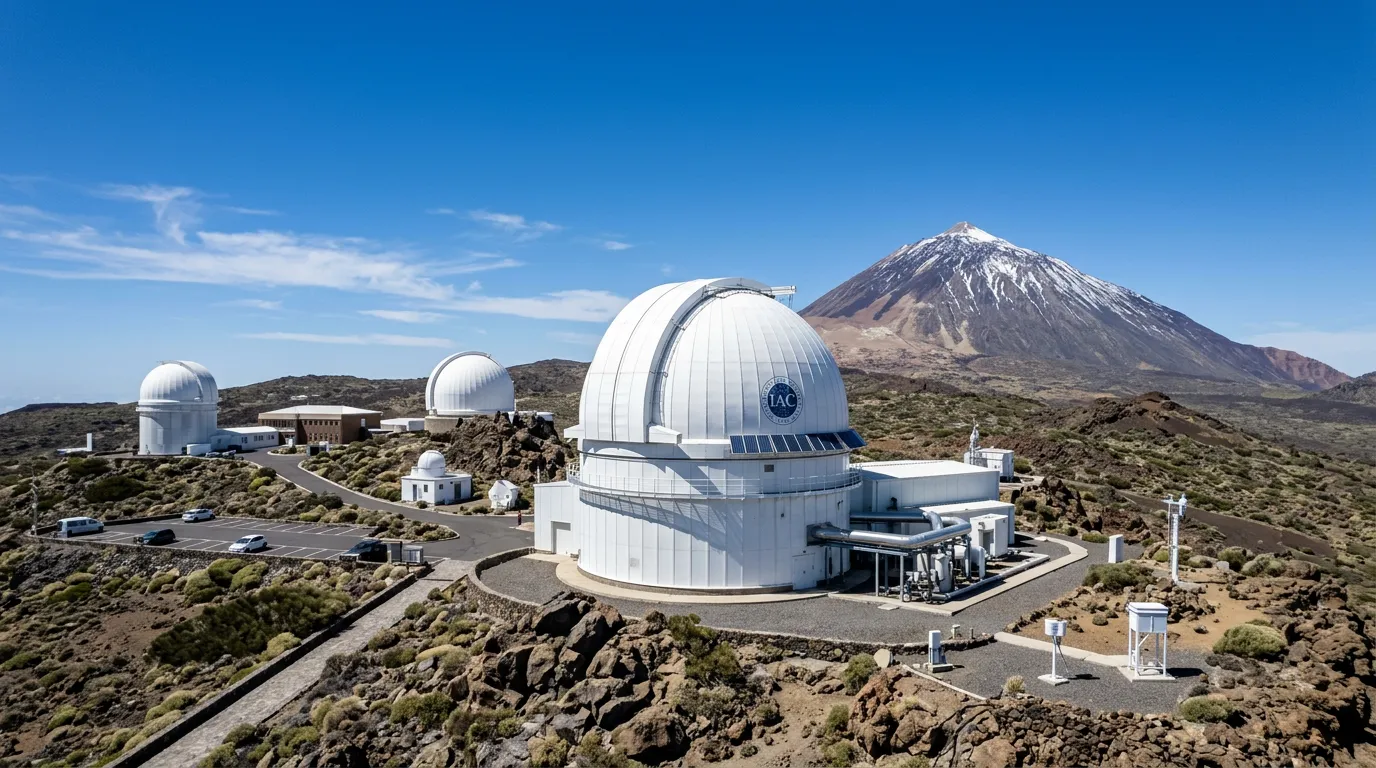
You then walk inside a nocturnal telescope dome. The tour visits either the Carlos Sánchez Telescope, a 1.52-metre reflector optimised for infrared observations and used to study brown dwarfs and exoplanet atmospheres, or the IAC-80, the 82-centimetre workhorse that has been producing data since 1991. The guide walks you through how the dome rotates to track a target, how the primary mirror cools to ambient temperature after sunset, and what the telescope is scheduled to observe that night. Standing inside a working research dome at 2,400 metres, surrounded by an instrument whose data underpins hundreds of peer-reviewed papers, is a different kind of awe than looking through an eyepiece.
The final block is a 30-minute astrophysics workshop. The guide covers three of the observatory's signature scientific contributions: helioseismology, born here in 1979 when the IAC deployed the Mark I Fourier Tachometer to detect pressure waves rippling through the Sun's interior; the brown dwarf Teide 1, the first confirmed failed star, detected in January 1994 using the IAC-80 telescope, with the discovery published in Nature in September 1995 by Rafael Rebolo's team; and ongoing solar space-weather monitoring, where Teide's instruments track flares and coronal mass ejections that can knock out satellite communications. The workshop is pitched at an engaged adult level. A curious teenager will follow it; a restless eight-year-old will not.
Why this observatory matters
Teide Observatory is not a museum with a telescope bolted to a courtyard. It is the world's largest solar observatory by instrument count, operated by the Instituto de Astrofísica de Canarias (IAC). The site hosts over 30 telescopes from 60 institutions across 19 countries, spread across the Izaña ridge at altitudes between 2,390 and 2,395 metres. The star of the fleet is GREGOR, a 1.5-metre solar telescope that resolves features on the Sun's surface as small as 70 kilometres, the highest-resolution solar images ever produced from the ground. GREGOR uses adaptive optics and a closed helium-filled light path to cancel atmospheric distortion, and its data feeds into the European Space Agency's space-weather network.
The discoveries made here are not footnotes. Helioseismology, the study of solar pressure waves used to map the Sun's interior structure, density, and rotation, was born at Teide in 1979. Before Teide's measurements, astronomers could observe only the Sun's surface. After the Mark I instrument began recording, they could infer what was happening 200,000 kilometres below it. The IAC-80 telescope detected Teide 1 in January 1994, and its substellar, cold nature was confirmed that December using the William Herschel Telescope on La Palma. The discovery, confirming Teide 1 as the first observed brown dwarf, a celestial object too massive to be a planet but too cool to sustain hydrogen fusion, was published in Nature in September 1995. The paper resolved a theoretical prediction that had stood since the 1960s and opened the field of brown-dwarf astronomy.
You will not enter GREGOR. It operates continuously during daylight hours and access is restricted to IAC researchers. You will see it from the outside: a white dome on the ridgeline, adjacent to the Vacuum Tower Telescope (VTT) and the THEMIS solar telescope. The guide explains what each instrument measures and why the Izaña ridge, chosen in 1964, delivers the best solar seeing in Europe.
Booking, logistics, and altitude
The tour is reservation-only through the VolcanoTeide website. There is no ticket desk at the observatory gate. Price: from €21 per person. Children aged 8 to 16 years enter free; children under 8 are not permitted, both for safety reasons and because the workshop content assumes an adult attention span. The tour runs daily in English and Spanish. German and French are available on select days, so confirm language availability at booking.
Arrive 30 minutes before your time slot. The observatory gate is unstaffed outside tour blocks and late arrivals are not admitted. The site sits at 2,390 metres above sea level, which can trigger mild altitude symptoms, including headache, light-headedness, and shortness of breath, if you drive straight from the coast. The operator advises against the visit for anyone with heart or respiratory conditions. If you have never been above 2,000 metres, spend the preceding day at altitude: the Parador at Las Cañadas (2,150 m) or the viewpoints along the TF-24 above 2,300 m are practical acclimatisation stops.
There is no public transport to the observatory. You need a rental car. The drive from Costa Adeje takes roughly 50 minutes via the TF-1 motorway and the TF-24 mountain road. From Puerto de la Cruz, allow 40 minutes via the TF-21 and TF-24. The road is paved and well-maintained, but the final approach along the Izaña ridge is exposed to high winds. Parking at the observatory is limited, roughly 30 spaces, but sufficient outside the Open Days events.
Cancellation is free up to 24 hours before your slot. Weather cancellations by the operator, whether heavy snow, ice on the access road, or wind that makes the site unsafe, trigger automatic refunds or rebooking.
Practical note: at 2,390 metres, UV radiation is roughly 25% stronger than at sea level. The first 30 minutes of the tour are outdoors for the solar observation block. Bring sunscreen, sunglasses, and a hat. A windbreaker is useful even in July: the Izaña ridge catches Atlantic winds, and standing still for 30 minutes in a breeze at altitude chills you faster than you expect.
The seasonal pause and the night-visit myth
The guided tour suspends from December through March due to winter conditions: snow, ice on the access road, and high winds that make the exposed observatory site unsafe for visitors. It resumes in September. If you are visiting Tenerife during the northern-hemisphere winter, the observatory tour is not an option. Plan around it or accept the gap.
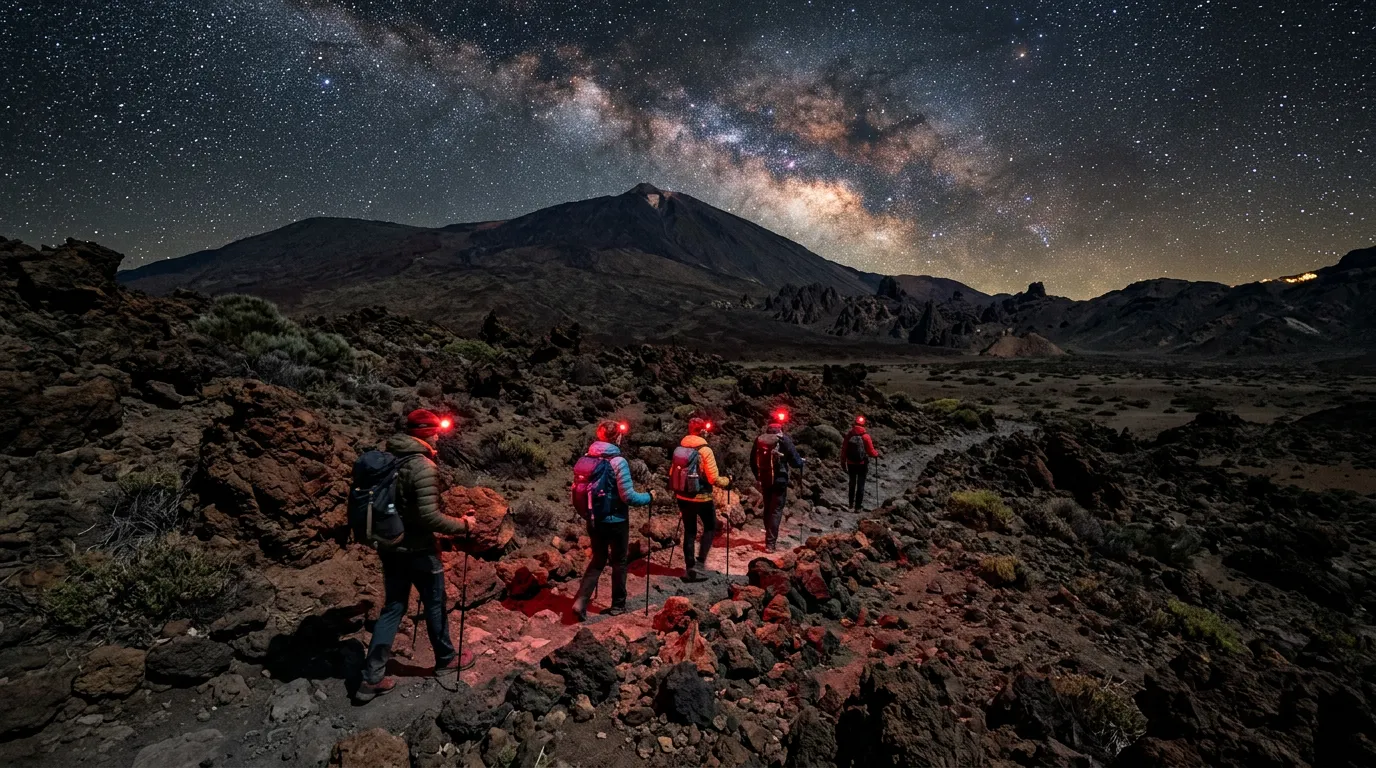
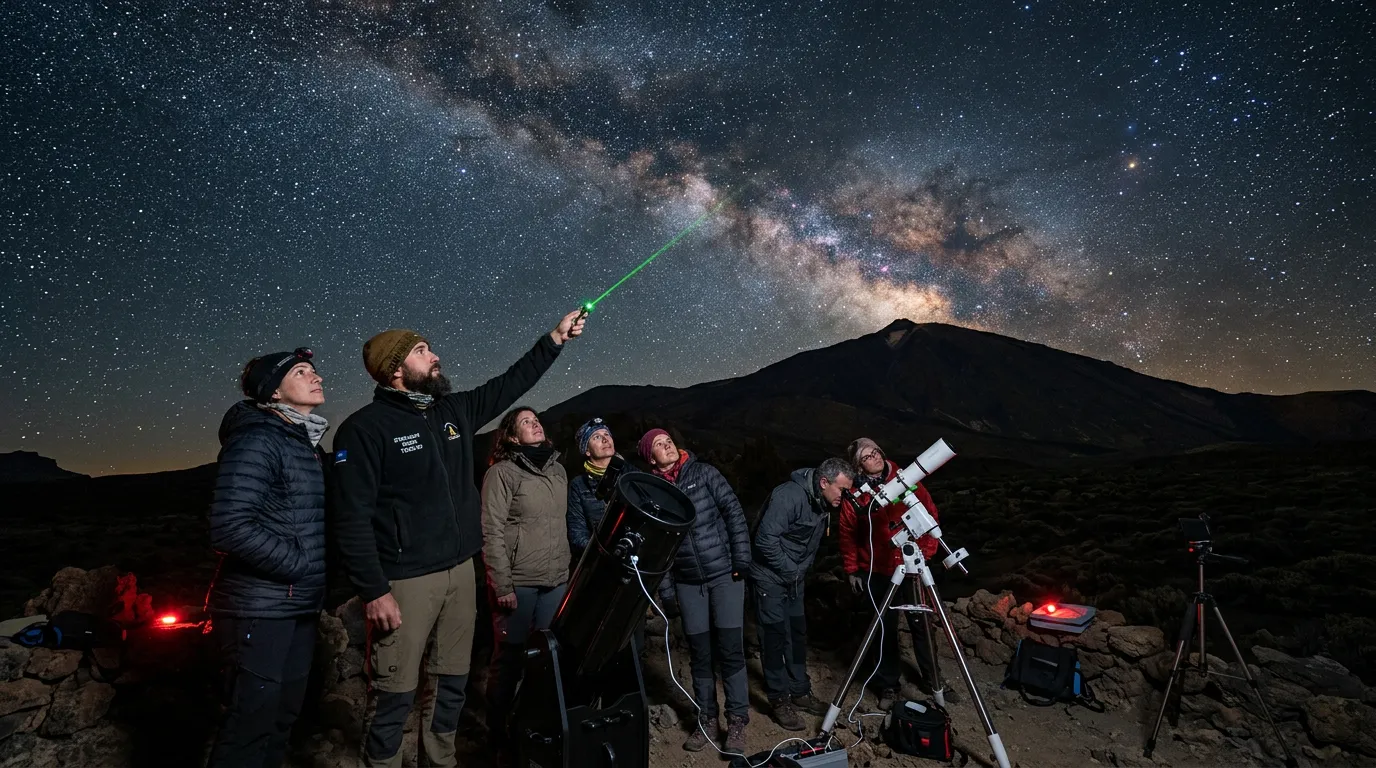
Also not an option: night visits. The observatory conducts active research every clear night of the year. The telescopes are operated by scientists and students, not by tour guides. There has never been a public night-visit programme at Teide Observatory, and the IAC has given no indication that one is planned. If you want to look through a telescope at Teide's dark skies, the correct tour is the Teide Stargazing & Astronomy Tour, which operates from the Las Cañadas caldera and the cable-car base station, not from the observatory.
The only exception is the Open Days event, held on June 20–21, 2026. These were free, Spanish-language, and fully booked within hours of the announcement. They are not a reliable way to see the observatory on short notice. If you want a spot in 2027, follow the IAC's website and VolcanoTeide's social channels from early spring, and book the moment registration opens.
Observatory tour vs. stargazing tour: which one?
These two tours serve different interests, and comparing them directly misses the point of each:
- Observatory Guided Visit: Daytime science tour. You tour working telescope domes, observe the Sun, and attend an astrophysics workshop. You learn how helioseismology works, what a brown dwarf is, and how a 1.5-metre solar mirror resolves sunspot filaments. You do not look at stars. From €21. Duration 1.5 hours. Runs April–November only.
- Teide Stargazing & Astronomy Tour: Night-time observation. You look through long-range telescopes at planets, deep-sky objects, and the Milky Way under Bortle 2 skies. Three tiers from a one-hour Observation (€42) to the full Sunset & Stars with cable car (€182). Runs year-round.
Book the observatory tour if you want to understand the science: what instruments decode the universe, and how. Book the Teide Stargazing & Astronomy Tour if you want to see the sky: Saturn's rings, the Andromeda Galaxy, the Milky Way's core.
The two tours complement each other. Do the observatory tour in the morning, spend the afternoon at altitude acclimatising, and take the stargazing tour at night. That is a full Teide astronomy day, and the only way to experience both the science and the sky in a single trip.
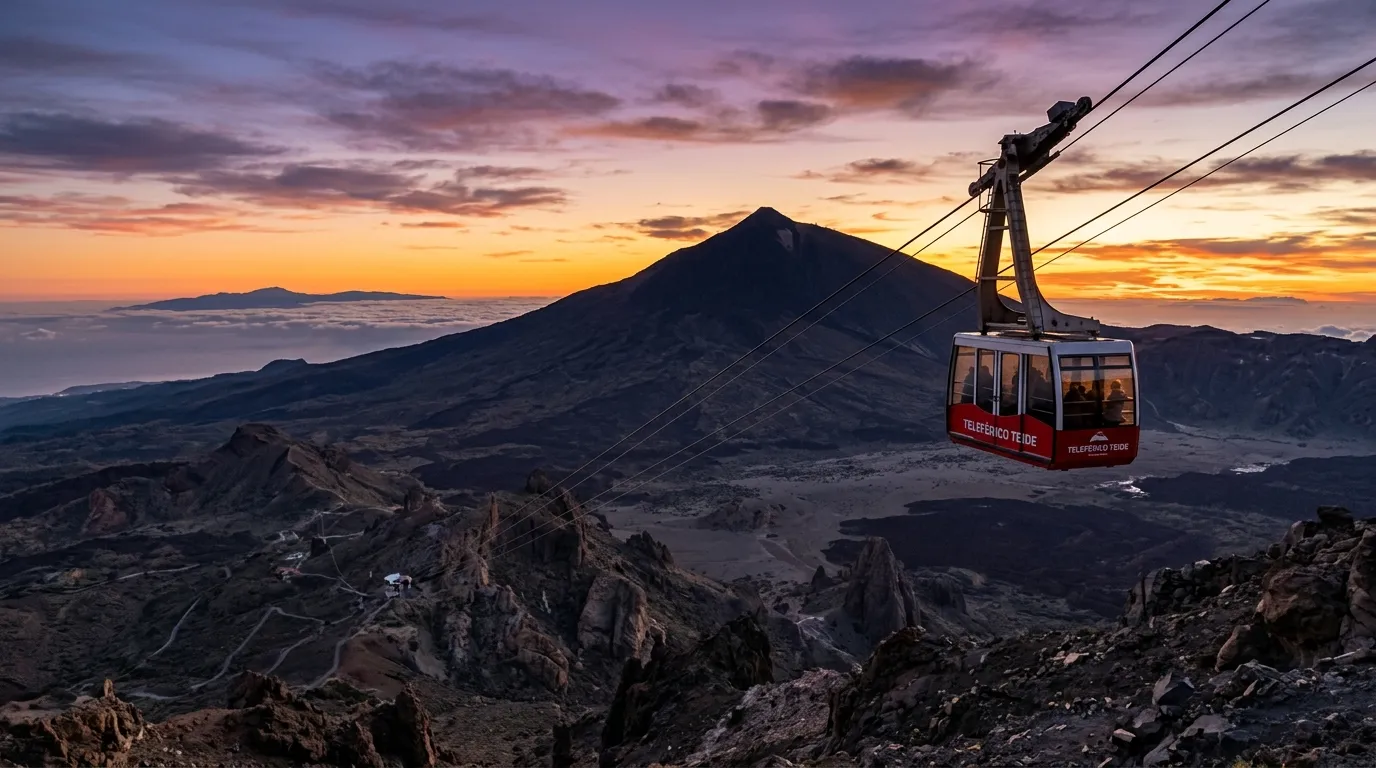
The observatory tour also pairs well with a day exploring the Teide National Park: the Roques de García, the cable car to La Rambleta, and the Mirador de Chío at sunset. For timing guidance on when to visit Tenerife for astronomy, see the best time for stargazing in Tenerife.