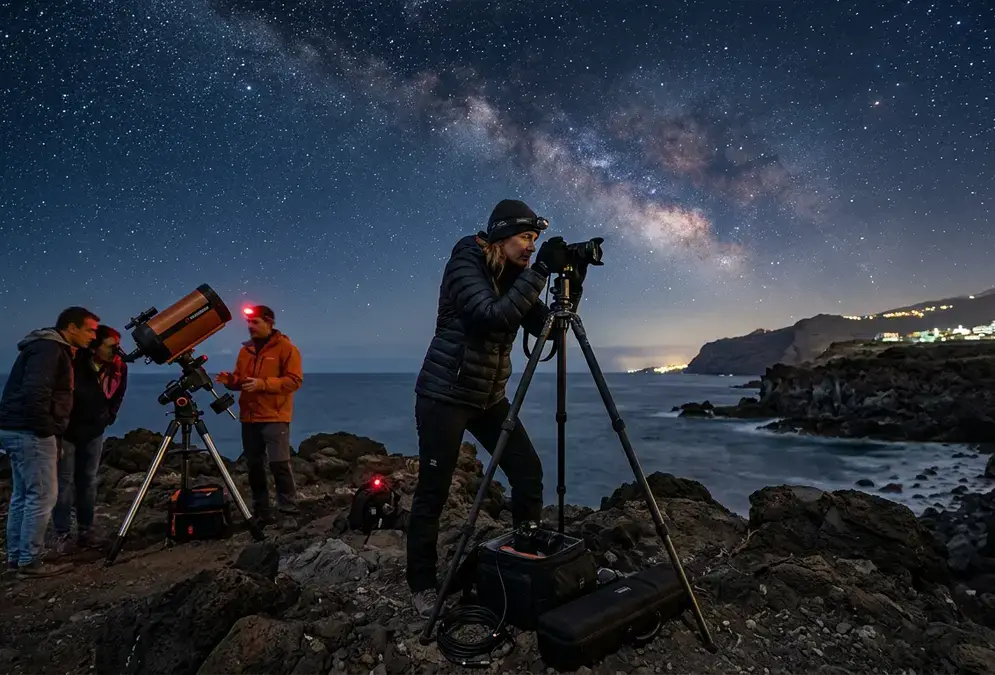
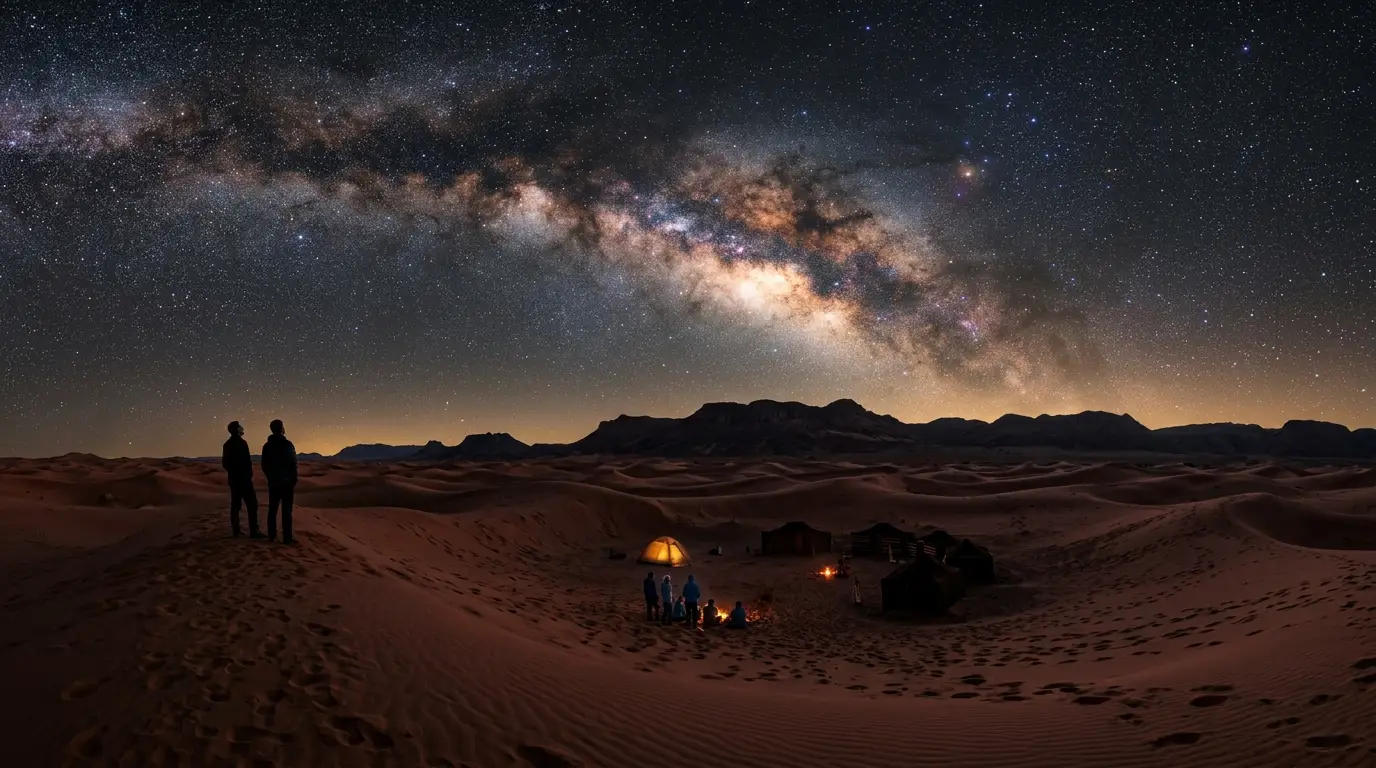
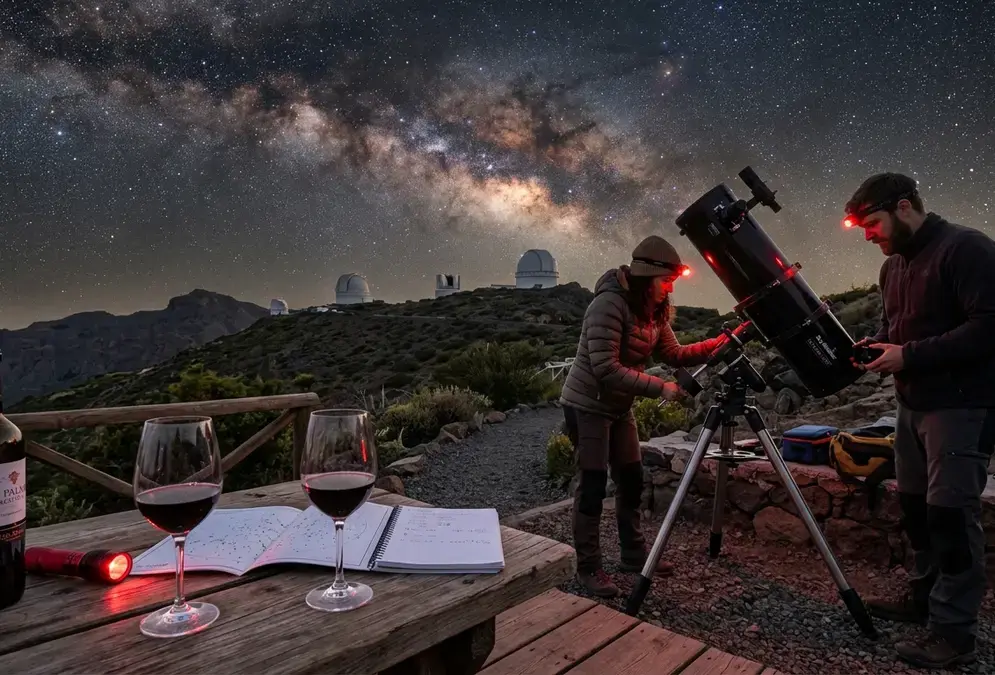
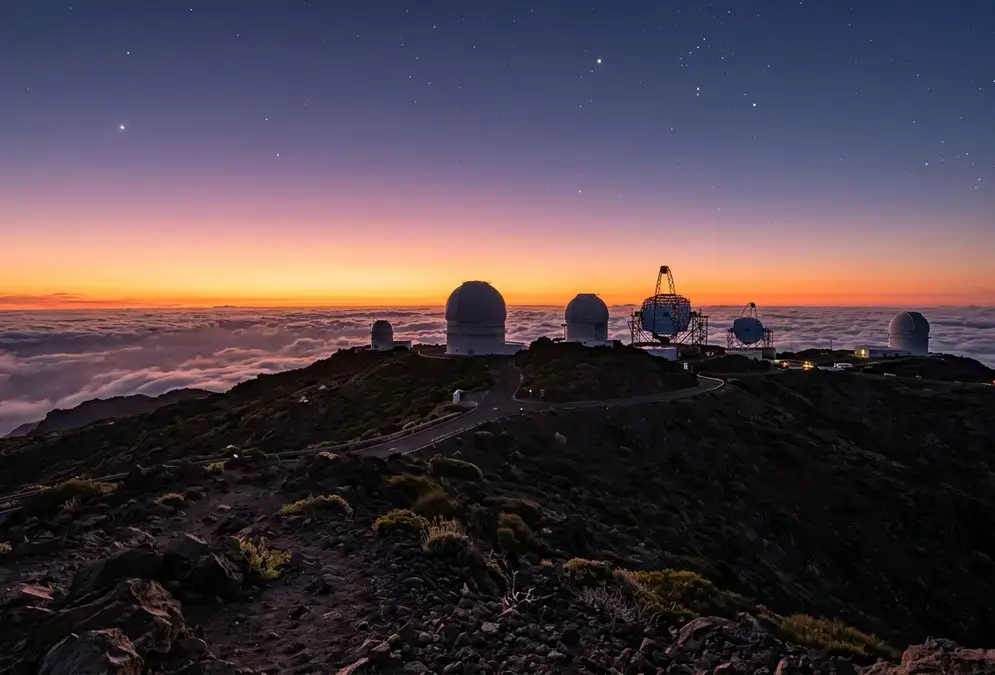
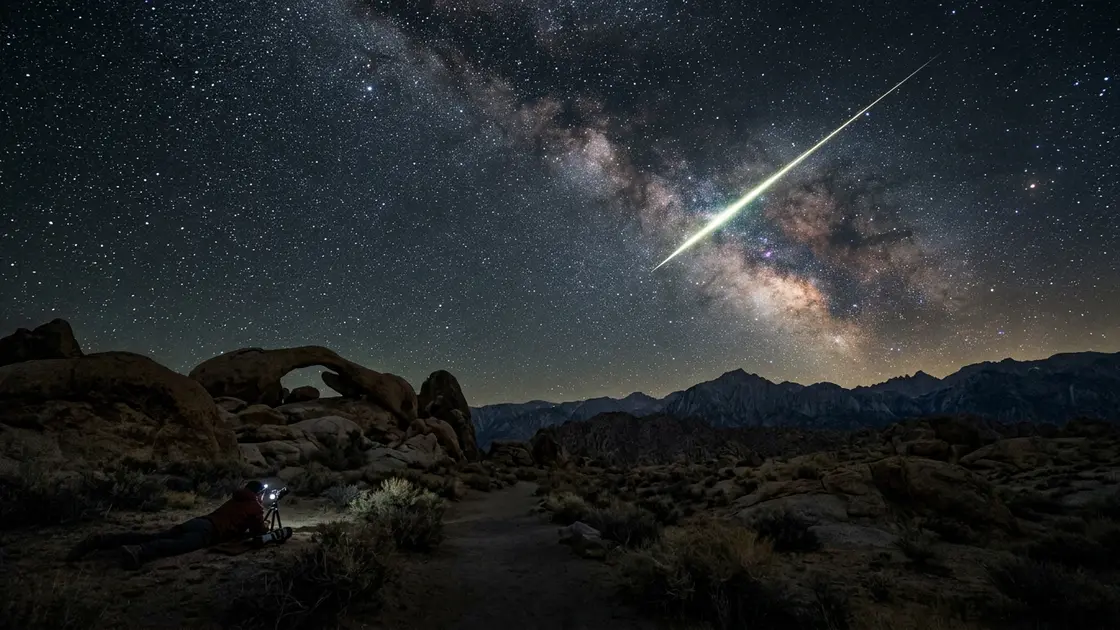
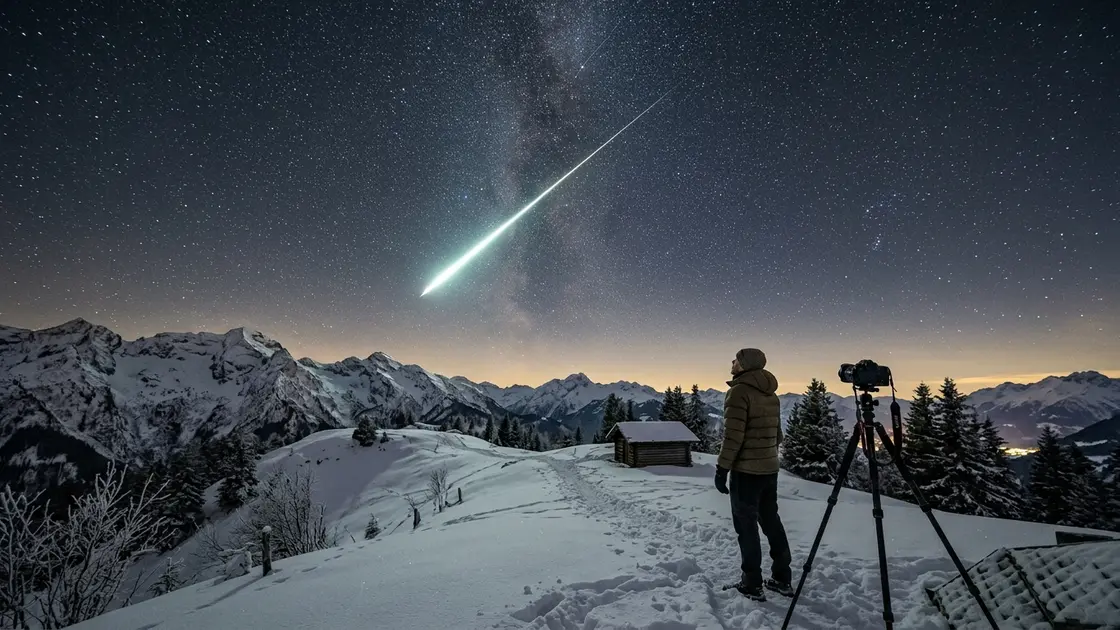
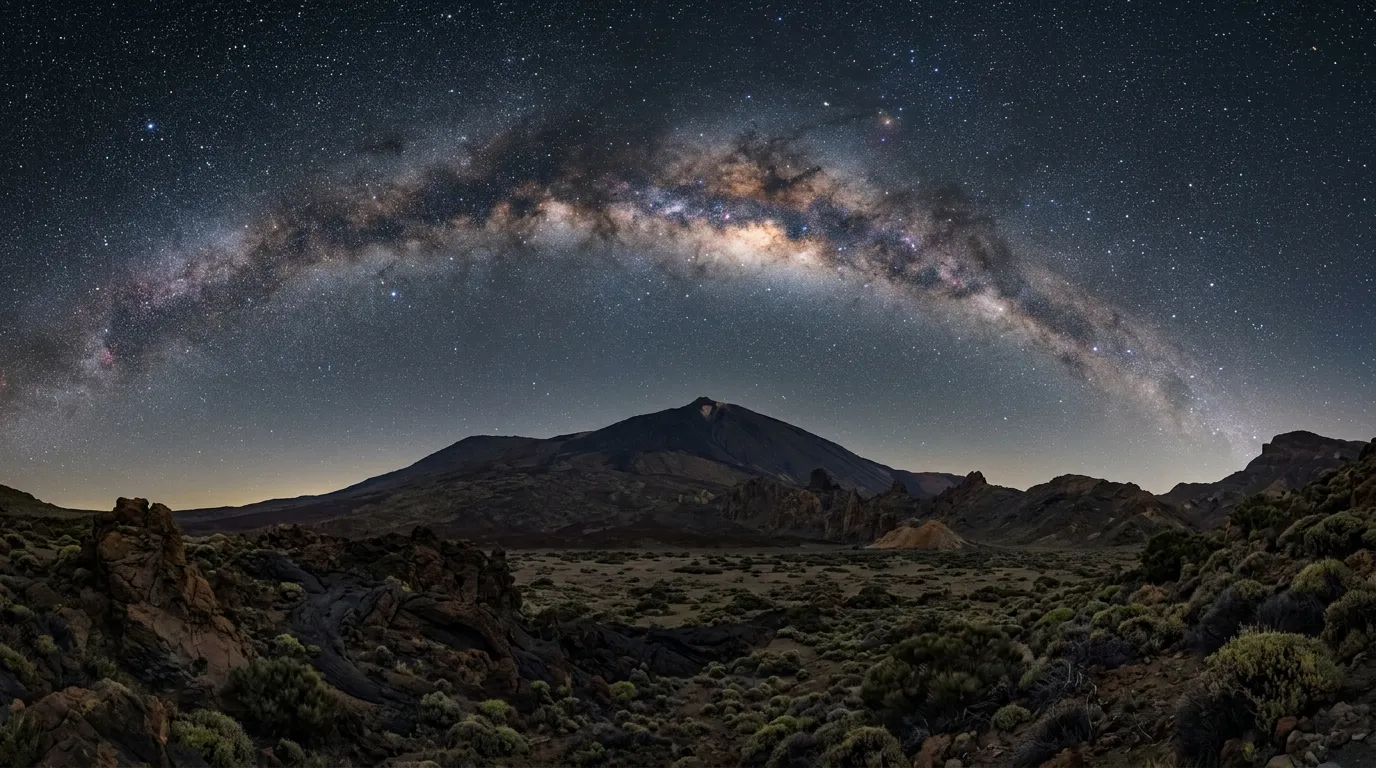
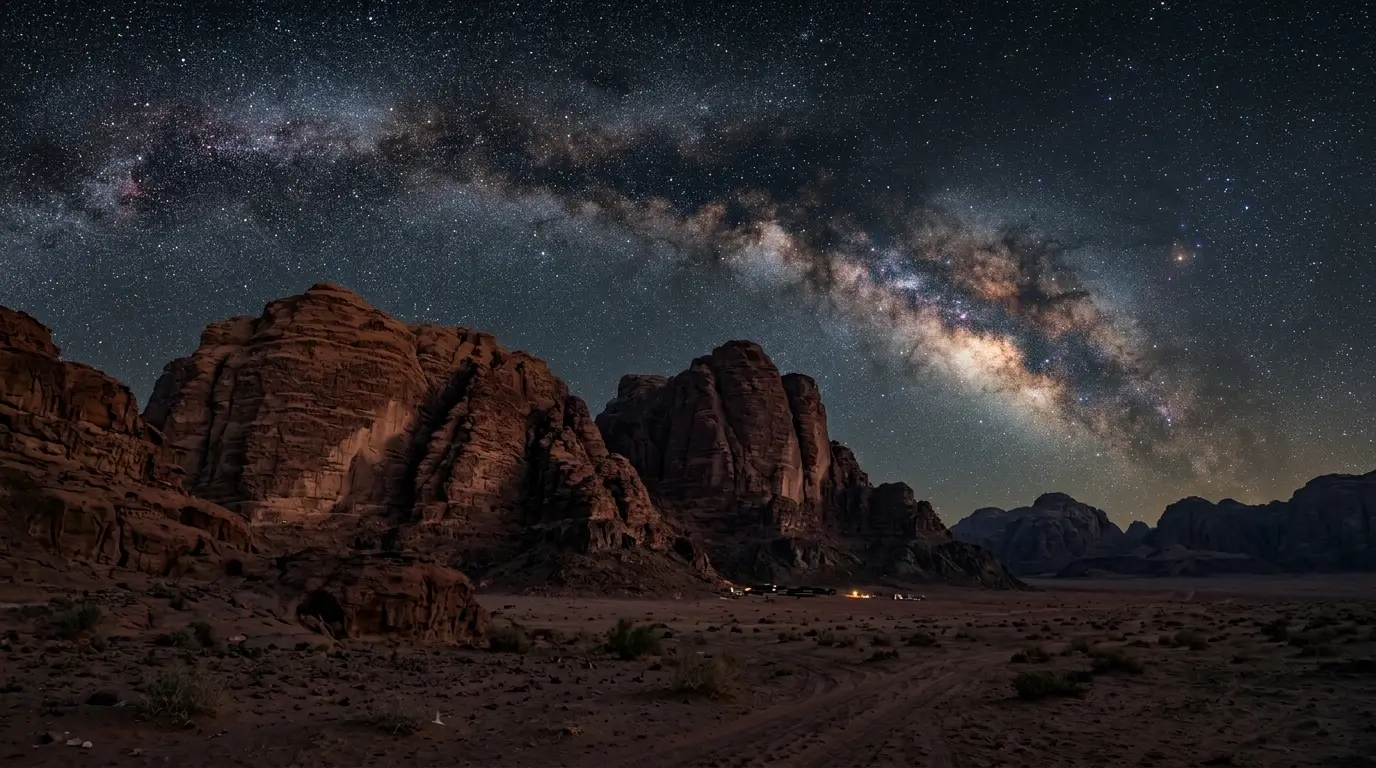
Milky Way arching over the Roque de los Muchachos Observatory domes on La Palma, Bortle 1-2 dark sky above the Caldera de Taburiente rim at 2,396 metres
stargazing dark sky milky way

La Palma Stargazing: The World's First Starlight Reserve

La Palma stargazing guide: the world's first Starlight Reserve since 2012, Bortle 1-2 skies above Roque de los Muchachos, plus where to stay and go year-round.

Darkness: Bortle 2
Latitude: 29°N
Best months: Year-round

Dark-sky facts

Darkness
Bortle 2 · Dark sky
Best months
Year-round
Country
Spain
Coordinates
28.68°N, 17.76°W
Designation
La Palma Starlight Reserve
Night access
Roque de los Muchachos Observatory day visits by reservation only via a Starlight-certified guide, typically 90-110 minutes (verify current times before booking); night access to the observatory is not permitted; Caldera de Taburiente National Park and the Garafía road network are open 24/7 year-round
Costs & fees
Observatory day visit from ~€20 adult / €15 child or La Palma resident, minimum age 6, reservation required (verify current pricing before booking); national park entry free; stargazing tours and lodge stays priced separately

Weighing it against somewhere else? La Palma vs Tenerife Stargazing: How to Choose

The Milky Way is richly structured overhead; the Andromeda Galaxy is an easy naked-eye smudge.

This destination rates Bortle 2 on the 9-level Bortle dark-sky scale, where 1 is a pristine dark sky and 9 is an inner-city sky. The Milky Way is richly structured overhead; the Andromeda Galaxy is an easy naked-eye smudge.

On this page

Updated

La Palma became the first island on Earth to earn Starlight Reserve certification, in April 2012, and the protection behind that title runs three decades deeper: a 1988 Sky Quality Law (Ley del Cielo) restricts outdoor lighting, radio interference, and flight paths specifically to keep the night sky dark above the Roque de los Muchachos Observatory, at 2,396 metres on the rim of the Caldera de Taburiente. The IAC's own research puts artificial light pollution at the observatory at roughly 2% of natural sky brightness, a number worth sitting with if you've stood under a suburban sky anywhere else. Unlike Tenerife's Teide, La Palma's flagship observatory is a night-time research facility, home to the Gran Telescopio Canarias, the world's largest single-aperture optical telescope, and it is closed to the public after dark. What that means for a traveler: this isn't a destination where you drive up, look through the big telescope, and drive home. It's a destination built around Bortle 1-2 skies you find yourself, on an island of roughly 84,000 people, about a tenth of Tenerife's population and a fraction of its tourism traffic.

The sky this month

Computed for La Palma at 29°N. Updates nightly.

  • First quarter tonight, 36% illuminated

    Next new moon August 12. The nights either side of it are the darkest of the month.

  • About 7 hours of astronomical darkness tonight

    The sun drops more than 18 degrees below the horizon, so the sky gets genuinely dark for deep-sky viewing at 29°N.

    Hours of astronomical darkness by month at La Palma: January 11 hours, February 10 hours, March 9 hours, April 8 hours, May 7 hours, June 7 hours, July 7 hours, August 8 hours, September 9 hours, October 10 hours, November 11 hours, December 11 hours.

  • Perseids active now

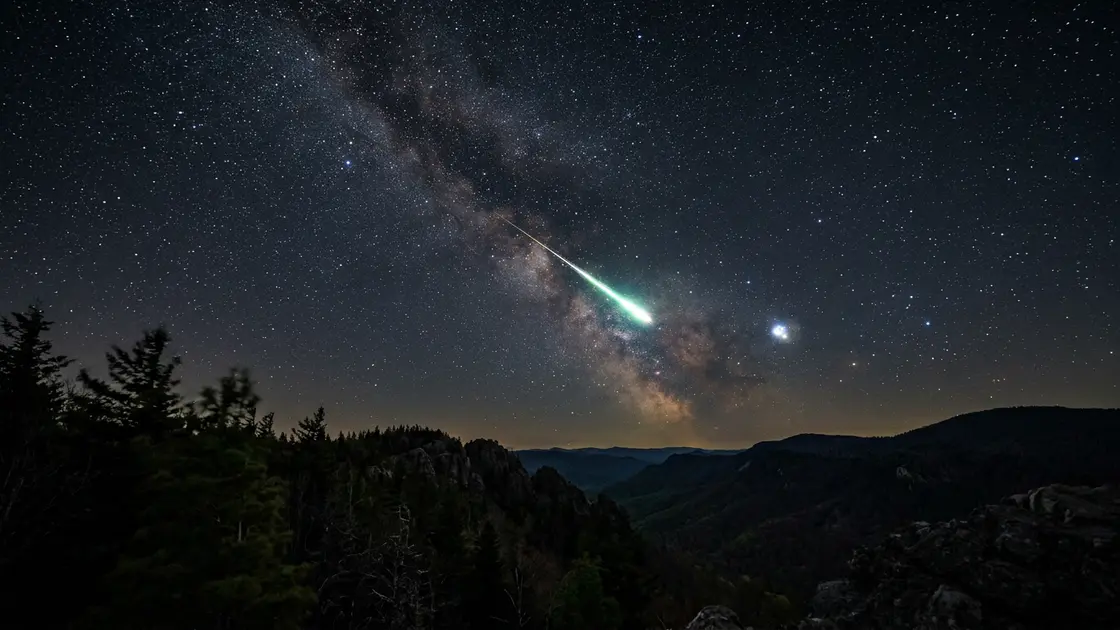
    Peaks August 12. Up to 100 meteors per hour at maximum. The 2026 peak lands on a new moon — a dark-sky year with zero lunar washout.

    See the Perseids guide
New moons August 12 September 10 October 10
Add new-moon reminders Full sky calendar

Where to go stargazing in July

Why La Palma's sky is different

Two different milestones get conflated in most write-ups, so it's worth separating them clearly. The Ley del Cielo (Law 31/1988) is the legal instrument: one of the first laws anywhere written specifically to protect a night sky for astrophysical research, restricting light pollution, radio interference, and aircraft flight paths over La Palma and northern Tenerife. A 1992 decree filled in the technical detail. The Starlight Declaration, signed on La Palma on 20 April 2007 by UNESCO, the International Astronomical Union, and the Instituto de Astrofísica de Canarias, was a founding manifesto: a statement that an unpolluted night sky is a right, not a privilege. The certification followed five years later, in April 2012, when Fundación Starlight named La Palma — together with Alqueva in Portugal — the world's first Starlight Reserve, simultaneously naming it a Starlight Tourist Destination. The law gave the sky legal protection; the 2007 declaration gave it a name; the 2012 certification made it official.

The physical mechanism doing the daily work is the same Atlantic trade-wind cloud layer that clears Tenerife's Teide skies, sitting roughly 770-1,380 m in summer and rising to around 1,360-1,850 m in winter. Anything above that band, including the observatory's 2,396 m ridge and several stargazing lodges in the northern Garafía municipality, sits clear above the marine cloud deck for most of the year. Below it, particularly in January and February, calima (Saharan dust intrusions) can further haze the sky at lower elevations; the observatory itself usually sits above the dust layer too, but the effect is real enough at sea level that it's worth checking a calima forecast before locking in winter dates.

Sky-quality readings back up the claim. Historical solar-minimum studies at the observatory found sky brightness of B=22.7, V=21.9, R=21.0 mag/arcsec², numbers that put the Roque de los Muchachos in the same conversation as Chile's Atacama and Hawaii's Mauna Kea for pure sky darkness. IAC-affiliated measurements at the darkest sites put the sky at Bortle Class 1-2, among the lowest ratings measured anywhere.

None of this requires disparaging Tenerife, whose Teide skies genuinely earn their own UNESCO listing. The practical difference is scale. La Palma's population sits around 84,000 across the whole island, against Tenerife's roughly 964,000; the traffic on La Palma's mountain roads after dark, the crowd at any viewpoint, and the light dome from any single town are all smaller by an order of magnitude. If you want the full feature-by-feature comparison, read La Palma vs Tenerife for stargazing; the short version is that La Palma trades some infrastructure and tour-market maturity for a genuinely quieter island.

Month by month

La Palma's stargazing case doesn't rest on long-term climate averages the way Tenerife's does; less has been published specifically on the island's night-sky season, so treat the pattern below as broadly similar to Tenerife's rather than independently measured for La Palma. What is well documented is the Atlantic trade-wind cloud layer, which sits lower and more consistently in summer, giving altitude-based lodges like Casa El Colmenero their best chance of clearing it, and calima, the Saharan dust intrusion that is most frequent and intense in January and February. Moon phase still matters more than month: a new-moon night in November beats a full-moon night in July anywhere on this list.

  • January: Fair — Calima intrusions are most frequent and intense this month, hazing skies at lower elevations; Atlantic frontal systems also bring more cloud and rain island-wide
  • February: Fair — Second peak calima month; the trade-wind cloud layer tends to sit higher and thicker, working against lower-altitude lodges clearing it
  • March: Good — Calima risk eases; the cloud layer starts settling toward its lower summer position, improving odds for altitude-based bases in Garafía
  • April: Good — Transition month; a Milky Way arm becomes visible low on the southern horizon before dawn, in a season pattern similar to Tenerife's
  • May: Peak — The trade-wind cloud layer sits at its lowest and most consistent, giving above-the-cloud lodges their best odds; the Milky Way core starts rising
  • June: Peak — Galactic core climbs high overhead; warm nights and a strong inversion make this one of the best windows of the year
  • July: Peak — Peak Milky Way season, by analogy with Tenerife's pattern; the cloud layer stays low, favouring Garafía's altitude lodges
  • August: Peak — Perseid meteor shower peaks mid-month; a secondary, higher-altitude Saharan dust layer can occasionally haze clarity, though the observatory itself sits above it
  • September: Peak — Shoulder month with fewer visitors; the Milky Way core is still high and the cloud layer remains favourably low
  • October: Good — Autumn transition; the cloud layer starts rising toward its winter position and nights cool at altitude
  • November: Fair — Atlantic frontal systems and stronger trade winds bring more island-wide cloud, the same pattern that lowers Tenerife's rating this month
  • December: Good — Longest nights of the year; cold at altitude and occasional winter fronts, but clear stretches between systems reward patience

Going in May? See what else the sky offers that month

Roque de los Muchachos Observatory: the science and the access rules

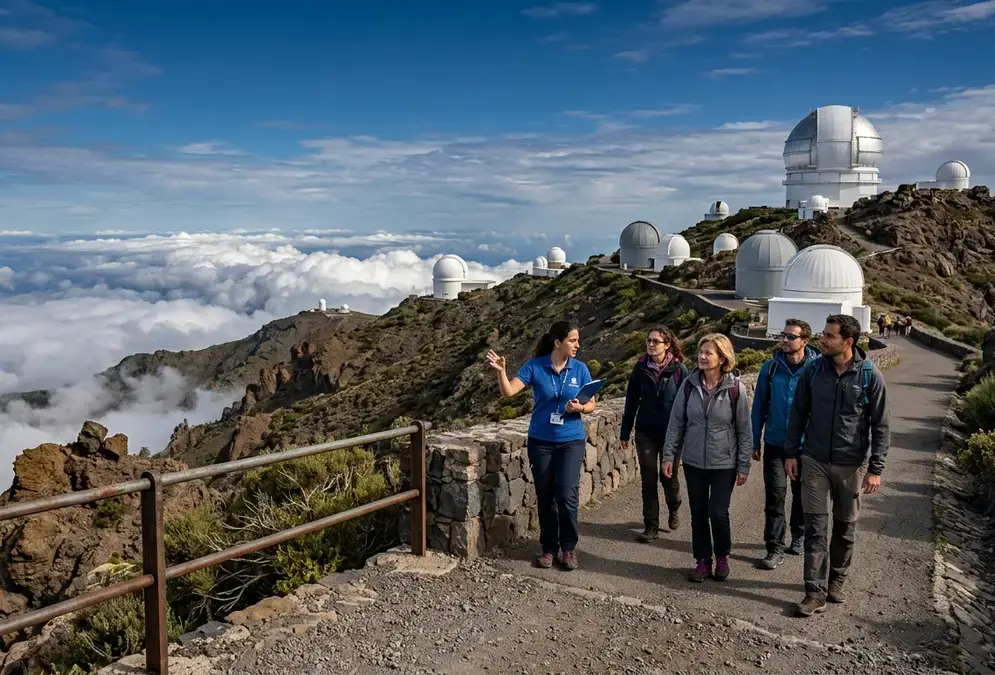
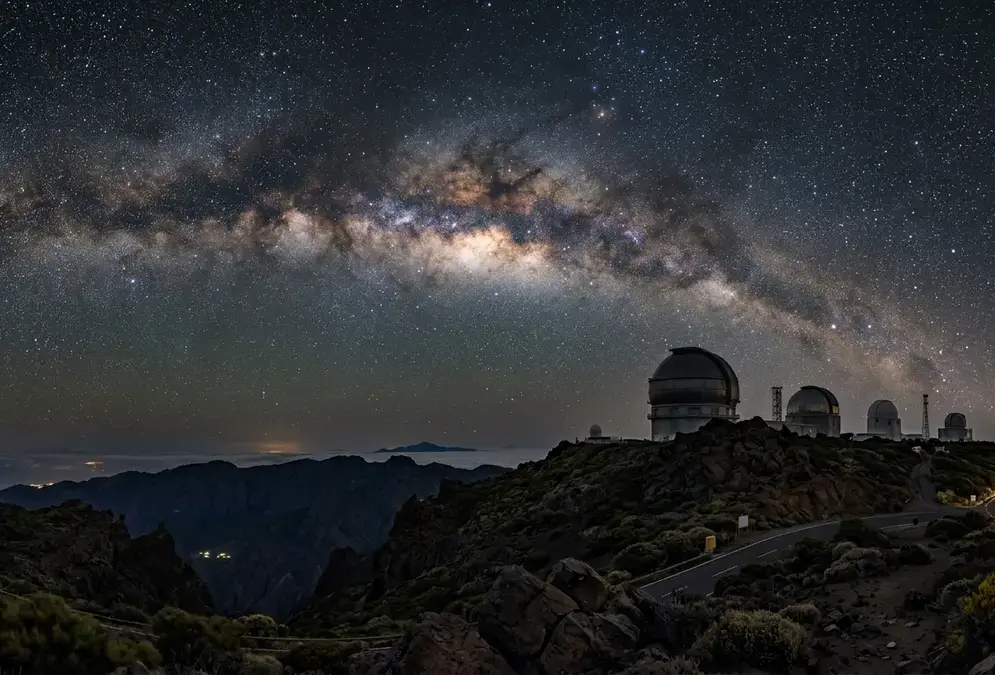
The Roque de los Muchachos Observatory (ORM), operated by the Instituto de Astrofísica de Canarias, sits at 2,396 m on the caldera rim in the municipality of Garafía. It hosts more than 20 telescopes and instruments, including the Gran Telescopio Canarias (GTC), a 10.4 m primary mirror confirmed as the world's largest single-aperture optical/infrared telescope; the William Herschel Telescope, a 4.2 m instrument operating since 1987; and the MAGIC twin Cherenkov telescopes, built for high-energy gamma-ray astronomy rather than visible light.

Here's the access rule that trips up first-time visitors: ORM is a day-visit-only site. IAC itself doesn't sell tickets; visits are led by independently operating Starlight-certified guides (trained in partnership with the IAC and Fundación Starlight), typically 90 to 110 minutes, priced around €20 for adults and €15 for children or La Palma residents, with a minimum age of 6 and reservation required in advance. Night access is not open to the public; gates close after dark so vehicle lights and stray illumination don't disrupt live observation runs. If a tour operator offers you a night visit to the observatory itself, that isn't part of the official program. Verify current schedules and pricing directly with a Starlight-certified operator before you travel, since visit policies shift.

What the daytime visit is good for: walking among working telescope domes on one of the best astronomical sites on the planet, and hearing what each instrument actually does. It isn't a substitute for a night under the stars; that happens lower down, on your own or with an independent stargazing guide, not inside the observatory gates. For the full drive-by-drive route and visitor-centre details, see the Roque de los Muchachos Observatory guide.

Getting there and getting around

La Palma Airport (SPC) sits in Breña Baja, about 8 km south of Santa Cruz de La Palma. As of 2026, the airport is served by Binter Canarias, Canaryfly, Condor, Discover Airlines, easyJet, Edelweiss, Eurowings, Iberia, Jet2, Luxair, Marabu, Transavia, Volotea, and Vueling, connecting to roughly 21 destinations, with Binter Canarias, Condor, and Eurowings running the most flights. Most routes connect through Tenerife or Gran Canaria, plus seasonal direct links from mainland Spain, Germany, and the UK. Airline route lists shift season to season; confirm current connections before booking.

The ferry alternative: Fred Olsen Express and Naviera Armas both sail between Santa Cruz de La Palma and Los Cristianos on Tenerife's south coast, a crossing of roughly 2h30 to 3h15. It's a reasonable option if you're island-hopping and want to bring a rental car across, though flying is faster for a dedicated trip.

One reassurance worth stating plainly: the 2021 Tajogaite eruption, on the Cumbre Vieja rift zone, ran 85 days from 19 September to 13 December that year, destroying more than 3,000 buildings and reshaping the coastline in the Aridane valley on the island's west side, near Los Llanos de Aridane and El Paso. It was genuinely serious, and the new lava field is now a visitor attraction in its own right, with some zones still restricted for residual gas and ground-stability reasons. None of that overlaps with the ORM / Caldera de Taburiente stargazing area on the opposite side of the island. If you're worried the eruption affects a stargazing trip, it doesn't; the two areas sit on different sides of a genuinely mountainous island.

A rental car is not optional. There's no meaningful public transport once you leave Santa Cruz de la Palma or Los Llanos de Aridane, and the road up to the observatory climbs to nearly 2,400 m on mountain switchbacks that take longer to drive than the map distance suggests. Fuel up before you leave the coast; stations thin out fast above the main towns. For the full airport, ferry, and car-rental breakdown, see getting to La Palma.
Interactive map — loads as you scroll (requires JavaScript)

Tap a pin to open the lodge, tour, or destination page.

How long to stay

Best season

April through October, strongest May-September, when the trade-wind cloud layer sits lowest; a seasonal pattern similar to Tenerife's rather than independently confirmed for La Palma specifically

Quietest hours

Post-midnight, once day-trippers have left Garafía and the Caldera viewpoints; the road network here carries a fraction of Tenerife's night traffic even in August

Visit duration

3 nights minimum for a stargazing-focused trip; 5-7 nights to add Caldera de Taburiente hiking and the 2021 eruption site without rushing

Where to stay

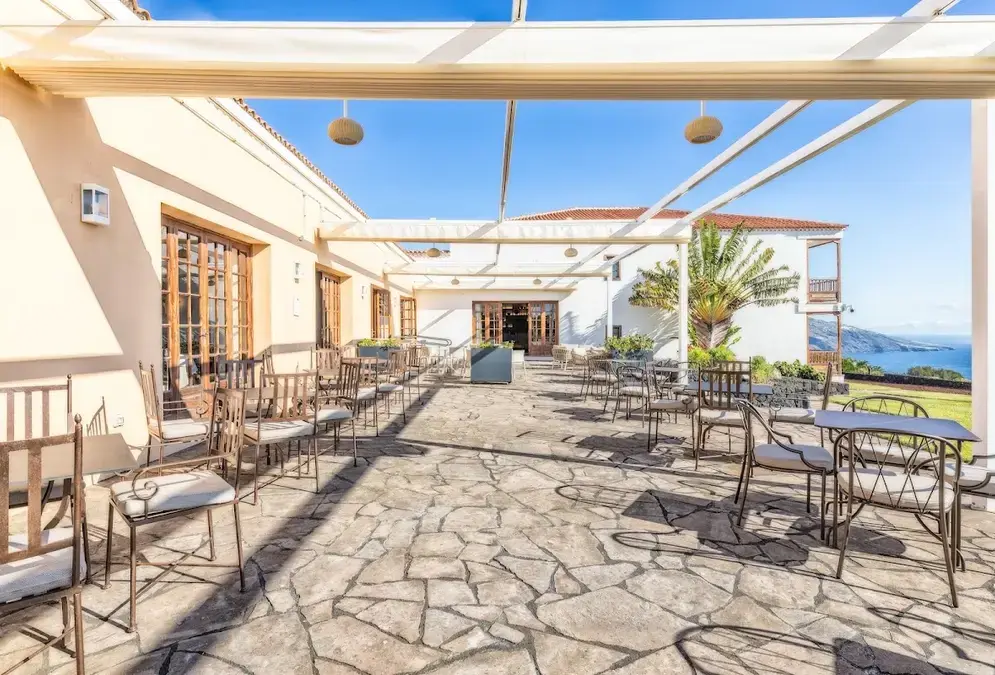
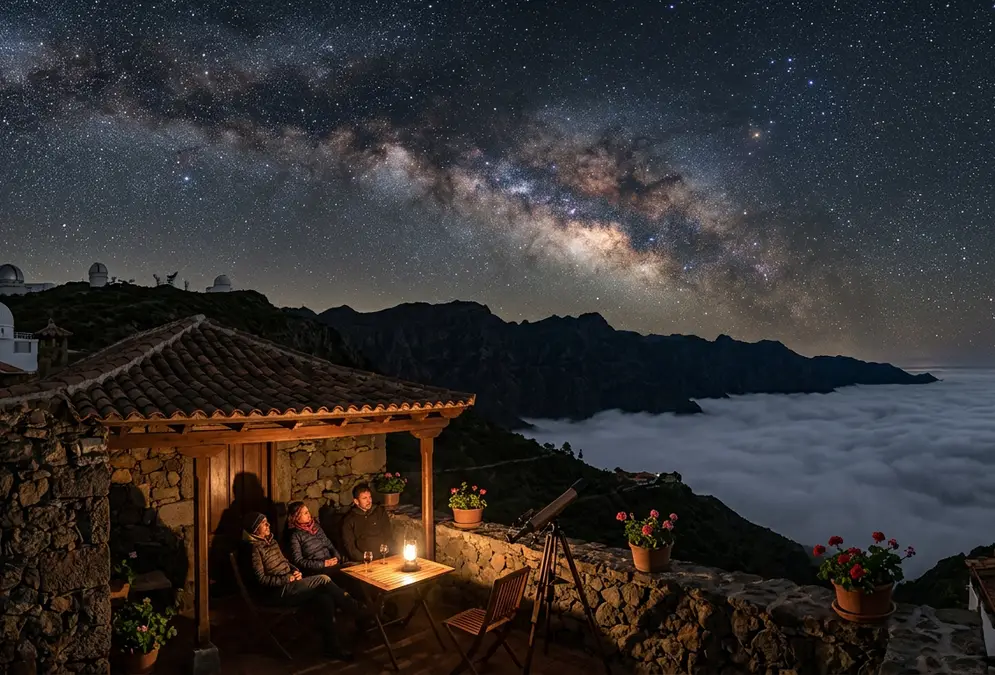
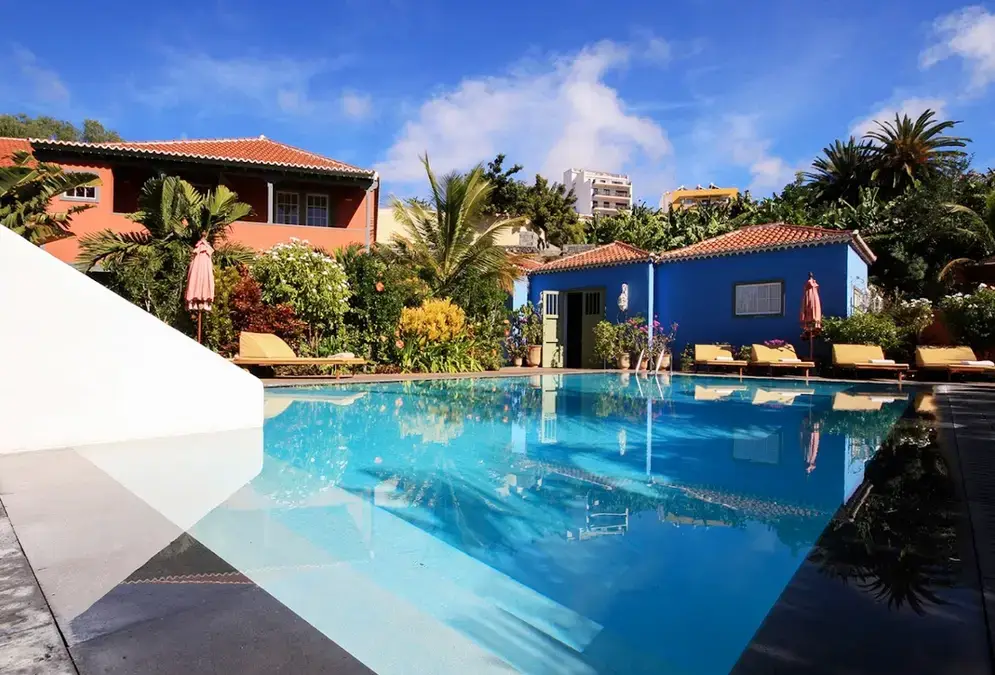
Where you sleep on La Palma decides how much of the night you actually get to use. The island's darkest, least populated municipality is Garafía, on the remote north side, and it's where the strongest lodging case is currently built: Casa El Colmenero, a restored rural house at 1,042 m, sits inside the altitude band where the Atlantic cloud layer typically breaks up, the same mechanism that keeps ORM's summit clear. It carries no Starlight Foundation certification and no star rating, but early Booking.com reviews put it at 10/10, with guests independently calling out the night sky from its private terrace. Self-catering rates start around €31 per person per night.

Two Starlight-certified alternatives exist elsewhere on the island, Villa La Malvasía in Fuencaliente and Casa Rural El Pósito in Villa de Mazo, if a formal badge matters more to you than the above-the-cloud physics. For a full ranking across five properties, weighing altitude, drive time to the observatory, and price, read the best places to stay on La Palma for stargazing.

Top lodges at a glance

3 4.2 Budget

Best best base for pairing stargazing with the caldera de taburiente

Casas Rurales Tola

Self-catering casa rural in El Paso, gateway to Caldera de Taburiente, from €46/night

$ · from €46/night View lodge
4 4.7 Luxury

Best best heritage stay with a dark-sky-adjacent location

Hotel Hacienda de Abajo

Adults-only 4-star heritage hotel in Tazacorte, shielded from Santa Cruz's light dome by the cloud-inversion layer, from €167/night

$$$ · from €167/night View lodge
5 4.2 Traditional

Best best comfort-and-location base, not a stargazing pick

Parador de La Palma

4-star Parador in Breña Baja near the airport and Santa Cruz de la Palma, over an hour's drive from Roque de los Muchachos, from €130/night

$$ · from €130/night View lodge
See the full ranking: Best Places to Stay on La Palma for Stargazing

Tours and stargazing experiences

La Palma's stargazing tour market is smaller and less mature than Tenerife's, a direct consequence of the island's lower tourism volume. That isn't necessarily a downside: most stargazers here still do it the way locals do, driving into Garafía or the recognised observation points around Las Tricias after dark, finding a pull-off, and waiting for their eyes to adjust. Guided options exist and are growing, typically running from the coastal towns up into the highlands for a few hours with a local guide and a telescope; check current listings and verify what's actually included (transport, telescope, guide credentials) before booking, since the market here has fewer established, long-running operators than Tenerife's. We track the current best-reviewed option at the La Palma stargazing tour.

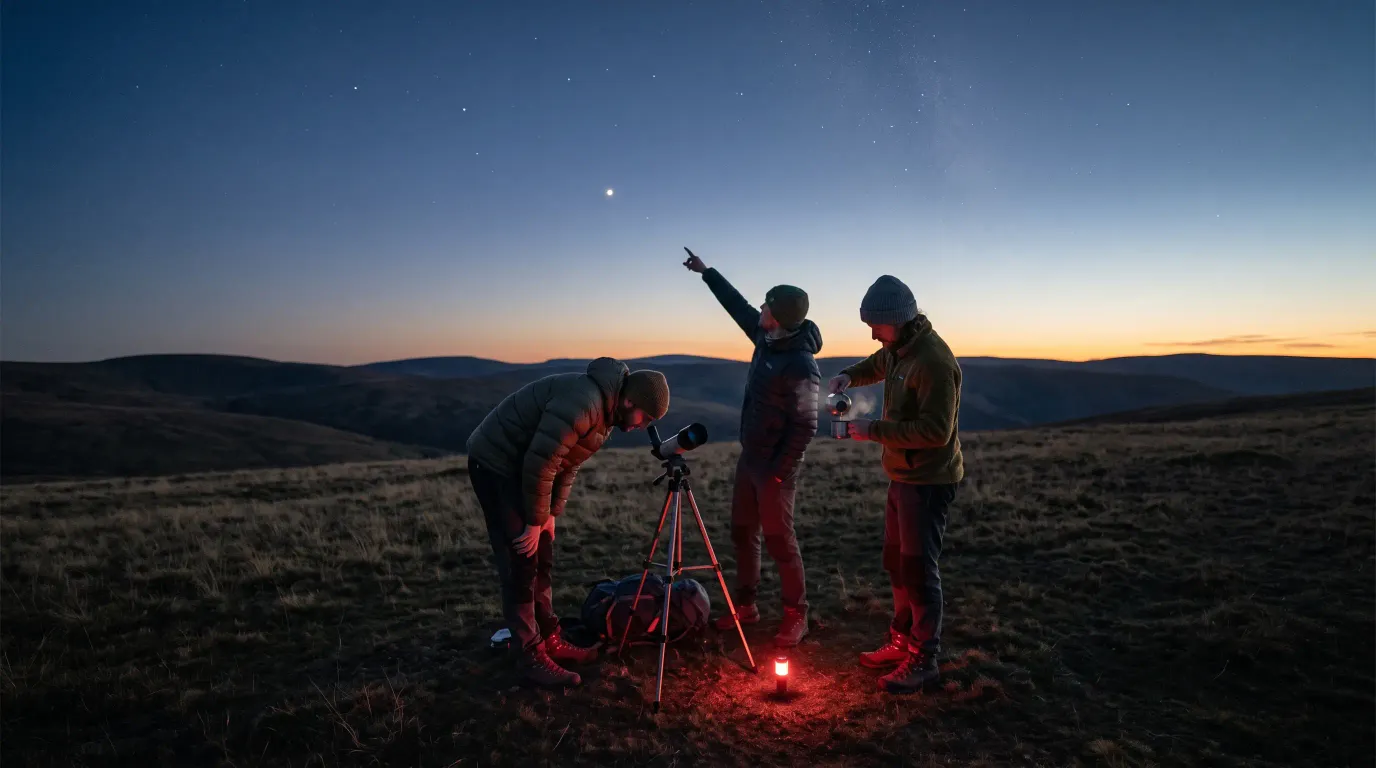
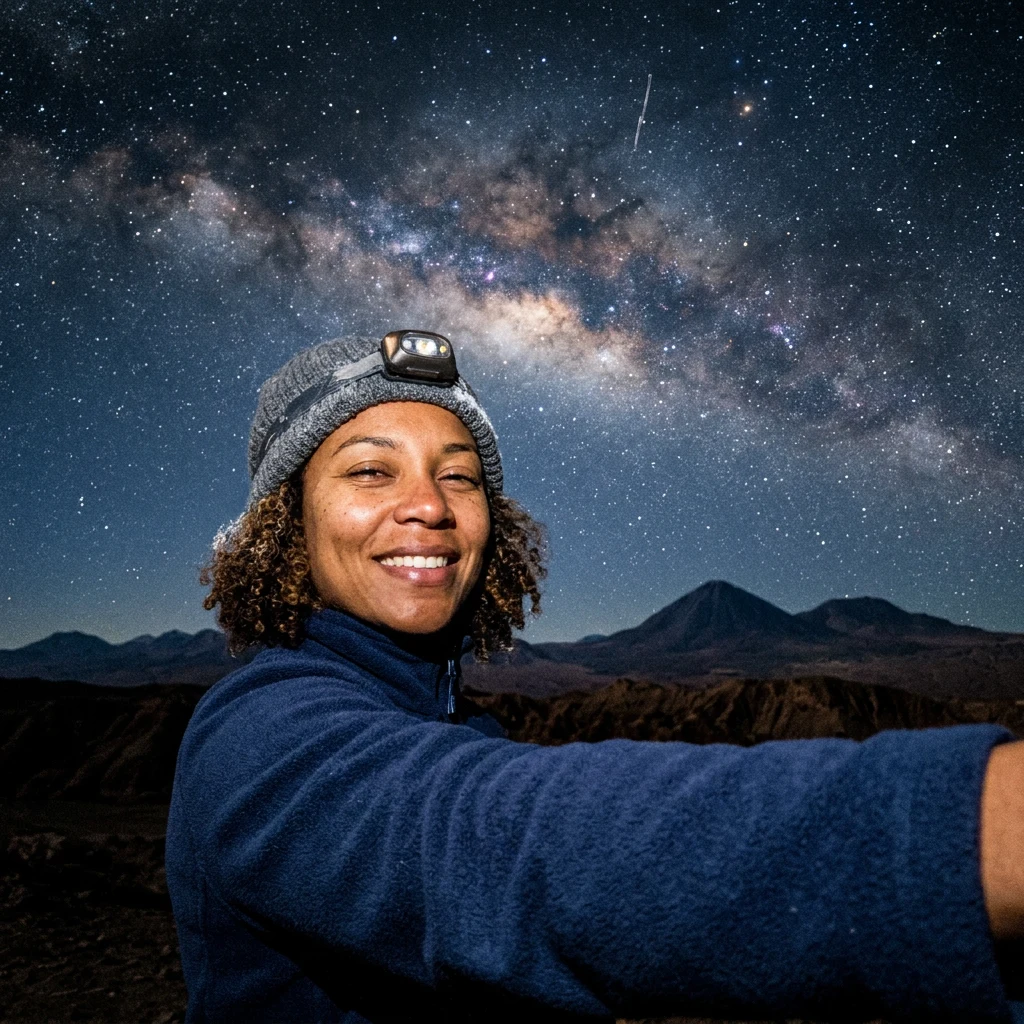
Independent stargazing needs almost nothing beyond a car, a red-light headlamp, and warm layers. No permit is required for roadside stops in Garafía or along the roads toward the observatory access corridor; just don't set up in the middle of the road, and use marked parking areas rather than the shoulder on switchback sections.

All tours

Planning your visit

How many days? Three nights minimum if stargazing is the point of the trip: one to get oriented and handle the drive into Garafía or wherever you're basing yourself, one for a guided session or the ORM day visit, and at least one for independent observation with a buffer for weather. Five to seven days lets you add Caldera de Taburiente hiking and the west-coast eruption site without feeling rushed; see is La Palma worth it for stargazing for itinerary options, or how many days you need in La Palma for stargazing for a fuller day-by-day breakdown.

When to go? Less has been independently measured for La Palma's night-sky season specifically than for Tenerife's, so treat the pattern as broadly similar rather than separately verified: roughly April through October, with the strongest stretch May through September, when the trade-wind cloud layer sits at its lowest and the Milky Way core climbs highest. Avoid locking in December or February without checking the current calima forecast; those two months carry the highest risk of Saharan dust hazing lower-altitude skies, though ORM itself, well above the dust layer, usually stays clear regardless. For a full month-by-month breakdown, see the best time to stargaze on La Palma.

What to bring? Layers, regardless of season. Nights at altitude on the Canary Islands run noticeably colder than the coast, though exact overnight figures for La Palma specifically haven't been independently confirmed in this research pass, so treat any specific temperature you read elsewhere as a general Canarian estimate rather than an ORM-specific one, and pack for worse than you expect. A red-light headlamp protects your night vision; binoculars will show more of the Milky Way's structure than you'd expect at 2,000+ metres.

Moon phase still matters more than the calendar month. Book within four to five nights of a new moon for the darkest skies regardless of which month you land in; a full moon washes out the Milky Way almost completely.

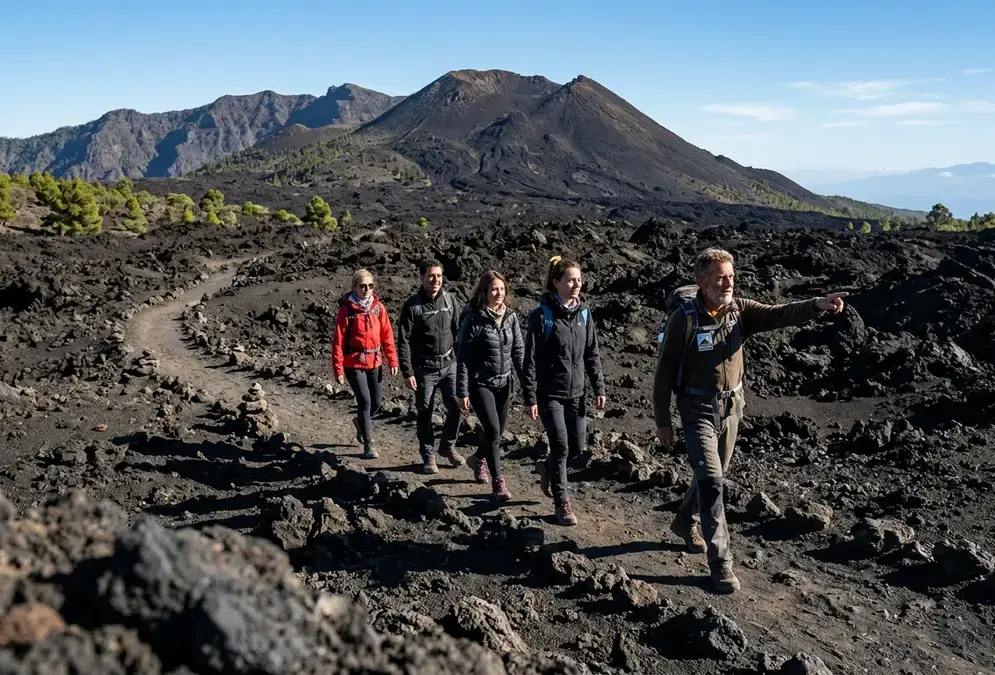
Beyond the stars: La Palma is a genuinely good hiking and volcano-landscape island on its own terms, from the Caldera de Taburiente's cliffs to the new Tajogaite lava field. See what else to do on La Palma for a full trip beyond the telescope.

Reporter notebook

Insider tips

Best time

Match your dates to the new moon before the season

Moon phase affects what you'll actually see more than the calendar month does. Book within four to five nights of a new moon regardless of season, and separately check the current calima forecast if you're travelling in December or February, since Saharan dust intrusions peak then and can haze skies at lower elevations even when the observatory itself stays clear.

Booking tip

Reserve the ORM day visit ahead, and book your rental car for the whole trip

Roque de los Muchachos day visits require advance reservation, run only 90-110 minutes, and cap at a minimum age of 6; they sell out around holidays and peak summer weeks. Book the car for your full stay too, not just a day or two: there's no public transport option to the observatory road or the Garafía lodges, and several routes take longer to drive than the map distance suggests.

What to bring

Pack layers for altitude, not for the coast

Whatever the weather is doing in Santa Cruz de la Palma or Los Llanos de Aridane, expect it to be colder and windier by the time you've climbed toward the observatory or a Garafía terrace. A red-light headlamp protects your night vision for map-checking and star-chart reading without forcing you back inside every time.

Frequently asked questions

Is La Palma better than Tenerife for stargazing?

Both islands deliver genuinely dark, UNESCO-recognised skies, so it depends on what you want. La Palma is quieter and less touristed, with about a tenth of Tenerife's population and less traffic on its mountain roads, but its tour market and hotel infrastructure are less developed. Tenerife offers more guided-tour options and a wider range of lodging near the caldera. For the full feature-by-feature breakdown, see our dedicated comparison at La Palma vs Tenerife for stargazing.

Can I visit Roque de los Muchachos Observatory at night?

No. ORM is a day-visit-only site: guided tours run roughly 90-110 minutes, cost around €20 for adults (€15 for children or La Palma residents), require reservation in advance, and have a minimum age of 6. Night access is not open to the public because the telescopes are active research instruments and stray light or vehicle traffic would disrupt observation runs. Verify current schedules and pricing with a Starlight-certified operator before you travel.

What Bortle class is the night sky above La Palma?

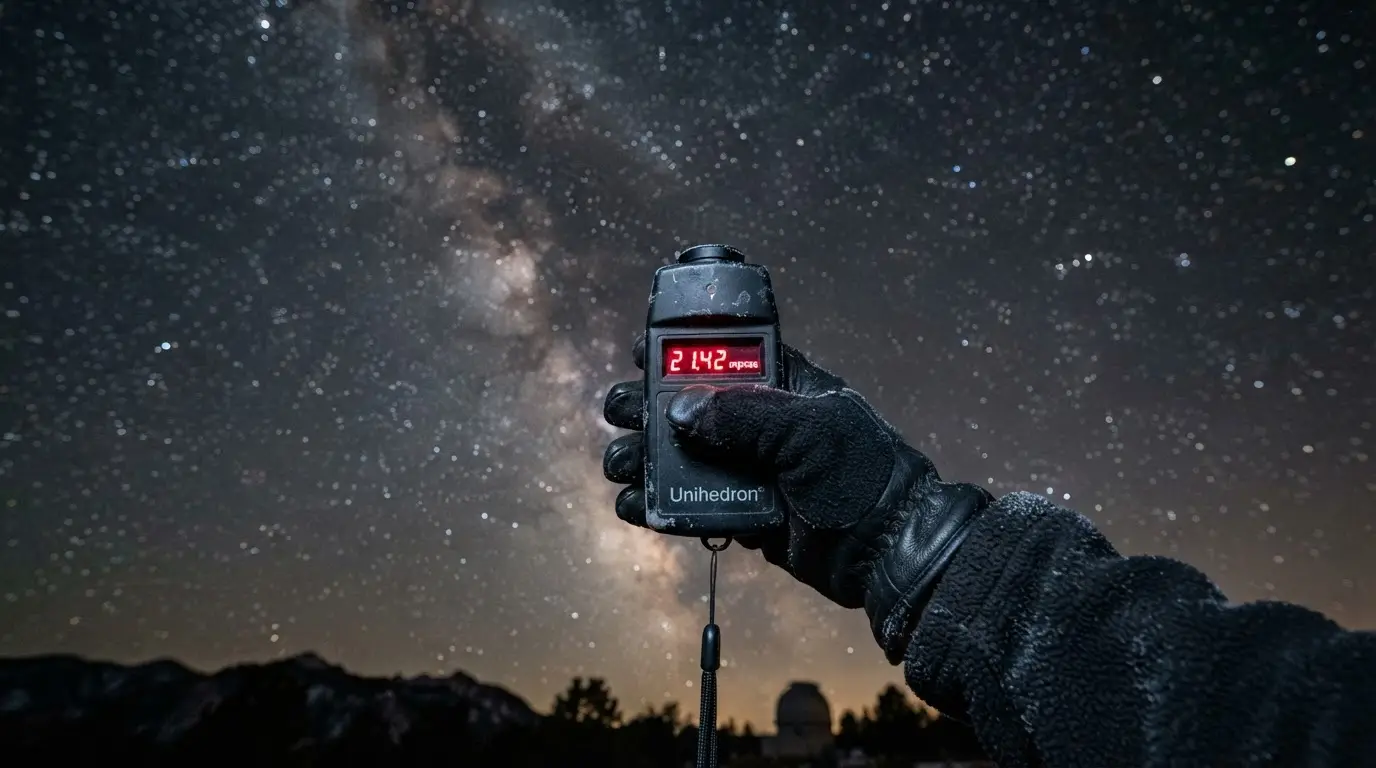
The darkest sites, including the Roque de los Muchachos ridge, measure Bortle Class 1-2, with Sky Quality Meter readings around 21.57 to 21.90 mag/arcsec² on moonless nights and a peak reading of 22.03 recorded in 2025. That puts La Palma's sky among the darkest measured anywhere on Earth, in the same range as Chile's Atacama and Hawaii's Mauna Kea.

When is the best time of year to visit La Palma for stargazing?

Roughly April through October, with the strongest window May through September, when the Atlantic trade-wind cloud layer sits at its lowest and the Milky Way core is highest. This pattern is inferred from the same climate mechanism that governs Tenerife's season rather than independently measured for La Palma specifically. Avoid locking in December or February without checking the current calima (Saharan dust) forecast, since those two months carry the highest risk of hazed skies at lower elevations.

Does the 2021 volcanic eruption affect visiting La Palma for stargazing?

No. The 2021 Tajogaite eruption affected the Aridane valley and west coast, near Los Llanos de Aridane and El Paso, an area now a visitor attraction with some zones still restricted for residual gas and ground stability. It does not overlap with the Roque de los Muchachos Observatory or the Caldera de Taburiente stargazing area on the opposite side of the island.

How do I get to La Palma?

Fly into La Palma Airport (SPC) in Breña Baja, about 8 km south of Santa Cruz de La Palma; as of 2026 it's served by Binter Canarias, Canaryfly, Condor, easyJet, Iberia, Jet2, Vueling, and several other European carriers, mostly via connections through Tenerife or Gran Canaria. Fred Olsen Express and Naviera Armas also run ferries from Los Cristianos in southern Tenerife, a crossing of roughly 2h30 to 3h15. A rental car is essential once you land; there's no meaningful public transport to the observatory or the northern stargazing lodges.

How many days do I need for a La Palma stargazing trip?

Three nights minimum if stargazing is the focus: one to settle in and handle the drive, one for a guided session or the ORM day visit, and one for independent observation with a weather buffer. Five to seven days lets you add Caldera de Taburiente hiking and the 2021 eruption site without rushing the trip.

Where should I stay for stargazing on La Palma?

Garafía, on the island's remote north side, is the darkest, least populated municipality and the strongest current lodging base. Casa El Colmenero, a self-catering rural house at 1,042 m, sits above the altitude band where the Atlantic cloud layer typically breaks up and carries an early 10/10 guest score, though it has no formal Starlight certification. See our ranked guide to the best places to stay on La Palma for stargazing for four more options across different budgets and priorities.

What is calima, and does it affect stargazing on La Palma?

Calima is a Saharan dust intrusion, most frequent and intense in December and February, that hazes the sky mainly at lower elevations. Roque de los Muchachos, at 2,396 m, sits above the typical calima layer, so the observatory usually stays clear even during a dust event, but lodges and viewpoints at lower altitude can see reduced sky clarity during stronger episodes. Check a current calima forecast before locking in winter dates.

Further reading

Sources