No operator on La Palma sells a single ticket that covers both the Tajogaite volcano and a night under the stars. That is not an oversight, it is simply how the island's tour market is built: the volcano trek and the stargazing session run under different licenses, with different guides, and they have to be booked separately. What you can do, and what this page sets out, is stack the two into one genuinely good day, a guided walk into the 2021 eruption's aftermath followed that same evening by two hours under a Bortle-dark sky. Book both, plan the gap between them, and you cover more of what makes La Palma distinctive than either tour manages alone.
Morning: walking into the 2021 eruption zone
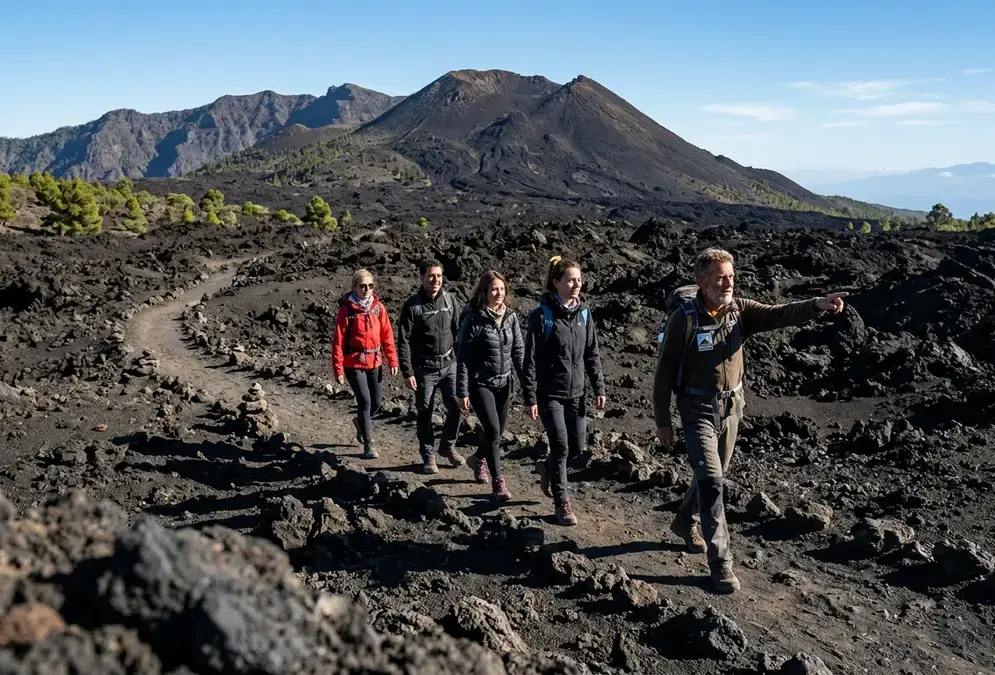
The Tajogaite volcano, part of the Cumbre Vieja eruption on La Palma's west side, opened a new cone and roughly 1,200 hectares of fresh lava field between 19 September and 13 December 2021, burying more than 3,000 buildings in the Aridane valley. As of 2026, the crater zone stays open only to visitors on a guided, authorized tour. The ground inside the restricted perimeter still releases CO2 at levels that make solo or unguided access unsafe, and rangers do not issue independent hiking permits for that stretch. Book with an authorized operator (La Palma Transfer & Tours and several guides listed on GetYourGuide and Viator run this daily), expect to pay roughly €35-50 per person, and set aside anywhere from 3 to 8 hours depending on the operator's route.
Most itineraries meet at Llano del Jable, a black-sand plain at 1,341 m that doubles as an evening stargazing site for some operators, then walk a roughly 5 km moderate trail toward the new cone and lava tongue. You cross ground that was farmland and rooflines less than five years before you got there. Guides point out specific streets, a church tower still visible above the flow, banana plantations reduced to a black plain. It is a sobering walk, not a photo backdrop, and a good guide treats it that way.
Evening: stargazing after the ash settles
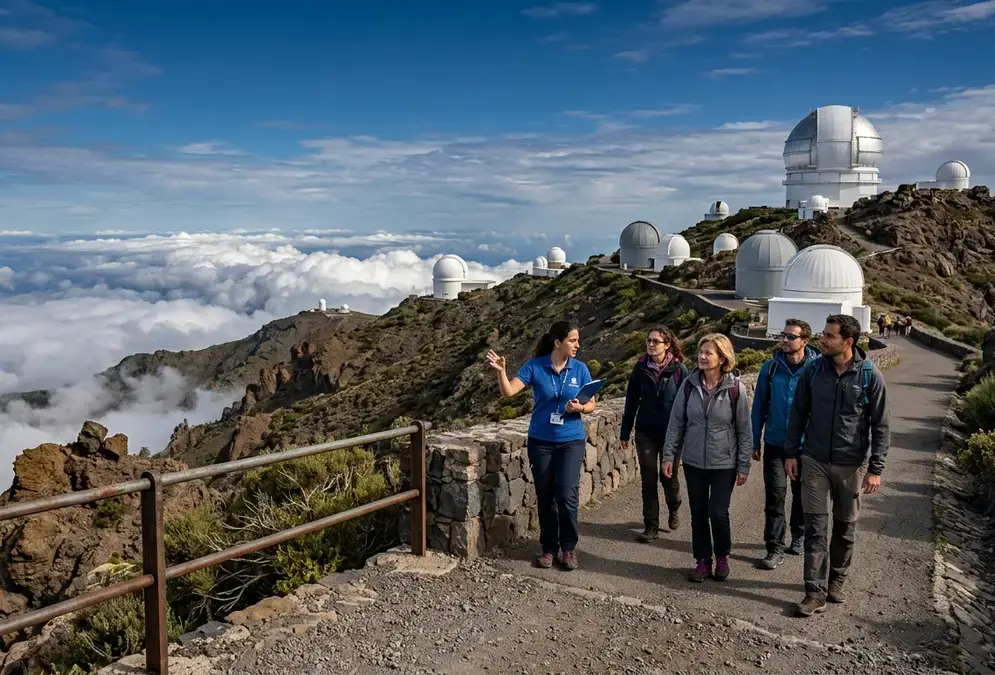
Once the volcano tour wraps, a stretch of daylight sits between the two bookings, enough time to eat in Los Llanos de Aridane or El Paso and drive to your evening meeting point. Two La Palma operators run the stargazing half: AstroLaPalma and Ad Astra La Palma, both offering roughly 1.5-2 hour sessions priced around €35 for an astronomy-focused session or €49 for a photography session with camera setup included. Sessions run from either the San Antonio Volcano Visitor Center in Fuencaliente (632 m, a different and much older volcano than Tajogaite) or from Llano del Jable / Las Ventas (1,320-1,341 m), the same plain some volcano tours use by day.
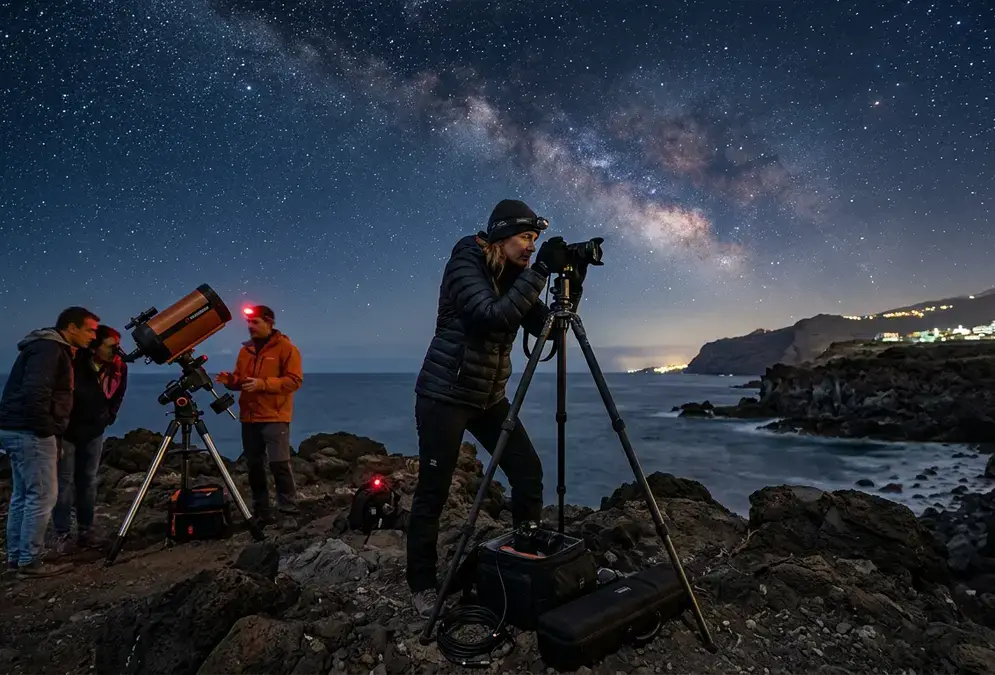
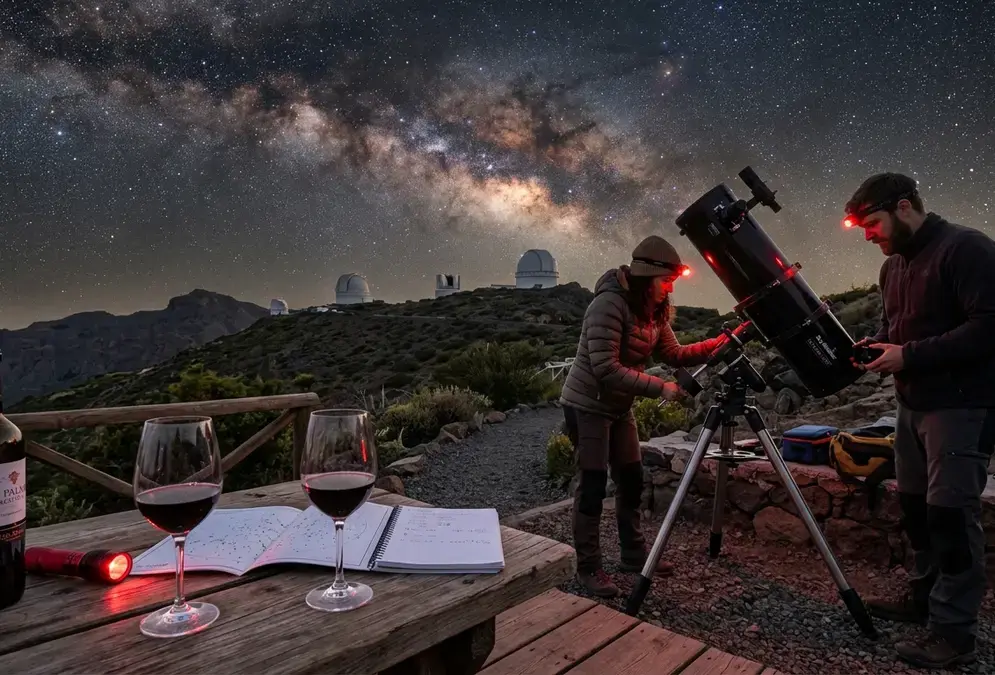
Guides set up portable telescopes and talk through what is overhead: the Milky Way's core in summer, the winter constellations from October, a sky that measures Bortle 1-2 once you are above the trade-wind cloud layer sitting around 1,000-1,500 m most nights. It is a real dark sky, not a marketing line, and after a day spent looking down into a scarred lava field, looking up at an unmarked one lands harder. For the island's full dark-sky case, see La Palma stargazing.
Booking both without wasting the day
Timing is the real trick here. Volcano tours run morning or midday departures and typically wrap by mid-afternoon; stargazing sessions start after sunset, which on La Palma runs anywhere from roughly 19:00 in high summer to 18:00 in winter. That gap is your dinner window. If your volcano tour meets at Llano del Jable and your stargazing session also runs from Llano del Jable, you do not even need to relocate, just find food nearby and come back after dark. If your stargazing operator instead runs from San Antonio in Fuencaliente, budget 30-40 minutes' drive south along the coast road from the Aridane valley.
Book both slots several days ahead in July and August, when demand peaks for both markets and neither operator runs large groups. Confirm your stargazing operator's exact meeting point when you book: it is the one detail that decides both your dinner plans and your drive.
What to bring, what to expect
Dress for two different microclimates in one day. The volcano trek crosses exposed black lava terrain with almost no shade: sun protection, sturdy closed shoes (ash and clinker will shred sandals), and water are non-negotiable, even on a mild forecast. By the time the stargazing session starts, temperatures at 1,300 m and above drop fast after dark. Pack a proper jacket, not the layer you hiked in. A red-light headlamp protects your night vision once the telescopes come out; a white phone torch costs the group twenty minutes of dark adaptation.
Neither tour suits every traveler, and that is worth saying plainly. The volcano trek's authorized-guide requirement exists because parts of the ground are actively unstable and CO2 pockets are a real hazard, not a bureaucratic formality, so anyone hoping to wander the crater independently should look elsewhere; it is not permitted, in 2026 or for the foreseeable future. If your evening is already booked, or the forecast turns, the two halves are separable: the volcano tour stands entirely on its own, and it is worth doing even without the stargazing add-on.