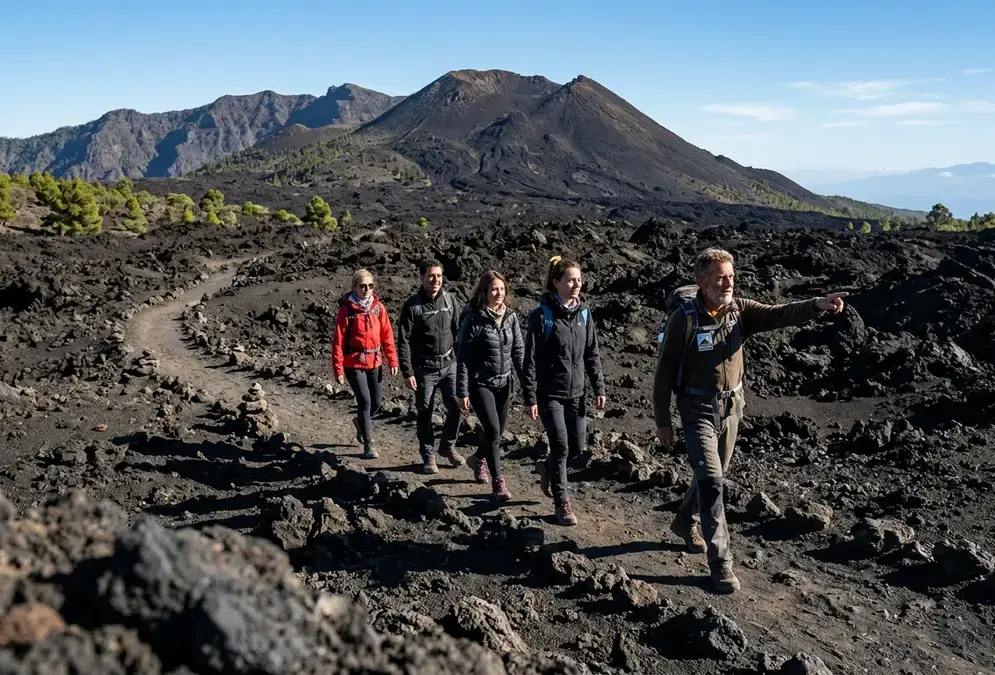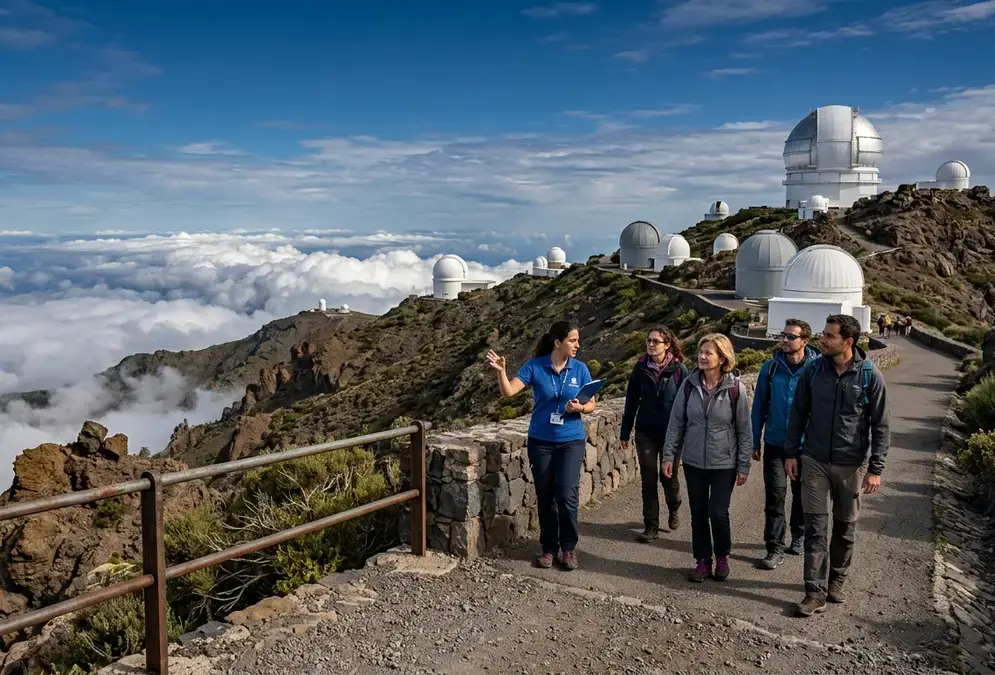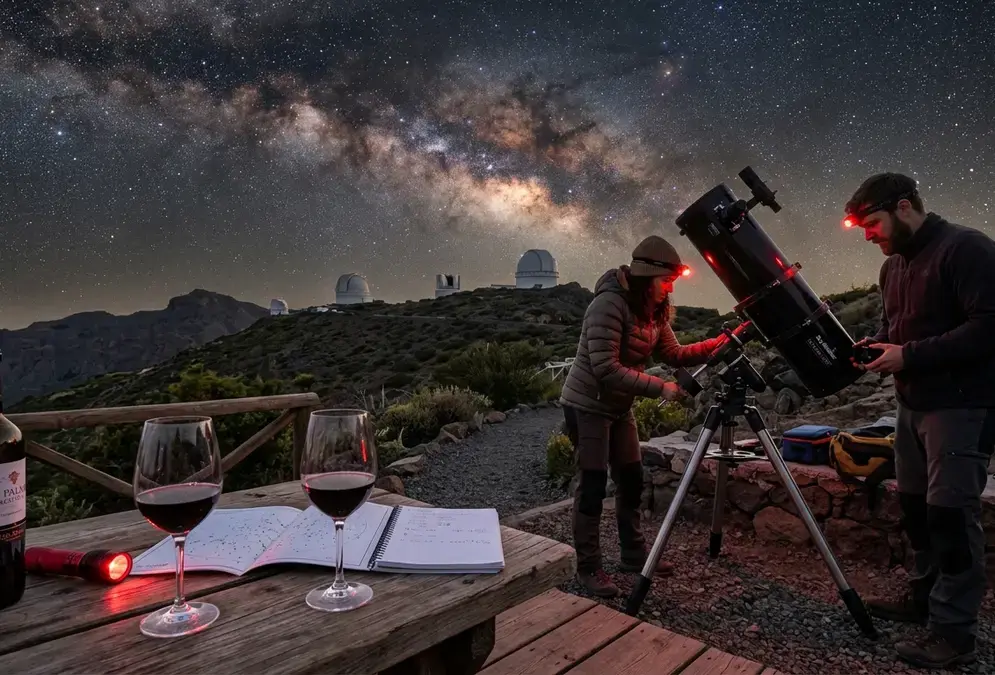
La Palma doesn't have a single official concessionaire running its stargazing tours the way Tenerife does. What it has instead is Roque de los Muchachos, at 2,396–2,426 metres on the rim of the Caldera de Taburiente, the observatory ridge behind the world's first UNESCO Starlight Reserve designation, and a small, competitive market of independent operators selling trips up to it after dark. The most-reviewed of them, a roughly 6-7 hour evening tour listed on GetYourGuide as the "Roque de los Muchachos Stargazing Tour with Wine", has racked up 647 reviews at 4.4 out of 5, by far the largest review count of any La Palma stargazing listing in this research. That's a real, popular, bookable trip, not a boutique unknown. It's also worth knowing upfront that this island's tour scene, unlike Tenerife's tiered, single-operator system, runs on several independent companies at different price points and inclusions, so a bit more comparison shopping pays off here than it would across the water.
What the tour includes
The flagship listing runs roughly 6-7 hours and centres on the observatory ridge, one of the highest and darkest points on the island. Confirmed inclusions are a guided stargazing session, telescope viewing, and a wine tasting worked into the evening, a detail no equivalent Tenerife tour I've reviewed offers. What I couldn't independently confirm: the exact transport arrangement, group size, or which languages the guide covers, since the operator's own product page blocked automated review during research. Listed prices convert to roughly €68, but online marketplace pricing shifts with currency conversion and demand; treat that as a starting estimate and check the exact figure on the current listing before you pay.
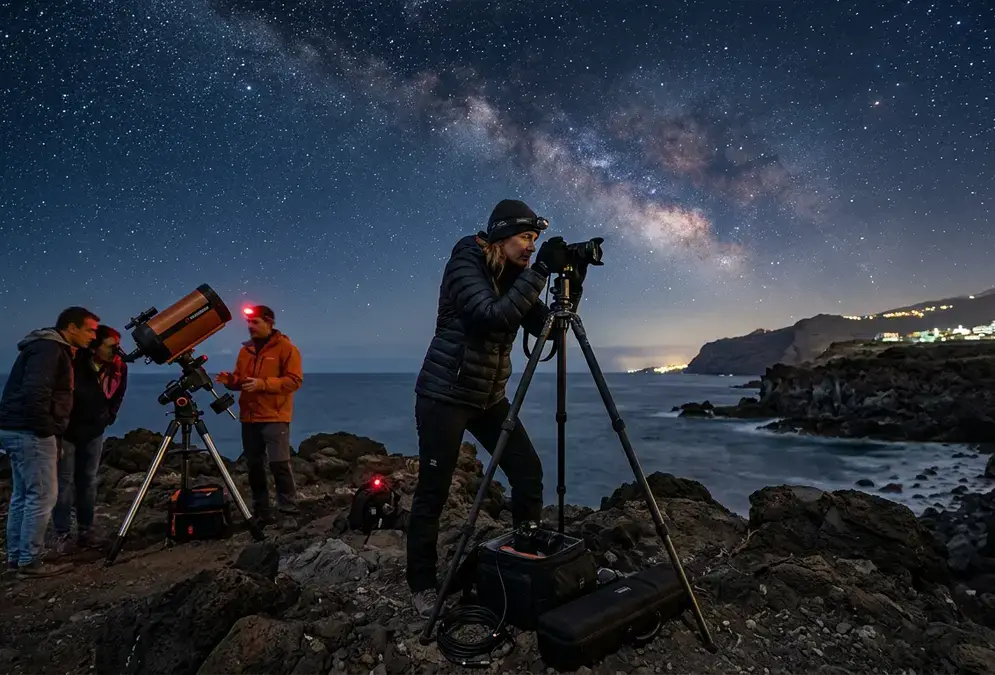
Expect the shape of any guided stargazing evening: a drive up into the highlands as the sky darkens, a stop with a clear horizon away from artificial light, a telescope set up by the guide, and a walk through the visible constellations and deep-sky targets for the night. The wine tasting is folded into that window rather than a separate stop; exactly when it happens in the evening isn't detailed in the listing, so don't plan the evening around it as a fixed checkpoint.
The stargazing experience
What you're actually looking up at is the real reason to book. Roque de los Muchachos sits inside a Bortle 1-2 sky, among the darkest independently measured skies on Earth, the result of the 1988 Ley del Cielo (Sky Quality Law) and the Atlantic trade-wind cloud inversion that keeps the observatory ridge clear of both artificial light and marine moisture most nights of the year. The IAC, which operates the Roque de los Muchachos Observatory itself, puts artificial light pollution at the site at roughly 2% of natural sky brightness. That's the same ridge holding the Gran Telescopio Canarias, at 10.4 metres the world's largest single-aperture optical telescope, though the observatory is a working research facility closed to the public after dark; your tour guide sets up separately, on public land nearby, not inside the GTC dome.
A moonless night from this altitude puts the Milky Way's core, the Andromeda Galaxy, and a long list of naked-eye deep-sky targets well within reach, especially April through October when the core climbs highest. Book within a few nights of new moon if the calendar allows it; a full moon washes out most of what makes this specific sky worth the drive.
Comparing La Palma's stargazing tours
The 647-review GYG listing is the anchor pick simply because nothing else on the island comes close on volume, but it isn't the only option, and it isn't necessarily right for every traveler:
- Roque de los Muchachos Stargazing Tour with Wine (GetYourGuide, 647 reviews, 4.4/5): the full 6-7 hour evening with wine tasting, from around €68.
- La Palma: Stargazing in the Best Sky in the World (GetYourGuide, 140 reviews, 4.7/5): a compact roughly 1.5-hour session, around $44, the pick if a full evening is more than you want.
- VIP Night Sky Tour With Your Own Telescope (GetYourGuide, 13 reviews, 4.7/5, around €57): a smaller-group format built around bringing your own gear, worth a look if you're already traveling with a telescope.
- AstroLaPalma astronomy tour (booked directly, around €35): the cheapest confirmed option here, and it skips the marketplace booking fee entirely since you deal with the operator directly.
None of these has the review volume or brand recognition of Tenerife's Volcano Teide concessionaire tours, and that's the honest trade-off of visiting a smaller, less-touristed island: a bit more homework reading recent reviews and checking what's actually included before you commit. If watching the sun drop into the cloud layer before the telescopes come out matters as much as the stargazing itself, the same flagship listing is also covered from that angle in the Roque de los Muchachos Sunset & Stars Tour page.
Why La Palma's tour market looks different from Tenerife's
Tenerife's Teide stargazing tours run through Volcano Teide, the single concessionaire licensed to operate inside the national park after dark; book any of its tiers and you know exactly what regulatory body stands behind it. La Palma has no equivalent, because Roque de los Muchachos Observatory isn't set up for public night visits at all: night access to the observatory itself is closed, full stop, and every stargazing tour on the island operates from public land near it rather than inside a permitted concession. That's a structural difference more than a downside. It means more operator variety, generally lower prices than Tenerife's flagship tier, and a bit more responsibility on you to check a specific listing's current reviews, inclusions, and cancellation policy rather than trusting a single brand across the board.
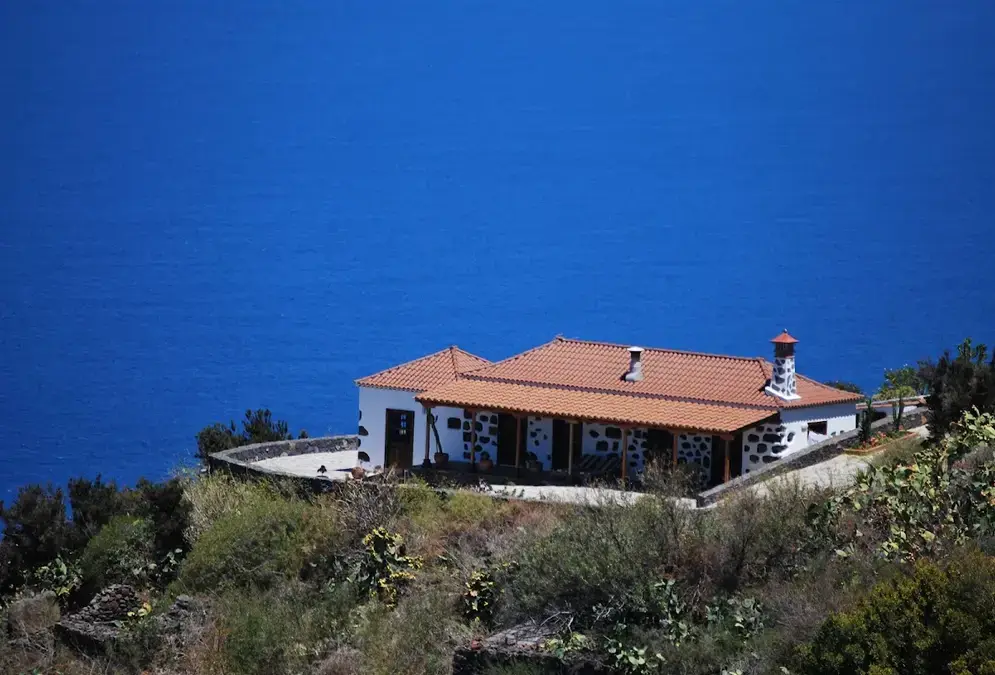
For the destination-level context, altitude, and sky-quality numbers, see the La Palma stargazing guide. For where to sleep close to the darkness, this rural house in Garafía sits inside the altitude band where the cloud layer typically breaks up, and the fuller ranking is in the best places to stay on La Palma for stargazing.
Practical details
Weather and moon phase: La Palma tours are as weather- and moon-dependent as any stargazing trip. Winter, particularly January and February, carries the highest risk of calima, Saharan dust haze that can degrade lower-altitude visibility even when the observatory ridge itself stays clear above it. Check the operator's rescheduling policy before booking; a clouded-out or full-moon night should come with a rebooking option, not a forfeited fee.
What to bring: Roque de los Muchachos sits above 2,300 metres, and nights get cold up there even in August. Pack real layers, not a light jacket, and bring a red-light headlamp if you have one so you're not the person flooding the group's night vision with a phone torch. For the fuller seasonal breakdown, read the best time to stargaze on La Palma.
Booking timing: the flagship wine tour's 647 reviews suggest it fills up during July, August, and the Christmas-New Year window; book a few weeks out if those dates matter to your trip. Off-peak, booking the same week is usually fine, though a new-moon window in shoulder season can still tighten availability fast.