What the certification actually rests on
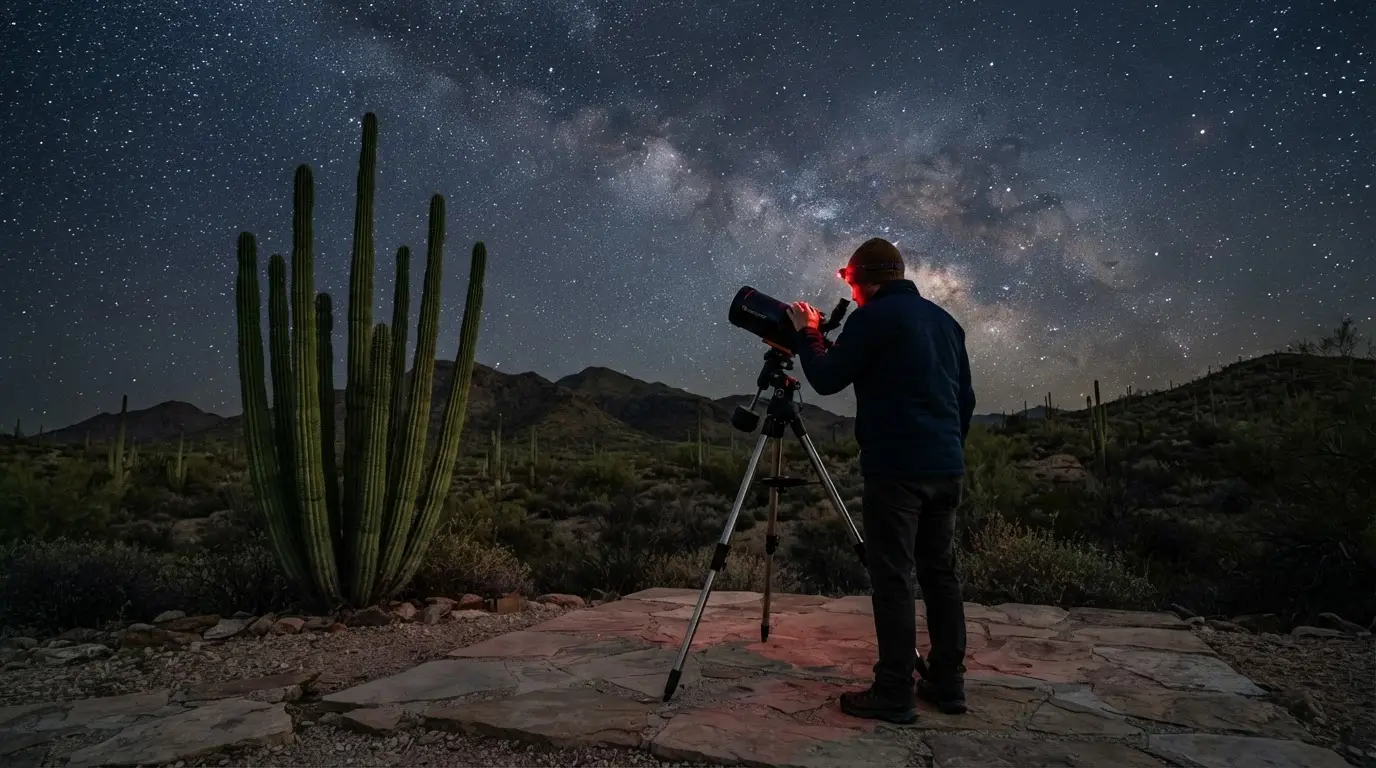
The level is International Dark Sky Park, the wording DarkSky International uses in its own release[7]. What stands behind it is a decade of lighting work rather than a lucky sky. The effort began in 2016, the announcement came in 2026, and over those years over 100 fixtures around the visitor center and campground were updated[8]. NPS's park page puts the result in plain words: the monument has "some of the darkest skies in the country"[9].
That makes this a certification you can stand inside. The lights a visitor meets first, at the Kris Eggle Visitor Center and the campground, are the ones that were retrofitted, and the label is meant to protect the darker ground beyond them.
The park has promised a designation celebration for winter 2027, with details and a date still to come[10]. Until the schedule appears, treat any event listing you find for it as unconfirmed.
The border sets the terms of any trip
The monument's southern boundary is the US-Mexico border[11]. NPS's advice for visitors is the sensible kind: tell someone where you are going and when you will be back, and if you meet suspicious activity, keep away, call 911 and report it[12].
The harder variable is construction. NPS's Alerts and Conditions page carries a closure order effective 24 August 2026 and in force until further notice[2], tied to a Homeland Security infrastructure project[13] and applying to all vehicles and pedestrians[14]. As written, the order covers:
Confirm road access before you drive
Check the NPS Alerts and Conditions page for Organ Pipe the day you leave, and call the monument on 520-387-6849 before heading down any remote road. Do not rely on a map app or an older trip report for road status.
- All crossover roads leading south from South Puerto Blanco Drive[3]
- Grey's Ranch Road and Camino de Dos Republicas[4]
- A strip along the southern boundary that runs 150 feet north from the primary border fence[15], narrower (less than 150 feet) where the planned construction footprint sits closer to the border, as at Quitobaquito[16]
The same order states that South Puerto Blanco Drive is open at this time[17].
What the order leaves unsaid matters as much. It does not name Twin Peaks, Pinkley Peak, the Kris Eggle Visitor Center or Ajo Mountain Drive, so it does not confirm access to any of them. Roads and trails stay open unless an alert says otherwise[18], and NPS says notice will be given of any additional closures or of this one being lifted[19].
There is also a discrepancy to check. A separate NPS alert banner posted 31 July 2026 lists West Border Road, East Border Road and Camino de Dos Republicas as temporarily closed[20]. The order's text names Grey's Ranch Road, the crossover roads and the 150-foot strip in addition to Camino de Dos Republicas, which appears in both, so the two NPS statements differ. Read the live Alerts and Conditions page the day you leave. The scenic drives also cap vehicle length at 25 feet because of sand and washes[21].
DarkSky has a stake in all this. It opposes permanent lighting along borderland stretches that would qualify for dark-sky protection[22], and says wall stadium lighting has already dimmed the night across many borderland regions[23]. The same collision of fence and sky is the subject of our piece on Big Bend's border wall and its dark-sky threat.
Where to set up: the pads, the peak and the photo stops
The monument protects over 330,000 acres of Sonoran Desert[5], but NPS names only a handful of places for night-sky viewing:
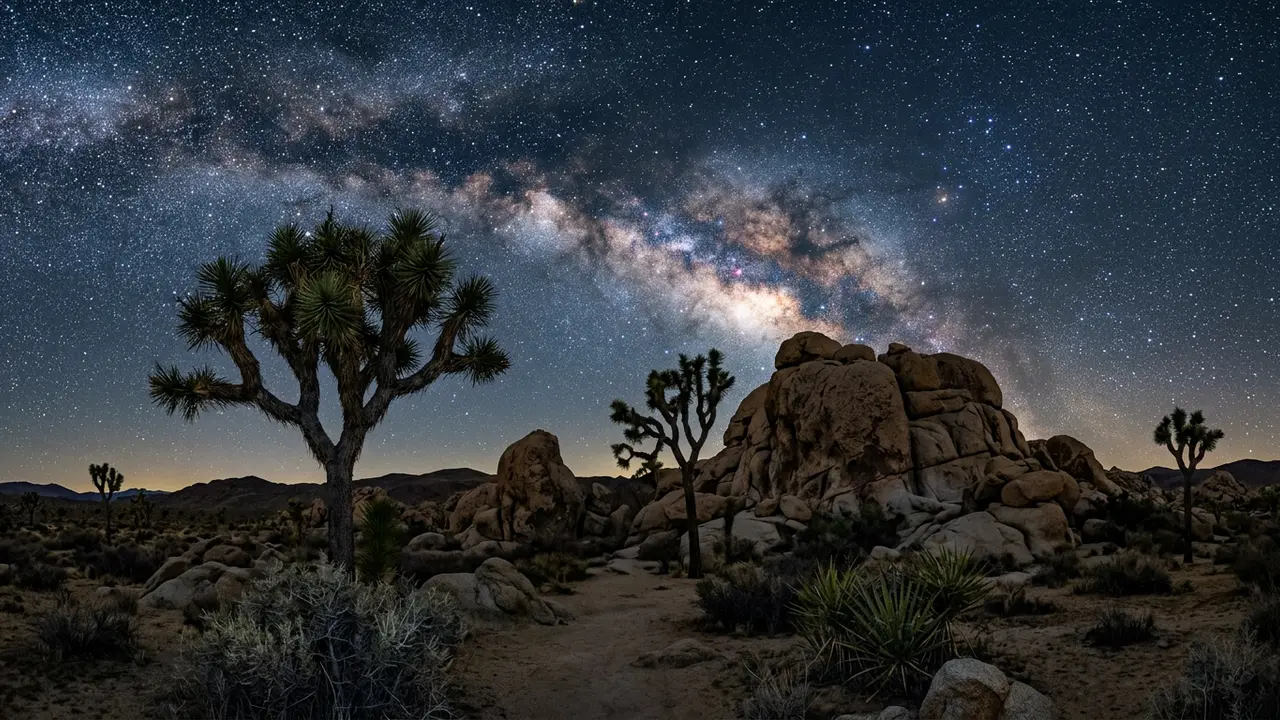
Featured · Destination
Joshua Tree National Park
Joshua Tree earned International Dark Sky Park status in 2017, just two hours from LA. Here's where to see the Milky Way, dodge crowds, and stay the night.
- Twin Peaks Campground amphitheater: a level, paved 10-foot-by-10-foot viewing pad with two benches sits along the path[24]
- Pinkley Peak Picnic Area: picnic tables, a vault toilet and the silhouette of Mount Pinkley as a backdrop[25]
- Photography stops: the Desert View Trail near Twin Peaks, Alamo Canyon and several areas along Ajo Mountain Drive[26]
Twin Peaks is the easy answer if you are camping there, since the pad sits on the amphitheater path inside the campground. Pinkley Peak suits a day-trip arrival, with a toilet and a skyline already framed.
Ajo Mountain Drive is the one to check against the Alerts page before you plan around it. Photographers weighing Sonoran against Mojave foregrounds can set this list beside Joshua Tree's best stargazing spots.
Planning a winter visit
NPS describes the ranger programs as a December-through-mid-April offer, daily, meeting at the visitor center's back patio or the Twin Peaks amphitheater[29]. Staffing, weather or road conditions can cancel or change any of them[30], so check the live 2026-27 calendar before building a night around one. The monument had already presented more than 100 astronomy evening programs and telescope nights before certification[31].
Winter suits the sky as well as the schedule. NPS calls the nights clear and good for Milky Way viewing[32], with December and January highs from the 60s down to the low 50s and nights from the low 40s to below freezing[33]. Pack for a long stand beside a telescope.
The costs and constraints, from NPS:
- Twin Peaks Campground: 34 tent-only sites and 174 RV sites, with no electric, water or sewer hookups[34][35]
- Alamo Canyon Campground: 4 tent-only sites[36]
- Backcountry camping: $5 per zone, good for 7 nights[37]
- Entrance: $25 per vehicle, valid for seven consecutive days and charged on top of any camping fee[38]
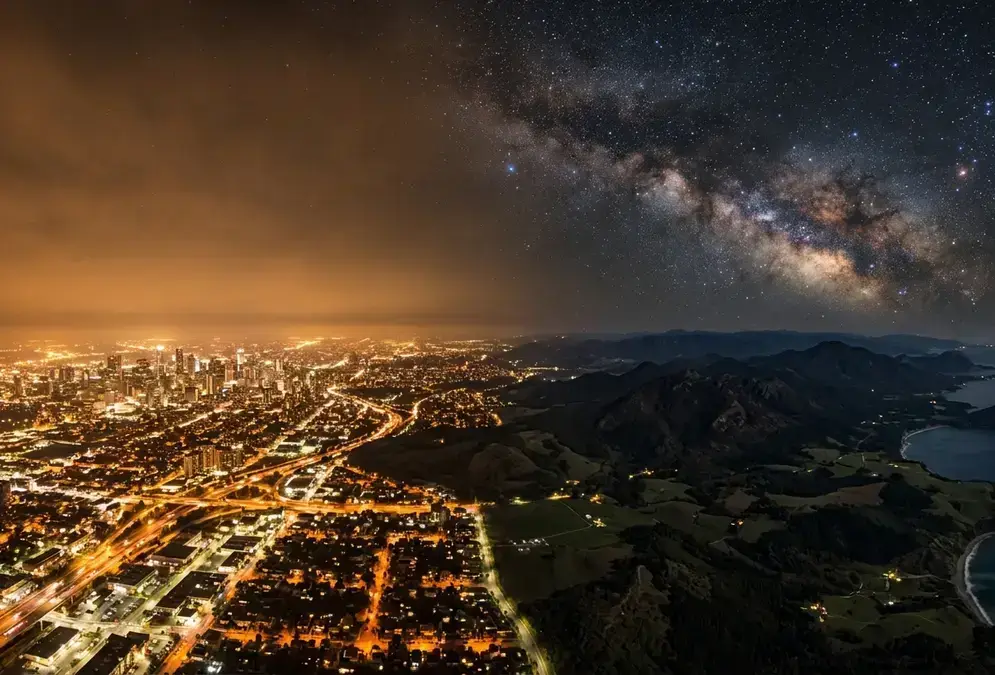
Featured · Article
What Is Light Pollution? Definition, Types, and Solutions
Light pollution is artificial light brightening the night sky, affecting 80% of the world. Learn the 4 types, wildlife and health effects, and how to fix it.
Recommended tours
Tours are selected for quality, not commission. I earn a small fee if you book — at no extra cost to you.
Campgrounds fill quickly between December and April, and NPS strongly recommends reserving ahead[39]. A snowbird arriving unbooked in January is gambling on a cancellation.
If a closure order or a full campground ends the plan, other desert skies on this site are worth a look, starting with Death Valley stargazing. The sky at Organ Pipe has been certified; whether you can reach all of it this winter is the open question, and only the Alerts page and a phone call will answer it.