Understanding Bortle Class 1: The Darkest Rating There Is
Big Bend doesn't need the hedge.
For comparison, here's roughly where the scale runs:
- Class 1: essentially zero light-dome effect, the darkest rating on the scale
- Class 4-5: suburban transition skies, where the Milky Way is visible but washed out near the horizon
- Class 8-9: inner-city sky, where only the Moon, planets, and the brightest stars register at all
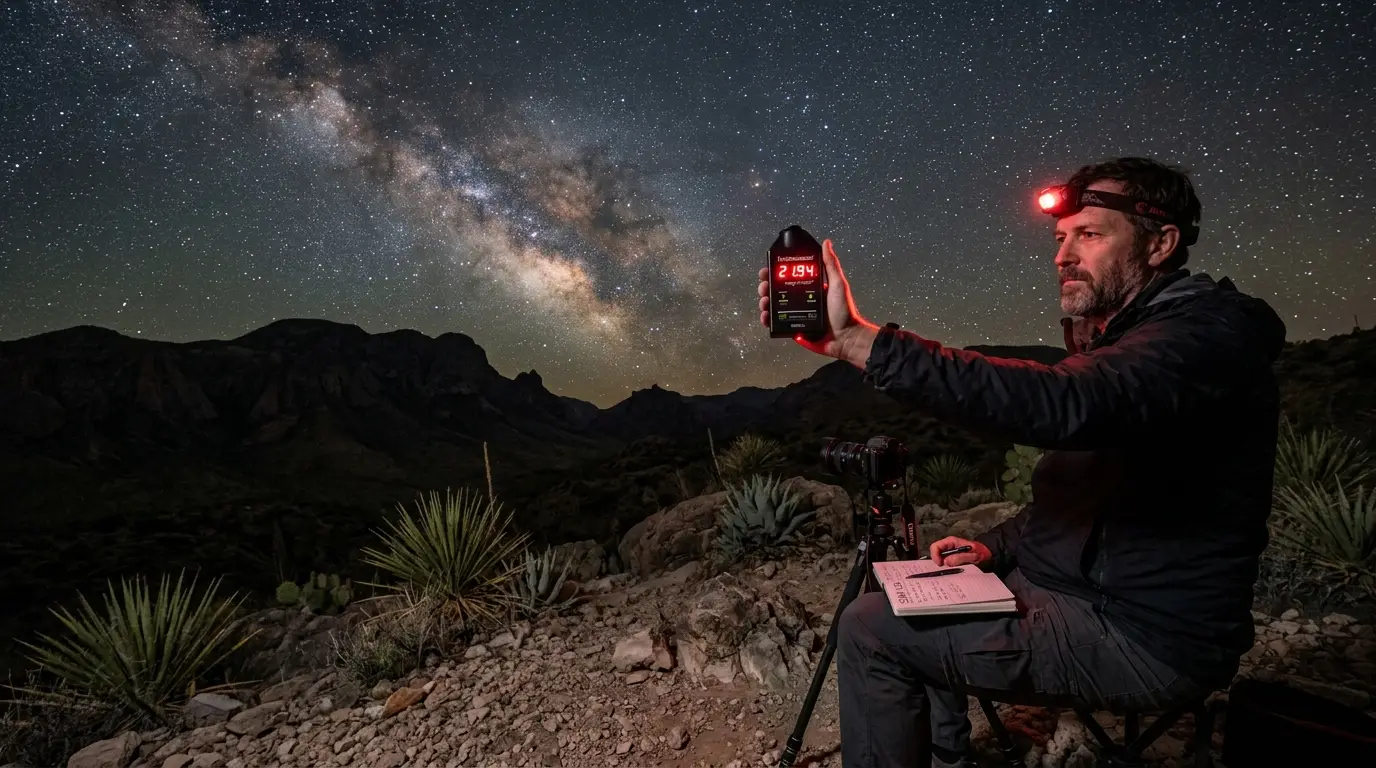
How the Darkness Was Actually Measured
21.73
IDA Certification: A Park-Wide Dark Sky Designation
Featured · Destination
Big Bend National Park
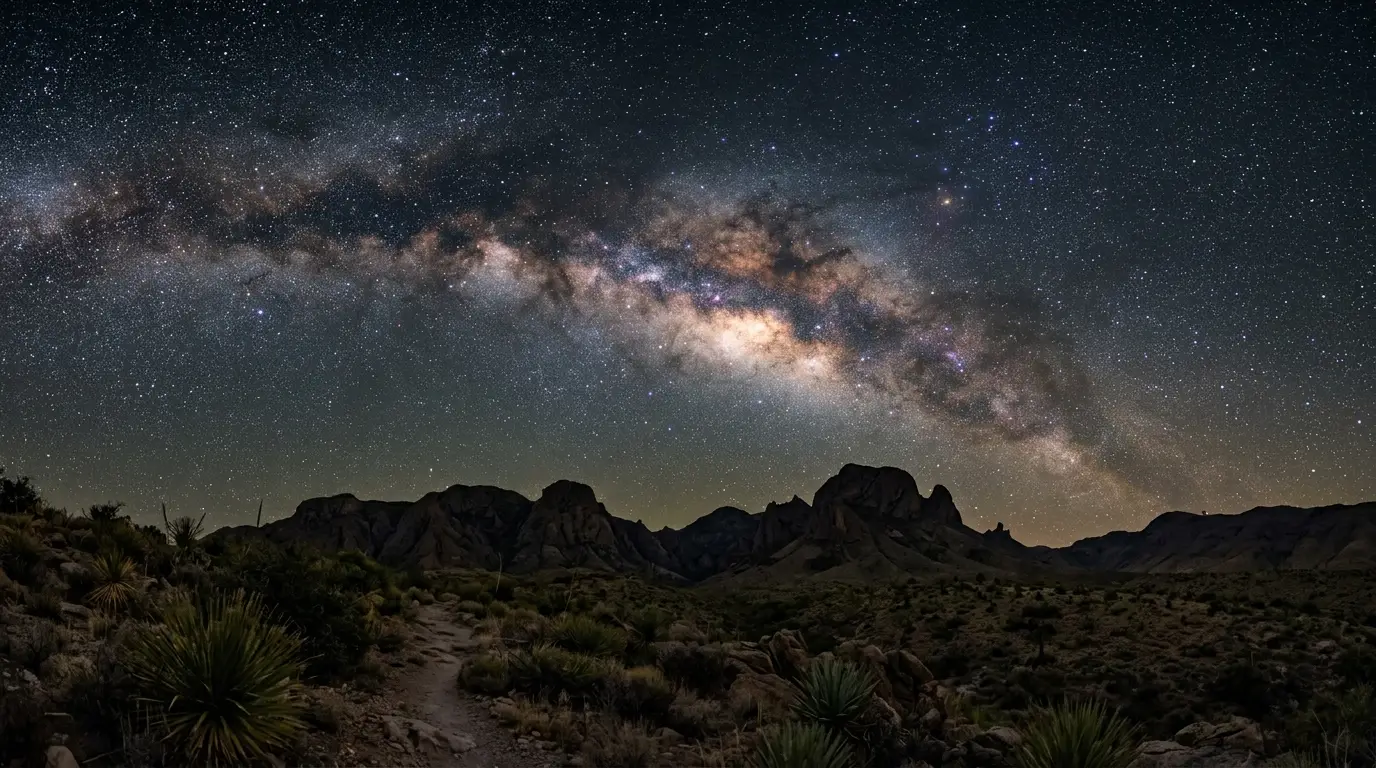
Big Bend National Park is Bortle Class 1, the darkest rating the Bortle scale has. What that dark sky rating means on the ground, and the best months to go.
What is confirmed, directly from the National Park Service:
- Big Bend is a large protected area at over 801,000 acres, making it the largest International Dark Sky Park in the world to date[6]
- Its International Dark Sky Park certification covers the park's night sky as a whole, not one lookout point
- The certification and the park's overall size are two separate facts, and both hold up independently of each other
McDonald Observatory: Six Decades of Measuring This Sky
- 1960
First documented sky-brightness measurement
McDonald Observatory begins tracking night-sky brightness, decades before the Bortle scale existed.
- 1972-1973
Follow-up measurements confirm the trend
Kalinowski and Roosen's repeat readings confirm McDonald Observatory remained one of the darkest observatories in the region.
- 2012
Big Bend earns International Dark Sky Park status
The International Dark-Sky Association certifies Big Bend National Park, formalizing decades of documented regional darkness.
The Hobby-Eberly Telescope
Sixty Years of Sky-Brightness Data
Why This Sky Stays Dark: Remoteness, Desert, Elevation
Recommended tours
Tours are selected for quality, not commission. I earn a small fee if you book — at no extra cost to you.
What the Certification Actually Means for Your Trip
- Any clear, moonless night works. You don't need one specific overlook or a guided tour to see a genuinely dark sky here; Bortle Class 1 covers most of the park, not one lucky corner of it.
- New-moon week matters more than the season. The certification measures darkness at its baseline; moonlight still washes out the same sky a research-grade site would otherwise show you.
- McDonald Observatory is worth the drive, but it's a separate trip. This Fort Davis observatory event puts you behind a research telescope roughly four hours from the park, a genuine day trip rather than a quick stop, and it's the one place nearby where this sky's science becomes something you look through rather than just read about.
- The certification doesn't expire on a park map, but conditions still shift locally. Check current conditions and moon-phase timing before locking in a date, the same way you'd check weather before any outdoor trip.
Featured · Article
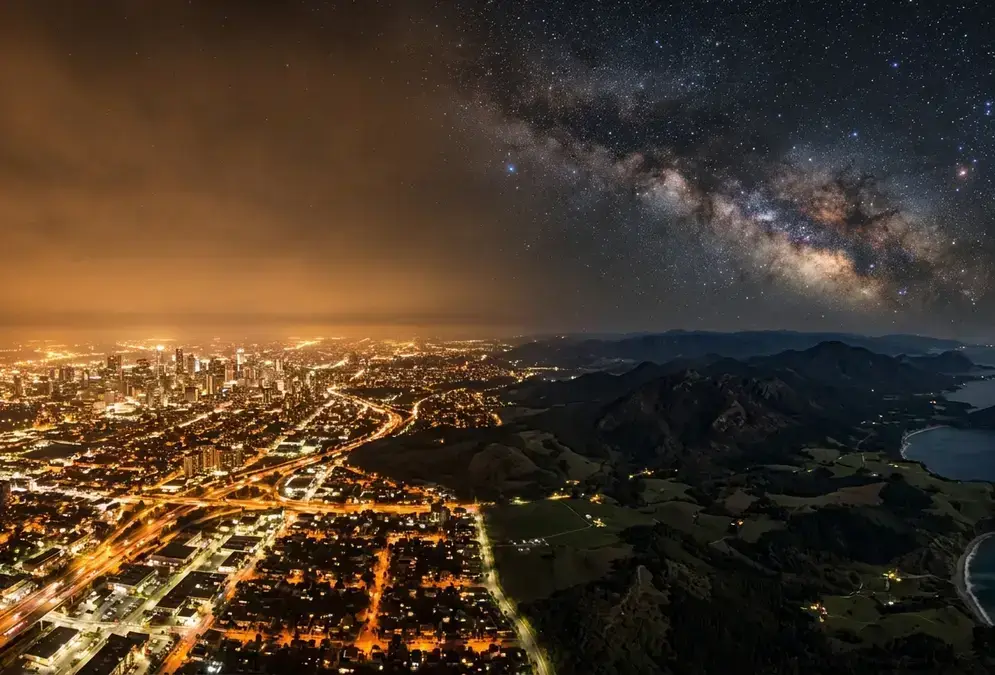
What Is Light Pollution? Definition, Types, and Solutions
Light pollution is artificial light brightening the night sky, affecting 80% of the world. Learn the 4 types, wildlife and health effects, and how to fix it.