Dark Texas Skies
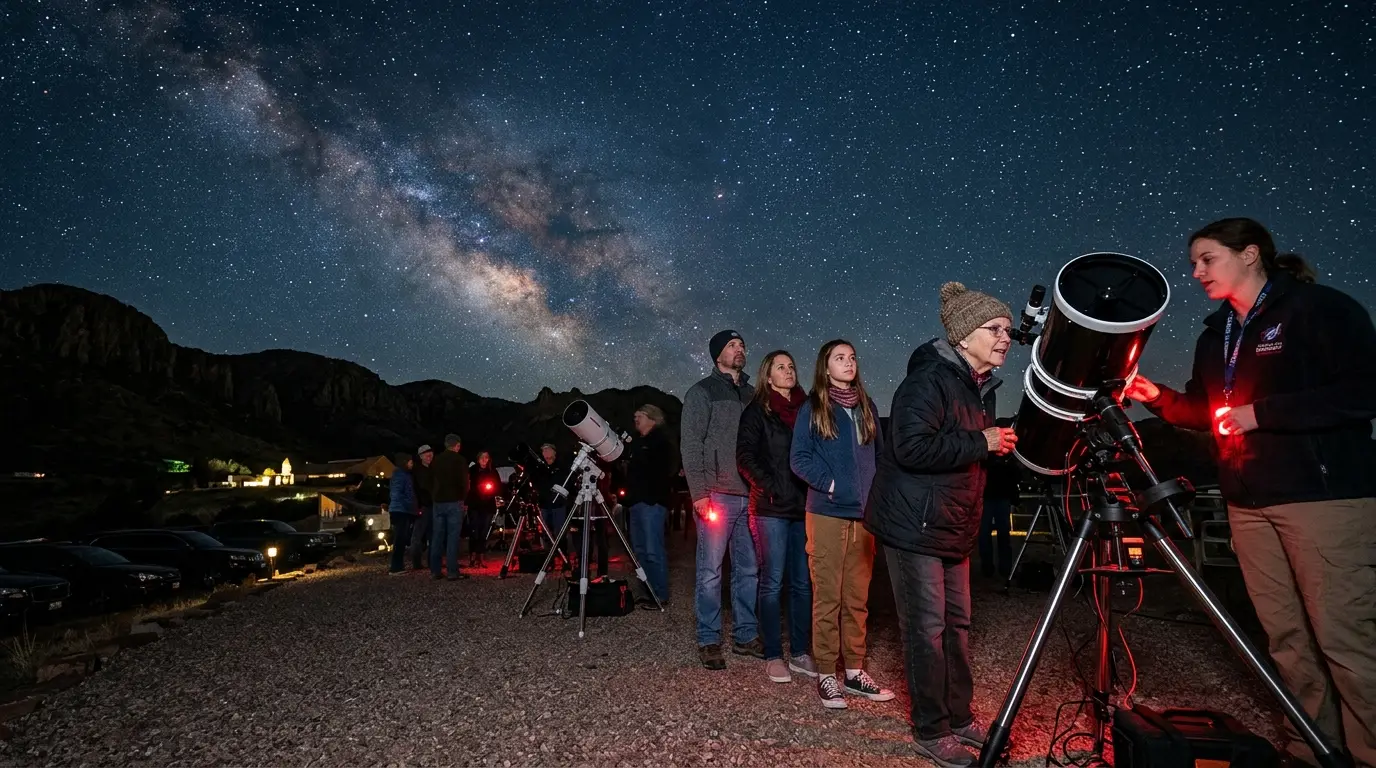
Dark Texas Skies runs $10 stargazing nights from Marathon, Texas, the closest gateway to Big Bend's protected dark skies, telescopes and binoculars provided.
Big Bend National Park is Bortle Class 1, the darkest sky rating in the US. An honest look at McDonald Observatory, when to go, and where to stay near it.
Photo tour of the lodges, night-sky trips, and guides for this destination.
Best only in-park stay, zero drive to bortle class 1
Astro Mucho runs nightly star parties and private astronomer-led sessions based in Terlingua, Texas, inside the Big Bend Dark Sky Reserve, from $25 to $599.
We ranked the four lodges near Big Bend National Park by dark-sky access, remoteness, and bookability, from an in-park Bortle 1 lodge to a Marathon hotel.
NPS names Sotol Vista and the Rio Grande overlook for stargazing, not Chisos Basin or Santa Elena Canyon. Here's what each of Big Bend's six spots offers.
Best included telescope and guided audio, no setup required
Ranked by Bortle darkness, clear-night odds, and galactic-core season: 14 places worldwide where the Milky Way is genuinely visible, from Atacama to Uluru.
Full-frame camera, fast wide lens, sturdy tripod: the gear that captures Big Bend's Bortle 1 Milky Way, plus battery care for 106°F days and 29°F desert nights.
Weighing it against somewhere else? Big Bend vs Bryce Canyon Stargazing: How They Compare Joshua Tree vs Big Bend Stargazing: Convenience or Dark Sky
Bortle 1 sky
What the Bortle scale meansThe Milky Way casts a faint shadow. Zodiacal light and airglow are obvious.
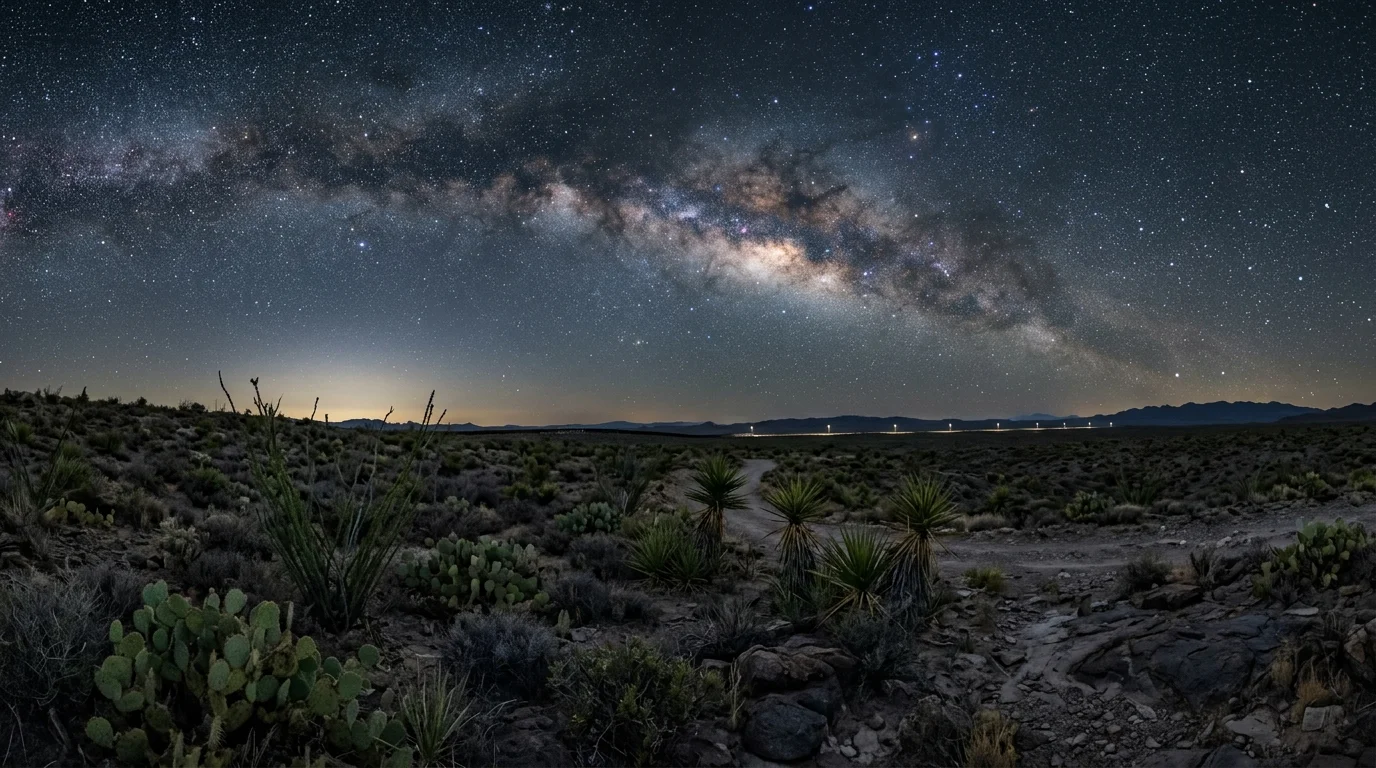
This destination rates Bortle 1 on the 9-level Bortle dark-sky scale, where 1 is a pristine dark sky and 9 is an inner-city sky. The Milky Way casts a faint shadow. Zodiacal light and airglow are obvious.
On this page
Updated
Big Bend National Park is rated Bortle Class 1, the darkest classification the Bortle scale has, and the National Park Service says so directly rather than leaving it to marketing copy. That number, not an adjective, is the real reason to build a trip around this stretch of the Chihuahuan Desert: a night sky measurably darker than nearly anywhere else in the continental United States, over a park where the Rio Grande marks the US-Mexico border and the nearest real city light is a rumor on the horizon.
This hub covers what that Bortle 1 rating means on the ground, the honest math on visiting McDonald Observatory (closer to a day trip than a quick detour), when to time a visit around the Milky Way's core, where to stay, and the logistics, cell service, entrance fees, distance from the nearest airport, that most stargazing write-ups skip. If Bryce Canyon or Death Valley are also on your shortlist, Big Bend sits in similar company: all three read as Bortle Class 1 in their darkest corners, among the few spots in the US National Park System where that's independently documented rather than assumed.
Computed for Big Bend National Park at 29°N. Updates nightly.
First quarter tonight, 36% illuminated
Next new moon August 12. The nights either side of it are the darkest of the month.
About 7 hours of astronomical darkness tonight
The sun drops more than 18 degrees below the horizon, so the sky gets genuinely dark for deep-sky viewing at 29°N.
Hours of astronomical darkness by month at Big Bend National Park: January 11 hours, February 10 hours, March 9 hours, April 8 hours, May 7 hours, June 7 hours, July 7 hours, August 8 hours, September 9 hours, October 10 hours, November 11 hours, December 11 hours.
Perseids active now
Peaks August 12. Up to 100 meteors per hour at maximum. The 2026 peak lands on a new moon — a dark-sky year with zero lunar washout.
See the Perseids guideWhere to go stargazing in July
The Bortle scale runs 1 to 9, from a theoretically perfect black sky down to inner-city glow, and Class 1 sits at the very top, the standard astronomers use for a site with essentially no artificial light dome and a Milky Way bright enough to cast a faint shadow on the ground. NPS states it plainly: "Big Bend National Park is a Bortle Class 1 park, the darkest rating on the Bortle scale used to measure sky darkness." That's an unusually direct claim for a federal agency to publish, and Texas Parks and Wildlife's own Bortle-ratings page corroborates it independently.
Big Bend also carries DarkSky International Dark Sky Park designation, and belongs to something larger still: the Greater Big Bend International Dark Sky Reserve, described on its own site as "the largest International Dark Sky Reserve in the world, spanning more than 15,000 square miles across the Big Bend region of Texas and northern Mexico." That works out to roughly 9 million acres, most of it uninhabited desert and mountain on both sides of the river, functioning as a single dark-sky buffer larger than several US states combined.
Big Bend's park-level designation carries a specific tier too: NPS confirms Gold Tier International Dark Sky Park status, awarded in 2012, and at over 801,000 acres it's the largest International Dark Sky Park in the world to date. Between the Gold Tier park designation and the Reserve's scale around it, Big Bend holds two independently confirmed dark-sky credentials, not just one.
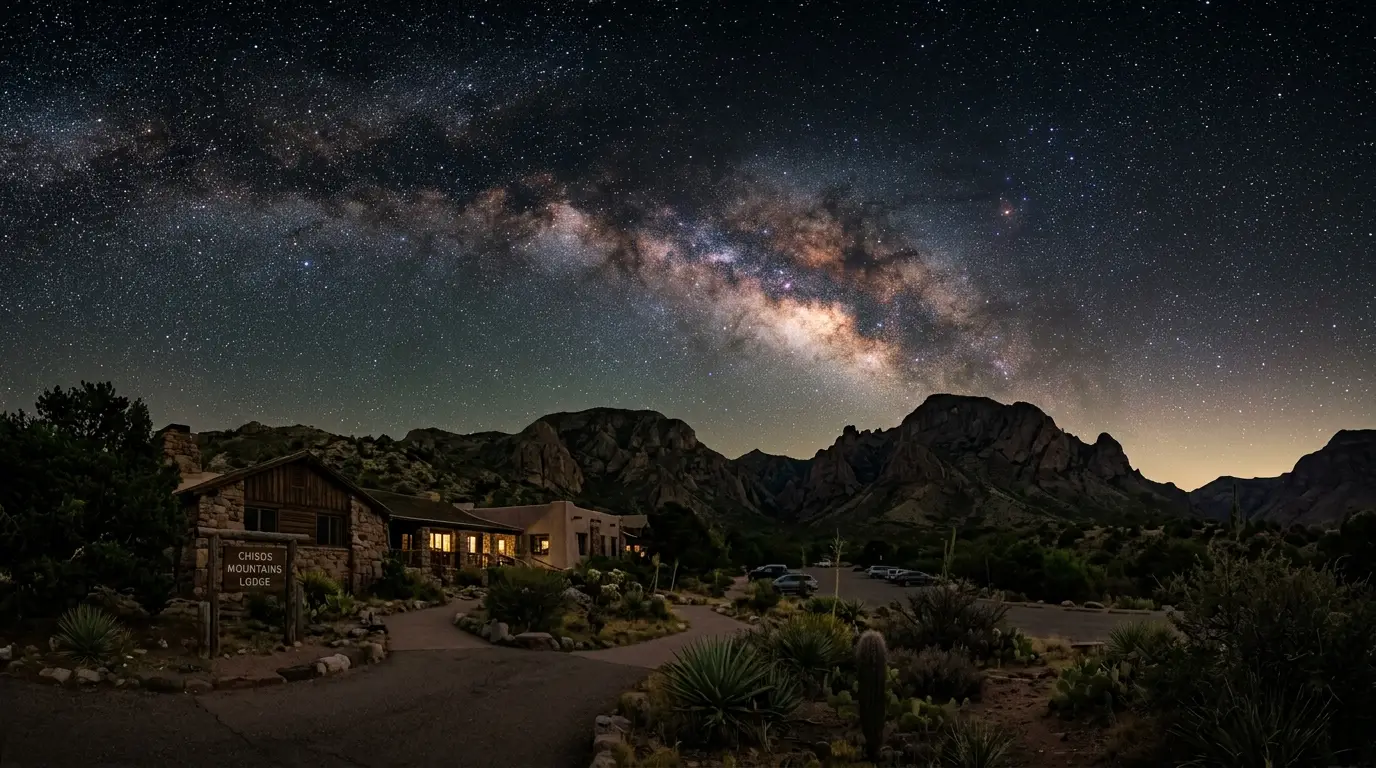
Four spots do most of the work once the sun's down. Chisos Basin, at roughly 5,400 feet and ringed by the Chisos Mountains, is the park's highest developed area and home to Chisos Mountains Lodge, the only lodging inside the park. Santa Elena Canyon gives a dramatic, sheer-walled foreground for a Milky Way shot. Rio Grande Village, down along the river and the international border, runs a popular dark-sky campground. Sotol Vista trades foreground drama for the widest open horizon in the park, useful if you want the sky itself, not the rock around it, to carry the shot. For a closer, spot-by-spot breakdown of these four, plus two more NPS names but doesn't fully endorse, see the full rundown of Big Bend's best stargazing spots.
Get this one honest before you plan around it: McDonald Observatory is not inside Big Bend. It sits in the Davis Mountains near Fort Davis, reached via Highway 118 north through Terlingua, Alpine, and Fort Davis, and it's a genuine 3.5 to 4-hour drive each way (112-151 miles), not the roughly three-hour figure that still circulates on some travel sites. Build it as a full-day round trip, or better, an overnight stay in Fort Davis, not a quick side errand from the park.
What you're driving toward is real research infrastructure. The observatory's Hobby-Eberly Telescope, at 433 inches (11 meters) across its segmented mirror, ranks among the largest optical telescopes on Earth, used by working astronomers for exoplanet surveys and studies of galaxies, supernovae, and black holes. It isn't part of the public program, visitors view through dedicated telescopes at the Rebecca Gale Telescope Park instead, but its presence is why this stop earns the drive: you're visiting a working observatory, not a roadside attraction with a telescope prop.
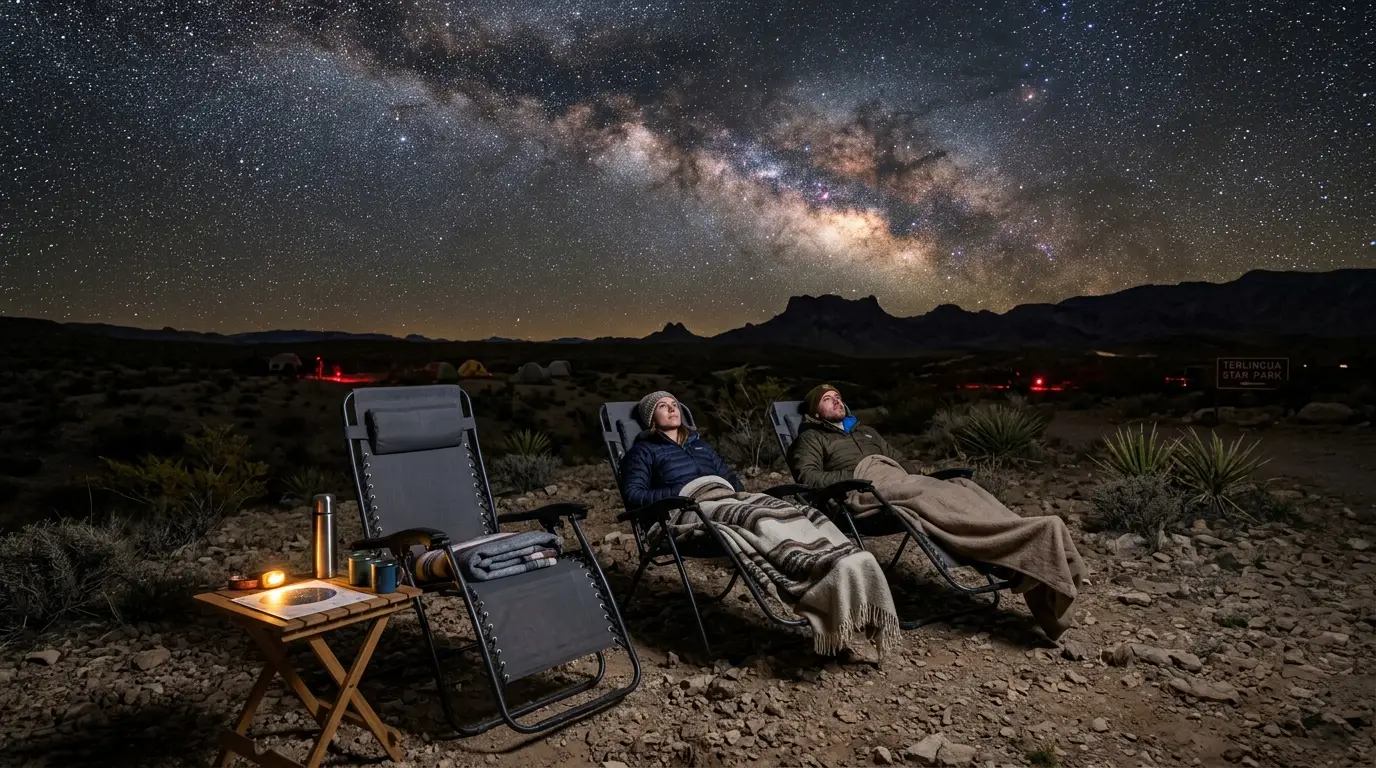
Public Star Party evening programs run Tuesday, Friday, and Saturday, roughly two hours each, with exact start times shifting by season. Book three or more weeks ahead; slots fill, especially on weekends. For guided stargazing without the drive to Fort Davis, Dark Texas Skies runs sessions from Marathon and Astro Mucho runs public star parties from Terlingua Star Park, both inside the Reserve and a fraction of the distance.
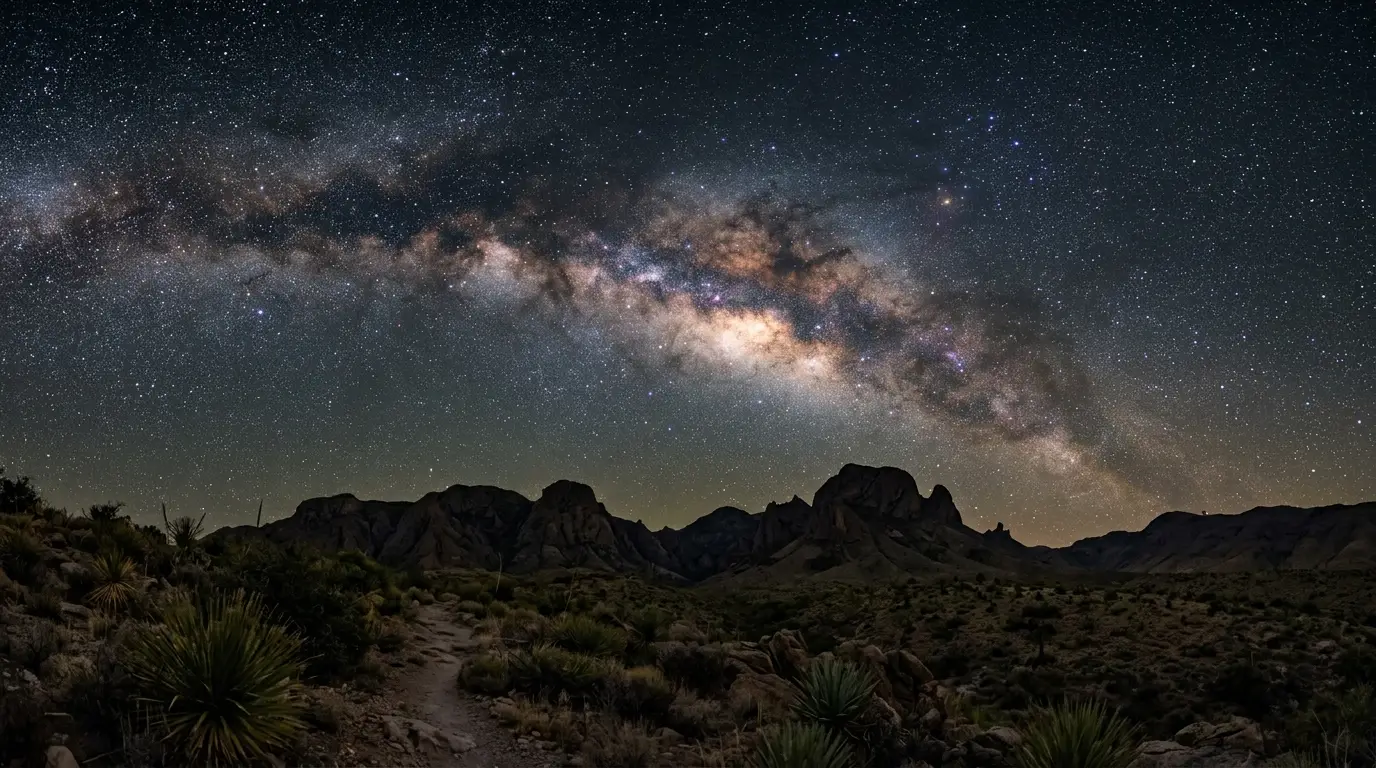
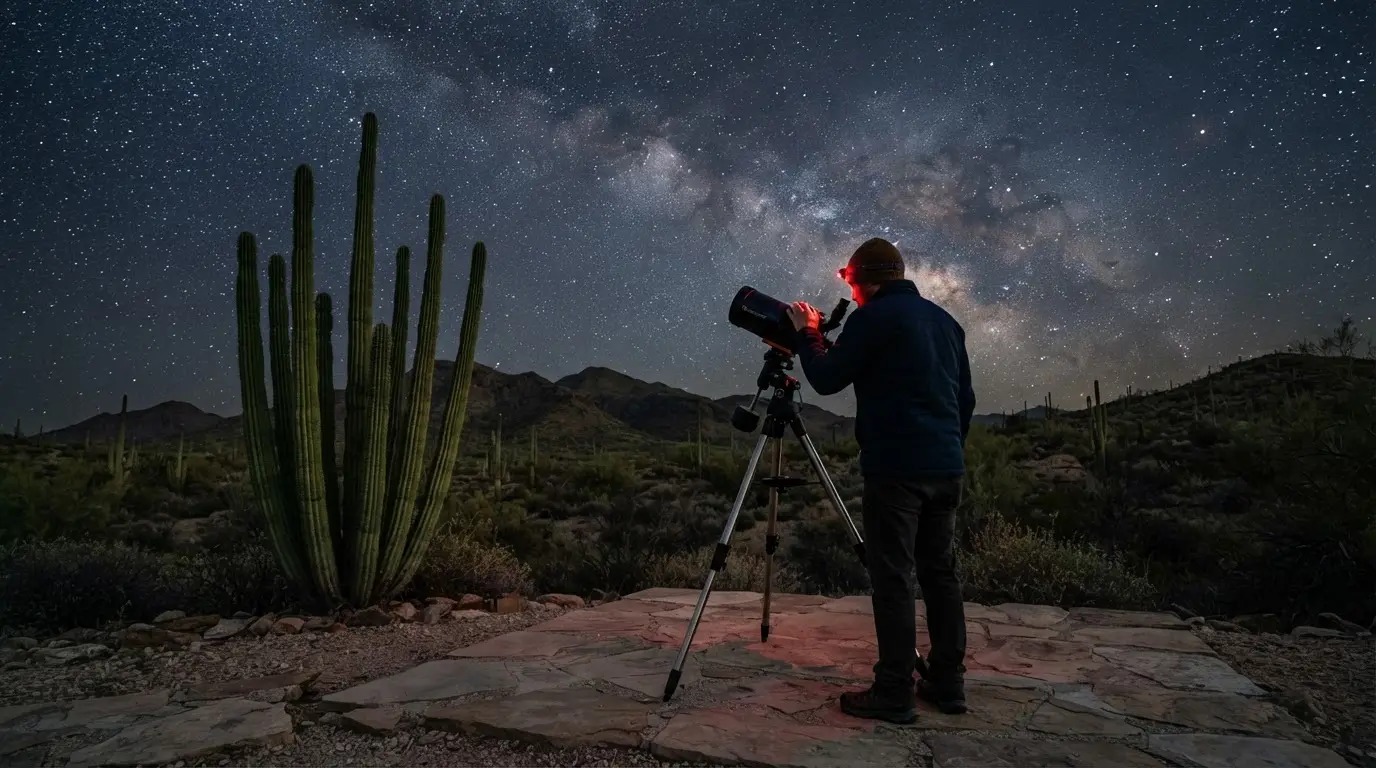
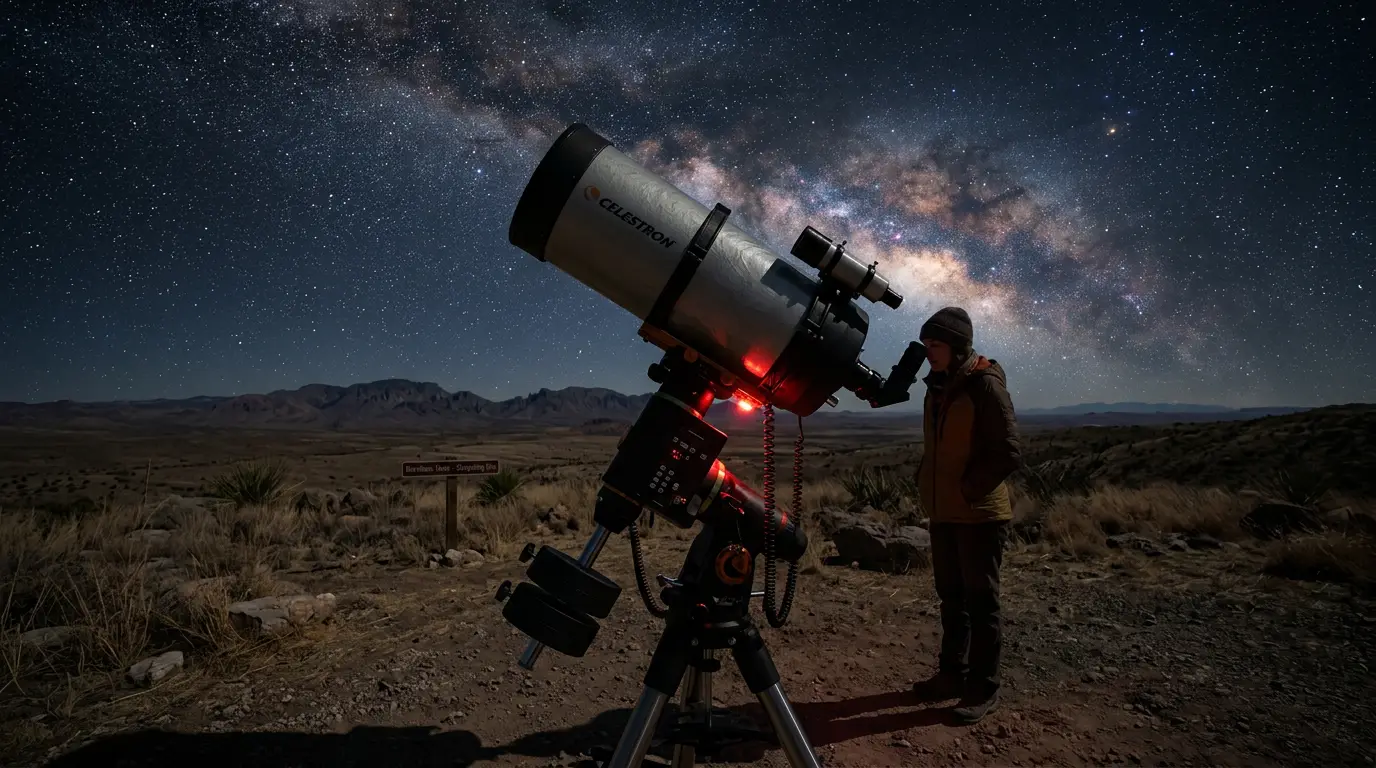
Dark Texas Skies runs $10 stargazing nights from Marathon, Texas, the closest gateway to Big Bend's protected dark skies, telescopes and binoculars provided.
McDonald Observatory's Star Party puts visitors behind real telescopes in the Davis Mountains, a genuine day trip from Big Bend National Park, not a quick stop.
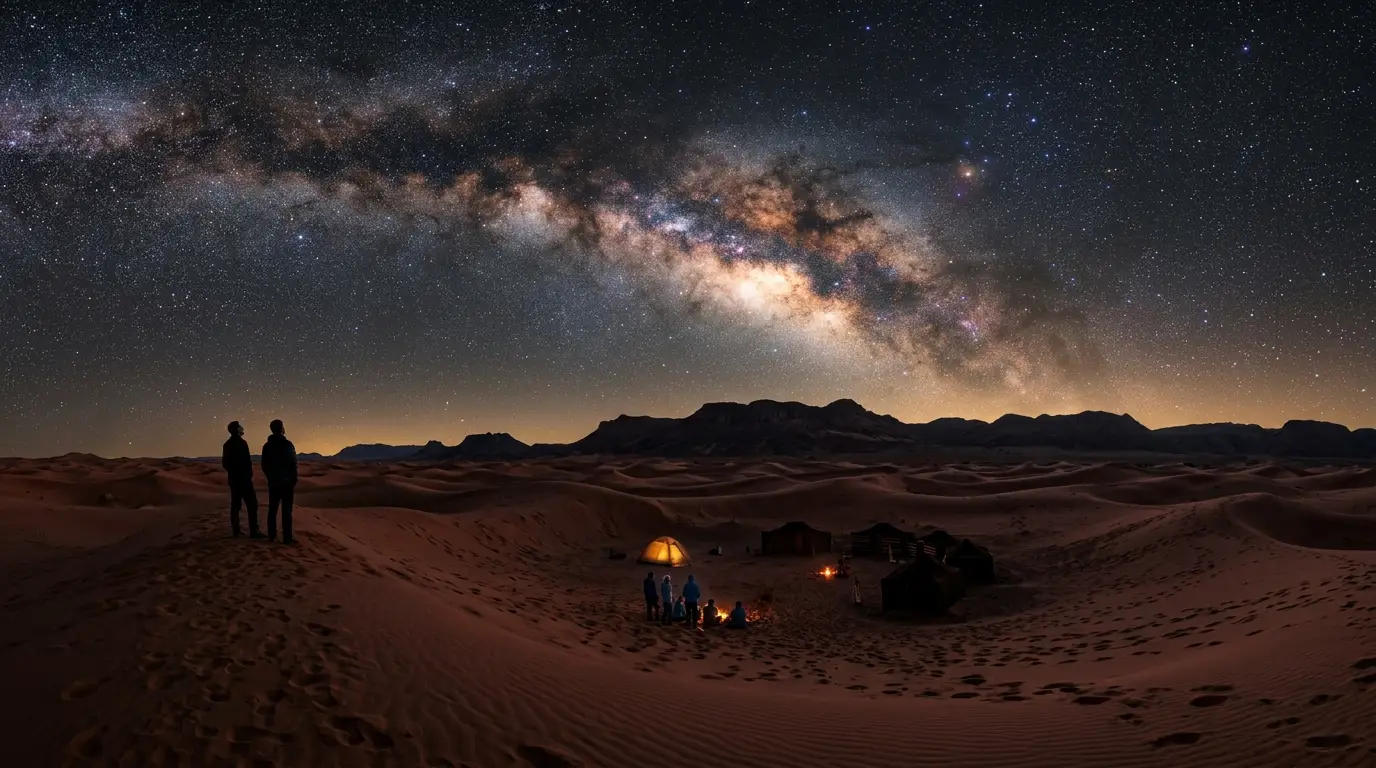
The Milky Way's core is visible from Big Bend roughly March through October, brightest during summer, which sets up the park's one real trade-off: those same summer months regularly push daytime temperatures over 100°F, complicating hiking, driving, and water logistics even on a night when the sky itself is at its best.
Go October through March for Big Bend's driest, clearest skies; cold nights sharpen the view, and the crowds stay thinner than spring break. Skip June through September, when monsoon thunderstorms build most afternoons, humidity climbs, and daytime heat tops 100°F even before the clouds arrive. April and May split the difference: still dry, but warming fast toward the wet season.
Going in January? See what else the sky offers that month
There's no way around this: Big Bend is remote even by national-park standards. The two nearest airports are Midland International Air & Space Port, roughly 220-240 miles and a 4-5 hour drive to the Panther Junction Visitor Center, and El Paso International Airport, roughly 300-330 miles and a 5.5-7 hour drive. No public transit reaches the park; a rental car is the entire plan, not a backup option.
Once you're inside, don't count on your phone. NPS is direct about it: "Cell phone coverage in the park is limited and unreliable; do not expect to have service throughout most of the park." Only Panther Junction and the Chisos Basin Campground have any reasonably stable signal. Download offline maps before you arrive, carry a paper one as backup, and tell someone your route and return time before heading out for the night.
Tap a pin to open the lodge, tour, or destination page.
Best season
Year-round for Bortle Class 1 skies; March through October for the Milky Way's core, with spring and fall the more comfortable shoulder months for daytime logistics.
Quietest hours
After the day-use crowds clear the main overlooks, especially at Sotol Vista and Rio Grande Village rather than the busier Chisos Basin trailheads.
Visit duration
2-3 nights covers Chisos Basin, Santa Elena Canyon, and a clear night's viewing; add a full day if a McDonald Observatory Star Party is part of the plan.
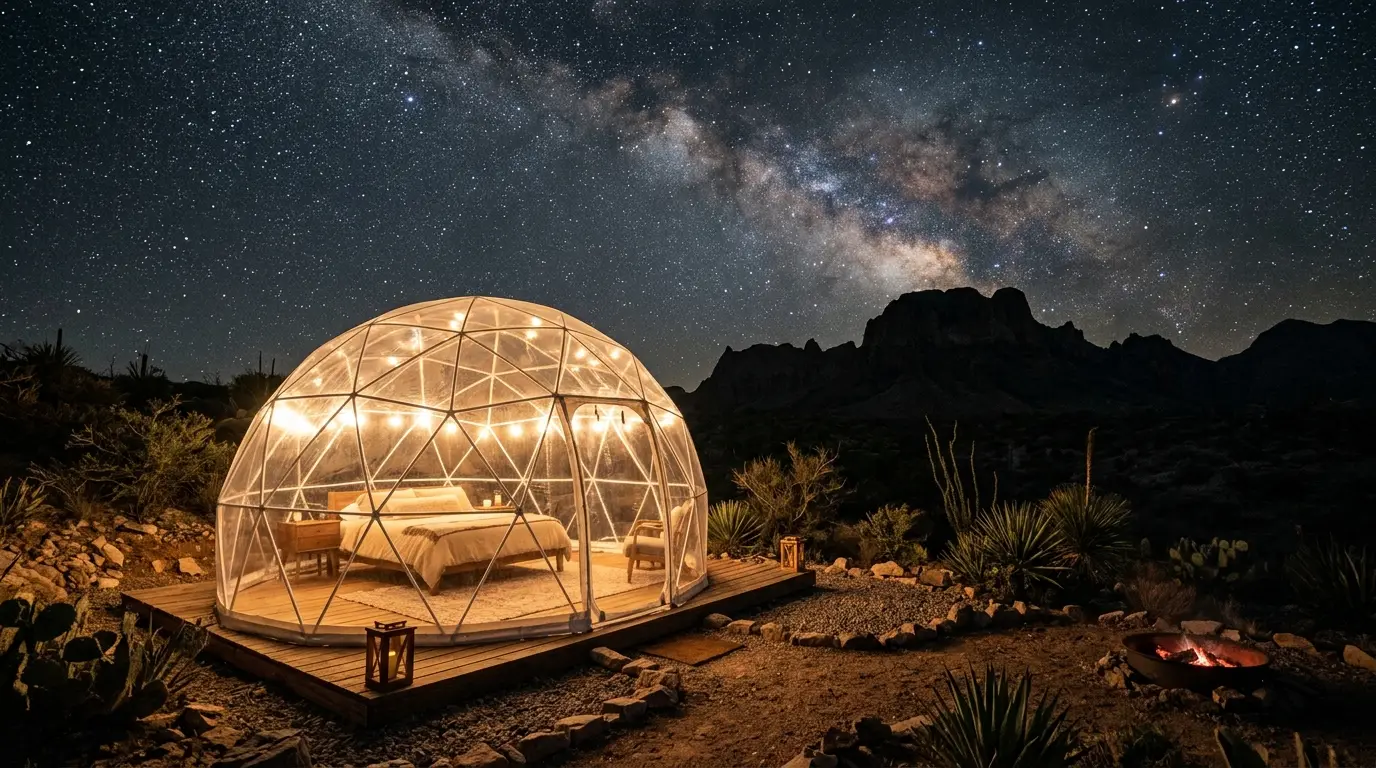
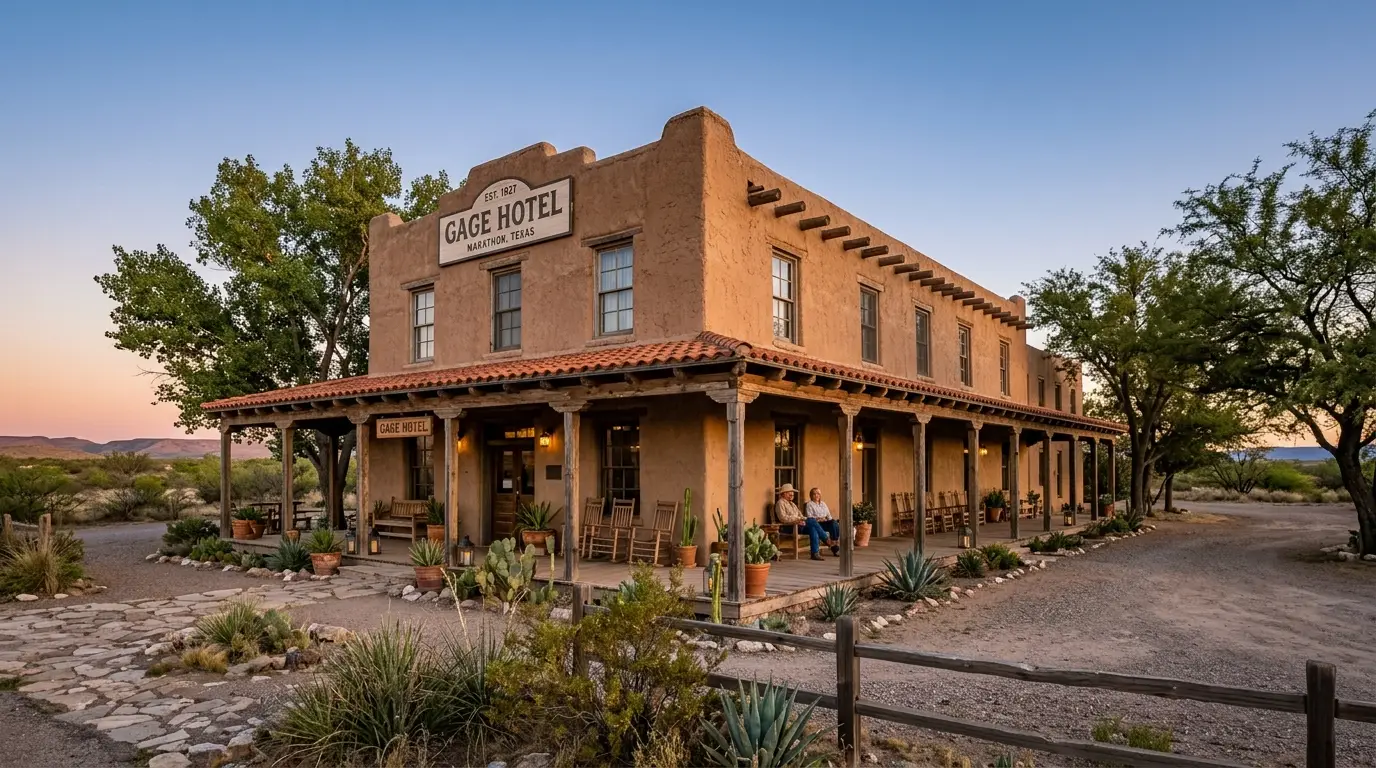
Chisos Mountains Lodge is the only lodging inside the park, set in Chisos Basin a short walk from some of the darkest, most sheltered sky in Big Bend. Book well ahead, rooms here sell out fast for a property with no real in-park competition. Outside the boundary, the small towns of Terlingua, Study Butte, and Alpine hold the rest of the area's lodging and restaurants, each roughly 20 minutes to two-plus hours from the park entrances depending on which one you pick. Glamping fills out that gateway option well: Basecamp Terlingua puts private fire pits and stargazing chairs a few minutes from the park entrance, while StarStruck Glamping bundles a telescope and guided audio session into every dome, about 30 minutes out near Terlingua Ranch. To the north, Marathon works as its own gateway: the historic Gage Hotel sits about 40 miles from the Persimmon Gap entrance, trading proximity to the sky itself for a fine restaurant, a notable bar, and an easy highway stop before or after the drive in.
Best private fire pit and stargazing chairs minutes from the gate
Minutes to park · 4/5 TripAdvisor · 5 unit types
Best comfort and easy booking on the northern approach
45 min to Persimmon Gap · 46 rooms · No stargazing amenities
Entrance runs $30 per private vehicle, valid for seven days, or $15 per person on foot, bicycle, or as part of an organized group, for visitors 16 and up. NPS periodically revises this figure, so confirm current pricing before you go.
For deeper planning beyond this hub: weigh Big Bend against a road-accessible alternative in Big Bend vs Bryce Canyon stargazing, build a desert stargazing packing list around the heat-to-cold swing, and pick your astrophotography gear or lean on smartphone night sky photography if a phone is what you're carrying. For the Bortle Class 1 science itself, Sky Quality Meter readings and IDA certification included, see Big Bend's dark sky certification, explained.
A few things worth locking in before you leave home:
Reporter notebook
Star Party evening programs run Tuesday, Friday, and Saturday and sell out fast, especially on weekends. Book directly at mcdonaldobservatory.org rather than assuming you can walk up on the one clear night of your trip.
Only Panther Junction and the Chisos Basin Campground have any reliable signal in the park. Carry a paper map as backup and tell someone your route and return time before heading out after dark.
March through October gives the best core visibility, but summer daytime highs routinely clear 100°F. Spring and fall shoulder months keep the same dark sky with far more manageable daytime logistics.
Further reading
“Big Bend National Park is a Bortle Class 1 park, the darkest rating on the Bortle scale used to measure sky darkness.”
“The Greater Big Bend International Dark Sky Reserve is the largest International Dark Sky Reserve in the world, spanning more than 15,000 square miles across the Big Bend region of Texas and northern Mexico.”
“Cell phone coverage in the park is limited and unreliable; do not expect to have service throughout most of the park.”
“Entrance fee: $30 per private, non-commercial vehicle (valid for 7 days); $15 per person entering by foot, bicycle, or motorcycle.”
“The designation of Big Bend National Park (BBNP) as a Gold Tier International Dark Sky Park adds a jewel to the worldwide network of dark sky oases recognized by the International Dark-Sky Association for excellence in night sky stewardship.”
The Leonids peak November 17–18, 2026 with a modest 10–15 meteors an hour — not a repeat of 1833 or 1966's storms, but a solid, free show worth watching.
Watch up to 20 meteors an hour during October's Orionid shower, born from Halley's Comet debris. Peak nights Oct 21-22, 2026, best viewed just before dawn.
Head to head
United States · Best Year-round (moonless summer nights best)
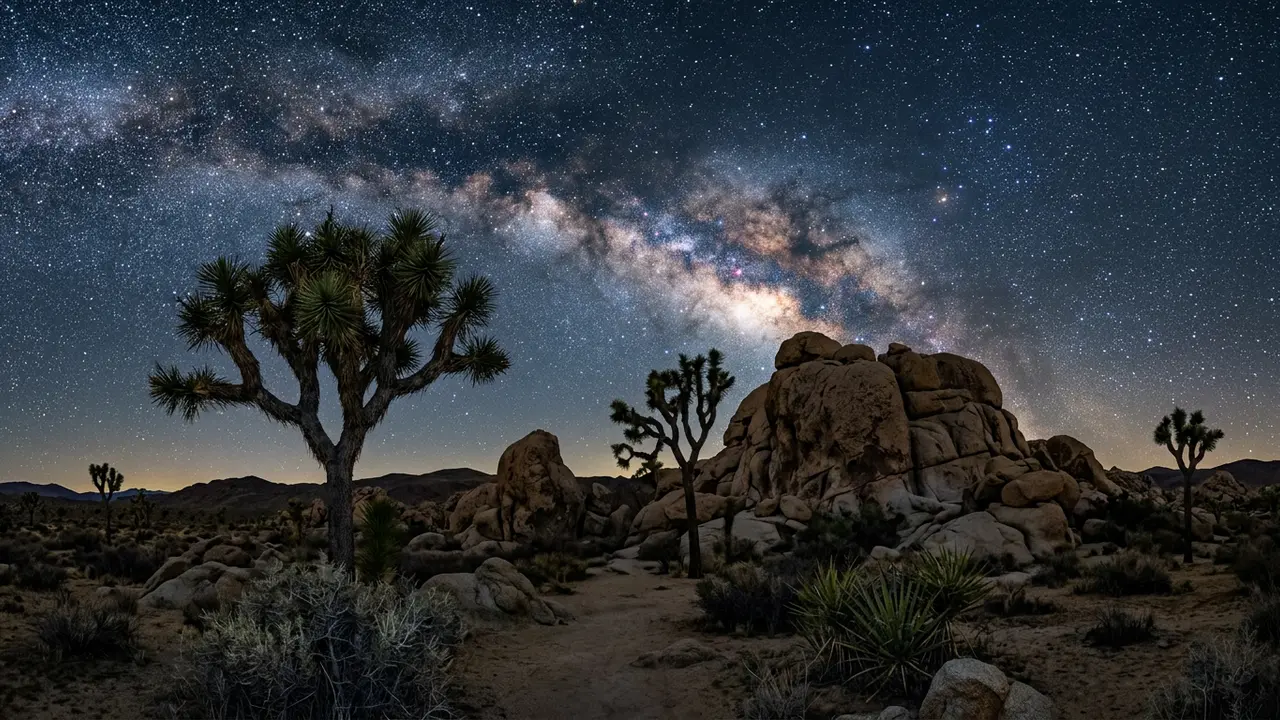
Joshua Tree earned International Dark Sky Park status in 2017, just two hours from LA. Here's where to see the Milky Way, dodge crowds, and stay the night.
United States · Best Year-round (Astronomy Festival in June)
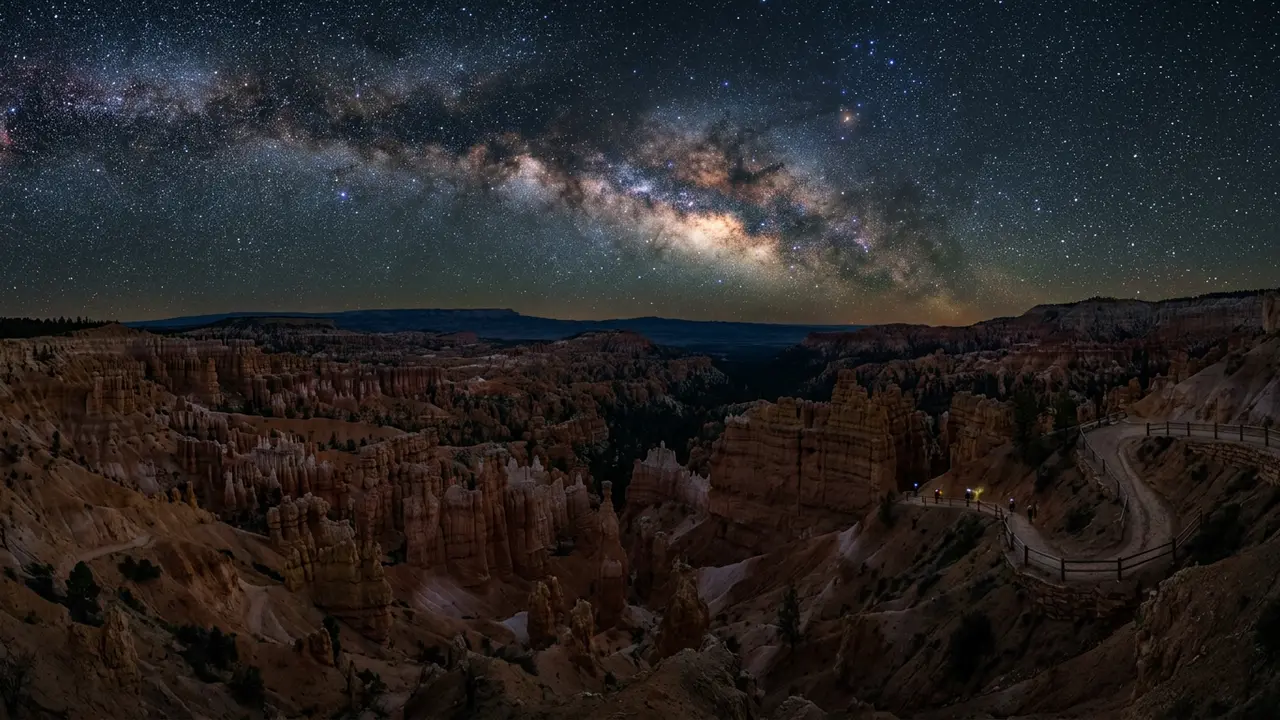
Bryce Canyon earned Gold-Tier Dark Sky Park status in 2019 after 50 years of astronomy programs. Drive in from Vegas or Salt Lake City to see it for yourself.
United States · Best Oct–Apr (Dark Sky Festival in spring)
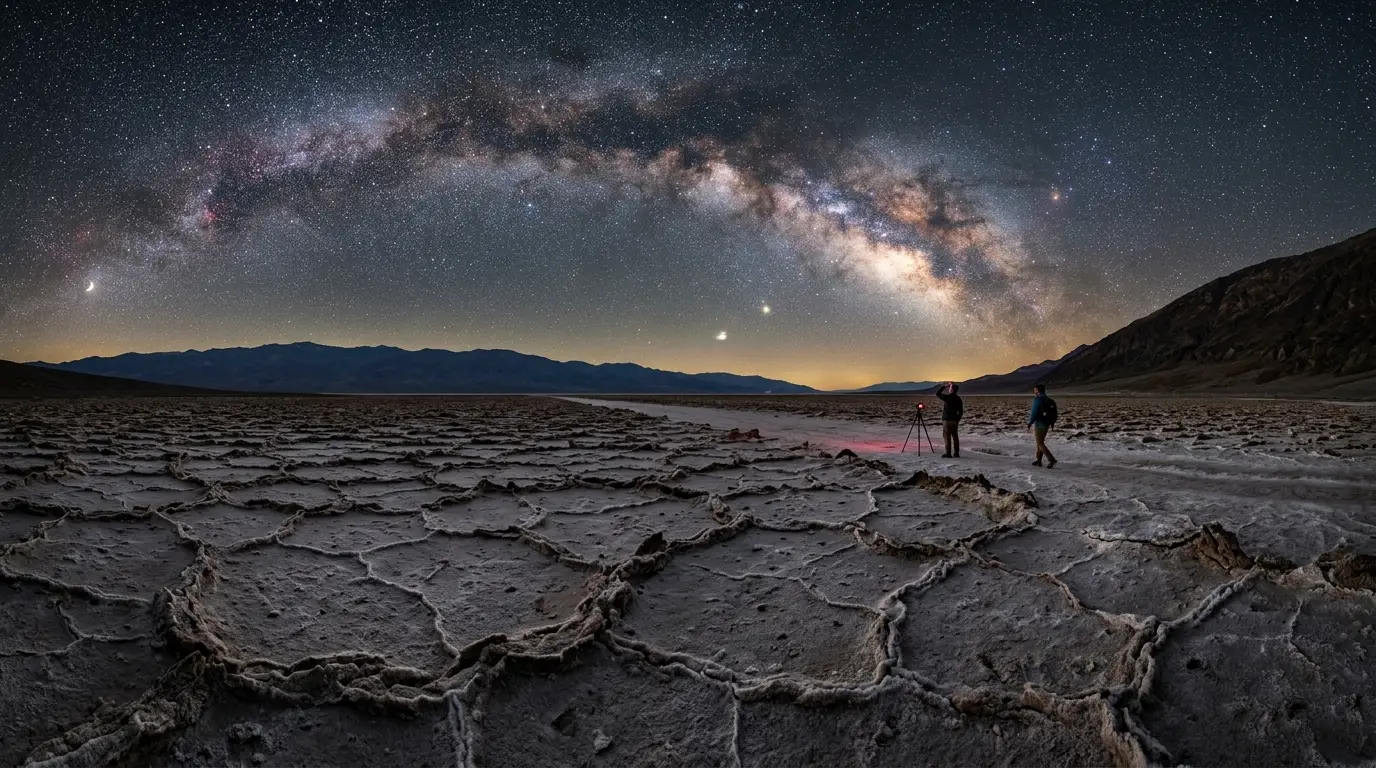
Death Valley's Gold-tier dark sky sits at the lowest point in North America. Here's when to visit, where to stay, and how to handle the extreme summer heat.