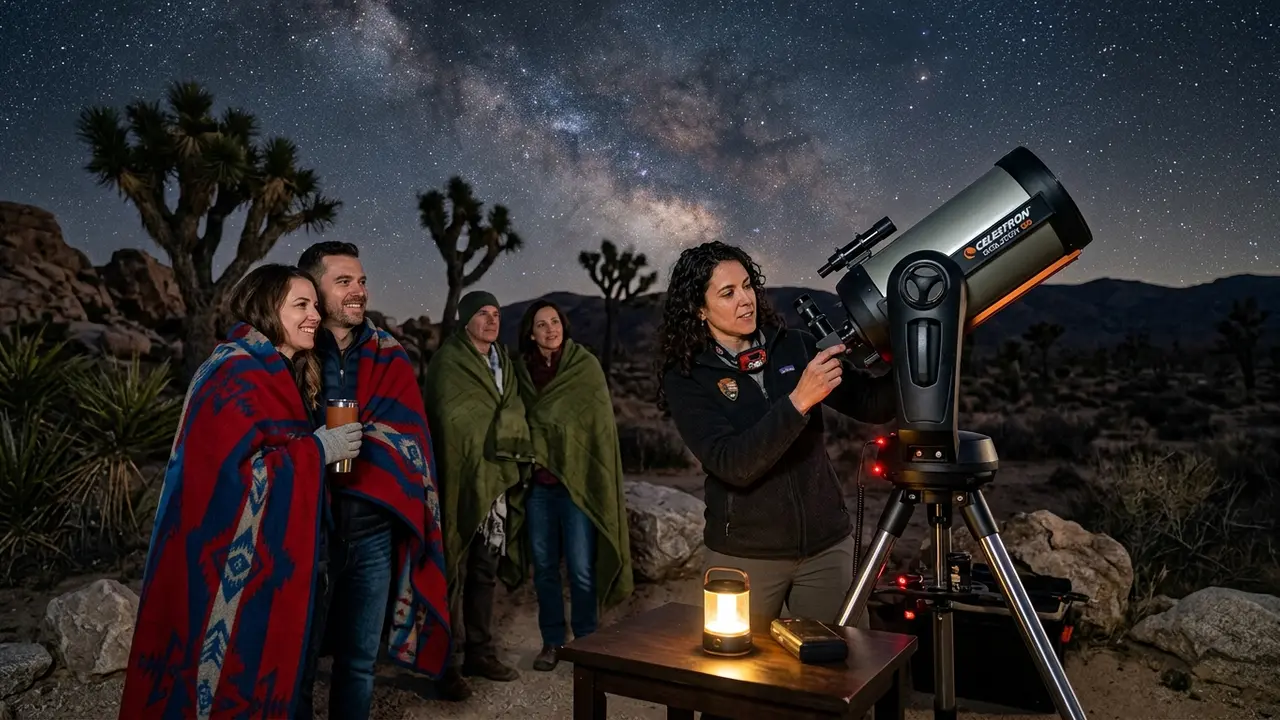
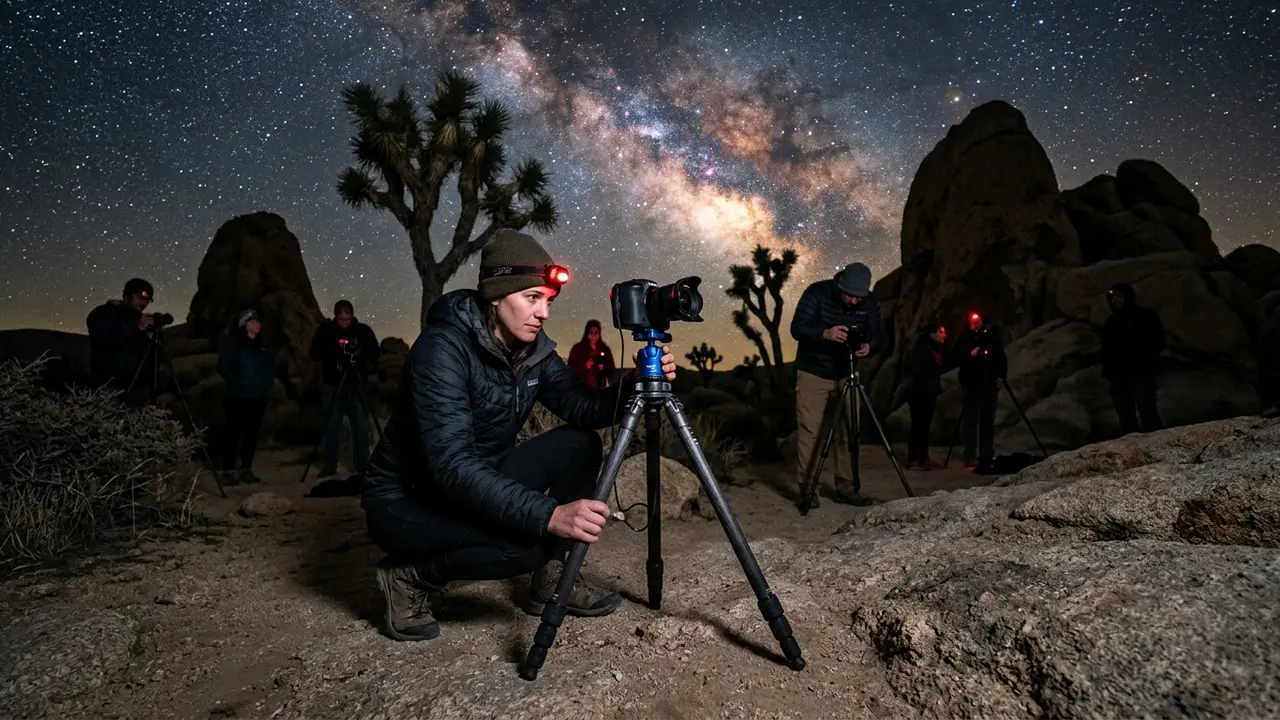
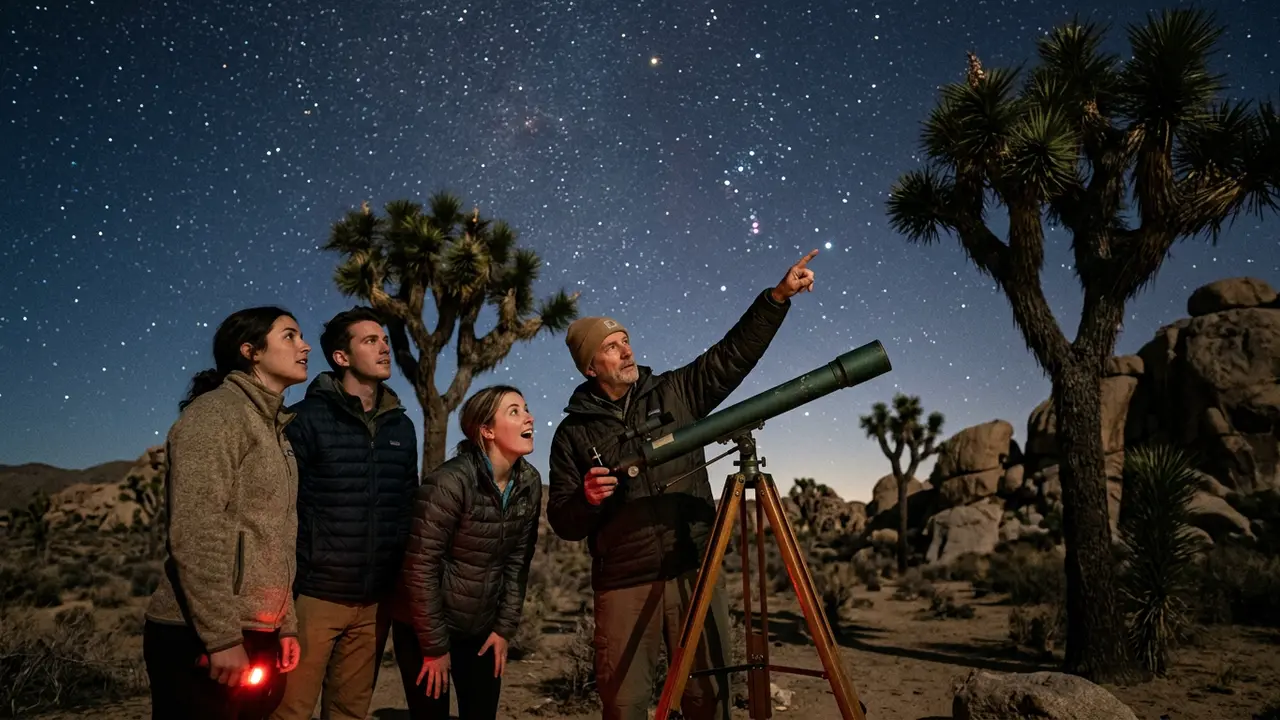
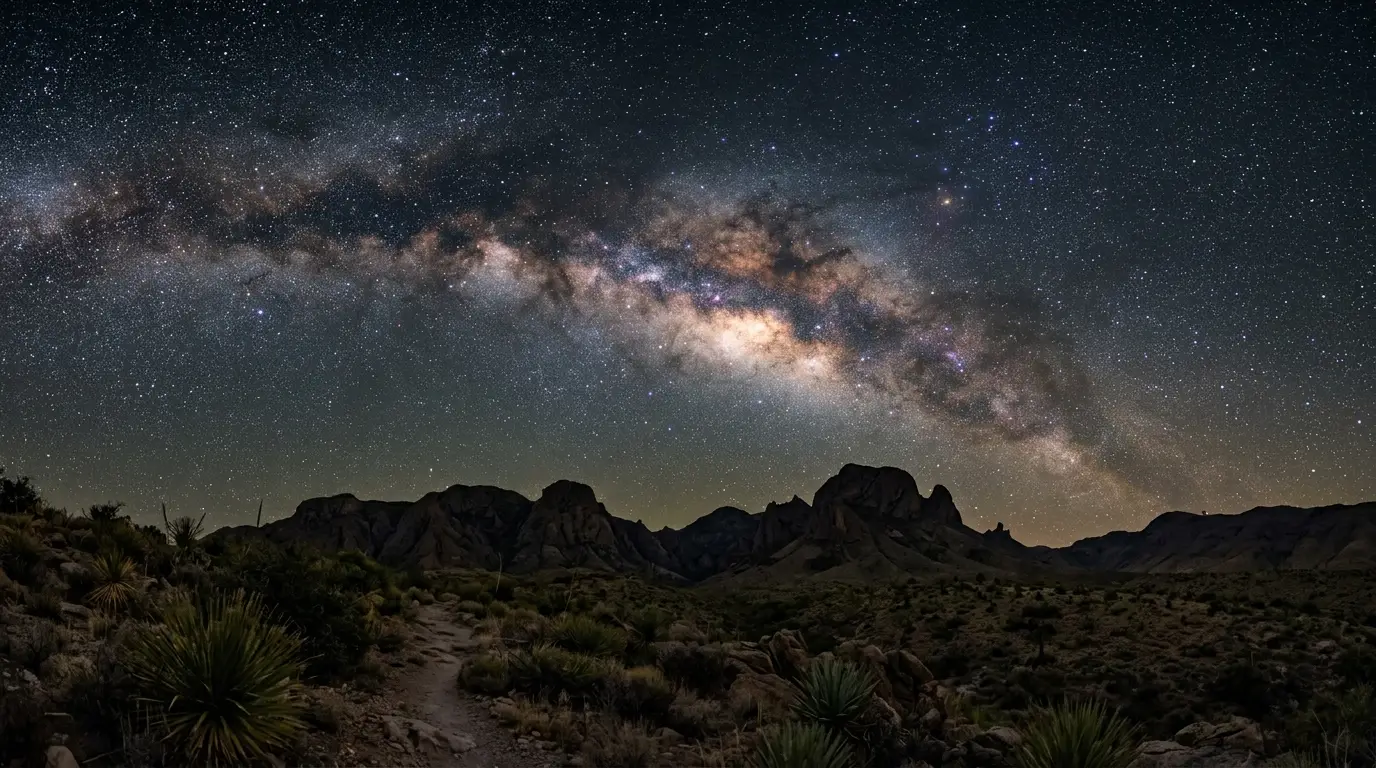
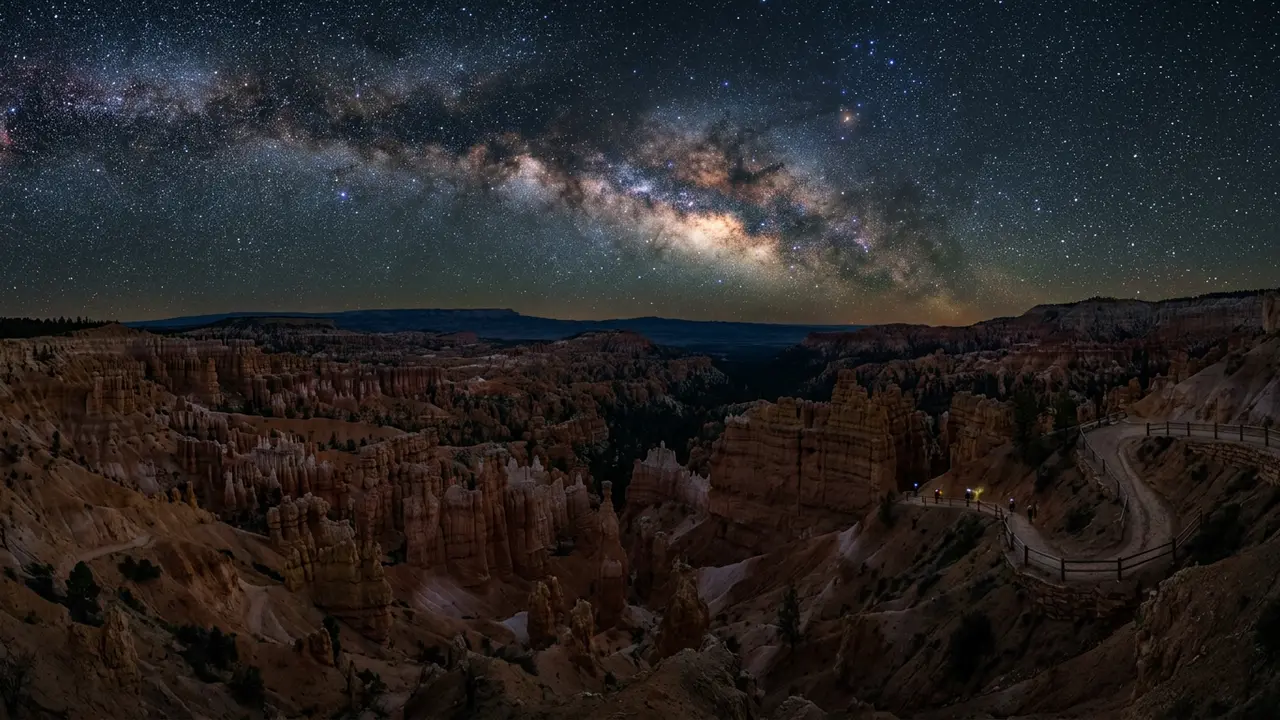
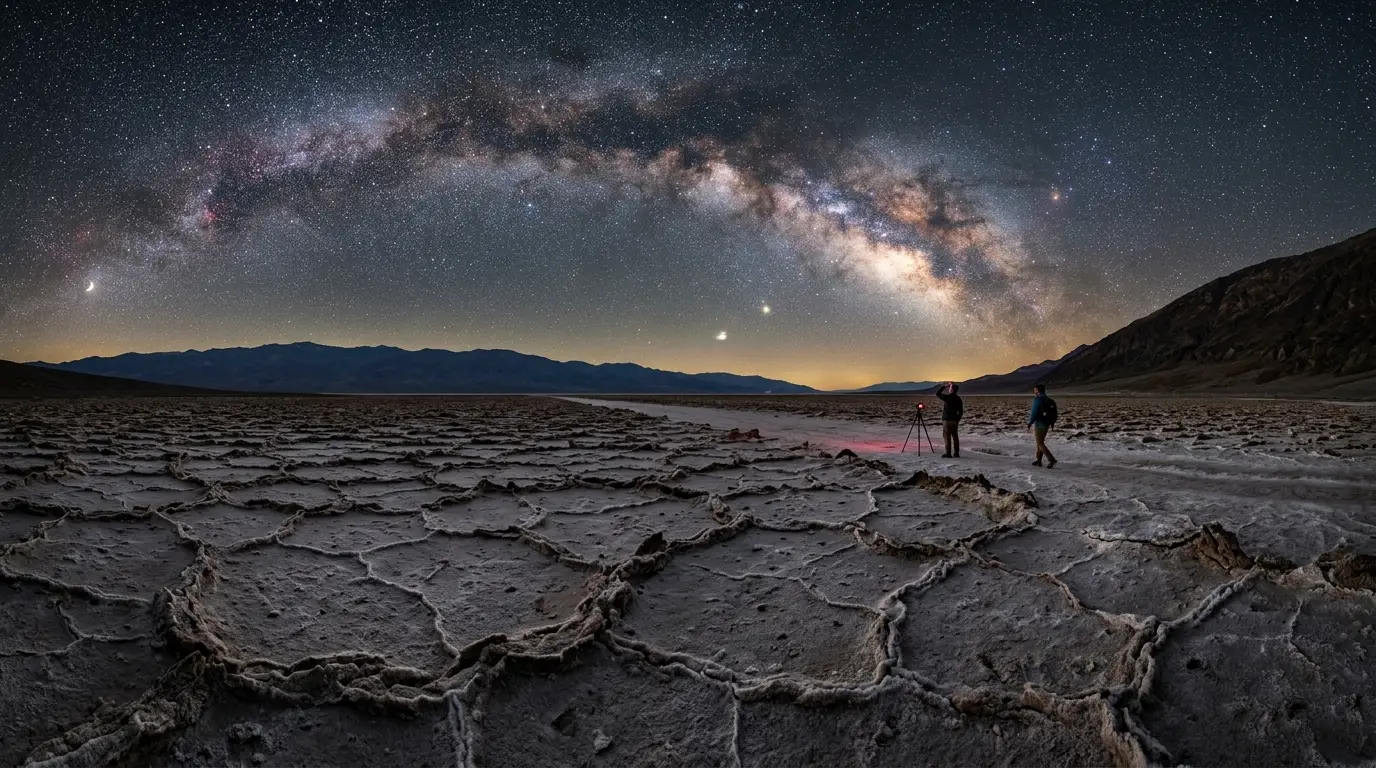
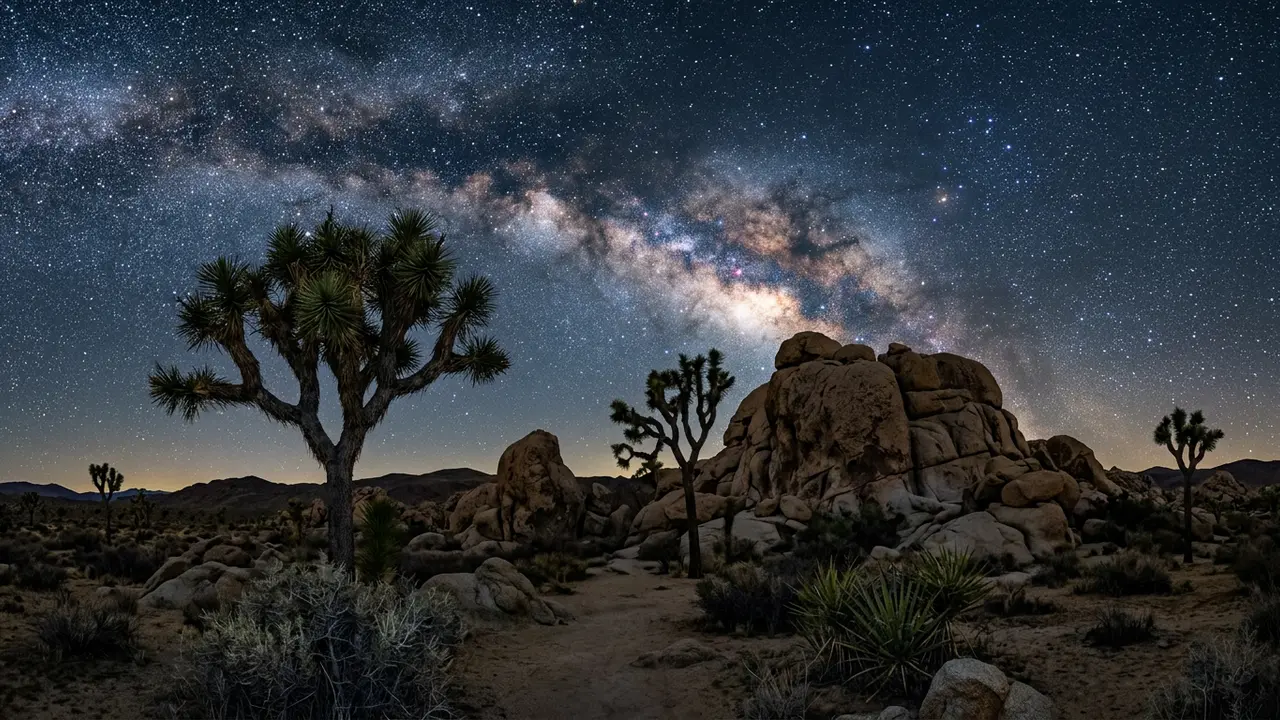
Star-filled night sky over Joshua Tree's boulder formations and namesake trees, an International Dark Sky Park two hours from Los Angeles
dark sky park joshua tree california

Joshua Tree: A Dark Sky Park Two Hours From LA

Joshua Tree earned International Dark Sky Park status in 2017, just two hours from LA. Here's where to see the Milky Way, dodge crowds, and stay the night.

Darkness: Bortle 2-3
Latitude: 34°N
Best months: Year-round (moonless summer nights best)

Dark-sky facts

Darkness
Bortle 2-3
Best months
Year-round (moonless summer nights best)
Country
United States
Coordinates
33.87°N, 115.90°W
Designation
International Dark Sky Park (Silver Tier), International Dark-Sky Association
Night access
Park accessible year-round, 24 hours; stargazing is best on clear, moonless nights at any of the park's designated viewing areas.
Costs & fees
$30 per private vehicle (valid 7 days), $25 per motorcycle, $15 per person on foot or bicycle. No separate permit is required to stargaze after dark.

The Milky Way is richly structured overhead; the Andromeda Galaxy is an easy naked-eye smudge.

This destination rates Bortle 2-3 on the 9-level Bortle dark-sky scale, where 1 is a pristine dark sky and 9 is an inner-city sky. The Milky Way is richly structured overhead; the Andromeda Galaxy is an easy naked-eye smudge.

On this page

Updated

Two hours east of Los Angeles, the freeway thins into open desert, and then the boulders start: house-sized piles of pale monzogranite stacked like something a giant abandoned mid-build, with the park's namesake Joshua trees spiking up between them, all silhouetted, after dark, against more stars than most Angelenos have ever seen in one sitting. That's the whole pitch for Joshua Tree National Park: an International Dark Sky Park close enough for a weekend, not a flight.

The International Dark-Sky Association designated Joshua Tree an International Dark Sky Park in 2017, at the Silver Tier level, a mid-range rating that sits below Bryce Canyon's Gold Tier but still requires the same rigorous process: measured sky-quality data plus lighting agreements with the towns pressed right up against the park boundary. See our explainer on what that Silver Tier certification actually means for the full process. This hub covers what that certification means on the ground, when to time a visit around the Milky Way's galactic core, where the crowds go and where they don't, where to stay, and one thing most stargazing write-ups skip: the honest state of light pollution creeping in from the towns just outside the fence.

The sky this month

Computed for Joshua Tree National Park at 34°N. Updates nightly.

  • First quarter tonight, 36% illuminated

    Next new moon August 12. The nights either side of it are the darkest of the month.

  • About 7 hours of astronomical darkness tonight

    The sun drops more than 18 degrees below the horizon, so the sky gets genuinely dark for deep-sky viewing at 34°N.

    Hours of astronomical darkness by month at Joshua Tree National Park: January 11 hours, February 10 hours, March 9 hours, April 8 hours, May 7 hours, June 6 hours, July 6 hours, August 8 hours, September 9 hours, October 10 hours, November 11 hours, December 11 hours.

  • Perseids active now

    Peaks August 12. Up to 100 meteors per hour at maximum. The 2026 peak lands on a new moon — a dark-sky year with zero lunar washout.

    See the Perseids guide
New moons August 12 September 10 October 10
Add new-moon reminders Full sky calendar

Where to go stargazing in July

A Dark Sky Park Two Hours From LA

Joshua Tree sits about 130 miles east of Los Angeles, roughly a two to two-and-a-half-hour drive depending on traffic, and closer still to Palm Springs, about an hour away on I-10. That proximity is the differentiator: most International Dark Sky Parks in the American West ask for a half-day drive or a flight into a regional airport. Joshua Tree asks for a Friday-evening tank of gas.

The park itself covers roughly 790,000 acres of California desert, entered for $30 per private vehicle, a pass valid for seven days ($25 by motorcycle, $15 on foot or bike). No separate stargazing permit exists; the standard entrance fee covers access to every overlook and pullout after dark.

Where the Mojave Meets the Colorado Desert

Joshua Tree is really two deserts stitched together. The higher, cooler Mojave Desert section in the park's western and northern half is where the trees the park is named for actually grow, twisted yucca relatives that only survive above about 3,000 feet. The Colorado Desert to the south and east drops into flatter creosote scrub and the Pinto Basin, hotter and starker, with fewer visitors and correspondingly darker corners. The boulder piles that make Joshua Tree famous with climbers by day do something else after dark: they break the horizon into a jagged, textured silhouette that flat desert sites don't have.

NPS doesn't publish a single official Bortle scale number for the park, and it's worth being honest about that rather than inventing one the way some travel blogs do. What NPS does say is plainer and more useful: the desert's dry, arid air produces some of the darkest nights left in Southern California, with the galaxy visible to the naked eye on a clear, moonless night.

When to Go: Milky Way Season and the Trade-Offs

Summer nights, moonless ones especially, are the best window for the Milky Way's galactic core, the bright core region visible low in Sagittarius, and the Perseid meteor shower peaks in mid-August on top of that. Winter flips the trade: sunset lands as early as 4:30 p.m. in December, buying hours of dark sky before a reasonable bedtime, with Orion, Sirius, Gemini, and Taurus standing in for the galactic core. Spring brings Arcturus higher overhead; fall trades it for the Great Square of Pegasus and, on the clearest nights, a naked-eye view of the Andromeda Galaxy.

The one real caveat is heat, not sky quality: Joshua Tree's summer days run brutally hot, and that shapes when you'll actually want to be outside even once the night itself cools off. A new moon week is worth building a trip around regardless of season, since even a half moon washes out the fainter detail that makes the park worth the drive, and it's the window serious astrophotography visitors plan around too. Our best time to stargaze in Joshua Tree guide breaks down, month by month, which trade-off is worth making.

Month by month

Joshua Tree's dark sky doesn't really have an off-season, but comfort does. Moonless summer nights bring the clearest view of the Milky Way's galactic core, but daytime heat routinely tops 100°F. Winter buys the most hours of darkness after an early sunset, at the cost of cold nights. Shoulder season, spring and fall, is when the trade-offs balance best.

  • January: Good — Early sunset buys long dark-sky hours, but nights drop into the 40s.
  • February: Good
  • March: Peak — Mild days, clear skies, before summer heat and before spring-break crowds peak.
  • April: Good — Spring-break crowds pick up at the park's popular overlooks.
  • May: Peak — Warm days, moonless nights start showing the Milky Way's core low in the sky.
  • June: Good — The galactic core rises higher, but daytime heat climbs past 100°F.
  • July: Fair — Peak heat, but moonless nights offer the year's best galactic-core viewing for those who can handle the daytime temperatures.
  • August: Good — The Perseid meteor shower peaks mid-month; days are still brutally hot.
  • September: Peak — Heat starts breaking, skies stay clear, the core is still visible early in the night.
  • October: Peak — Cooler temperatures and clear air make this the most comfortable all-around month.
  • November: Good — Early sunsets buy more dark hours; nights turn cold.
  • December: Good — The coldest nights, but the year's earliest sunset buys the most hours of darkness.

Going in March? See what else the sky offers that month

Where to Stargaze, and Where the Crowds Go

The park maintains four official stargazing parking areas:

  • Quail Springs
  • Hidden Valley
  • Cap Rock
  • Ryan Mountain

Cottonwood Campground, down in the Colorado Desert section, has the darkest skies in the park, according to NPS. Keys View, the postcard overlook toward the Coachella Valley, is the most popular stop for a reason: the view is spectacular by day. After dark, it's also the most compromised. NPS is direct about this: "Most of the light pollution comes from poorly regulated artificial lighting in Los Angeles, Las Vegas, and the Coachella Valley," and large light domes from those cities specifically wash out the sky at Keys View, in a way they don't at more remote spots like Pinto Wells.

That's the honest trade-off worth knowing before driving out at sunset expecting the darkest sky in the park at its busiest viewpoint. For a full spot-by-spot breakdown of all four official areas, plus the quieter eastern corridor most visitors skip, see our guide to the best stargazing spots in Joshua Tree. The park has partnered with the nearby Morongo Basin towns of Twentynine Palms and Yucca Valley, plus a nearby military base, to cut outside lighting that threatens the rating, a partnership that only exists because those towns' lighting was identified as a real threat to the certification in the first place. NPS frames the underlying problem in a way worth repeating: unlike most conservation losses, a dark sky can be recovered, not just protected. That's a genuinely reassuring framing, and also a reminder that the rating depends on those outside agreements holding, not on anything the park controls alone. For the mechanics of why any of this matters, see our explainer on light pollution, or compare how Joshua Tree's Silver Tier stacks up against Bryce Canyon's Gold Tier and the rest of the field in our guide to the best dark sky parks in the world.
Interactive map — loads as you scroll (requires JavaScript)

Tap a pin to open the lodge, tour, or destination page.

How long to stay

Best season

Year-round for dark skies; moonless summer nights give the clearest view of the Milky Way's core, while winter's early sunset buys the most hours of darkness overall.

Quietest hours

After 10 PM once day visitors clear the main overlooks, especially at Cottonwood Campground and Pinto Basin Road rather than Keys View.

Visit duration

A single night covers the highlights; 2 nights lets you pair a clear sky with a daytime hike among the boulders and Joshua trees.

Where to Stay

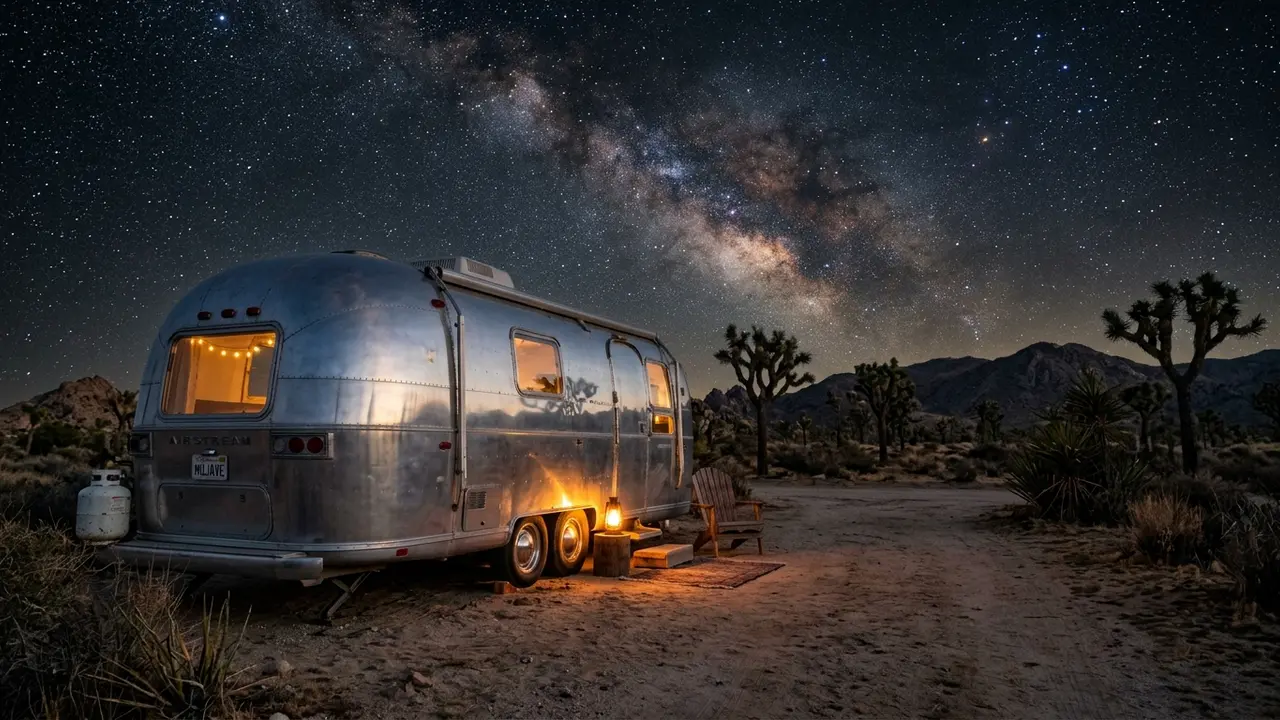
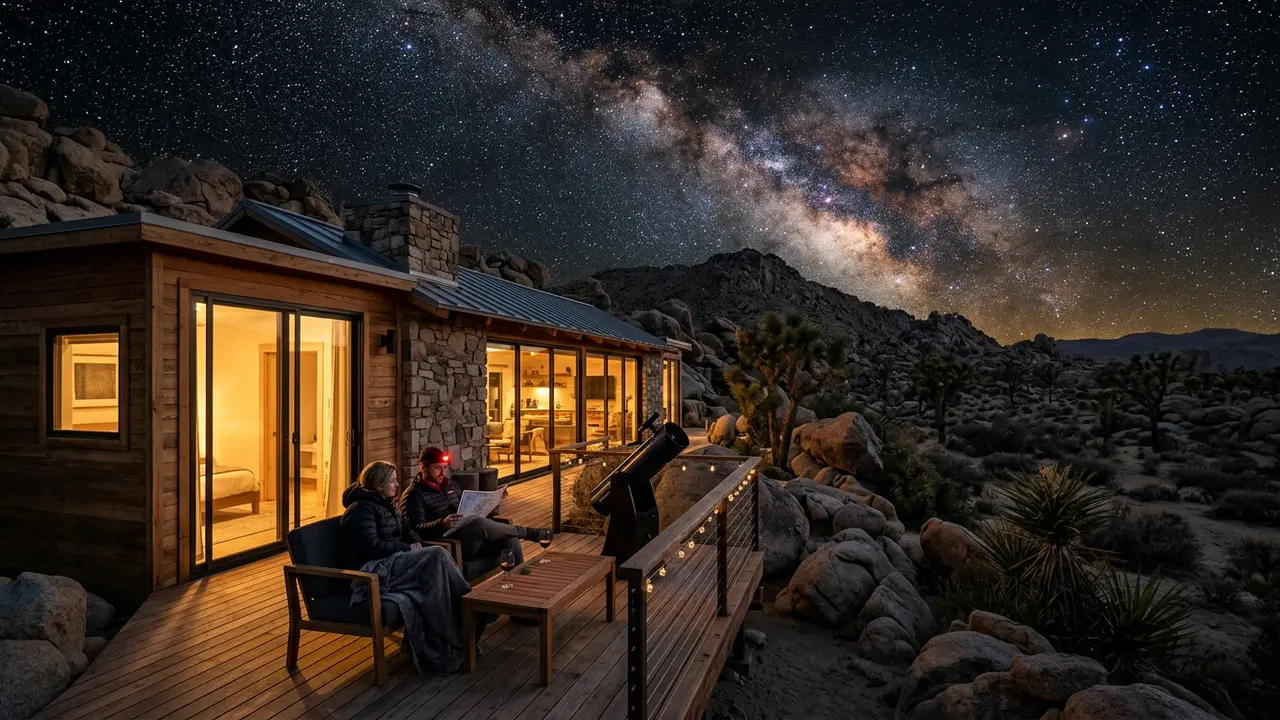
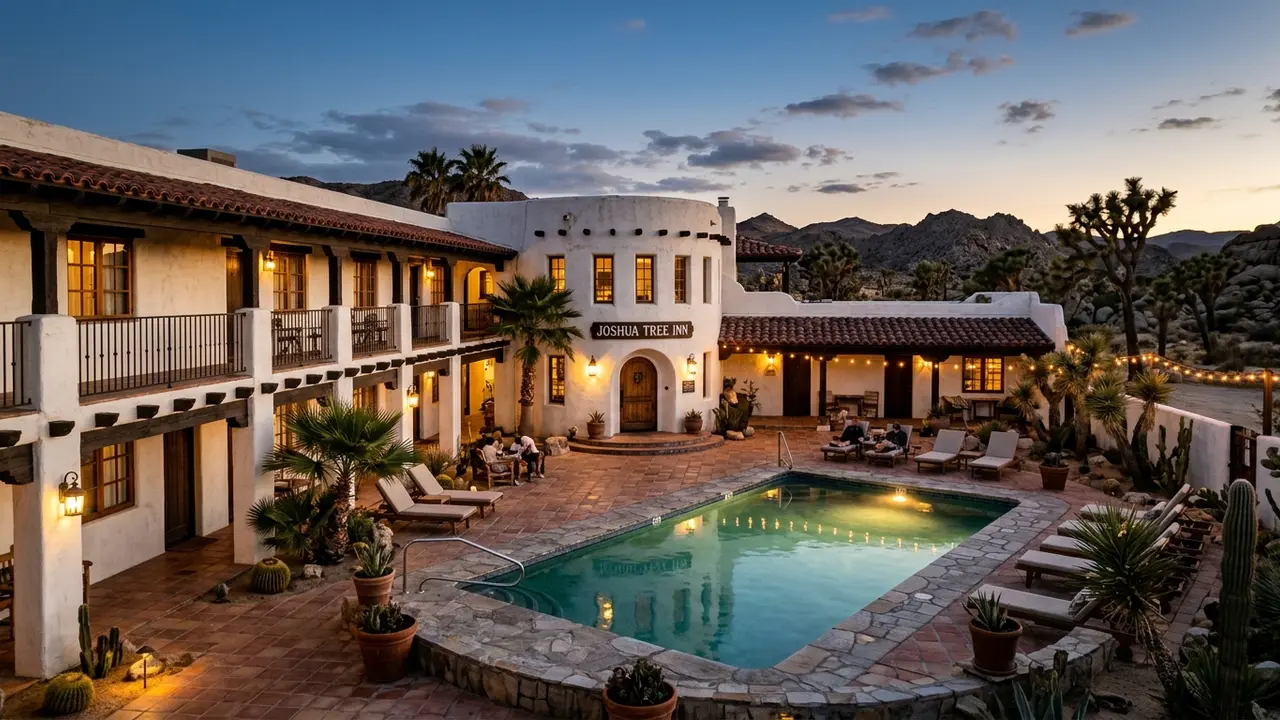
Lodging clusters just outside the park boundary rather than inside it: Joshua Tree Village, Yucca Valley, and Twentynine Palms all sit close enough to the park entrances for a short drive back to a dark overlook after dinner. The Reset Hotel and Sacred Sands both lean into the desert-modern, watch-the-stars-from-your-room end of the spectrum. Kate's Lazy Desert trades polish for retro Airstream character, and the Joshua Tree Inn is the classic, closer-to-town option. For the full lodge-by-lodge breakdown weighing price, proximity, and dark-sky amenities, see our ranked guide to Joshua Tree's stargazing lodges.

Top lodges at a glance

3 Glamping

Best best for genuinely dark skies on a budget

Kate's Lazy Desert

Five acres of open Mojave desert, away from town light, at the lowest price on this list

$79-$125 (historical; confirm current rate) View lodge
4 Charming

Best best historic pick / most established booking

Joshua Tree Inn

Closest in-town lodge to the park boundary, but no dedicated stargazing amenities

$$ · Rates vary; check ResNexus booking system for current pricing · from $129/night View lodge
See the full ranking: Best Lodges for Joshua Tree Stargazing

Planning the Rest of Your Trip

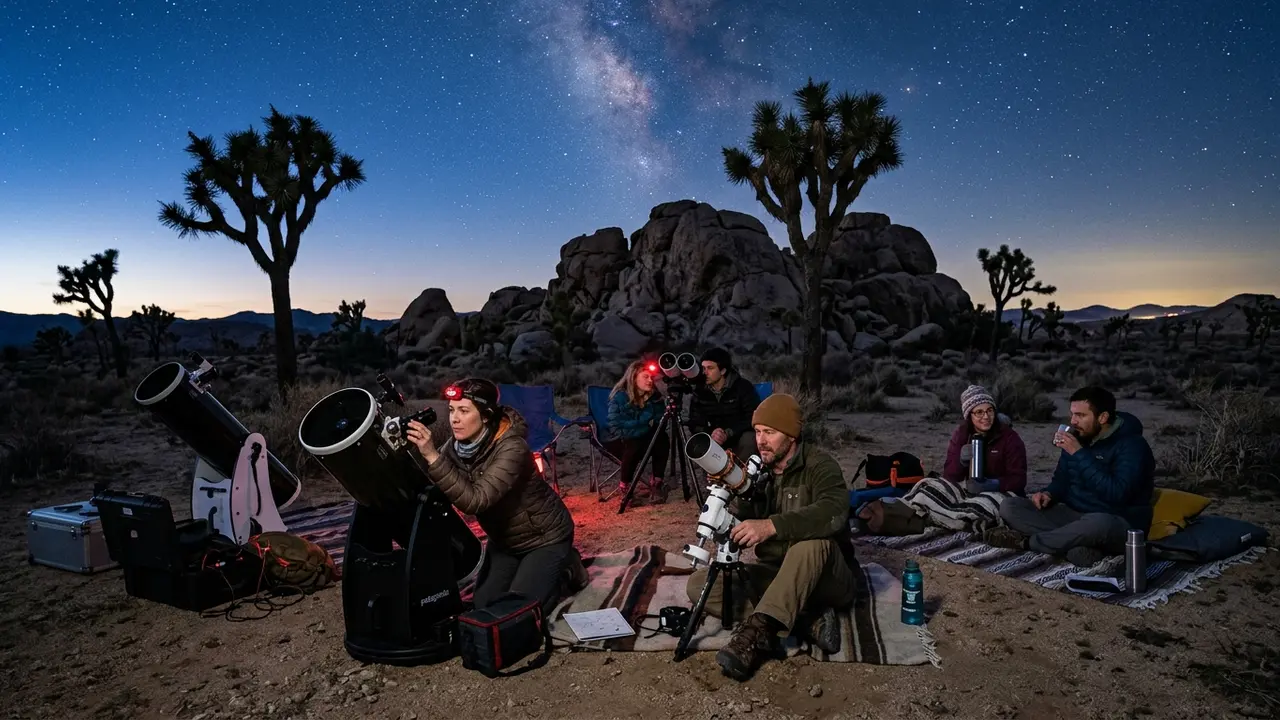
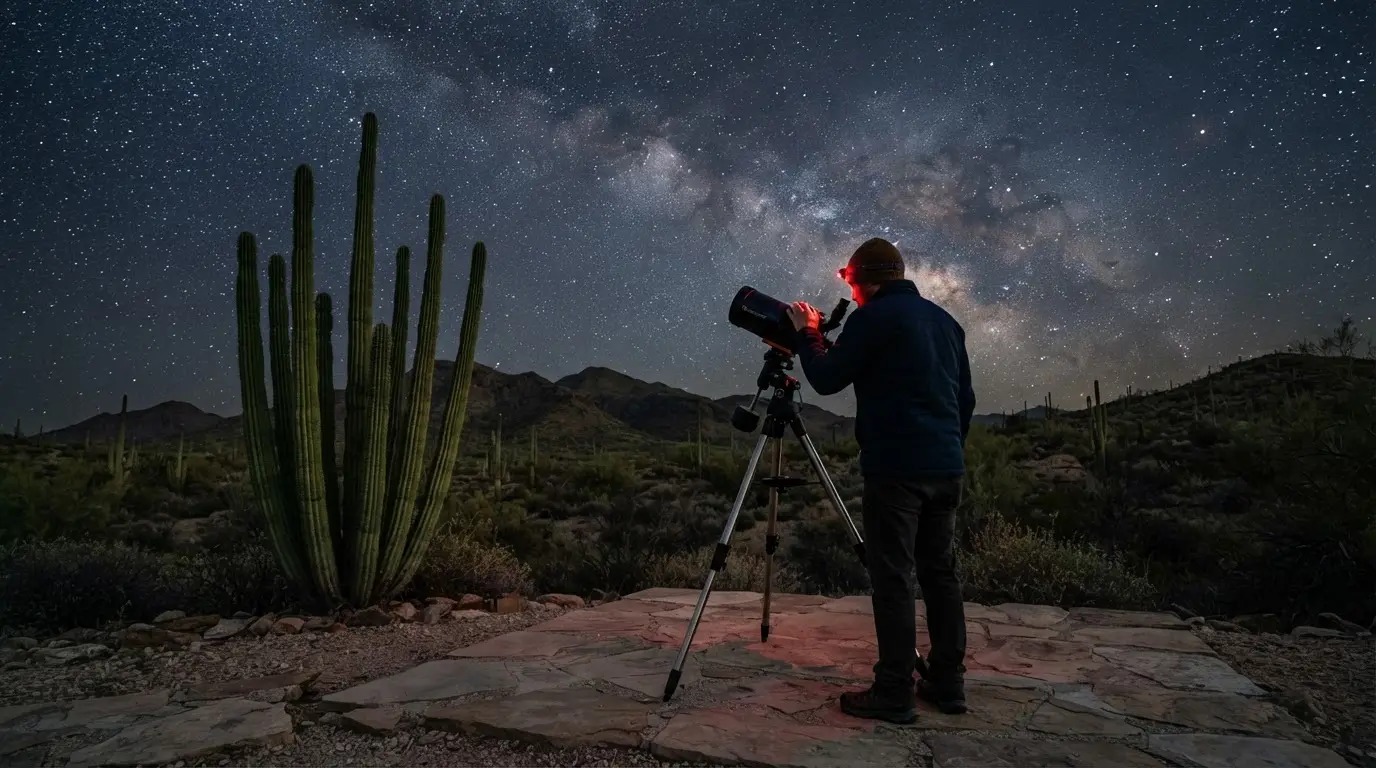
A few practical notes round out the plan. Bring layers regardless of season: a 90°F desert afternoon can drop into the 40s after dark, and a red-light flashlight or headlamp preserves night vision better than a phone screen. Services inside the park are limited, no gas stations and minimal food, so fill up in Yucca Valley or Twentynine Palms before driving in. No permit is required for stargazing itself, only the standard park entrance fee.

Whether Joshua Tree is worth the drive over a bigger dark-sky reserve further from LA depends on what you're optimizing for. If it's the darkest possible sky, other Silver and Gold Tier parks further from a metro area will beat it, including Texas's Big Bend; see our Joshua Tree vs Big Bend stargazing comparison for how that trade-off plays out. If it's a genuinely dark sky reachable on a Friday-night drive from Los Angeles or Palm Springs, with boulders and Joshua trees for a foreground no flat desert offers, this is the one on the list that doesn't ask for a flight.

All tours

Reporter notebook

Insider tips

Best time

Go moonless in summer for the Milky Way core

The galactic core in Sagittarius shows up best on moonless summer nights. Check the lunar calendar before booking; even a half moon washes out the fainter detail.

Crowd tip

Skip Keys View, try Cottonwood or Pinto Basin Road instead

Keys View draws the biggest crowd and the dimmest sky, thanks to light domes from LA, Las Vegas, and the Coachella Valley. Cottonwood Campground and Pinto Basin Road sit further from those light sources and stay noticeably darker.

What to bring

Pack for near-freezing nights even in warm seasons

Desert temperature swings mean a hot afternoon can drop into the 40s after dark. Bring layers, a red-light flashlight or headlamp to preserve night vision, and fill your tank before entering; services inside the park are limited.

Frequently asked questions

Is Joshua Tree National Park an International Dark Sky Park?

Yes. The International Dark-Sky Association designated Joshua Tree an International Dark Sky Park in 2017, at the Silver Tier level.

How far is Joshua Tree from Los Angeles?

About 130 miles east of Los Angeles, roughly a 2 to 2.5 hour drive depending on traffic, and about an hour from Palm Springs.

Does Joshua Tree National Park have light pollution?

Yes. NPS documents light domes from Los Angeles, Las Vegas, and the Coachella Valley visibly impairing the sky at Keys View specifically, while more remote spots like Pinto Wells and Cottonwood Campground stay much darker.

Where is the best place to stargaze in Joshua Tree?

Cottonwood Campground has the darkest skies in the park, according to NPS. The park's four official stargazing parking areas are Quail Springs, Hidden Valley, Cap Rock, and Ryan Mountain.

Is Keys View good for stargazing?

It's the most popular overlook, but also the most affected by light domes from nearby cities. For a darker sky, head to Cottonwood Campground or Pinto Basin Road instead.

What is the best time of year to see stars in Joshua Tree?

Moonless summer nights are best for the Milky Way's galactic core, plus the Perseid meteor shower in mid-August. Winter offers the most total hours of darkness thanks to an early sunset.

How much does it cost to enter Joshua Tree National Park?

$30 per private vehicle for a 7-day pass, $25 per motorcycle, or $15 per person on foot or bicycle. No separate stargazing permit is required.

Is Joshua Tree getting more light pollution over time?

Growth in nearby towns like Yucca Valley, Twentynine Palms, and Palm Springs puts real pressure on the park's dark-sky rating. The park has partnered with those communities to reduce outside lighting, and NPS frames night sky loss as reversible, unlike most other conservation losses.

Further reading

Sources