Why book here
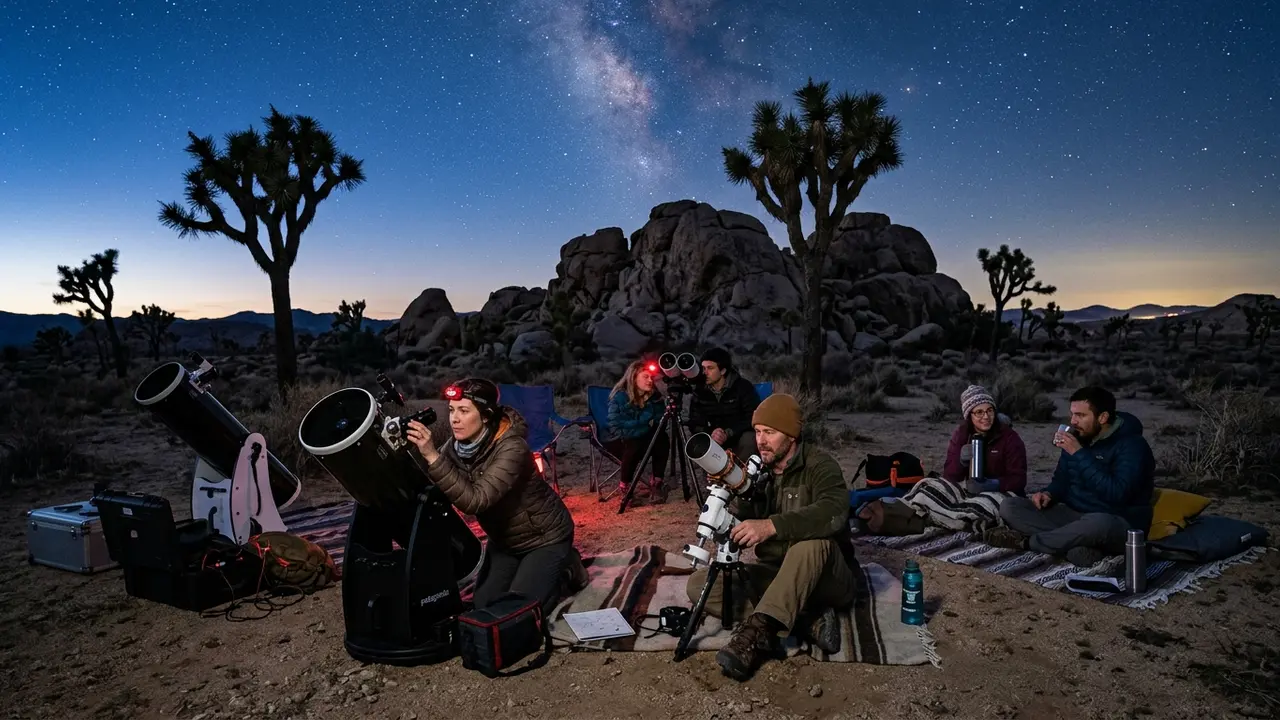
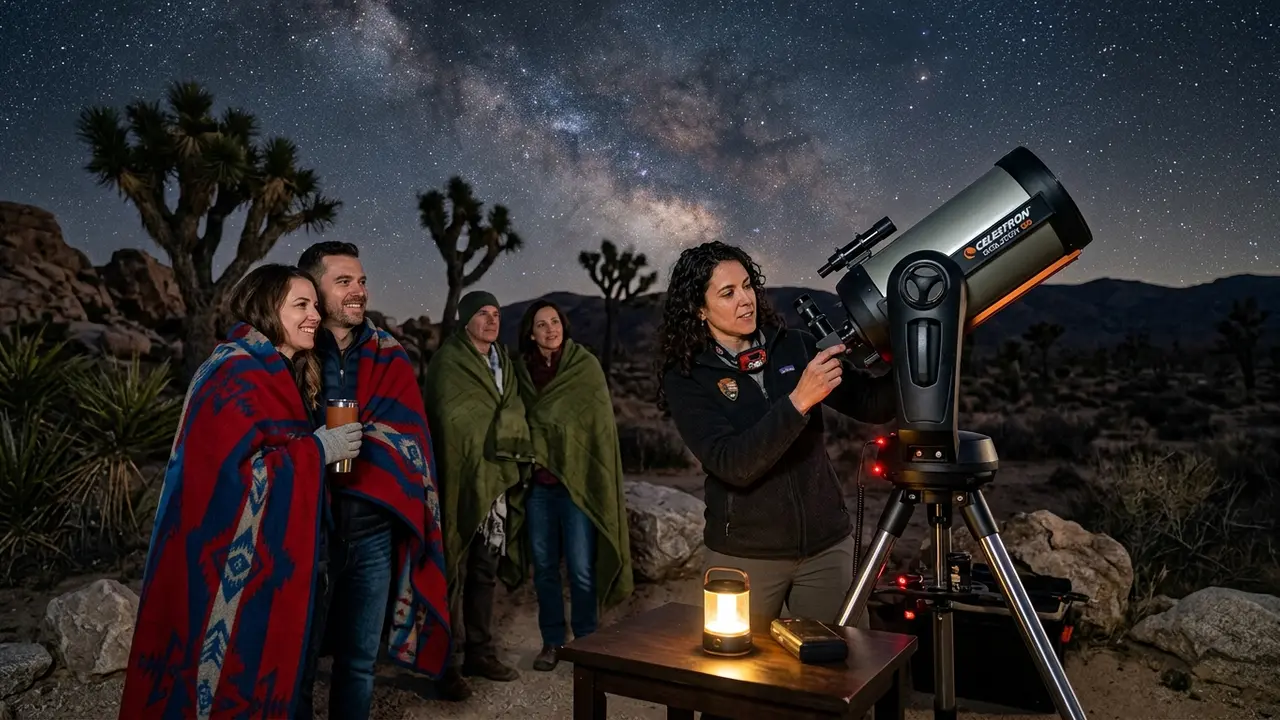
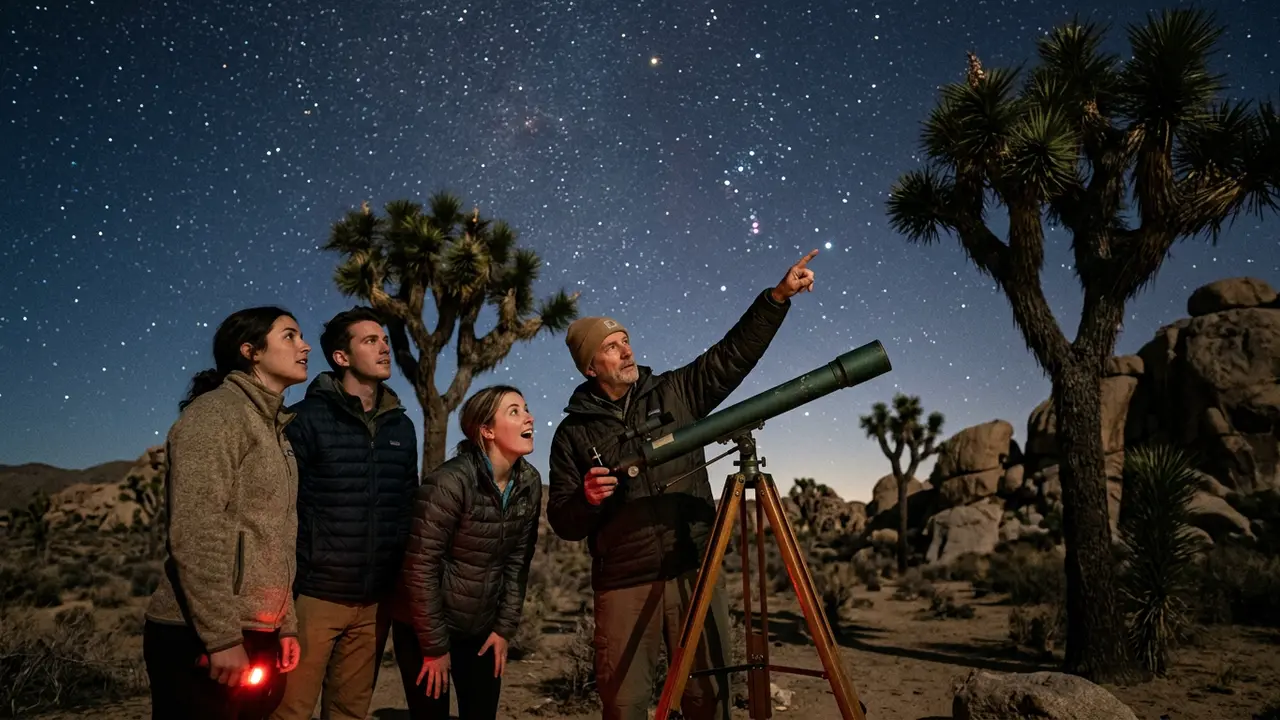
Joshua Tree earned Silver Tier status as an International Dark Sky Park in 2017, but a designation doesn't tell you which star is which or how to actually photograph the Milky Way once you're standing in the dark. Stargazing Joshua Tree fills that specific gap: a 2-hour, astronomer-led session built around the park's High Desert skies, with astrophotography coaching worked into the format rather than tacked on as an afterthought. At $175 per adult and $95 per child, it sits toward the premium end of the Joshua Tree tour market, closer to a private astronomy lesson than a budget stargazing add-on bolted onto a bus tour. If you want someone who can actually answer "what is that" when you point at the sky, and you brought a camera you don't quite know how to use after dark, this is the tour built around both of those problems.
What the astronomer-led format covers
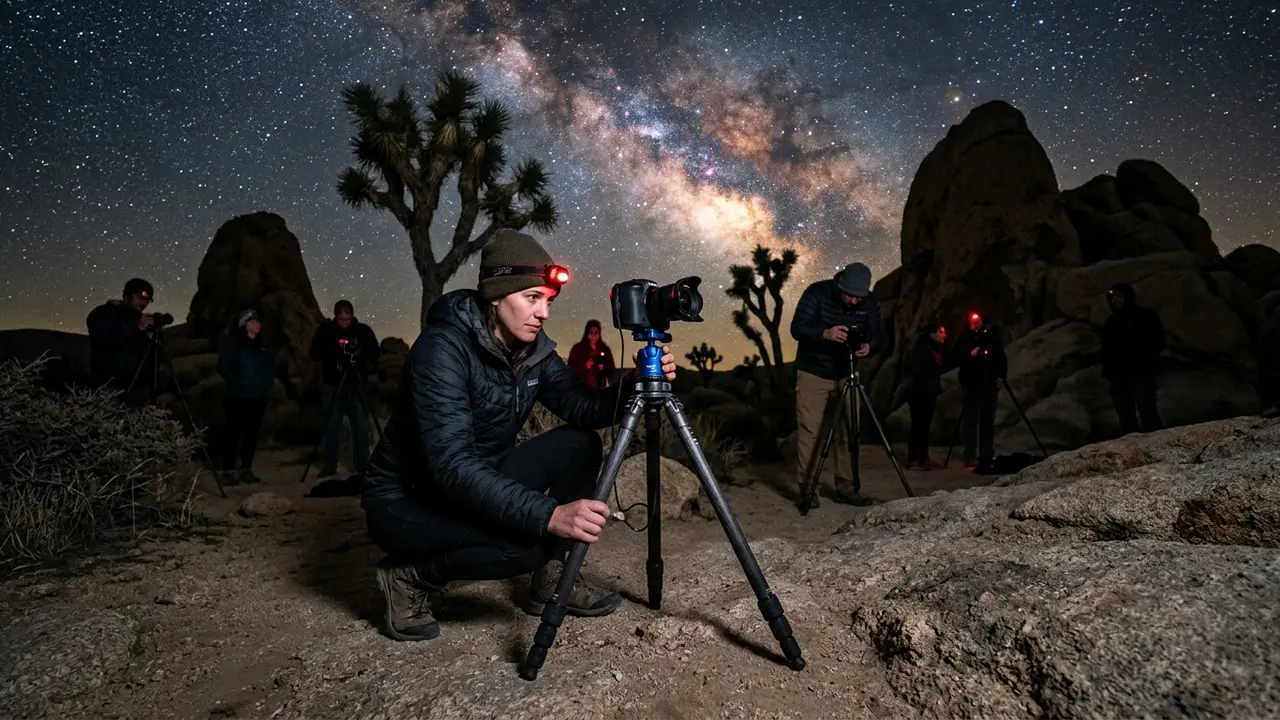
The two-hour structure centers on a working astronomer guiding the group through what's actually visible that night: planets, constellations, and deep-sky targets depend on the season and the moon phase, so expect the guide to curate rather than run a fixed script. Astrophotography coaching is the distinguishing feature here: rather than a generic point-your-phone-at-the-sky tip, the format is built for visitors who showed up with a camera, even a basic mirrorless setup, and want real guidance on exposure and framing under a genuinely dark sky. That coaching only pays off if you bring your own gear. This isn't a rental-equipment tour, so a camera and tripod are on you.
Booking and group format
Reservations run through the operator's own site, stargazingjtree.com, via the Peek booking platform, with phone and email listed as direct alternatives if you'd rather sort details with a person. Booking direct (rather than through a third-party marketplace) tends to matter most if your plans shift: a date change or group-size adjustment becomes a conversation with the operator, not a support ticket routed through a platform. The $95 child rate signals this is built as a family option alongside a solo-astrophotographer one, though confirm any age minimums directly when you book an evening session that runs two hours past a small kid's bedtime.
Where this fits inside Joshua Tree's dark sky
The tour operates inside Joshua Tree National Park, which earned its Silver Tier International Dark Sky Park rating in 2017, a real, externally audited designation rather than a marketing label. That matters more here than at a lot of stargazing tours: the operator isn't manufacturing darkness at a remote campsite, the park itself is doing that work. Timing still matters on top of the location. A moonless week sharpens everything the astronomer points out, and summer specifically favors the Milky Way's galactic core low in the southern sky, while winter trades that for Orion and the brighter stars of the northern hemisphere's classic season. Check the operator's calendar against a new-moon week before you commit to a date. Since the operator assigns your viewing site the day of, it's worth knowing which of the park's own designated stargazing areas tend to run darkest; the guide to Joshua Tree's best stargazing spots breaks down the trade-offs.
Practical details
What to bring: Layer up regardless of season. Joshua Tree's High Desert nights drop well below the daytime high, and two hours standing still in the cold is a different experience than two hours hiking. Bring your camera and tripod if the astrophotography coaching is the reason you're booking this tour over a cheaper alternative.
Weather: This is a visual, telescope-based tour with no indoor fallback. Clear skies are the baseline requirement, not a bonus. Confirm the operator's specific weather and rescheduling policy when you book, since it isn't published in detail on the public site.
Meeting point: Exact location is confirmed at booking. The operator assigns a viewing site within the park based on your date and group, so don't expect a fixed public meeting spot the way you would for a park-run program.