Why this is different from a stargazing tour
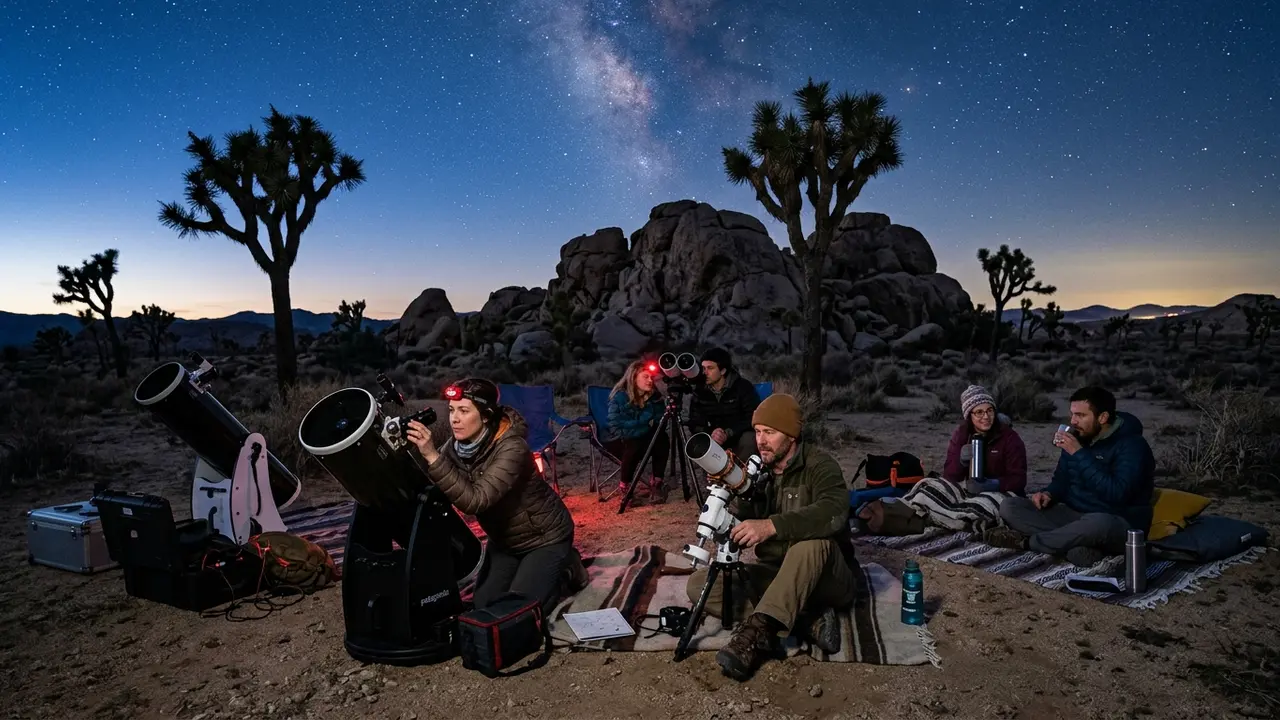
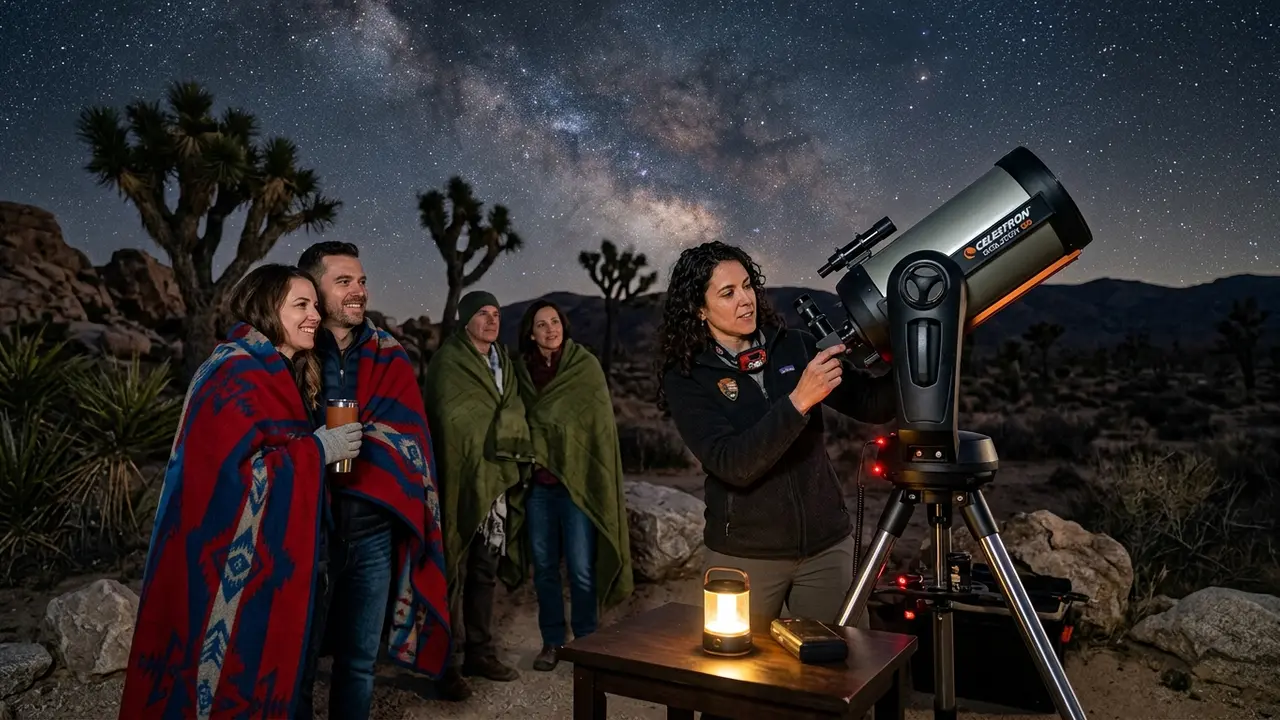
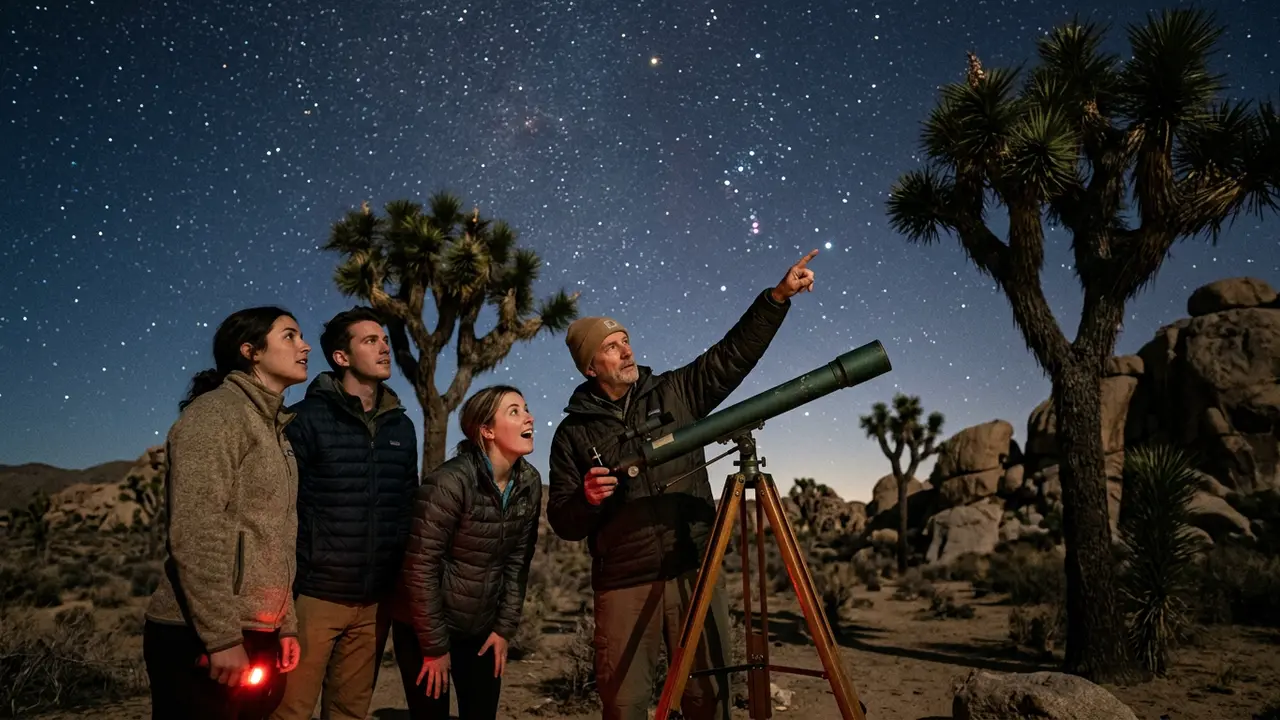
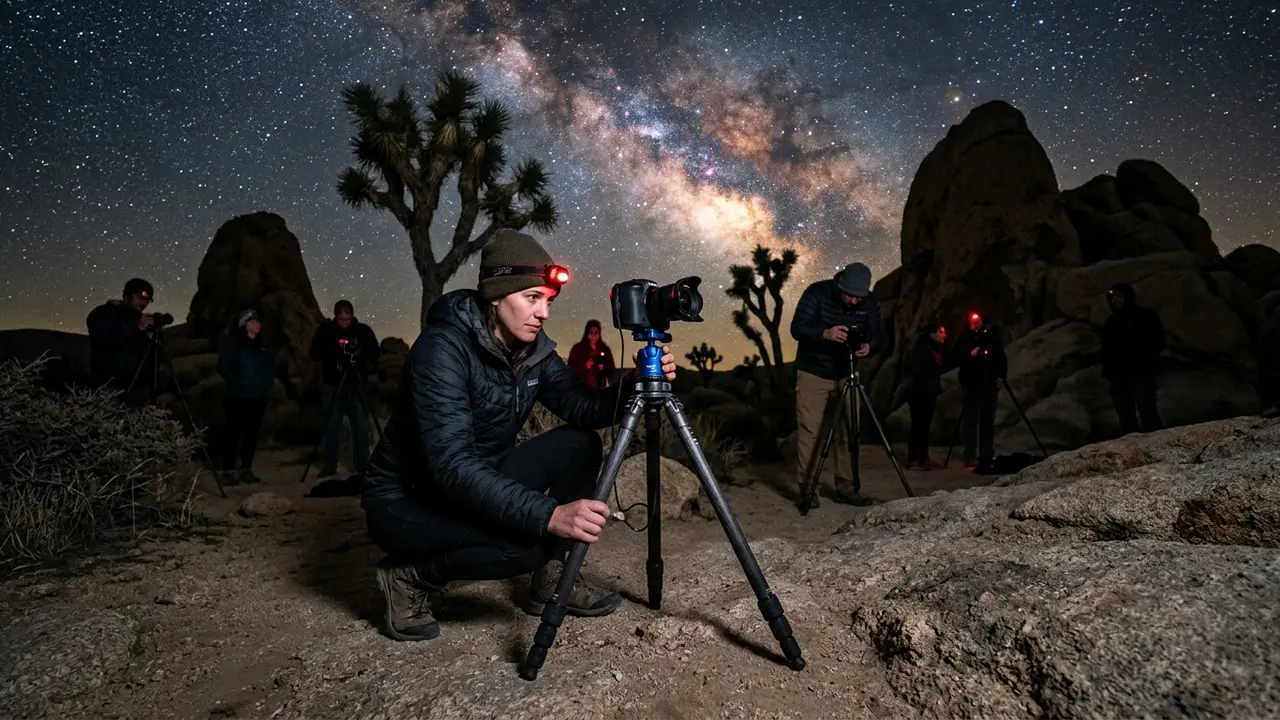
Most Joshua Tree night-sky operators sell you a telescope and a story. Joshua Tree Workshops, run by photographer Casey Kiernan, sells you something more specific: the technical skill to shoot the Milky Way yourself and come home with files worth editing. The signature session, Milky Way at the Arch, runs sunset through roughly midnight — a full 5 to 6 hours, with groups capped at 4 photographers maximum. That's smaller than most guided tours in the park, and it's deliberate: camera settings, composition, and troubleshooting a stuck shutter in the dark all go faster with one instructor and three students than with a dozen. If you own a camera and a tripod but have never actually nailed a Milky Way shot, this is built for exactly that gap.
What a 5-to-6-hour session actually covers
The format starts at a designated meeting point before the group drives into the park together, then hikes roughly half a mile with light bouldering to reach the shooting location; bring shoes you can scramble in, not sandals. Once there, instruction covers:
- Camera settings for night photography: ISO, aperture, and shutter-speed combinations that actually resolve stars instead of noise
- Composition against Joshua Tree's rock formations, using the park's geology as foreground rather than shooting the sky in isolation
- Live shooting through the night, with Kiernan correcting technique in real time rather than lecturing beforehand and leaving you to figure it out
- A post-processing video tutorial using Adobe Lightroom, sent after the workshop so the education doesn't stop once the camera goes back in the bag
All skill levels are welcome, which matters more here than on a viewing-only tour: a first-timer and an intermediate shooter get genuinely different coaching within the same small group.
Booking, and what isn't published
There's no online booking widget. Reservations run by emailing casey.l.kiernan@gmail.com or through the contact form at joshuatreeworkshops.com/contact: book direct, no third-party marketplace in between. Two things worth knowing before you write that email: pricing isn't published anywhere on the site, so budget for a short back-and-forth to get a quote, and there's no visible review section or ratings feed on the operator's own pages, so you're weighing the format and the operator's press mentions (Visit California Magazine and Sunset Magazine have both featured the workshop) rather than a stack of testimonials. Neither is a red flag on its own, but it's a different trust calculus than booking a tour with hundreds of TripAdvisor reviews attached.
Workshops are scheduled near new moons specifically for the darkest possible sky, with June–July 2026 dates already listed on the operator's site. If a date you want isn't posted yet, ask directly. A small operator's calendar tends to fill in as demand shows up.
Gear: bring it, or rent the lens before you arrive
This is not an equipment-rental tour. You need your own kit, though a lens can be sourced externally if you don't own one:
- A DSLR or mirrorless camera with manual controls; a point-and-shoot or phone camera won't hold a long enough exposure
- A fast lens, f/2.8 or faster, ideally 20mm or wider to fit enough sky into the frame
- A sturdy tripod; handheld night photography doesn't work at these shutter speeds
- A headlamp or flashlight for the hike in and out after dark
Camera equipment stays your own responsibility throughout the session.
Who this fits, and what to check before you go
The half-mile hike plus light bouldering is a real physical requirement, not a formality — if mobility is a concern, raise it with Kiernan directly before booking rather than assuming the group will slow down for you. Fitness aside, the Joshua Tree destination guide is worth reading first regardless: it covers the park's dark-sky rating and seasonal conditions that decide whether a given new-moon week is actually worth the drive. Pair that with the best time to stargaze in Joshua Tree piece to check the operator's June–July dates against the wider seasonal picture: a new moon is necessary but not sufficient if a heat wave or strong wind is also in the forecast.
An emergency satellite communicator carried by the guide is a small but reassuring detail, given how far the shooting locations sit from cell coverage inside the park.