Why Joshua Tree's Sky Holds Up Every Month
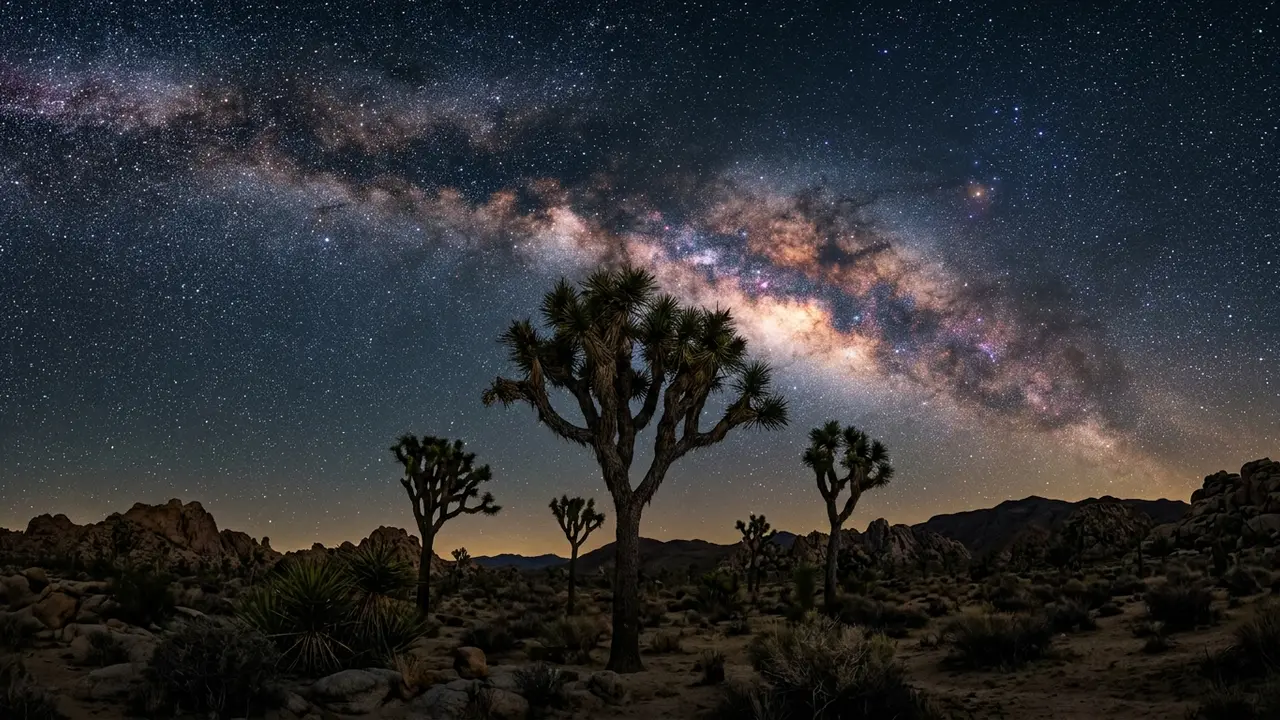
Joshua Tree National Park is a designated International Dark Sky Park[1], the certification DarkSky International gives to places that both protect their night sky through real lighting policy and prove the sky is dark enough to be worth protecting. The park earned that status in 2017[2], joining a short list of U.S. national parks willing to back up the claim with a measured commitment instead of a marketing label.
What sets it apart from most desert parks within driving distance of a major metro area is geography. Joshua Tree sits where the Mojave and Colorado deserts meet, far enough from Los Angeles's glow and high enough in elevation that its darkest corners read low on the Bortle scale even on a clear night. None of that shifts month to month. What changes with the calendar is comfort, moon timing, and which part of the sky rewards the longest look, which is the actual planning problem the rest of this guide answers. If you're weighing Joshua Tree against other options, it sits comfortably among the best dark sky parks in the world.
2017
That contrast is easiest to feel at the park's edges. Drive in from Palm Springs after dark and the sky brightens fast as you approach the Coachella Valley's lights; head instead toward the park's quieter interior, away from the main entrance roads, and the shift from suburban glow to genuine dark happens within a few miles, not a few hours.
Summer: Brutal Days, the Best Milky Way Nights
Summer is when Joshua Tree's sky does its best work. The National Park Service is direct about it: the Milky Way is at its best on a moonless summer night[3], and the galactic core sits high enough after dark that you don't need a star chart to find it. Third-party astrophotography guides describe the core as visible roughly from late spring through early fall, with the boldest stretch landing in peak summer, but that's photographer consensus, not an NPS-confirmed calendar, so treat the exact start and end months as a rough guide rather than a fixed rule.
The cost of that view is the daytime hours you have to survive first. Summers here run over 100°F (38°C) during the day, and nights don't cool much below 75°F (24°C) until the early hours of the morning[4]. That's a real planning constraint, not a minor discomfort. Hike before 9am, spend the afternoon in shade or air conditioning, and don't plan a long stargazing session until well after sunset, once the ground finally starts giving up its heat.
Featured · Destination
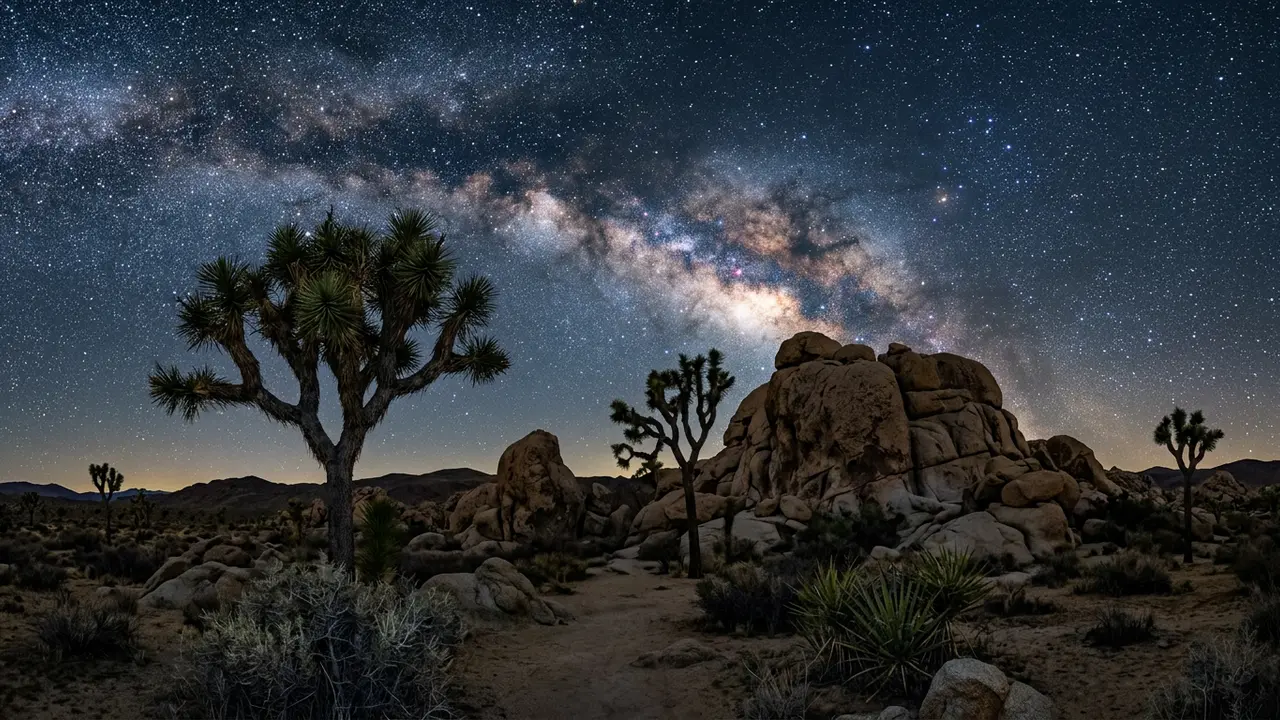
Joshua Tree National Park
Joshua Tree earned International Dark Sky Park status in 2017, just two hours from LA. Here's where to see the Milky Way, dodge crowds, and stay the night.
A few practical habits make the difference between a good summer night and a miserable one. Set up before the last light fades so your eyes begin their dark adaptation early, keep a headlamp on red mode rather than white so you don't ruin that adaptation for yourself or anyone camped nearby, and expect the desert to cool slower than you'd guess. It's common to still be sweating an hour after sunset even as the stars come out. For anyone slotting Joshua Tree into a longer California desert loop, whether the September leg is worth keeping at all is its own call, separate from picking a season for a standalone Joshua Tree trip.
Spring and Fall: The Season Most People Should Actually Book
If comfort matters as much as the sky, spring and fall are the honest answer. Average highs sit around 85°F (29°C) with lows near 50°F (10°C)[5], warm enough for a t-shirt at sunset and cool enough that a light jacket handles the hours after dark. That's a wider comfort window than either extreme, which is why most repeat visitors plan around March through May or September through November instead of chasing a specific meteor shower or Milky Way window.
The trade-off is that spring and fall don't hand you winter's deepest darkness or summer's boldest galactic core. They hand you a night you can actually enjoy without watching the clock for when the heat breaks or your fingers go numb, which for most first-time visitors is worth more than either extreme.
| What matters | Summer (Jun-Aug) | Spring & fall | Winter (Nov-Feb) |
|---|---|---|---|
| Daytime comfort | Over 100°F, plan around the heat | Around 85°F, comfortable | Around 60°F, cold but manageable |
| Night comfort | Still near 75°F after sunset | Near 50°F after dark | Freezing after sunset |
| Best for | Milky Way core season | A comfortable all-around visit | Longest dark hours, clearest cold air |
| Darkness window | Shorter summer nights | Moderate | Sunset near 4:30pm, full dark by 5pm |
Spring in particular draws crowds for the wildflower bloom in good rain years, which means the four designated stargazing pull-offs can fill up on a clear Saturday night. Fall is the quieter version of the same comfortable weather, with fewer day-trippers competing for the same parking spots after dark.
Winter: The Coldest Nights Give You the Most Darkness
Winter flips the calculation again. Days cool to around 60°F (16°C) and nights drop to freezing[6], numbers that sound like a reason to stay home until you notice what winter actually gives back: darkness starts absurdly early. Sunset can fall as early as 4:30pm, with full dark settling in by around 5pm[7]. That means a stargazing session that would start at 9pm in June can start right after an early dinner in December.
Recommended tours
Tours are selected for quality, not commission. I earn a small fee if you book — at no extra cost to you.
Temperatures drop fast once the sun is down, even after a mild winter day, since the desert doesn't hold onto afternoon warmth the way a temperate climate would. Pack real layers, not just a windbreaker. Stargazing gear for beginners covers what's actually worth packing before your first cold-weather session, binoculars and warm hands matter more here than a telescope does.
That means a stargazing session that would start at 9pm in June can start right after an early dinner in December.
That same dry air is part of what makes the view worth the cold. Low humidity year-round is a big part of why Joshua Tree's sky reads so clean on paper, and winter nights, being the driest of the year here, often deliver the clearest, most transparent air of any season, useful if a telescope or a camera is part of the plan rather than just eyes and patience.
The Moon Phase Decides More Than the Season Does
None of the seasonal math matters if you show up three days after a full moon. The National Park Service puts it plainly: bright moonlight reduces the number of stars you'll see, and checking the moon's phase and rise-and-set times is the actual first step in planning a stargazing trip here[8], not an afterthought you handle once you've already picked a date.
The practical rule is simple: aim for the four or five nights centered on a new moon, when the sky stays dark from dusk until moonrise, or doesn't rise at all. A full moon at Joshua Tree does roughly what a nearby town's streetlights would do to a fainter sky. It won't erase the brightest stars and planets, but it flattens the Milky Way's dust lanes into nothing and turns a three-hour session into forty minutes of decent viewing before the glow takes over. The Joshua Tree stargazing forecast tracks the coming month's moon phases and cloud cover together, so check it before you check anything else.
A moon-phase app or a basic lunar calendar answers the question in seconds: it shows the current phase, tonight's moonrise and moonset, and how many nights remain until the next new moon. Cross-check that against the weather forecast for the same dates, since a perfect new-moon window under thick cloud cover is worth nothing. The two variables, moon and cloud, matter more than the calendar month you picked.
Planning the Trip: Where to Stand, What to Pay, and the Drive from LA
Temperatures drop quickly after sunset here regardless of season, so extra layers matter even on a day that hit 100°F by noon[9]. A fleece that feels unnecessary at 6pm earns its place by 10pm, whether it's July or January. The full Joshua Tree stargazing destination guide covers lodges and tours near the park if you want the trip planned end to end.
Featured · Article
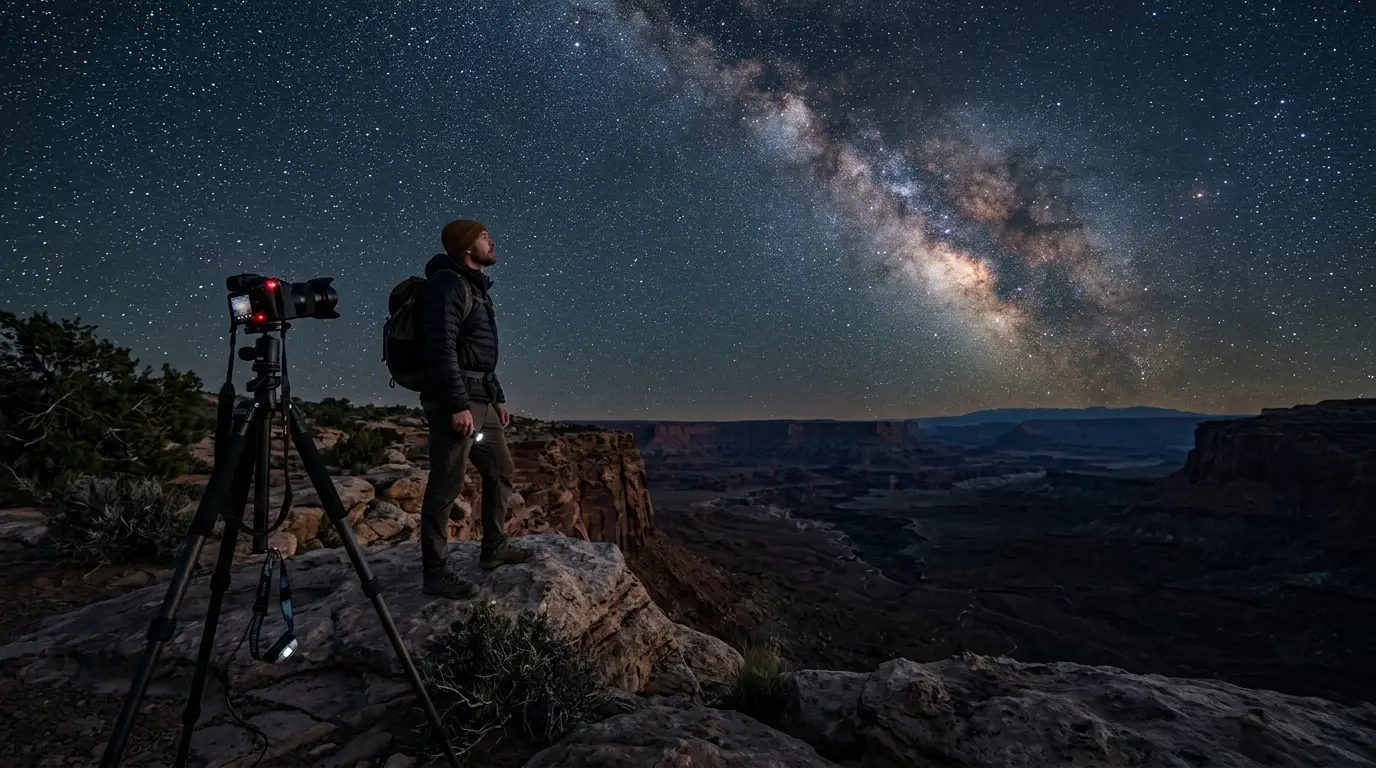
What Is Astrotourism? The Complete Beginner's Guide
Astrotourism means travel built around dark skies: meteor showers, auroras, the Milky Way. What it means, where to go, and how to plan your first trip.
Where to Stargaze Inside the Park
The park designates four parking-lot areas for nighttime stargazing:
- Quail Springs
- Hidden Valley
- Cap Rock
- Ryan Mountain
Visitors must stay awake and within 20 feet (6 meters) of their vehicle at these spots[10], a rule built around safety in a desert park with uneven ground and active wildlife, not bureaucratic caution. Third-party sources point to Pinto Basin as an unofficial, darker option away from the main tourist loop, though it isn't one of the park's four designated areas. The guide to Joshua Tree's best stargazing spots ranks all four against that eastern corridor in more detail.
Fees, Hours, and the Weekend Trip from LA or Palm Springs
Joshua Tree National Park never closes[11], so there's no gate curfew keeping you out for a pre-dawn arrival or a session that runs past midnight. Standard entrance still applies: $30 per vehicle for a 7-day permit, $25 per motorcycle, $15 per person on foot or bike with under-16s free, or $55 for a 12-month pass[12]. Nothing on the park's own pages describes a separate nighttime permit, so a stargazing session after dark is covered by the same pass as a daytime visit.
It sits close enough to Los Angeles and Palm Springs that a clear-sky forecast alone is often reason enough to leave after work on a Friday. That's the real appeal for anyone stuck under a light-polluted metro sky: no need for a week off, just a car, warm layers, and a night with no moon up. Layer a meteor shower onto that new-moon night and the trip improves without extra planning. The Perseids land during the worst of the summer heat and the Geminids land deep in winter's clearer, colder air, though the exact peak night shifts by a day or two every year, so confirm the current year's dates before building a trip around either one.