The Short Answer: One Night Works, Two to Three De-Risk It

One clear, moonless night is genuinely enough to see Joshua Tree's Milky Way at its best. The park doesn't ask for a multi-day commitment the way a remote, flight-only dark-sky reserve does. But "enough" and "ideal" aren't the same word. A single overnight trip gambles everything on one night's weather and one night's moon phase, and if either goes against you, there's no second try before the drive home.
Joshua Tree is a designated International Dark Sky Park[1] and stays open 24 hours a day, every day of the year[2], so the park itself never rushes anyone out. The limiting factor on a one-night trip is never park access, it's what the sky happens to be doing during the single night available. That's the whole appeal, and the whole risk, of a quick weekend built around Joshua Tree National Park: close enough to Los Angeles that one clear night, driven to and from in under 48 hours, is a completely reasonable weekend. It's also close enough that a cloudy or moon-bright night doesn't sink an entire vacation, just a Saturday.
One clear, moonless night is genuinely enough to see Joshua Tree's Milky Way at its best
Two to three nights change the math. Instead of one shot at a dark, moonless sky, a longer stay buys a second or third attempt if the first night disappoints, plus enough daylight hours to actually explore the boulder fields and trails that make Joshua Tree worth visiting even before the sun goes down.

One Night: What a Single Clear Night Actually Gets You
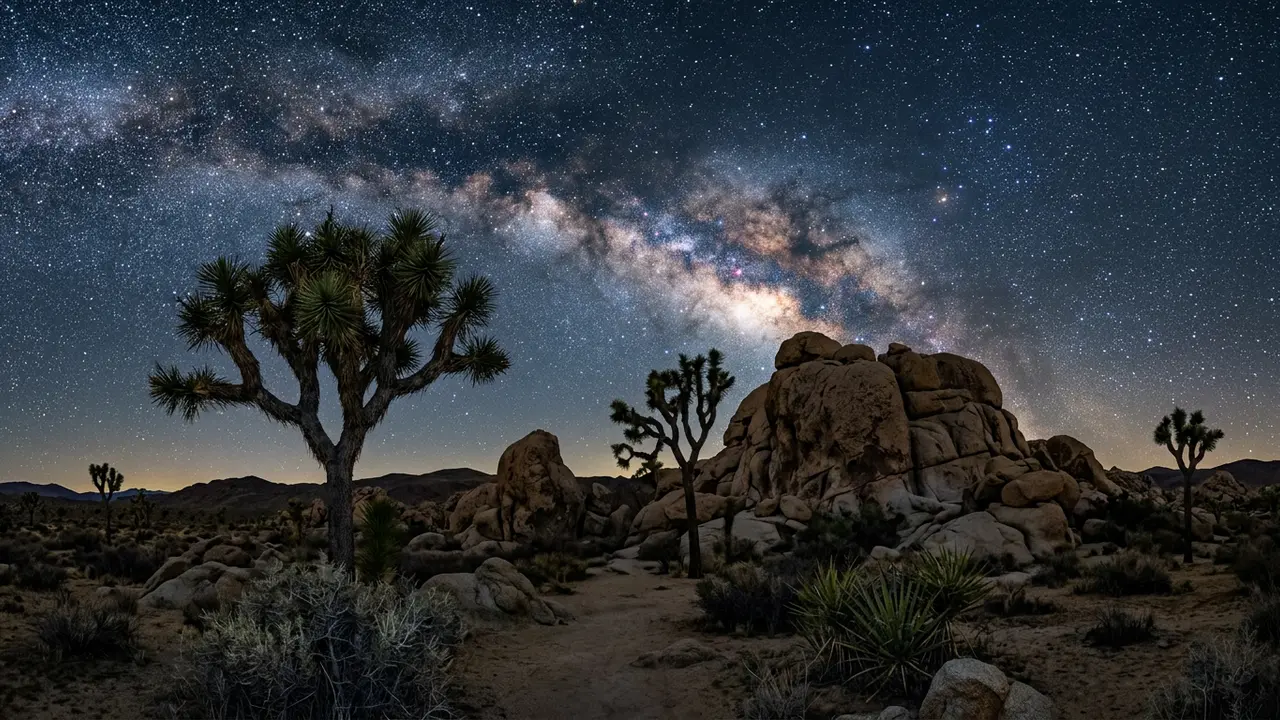
A one-night stargazing trip to Joshua Tree covers exactly one thing well: a single clear-sky attempt at the Milky Way, at one of the park's four designated stargazing areas[3], the Quail Springs, Hidden Valley, Cap Rock, and Ryan Mountain parking lots, each an easy pull-off rather than a hike-in spot. Arrive in the afternoon, catch sunset from one of the park's overlooks, then walk out to whichever of the four lots looks emptiest once darkness falls.
The one variable a single night can't control is the moon. Moonrise and moonset timing materially change how many stars are visible, which is why the National Park Service is explicit that checking the moon's phase and rise-and-set times before locking in a date matters more than picking a specific stargazing spot[4]. Book a one-night trip around a new moon window if the goal is the Milky Way's core rather than just some stars, since a bright moon overhead washes out exactly the faint detail a one-night trip has no backup plan for.

Featured · Destination

Joshua Tree National Park

Joshua Tree earned International Dark Sky Park status in 2017, just two hours from LA. Here's where to see the Milky Way, dodge crowds, and stay the night.

For a weekend built around one clear night, that's the honest trade-off: it works if the moon phase and the forecast line up, and it doesn't leave room to recover if they don't.

Two to Three Nights: Building In a Weather-and-Moon Buffer

Add a second or third night and a cloudy first evening stops being the whole trip. Instead of one attempt at a clear, dark sky, a longer stay buys two or three attempts, with enough slack to wait out a passing weather system or a night that turns out brighter than expected because the moon rose later than planned.
That buffer matters more at Joshua Tree than it might at a park that's genuinely hard to reach, precisely because the park sits so close to population centers. Light pollution from surrounding communities does reach into parts of the park, which means some of the four designated areas run darker than others depending on which direction they face[5]. A one-night trip has no time to scout past the first spot that looks clear from the parking lot. A two- or three-night trip can try Quail Springs the first night, decide it's catching too much glow from the west, and move to Ryan Mountain or Cap Rock the second.
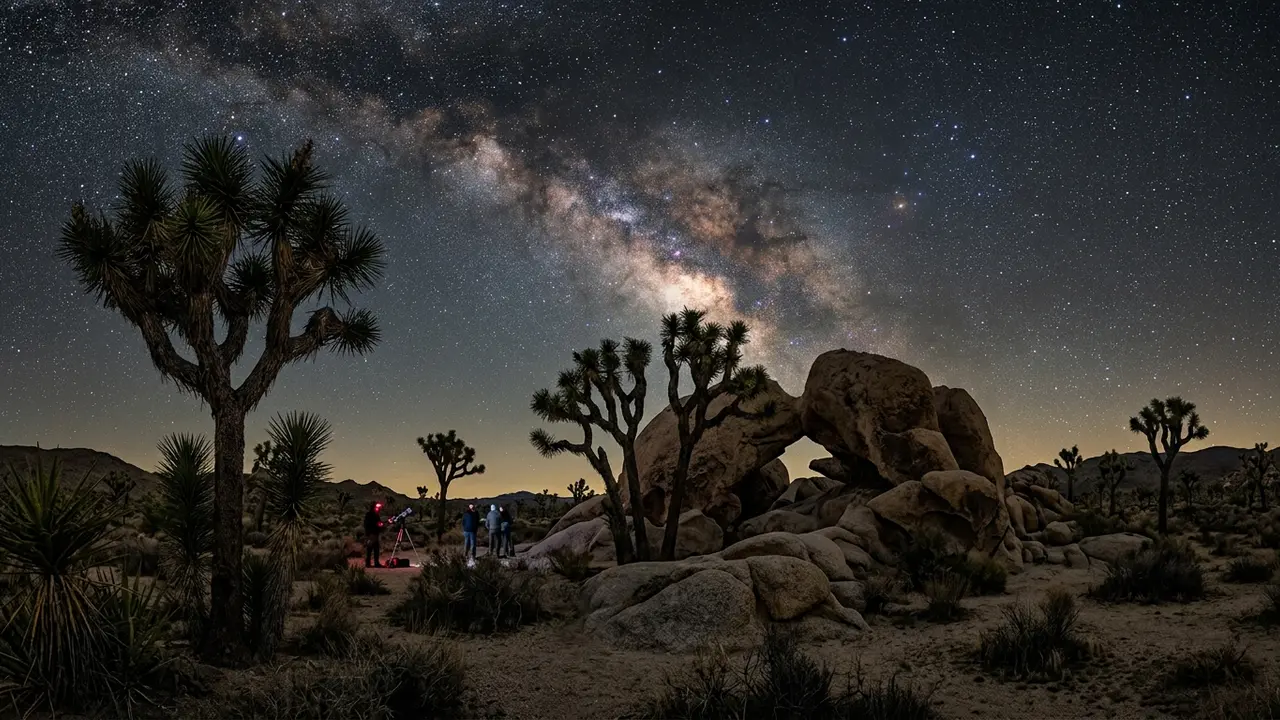
Milky Way arching over Joshua Tree's boulder formations and namesake trees, illustrating how many days in Joshua Tree to plan for a stargazing trip

Milky Way arching over Joshua Tree's boulder formations and namesake trees, illustrating how many days in Joshua Tree to plan for a stargazing trip

The park's own guidance backs the seasonal half of this planning question too: the Milky Way is at its best on a moonless summer night[6], which narrows the ideal window regardless of how many nights are booked. Best Time to Stargaze in Joshua Tree breaks down which months and moon phases line up best, worth checking before locking in exact dates for either version of this trip.
What you get1 night2-3 nights
Stargazing chancesOne attempt, no backupTwo to three attempts, room to change viewing spots
Daytime activitiesA sunset viewpoint onlyTime for a hike, rock climbing, or both
Best forA quick LA or Palm Springs weekendAnyone who wants insurance against clouds or a bright moon

Why the LA and Palm Springs Proximity Changes the Trip

Most International Dark Sky Parks in the American West ask for a half-day drive or a flight into a regional airport before the trip even starts. Joshua Tree doesn't. It sits roughly two to two-and-a-half hours east of Los Angeles by car, and closer still to Palm Springs, somewhere around 45 minutes depending on which entrance is used. That proximity is the entire reason the one-night version of this trip makes sense in the first place: nowhere else on a serious stargazer's list is a genuine weekend option rather than a vacation.
That same proximity cuts the other way for anyone weighing a longer stay. A three-night trip to a genuinely remote dark-sky reserve is a real vacation, flights, a rental car, the works. A three-night trip to Joshua Tree from LA or Palm Springs is still just a long weekend, which makes the extra-night decision a lot cheaper than it would be almost anywhere else on a stargazer's list. There's rarely a strong reason not to add a second or third night if the schedule allows it, since the marginal cost of staying longer is a couple of extra nights of lodging, not an extra flight.
Getting to Joshua Tree covers the actual routes in and which entrance to use depending on where the drive starts, worth a look before picking a specific weekend.

What to Do With the Extra Nights

The extra night or two of a longer stay earns its keep during the day, not just after dark. Joshua Tree's boulder-strewn terrain gives a longer stay plenty to do before sunset without ever leaving the park:
  • Barker Dam Trail — an easy loop past a small reservoir and some of the park's Native American petroglyphs, good in spring when desert wildflowers are out
  • Skull Rock Trail — a short loop near Jumbo Rocks Campground with some light scrambling over the granite formations that give the park its name
  • Ryan Mountain Trail — a steeper climb that trades ease for a genuine panoramic view over the whole park
  • Rock climbing and bouldering around Hidden Valley and Intersection Rock, two of the park's best-known climbing areas
  • Keys View and the Cholla Cactus Garden, both worth timing for sunset just before the night's main event
Check the park's calendar for a seasonal Night Sky Festival too. The National Park Service runs ranger-led night-sky programs periodically, and a longer stay is the only version of this trip with enough slack to build around one if the dates happen to line up.

Featured · Article

What Is Light Pollution? Definition, Types, and Solutions

Light pollution is artificial light brightening the night sky, affecting 80% of the world. Learn the 4 types, wildlife and health effects, and how to fix it.

None of that fits into a single overnight trip built around one stargazing session. It's the clearest argument for the extra night: not more insurance against a cloudy sky, but more of the park itself.

Sample Itineraries: 1-Night Weekend vs 2-3 Night Trip

Here's how each version actually breaks down.

A one-night weekend trip looks like this:

  • Day 1: Drive in from LA or Palm Springs by early-to-mid afternoon, pay the park's entrance fee (the booth isn't always staffed)[7], catch sunset at Keys View or Cap Rock, then walk out to whichever of the four designated stargazing areas looks darkest that night
  • Night 1: The trip's one stargazing window, ideally timed around a new moon
  • Day 2: A short morning hike, then the drive back
Timeline
  1. Night 1

    Main stargazing attempt

    The only guaranteed clear-sky try on a one-night trip.

  2. Day 2

    Longer hike or climbing session

    Added on a two-to-three-night trip; time the one-night version doesn't have.

  3. Night 2

    Weather-buffer stargazing

    A second chance at a clear, moonless sky if night one didn't deliver.

  4. Day 3

    Slower morning and departure

    Only on the three-night version; one more daylight stop before the drive home.

A two-to-three-night trip adds room on both ends:

  • Day 1: Arrive, settle in, an easier trail like Barker Dam before dinner
  • Night 1: First stargazing attempt
  • Day 2 (added): A longer hike, Ryan Mountain or a climbing session at Hidden Valley, plus a second stargazing window if night one clouded over or the moon rose late
  • Day 3 (added, on a three-night trip): A slower morning, Cholla Cactus Garden or Skull Rock Trail, departure in the afternoon
Either version works. The one-night trip is the honest weekend option for anyone within a few hours' drive who's comfortable gambling on a single night's weather. The two-to-three-night version is the one that plans for a cloudy first night rather than hoping around it, and it's the only one with enough daylight hours to actually explore what Joshua Tree looks like when the sun's up. Best Lodges for Joshua Tree Stargazing covers where to stay for either version of the trip.