
The Short Answer: What You're Actually Weighing
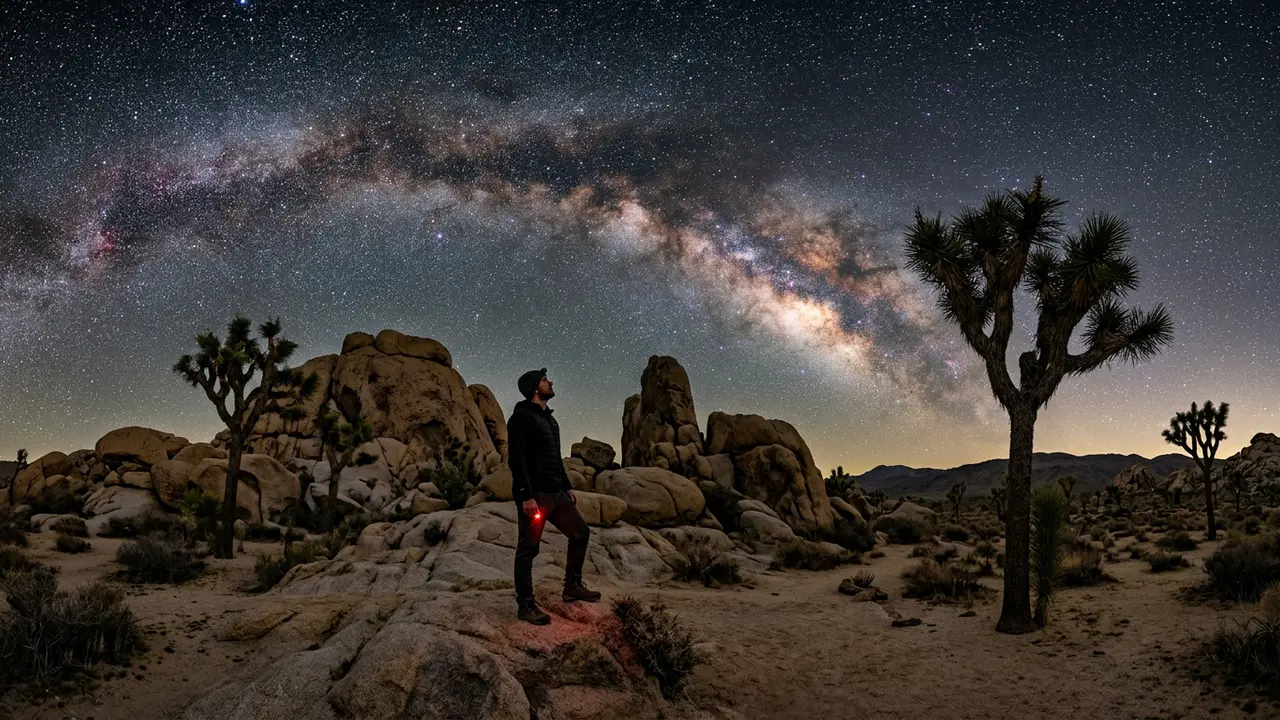
Joshua Tree is worth the trip for a stargazer who wants a real dark sky without booking a flight, values a foreground no flat desert offers, and can plan a visit around a new moon week rather than betting the whole trip on one clear night. Stand at any of the park's boulder piles after the last daylight walkers have driven back toward Yucca Valley, and the payoff is obvious within minutes: the sky here does something a flat horizon never manages, framed by rock stacked like a giant's abandoned project and the spiked silhouettes of the trees the park is named for. It's a harder sell for anyone chasing the single darkest possible sky in the American Southwest, expecting Keys View at sunset to double as a quiet nighttime spot, or hoping to show up in July without checking a forecast first.
That split is the honest starting point, worth laying out before the marketing language takes over. Joshua Tree earned International Dark Sky Park certification from the International Dark-Sky Association, but it holds the Silver Tier rating, not the top Gold Tier rank[1]. That single fact does more to set expectations correctly than any amount of boulder-and-star photography.
None of that is marketing spin. It's the same trade-off every certified dark-sky park makes somewhere in its paperwork: darkness measured against light domes it doesn't control, crowd numbers it can't turn away, and a climate it didn't choose.
What's worth weighing honestly, before committing a Friday night and a tank of gas, comes down to three things:
- What Silver Tier actually means next to a Gold Tier park, and why Joshua Tree hasn't closed that gap
- Whether the park's busiest viewpoint is worth visiting after dark, or worth skipping entirely
- What a nearly three-million-visitor year does to the handful of named overlooks everyone photographs
This isn't a sales pitch. It's the same math stargazing in Joshua Tree National Park covers from the destination side, worth reading before the days off are booked, not after.
The Payoff: A Certified Dark Sky Two Hours From LA
Start with what Joshua Tree actually delivers, because it's real. The National Park Service doesn't hedge about it: the desert here offers some of the darkest nights left in Southern California, dark enough that plenty of visitors see the Milky Way's galactic core for the first time in their lives, standing in a parking lot after dinner[2]. That's not a line lifted from a brochure. It's how the agency running the park describes its own sky, and that kind of unqualified statement is rare from a federal agency more used to hedging.
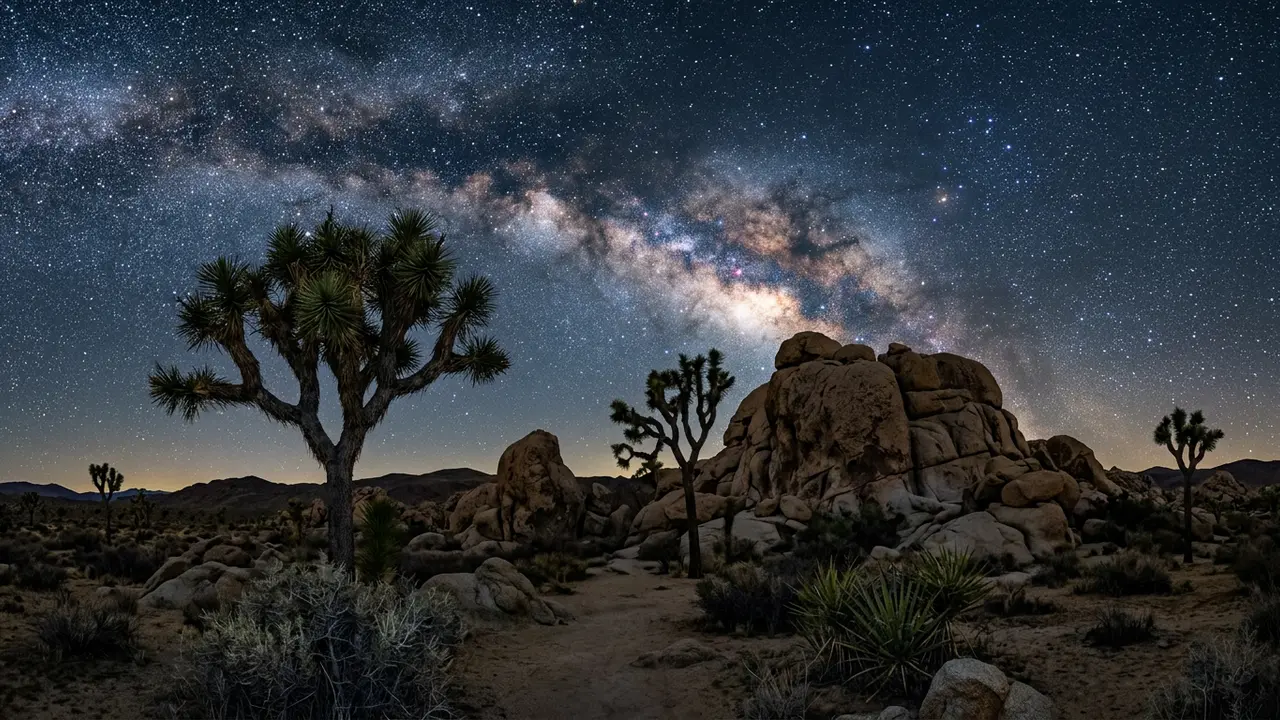
What makes that darkness land differently than a flat desert or a lakeside dark-sky site is the foreground. House-sized piles of pale granite, the park's namesake Joshua trees spiking up between them, all cut into jagged silhouette once the sun drops. No Gold Tier park within easy driving distance of a major metro area gives you that combination of texture and access.
Featured · Destination
Joshua Tree National Park
Joshua Tree earned International Dark Sky Park status in 2017, just two hours from LA. Here's where to see the Milky Way, dodge crowds, and stay the night.
And the access is the other half of the pitch. Joshua Tree sits close enough to Los Angeles for a same-weekend trip, no regional-airport connection or multi-day itinerary required, a genuinely rare position for a certified International Dark Sky Park to hold. Most of the country's darkest, highest-tier sites ask for a half-day drive at minimum. This one asks for a Friday evening and a full tank, which for a Los Angeles resident used to driving further for a decent burrito is a strange kind of convenience to attach to a night sky this dark.
Why Silver Tier, Not Gold
Here's where the honesty has to hold. Joshua Tree isn't the darkest International Dark Sky Park on the continent, and the reason is specific rather than vague: most of its light pollution comes from poorly regulated lighting in Los Angeles, Las Vegas, and the Coachella Valley[3], three of the brightest metro areas in the American West, several within line of sight of parts of the park.
That light doesn't stop at the boundary fence. The National Park Service is direct about this too: light pollution from surrounding communities does reach into Joshua Tree, which means some areas of the park are meaningfully darker than others[4]. The park's west side, closer to the Coachella Valley and the Los Angeles basin, carries more of that glow than the remote eastern stretch toward the Colorado Desert.
Some outside coverage has suggested the Silver Tier rating could eventually climb toward Gold if lighting improves in the Morongo Basin and Coachella Valley towns pressed against the park's edge. That's a possibility raised in third-party reporting, not an official commitment from DarkSky International, so it's worth treating as a hopeful footnote rather than a plan with a date attached. What's certain today is simpler: Silver Tier, one level below Gold, requires the same rigorous sky-quality measurements and lighting agreements to earn, whichever end of that scale a park sits on. For the full breakdown of what that certification process actually involves, see my explainer on Joshua Tree's dark sky certification.
“Most of the light pollution comes from poorly regulated artificial lighting in Los Angeles, Las Vegas, and the Coachella Valley.”
What Earning Any Tier Actually Requires
International Dark Sky Park status, at any tier, isn't handed out for having a rural location. DarkSky International requires measured sky-quality readings across multiple nights, a lighting management plan the park commits to maintaining, and typically outreach or agreements with neighboring communities whose lighting affects the site. Joshua Tree cleared that bar in 2017. The gap between Silver and Gold isn't a matter of paperwork; it's a matter of how much artificial light from outside the boundary still washes into the park despite that plan being in place.
Keys View, Crowds, and Where the Skies Stay Dark
The other real trade-off is crowding, and it's worth separating rumor from documented fact. Joshua Tree logged 2,932,644 recreation visitors in 2025[5], nearly three million people moving through a park with a small handful of named overlooks everyone wants at sunset. That volume is real, and it's the scale behind every complaint about a packed parking lot at golden hour.
Keys View is where most of that traffic funnels, and for good reason by day: the view over the Coachella Valley is the park's most photographed. What isn't an official National Park Service statement, and shouldn't be presented as one, is a specific after-dark crowding claim about Keys View. That reputation comes from word of mouth and travel-blog consensus, not a documented NPS figure. What NPS does say plainly is which spots sit furthest from that traffic and from the light pollution already covered here: Cottonwood Campground and the stretch of Pinto Basin Road between Cholla Cactus Garden and Cottonwood carry the least traffic and the darkest skies in the park[6].
That's the practical takeaway, more useful than any specific crowd count. If a quiet, dark overlook matters more than a landmark view, the park itself points toward the answer. For the full spot-by-spot breakdown beyond these two, see my guide to the best stargazing spots in Joshua Tree.
| Factor | Keys View | Cottonwood Campground / Pinto Basin Road |
|---|---|---|
| Daytime crowd | Heaviest in the park | Minimal |
| Distance from major light domes | Closest to Los Angeles and Coachella Valley glow | Furthest from surrounding light pollution |
| Night sky darkness | Most affected by light pollution, per NPS | Darkest recorded skies in the park, per NPS |
| Best use | Daytime views and sunset photography | Nighttime stargazing and astrophotography |
Why Keys View Still Earns a Visit
None of this makes Keys View worth skipping outright. The daytime view across the Coachella Valley toward the Salton Sea is genuinely worth the short walk from the parking lot, and catching sunset there before driving to a darker spot for the actual stargazing isn't a bad way to spend an evening. The mistake is expecting Keys View itself to deliver both the sunset and the Milky Way in one stop.
Summer Heat: The Other Real Drawback
Heat is the least glamorous trade-off, and also the most physical. Joshua Tree's Mojave Desert and Colorado Desert sections run desert-hot in summer, well over 100°F on a typical June, July, or August afternoon, hot enough that the practical stargazing question isn't whether the night sky is dark. It's whether anyone wants to be outside in the hours before it cools off.
None of that argues against packing the way any desert trip demands: water well beyond what feels necessary, a hat and sun protection for the drive in, and a plan to be somewhere shaded, not on a trail, for the hottest hours of the day.
That heat shapes the whole visit, not just the hike skipped at noon. A late-afternoon arrival timed for a sunset overlook means sitting through the hottest part of the day first, and the desert doesn't cool the moment the sun sets either. It takes hours for rock and sand to release the heat they've absorbed since morning. A new moon week in a cooler month, spring or fall especially, sidesteps the worst of it while keeping the same dark sky summer visitors chase for the Milky Way's galactic core.
Featured · Article
What Is Astrotourism? The Complete Beginner's Guide
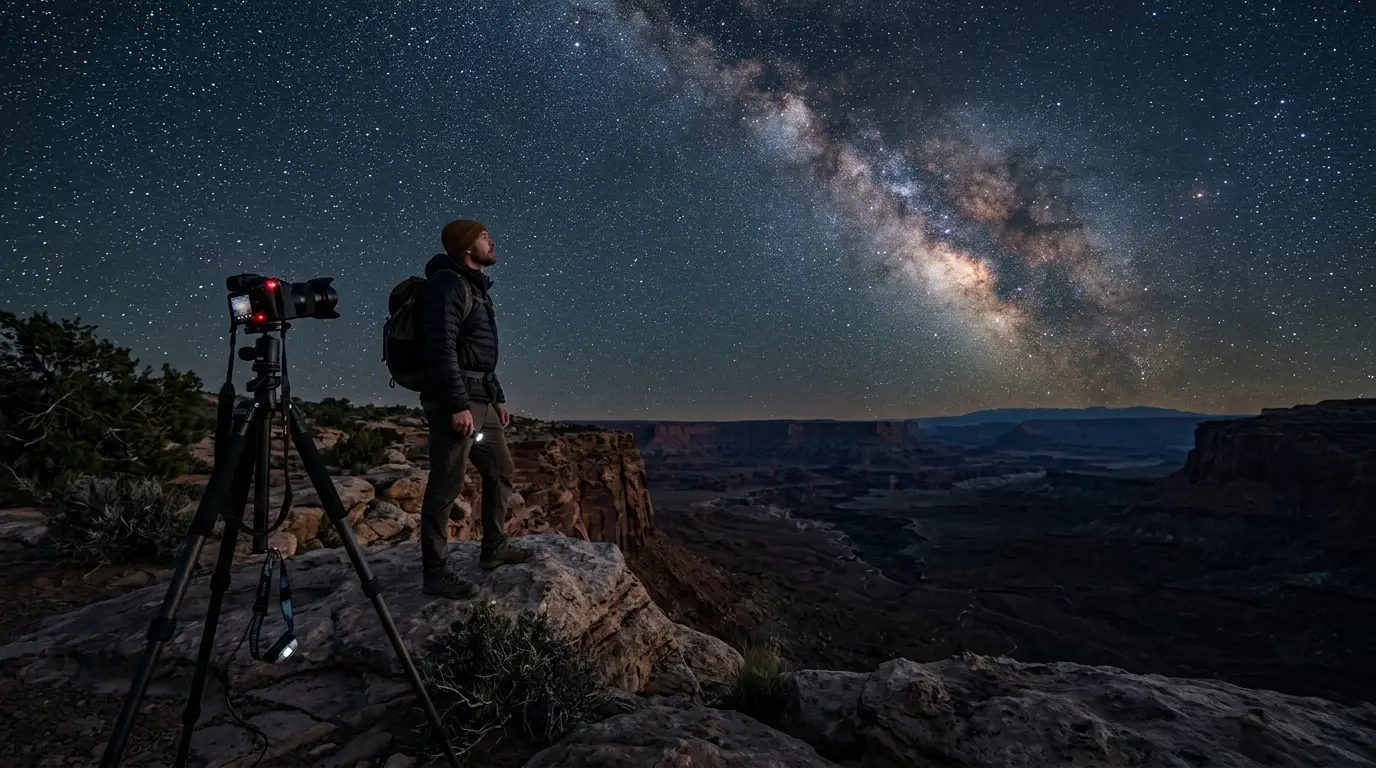
Astrotourism means travel built around dark skies: meteor showers, auroras, the Milky Way. What it means, where to go, and how to plan your first trip.
None of this is a reason to write off a summer trip. The galactic core sits highest in the sky exactly when the heat is worst, so summer stargazers are trading comfort for a specific astronomical payoff. Anyone unwilling to make that trade has an easy fix: visit in April, May, September, or October instead, and accept a slightly lower core in exchange for a bearable afternoon.
So, Is It Worth It? Who Should Go and Who Should Wait
Joshua Tree is worth it for a stargazer who wants a real, certified dark sky within a weekend's reach of Los Angeles, is willing to skip Keys View after dark in favor of Cottonwood Campground or Pinto Basin Road, and can time a visit around a new moon week rather than hoping for the best. The boulder-and-Joshua-tree foreground alone is hard to replace this close to a major metro area. Where to stay for Joshua Tree stargazing is worth reading before booking, since a Palm Springs base sits inside the same Coachella Valley glow covered above.
It's a harder case for:
- Anyone chasing the darkest possible sky on the Bortle scale in the American Southwest, who'll do better at a Gold Tier park further from a major metro area; see the Joshua Tree vs Big Bend stargazing comparison for how that trade plays out against a truly remote park
- A visitor expecting Keys View at sunset to double as a quiet nighttime spot
- Anyone unwilling to plan around summer heat or a moon-phase calendar and hoping to just show up
2.93M
None of those are reasons to write the park off. They're reasons to plan around the trade-off rather than discover it on arrival.
Recommended tours
Tours are selected for quality, not commission. I earn a small fee if you book — at no extra cost to you.
What tips the balance, more than the crowding or the light pollution, is timing. The best time to stargaze in Joshua Tree covers the new-moon windows and seasonal trade-offs that do more to decide whether a given night here is worth the trip than anything covered above. Get that part right, and the Silver Tier rating, the Keys View crowd, and the summer heat all shrink down to the fine print of a visit that was worth taking anyway.
There's also a simpler test worth applying before any of the above: does the idea of a boulder-framed Milky Way two hours from home sound better than the idea of flying somewhere darker for one guaranteed night? For most of the stargazers this site hears from, the honest answer is yes.