
The Light-Dome Question: Why Your Base Town Matters More Than the Drive
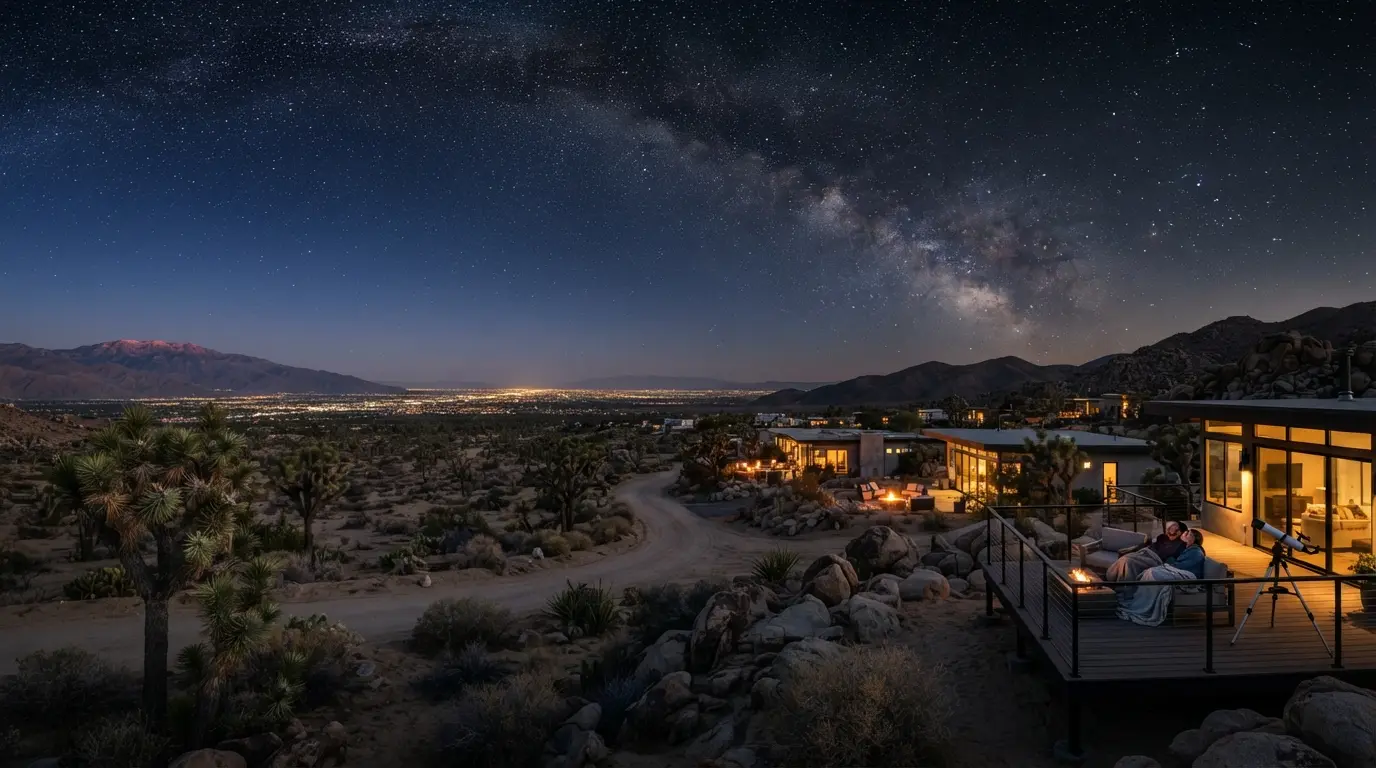
The sky over Joshua Tree isn't one uniform darkness you either reach or don't. It's a gradient, and where you sleep determines which slice of that gradient you actually get. That makes the base-town decision a sky-quality decision first, not just a logistics one.
The western half of the park, nearest Palm Springs and Twentynine Palms, still loses real sky to the metro areas pressing in from outside the boundary, with conditions comparable to Bortle 4-5 elsewhere in the region, even though the ground itself is remote desert[4]. Head the other direction and the sky measurably improves: across the Coachella Valley and Joshua Tree region, darker skies generally lie farther from the Palm Springs–Indio light dome[5].
The park's own interior confirms the pattern. The eastern half, around Pinto Basin, offers some of the clearest night skies in the region[6], proof that distance from the light dome matters more than distance from the park boundary. Neither base town sits inside the park, so the real question isn't "which town is closer," it's which direction from your base actually points toward darker ground.
| Palm Springs | Twentynine Palms / Wonder Valley | |
|---|---|---|
| Sky character | Inside the Coachella Valley light dome | Darker, at the edge of the Wonder Valley desert |
| Nearest park entrance | West Entrance, via Joshua Tree Village | North Entrance, right in town |
| Lodging style | Resorts, chain hotels, spas | Motels, guesthouses, desert vacation rentals |
| Best suited for | Convenience, nightlife, airport buffer | Sky quality, quieter gate, quick interior access |
Palm Springs: The Easy Base, Inside the Glow
Palm Springs works because it's easy, not because it's dark. It has its own airport, a deep resort and spa market, and a straightforward 43-mile, roughly 50-minute drive to the West Entrance[1], routing through Yucca Valley and Joshua Tree Village along the way[7]. For a first trip, or a trip where stargazing is only part of the itinerary, that convenience is a real advantage.
What it isn't is a dark-sky base. Palm Springs sits inside the same Coachella Valley light dome that washes out the park's western edge, so a night here is a resort-town night, not a desert one. The region's darker sky sits east of the Coachella Valley, not above it[5]. Anyone weighing Palm Springs against Joshua Tree itself should treat it as a staging point for the drive in, not a place to expect much of a sky from the hotel parking lot.
Featured · Destination
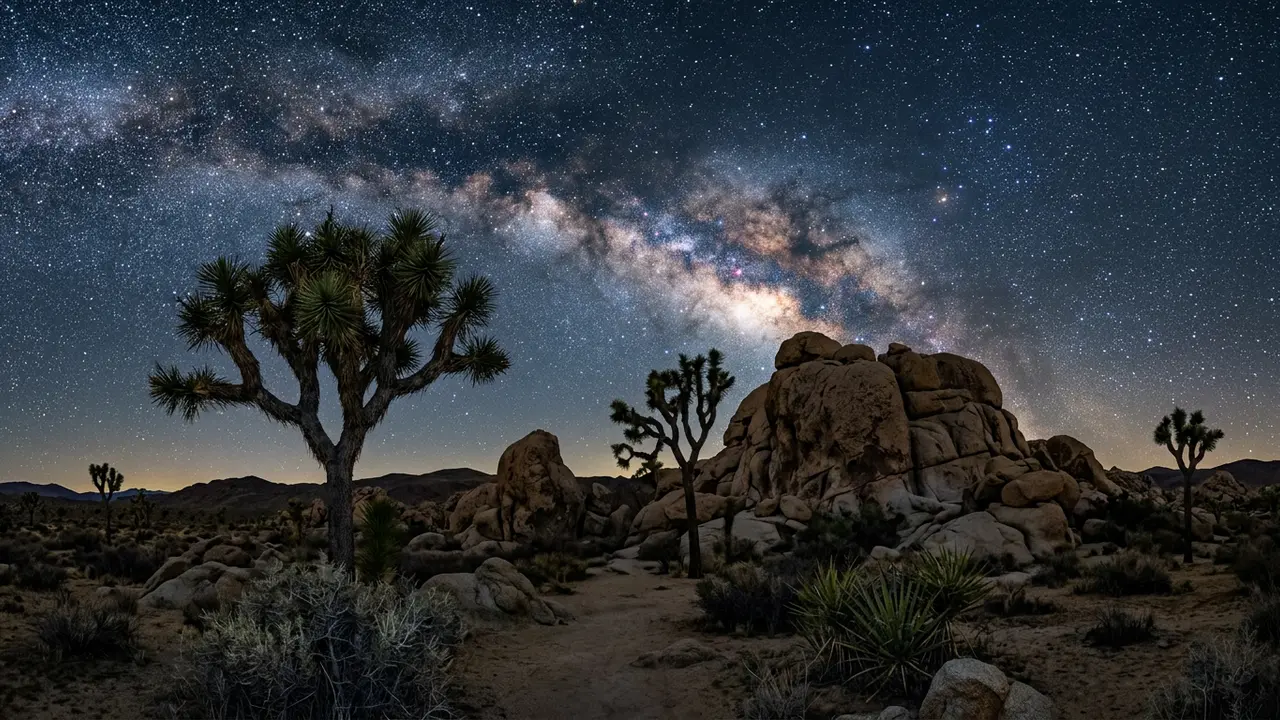
Joshua Tree National Park
Joshua Tree earned International Dark Sky Park status in 2017, just two hours from LA. Here's where to see the Milky Way, dodge crowds, and stay the night.
The lodging tradeoff runs the other way. Palm Springs carries the larger resort market, with chain hotels, boutique inns, and day-spa properties, against Twentynine Palms' smaller run of motels and vacation rentals. If lodging quality matters more than location for this trip, the best lodges for Joshua Tree stargazing guide ranks the specific options across both base towns rather than the towns themselves.
Twentynine Palms and Wonder Valley: Closer to Dark, Closer to the Gate
Twentynine Palms sits at the North Entrance[13] and skips the Coachella Valley glow almost entirely. Sky's the Limit Observatory, just outside that entrance, sits on a wide expanse of desert with minimal light pollution[8] — a fair proxy for what the town's edge actually offers a visitor without a telescope. The park's Bortle rating settles around Bortle 3 near its interior, and the sky keeps darkening the farther you get from Indio and Mexicali's glow on the horizon[9].
Wonder Valley sits east of Twentynine Palms proper, past the last of the motels and closer to open desert. It has no chain hotels, no strip of restaurants, and a scattering of small cabins and homestead rentals instead — the tradeoff for sitting that much closer to the direction the sky measurably improves in[5].
West Entrance vs North Entrance: What Your Base Town Decides for You
Your base town isn't just where you sleep, it's which gate you'll be using every single night. The West Entrance sits five miles south of the Highway 62 and Park Boulevard junction at Joshua Tree Village[10]; the North Entrance sits in Twentynine Palms, three miles south of the Highway 62 and Utah Trail junction[11]. Base in Palm Springs and the West Entrance becomes your default. Base in Twentynine Palms or Wonder Valley and it's the North Entrance, every time.
That default carries a real weekend consequence: compared to the West Entrance, the North Entrance sees much shorter entry lines on weekends and holidays[12]. A few things worth weighing before you lock in a base town:
- Crowd exposure — the West Entrance backs up first on peak weekends; the North Entrance rarely does
- Interior access — the North Entrance sits closer to the darker eastern half around Pinto Basin
- Drive-time buffer — the West Entrance route is the shorter overall drive if you're flying into Palm Springs or LA
Recommended tours
Tours are selected for quality, not commission. I earn a small fee if you book — at no extra cost to you.
The getting to Joshua Tree guide breaks down the full driving-distance picture from every major airport, if entrance choice is the deciding factor rather than the sky itself.
One wrinkle worth knowing before you book: which entrance you use doesn't lock you out of the other half of the park. Both entrances connect to Park Boulevard, so a Palm Springs base can still reach the darker eastern wilderness in an evening — it just costs more driving time than a Twentynine Palms base spends getting there.
Which Base Fits Your Trip
Base in Palm Springs if the trip is really about a comfortable weekend with stargazing as one item on the list, not the whole point. Base in Twentynine Palms or Wonder Valley if the sky is the reason you booked the trip at all, and you're willing to trade resort amenities for a shorter drive into genuine dark.
A few situations make the call easier than picking blind:
- A first visit built around comfort, flights, and a resort night or two: Palm Springs
- A trip where the Milky Way is the actual goal, not a bonus: Twentynine Palms or Wonder Valley
- A weekend that also includes shopping, spas, or Palm Springs' own attractions: Palm Springs
- Repeat visitors who already know the park and want minimal drive between bed and dark sky: Wonder Valley
Featured · Article
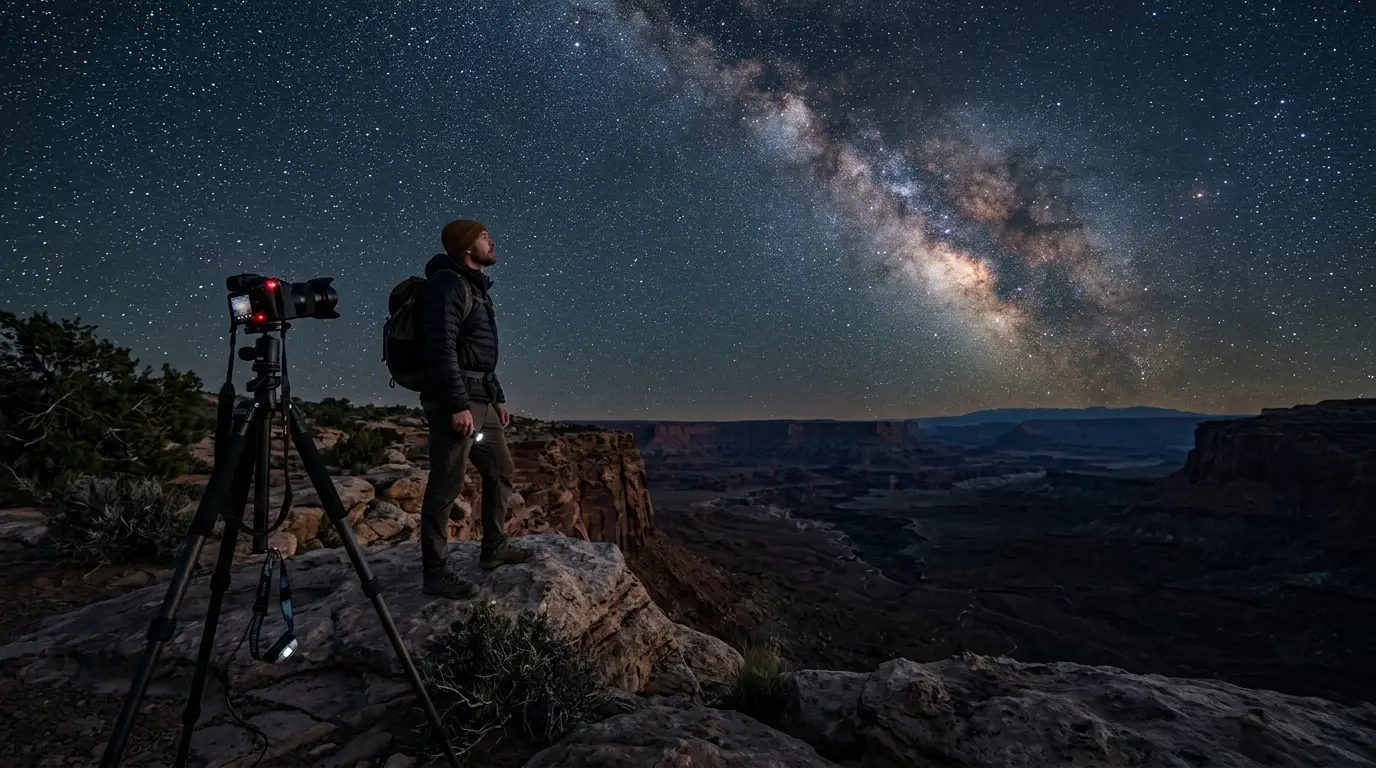
What Is Astrotourism? The Complete Beginner's Guide
Astrotourism means travel built around dark skies: meteor showers, auroras, the Milky Way. What it means, where to go, and how to plan your first trip.
Neither town is inside the park, so neither one guarantees the sky by itself. The how many days to spend in Joshua Tree for stargazing piece is worth reading next if the base-town choice has you rethinking how long the trip should actually run.