
The short answer: safe, with homework
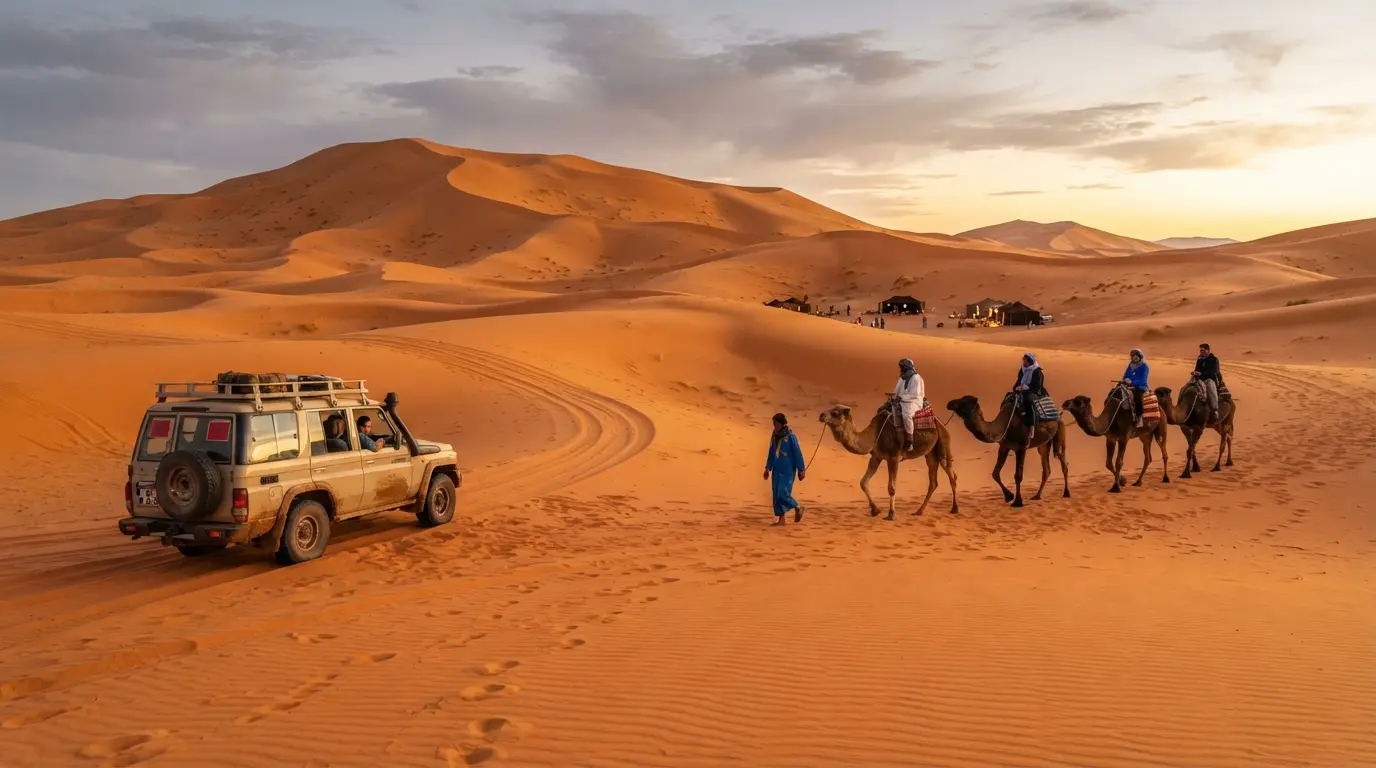
Book through a licensed, named operator and a Merzouga desert tour is no riskier than other rural adventure tourism in Morocco. The dangers that do exist are concentrated and checkable before you pay a deposit. Operator legitimacy tops the list: Morocco licenses travel agents by law, and an unlicensed reseller or a riad front desk selling a desert trip is where most bad experiences start. Quad-bike and dune-buggy excursions carry the clearest documented risk, and camel treks leave phone signal behind by design, so contact redundancy is something you plan rather than hope for.
The risk I worried about on the Merzouga leg was not the desert. It was the road in and the camp-vetting homework, the logistics between Marrakech and the dunes that decide most of the trip before you ever stand on a dune. That is a more useful worry than the sand itself.
Whether the trip is worth the time and money at all is a separate question from whether it is safe. Is Merzouga worth it for stargazing works through the cost, the camp market, and the night-count math.
What the two documented incidents actually show
Search Merzouga safety and you turn up two specific things, not a broad record of danger. The first is a fatal off-road crash: in November 2025, two Polish tourists died when the driver lost control of an all-terrain vehicle that overturned in the Erg Chebbi dunes near Merzouga, a crash Poland's foreign ministry confirmed[4]. Read it straight and it is one ATV incident with a driver at the wheel, not evidence that the camel treks or the desert camps are dangerous. It matters because it shows where the risk concentrates, on motorized dune excursions, which is exactly where the official advice below points.
The second is a first-person account on the Tierra Roja blog, and it is a complaint about the tour industry, not about the desert. The writer was delivered to a different, roadside camp than the one booked, the camel ride they had paid for was sold to other customers, and the next morning they could not get a ride out while the camp refused to tell their own driver how to reach them[5]. That is an operator-substitution and abandonment pattern, one documented instance rather than a description of how every Merzouga camp runs.
Neither incident is a reason to skip the trip. Both are reasons to vet the operator, which is the through-line of every source worth reading on this question. The incidents get repeated online as if they were the whole story; the actual story is that they are checkable, and the checks are the rest of this piece.
What the official advisories say about Morocco
Official travel advice does not single out Merzouga, and that is itself a useful signal. The UK's FCDO raises three things worth reading closely. Quad bike accidents involving British nationals frequently occur in resort areas, safety standards vary considerably, and the advice is to always wear a crash helmet[6]. Providers of recreational and adventure tourism may not meet UK safety standards, and some travel insurance policies will not cover activities such as quad biking[7]. People posing as official tourist guides are common, so a guide in a historical district should carry an official badge and local-authority permission[8].
The US State Department keeps Morocco at Level 2, exercise increased caution, on terrorism grounds. That is an overseas-security posture, not a desert-tour warning, and it is the same level applied to destinations far more urban than Merzouga.
Confirm the quad-bike exclusion
Ask your insurer to confirm in the policy wording that quad biking or off-road dune driving is covered, because some policies exclude it. If it isn't, skip the quad leg or buy a short-term adventure rider before you go.
None of this says don't go. It says the two things under your control, which operator you book and whether your insurance covers the activity you are actually doing, are where the official risk lives.
Is the operator licensed? How to check
Morocco licenses the travel-agent profession under Law 11-16 and its application decree 2.21.80, which set out the procedures for obtaining and operating a travel-agent licence[9]. The Ministry of Tourism keeps an approved list of licensed travel agents, the Organisateur-Distributeur de Voyages (ODV) designation, and a licensing platform[10]. For you this means two things. A legitimate operator can name its licence number when asked, and an operator that cannot, or that deflects the question, is the single strongest red flag you will find.
Ask for three things before a deposit: the operator's registered company name, its travel-agent licence number, and a written itinerary that names the camp, the transfer, and the activity. Cross-check the licence against the Ministry of Tourism's list where you can. A riad, a taxi driver, or an unlicensed reseller selling a desert trip is not the same as booking through the licensed operator that actually runs it, and most substitution stories start with that gap.
Featured · Destination
Merzouga Stargazing
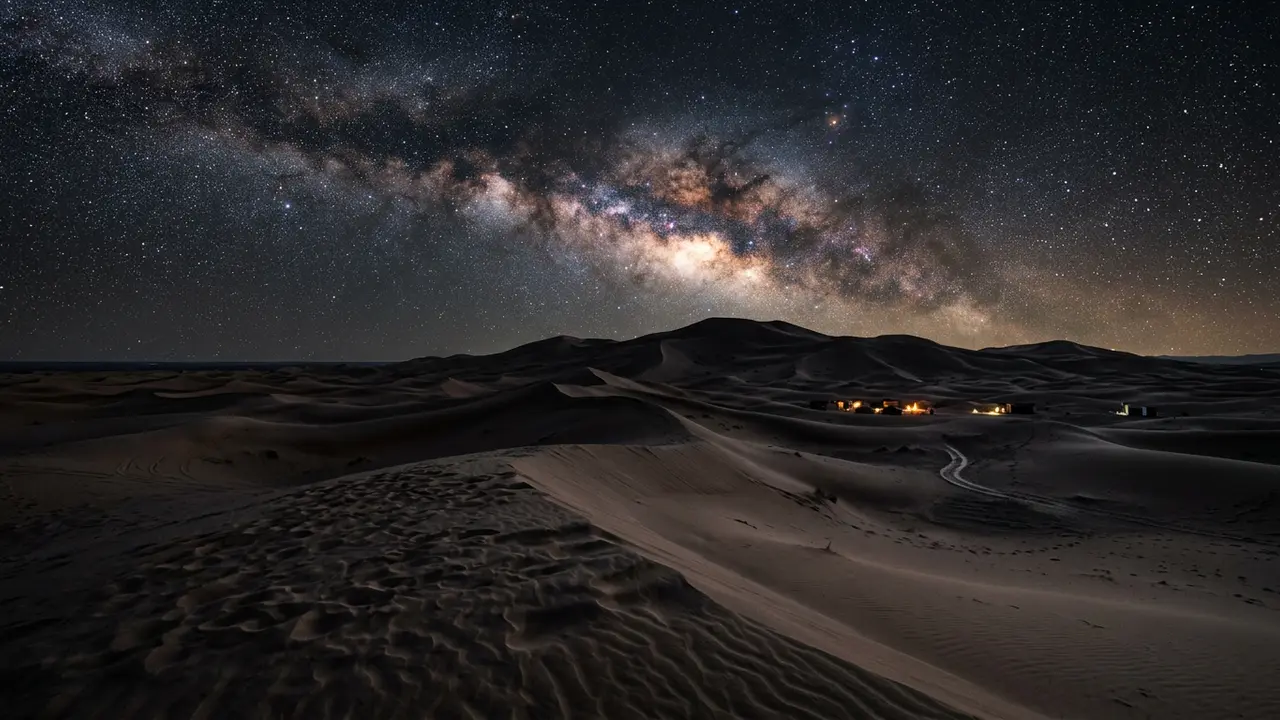
Erg Chebbi's dunes rise 150m above Morocco's Sahara, hours from city light. Stargaze from Berber-led desert camps: when to go, where to stay, how to get there.
The camel-trek guide you meet at the dunes is a separate role from the travel agent who sold you the trip, and both should be named in the written itinerary. If you cannot name the operator you are paying before you pay, that is the moment to stop.
The no-signal reality of a multi-day trek
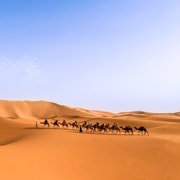
On a 2-night camel trek into Erg Chebbi, phone signal is intermittent on day one and essentially none on the bivouac night, by design[11]. That disconnection is the point of the trip, and it is also what makes contact redundancy a planning item rather than a nicety. A reputable operator runs a support 4x4 that follows at a distance carrying water and emergency supplies, and the guide can call it at any point[12].
Do the redundancy work yourself before you head out. Confirm the camp can reach your driver and your driver can reach the camp, and agree who you call if the group gets separated. Give someone at home your exact itinerary and the operator's contact. Carry a local SIM if you want any chance of signal on the approach roads, and download offline maps of the Errachidia area before you lose coverage.
Featured · Article
Uluru Cultural Significance and Visitor Etiquette
Uluru is Anangu land under joint management. Here's why the 2019 climb closure is settled policy, what you can't photograph, and real visitor etiquette.
How many nights you commit changes the exposure: a single desert night leaves less margin for weather and logistics than a two-night stay. How many nights in Merzouga for stargazing runs that trade-off in full.
What to check before you book
Distilled, the checks are a short list, and they line up with what operators themselves flag. Watch for no reviews, or only suspiciously uniform five-star ones; pressure to pay cash upfront by wire transfer; no written confirmation of your itinerary; or an operator who changes the plan once you've arrived[13]. The one-day Marrakech round trip deserves the same suspicion: the drive alone runs nine to ten hours each way, so a one-day version means eighteen to twenty hours of driving for perhaps an hour in the desert at dusk. Nobody runs that as a good-faith trip.
Recommended tours
Tours are selected for quality, not commission. I earn a small fee if you book — at no extra cost to you.
The question most people actually mean to ask, as one Merzouga operator put it, is whether the operator is legitimate, and that deserves more scrutiny than the desert itself. That is the honest summary of the whole safety question, and it is the opposite of fear. GOV.UK's own framing applies: no travel can be guaranteed safe, so read the advice and plan around it[14].
Before you pay a deposit
- Get the operator's licence number and check it
- Get a written itinerary naming the camp and transfer
- Confirm quad-bike cover in writing from your insurer
- Agree a contact plan with the camp and driver
- Read recent guest photos, not the listing shots
For the route in, getting to Merzouga covers the drive and transfer options, and things to do in Merzouga beyond stargazing covers the daytime legs that make a multi-day visit worth the transit. If specific logistics questions are still open, the Merzouga stargazing FAQ closes most of them.
Book through a licensed operator, confirm quad coverage in writing, and plan your contact redundancy, and a Merzouga desert tour is a safe trip. Skip those three checks and the risk you take is exactly the kind the incidents above describe: an operator problem, not a desert one.