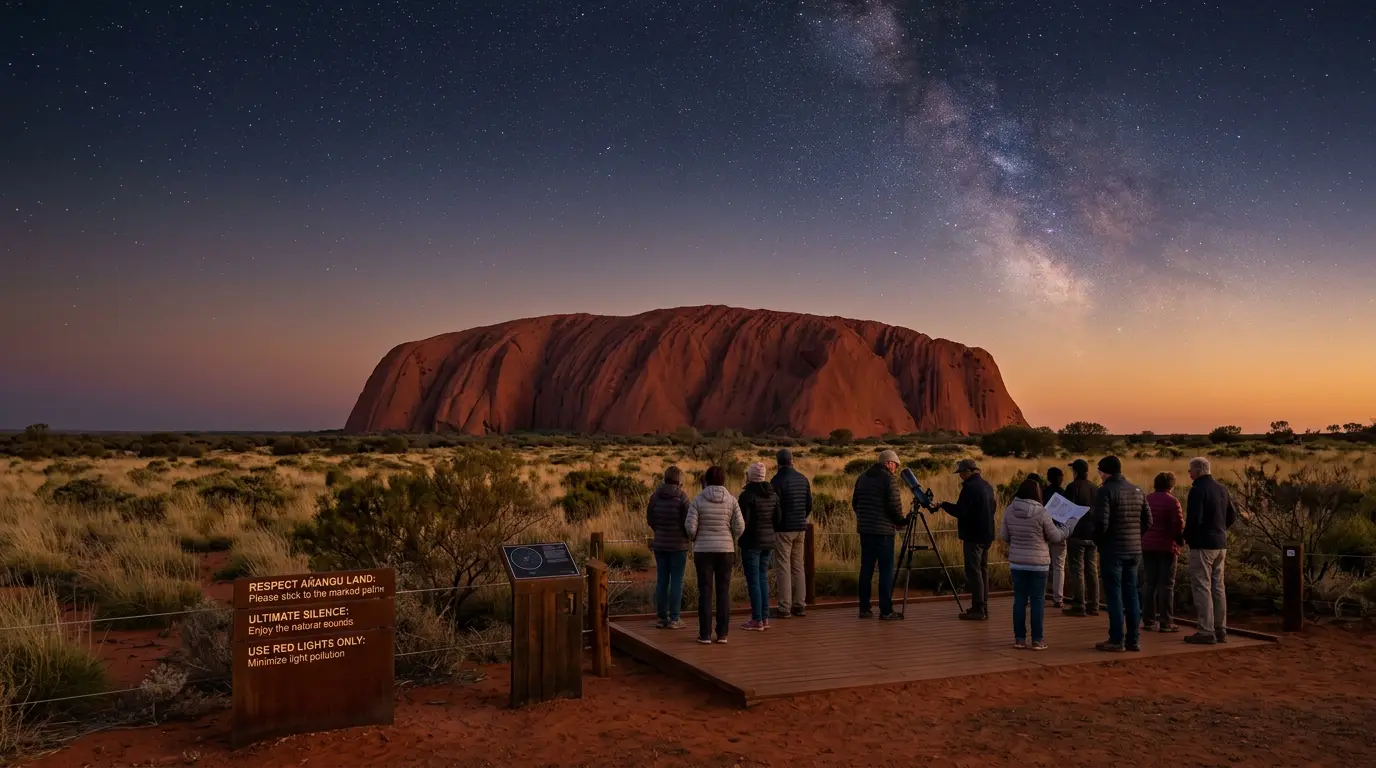

Whose land this is: Anangu, Tjukurpa, and joint management
Uluru-Kata Tjuta National Park is Anangu land, and title to it was formally handed back to its Traditional Owners in 1985[1]. Every rule this guide covers, on climbing, on photography, on how to greet someone, traces back to that fact rather than to some invented park regulation.
Since the Handback, the park runs under joint management. A Board of Management makes the major policy and management decisions for Uluru-Kata Tjuta National Park[2], and eight Aboriginal members nominated by the park's Traditional Owners sit on that board[3]. Parks Australia, the agency most visitors actually deal with at the gate and the Cultural Centre, is responsible for implementing the Board's decisions and for the park's day-to-day management[4].
Underneath both sits Tjukurpa, described by Parks Australia as Anangu's moral compass for daily life and their justice system[5]. It isn't written down anywhere. It is memorised and passed on to those who have earned or inherited the right to it, through song, ceremony, story, dance and art[6]. That distinction matters for a visitor: the etiquette in this guide isn't a park's suggested manners. It's the visible edge of a legal and moral system, one Anangu treat with the same weight anyone treats their own law.
8
A stargazing trip to Uluru starts here, not with a moon-phase calendar. Everything in this guide, the photography limits, the etiquette, the closed climb, applies after dark exactly as it does at noon. For when to actually go once you've got the land itself straight, see the seasonal window that suits your visit.
Why the climb closed in 2019, and why it isn't up for debate
The Uluru climb closed permanently on 26 October 2019[7]. That's not a pause and it doesn't come with an asterisk. It is settled policy, arrived at jointly by Anangu and Parks Australia, not a rule waiting for enough visitor complaints to reverse it.
Climbing was never actually sanctioned by the law of this place. Uluru has been sacred to Anangu for tens of thousands of years, and climbing it was not generally permitted under Tjukurpa, Anangu law and culture[8]. For decades, Anangu asked without the backing of a ban: in the 1990s, Parks Australia and Anangu put up signs at the base of the climb asking visitors, on behalf of Anangu, "Please Don't Climb"[9]. Plenty of visitors climbed anyway, right up until the Board acted.
The closure followed a process, not a sudden reversal. The Uluru-Kata Tjuta Board of Management formally decided it would close the climb to the top of Uluru on 26 October 2019[10], and one of the pre-set criteria written into that decision was that the proportion of visitors climbing had to fall below 20 per cent[11] before the Board would act. The date carries its own weight: 26 October is also the date the park was handed back to its Traditional Owners in 1985[12], so the closure closed a loop three decades in the making rather than opening a fresh argument.
Sammy Wilson, the Board's chairman when the decision was made, was direct about how he wanted the day understood.
Nothing about that framing invites nostalgia for the climb, and nothing in this guide should either. If you arrive hoping to hear about a lost tourist activity, recalibrate before the gate: this was Anangu's own request, granted.
“The land has law and Culture. We welcome tourists here. Closing the climb is not something to feel upset about but a cause for celebration. Let's come together; let's close it together.[13]”
What you can and can't photograph, and why
Uluru's photography rules exist because a night-sky trip is, in practice, a photography trip. A long exposure captures far more surface detail than a daylight glance ever would, which is exactly why the rules matter more after dark, not less.
In the park's culturally sensitive areas, visitors are welcome to photograph flora, fauna and people, while avoiding capturing any rock formations[14]. These aren't sites you're left to guess at: they're identified for visitors through on-site signage, visitor maps and the park website[15], not left behind a vague instruction to "be respectful."
The most specific guidance covers Uluru's north-east face, which carries particular cultural weight. Anangu ask photographers to take only wide shots from a distance and to avoid showing detail on the top-left side of the rock[16], with the hour or two before sunset recommended, since natural shadow at that time already obscures the sensitive detail on its own.
Restrictions extend past the rock itself. Parks Australia asks visitors not to enter or photograph restricted areas, including sacred sites, ceremonial sites, burial grounds and people's homes[17]. The same guidance extends a basic courtesy to people, not just places: check before you turn a camera on someone, in Yulara's car park as much as anywhere Anangu live and work.
Then there's the paperwork side, easy to forget in a phone-first era. Anyone planning to use images, footage or recordings of the park for commercial or media purposes should expect to need a permit or licence from Parks Australia before shooting. If you're filming for a channel or a client rather than an album, that's a box to tick before the trip, not after.
Everyday etiquette: greeting, eye contact, and listening
Most of what counts as respectful behaviour at Uluru has nothing to do with cameras. It's ordinary interaction, and Anangu have been generous about spelling it out rather than leaving visitors to guess.
Anangu traditionally greet each other with "palya", a word that can mean welcome, thank you, understood, OK or goodbye[19]. Visitors are encouraged to use it themselves: a small, low-stakes way to show you bothered to learn something before arriving, rather than treating the park as scenery with a gate fee.
Featured · Destination
Uluru
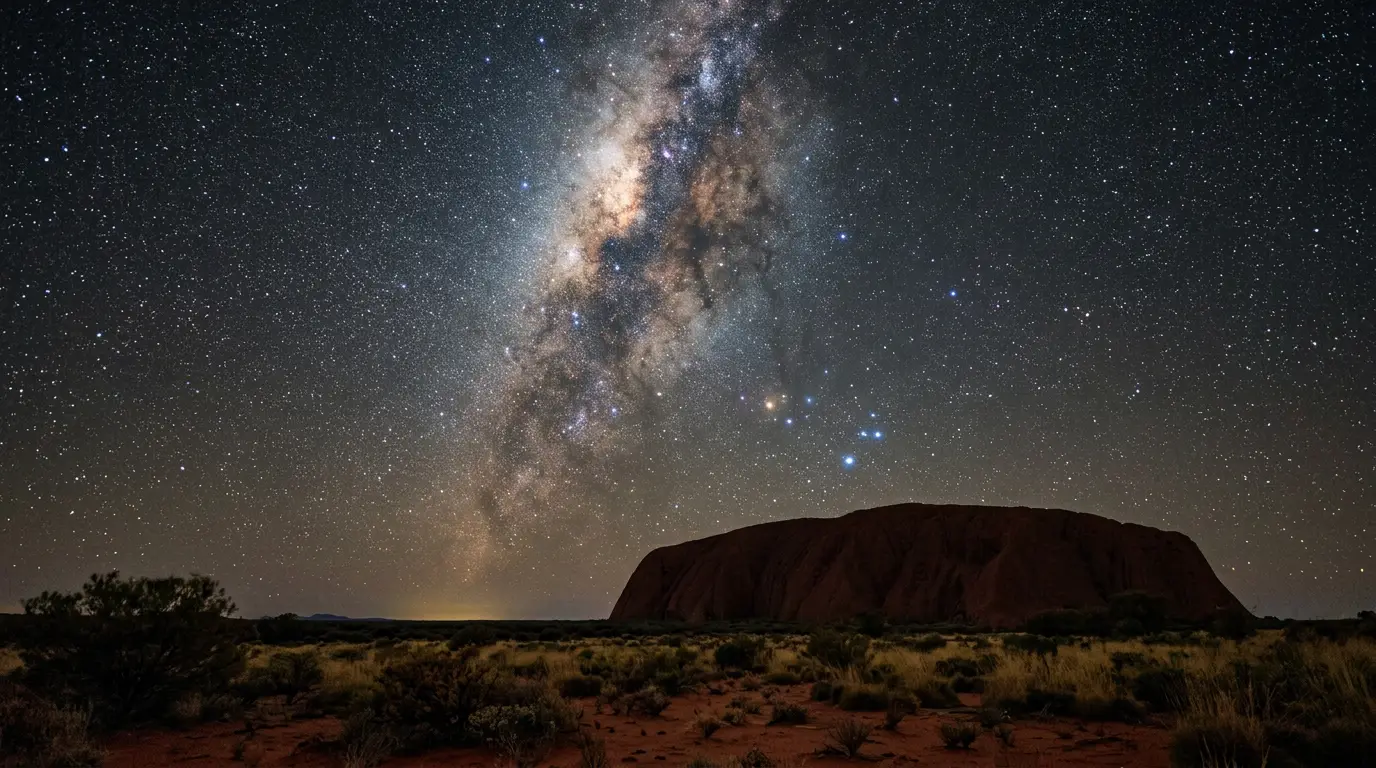
Stargaze at Uluru on Anangu-owned, jointly managed land: the Milky Way's core, Magellanic Clouds and Southern Cross over Australia's red-centre outback.
Two habits common among visitors read differently here than they might back home. Some Anangu may find constant eye contact uncomfortable[20], so don't read a lowered gaze as evasiveness or disinterest. And in Anangu culture, it's considered important to listen closely and consider a response carefully before answering, rather than replying quickly[21]; if a guide or Cultural Centre staff member pauses before answering your question, that pause is care, not confusion.
Staying on the marked path
The physical rule underneath everything else is the simplest one: stay on marked tracks and paths, and don't climb onto rock formations or boulders[22]. That covers the base walk around Uluru as much as it covers the closed climb route itself, and it applies on a self-guided walk exactly as much as inside a licensed night session with Uluru Astro Tours; the rule doesn't relax because a guide is standing next to you.
- Follow posted trail markers, even where the path looks informally open at the edges
- Treat every rock formation as off-limits to climb on, not only the summit route
- Ask at the Cultural Centre if a boundary isn't obvious, rather than guessing
Don't take the rocks: the law, and what Traditional Owners ask directly
Taking rocks or sand from the landscape carries both a cultural weight for Anangu and a real legal risk. Treat it as more than a minor souvenir grey area, whatever the exact current fine happens to be.
Visitors caught removing rocks, sand or soil from the park can face a legal penalty on top of the cultural harm the act causes.
Some visitors have tried to make amends after the fact, mailing pieces of rock back to the park along with apology letters, a pattern well known enough at Uluru to have its own informal name. Traditional Owners have responded to that pattern the same way every time: don't take anything from Uluru in the first place, and if a memory is what you're after, a photograph does the job without taking anything at all. Take the picture. Leave the rock. It's the shortest version of every rule above, and the one worth remembering if the guide's length outlasts your attention.
A dual World Heritage site, and what that means once the sun goes down
Uluru-Kata Tjuta National Park received UNESCO World Heritage listing for its natural values in 1987[23], recognition of the geology, the rare plants and animals, and the sheer scale of the landscape.
In 1994, UNESCO extended the listing to recognise the park's cultural landscape too: the relationship between the natural environment and Anangu belief[24]. That extension is the unusual one. Natural World Heritage sites are common enough; a dual listing, natural and cultural together, puts Uluru-Kata Tjuta among only a few dozen places on Earth, and just four in Australia[25].
Recommended tours
Tours are selected for quality, not commission. I earn a small fee if you book — at no extra cost to you.
For a stargazer, that dual status is the whole point in miniature. The reason the sky here is worth a multi-night trip and the reason the rock carries the rules in this guide are the same reason: this is one landscape, read by Anangu as a single continuous story, not scenery with a cultural footnote attached. Photograph it the way Anangu ask. Stay on the path. Learn "palya." None of that competes with the stargazing. It's the same trip. For where Uluru sits among the world's dark skies, certified and not, see Best Dark Sky Parks in the World.
Featured · Article
What Is Astrotourism? The Complete Beginner's Guide
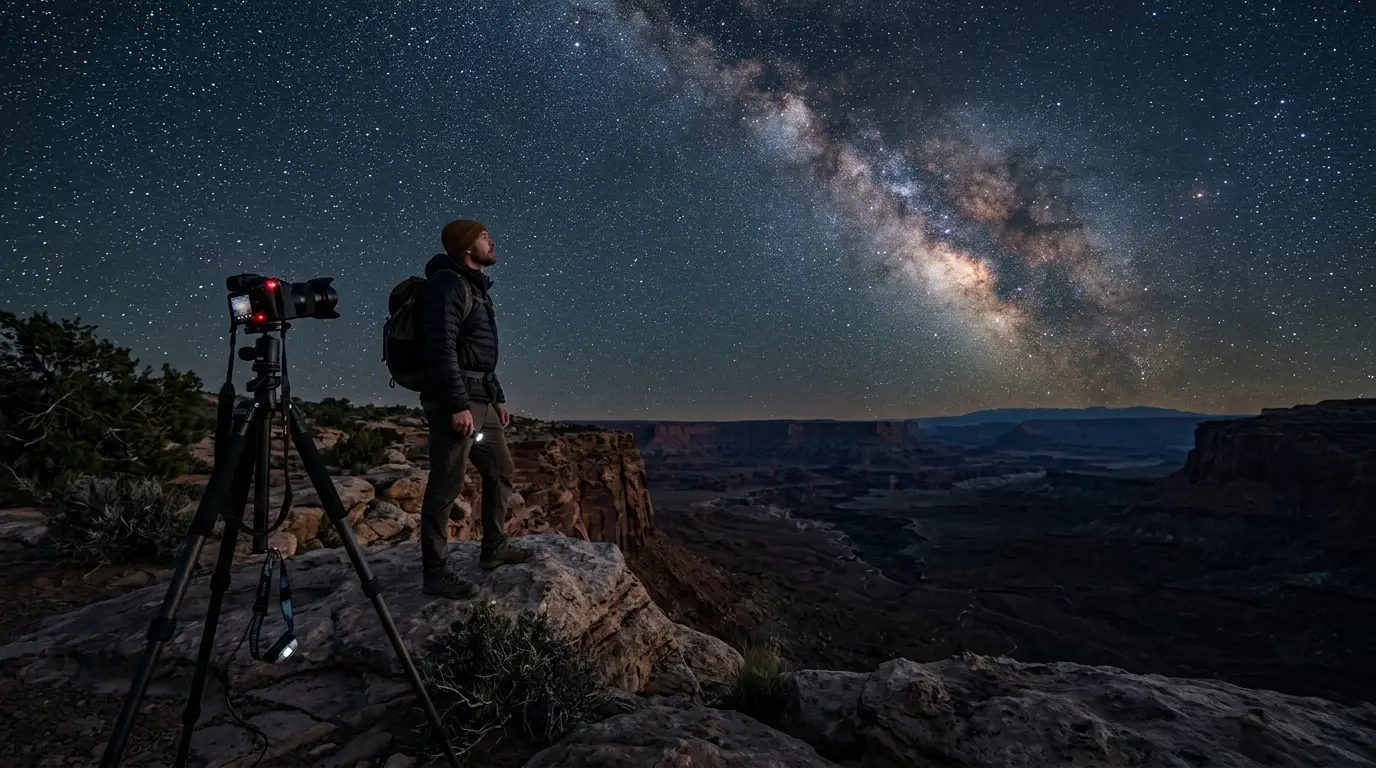
Astrotourism means travel built around dark skies: meteor showers, auroras, the Milky Way. What it means, where to go, and how to plan your first trip.
For the practical side, timing the visit, booking a licensed night session, choosing where to stay inside Yulara, see the full Uluru stargazing guide, which covers the sky itself in the depth this piece has given to the land underneath it.