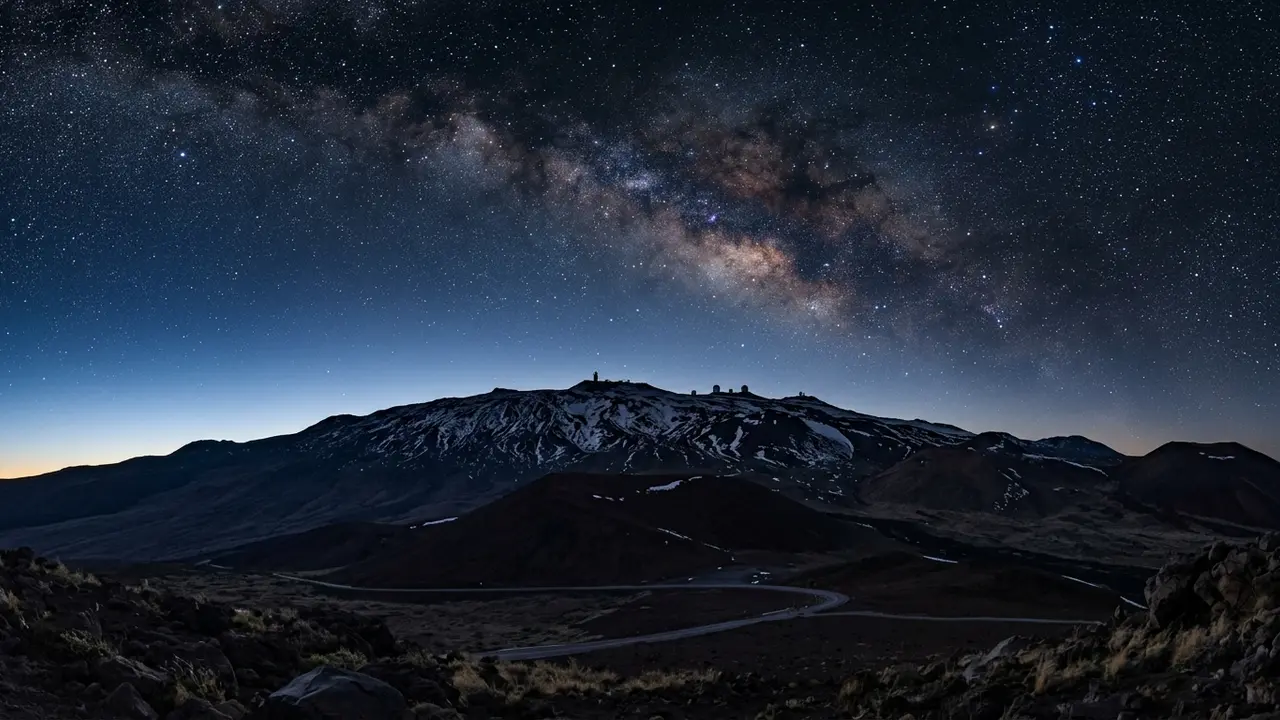

Mauna Kea as wahi pana: the sacred foundation

Hawaiian tradition classifies certain locations as wahi pana (storied, sacred places bound to specific histories and deities), and Maunakea ranks among the most significant of these for the entire island chain. Long before any telescope arrived, Native Hawaiians already had a name for the mountain: Mauna a Wākea, the Mountain of Wākea, distinct from the plainly descriptive "White Mountain" that "Maunakea" literally translates to[1]. One name describes what the summit looks like in winter; the other names who it belongs to.
In Hawaiian tradition, Maunakea is regarded as a shrine for worship, a home to the gods, and the piko of Hawaiʻi Island[2], piko meaning the navel, or umbilical cord. Genealogically, the mountain is described as the first-born mountain son of Wākea and Papa, the sky father and earth mother who are also progenitors of the Hawaiian people[3]; the same tradition holds that Maunakea is symbolic of the piko of the island-child Hawaiʻi, the point connecting land to the heavens[4]. For many Kanaka Maoli, that makes the mountain less a landmark than a relative.
One name describes what the summit looks like in winter; the other names who it belongs to.
The mountain has residents beyond the observatories, too. Poliʻahu, goddess of snow, is said to make her home on Maunakea[5], and the summit region carries a wider set of deity associations that Native Hawaiian cultural sources treat as living tradition, not folklore filed away in the past tense. None of this is offered here as trivia: it's the frame that explains everything that follows, why the mountain's management is legally constrained, why a 2019 protest drew kūpuna by the busload, and why the etiquette section at the end of this piece is not optional reading.

The ceded lands trust and a half-century of dispute

Maunakea's legal status complicates any simple story about who gets to decide its future. The mountain is part of the ceded lands trust that the State of Hawaiʻi is legally obligated to protect and preserve for future generations, held pursuant to its kuleana as a trustee[6]. Kuleana translates poorly into English: it's closer to a reciprocal responsibility than a property right, and that framing is precisely why disputes over Maunakea end up in court rather than staying purely political.
In November 2017, the Office of Hawaiian Affairs (OHA) sued the state and the University of Hawaiʻi over decades of mismanagement of the mountain, and the framing of that lawsuit is easy to misread as being about a single telescope. OHA said it directly: "This is not about any one telescope. This lawsuit is about addressing the state and the university failing to manage the entire mountain for nearly half a century"[7]. The complaint sought to hold the state and UH accountable for what it called longstanding, well-documented mismanagement of Maunakea[8], covering access roads, cultural-site protection, and environmental stewardship, not a single construction project. OHA filed a separate suit in January 2024 challenging the constitutionality of Act 255, the law creating MKSOA, on contract-clause and conflict-of-interest grounds, a distinct legal fight from the 2017 mismanagement case.
That distinction, mismanagement of a mountain rather than opposition to one telescope, gets flattened constantly in outside coverage. It's worth holding onto through the rest of this piece. The argument over Maunakea's summit is not simply astronomy against culture. It's a decades-long dispute about who has kept faith with a legal trust and a value some Kanaka Maoli describe as mālama ʻāina, caring for the land, and it predates any single project by far more than most visitors assume.

2019: kūpuna on the access road

The dispute became impossible to ignore in the summer of 2019, when construction crews attempted to begin work on the Thirty Meter Telescope (TMT), a project that had already been through years of permitting and legal challenges. Protesters, many of them elders, blocked the Maunakea Access Road. On July 17, 2019, 33 protesters were arrested, all of them described as kūpuna, elders[9], a detail that shaped how the story was reported nationally: this wasn't framed as a youth movement but as grandparents and great-grandparents putting their bodies on a mountain road.
An online petition opposing TMT construction, posted days earlier on July 14, 2019, gathered over 278,057 signatures worldwide[10] within weeks, evidence of how far the dispute travelled beyond Hawaiʻi Island. Construction did not resume in the aftermath. As of the most recent developments, TMT construction had not resumed since the 2019 protests, and in June 2025 the National Science Foundation dropped its support for TMT in favor of the Giant Magellan Telescope[11], leaving the project's future genuinely uncertain rather than settled in either direction.
That last point deserves emphasis, because it's easy to read a resolution into this story that the facts don't yet support. TMT is neither built nor formally cancelled. The mountain's summit today embodies exactly the kind of unresolved standoff a sacred site under an active legal trust, with an active protest history, would be expected to face. Anyone visiting expecting a settled controversy is visiting the wrong mountain. For travelers planning a trip around the working observatories and public programs that do exist here, Mauna Kea Stargazing covers the practical side without pretending the history isn't part of the visit.
Timeline
  1. July 14, 2019

    Petition against TMT construction posted

    An online petition opposing construction gathered over 278,057 signatures worldwide within weeks.

  2. July 17, 2019

    33 kūpuna arrested on the access road

    Protesters, described as elders, blocked the Maunakea Access Road; all 33 people arrested were kūpuna.

  3. June 2025

    NSF drops support for TMT

    The National Science Foundation shifted its support to the Giant Magellan Telescope, leaving TMT's future uncertain.

Who manages the mountain now
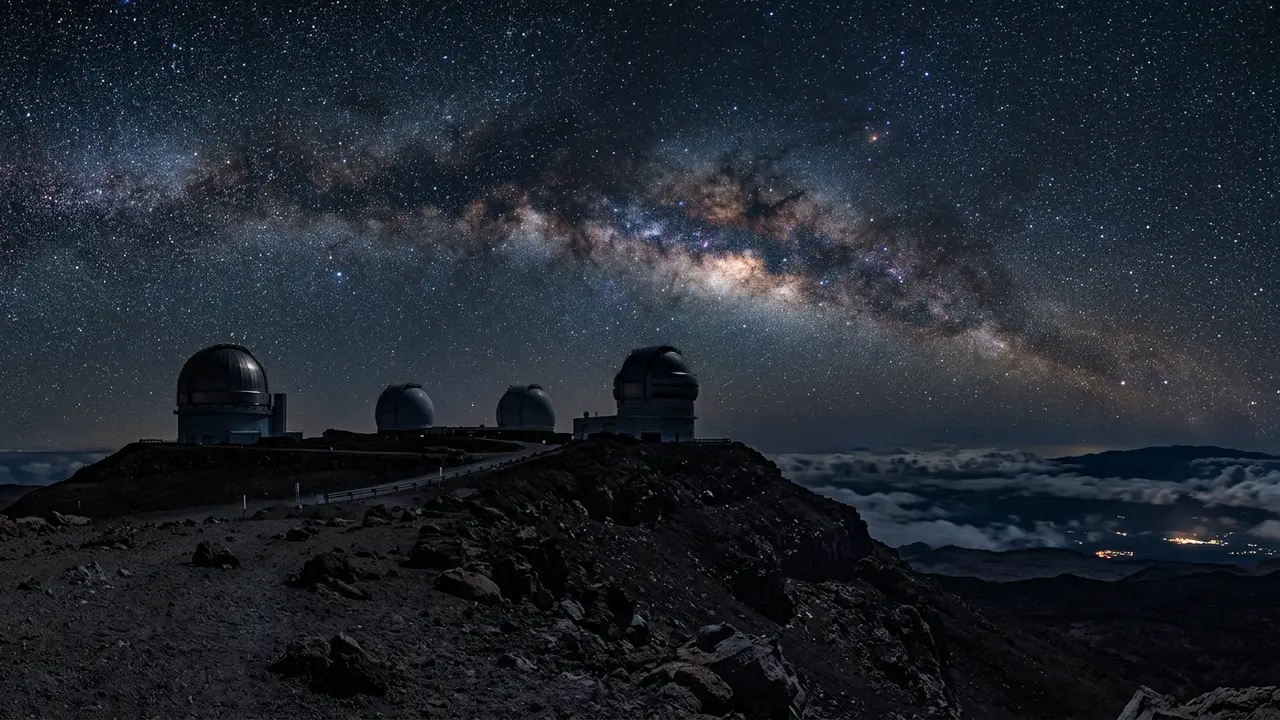
Governance changed on paper in 2022, though the change is still working its way through in practice. The Mauna Kea Stewardship and Oversight Authority (MKSOA) was established by the Hawaiʻi State Legislature in 2022 through Act 255[12], intended to shift authority away from the University of Hawaiʻi, which has managed the summit's astronomy leases for decades. Act 255 didn't flip a switch: it set a five-year transition period running from July 1, 2023 to July 1, 2028[13], during which authority moves gradually rather than all at once.
Right now, in the middle of that window, the University of Hawaiʻi continues to make final stewardship decisions, with MKSOA's input, until the leases and permits are officially transferred[14]. That's a genuinely awkward middle stretch: MKSOA exists, has members, and has a voice, but UH still holds the pen until 2028, or until the paperwork catches up, whichever comes first.
The clearest recent signal of where this is heading arrived in June 2025, when OHA withdrew its lawsuits challenging Act 255, stating that years of litigation had not yielded justice or meaningful progress on environmental cleanup, responsible management, and systemic accountability, and that it was shifting to an approach centering Native Hawaiian leadership[15]. Read that less as OHA losing interest and more as a bet: OHA said it would work closely with and support the Native Hawaiian leaders already appointed to MKSOA, naming Mayor Kimo Alameda, Pomai Bertelmann, Neil Hannahs, Ryan Kanakaʻole, Kalehua Krug, Lanakila Mangauil, and Noe Noe Wong-Wilson among them[16].
Mauna Kea cultural significance shown in the snow-dusted summit silhouette at dusk, sacred to Native Hawaiians as Mauna a Wākea

Mauna Kea cultural significance shown in the snow-dusted summit silhouette at dusk, sacred to Native Hawaiians as Mauna a Wākea

None of this means the argument is over. It means the argument moved from courtrooms to a stewardship board that includes some of the same Native Hawaiian voices who spent years fighting Act 255 in the first place, a genuinely different kind of contest, still very much in progress as this transition period runs through 2028.

Featured · Destination

Mauna Kea

Mauna Kea is sacred to Native Hawaiians and home to world-class observatories. Here's how to plan respectful, safe Mauna Kea stargazing at the Onizuka VIS.

What practitioners say respect looks like

Two Native Hawaiian voices, both quoted in reporting on the ongoing tension between spiritual practitioners and astronomers, describe what's actually at stake in language no legal filing can capture. Cultural and spiritual practitioner Lanakila Mangauil, one of the same names now serving on MKSOA, has described staying off the summit as itself a form of practice: "One of the important spiritual practices on Mauna Kea is our absence"[17]. That's a genuinely counterintuitive idea for anyone used to thinking of visiting a place as the respectful thing to do. Here, for at least some practitioners, not going is the more reverent choice.
Cultural practitioner Kealoha Pisciotta frames the stakes in terms of dignity rather than access: "When they diminish our ancestors and our elder siblings, they diminish us, our life force and our existence"[18]. That's not a metaphor about a mountain. It's a statement about how the treatment of a sacred place reflects back on the people who trace their genealogy to it, their mana, in the sense of spiritual power bound up in ancestry and land, treated as inseparable from how the mountain itself is treated.
One of the important spiritual practices on Mauna Kea is our absence.
Lanakila Mangauil , Native Hawaiian cultural and spiritual practitioner
Neither quote resolves the debate over what Maunakea's summit should look like in ten years. Most visitor guides skip straight to etiquette rules without explaining why the rules exist, and the rules make far more sense once you've read what "our absence" and "our life force" mean to the people who use those words. For general stargazing rather than summit access, Best Time for Mauna Kea Stargazing covers exactly why most travelers don't need to go anywhere near this argument to see the sky.

How to visit Mauna Kea respectfully

Everything above points toward practical behavior, and the official guidance is more specific than most visitors expect. Start with the baseline instinct: before you enter a sacred place, ask permission of the spirits there[19], even if that's just a private, silent moment in the car before you get out. Silence is the best behavior to practice at Hawaiian sacred places[20], and the official rule for anything you're unsure of is blunt: if you are unsure, don't do it[21].
Photography deserves its own line, because it's the etiquette mistake most likely to happen by accident. Official guidance instructs against taking photographs at sacred places[22], and that covers any ceremony, any offering, and any practitioner engaged in cultural practice, whether or not a sign says so. What looks to an untrained eye like a pile of stones may in fact be a sacred feature[23], so on Maunakea the safe assumption is that anything arranged rather than scattered was placed there on purpose, possibly kapu, restricted, to anyone but the person who placed it.

Concrete rules, drawn directly from official University of Hawaiʻi at Hilo and Center for Maunakea Stewardship guidance:

  • Do not move, remove, pile, or stack any rocks, altars, or offerings, and only remove offerings after a ceremony has clearly finished[24], including building your own small cairn, however harmless it feels
  • Respect Native Hawaiian cultural practices by asking permission from ancestors and giving thanks[25] when visiting these storied places
  • Recognize an ahulele, a three-level altar used for hoʻokupu (offerings) to family, the land, and gods, on sight, and give it space rather than curiosity[26]
  • Heed all Ranger advisories on parking, traffic, and trail or area closures[27], since they cover cultural protection as often as safety
Featured · Article

What Is Light Pollution? Definition, Types, and Solutions

Light pollution is artificial light brightening the night sky, affecting 80% of the world. Learn the 4 types, wildlife and health effects, and how to fix it.

The practical upshot of all of this is simpler than the list makes it sound. Treat yourself as a guest on this mountain, not a customer of a view. No official source hands you that exact phrase, but every rule above adds up to it: a guest asks before entering, stays quiet, doesn't rearrange the furniture, and leaves when it's time to leave. For the overwhelming majority of travelers, that guest role is best played from the Visitor Information Station rather than the true summit. The Onizuka Center Visitor Station program is built around exactly that distinction, and it's where the free public stargazing programs actually happen. Travelers with a specific, legitimate reason to go higher should book a permitted operator such as Hawaii Forest & Trail rather than treating the summit as a self-guided add-on to a vacation.
None of this makes Maunakea off-limits. It makes it a place that asks more of a visitor than a scenic overlook does, which, if the wahi pana framing from the beginning of this piece means anything, is exactly the point.