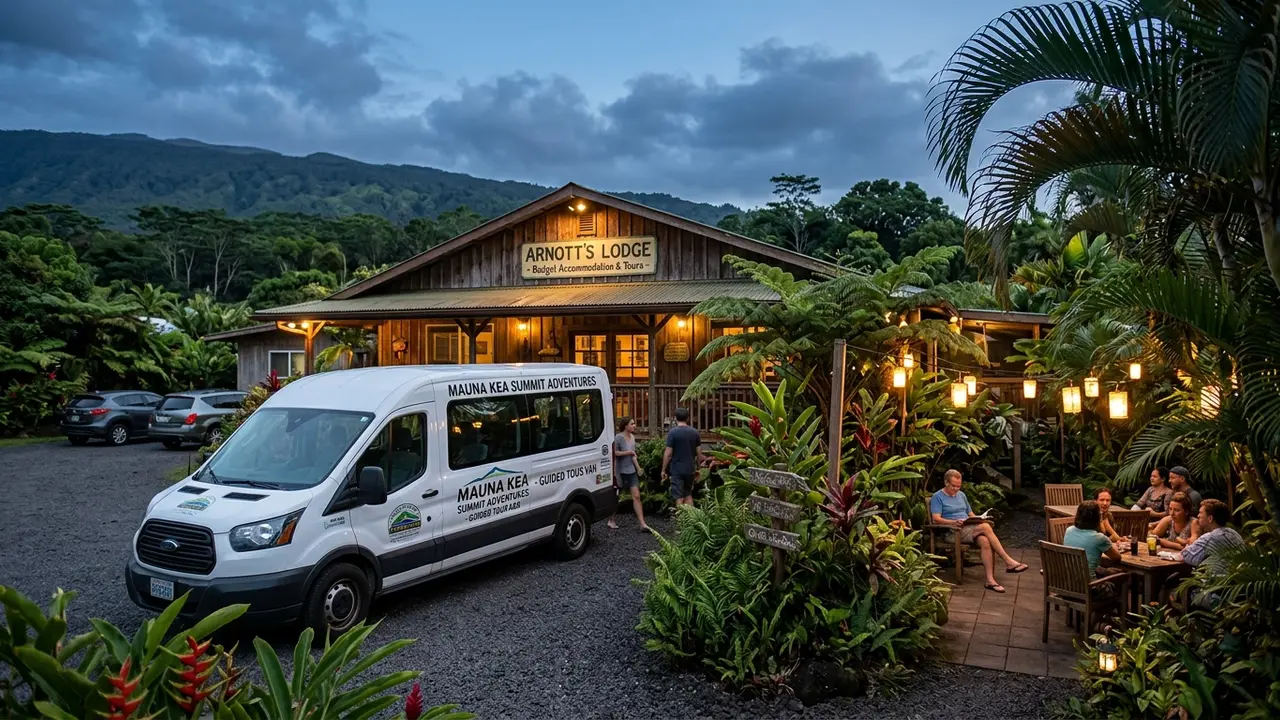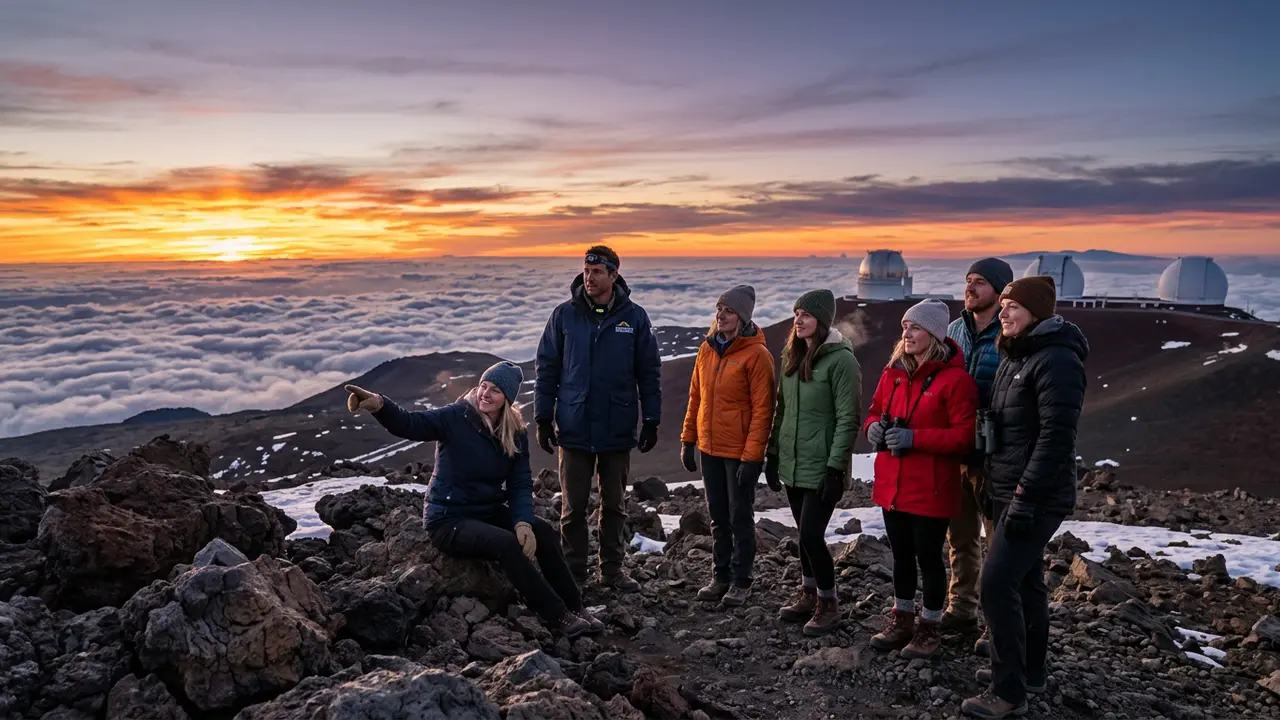
Most visitors who reach Mauna Kea's summit at night are not driving themselves up. Mauna Kea Summit Adventures, run by Paradise Safaris, Inc., is the pioneer permitted operator on the mountain, with guides who together have logged more than 50 years of experience on this exact drive. The 7.5- to 8.5-hour trip runs from Kailua-Kona to the 13,796-foot summit for sunset, then back down to the visitor center for stargazing through large portable telescopes. It is not the only way up, but it is the licensed, respectful one, and that distinction matters more here than at almost any other stargazing destination on this site.
Why "permitted" is not a marketing word
Mauna Kea is managed jointly by the University of Hawaiʻi and the state's Department of Land and Natural Resources, and unpermitted after-dark summit access damages a fragile alpine ecosystem that took centuries to establish. Mauna Kea Summit Adventures operates under a valid state commercial permit with a capped visitor count, one of a small handful of operators licensed for the drive. Booking with a permitted operator is how a visitor gets the sunset-to-summit experience without adding to the DIY 4x4 traffic the mountain's stewards are actively trying to reduce. If the plan was to rent a jeep and drive up after dark alone, this operator, and the mountain's management, would rather that plan changed.
What the 7.5 to 8.5 hours actually covers
- Pickup around Kailua-Kona, then a drive with a built-in acclimatization pause
- A stop at the visitor center (about 9,000 feet) for a hot supper and 30-45 minutes to adjust to elevation
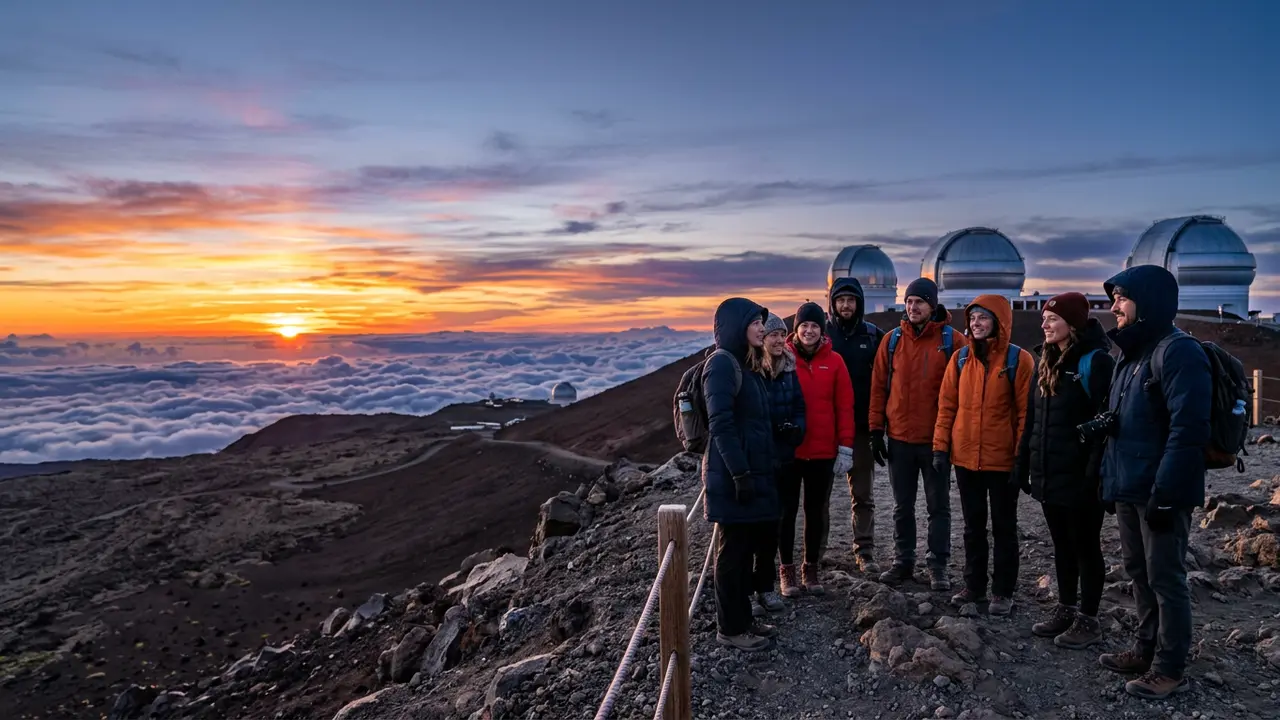
- The final ascent to the 13,796-foot summit for sunset, in custom Mercedes 4x4 "micro-coach" vehicles
- Guided stargazing back at the visitor center with large portable telescopes and a green laser pointer, from Polaris to the Southern Cross
- Arctic-style parkas (summit temperatures run 35-45°F) and gourmet hot beverages
Mauna Kea averages 325 clear nights a year, and the operator reports roughly a 90% success rate for good viewing conditions; about 12% of trips get cancelled for weather. Nobody, including this operator, can promise a specific night's sky.
Altitude sickness is a real risk, not a waiver formality
At nearly 14,000 feet, altitude sickness is documented and common enough that the operator screens for it before anyone boards. Do not book this tour with heart or respiratory conditions, while pregnant, with a BMI of 40 or above, or while sick or in a weakened state. Guides are trained to recognize headaches, ear popping, nausea, and shortness of breath, but training does not remove the risk. The visitor center stop exists specifically to let bodies acclimatize before the final push, and it is worth taking seriously even for someone who feels fine at 9,000 feet. Anyone with real doubt about their health at altitude should talk to a doctor before booking, not on the mountain.
A working observatory on a sacred summit
Mauna Kea is both a sacred site in Hawaiian tradition and home to some of the world's most important astronomical observatories, and the mountain's management has spent years balancing visitor access, scientific research, and cultural stewardship. A permitted tour does not resolve that tension, but it does mean a visit runs inside the rules the mountain's stewards set, rather than around them, and that a guide can speak to the summit's significance and not just its view.
Price, booking, and what to bring
Expect to pay $259 to $315 per adult, depending on the booking platform and season; trips sell out close to 100% of the time, so reserving ahead matters more than picking the perfect date. The tour includes round-trip transport, a professional guide, the parka, hot supper, hot beverages, and telescope access; it does not include extra warm layers beyond the parka or personal medications, so pack accordingly. Book directly through maunakea.com or a major activity platform.
Pair this with the free Onizuka Center visitor station program for a lower-cost, lower-commitment stargazing stop at the same elevation zone, or check the best time to go stargazing on Mauna Kea before picking dates. For the wider picture on where to stay and how to plan a Big Island stargazing trip, see the Mauna Kea stargazing guide.